



The “Circular from the rural school” project is a cooperation project between rural development groups led by the Asociación Territorio Mudéjar.
The following have participated in the project: ADRI Calatayud-Aranda, ADRI Jiloca-Gallocanta, FEDIVALCA -Valdejalón and Campo de Cariñena-, ASOMO Tarazona and el Moncayo, CEDEMAR -Bajo Aragón Caspe and Ribera Baja del Ebro-, ADRAE -Ribera Alta del Ebro- and ADEFO Cinco Villas.
The objective is to develop educational materials around the Mudejar identity of the towns, placing rural schools and the educational community of the towns as the center of the project.
Based on the work developed, for almost three years, the students of fifteen schools have designed a walk through their town in which we can learn about the main points of interest and their connection with the Mudejar culture.
The tour has been carried out following the working model of the schools that participated in the project and adapted to the town of Zuera.
Zuera is located on the terraces of the river Gállego, which in Roman times saw the growth of the ancient Gallicum and which fascinated the settlers from North Africa who arrived with the Muslim domination from the 8th century onwards. The origins of Zufaria, an Arabic place name meaning “beautiful” and also the settlement of Salzey -near the hermitage of Salz-, of Muslim origin and whose etymology is linked to the large number of saliceras in the surrounding area. After the Christian conquest, the Muslim peasants, who had a great knowledge of irrigation systems and were the mainstay of the economy of the conquered areas, remained in charge of their lands.
Plaster is one of the most important materials in Aragonese architecture thanks to the construction of Islamic heritage. In Zuera we have several plaster kilns and its use is traditional until the 60s of the 20th century: The materials used by the Mudejars are materials that we can find in the surroundings, what we would call, of proximity. Monuments and constructions in common use are made with the same materials and techniques.
This point is linked to the didactic activity 1.
Plaster is one of the most important materials in Aragonese architecture thanks to the construction of Islamic heritage. In Zuera we have several plaster kilns and its use is traditional until the 60s of the 20th century: The materials used by the Mudejars are materials that we can find in the surroundings, what we would call, of proximity. Monuments and constructions in common use are made with the same materials and techniques.
This point is linked to the didactic activity 3
One of the most tangible legacies of the Islamic period in Zuera is the exploitation and use of water resources. The Muslims stood out for introducing irrigation techniques to the Iberian Peninsula that completely modified the landscape and that shape the image that surrounds us today. Some of these works are irrigation channels, ditches, cisterns and aqueducts. In the place where we are we have several examples together.
This point is linked to the didactic activity 6
The church of San Pedro de Zuera is an important link between Romanesque and Mudéjar architecture, whose original construction dates from the second quarter of the 13th century. It seems to have had links with Lamberto, master builder of La Seo in Zaragoza, through his daughter married to the master builder Arnaldo, considered to be the master builder of Zuera.
This point is linked to the didactic activity 5.
In medieval times in the Iberian Peninsula we find three cultures coexisting, that is, living at the same time and in the same territory: Muslims, Christians and Jews. Although the Christians allowed the Muslims and Jews to maintain their religion and customs, they forced them to live segmented, in neighbourhoods that we call “morerías” and “juderías”. Today, in many localities, we still have the urban layout of what were once these demarcations. In other places they appear more transformed. Zuera could have had these three cultures coexisting for many centuries, although no separation into aljamas or neighbourhoods can be identified in the urban layout.
This point is linked to the didactic activity 7

The “Circular from the rural school” project is a cooperation project between rural development groups led by the Asociación Territorio Mudéjar.
The following have participated in the project: ADRI Calatayud-Aranda, ADRI Jiloca-Gallocanta, FEDIVALCA -Valdejalón and Campo de Cariñena-, ASOMO Tarazona and el Moncayo, CEDEMAR -Bajo Aragón Caspe and Ribera Baja del Ebro-, ADRAE -Ribera Alta del Ebro- and ADEFO Cinco Villas.
The objective is to develop educational materials around the Mudejar identity of the towns, placing rural schools and the educational community of the towns as the center of the project.
Based on the work developed, for almost three years, the students of fifteen schools have designed a walk through their town in which we can learn about the main points of interest and their connection with the Mudejar culture.

The tour has been carried out following the working model of the schools that participated in the project and adapted to the locality of Tarazona.
Tarazona was founded under the name of Turiaso, and according to local legend, it was built by Tubalcaín and rebuilt by Hercules. In the 1st century BC, the city probably already extended towards both banks of the river Queiles.
From the 3rd century onwards, the city was gradually abandoned due to the political instability of the Roman Empire. At the beginning of the 8th century, Tarazona was under Islamic rule until 1119, the year of the Christian conquest by Alfonso I the Battler. From this time onwards, three very important cultures coexisted in the town: Christians, Muslims and Jews.

The Muslims who remained after this conquest became known as Mudejars, and preserved their religion, culture and customs.
As the Christians dominated the territory at that time, they commissioned the Mudejars, who were accustomed to using a series of techniques, materials and decoration typical of their culture, to carry out the constructions. The Christians admired the art built by the Mudejars.
This point is linked to the didactic activity 1.

The Mudejars built many types of architecture depending on the function and the person who commissioned it. In Tarazona we have many examples of Mudejar monuments The Mudejar style of Tarazona Cathedral appears after the War of the Two Peters. It was necessary to rebuild part of the building. There is also an example of a Mudejar cloister attached to the building.
This point is linked to the didactic activity 4

Mudejar architecture can be found around large rivers, as this was the place where the Muslim population usually settled. The Ebro was the backbone of the city, with its main tributaries, such as the Jalón, also gaining importance. The river that crosses Tarazona is the Queiles, an important population centre for all cultures throughout history.
This point is linked to the didactic activity 6

Many examples of Renaissance palace-houses and even religious buildings are preserved in Tarazona. These buildings allow us to talk about the use of traditional Islamic building materials and techniques over time. In 1610 the Moors (Mudejars converted to Christianity) were expelled from Aragon, which meant the end of the Mudejar style. Even so, we can still find buildings that are built in the same construction tradition.
This point is linked to the didactic activity 7

With the arrival of Christianity, the previous settlers had to live segmented into different quarters, although their religion and customs were respected. These neighbourhoods, or aljamas, were like small cities with their own administration at the service of the Christian king.
In the aljamas were located, in addition to the houses where people lived, the main buildings for the conduct of life in each culture, such as mosques and synagogues. There are localities where this urban division is perfectly differentiated. Tarazona is one of the best examples. As well as having an extensive Moorish quarter, it also has a Jewish quarter, as the town had a large Jewish population.
This point is linked to the didactic activity 2


Pozuel de Ariza was a strategic point in the border wars between the kingdoms of Castile and Aragon. It is a town on the border between the two Autonomous Communities, even today. In fact, the castle on the border belongs to the Castile and León region and the Nuestra Señora de la Torre hermitage, the main monument in the town, is in the Aragon region.
The hermitage of Nuestra Señora de la Torre, located at the foot of the castle of Martín González (or de la Raya), was built in 1375 as a witness to the Peace of Almazán, signed between Pedro IV the Ceremonious of Aragon and Enrique II of Castile. This put an end to the continuous confrontations between Castile and Aragon, giving rise to a less hostile relationship between the incipient kingdoms. In fact, those baptised in this place enjoyed the dual status of Aragonese and Castilian.
The building we now see is not the one erected in the 14th century, but a later building, probably from the first third of the 16th century (the period from which the chancel is preserved) and which was extended in the mid-17th century.
Pozuel de Ariza was a strategic point in the border wars between the kingdoms of Castile and Aragon. It is a town on the border between the two Autonomous Communities, even today. In fact, the castle on the border belongs to the Castile and León region and the Nuestra Señora de la Torre hermitage, the main monument in the town, is in the Aragon region.
The hermitage of Nuestra Señora de la Torre, located at the foot of the castle of Martín González (or de la Raya), was built in 1375 as a witness to the Peace of Almazán, signed between Pedro IV the Ceremonious of Aragon and Enrique II of Castile. This put an end to the continuous confrontations between Castile and Aragon, giving rise to a less hostile relationship between the incipient kingdoms. In fact, those baptised in this place enjoyed the dual status of Aragonese and Castilian.
The building we now see is not the one erected in the 14th century, but a later building, probably from the first third of the 16th century (the period from which the chancel is preserved) and which was extended in the mid-17th century.


Inside the hermitage of Nuestra Señora de la Torre we find one of the few Mudejar roofs in the whole of Aragon with a structure of moamares limes. With the same structure we find examples in other localities such as in Mesones de Isuela in the castle chapel and even in the parish church of La Seo de Zaragoza, both works built under the patronage of the archbishop Lope Fernández de Luna and related to a funerary function.
Each Mudéjar roof is named according to the structure that makes it up. Thus we find a rich variety of names, as many as there are types of structures: moamares limas, alfarjes, par y nudillo, par e hilera, artesonados, etc.
Inside the hermitage of Nuestra Señora de la Torre we find one of the few Mudejar roofs in the whole of Aragon with a structure of moamares limes. With the same structure we find examples in other localities such as in Mesones de Isuela in the castle chapel and even in the parish church of La Seo de Zaragoza, both works built under the patronage of the archbishop Lope Fernández de Luna and related to a funerary function.
Each Mudéjar roof is named according to the structure that makes it up. Thus we find a rich variety of names, as many as there are types of structures: moamares limas, alfarjes, par y nudillo, par e hilera, artesonados, etc.
Territorio Mudéjar Network
The city council has been a full member of Territorio Mudéjar since April 2023.
More information
Town Hall: 975 325 176
http://pozuel.com/
Association for the Integral Development of the Calatayud and Aranda Regions
galcar.es
VISIT POZUEL DE ARIZA
976 633 296
DO YOU WANT TO KNOW MORE?
Turismo de Aragón
turismodearagon.es
Turismo Comarca Comunidad de Calatayud
https://www.comunidadcalatayud.com/
Centro de Estudios bilbilitanos
cebilbilitanos.com
Projects Territorio Mudéjar in Pozuel de Ariza
Mudéjar didactic, the guide | See the project
Mudetrad project | See the project
“Circular” Family walks | See the project

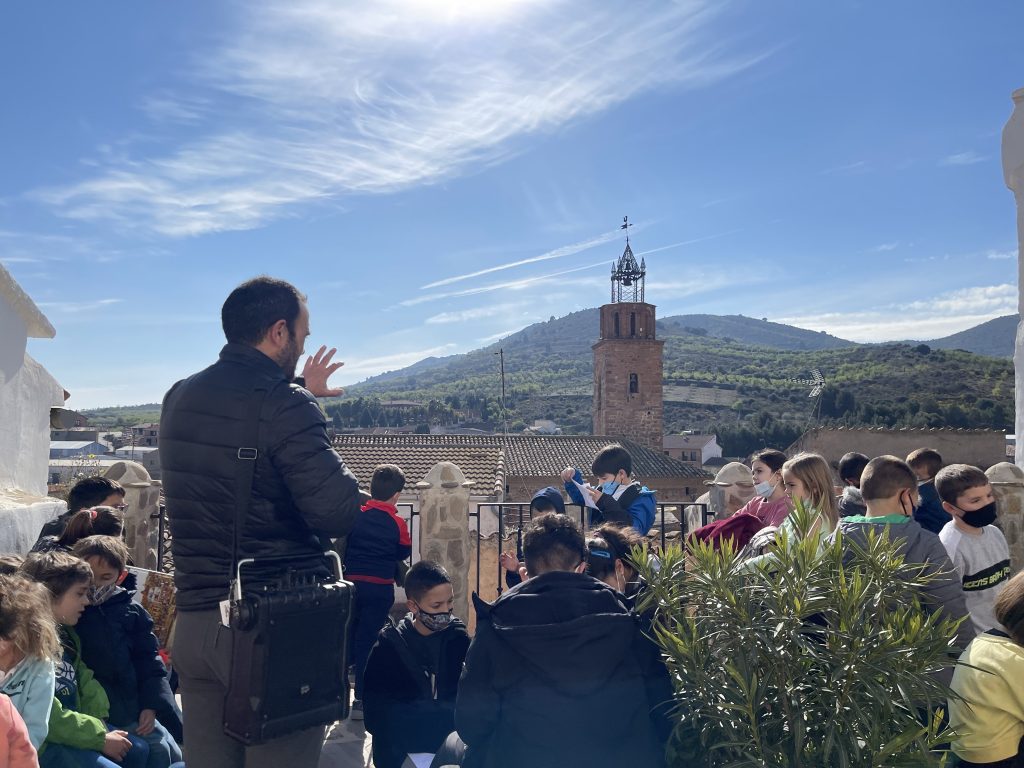
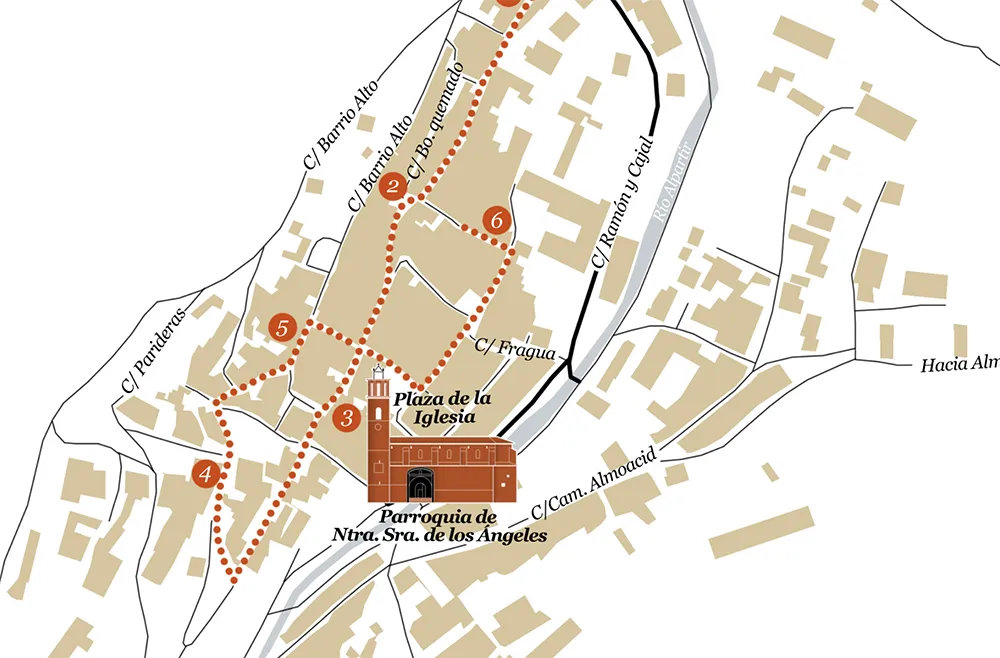


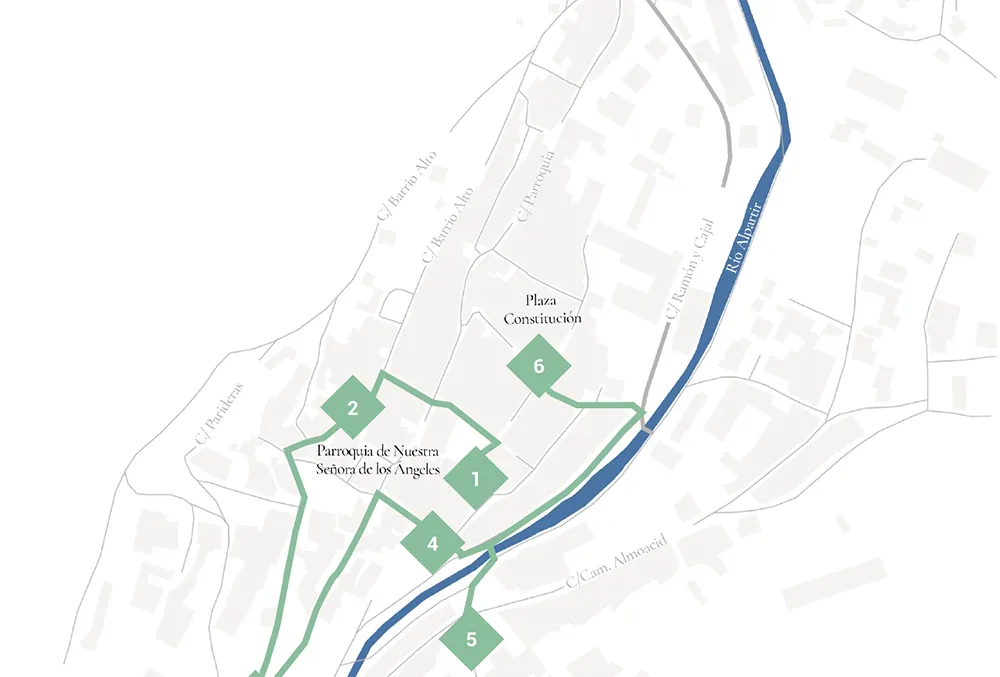

Alpartir, located a few kilometres from La Almunia de Doña Godina, is in a privileged enclave in the Sierra de Algairén. Its name, according to some research, derives from Arabic and means “the gift” or “that is near the river”, referring, in any case, to a place of great scenic beauty.
The town is named after one of the most important figures of our territory in medieval times, Fray Martín de Alpartir. Born in 1380, he was an outstanding religious historian, commander of the Order of the Holy Sepulchre and secretary to Pope Benedict XIII or “Papa Luna”.
Evidence of the importance of Alpartir in medieval times can be seen in the remains of the Hospital of the Order of St. John of Jerusalem, an ogee arch in the Plaza Constitución, as well as the ruins of the Franciscan Recollect convent of San Cristóbal, just a few kilometres from the town.
Alpartir, located a few kilometres from La Almunia de Doña Godina, is in a privileged enclave in the Sierra de Algairén. Its name, according to some research, derives from Arabic and means “the gift” or “that is near the river”, referring, in any case, to a place of great scenic beauty.
The town is named after one of the most important figures of our territory in medieval times, Fray Martín de Alpartir. Born in 1380, he was an outstanding religious historian, commander of the Order of the Holy Sepulchre and secretary to Pope Benedict XIII or “Papa Luna”.
Evidence of the importance of Alpartir in medieval times can be seen in the remains of the Hospital of the Order of St. John of Jerusalem, an ogee arch in the Plaza Constitución, as well as the ruins of the Franciscan Recollect convent of San Cristóbal, just a few kilometres from the town.


Although there are no monumental buildings, the Mudejar culture can be perceived when we walk through the streets and observe the landscape. The Islamic heritage can be seen in the construction techniques, the irrigation mechanisms and the urban layout: the houses are organised in a narrow plot defined by the sinuosity of the urban planning, favouring intimacy and discretion.
The main monument is the church of Nuestra Señora de los Ángeles, a 16th century masonry construction. Other elements of note are the pilón, a Renaissance fountain of ashlar stone with a trough, the chapels of San Clemente and the Virgen del Pilar and the chapel of the Virgen del Carmen.
Although in general the trades carried out by the Mudejar population were mainly linked to architecture, agriculture and all those actions involving the transformation and use of resources are also noteworthy. The most important products in Alpartir are oil and almonds. It is well worth visiting the town during the flowering season.
Although there are no monumental buildings, the Mudejar culture can be perceived when we walk through the streets and observe the landscape. The Islamic heritage can be seen in the construction techniques, the irrigation mechanisms and the urban layout: the houses are organised in a narrow plot defined by the sinuosity of the urban planning, favouring intimacy and discretion.
The main monument is the church of Nuestra Señora de los Ángeles, a 16th century masonry construction. Other elements of note are the pilón, a Renaissance fountain of ashlar stone with a trough, the chapels of San Clemente and the Virgen del Pilar and the chapel of the Virgen del Carmen.
Although in general the trades carried out by the Mudejar population were mainly linked to architecture, agriculture and all those actions involving the transformation and use of resources are also noteworthy. The most important products in Alpartir are oil and almonds. It is well worth visiting the town during the flowering season.
More information
Town Hall: 976 812 336
http://www.alpartir.es/
Association for the Integral Development of Valdejalón and Campo de Cariñena fedivalca.org
VISIT ALPARTIR
976 633 296
DO YOU WANT TO KNOW MORE?
Region of Valdejalón
www.valdejalon.es
Territorio Mudéjar Network
The city council has been a full member of Territ estate Territ percibible since April 2022.
Projects Territorio Mudéjar in Alpartir
Pedagogy | See project
Mudetrad project | See project
Podcast | See project
Mudéjar didactic, the guide | See project
“Circular” Family walks | See project

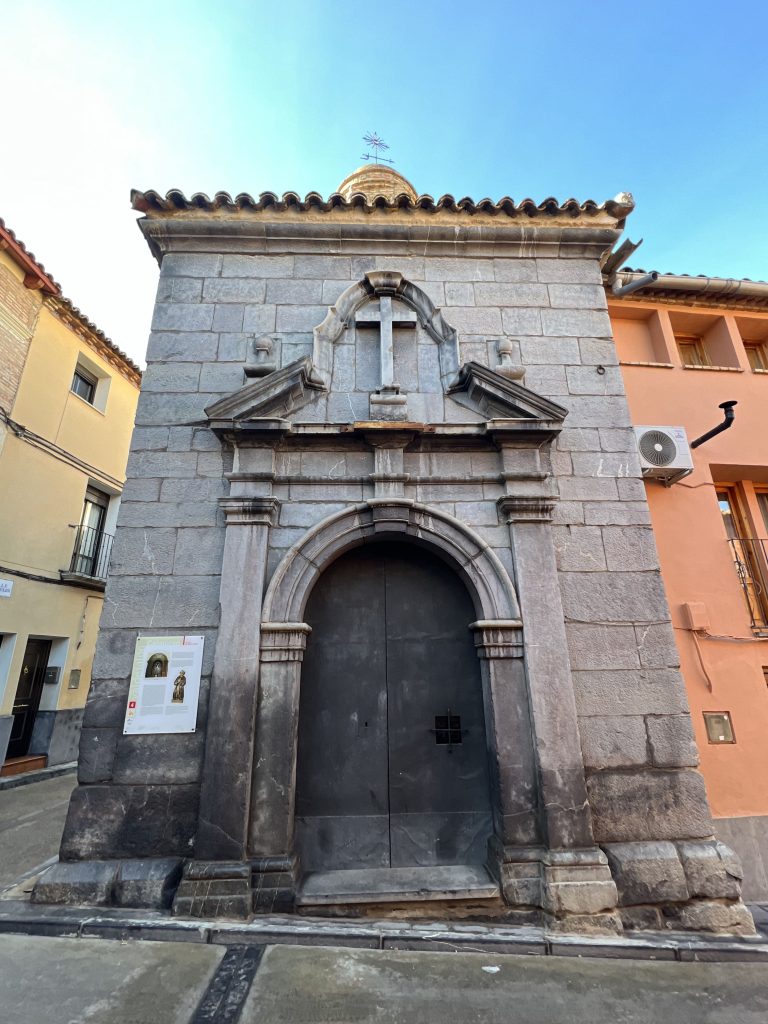
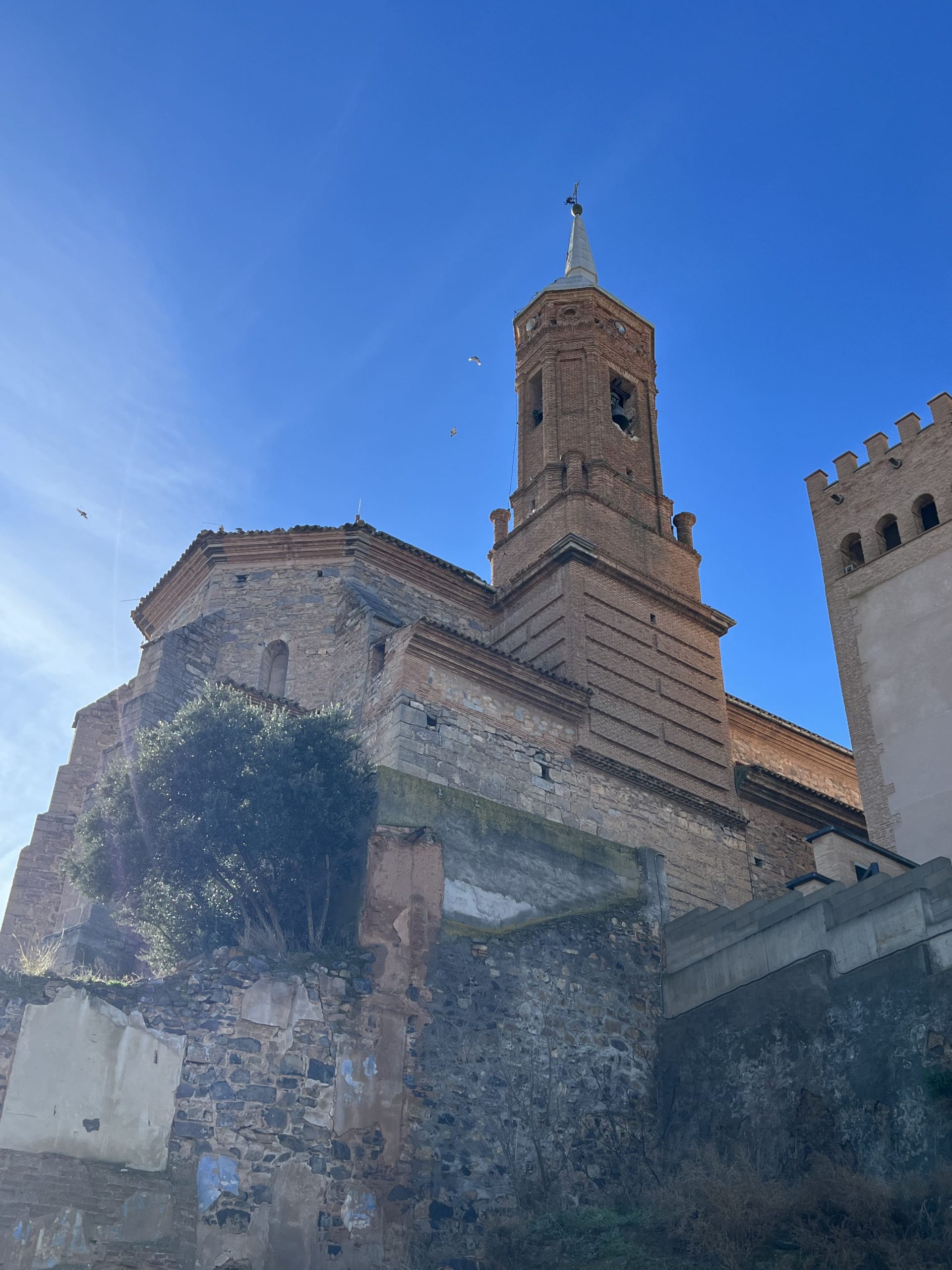
Calatorao is located in the surroundings of the Jalón valley, a fertile place that has been populated since the beginning of time and is famous for its black stone. The remains of the Celtiberian city of Nertóbriga are thought to be in the vicinity of the town, in a place known as Puyrredondo, between present-day La Almunia de Doña Godina, Ricla and Calatorao.
Also in the vicinity of the town is the Roman road that linked the important cities of Emerita Augusta (present-day Mérida) with Caesaraugusta (present-day Zaragoza). It seems to have played a key role in the wars against Numantia between 154 and 153 BC.
However, the origins of the locality as such date back to the Islamic period, when the place was baptised with the name ofQalat-al-Turäb, which means earth castle. This name refers to the castle located on the highest point of Calatorao, from which the hillside urban fabric that has evolved up to the present day was developed.
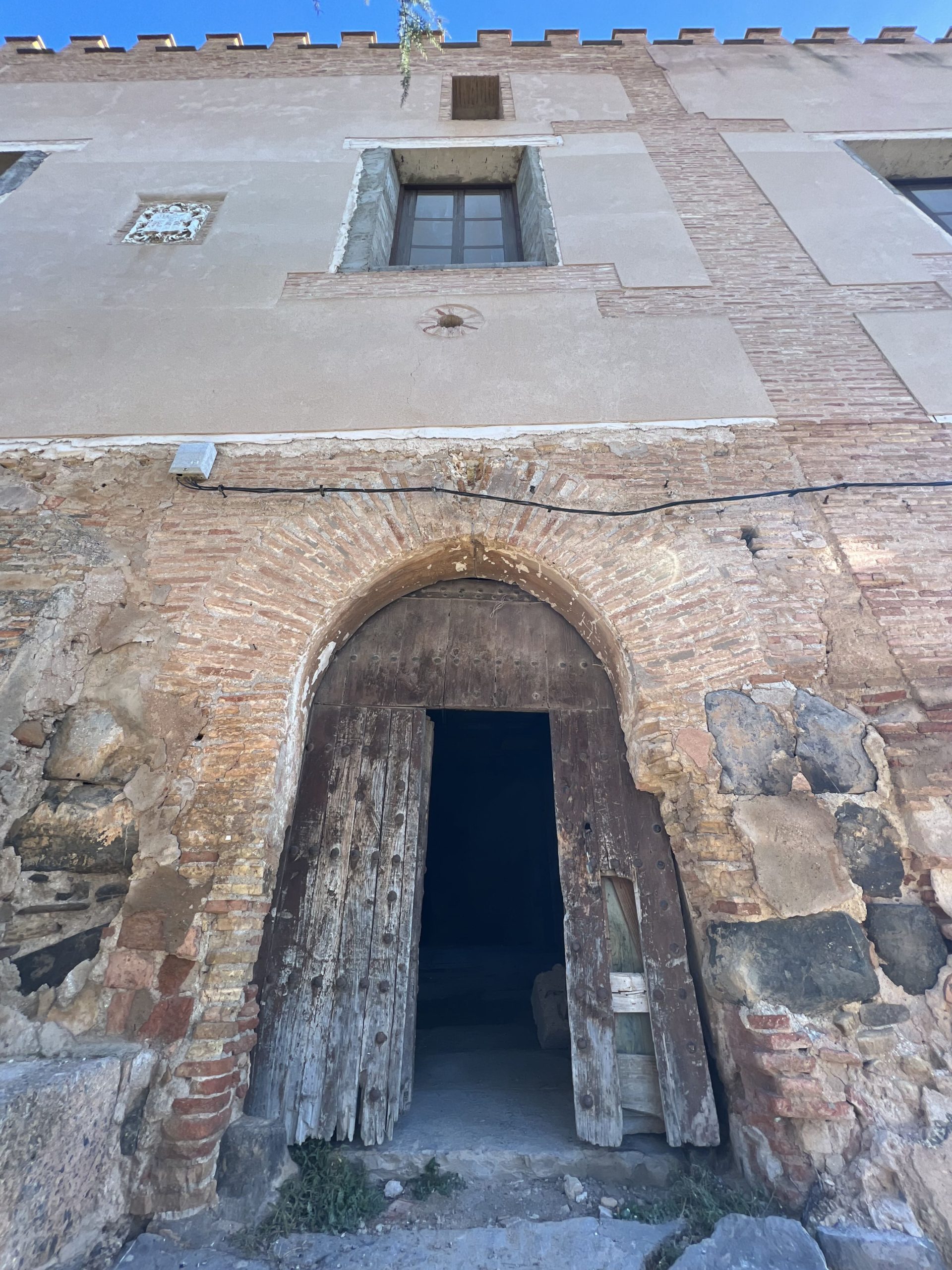
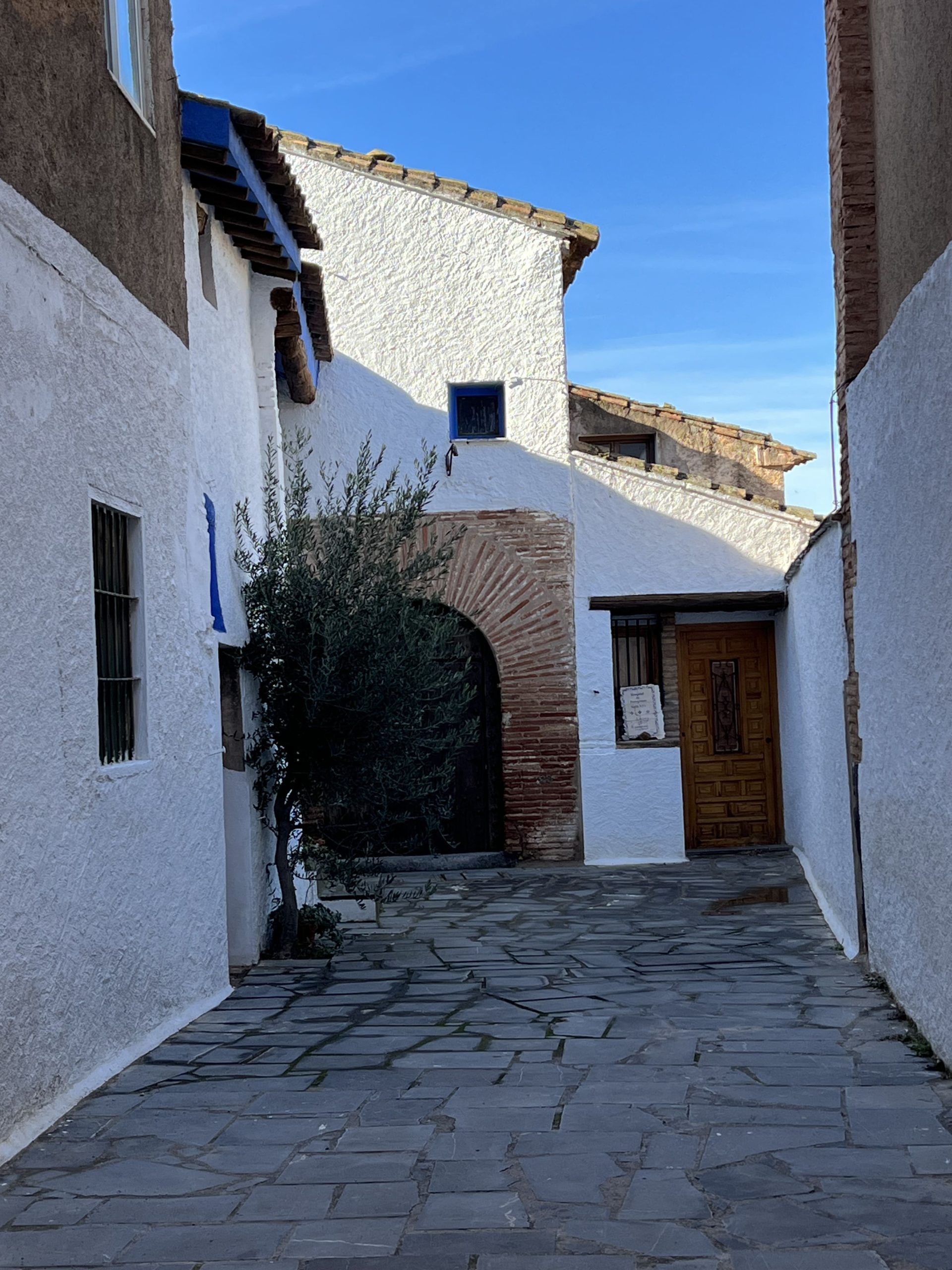
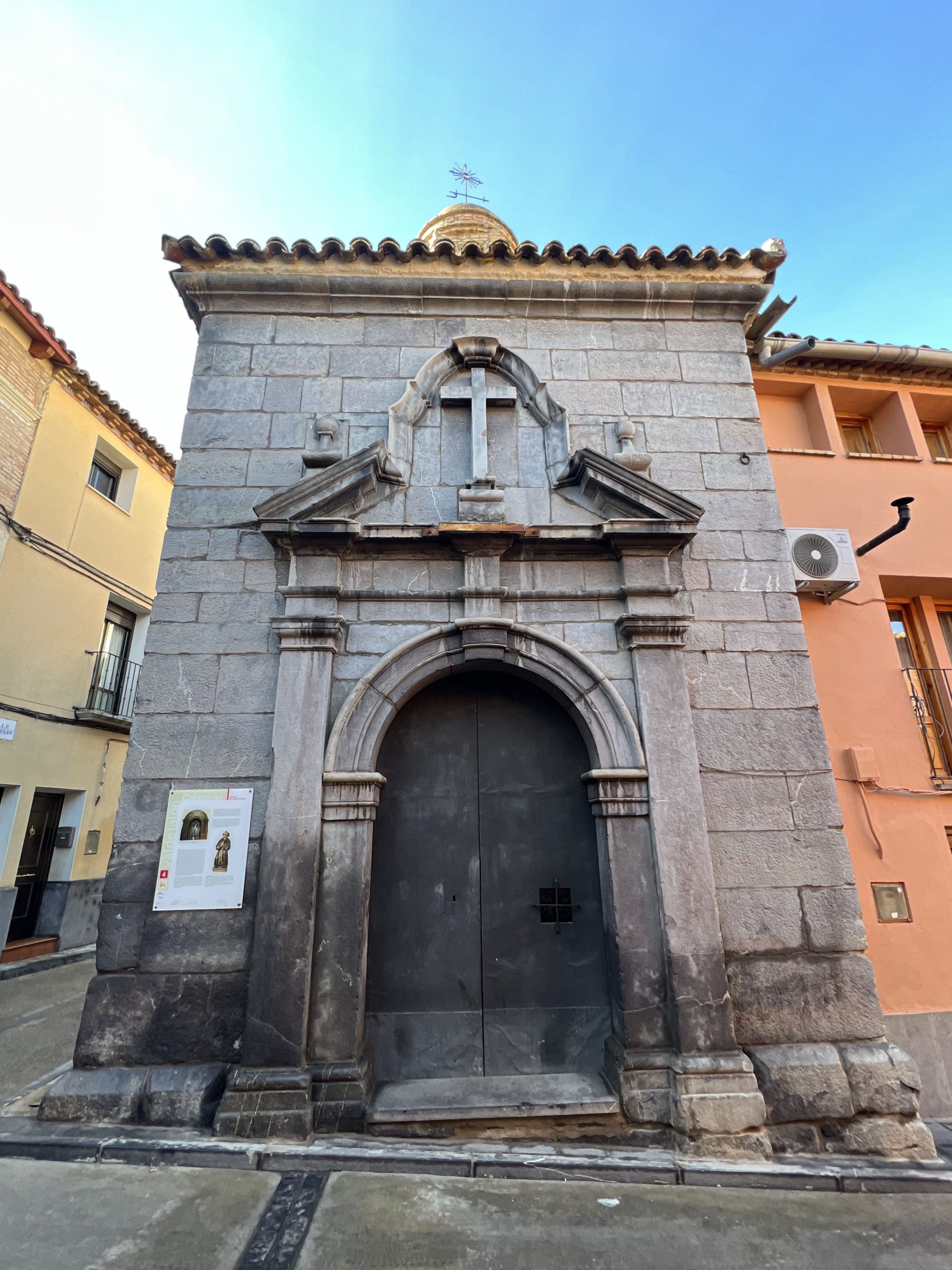
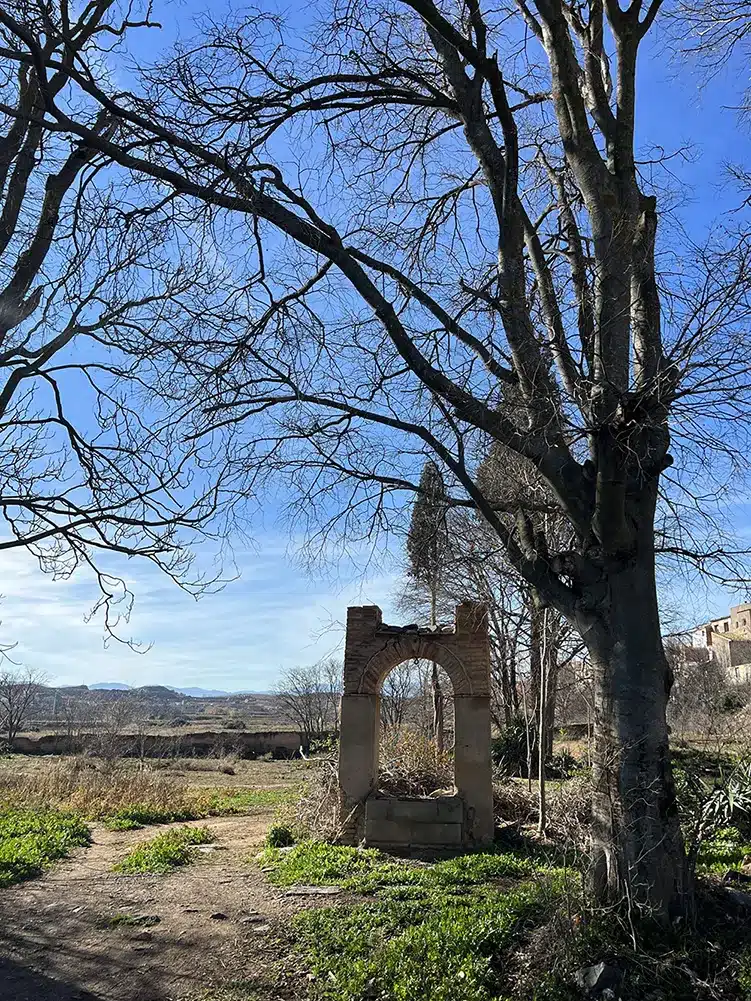
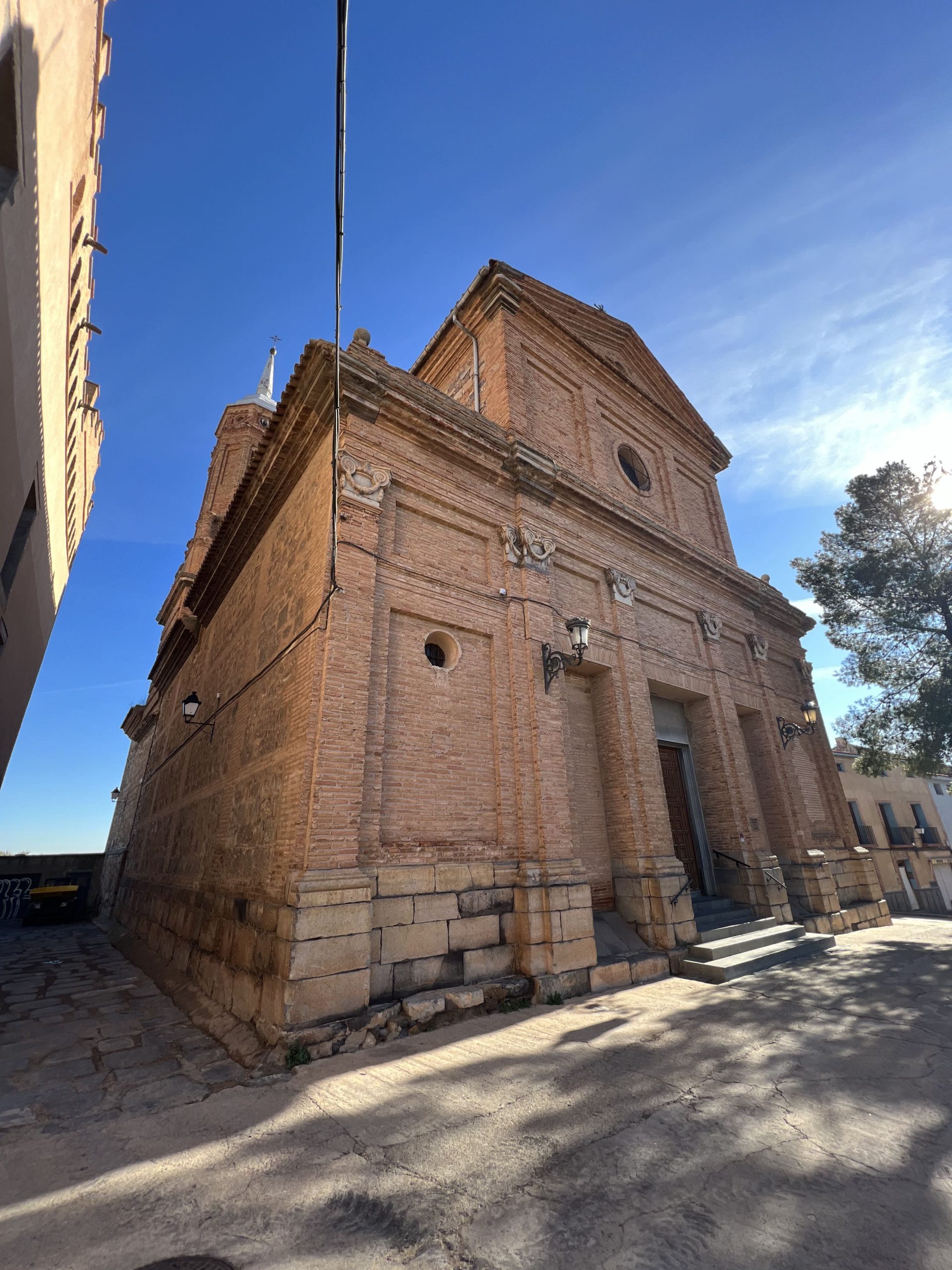
Already in the Christian period, we find in the documentation that refers to Calatorao a high number of Mudejar population in the town. Specifically, in 1350, the Mudejar population was twice as large as the Christian population: 100 Moors and 45 Christians. As a result, the 14th-15th century Mudejar aljama mosque is still preserved today. This building was located by Professor Bernabé Cabañero Subiza in 2002 in the building formerly known as the Hospital de los Peregrinos.
Other interesting elements that can be found on a stroll through the town are the parish church of San Bartolomé, a neoclassical construction from the 18th century, the group of Aragonese palatial houses from the 16th, 17th and 18th centuries or the Casino building built in 1910 and still in use.
Territorio Mudéjar Network
The city council has been a founding partner of Territorio Mudéjar since 2023.
More information
Town Hall: 976 607 111
DO YOU WANT TO KNOW MORE?
Turismo de Aragón
turismodearagon.com
Turismo comarca de Valdejalón
valdejalon.es
Proyectos Territorio Mudéjar
en Calatorao
Monumentos | Ver el proyecto
Pedagogía | Ver el proyecto
Proyecto Mudetrad | Ver el proyecto
Mudéjar didáctico, la guía | Ver el proyecto
“Circular” Paseos en familia | Ver el proyecto

There are many remains of prehistoric settlements in the vicinity of the town of Ariza. Ten sites dating from the Late Bronze Age or 1st Iron Age stand out, where pieces of flint and handmade pottery have been found, some with coarse decorations.
In the same place there is a Roman road that linked two of the most important cities in Hispania: Emerita Augusta (today’s Mérida) and Caesaraugusta (today’s Zaragoza), although there is no evidence of Roman residential architecture in Ariza.
But it is undoubtedly the Arab period that marks the course of Ariza. The medina of Hariza or Fariza (according to some Arabists “the Possession”) must have been a major commercial centre.. Nearby nuclei must have been absorbed by it, as it represented a nucleus that was in constant growth, populated by Berber tribes. One of the reasons for this was that Abderramán III established a communication route between Medinaceli, Calatayud and Zaragoza.
The original urban layout of the town, which is based around the castle, dates from this period.
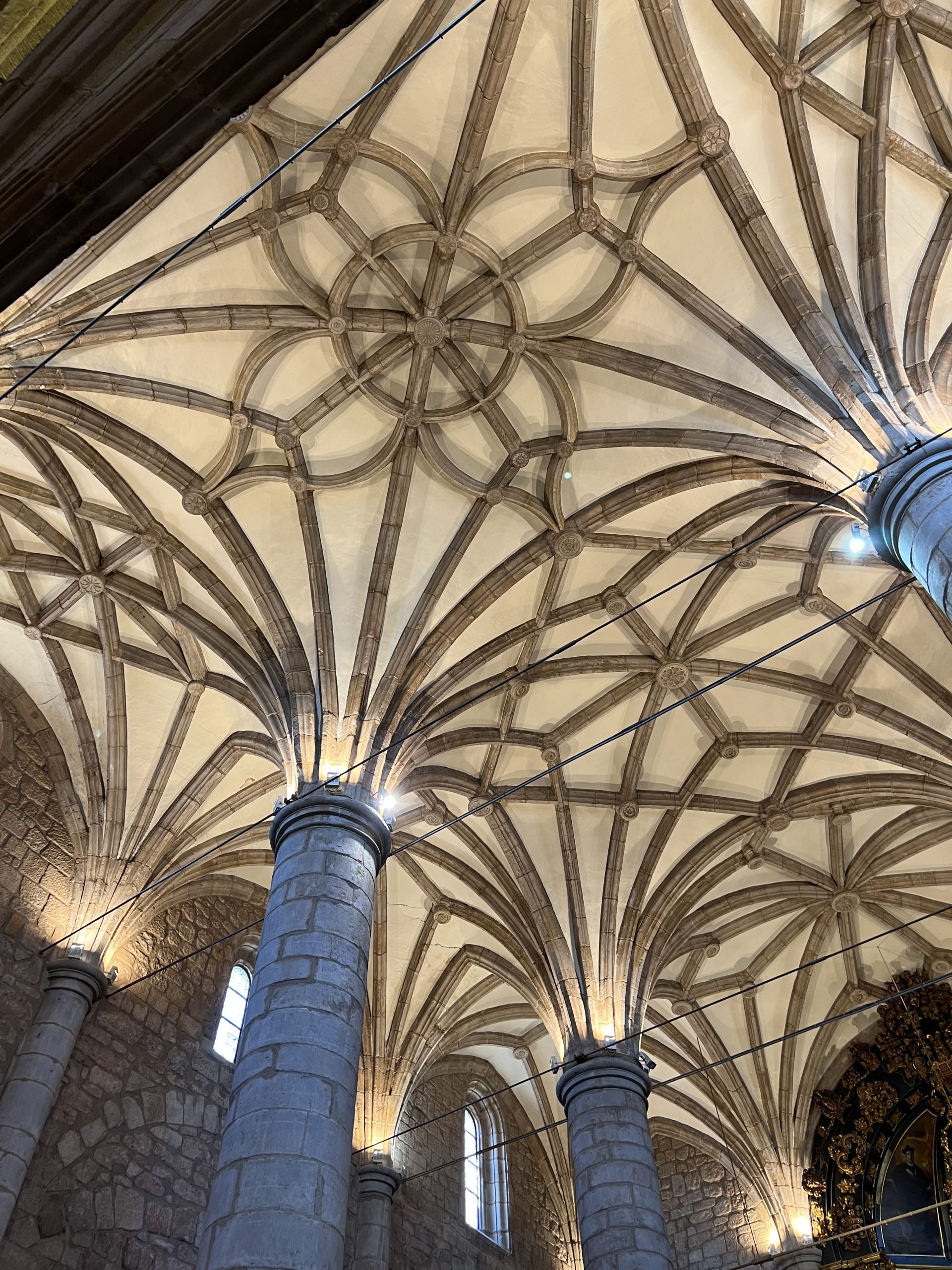
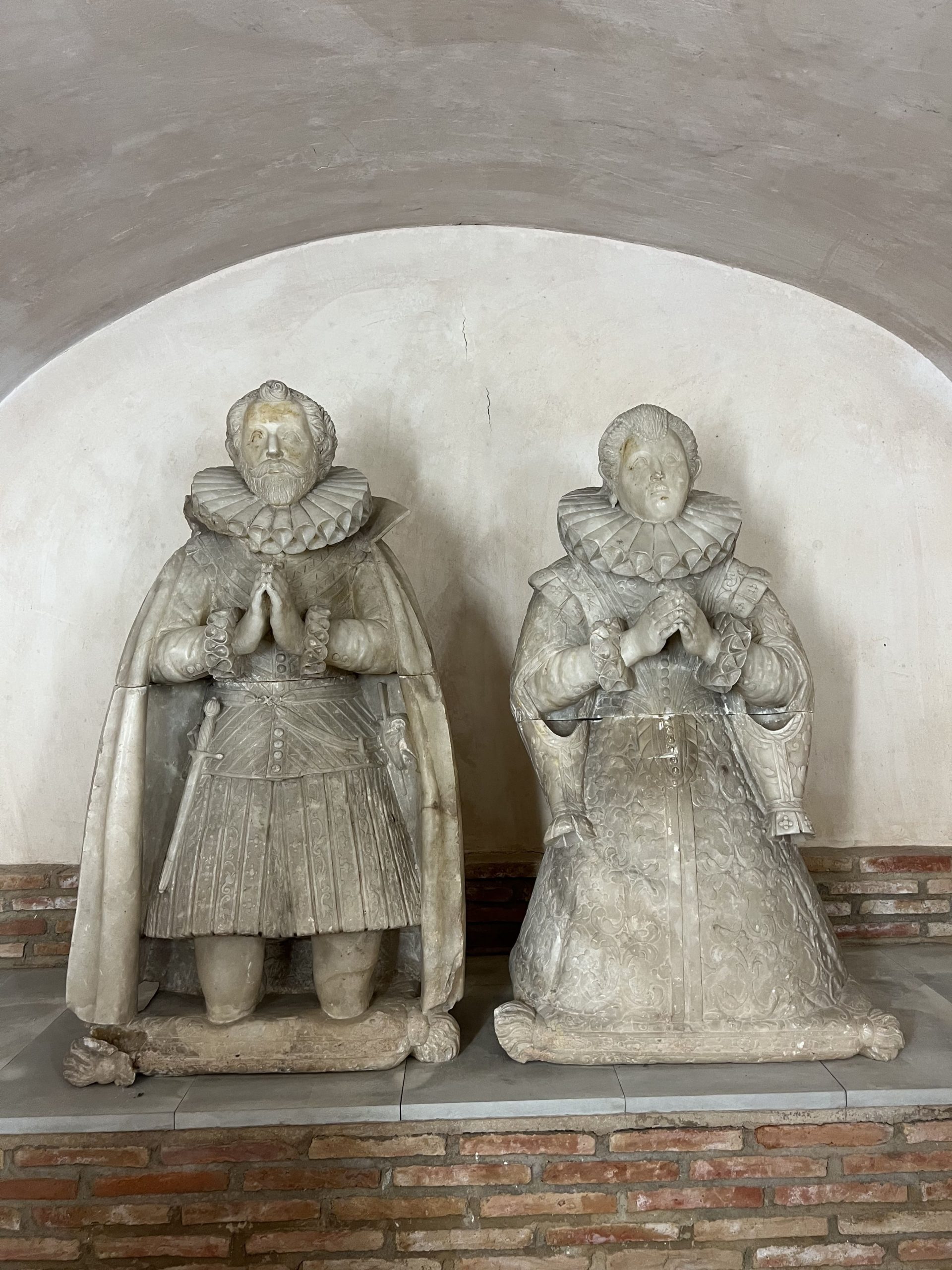
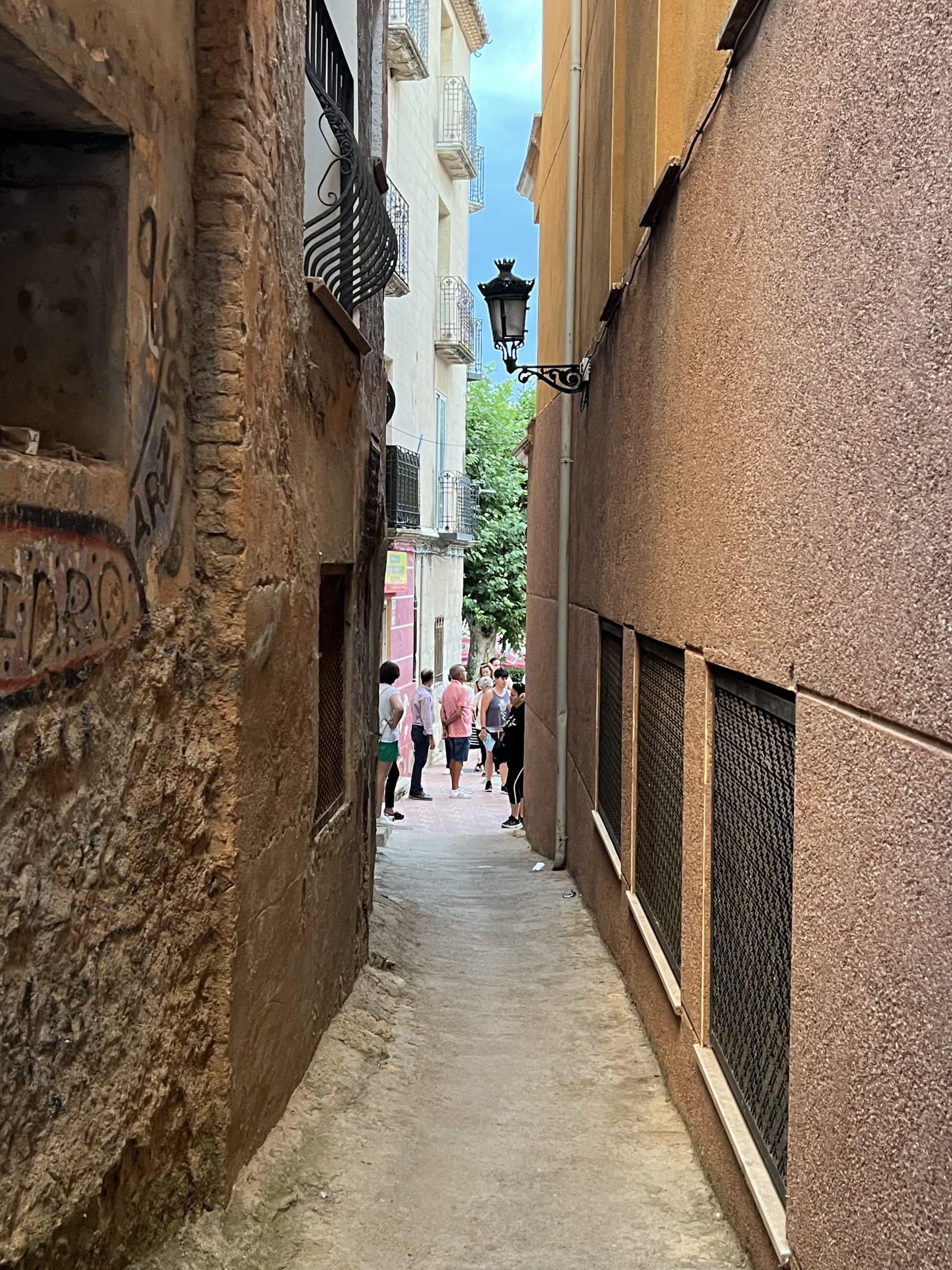
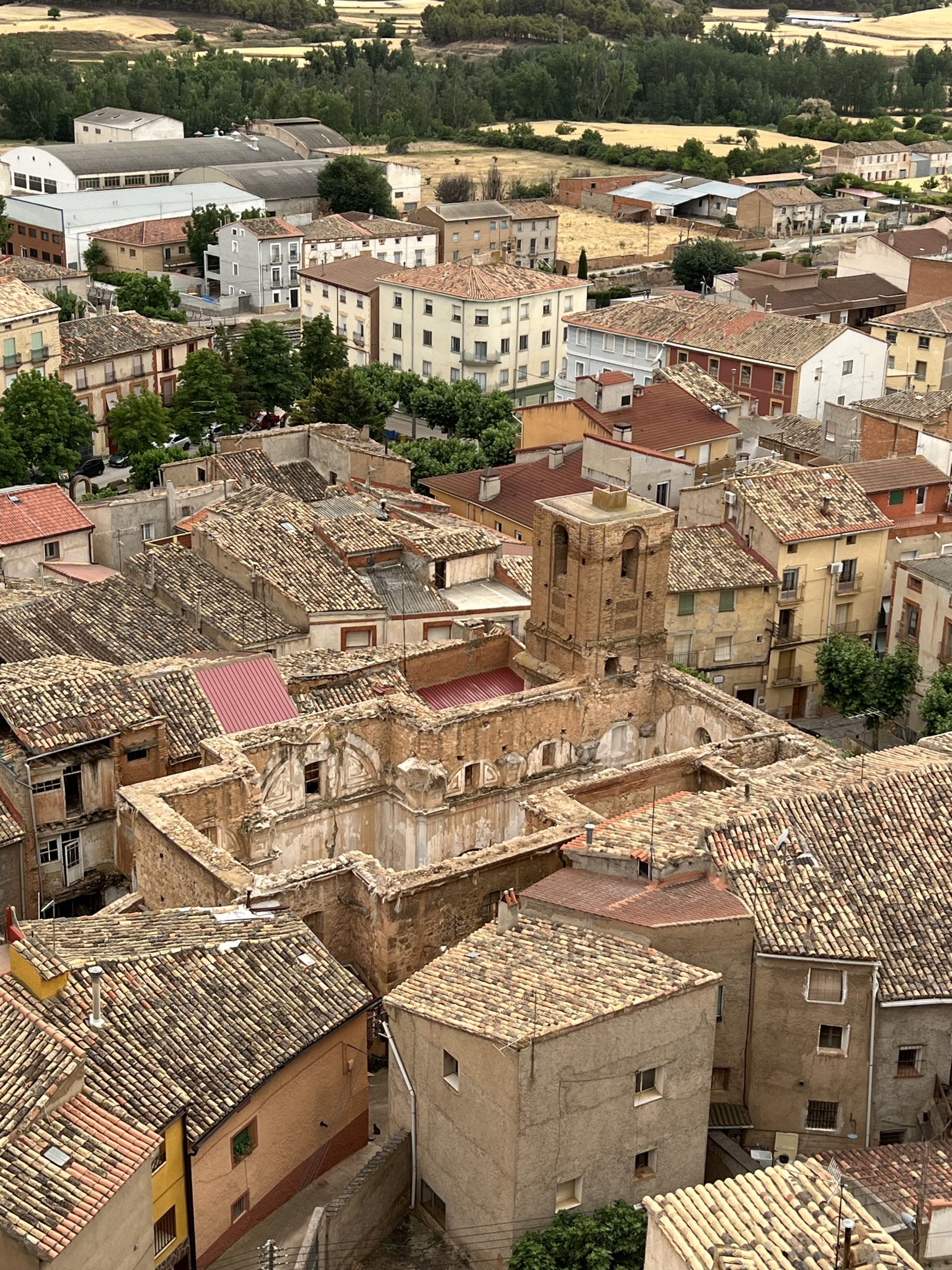
The remains of the castle of Ariza stand on a mountain ridge overlooking the town. They have a triangular ground plan, at the foot of which the town grew, forming the current urban centre. Its situation from the defensive point of view is unbeatable, which is why it was later used in different conflicts.
Walking through Ariza we can locate the old quarters that divided the town in the Middle Ages: the Jewish quarter and the Moorish quarter, located inside and outside the limits of the wall, of which we still have vestiges today, such as the Arco de la Villa or Arco de Castilla.
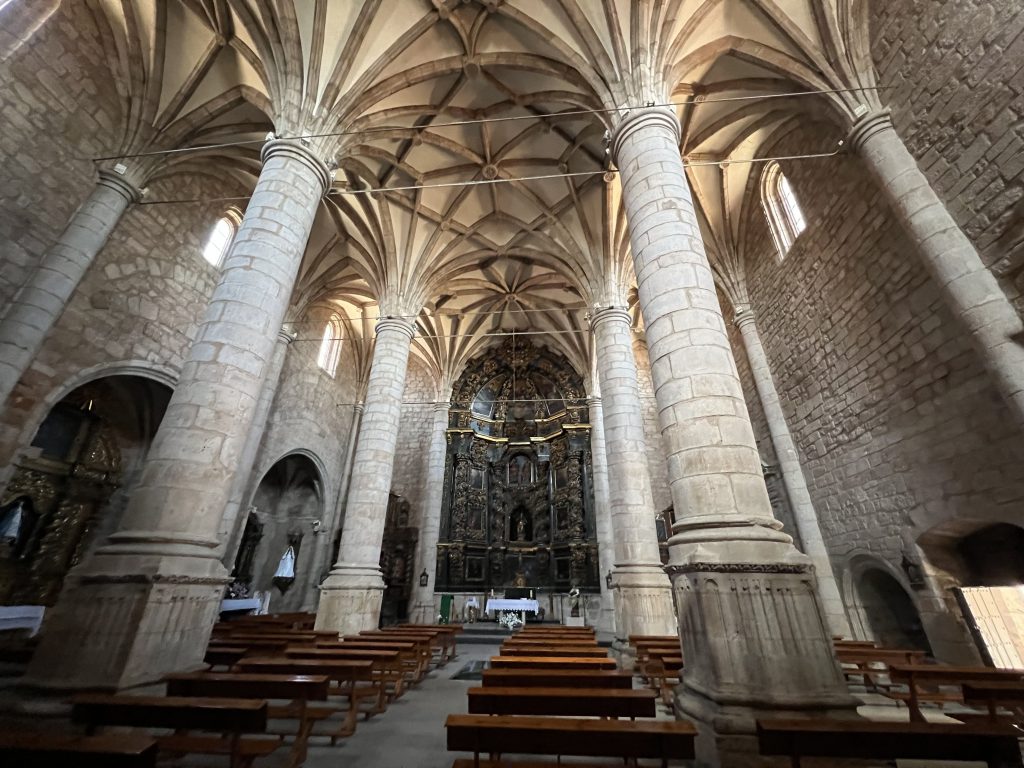
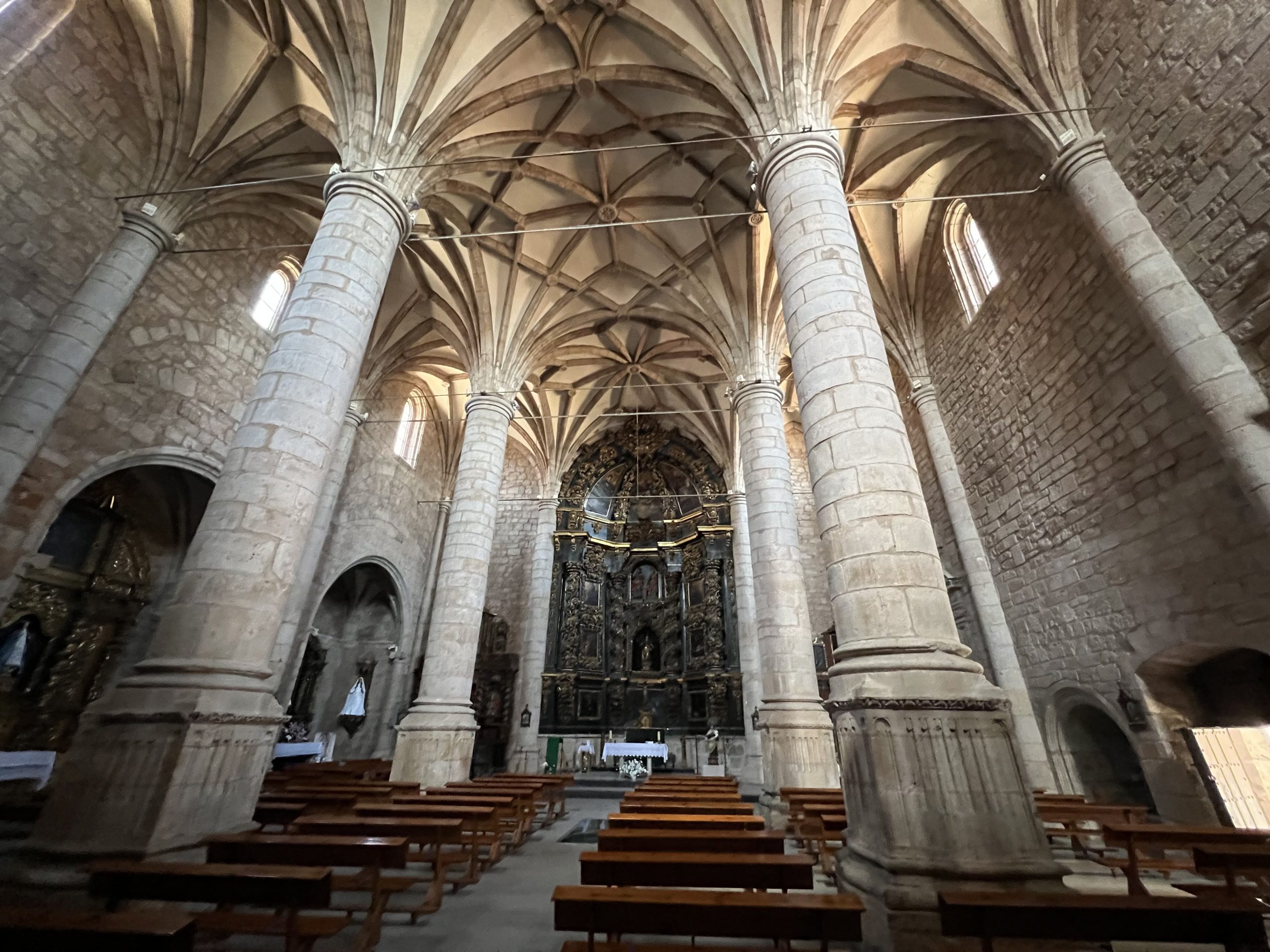
The church of St. Mary, the main monument of the town, is a perfect example of the building typology of hallenkircheor hall plant, widely used in our territory during the 16th century.
Other outstanding monuments include the old hospital, the old church of San Pedro, already documented since the 13th century, the Palacio del Marqués, a building owned by the municipality that is still in use today, and the convent of San Francisco, located on the edge of the town, a Baroque construction from the 18th century.
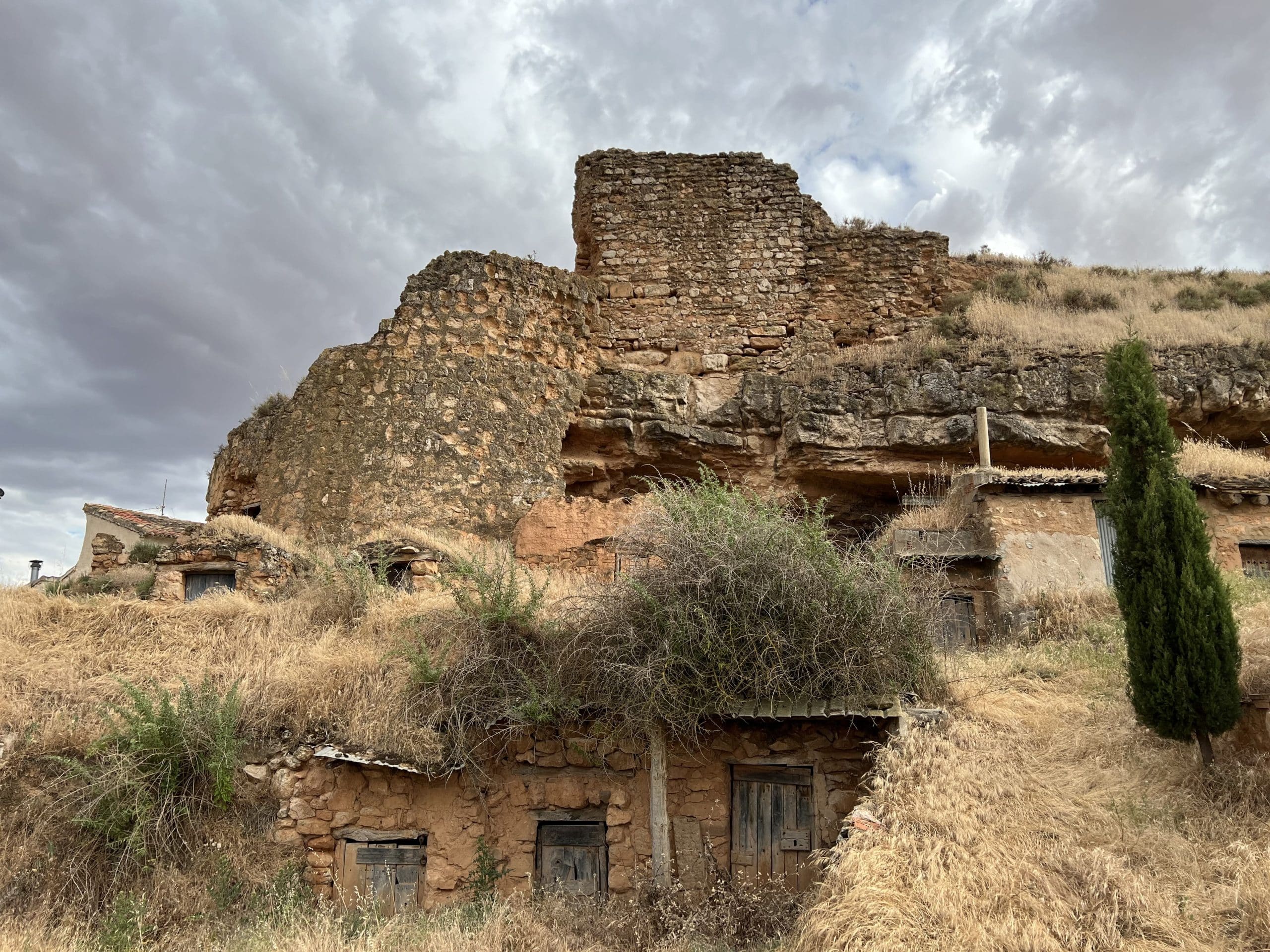
Another interesting element is the cellar quarter, which today has about 80 cellars still standing, although it once had more than 150. Due to the large number of them in Ariza, the “cuberos” or craftsmen who made the vats and vats in the winery itself and who were used as containers to store the wine became indispensable.
Territorio Mudéjar Network
The city council has been a founding partner of Territorio Mudéjar since 2023.
More information
Town Hall: 976 845 095
DO YOU WANT TO KNOW MORE?
Turismo de Aragón
turismodearagon.com
Turismo comarca de Calatayud
comarcacalatayud.com
Centro de Estudios Bilbilitanos
cebilbilitanos.com
Proyectos Territorio Mudéjar
en Calatorao
Monumentos | Ver el proyecto
Pedagogía | Ver el proyecto
Proyecto Mudetrad | Ver el proyecto
Mudéjar didáctico, la guía | Ver el proyecto
“Circular” Paseos en familia | Ver el proyecto
We are an association of town councils and we work together for local development based on the Mudejar heritage through a unified and collaborative management network.
We are 49 partner villages. We work together to make our towns stronger and build their own identity through their heritage.
49 destinations and hundreds of possibilities. Our proposals and heritage routes are designed through the cultural elements that we have preserved from the roots in our territory of the Andalusian Islamic tradition since the 8th century and its permanence in the Christian western world since the 12th century, the fusion of which crystallises what we call Mudejar.
At Territorio Mudéjar we connect researchers with projects and tools to generate impact on heritage. We have several programmes for you to join our team, contact us.
We also offer you uniqueresources to study and learn first-hand about our field of work and thus contribute to the preservation of Mudejar heritage. field of work and thus contribute to the preservation of the Mudejar heritage.
Territorio Mudéjar was created as an association of town councils whose objective is to consolidate a unified and collaborative management network for the use of the historical-artistic resources linked to the important Mudejar heritage, understanding them as a driving force for the development of the villages and as an element of identity for the maintenance of the communities that make up our territory.
Nuestro programa de actuaciones para los próximos años ha sido diseñado de acuerdo a las líneas estratégicas definidas por el “Plan de trabajo del Consejo de la Unión Europea 2019-2022” que, alineadas a los objetivos de la Agenda 2030, tienen como principio rector que “la identidad cultural de los territorios contribuirán al desarrollo social y económico sostenible diferenciando mercados y a su vez permitiendo su integración en una economía diversificada que pueda asegurar su éxito futuro”.

Territorio Mudéjar is an association of town councils, currently we are 49 member towns. In order to make heritage an opportunity, we advise, research, care, monitor and disseminate the cultural identity that defines our towns, helping to strengthen local development through its singularities.
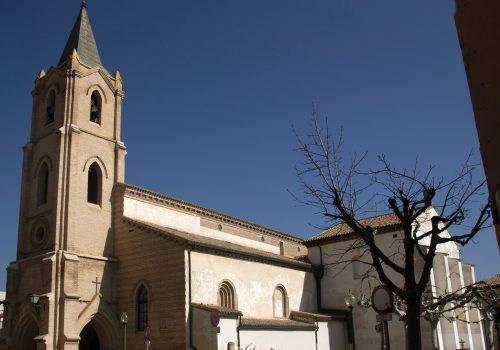
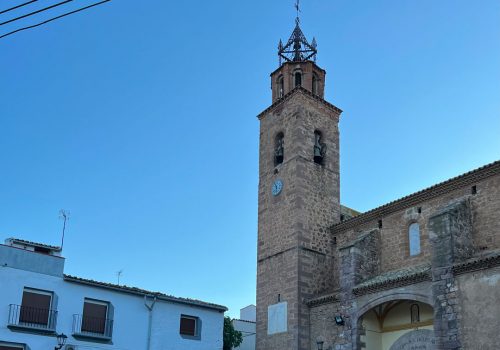
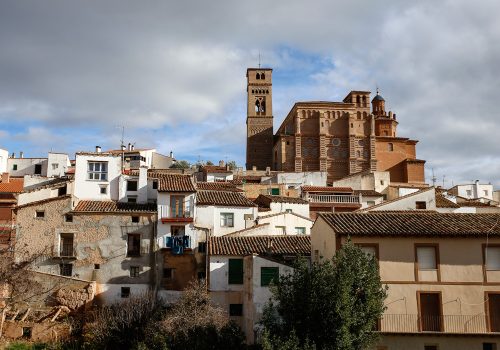
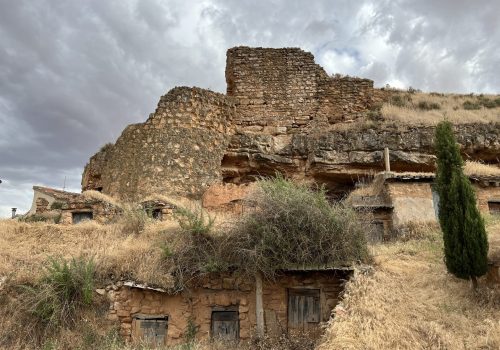
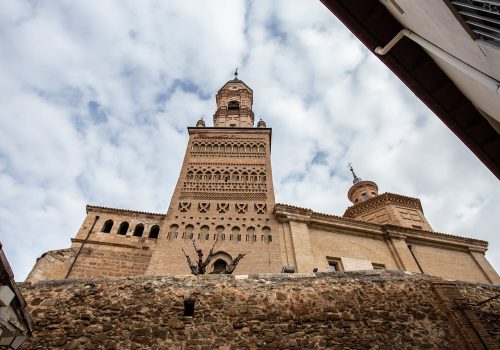


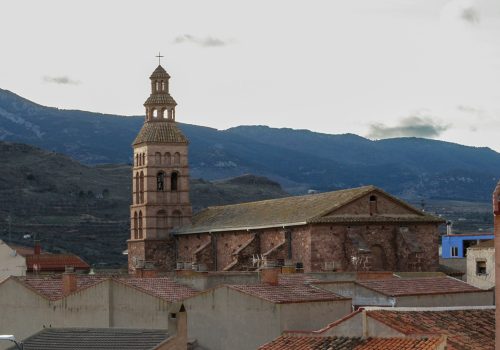
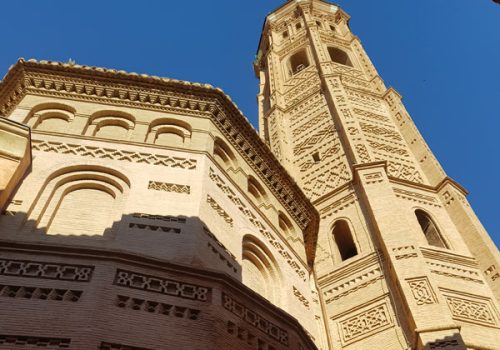
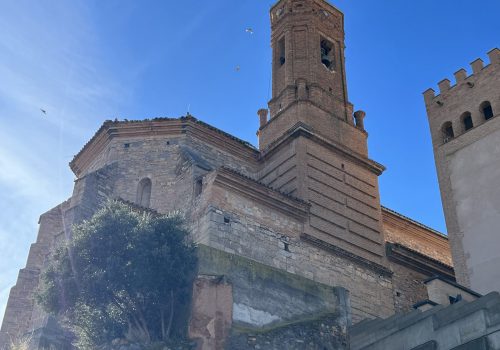
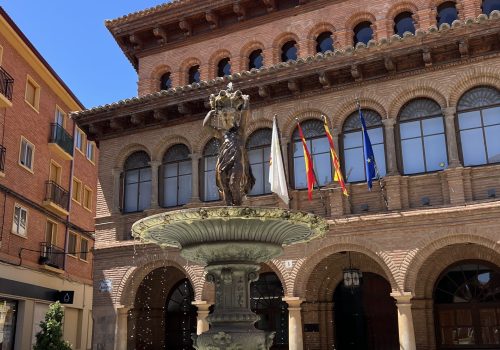

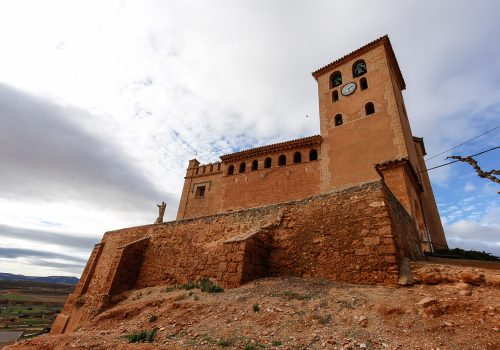


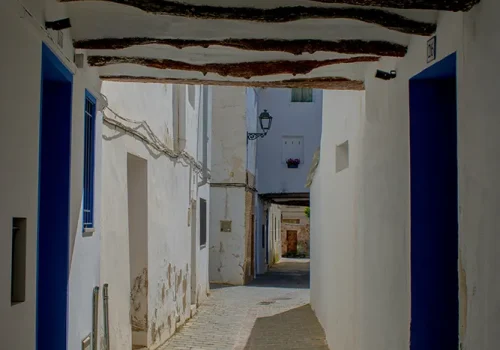


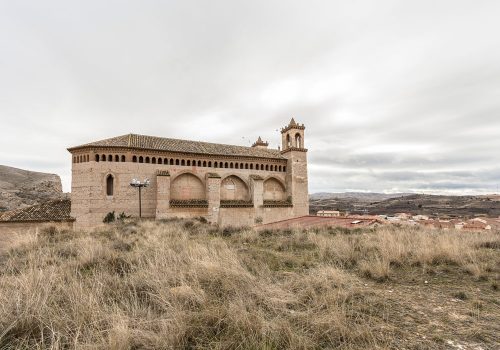


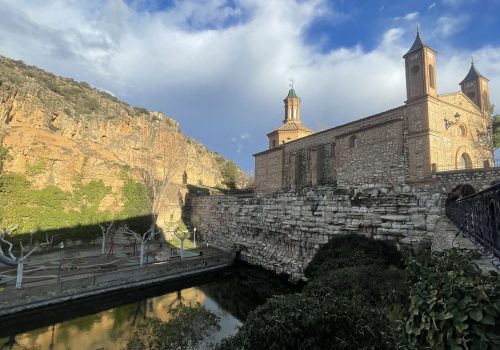

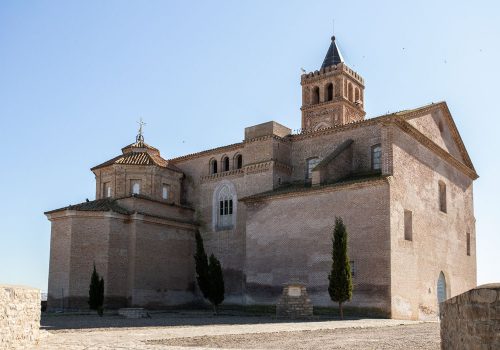
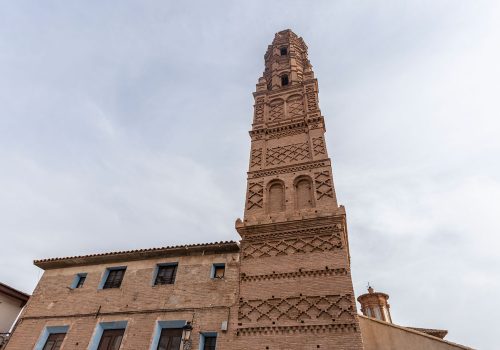
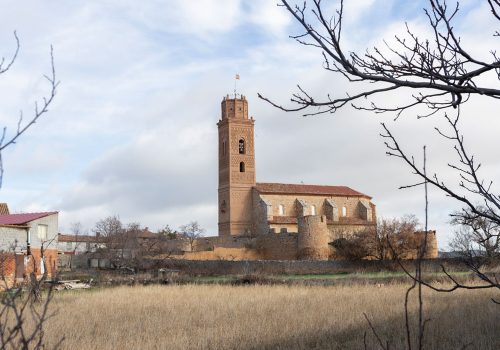
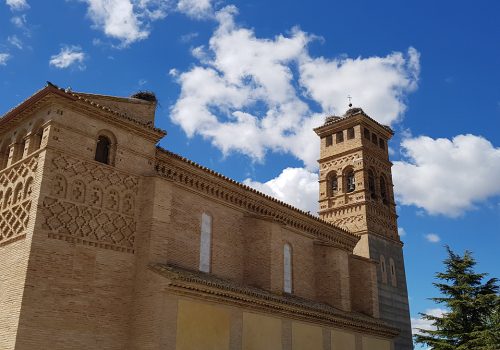
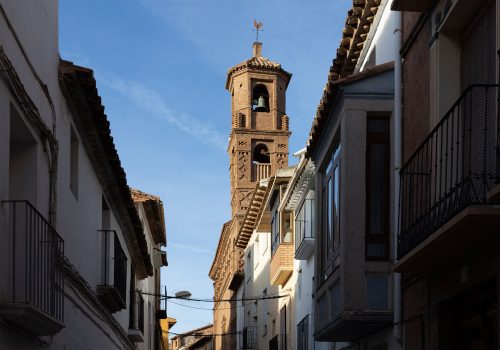
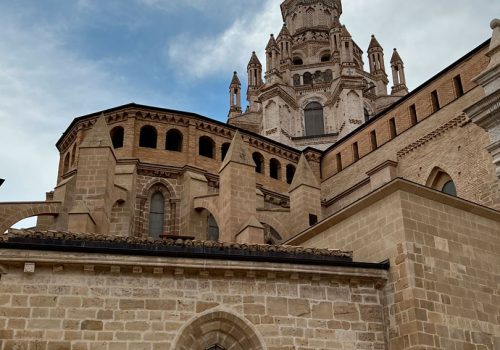

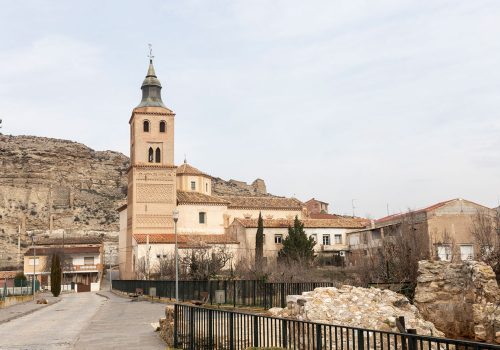


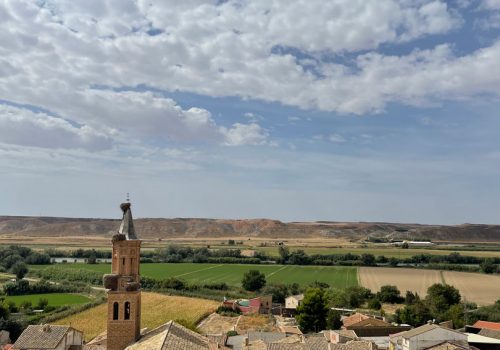
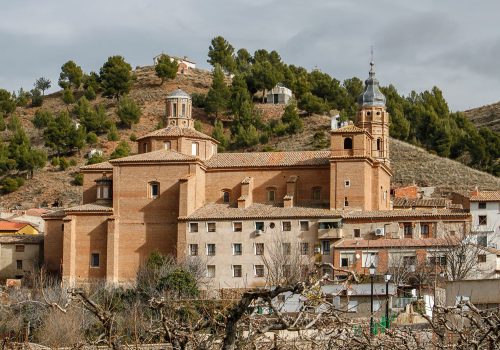
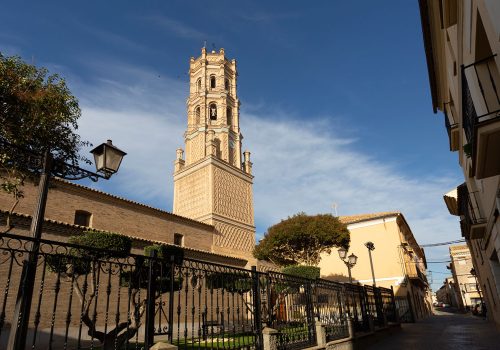

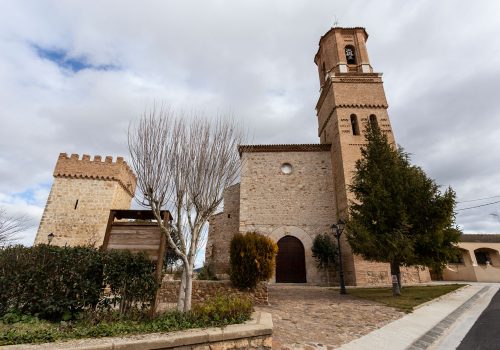
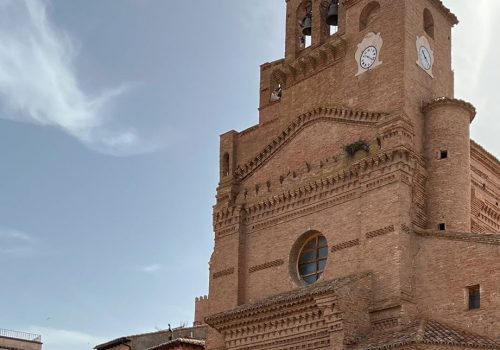
Research projects allow us to generate a solid documentary and scientific base. Our work not only preserves knowledge, but also promotes the dissemination and enhancement of Mudejar heritage, connecting past and present through science and culture.




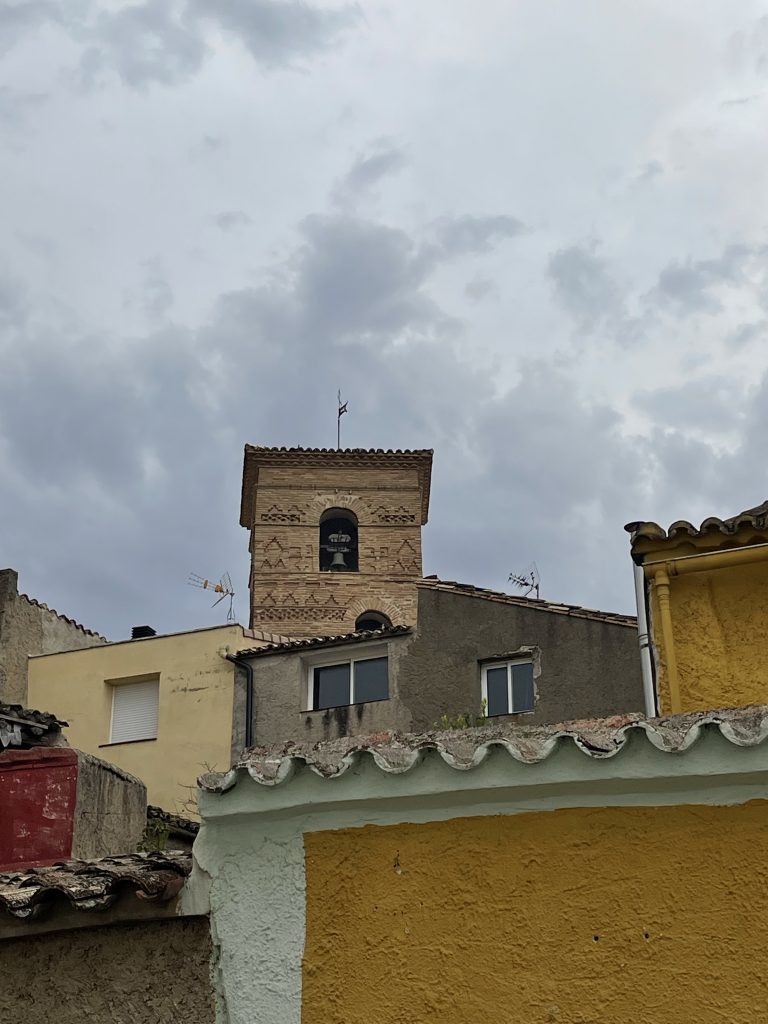


Castejón de Valdejasa is located in the region of Cinco Villas, 45 kilometres from Zaragoza. En origen, una calzada romana transcurría por este lugar, uniendo Caesaraugusta (Saragossa) y Pompaelo (Pamplona). This place was also a Celtiberian settlement, as attested by the archaeological remains of a settlement on one of its hills.
One of the first documentary references to the locality is in the Town Charter of Ejea at the beginning of the 12th century. It was precisely during this period that cultural coexistence between Christians, Muslims and Jews was experienced in the territory. One of the examples of the Mudejar past is the church of Santa María la Mayor, dating from the late 14th and early 15th centuries. Today the Mudejar work is masked by an intervention carried out in the 20th century.
In Castejón de Valdejasa there are still some cellars that have been excavated taking advantage of the natural unevenness of the clayey terrain, with masonry fronts. Nowadays they have been adapted as meeting places, being a very picturesque place that you should not miss. There are also important examples of 16th and 17th century architecture such as the House of the Inquisition.
Castejón de Valdejasa is located in the region of Cinco Villas, 45 kilometres from Zaragoza. En origen, una calzada romana transcurría por este lugar, uniendo Caesaraugusta (Saragossa) y Pompaelo (Pamplona). This place was also a Celtiberian settlement, as attested by the archaeological remains of a settlement on one of its hills.
One of the first documentary references to the locality is in the Town Charter of Ejea at the beginning of the 12th century. It was precisely during this period that cultural coexistence between Christians, Muslims and Jews was experienced in the territory. One of the examples of the Mudejar past is the church of Santa María la Mayor, dating from the late 14th and early 15th centuries. Today the Mudejar work is masked by an intervention carried out in the 20th century.
In Castejón de Valdejasa there are still some cellars that have been excavated taking advantage of the natural unevenness of the clayey terrain, with masonry fronts. Nowadays they have been adapted as meeting places, being a very picturesque place that you should not miss. There are also important examples of 16th and 17th century architecture such as the House of the Inquisition.


After visiting the main monuments mentioned above, ending with the incredible panoramic view of the town and the landscape from the Santa Ana hermitage, you can’t miss its star dish: escabechado (pickled fish).
Pickling is a traditional way of preserving food. The recipe goes back a long way and has been passed down from generation to generation, with each house having its own recipe. Castejón de Valdejasa has become famous thanks to the publicity provided by the town council, with activities such as the “Feria del Conejo Escabechado”, among others.
Castejón de Valdejasa also has many routes to do on foot or by bicycle along its extensive mountain, whose vegetation is mainly reforestation pine.
After visiting the main monuments mentioned above, and finishing with the incredible panoramic views of the city and the surrounding countryside from the hermitage of Santa Ana, don’t miss its star dish: escabechado (pickled fish).
Pickling is a traditional way of preserving food. The recipe goes back a long way and has been passed down from generation to generation, with each house having its own recipe. Castejón de Valdejasa has become famous thanks to the publicity provided by the town council, with activities such as the “Feria del Conejo Escabechado”, among others.
Castejón de Valdejasa also has many routes to do on foot or by bicycle along its extensive mountain, whose vegetation is mainly reforestation pine.
Information
City Council: 976 68 60 57
Association for the Development and Promotion of Cinco Villas
adefo.com
VISIT TO CASTEJÓN DE VALDEJASA
976 633 296
DO YOU WANT TO KNOW MORE?
Region of Cinco Villas
https://www.comarcacincovillas.es/
Tourism Castejón de Valdejasa
https://castejonvaldejasaturismo.es/
Territorio Mudéjar Network
The city council has been a full member of Territorio Mudéjar since April 2021.
Projects Territorio Mudéjar in Castejón de Valdejasa
Pedagogy| View the project
Mudetrad Project | View the project
Didactic Mudejar, the guide | View the project
“Circular” Family Outings | View the project


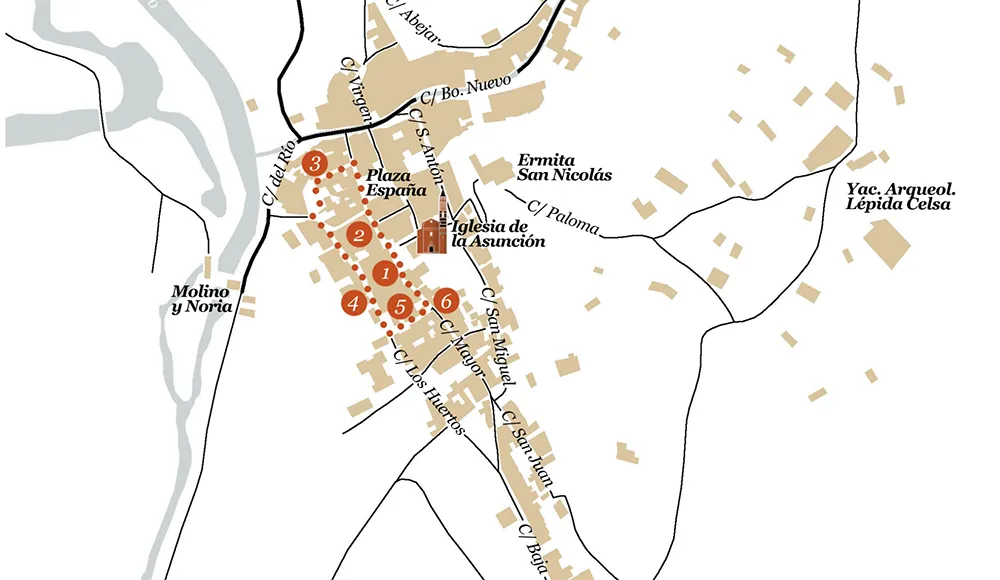

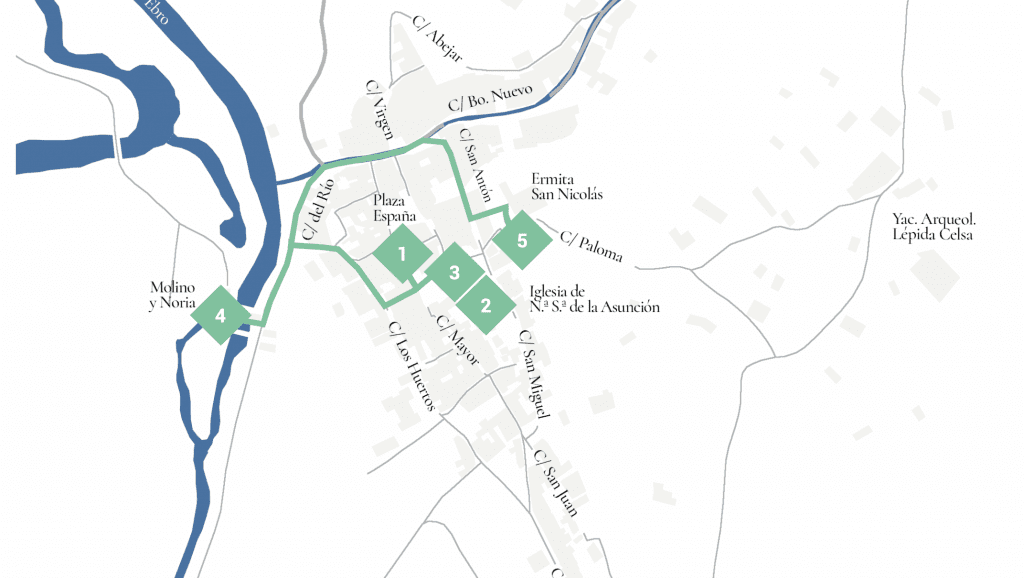

The origins of Velilla de Ebro date back to 44 B.C.: it was in that year that Marcus Emilius Lepidus founded the colony known as “Victiux Iulia Lepida”, thus consolidating control of the Ebro and its passage along the Via Augusta. The colony of Celsa was recognised as one of the most important in the Ebro valley, even minting its own coinage. Around the same time, other colonies of particular importance arose, such as Caesaraugusta, now known as Saragossa. The splendour of Lepida Celsa lasted until the time of Nero.
In the town centre we find a beautiful church from the 16th-17th centuries, of very harmonious proportions, with a single nave with side chapels between the buttresses – in a reform of the 18th century the buttresses were perforated, giving the impression of three naves. The church has a Mudejar typology in terms of its ground plan and the layout of its elements, although it is resolved with Renaissance formal solutions.
The slender Mudejar tower, built in brick and with three sections, stands out. The upper part of the lower body is decorated with bands of staggered or saw-toothed angled bands.
The origins of Velilla de Ebro date back to 44 B.C.: it was in that year that Marcus Emilius Lepidus founded the colony known as “Victiux Iulia Lepida”, thus consolidating control of the Ebro and its passage along the Via Augusta. The colony of Celsa was recognised as one of the most important in the Ebro valley, even minting its own coinage. Around the same time, other colonies of particular importance arose, such as Caesaraugusta, now known as Saragossa. The splendour of Lepida Celsa lasted until the time of Nero.
In the town centre we find a beautiful church from the 16th-17th centuries, of very harmonious proportions, with a single nave with side chapels between the buttresses – in a reform of the 18th century the buttresses were perforated, giving the impression of three naves. The church has a Mudejar typology in terms of its ground plan and the layout of its elements, although it is resolved with Renaissance formal solutions.
The slender Mudejar tower, built in brick and with three sections, stands out. The upper part of the lower body is decorated with bands of staggered or saw-toothed angled bands.


Velilla conserves an interesting hydraulic complex comprising a wash house, a flour mill and a double-wheeled waterwheel, possibly of Arab origin. These purely utilitarian architectures speak to us of the ancient relationship of its inhabitants with the river, the raison d’être of this territory. They are characterised by their location and construction in a natural area in front of the town centre, on a branch of the river that surrounds a fertile meadow.
The subsoil hides another of the town’s riches: alabaster, an ornamental stone that has been appreciated since ancient times. From the Velilla quarries was extracted, for example, the alabaster of the main altarpiece of the Pilar de Zaragoza, the work of the sculptor Damián Forment, a material used to carve the missing altarpiece of the chapel of San Nicolás de Velilla de Ebro, which was the work of the same sculptor.
It is well worth climbing up to this hermitage of San Nicolás, of Romanesque origin, although it was extensively renovated in the 17th and 18th centuries. The façade is crowned by a belfry with three openings in which the Miracle Bell was located, a legend that begins in the year 418 and is probably related to the Christianisation of the place. In the side chapels inside the chapel, remains of Baroque paintings have been preserved.
Velilla conserves an interesting hydraulic complex comprising a wash house, a flour mill and a double-wheeled waterwheel, possibly of Arab origin. These purely utilitarian architectures speak to us of the ancient relationship of its inhabitants with the river, the raison d’être of this territory. They are characterised by their location and construction in a natural area in front of the town centre, on a branch of the river that surrounds a fertile meadow.
The subsoil hides another of the town’s riches: alabaster, an ornamental stone that has been appreciated since ancient times. From the Velilla quarries was extracted, for example, the alabaster of the main altarpiece of the Pilar de Zaragoza, the work of the sculptor Damián Forment, a material used to carve the missing altarpiece of the chapel of San Nicolás de Velilla de Ebro, which was the work of the same sculptor.
It is well worth climbing up to this hermitage of San Nicolás, of Romanesque origin, although it was extensively renovated in the 17th and 18th centuries. The façade is crowned by a belfry with three openings in which the Miracle Bell was located, a legend that begins in the year 418 and is probably related to the Christianisation of the place. In the side chapels inside the chapel, remains of Baroque paintings have been preserved.
Territorio Mudéjar Network
The city council has been a full member of Territorio Mudéjar since April 2021.
More information
Town Hall: 976 176 350
https://www.velilladeebro.es
Centre for the Development of the Sea Regions of Aragon
cedemar.es
VISIT VELILLA DE EBRO
976 633 296
DO YOU WANT TO KNOW MORE?
Turismo de Aragón
turismodearagon.com
Comarca Ribera Baja del Ebro
https://riberabaja.es/
Projects Territorio Mudéjar in Velilla de Ebro
Pedagogy | See project
Mudetrad project | See project
Podcast | See project
Mudéjar didactic, the guide | See project
“Circular” Family walks | See project

The town of Gelsa is located in the shelter of the river Ebro, taking advantage of the fertile lands that bathe it.
Regarding the origins of the locality, researchers suggest that it is a Roman foundation that was part of an extension of the colony of Lépida Celsa, located in nearby Velilla de Ebro. Proof of this are the remains found in excavations, such as the remains of burial sites and tombstones.
The Arab settlement around the 8th century marks the evolution of Gelsa. The Muslims knew how to make the best use of the course of the river Ebro as it passed through the town and created a complex network of hydraulic works whose purpose was agricultural exploitation. The hydraulic complex comprising the weir, the box of three waterwheels, the irrigation channel nozzle and the flour factory can still be seen today. However, some of the buildings date back to Roman times and underwent transformations in later periods as a result of their continued use.
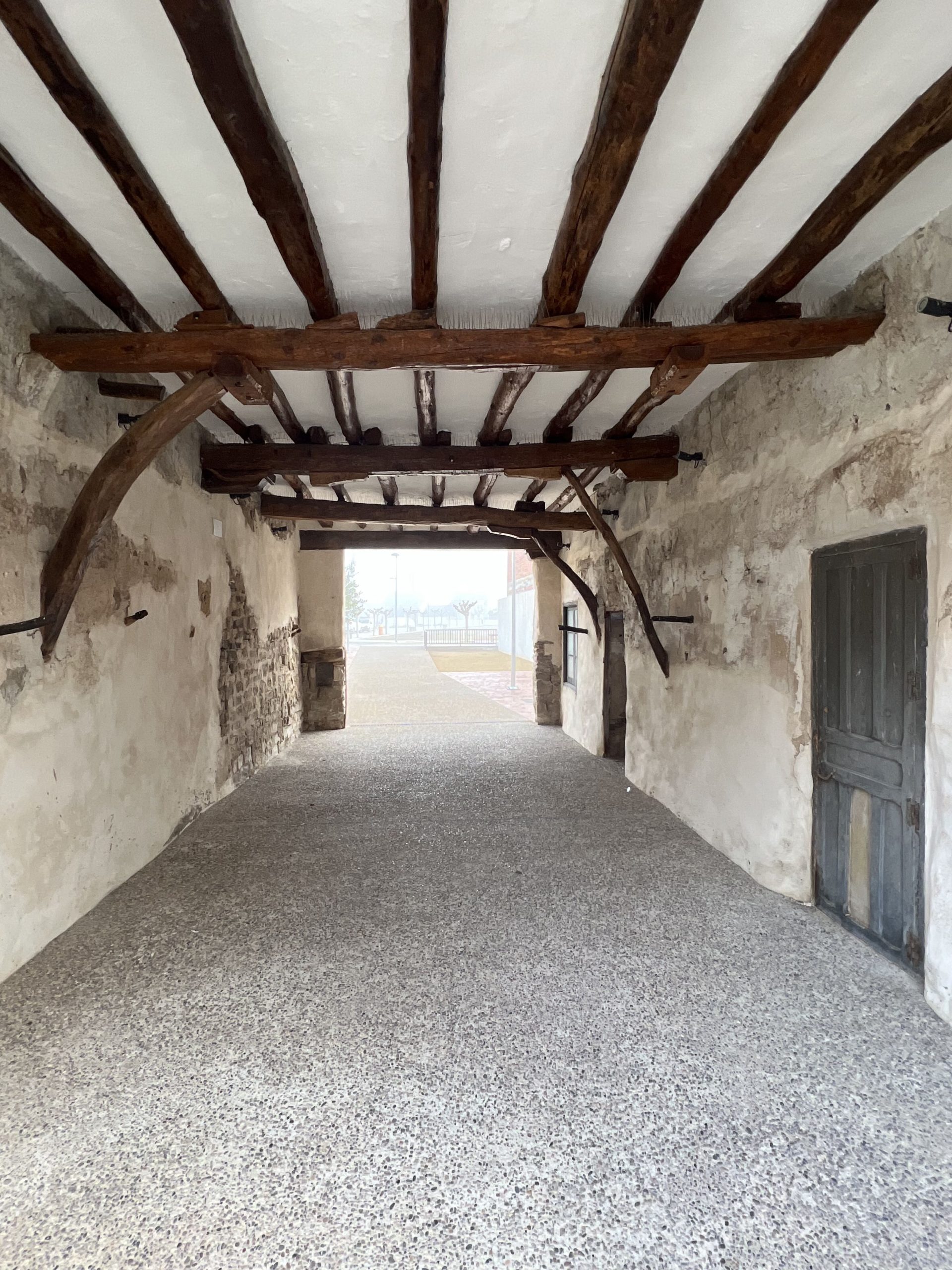
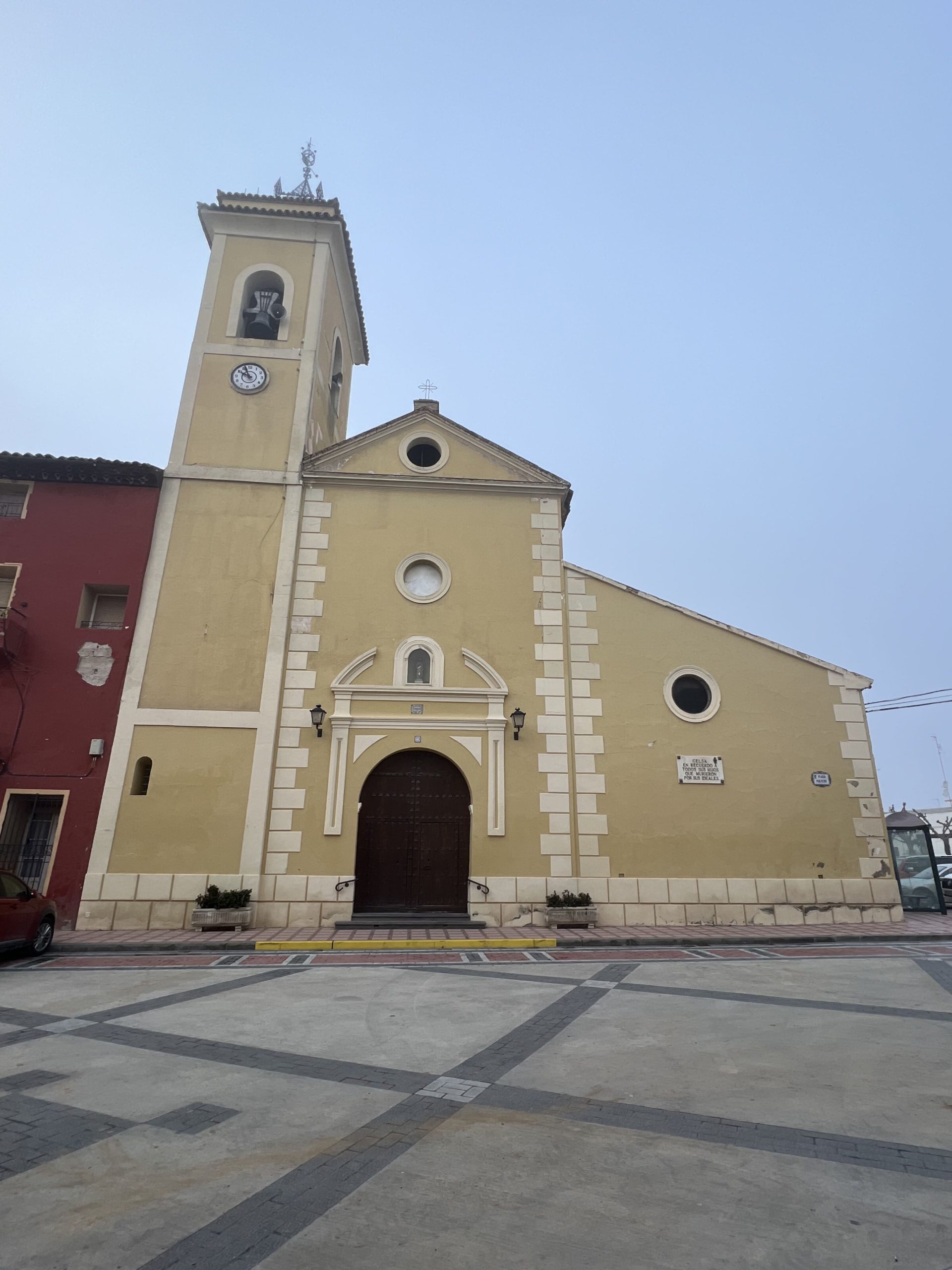
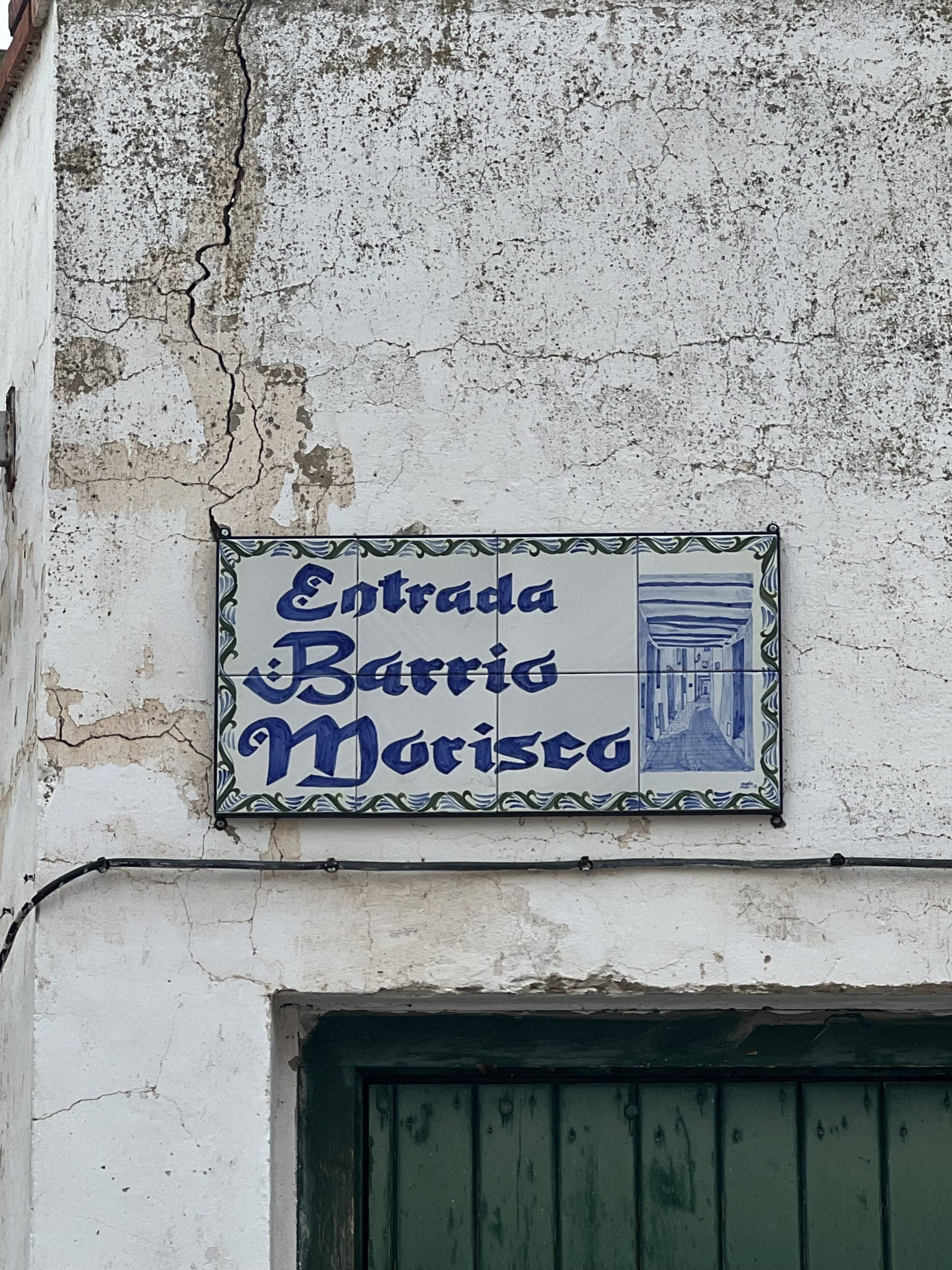
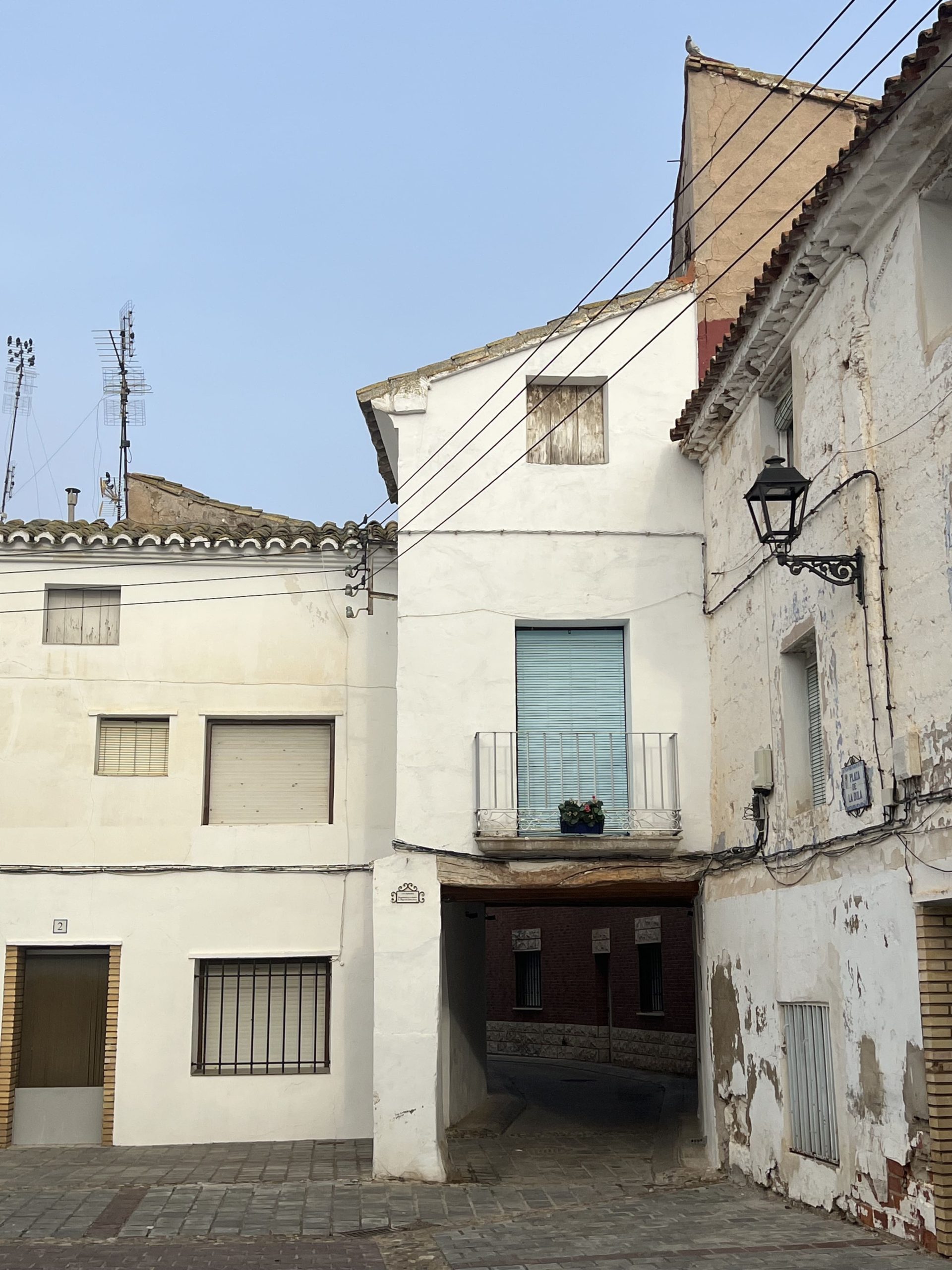
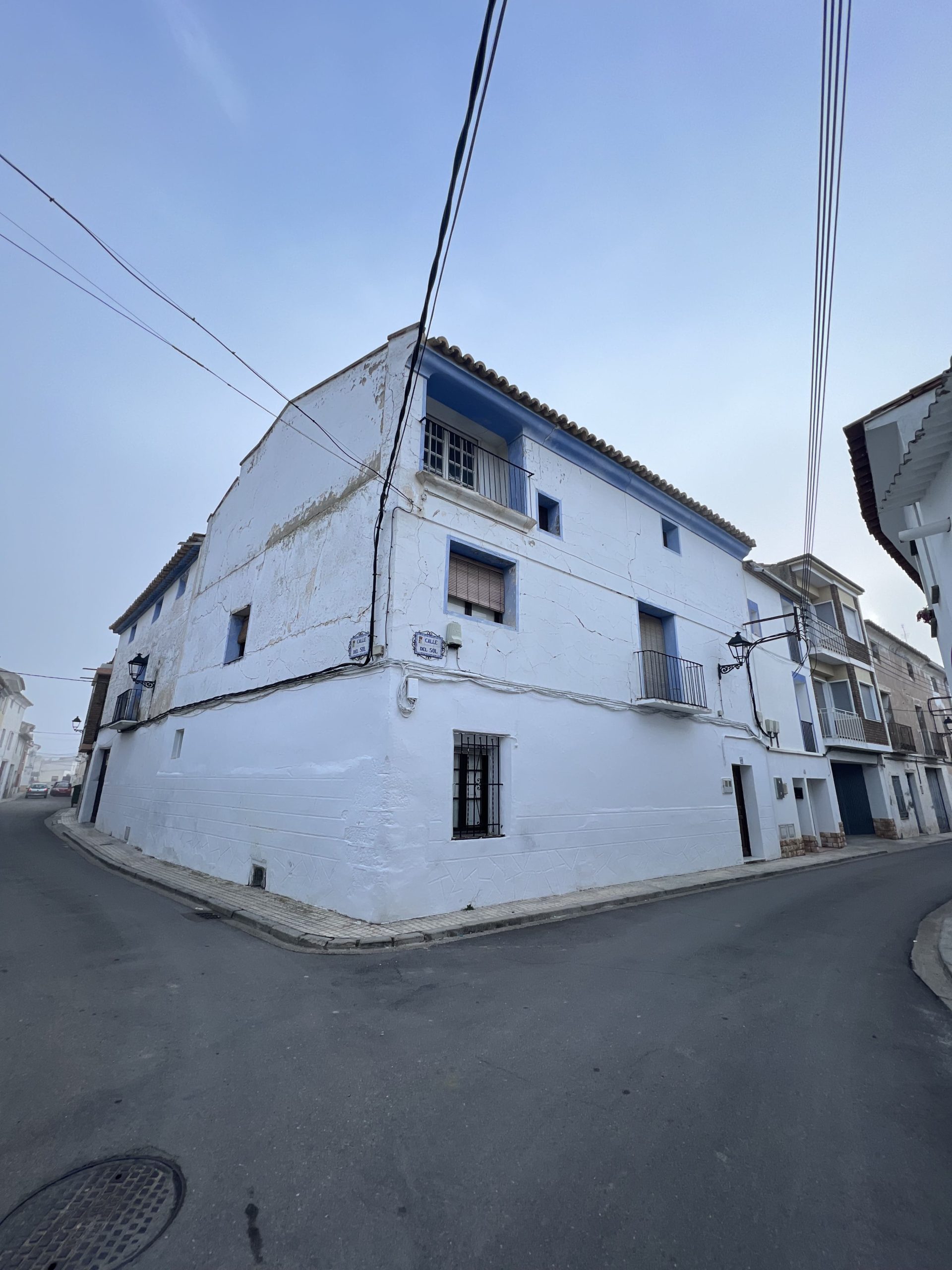
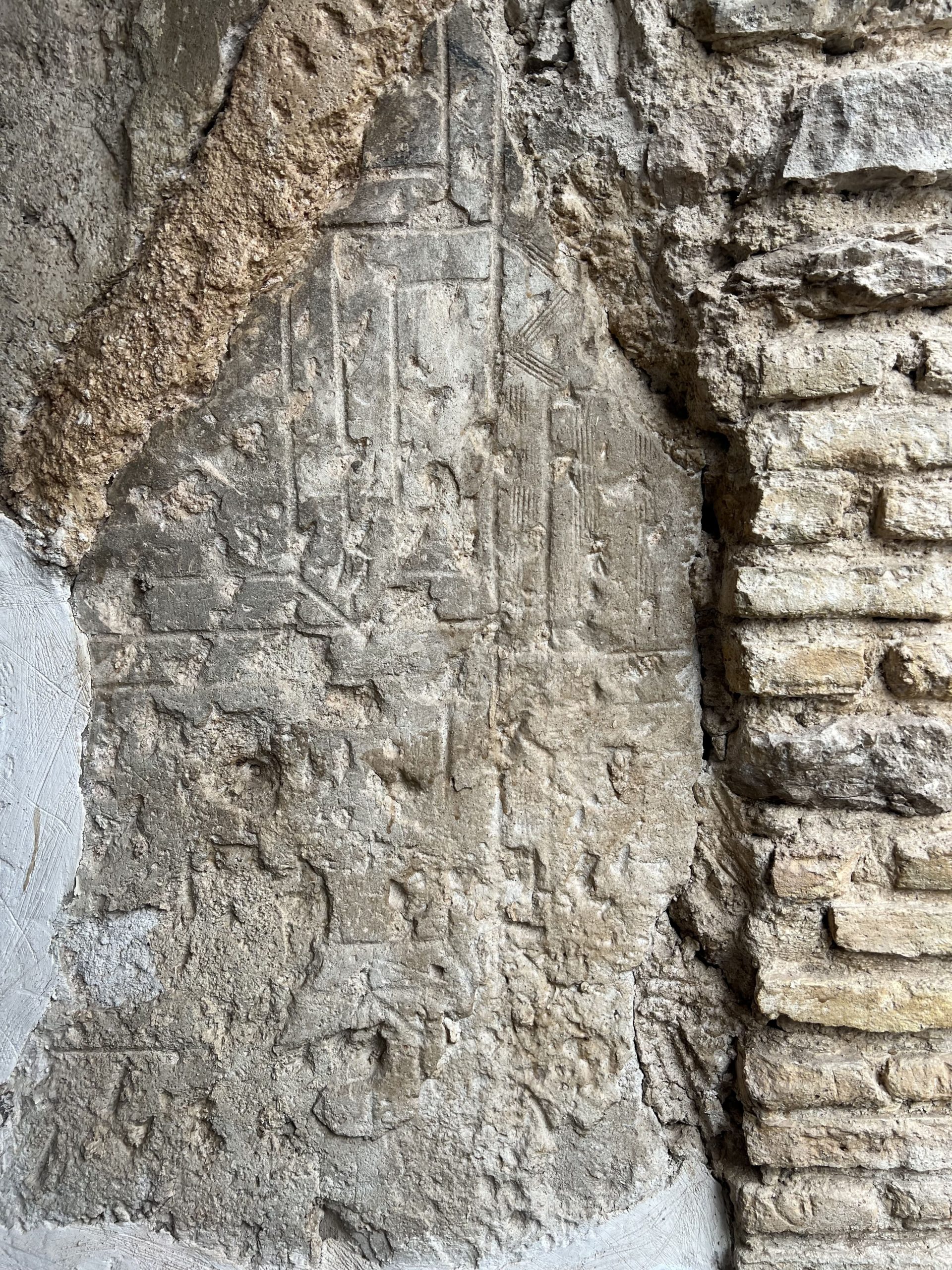
The passage of different settlers is reflected in the urban fabric of the town, which has managed to combine past and present in harmony.
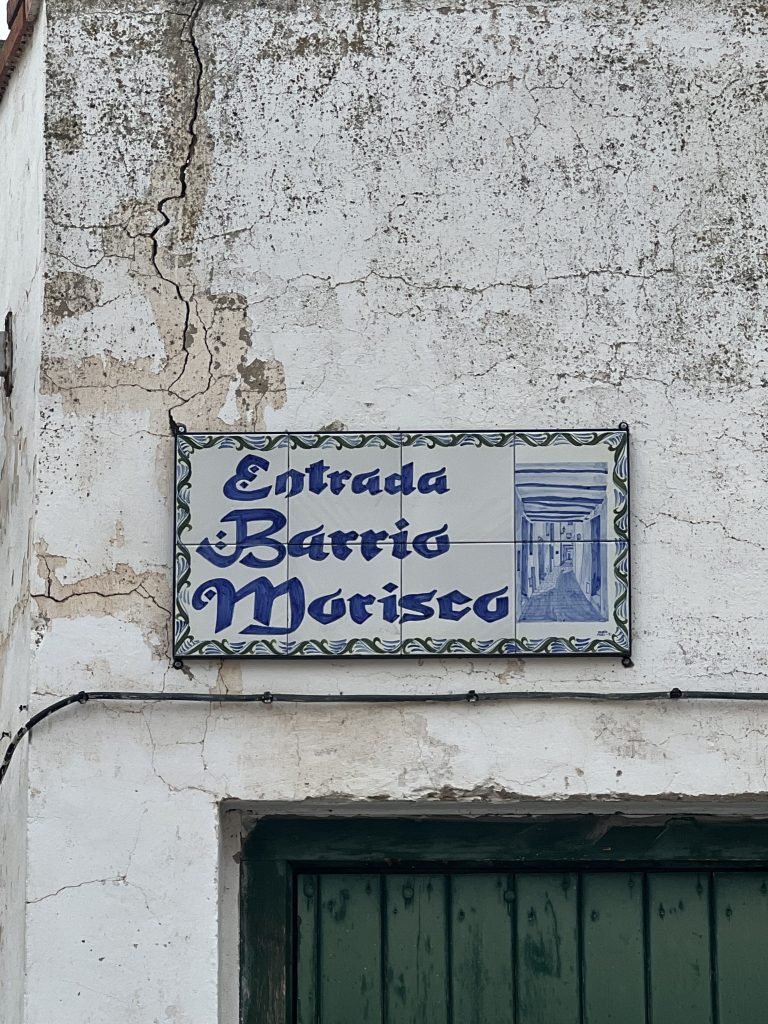
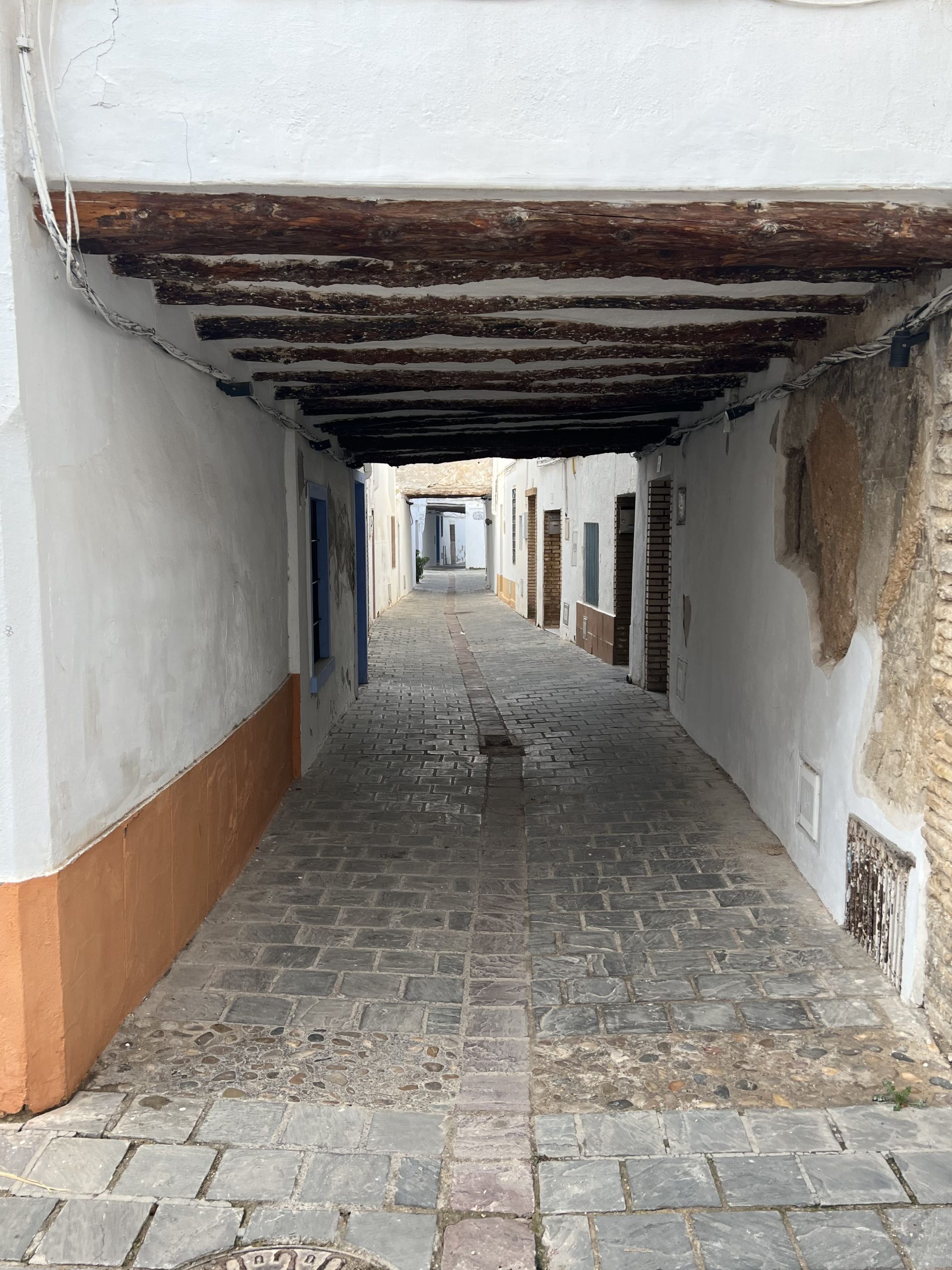
Of special interest is the urban complex currently known as the “Barrio Morisco”, located in the heart of Gelsa. It is a complex of a considerable extension of streets, alleys, alleys with houses of traditional Aragonese architecture and other elements of interest that take us back to the architecture of the medieval period.
Its parish church, dedicated to San Pedro Apóstol, is a 17th century construction in brick, adobe and ashlar stone plinth. It was profoundly transformed in the 19th century, giving it the appearance we see today. Inside the church is the relic of the Holy Thorn, highly venerated among the Gelsans, since, according to tradition, it comes from the crown of thorns of Jesus of Nazareth.
Other religious buildings include the Ermita del Buen Suceso (Chapel of the Good Succession), also located in the town. It is an 18th century building.
Territorio Mudéjar Network
The city council has been a founding partner of Territorio Mudéjar since 2023.
More information
Town Hall: 976 176 403
DO YOU WANT TO KNOW MORE?
Turismo de Aragón
turismodearagon.com
Comarca Ribera Baja del Ebro
riberabaja.es
Projects Territorio Mudéjar in Calatorao
Monuments | See the project
Pedagogy | See the project
Mudetrad project | See the project
Mudéjar didactic, the guide | See the project
“Circular” Walks with the family | See the project
