Villarroya de la Sierra

Villarroya de la Sierra Circular
Circular from the rural school
Family Outings
COOPERATIVE PROJECT BETWEEN RURAL DEVELOPMENT GROUPS
Villaroya de la Sierra Mudetrad
Mudetrad
A PROJECT THAT HIGHLIGHTS THE TRADITIONAL ARCHITECTURE OF VILLARROYA DE LA SIERRA
La guía didáctica
Didactic Mudejar, the guide
THE GUIDE ILLUSTRATED BY DAVID GUIRAO TO HELP YOU UNDERSTAND THE MUDEJAR STYLE

The "villa roya"

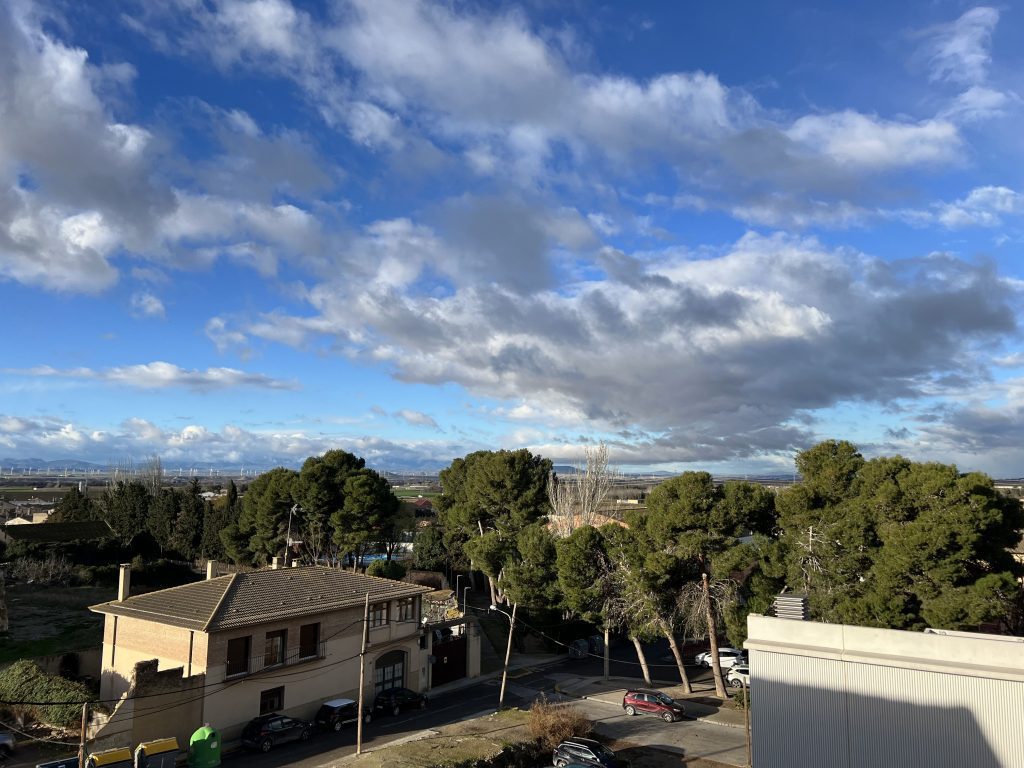
Villarroya de la Sierra, the “reddish village” due to the dominant colour of its surroundings, is located at the foot of the Sierra de la Virgen, with all its hamlets on a slight slope towards the river Ribota. There is evidence of settlements from ancient times.

During the Islamic period, the use and cultivation of the territory became evident with the development and improvement of hydraulic engineering systems, construction systems and urban planning.

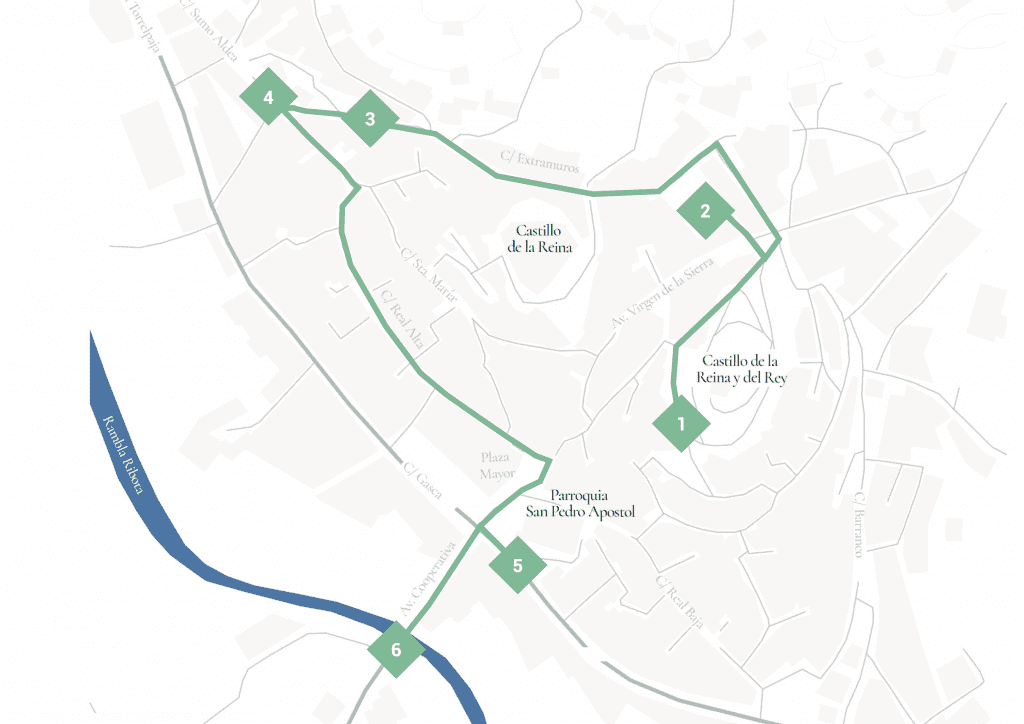
The town played a fundamental role during the border wars against Castile, as it had an important fortified enclosure of which we still have evidence today: the two defensive towers known as the Castillo de la Reina and Castillo del Rey (Queen’s and King’s Castle) guarded a walled enclosure of which the Low Gate and the Old Gate, of Mudejar appearance, are preserved, as well as a large stretch of wall made of rammed earth.

The castle of the Queen, probably of Muslim origin, dates from the 10th and 11th centuries; and the King’s castle was built with the growth of the city during the Aragonese rule at the end of the 13th century.

Villarroya de la Sierra, the “reddish village” due to the dominant colour of its surroundings, is located at the foot of the Sierra de la Virgen, with all its hamlets on a slight slope towards the river Ribota. There is evidence of settlements from ancient times.

During the Islamic period, the use and cultivation of the territory became evident with the development and improvement of hydraulic engineering systems, construction systems and urban planning.

The town played a fundamental role during the border wars against Castile, as it had an important fortified enclosure of which we still have evidence today: the two defensive towers known as the Castillo de la Reina and Castillo del Rey (Queen’s and King’s Castle) guarded a walled enclosure of which the Low Gate and the Old Gate, of Mudejar appearance, are preserved, as well as a large stretch of wall made of rammed earth.

The castle of the Queen, probably of Muslim origin, dates from the 10th and 11th centuries; and the King’s castle was built with the growth of the city during the Aragonese rule at the end of the 13th century.

A historic urban fabric

The town grew in population and a new neighbourhood was formed to the east, today Virgen de la Sierra street. It also had a new church as a place of worship, which would be located on the site of the current parish church, but of smaller dimensions. The houses of the local bourgeoisie and nobility were transformed to adapt them to the tastes of the time, giving them more space along Calle Real.

The church of San Pedro Apóstol, declared an Asset of Cultural Interest, was built at the end of the 15th century, although its current appearance is the result of a thorough renovation in the 17th century.

Particularly striking is the fusion of building styles, combining the brickwork of the Islamic tradition maintained in the Christian period through the Mudéjar style and the Western European styles present in the Gothic style doorway, belonging to the original building from the beginning of the 15th century.

Another significant area for the locality is the old dula. A dula is the name, of Arabic origin, given to the communal grazing land for the flocks or herds of the neighbours. From this meaning it would make sense to use it as a bullring in the case of Villarroya de la Sierra.

The town grew in population and a new neighbourhood was formed to the east, today Virgen de la Sierra street. It also had a new church as a place of worship, which would be located on the site of the current parish church, but of smaller dimensions. The houses of the local bourgeoisie and nobility were transformed to adapt them to the tastes of the time, giving them more space along Calle Real.

The church of San Pedro Apóstol, declared an Asset of Cultural Interest, was built at the end of the 15th century, although its current appearance is the result of a thorough renovation in the 17th century.

Particularly striking is the fusion of building styles, combining the brickwork of the Islamic tradition maintained in the Christian period through the Mudéjar style and the Western European styles present in the Gothic style doorway, belonging to the original building from the beginning of the 15th century.

Another significant area for the locality is the old dula. A dula is the name, of Arabic origin, given to the communal grazing land for the flocks or herds of the neighbours. From this meaning it would make sense to use it as a bullring in the case of Villarroya de la Sierra.

Territorio Mudéjar Network

The city council has been a full member of Territ estate Territ percibible since April 2022.

More information

Town Hall: 976 899 001
villarroyadelasierra.es

Association for the Integral Development of the Calatayud and Aranda Regions.
galcar.es

VISIT VILLARROYA DE LA SIERRA
976 633 296

WANT TO KNOW MORE?
Turismo Comarca Comunidad de Calatayud
comunidadcalatayud.com
Centro de Estudios Bilbilitanos
cebilbilitanos.com

Projects Territorio Mudéjar in Villaroya de la Sierra

“Circular” Family Walks | See project
Mudetrad project | See project
Mudéjar didactic, the guide | See project

Tarazona

Vista exterior de la catedral de Tarazona, con su cimborrio mudéjar y estructuras góticas y renacentistas.
portada guia didactica
Didactic Mudejar, the guide
THE GUIDE ILLUSTRATED BY DAVID GUIRAO TO HELP YOU UNDERSTAND THE MUDEJAR STYLE
Tarazona circular
Circular from the rural school
Family Outings
COOPERATIVE PROJECT BETWEEN RURAL DEVELOPMENT GROUPS
Vista exterior de la catedral de Tarazona, con su cimborrio mudéjar y estructuras góticas y renacentistas.

Turiaso

Tarazona was founded under the name of Turiaso, according to local legend, it was built by Tubalcaín and rebuilt by Hercules. In the 1st century BC. the city probably already extended to both banks of the river Queiles.

From the 3rd century onwards, the city was gradually abandoned due to the political instability of the Roman Empire. At the beginning of the 8th century, Tarazona was under Islamic rule until 1119, the year of the Christian conquest by Alfonso I the Battler.

Tarazona was a place of coexistence of cultures in medieval times. Almost the entire urban layout survives from this period, which we can understand by walking through its Moorish and Jewish quarter, as well as a large number of architectural features related to the period.

Tarazona was founded under the name of Turiaso, according to local legend, it was built by Tubalcaín and rebuilt by Hercules. In the 1st century BC. the city probably already extended to both banks of the river Queiles.

From the 3rd century onwards, the city was gradually abandoned due to the political instability of the Roman Empire. At the beginning of the 8th century, Tarazona was under Islamic rule until 1119, the year of the Christian conquest by Alfonso I the Battler.

Tarazona was a place of coexistence of cultures in medieval times. Almost the entire urban layout survives from this period, which we can understand by walking through its Moorish and Jewish quarter, as well as a large number of architectural features related to the period.

Singular monuments

The Mudejar style in Tarazona has its own personality. An example of this singularity is the cathedral of Santa María de la Huerta. The beginnings of the Mudejar works in Tarazona Cathedral start with the need to rebuild it due to the War of the Two Peters. We find important Mudejar interventions such as the tower, the dome and the cloister. The cloister is unique due to the fact that it is completely enclosed with latticework, mostly with motifs from the Christian tradition, but its aesthetic sense is from the Islamic tradition.

There are other monuments of special importance: the church of La Magdalena has preserved the Mudejar wooden roof system in one of the side naves and a piece of liturgical furniture from a Moorish workshop in the nearby town of Torrellas dating from the 16th century.

Other outstanding buildings in the town centre include the Episcopal Palace, the church of San Miguel Arcángel, the Palace of Eguarás, the Town Hall, etc.

The Mudejar style in Tarazona has its own personality. An example of this singularity is the cathedral of Santa María de la Huerta. The beginnings of the Mudejar works in Tarazona Cathedral start with the need to rebuild it due to the War of the Two Peters. We find important Mudejar interventions such as the tower, the dome and the cloister. The cloister is unique due to the fact that it is completely enclosed with latticework, mostly with motifs from the Christian tradition, but its aesthetic sense is from the Islamic tradition.

There are other monuments of special importance: the church of La Magdalena has preserved the Mudejar wooden roof system in one of the side naves and a piece of liturgical furniture from a Moorish workshop in the nearby town of Torrellas dating from the 16th century.

Other outstanding buildings in the town centre include the Episcopal Palace, the church of San Miguel Arcángel, the Palace of Eguarás, the Town Hall, etc.

Territorio Mudéjar Network

The city council has been a full member of Territorio Mudéjar since April 2023.

More information

Town Hall: 976 199 110
tarazona.es

Association for the Development of the Lands of Moncayo
asomo.com

VISIT TARAZONA
976 633 296

DO YOU WANT TO KNOW MORE?
Turismo de Aragón
turismodearagon.com
Turismo Comarca de Tarazona y el Moncayo
tarazonayelmoncayo.es
Centro de Turiasoneses
ceturiasonenses.org
Fundación Tarazona Monumental
tarazonamonumental.es

Projects Territorio Mudéjar in Tarazona

Mudéjar didactic, the guide | See the project
“Circular” Family walks | See the project
Mudetrad project | See the project

Acered

Acered
Pedagogy
SCHOOL MATERIALS TO WORK ON CULTURAL AND NATURAL HERITAGE
Mudetrad Acered
Mudetrad Project
A PROJECT THAT HIGHLIGHTS THE VALUE OF ACERED'S TRADITIONAL ARCHITECTURE
La guía didáctica
Didactic Mudejar, the guide
THE GUIDE ILLUSTRATED BY DAVID GUIRAO TO HELP YOU UNDERSTAND THE MUDEJAR STYLE
Circular Acered
Circular from the rural school
COOPERATIVE PROJECT BETWEEN RURAL DEVELOPMENT GROUPS

A place of communication

The name ‘Acered’, according to some research, comes from the Arabic al-sirat (the road). Located in the Sierra de Santa Cruz, it must have been an important means of communication between the great Arab medinas of Daruqa (Daroca) and Qalat Ayyub (Calatayud), via a shortcut through the mountains.

This characteristic led to the settlement of several cultures throughout history. Before the Islamic domination, some archaeological remains from the Iron Age have been found, such as certain tools made of flint. In addition, the remains of a possible Iberian wall located in the vicinity of the Peirón de los Desamparados have also been discovered. The existence of this pre-Islamic settlement would not be surprising, as there are several examples of Prehistoric and Iberian settlements such as Castellar de Berrueco in the surrounding area of the Comarca de Daroca.

The original nucleus of the town is located in a small walled enclosure that is still preserved on a nearby hill, where the hermitage of the Virgin of Semón stands today, a 16th and 18th century building. This enclosure may have been a strategic defensive point in the sierra.

The name ‘Acered’, according to some research, comes from the Arabic al-sirat (the road). Located in the Sierra de Santa Cruz, it must have been an important means of communication between the great Arab medinas of Daruqa (Daroca) and Qalat Ayyub (Calatayud), via a shortcut through the mountains.

This characteristic led to the settlement of several cultures throughout history. Before the Islamic domination, some archaeological remains from the Iron Age have been found, such as certain tools made of flint. In addition, the remains of a possible Iberian wall located in the vicinity of the Peirón de los Desamparados have also been discovered. The existence of this pre-Islamic settlement would not be surprising, as there are several examples of Prehistoric and Iberian settlements such as Castellar de Berrueco in the surrounding area of the Comarca de Daroca.

The original nucleus of the town is located in a small walled enclosure that is still preserved on a nearby hill, where the hermitage of the Virgin of Semón stands today, a 16th and 18th century building. This enclosure may have been a strategic defensive point in the sierra.

The Mudejar building tradition

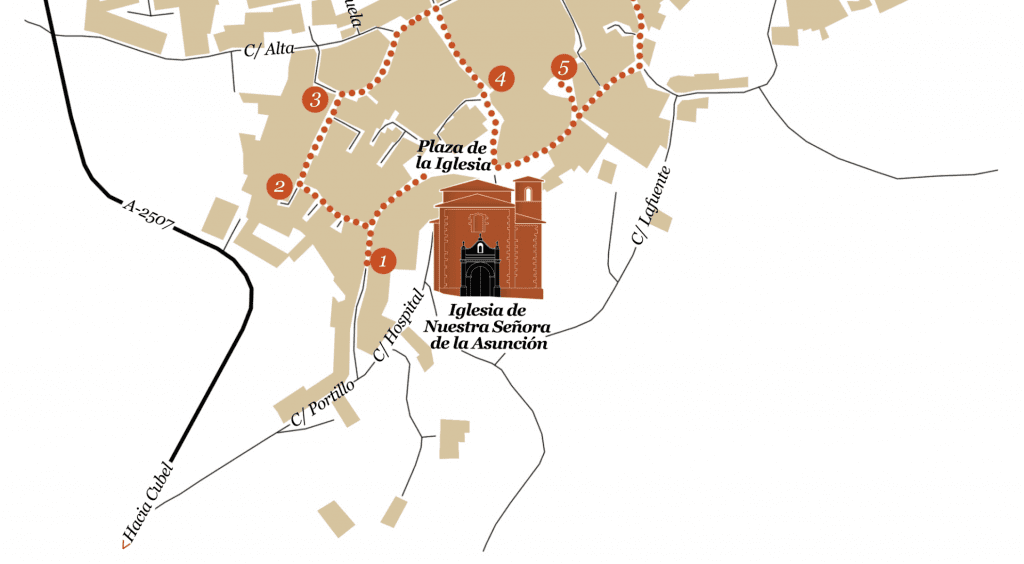
The current church of Nuestra Señora de la Asunción was built in 1674 by the architect Juan de la Marca. It is a Baroque church from the last third of the 17th century. Even so, the architect used materials and techniques reminiscent of the Islamic period. An example of this is the plasterwork inside the church in the Mudejar tradition.

The constructive evolution of the building is documented and it highlights the reuse of the previous temple, probably in the Mudejar style. The tower we see today is the result of a work carried out after 1971, as the old tower collapsed in that year, causing damage to the presbytery and transept of the current church. It was made of masonry and reinforced with ashlar stone at the corners.

In Acered we also find other important urban spaces and elements for the town that you can visit, such as the washing place or the Cruz de los Apóstoles (Apostles’ Cross).

The current church of Nuestra Señora de la Asunción was built in 1674 by the architect Juan de la Marca. It is a Baroque church from the last third of the 17th century. Even so, the architect used materials and techniques reminiscent of the Islamic period. An example of this is the plasterwork inside the church in the Mudejar tradition.

The constructive evolution of the building is documented and it highlights the reuse of the previous temple, probably in the Mudejar style. The tower we see today is the result of a work carried out after 1971, as the old tower collapsed in that year, causing damage to the presbytery and transept of the current church. It was made of masonry and reinforced with ashlar stone at the corners.

In Acered we also find other important urban spaces and elements for the town that you can visit, such as the washing place or the Cruz de los Apóstoles (Apostles’ Cross).

Territorio Mudéjar Network

The city council has been a full member of Territ estate Territ percibible since April 2022.

More information

Town Hall: 976 896 663

Association for the Integral Rural Development of the lands of Jiloca and Gallocanta adri.es

VISIT ACERED
976 633 296

DO YOU WANT TO KNOW MORE?
Aragon Tourism
turismodearagon.com
Comarca de Daroca Tourism
turismo.comarcadedaroca.com
Centro de Estudios darocenses
ifc.dpz.es
Centro de Estudios del Jiloca
www.xiloca.org

Projects Mudejar Territory in Acered

Pedagogy | See project
Mudetrad project | See project
Mudéjar didactic, the guide | See project
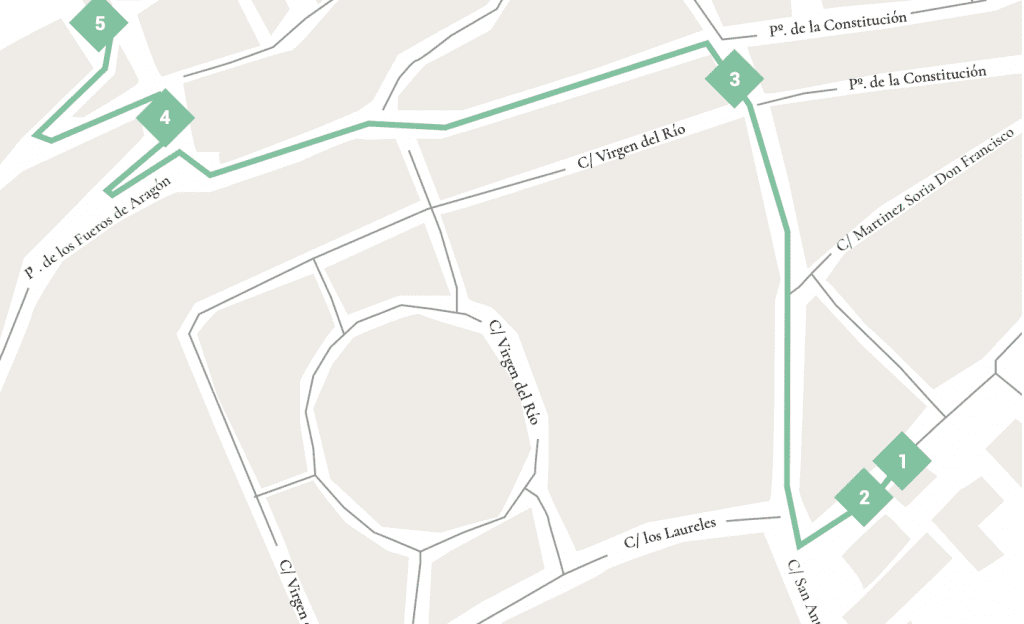
“Circular” Family walks | See project

Alagón

Circular from
the rural school

The “Circular from the rural school” project is a cooperation project between rural development groups led by the Asociación Territorio Mudéjar.

The following have participated in the project: ADRI Calatayud-Aranda, ADRI Jiloca-Gallocanta, FEDIVALCA -Valdejalón and Campo de Cariñena-, ASOMO Tarazona and el Moncayo, CEDEMAR -Bajo Aragón Caspe and Ribera Baja del Ebro-, ADRAE -Ribera Alta del Ebro- and ADEFO Cinco Villas.

The objective is to develop educational materials around the Mudejar identity of the towns, placing rural schools and the educational community of the towns as the center of the project.

Based on the work developed, for almost three years, the students of fifteen schools have designed a walk through their town in which we can learn about the main points of interest and their connection with the Mudejar culture.

Alagón

The town belongs to the ADRAE local development group that brings together the towns of the Ribera Alta del Ebro region.

The tour has been carried out following the work model of the schools that participated in the project and adapted to the town of Alagón.

Alagón is located between the Aragón channel and the Jalón and Ebro rivers. The richness of its lands favored the settlement of different cultures throughout its history, such as Christians, Jews and Muslims. Its important history is reflected in its urban layout, where traces of what was the Moorish quarter and the Jewish quarter are still preserved. In Alagón you will also find buildings such as the hermitage of Nuestra Señora del Castillo or the church of San Antonio de Padua. Although, without a doubt, the jewel of the town is the Mudejar church of San Pedro, with its magnificent tower.

1. History of the town

In Alagón we find very old human settlements. An example is Alaún, an Iberian town that had its own currency. In the same place rise the remains of an old Muslim castle, around which the town was created and developed. Today in this place we find the hermitage of Nuestra Señora del Castillo, built in the 16th century.

This point is linked to the didactic activity 1

2. Mudejar architecture

Mudejar architecture is developed by the Islamic population that remained in the territory after the Christian conquest and which came to be called Mudejar. The Mudejars were especially skilled in the construction trades. This fact is perfectly appreciated in the church of San Pedro and its tower. The building witnessed various very important historical events, such as the wedding of the Aragonese King Pedro IV with his first wife, María de Navarra, in 1338.

This point is linked to the didactic activity 5

3. Construction materials

In Alagón, as in other towns, we can see those materials used for Mudejar monuments, adapted for housing. For this reason, the conservation of traditional architecture is important, since it allows us to know how these buildings are made, as well as the monumental ones. These construction techniques derive from the Islamic tradition and the use of the land for the realization of brick, adobe and wall.

This point is linked to the didactic activity 3

4. Coexistence of cultures

During medieval times, 3 cultures coexisted in our territory: Christians, Jews and Muslims. Under the power of the Christian quarter, we find Jewish quarters and morerías. These spaces are the neighborhoods or aljamas where each culture was organized, with spaces for worship as well as places for social gatherings (market squares).

This point is linked to the didactic activity 2

5. Reminiscencias

The elements and materials, as well as construction techniques of the Islamic tradition, have continued to be used over time, but adapted to other architectural languages, such as the Renaissance palaces that are preserved in Alagón.

This point is linked to the didactic activity 7

The project has been carried out thanks to the Rural Development Program (PDR) of Aragon 2014-2020 in the call for aid for the preparation and implementation of cooperation projects between local action groups, for the 2019 financial year.

Villarreal de Huerva

Circular from
the country school

The “Circular from the rural school” project is a cooperation project between rural development groups led by the Asociación Territorio Mudéjar.

The following have participated in the project: ADRI Calatayud-Aranda, ADRI Jiloca-Gallocanta, FEDIVALCA -Valdejalón and Campo de Cariñena-, ASOMO Tarazona and el Moncayo, CEDEMAR -Bajo Aragón Caspe and Ribera Baja del Ebro-, ADRAE -Ribera Alta del Ebro- and ADEFO Cinco Villas.

The objective is to develop educational materials around the Mudejar identity of the towns, placing rural schools and the educational community of the towns as the center of the project.

Based on the work developed, for almost three years, the students of fifteen schools have designed a walk through their town in which we can learn about the main points of interest and their connection with the Mudejar culture.

Villarreal de Huerva

This walk shows us the work of the pupils of the Fernando el Católico CP school in Villarreal de Huerva.

Nowadays, Villarreal de Huerva still reveals its historical and artistic past, reflected in the remains of its castle and church. From here we start the route, and then continue on to the Huerva river, from where we will get a panoramic view of the town, as well as some information about the importance of water during the Middle Ages up to the present day.

1. History of the town

Villarreal de Huerva had a primitive Mudejar church of which today we can only see the tower. During the fighting in the 14th century, this church was fortified with a perimeter wall and the tower that can be seen from this point. It is from here that the present-day population is gradually built up.

This point is linked to the didactic activity 1

2. Mudejar architecture

The Mudéjars were particularly skilled in the construction of buildings of unique technical characteristics and beauty. They were highly sought after by the great patrons of the time and their works became the taste of the time. Although the present-day church of Villarreal (except for the tower) is Baroque, the interior has sgraffito work, the technique of which could be associated with the way the Mudejars worked the plaster sgraffito. The enclosure tower had a purely defensive function.

This point is linked to the didactic activity 5

3. Construction materials

The building materials used by the Mudejars can be found in the natural environment surrounding the monument, i.e. they were local materials. The most abundant were clay, plaster and wood. In Villarreal de Huerva, the materials can be seen in nature and also in the monuments and popular architecture.

This point is linked to the didactic activity 3

4. Water and agriculture

The Muslims were particularly adept at cultivating the land. They also introduced their own products, as well as irrigation techniques. Villarreal de Huerva, like other nearby towns, stands out for its agricultural landscape. The most abundant crops today are wheat and barley.

This point is linked to the didactic activity 6

5. Reminiscences

We could consider the period of Mudejar art creation to have ended in the 17th century, after the expulsion of the Moors. However, we have preserved a style that has survived over the centuries. This is why we find materials, construction techniques and elements that remind us of Mudéjar in later works, such as the peirons, which, in addition to having a religious function, serve to mark roads and boundaries.

This point is linked to the didactic activity 7

Quinto

Circular from
the country school

The “Circular from the rural school” project is a cooperation project between rural development groups led by the Asociación Territorio Mudéjar.

The following have participated in the project: ADRI Calatayud-Aranda, ADRI Jiloca-Gallocanta, FEDIVALCA -Valdejalón and Campo de Cariñena-, ASOMO Tarazona and el Moncayo, CEDEMAR -Bajo Aragón Caspe and Ribera Baja del Ebro-, ADRAE -Ribera Alta del Ebro- and ADEFO Cinco Villas.

The objective is to develop educational materials around the Mudejar identity of the towns, placing rural schools and the educational community of the towns as the center of the project.

Based on the work developed, for almost three years, the students of fifteen schools have designed a walk through their town in which we can learn about the main points of interest and their connection with the Mudejar culture.

Quinto

This walk shows us the work of the students of the CEIP Fernando el Católico school in Quinto.

Quinto, it was inhabited by Muslims since the 8th century, although its foundation is Roman. The Christians conquered the territory where the Muslims lived at the beginning of the 12th century. In the town of Quinto, traces of its Islamic and medieval past can be seen, especially in the imposing Mudejar church of La Asunción, popularly known as El Piquete.

1. History of the town

During the Middle Ages the Christians dominated the territory and commissioned many of the constructions to the Mudejars, who were accustomed to using a series of techniques, materials and decoration typical of their culture. The Gateway of San Miguel marks the entrance to the medieval town.

This point is linked to the didactic activity 1

2. Coexistence of cultures

In Quinto, the three cultures that make up the Mudejar culture coexisted: Jewish, Christian and Muslim. They lived segmented into different neighbourhoods or aljamas, where their religion and customs were respected, but in exchange they had to pay tribute. The Muslim aljama was probably in the vicinity of the street known today as “Morería”.

This point is linked to the didactic activity 2

3. Mudejar architecture

At the highest point of the village we find the church of Nuestra Señora de la Asunción, popularly known as “Piquete. It is a fortress church; it serves as a strategic point from which to keep watch along its patrol path, and also fulfils a religious function. The interior is preserved as it was after one of the clashes that took place during the Spanish Civil War. It currently houses the museum of mummies.

This point is linked to learning activity 5.

4. Water and landscape

The Arabs, when they came to the territory, brought with them fruits and vegetables from the place where they lived. The climate in both places is different, so the Arabs became pioneers in the introduction of irrigation techniques in the rural world. Some examples are waterwheels, waterwheels, cisterns and the most common, irrigation ditches. In Quinto there are also irrigation ditches to irrigate the abundant fields.

This point is linked to the didactic activity 6

5. Construction materials

From here we can see another view of the church, as well as some of the materials in their natural state. The materials used by the Mudejars are local, as they can be found in the surrounding area. For this reason, we will see that monuments and constructions in common use are made with the same materials and construction techniques.

This point is linked to the didactic activity 3

6. Reminiscences of the Mudejar

Finally, we can see an example of an Aragonese palace house from the 16th century. We can see how the use of the material, the construction technique and some of the decoration derive from the construction inheritance left by the Mudejars when they passed through Quinto.

This point is linked to the didactic activity 7

Calatayud

Circular from
the country school

The “Circular from the rural school” project is a cooperation project between rural development groups led by the Asociación Territorio Mudéjar.

The following have participated in the project: ADRI Calatayud-Aranda, ADRI Jiloca-Gallocanta, FEDIVALCA -Valdejalón and Campo de Cariñena-, ASOMO Tarazona and el Moncayo, CEDEMAR -Bajo Aragón Caspe and Ribera Baja del Ebro-, ADRAE -Ribera Alta del Ebro- and ADEFO Cinco Villas.

The objective is to develop educational materials around the Mudejar identity of the towns, placing rural schools and the educational community of the towns as the center of the project.

Based on the work developed, for almost three years, the students of fifteen schools have designed a walk through their town in which we can learn about the main points of interest and their connection with the Mudejar culture.

Calatayud

This walk shows us the work of the students of the Salvador Minguijón school in Calatayud.

Various populations and cultures have passed through Calatayud throughout its history, of which the Islamic period and the medieval period stand out in this route. A stroll through the town reveals its past through its urban layout and the monumental remains that have survived to the present day, particularly the towers.

1. History of the town

In the place where we find Calatayud today there were originally a series of Celtiberian settlements. Later it was the place where the Romans founded Bílbilis, of which there are still remains a few kilometres from the town. The Islamic period, when Calatayud as we know it today was founded, and its subsequent development during the Middle Ages, stand out.

This point is linked to the didactic activity 1

2. Coexistence of cultures

After the conquest of Calatayud in 1120, the three cultures that make up the Mudejar culture coexisted in the town: Christians, Muslims and Jews. Each culture lived in its aljama (neighbourhood), preserving its religion and customs and developing economic activities. In Calatayud we can see the Moorish and Jewish quarters with some of its most representative buildings such as the synagogue.

This point is linked to the didactic activity 2

3. Mudejar architecture

The Mudéjars were particularly skilled in the construction of buildings of unique technical characteristics and beauty, using local materials such as clay or plaster. The tower of San Andrés also offers a rich ornamental repertoire through which the importance of decoration in Mudéjar construction can be understood.

This point is linked to the didactic activity 3

4. Patronage

One of the great patrons of Mudéjar art were the military orders. The Order of the Holy Sepulchre has its main headquarters in Calatayud. It was originally a Mudejar convent of great importance, and today part of its cloister is still preserved.

This point is linked to the didactic activity 4

5. World heritage

The Mudejar masonry of the collegiate church of Santa María de Calatayud, which corresponds to the tower, the apse and the cloister, was included in the declaration of Mudejar World Heritage in 2001, together with 5 other buildings.

This point is linked to learning activity 5.

6. Reminiscences of the Mudejar

Although the Mudejar period came to an end in the 17th century with the expulsion of the Moors, we have preserved a way of working that has survived over the centuries and is the result of the development of different cultures in the same territory over many centuries.

This point is linked to the didactic activity 7

Torralba de Ribota

Circular from
the country school

The “Circular from the rural school” project is a cooperation project between rural development groups led by the Asociación Territorio Mudéjar.

The following have participated in the project: ADRI Calatayud-Aranda, ADRI Jiloca-Gallocanta, FEDIVALCA -Valdejalón and Campo de Cariñena-, ASOMO Tarazona and el Moncayo, CEDEMAR -Bajo Aragón Caspe and Ribera Baja del Ebro-, ADRAE -Ribera Alta del Ebro- and ADEFO Cinco Villas.

The objective is to develop educational materials around the Mudejar identity of the towns, placing rural schools and the educational community of the towns as the center of the project.

Based on the work developed, for almost three years, the students of fifteen schools have designed a walk through their town in which we can learn about the main points of interest and their connection with the Mudejar culture.

Torralba de Ribota

This walk shows us the work of the students of the school CRA Río Ribota in Torralba de Ribota.

Torralba de Ribota is located on a mound on the course of the river Ribota. It owes its name to the Torre Blanca (White Tower); its toponym derives from Turris Alba, Torre Alba or Torre Blanca, this being the first point on the route. During the walk, we will see other significant monuments in the town such as the Mudejar church of San Félix or the Mudejar square, where we can talk about reminiscences of the style.

1. History of the town

Torralba de Ribota owes its name to the Torre Blanca (White Tower), which was a defensive tower built in white stone during the War of the Two Peters (14th century). It must have been surrounded by a defensive system that included the whole town. It probably had a wall that was completed with this tower and the fortified church of San Félix.

This point is linked to the didactic activity 1

2. Mudejar architecture

The Mudejars made many types of buildings, depending on the function they were to have and the person who commissioned them. Fortress churches stand out, a typology of which we have numerous examples in our surroundings and which unites the religious function with the defensive function through its architecture. We would highlight the fortress churches of Tobed, Cervera de la Cañada and Torralba de Ribota.

This point is linked to learning activity 5.

3. Coexistence of cultures

After the arrival of the Christians in Zaragoza in 1119 and Calatayud in 1120, we can say that the Mudejar period began. The Christians allowed the Muslims, previous settlers, to remain in the territory, as they were necessary to sustain the local economy, and as they carried out work that was in great demand at the time, including crafts, agriculture and construction.

This point is linked to the didactic activity 2

4. Water and agriculture

The river that gives it its name flows through Torralba de Ribota, whose valley was populated by the Mudejar population during the Middle Ages. For the Islamic culture, water was a sacred asset. The abundance of water favoured the development of agricultural works and, therefore, the improvement and development of hydraulic engineering that can still be seen today.

This point is linked to the didactic activity 6

5. Reminiscences

Mudejar art came to an end in the 17th century when the Moors were expelled from the territory. However, we have preserved a style that has survived over the centuries. This is undoubtedly due to sharing a culture and territory for a long time. This is why we find materials, construction techniques and ornamental elements that remind us of Mudejar in later works. In this case, we find the Plaza Mudéjar, which is modelled on the material, i.e. brick, and the Mudejar decoration such as different ceramic motifs, being a work of the 21st century. This square is a place to meet and observe the marvellous views that surround Torralba de Ribota.

This point is linked to the didactic activity 7

Alpartir

Circular from
the country school

The “Circular from the rural school” project is a cooperation project between rural development groups led by the Asociación Territorio Mudéjar.

The following have participated in the project: ADRI Calatayud-Aranda, ADRI Jiloca-Gallocanta, FEDIVALCA -Valdejalón and Campo de Cariñena-, ASOMO Tarazona and el Moncayo, CEDEMAR -Bajo Aragón Caspe and Ribera Baja del Ebro-, ADRAE -Ribera Alta del Ebro- and ADEFO Cinco Villas.

The objective is to develop educational materials around the Mudejar identity of the towns, placing rural schools and the educational community of the towns as the center of the project.

Based on the work developed, for almost three years, the students of fifteen schools have designed a walk through their town in which we can learn about the main points of interest and their connection with the Mudejar culture.

Alpartir

This walk shows us the work of the pupils of the Ramón y Cajal school in Alpartir.

In the case of Alpartir, there is no Mudejar monument but there is an evident Islamic heritage that we will interpret in this tour around the town, discovering its urban planning of Islamic tradition, its marked agricultural landscape and some spaces that could have been workplaces, such as the workshops.

1. History of the town

Alpartir, in medieval times, was under the power of the military order of the Hospital (Order of St. John of Jerusalem) like some nearby towns. Like others, Alpartir was a place of coexistence of cultures, having left us an important legacy, especially in its urban layout. Although no Mudejar monuments can be found, it was most probably a place where Mudejar masters lived and worked in different trades.

This point is linked to the didactic activity 1

2. Coexistence of cultures

We can consider Alpartir as a hamlet designed following the contour lines, with narrow plots and simple characteristics. The social centre would be located in the church square, around which the mosque, the oven and the shops would be situated.

This point is linked to the didactic activity 2

3. Landscape

The town is located on the slopes of the Mosan and near the river. The Mudejars were great connoisseurs of agricultural work, which is why they sought to maintain the Muslim communities in their territories to avoid depopulation and for the efficiency of the farmers, specialising in sustainable and indigenous crops.

This point is linked to the didactic activity 6

4. Water and agriculture

Although in general the trades carried out by the Mudejar population were mainly linked to construction, agriculture and all the actions involved in transforming the landscape and making the most of resources also stand out. They took advantage of water resources to obtain abundant and high quality harvests.

This point is linked to learningactivity 5.

5. Builders and construction materials

In Calle Obradores in Alpartir, there were several potteries (generally located on the outskirts, close to watercourses). It is likely that the pottery work in Alpartir was influenced by the Mudejar style.

This point is linked to the didactic activity 3

6. Patrons

This ogee arch from the Hospital de San Juan is preserved in Alpartir and the Order of Malta is on the coat of arms of Alpartir. At the end of the route, we cannot overlook the figure of Fray Martín de Alpartir, canon of the Order of the Holy Sepulchre.

This point is linked to the didactic activity 7

Tauste

Circular from
the country school

The “Circular from the rural school” project is a cooperation project between rural development groups led by the Asociación Territorio Mudéjar.

The following have participated in the project: ADRI Calatayud-Aranda, ADRI Jiloca-Gallocanta, FEDIVALCA -Valdejalón and Campo de Cariñena-, ASOMO Tarazona and el Moncayo, CEDEMAR -Bajo Aragón Caspe and Ribera Baja del Ebro-, ADRAE -Ribera Alta del Ebro- and ADEFO Cinco Villas.

The objective is to develop educational materials around the Mudejar identity of the towns, placing rural schools and the educational community of the towns as the center of the project.

Based on the work developed, for almost three years, the students of fifteen schools have designed a walk through their town in which we can learn about the main points of interest and their connection with the Mudejar culture.

Tauste

The route has been carried out following the working model of the schools that participated in the project and adapted to the town of Tauste.

As well as standing out in the Islamic period with an important population, Tauste is one of the historic Cinco Villas of Aragon. The most visible landmark of the town is the tower of the church of Santa María. The Mudejar style is also present in the lower part of the town centre, where the church of San Antón is located. In addition, this tour of Tauste also allows you to discover some examples of Aragonese civil architecture, such as the Casa de la Cámara.

1. History of the town

The Muslim necropolis, or maqbara, of Tauste is considered to be one of the oldest and largest in the whole of the Iberian Peninsula. Located on the outskirts of the old Islamic medina of Tauste, today it is the site of one of the main avenues of the town. This maqbara of such characteristics leads us to believe that there was already a large population settled in Tauste around the 8th century. This population, after the Christian conquest, became known as Mudejar.

This point is linked to the didactic activity 1

2. Construction materials

At the foot of the primitive church of San Antón, a transitional period between the Romanesque and Mudejar styles, stands the tower of mixed typology in the Mudejar style. It is a late tower that still follows the Islamic building tradition, built in brick and plaster.

This point is linked to the didactic activity 3

3. Water and agriculture

Not many kilometres from the town of Tauste is the Bárdenas Reales Nature Reserve and Biosphere Reserve. In addition, we also find the passage of the canal through Tauste, whose origin dates back to the 13th century, when the construction of a dam and an irrigation channel to extract water from the river Ebro was permitted.

This point is linked to the didactic activity 6

4. Mudejar architecture

Undoubtedly, one of the identifying symbols of Tauste is the tower of the church of Santa María, which welcomes us from the road. With an octagonal ground plan, it rises to a height of 46 metres. The tower of Tauste has an interior structure divided into superimposed rooms, which is completed with a brick decoration on the outside that projects various plays of light and shadows on the tower.

This point is linked to learning activity 5.

5. Reminiscences

The House of the Chamber is located very close to the church. This building allows us to talk about the use of materials and construction techniques from the Islamic tradition that continue to be used throughout time in our territory. In 1610 the Moors (Mudejars converted to Christianity) were expelled from Aragon, which meant the end of the Mudejar style. Even so, we can still find buildings that are built following the same construction tradition. This is what we call the survival of the style, and we can find it in many architectures (houses, palaces, churches) until the 60s of the 20th century.

This point is linked to the didactic activity 7