Cervera de la Cañada

Circular from
the country school

The “Circular from the rural school” project is a cooperation project between rural development groups led by the Asociación Territorio Mudéjar.

The following have participated in the project: ADRI Calatayud-Aranda, ADRI Jiloca-Gallocanta, FEDIVALCA -Valdejalón and Campo de Cariñena-, ASOMO Tarazona and el Moncayo, CEDEMAR -Bajo Aragón Caspe and Ribera Baja del Ebro-, ADRAE -Ribera Alta del Ebro- and ADEFO Cinco Villas.

The objective is to develop educational materials around the Mudejar identity of the towns, placing rural schools and the educational community of the towns as the center of the project.

Based on the work developed, for almost three years, the students of fifteen schools have designed a walk through their town in which we can learn about the main points of interest and their connection with the Mudejar culture.

Cervera de la Cañada

This walk shows us the work of the pupils of the CRA Río Ribota in Cervera de la Cañada.

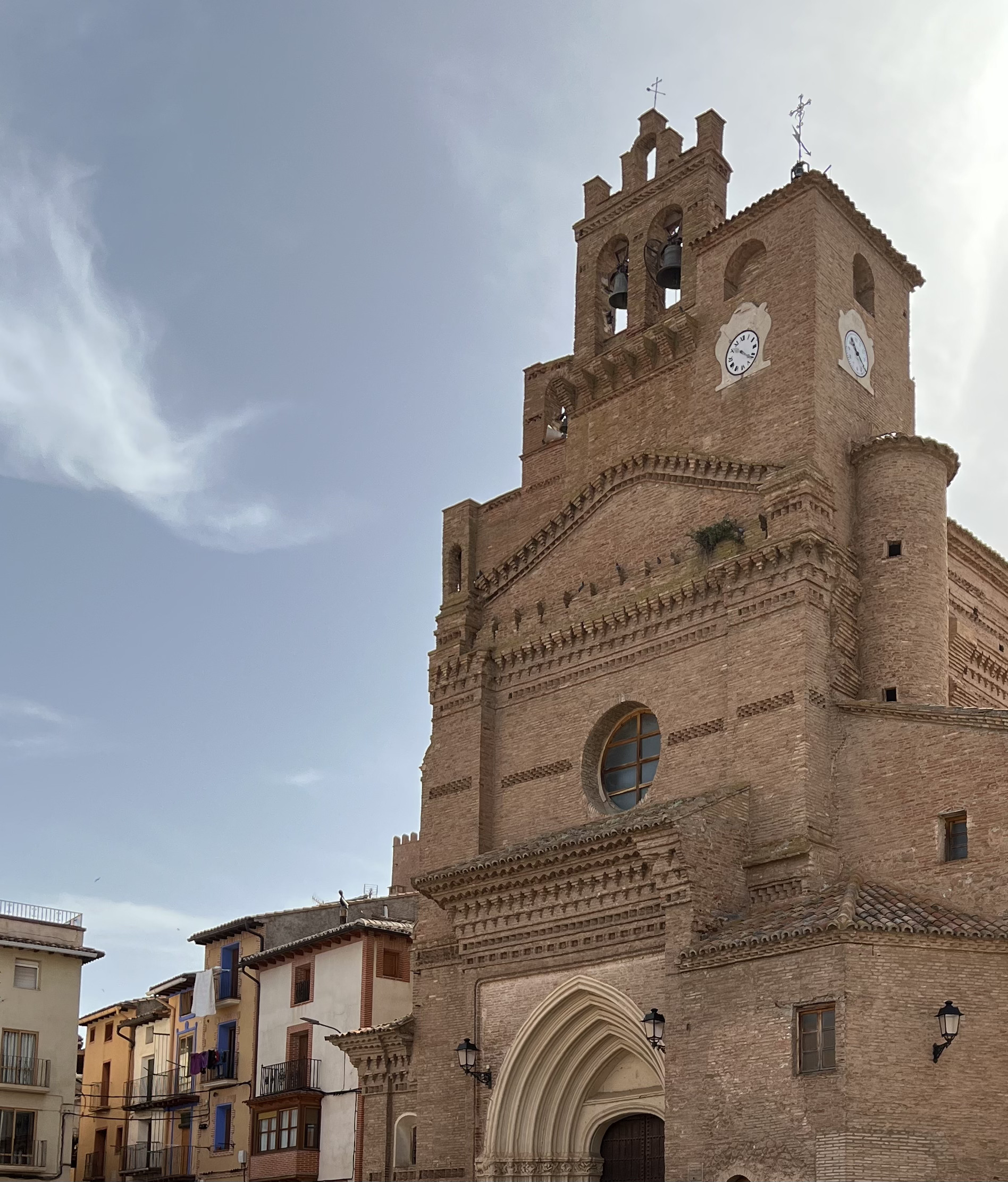
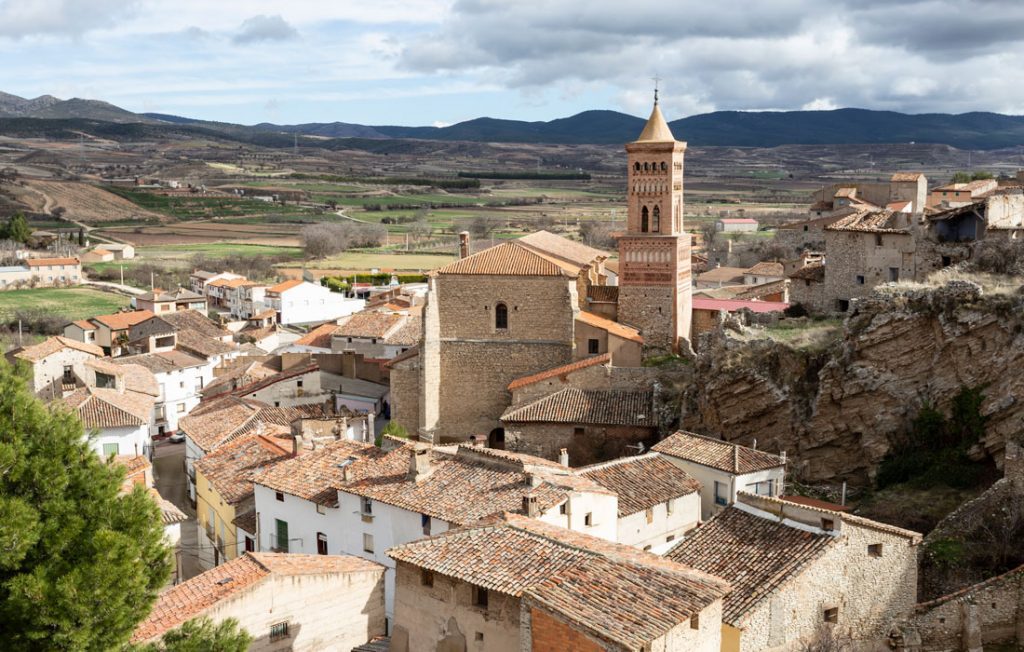
Cervera de la Cañada is located between the Sierra de Armantes mountain range and the Ribota river valley. On the ruins of an ancient castle, in the highest part of the town, stands one of the jewels of Aragonese Mudejar architecture: the church of Santa Tecla or Nuestra Señora de la Asunción. It was built by one of the two most representative master builders of the Aragonese Middle Ages: Mahoma Ramí. The monument dialogues with the town’s urban planning, which is developed on the slopes of the hill on which the church is located.

1. History of the town

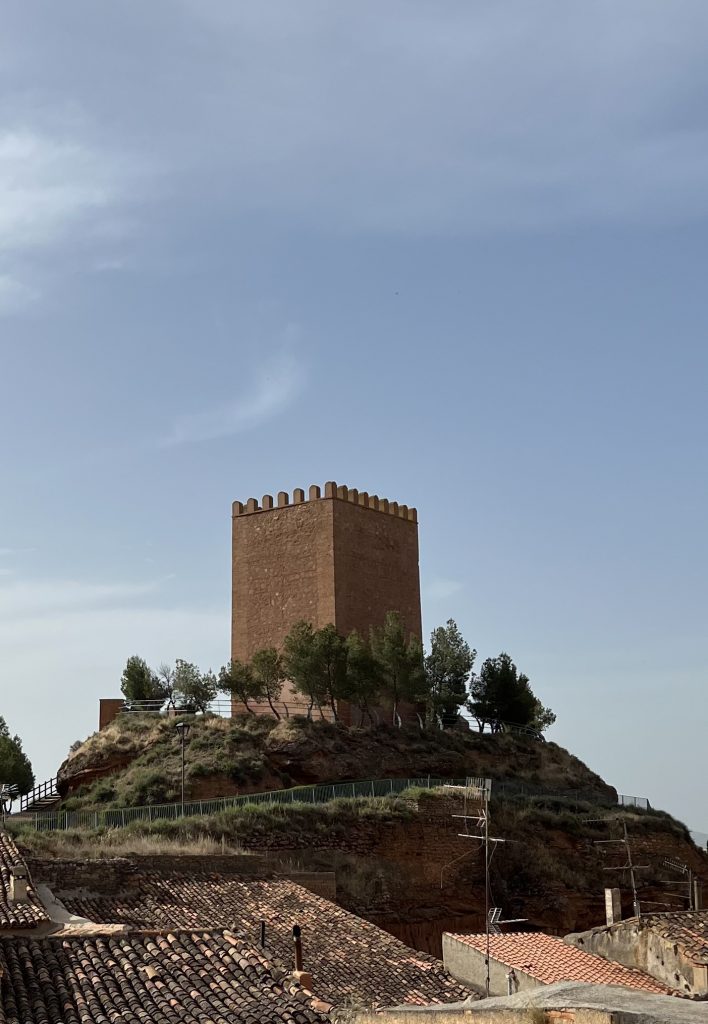
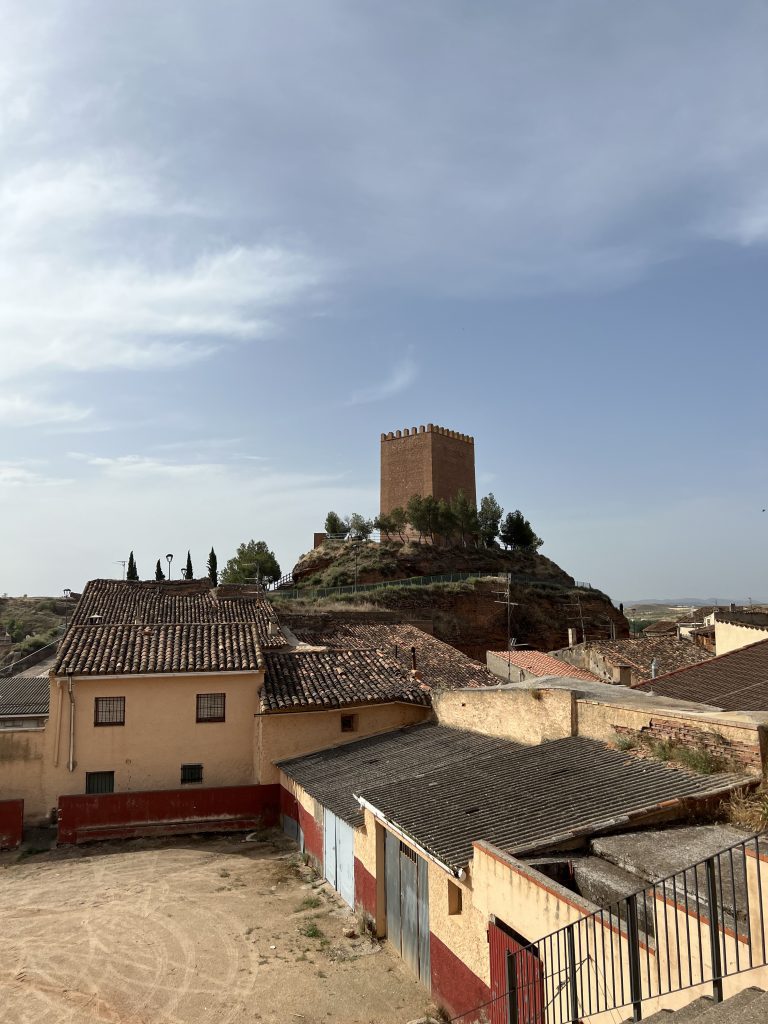
The oldest part of Cervera la de Cañada can be found in the remains of its castle, which were later used for the construction of the church. A circular tower of ashlar stone remains, which probably formed part of a fortified complex.

This point is linked to the didactic activity 1

2. World heritage

The church of Santa Tecla is a fortress church adapted to the place where it was built. It was declared a UNESCO World Heritage Site in 2001 for its unique style in the world, as well as for its magnificent conservation.

This point is linked to learning activity 5.

3. Construction materials

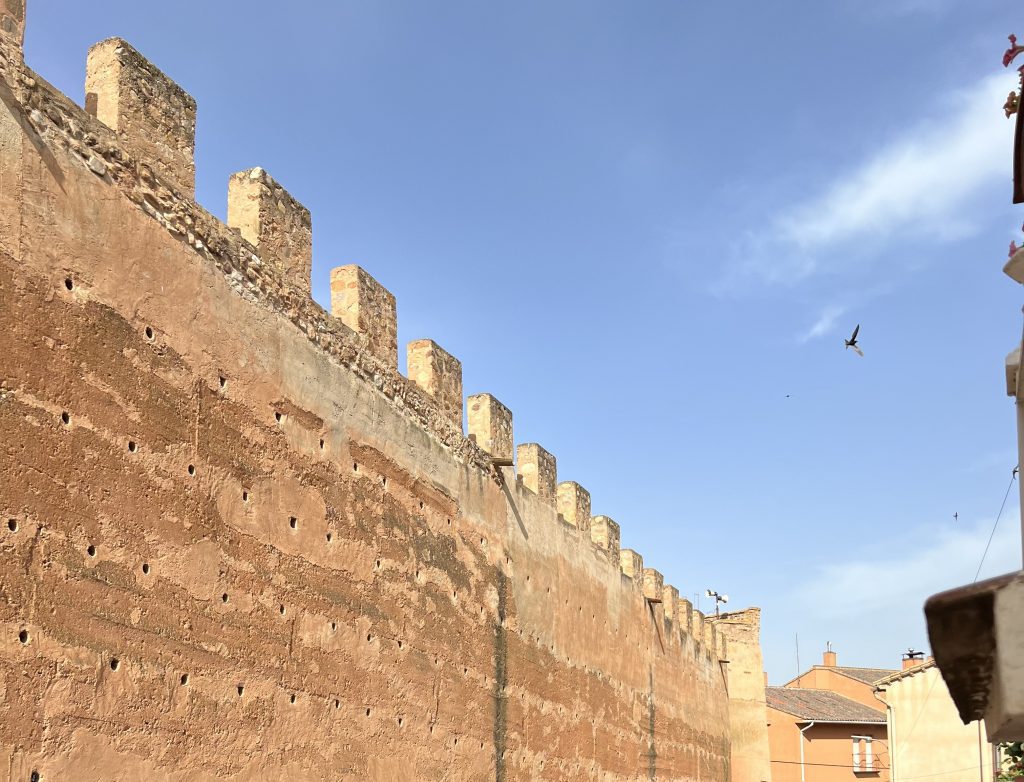
The Mudejars were particularly skilled in the construction of buildings of unique technical characteristics and beauty. This church was built by Mahoma Ramí, Pope Luna’s favourite master builder, although this church was commissioned by the local council and lordship (de la Cierva). The materials used by the Mudejars are materials that can be found in the surrounding area, such as clay and plaster.

This point is linked to the didactic activity 3

4. Coexistence of cultures

After the arrival of the Christians in Calatayud in 1120, we can say that the Mudejar period began. At this time, Christians, Muslims and Jews coexisted and lived segmented within the same localities.

This point is linked to the didactic activity 2

5. Reminiscences

After the arrival of the Christians in Calatayud in 1120, we can say that the Mudejar period began. At this time, Christians, Muslims and Jews coexisted and lived segmented within the same localities.

This point is linked to the didactic activity 7

6. Importance of agriculture

After the arrival of the Christians in Calatayud in 1120, we can say that the Mudejar period began. At this time, Christians, Muslims and Jews coexisted and lived segmented within the same localities.

This point is linked to the didactic activity 6

Aniñón

Circular from
the country school

The “Circular from the rural school” project is a cooperation project between rural development groups led by the Asociación Territorio Mudéjar.

The following have participated in the project: ADRI Calatayud-Aranda, ADRI Jiloca-Gallocanta, FEDIVALCA -Valdejalón and Campo de Cariñena-, ASOMO Tarazona and el Moncayo, CEDEMAR -Bajo Aragón Caspe and Ribera Baja del Ebro-, ADRAE -Ribera Alta del Ebro- and ADEFO Cinco Villas.

The objective is to develop educational materials around the Mudejar identity of the towns, placing rural schools and the educational community of the towns as the center of the project.

Based on the work developed, for almost three years, the students of fifteen schools have designed a walk through their town in which we can learn about the main points of interest and their connection with the Mudejar culture.

Aniñón

This walk shows us the work of the pupils of the CRA Río Ribota school in Aniñón.

Aniñón is in a privileged location, on the foothills of the Sierra de la Virgen, opposite the Sierra de Armantes mountain range. On the remains of an ancient castle, the church of Nuestra Señora del Castillo stands on one of the highest points in the town. The irregular urban layout of the town is evident throughout the route. At the end of the route is the Olive Oil Museum, where you can learn about the production process in an original mill. Stopping points and educational activities

1. History of the town

The location of Aniñón is very rich in materials, which favoured Mudejar construction due to the proximity of the materials and the existence of people who knew how to work them. The best example of this can be found at the highest point of the town centre, the church of Nuestra Señora del Castillo. Its tower is one of the most outstanding elements of the complex, offering a varied decorative repertoire.

This point is linked to the didactic activity 1

2. Construction materials

The materials used by Mudéjar masons can be found in the surrounding area. The most common materials are: clay (for making bricks), plaster (as mortar and render), wood (roofs) and alabaster.

This point is linked to the didactic activity 3

3. Mudejar architecture

The Mudejars were highly sought-after master builders by the great patrons of the time and their works were in keeping with the taste of the period. Decoration was a fundamental part of the construction of these spaces. Thus, they generated lights and shadows, which made the monument change. The church of Aniñon could be considered one of the late fortified churches within the style, although its original construction dates from the 14th century, it underwent a profound reformation in the 16th century.

This point is linked to the didactic activity 4

4. Importance of water

The Mudejars had inherited a strong tradition of Islamic origin. In order to acclimatise their crops to the conditions of our climate, it was necessary to build irrigation systems. With irrigation, new crops were introduced and those that already existed were improved. Aniñón still maintains the craft of working the land, being a mainly agricultural locality.

This point is linked to the didactic activity 6

5. Importance of agriculture

The crops in Aniñón are rich and varied: from olives to vines (already cultivated since Roman times). Also almonds (already present in the gastronomy of the Muslim period). The Olive Oil Museum was the site of the old Almazara, the Arabic name used to designate the place where the olives are pressed and the oil is obtained.

This point is linked to the didactic activity 7

Ateca

Circular from
the country school

The “Circular from the rural school” project is a cooperation project between rural development groups led by the Asociación Territorio Mudéjar.

The following have participated in the project: ADRI Calatayud-Aranda, ADRI Jiloca-Gallocanta, FEDIVALCA -Valdejalón and Campo de Cariñena-, ASOMO Tarazona and el Moncayo, CEDEMAR -Bajo Aragón Caspe and Ribera Baja del Ebro-, ADRAE -Ribera Alta del Ebro- and ADEFO Cinco Villas.

The objective is to develop educational materials around the Mudejar identity of the towns, placing rural schools and the educational community of the towns as the center of the project.

Based on the work developed, for almost three years, the students of fifteen schools have designed a walk through their town in which we can learn about the main points of interest and their connection with the Mudejar culture.

Ateca

This walk shows us the work of the pupils of the CEIP Virgen de la Peana school in Ateca.

Ateca is located in a strategic position between the rivers Jalón, Manubles and Mesa-Piedra, which led to the settlement of the area. Its name, derived from the Arabic toponym “la antigua”, indicates a strong legacy of Islamic origin and is complemented by a hamlet with an urban layout of Islamic character. The ensemble dialogues with the landscape marked by the use of water resources. The main landmark is the Mudejar tower of the church of Santa María.

1. History of Ateca

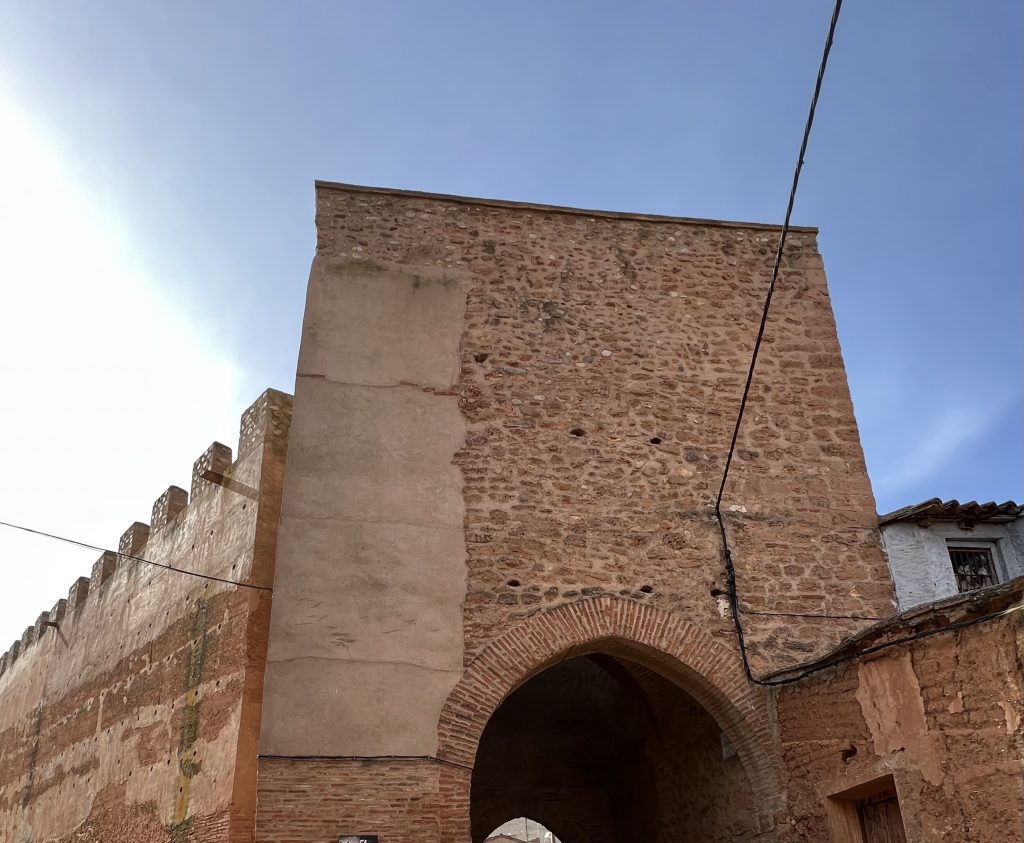
Ateca was at its most splendid in medieval times. It was defended by a walled complex which was accessed through four main gates. One of them is the Ariza gate, from which we explain the origin and history of the town.

This point is linked to the didactic activity 1

2. Water and agriculture

For the Islamic culture, water was a sacred asset. Ateca was the ideal place to settle because it was surrounded by different rivers. The abundance of water favoured the development of agricultural work and, therefore, the improvement and development of hydraulic engineering that can still be seen today.

This point is linked to the didactic activity 6

3. Coexistence of cultures

The three cultures that make up the Mudejar culture coexisted in Ateca: Jewish, Christian and Muslim. We can appreciate this fact through the urban planning that we have preserved: winding streets, dead ends, alleys… In addition to these urban characteristics of Islamic tradition, there are the callizos, passages with roofs that connect one street to another. The one in which we find ourselves is the so-called “callizo de la calle Mundillo”.

This point is linked to the didactic activity 2

4. Construction materials

The castle is one of the oldest parts of the town. Although it is built with masonry, the materials used in traditional Islamic buildings used to be made of mud or brick, mud being one of the materials used in Mudejar architecture, together with plaster, wood and alabaster.

This point is linked to the didactic activity 3

5. Mudejar architecture

The tower of the church of Santa María was built before the rest of the church. It is remarkable for its complex interior structure and decoration.

The exterior decoration is based on the play of light and shadow, using brick highlights and ceramics, which makes the building change depending on the light and weather conditions.

This point is linked to the didactic activity 7

Villarroya de la Sierra

Circular from
the country school

The “Circular from the rural school” project is a cooperation project between rural development groups led by the Asociación Territorio Mudéjar.

The following have participated in the project: ADRI Calatayud-Aranda, ADRI Jiloca-Gallocanta, FEDIVALCA -Valdejalón and Campo de Cariñena-, ASOMO Tarazona and el Moncayo, CEDEMAR -Bajo Aragón Caspe and Ribera Baja del Ebro-, ADRAE -Ribera Alta del Ebro- and ADEFO Cinco Villas.

The objective is to develop educational materials around the Mudejar identity of the towns, placing rural schools and the educational community of the towns as the center of the project.

Based on the work developed, for almost three years, the students of fifteen schools have designed a walk through their town in which we can learn about the main points of interest and their connection with the Mudejar culture.

Villarroya de la Sierra

This walk shows us the work of the students of the school CRA Río Ribota in Villarroya de la Sierra.

Villarroya de la Sierra, which derives its name from the village roya or reddish because of the colour that predominates in the surrounding area, is located at the foot of the Sierra de la Virgen mountain range, with the whole of its hamlet arranged on a slope towards the river Ribota. It was a key place at all times in history, due to its natural resources and strategic position. During the tour we will be able to see different vestiges of its historical past, such as the two fortresses, the wall and the church.

1. History of the town

Different settlements and cultures have been recorded here since ancient times. One of the key moments was the Islamic period, when the use and cultivation of the territory became evident with the development and improvement of hydraulic engineering systems, as well as the urban layout.

This point is linked to the didactic activity 1.

2. Reminiscences

The current bullring is an old dula. Dula is the name, of Arabic origin (dawhla = turn), given to communal grazing land for the herds or flocks of neighbours. Due to different vestiges that have survived to the present day, such as the dula and a possible ancient mosque in the Santa Maria neighbourhood, they could offer clues as to the possible Islamic settlement of the area.

This point is linked to the didactic activity 5.

3. Construction materials

The wall of Villarroya de la Sierra features the materials and techniques typical of buildings in the Islamic tradition, especially mud or brick, with mud being one of the most common materials used in Mudéjar architecture, along with plaster, wood and alabaster.

This point is linked to the didactic activity 3

4. Coexistence of cultures

After the Christian conquest, the three cultures that make up the Mudejar culture coexisted in the town: Christians, Muslims and Jews. Each culture lived in its aljama (neighbourhood), preserving its religion and customs and developing economic activities. The high gate was the access to the city for anyone coming from Castile, and going through the gate, you walk along the Calle Real Alta.

This point is linked to the didactic activity 2

5. Mudejar architecture

The church of San Pedro Apóstol was built at different times in history, but its Mudejar style can be seen in the brick decoration on the outside in the form of corner bricks.

This point is linked to the didactic activity 7

6. Water and agriculture

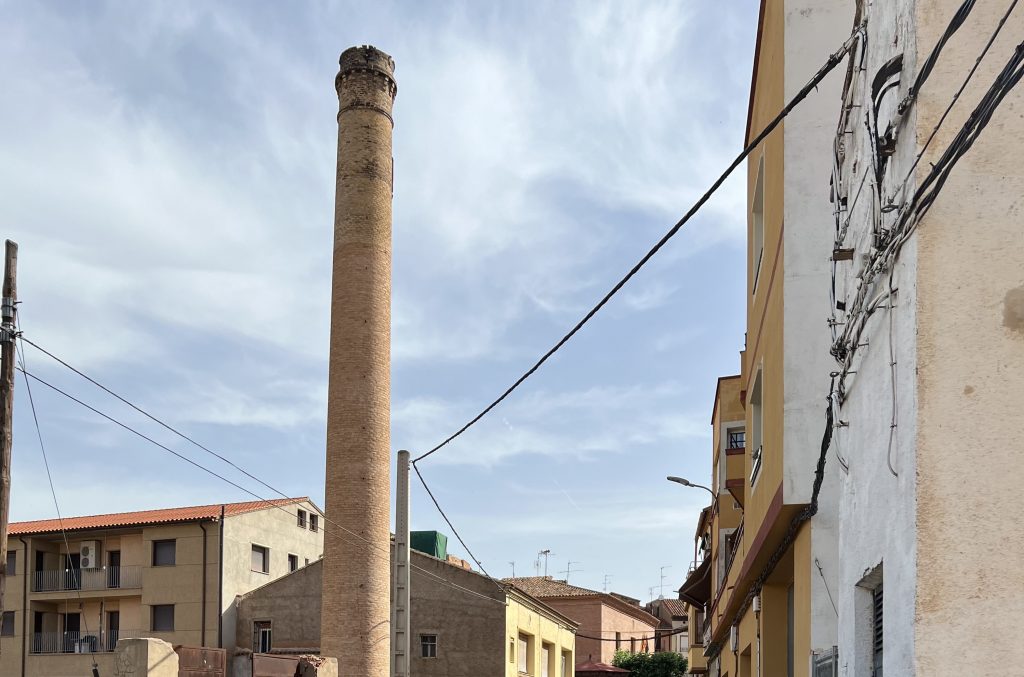
If there is one thing that characterises Villarroya, it is its diverse crops such as vineyards, cherry and almond trees, which could be related to the Muslim and Mudejar past of the area. The Muslims were characterised by the improvement of old irrigation systems and the creation of irrigation channels, cisterns and dams to make the most of the water. From this point, we can see an industrial chimney, another example of Mudejar heritage, an element of industrial brick architecture from the 20th century.

This point is linked to the didactic activity 6

Villar de los Navarros

Circular from
the country school

The “Circular from the rural school” project is a cooperation project between rural development groups led by the Asociación Territorio Mudéjar.

The following have participated in the project: ADRI Calatayud-Aranda, ADRI Jiloca-Gallocanta, FEDIVALCA -Valdejalón and Campo de Cariñena-, ASOMO Tarazona and el Moncayo, CEDEMAR -Bajo Aragón Caspe and Ribera Baja del Ebro-, ADRAE -Ribera Alta del Ebro- and ADEFO Cinco Villas.

The objective is to develop educational materials around the Mudejar identity of the towns, placing rural schools and the educational community of the towns as the center of the project.

Based on the work developed, for almost three years, the students of fifteen schools have designed a walk through their town in which we can learn about the main points of interest and their connection with the Mudejar culture.

Villar de los Navarros

The route has been carried out following the working model of the schools that participated in the project and adapted to the locality of Villar de los Navarros.

The town of Villar de los Navarros is located at the foot of the Herrera mountain range. This place witnessed one of the most bloody battles of the first Carlist war. In addition, during the tour we will discover the legacy that is still preserved, of a great historical-artistic wealth of Islamic tradition. The town’s main landmark is the Mudejar church of San Pedro Apóstol, with its unique tower.

1. History of the town

The whole town stands out for being a defensive place, sheltered by the mountains, where Mudéjares, the Muslims who remained in the territory after the Christian conquest, probably lived and carried out their activities. The Church of San Pedro dates back to the 15th century, and its tower is particularly noteworthy.

This point is linked to the didactic activity 1.

2. Coexistence of cultures

After the arrival of the Christians in the territory, we can say that the Mudejar period began. The Christians allowed the Muslims, the previous settlers, to remain in the territory, maintaining their religion and customs, but they forced them to live segmented, in neighbourhoods that we call morerías, and also to pay tribute.

This point is linked to the didactic activity 2

3. Construction materials

The materials used by the Mudejars are materials that can be found in the surroundings, what we would call, of proximity. In this way, we will see how commonly used monuments and constructions are made with the same materials and construction techniques.

This point is linked to the didactic activity 3

4. Water and landscape

In the vicinity of Villar de los Navarros there are several rivers of special importance: the Cámaras, the Huerva and the Jalón. Its basins articulate a landscape, which, together with its mountains, configures one of its main hallmarks.

This point is linked to the didactic activity 6

5. Mudejar architecture

Mudejar architecture is architecture made by Mudejar master builders. As part of the demands of the Christian lords, they built different types of buildings: churches, palaces, dwellings and cloisters. One of the most important typologies are towers.

The church of San Pedro de Villar de los Navarros is a unique example of the Mudejar style, as it has a unique tower solution. The interior conserves the Mudejar structure, masked by later alterations, of which the most notable features are the scribing in the choir area.

In the tower of San Pedro de Villar de los Navarros we find different types of brick decoration: double-edged zigzag strips, interlaced mixtilinear arches and panels of criss-crossed lines forming lozenges.

This point is linked to the didactic activity 7

Mainar

Circular from
the country school

The “Circular from the rural school” project is a cooperation project between rural development groups led by the Asociación Territorio Mudéjar.

The following have participated in the project: ADRI Calatayud-Aranda, ADRI Jiloca-Gallocanta, FEDIVALCA -Valdejalón and Campo de Cariñena-, ASOMO Tarazona and el Moncayo, CEDEMAR -Bajo Aragón Caspe and Ribera Baja del Ebro-, ADRAE -Ribera Alta del Ebro- and ADEFO Cinco Villas.

The objective is to develop educational materials around the Mudejar identity of the towns, placing rural schools and the educational community of the towns as the center of the project.

Based on the work developed, for almost three years, the students of fifteen schools have designed a walk through their town in which we can learn about the main points of interest and their connection with the Mudejar culture.

Mainar

This walk shows us the work of the pupils of the CEIP Santa Ana school in Mainar.

The main Mudejar monument in the village of Mainar is the tower of the church of Santa Ana. It is one of the later towers of the style, which was erected in the town as an identifying element. During the tour, as well as admiring the monument, we will see the surrounding landscape.

1. History of the city

The Christians conquered the territory where the Muslims lived between 1118 and 1120. The Muslims who remained after this conquest became known as Mudejars. The Christians admired the art built by the Mudéjars, so they became patrons. The Mudejar monument at Mainar is late, but there was probably an earlier settlement.

This point is linked to the didactic activity 1

2. Mudejar architecture

The main building in Mainar is the tower of Santa Ana, which dates from a late period within the style. The Mudéjars needed decoration as a fundamental part of their constructions. Thus, they generated light and shadow, making the monument change depending on the sunlight. In Mainar we see angled angles and multi-armed crosses forming lozenges.

This point is linked to the didactic activity 5.

3. Coexistence of cultures

During the Middle Ages, three cultures coexisted. The Christians were the ones who held the power, above all, the monarchy, the Church, and the nobility. They allowed the previous settlers to continue to inhabit the cities, but with a series of conditions: they had to live in their own nuclei (barrios or aljamas) and pay tribute. The cultures that coexisted were Christians, Muslims and Jews.

This point is linked to the didactic activity 2

4. Importance of agriculture

Muslims were particularly adept at cultivating the land. The introduction of home-grown products and irrigation techniques to help them flourish not only led to new and succulent foodstuffs, but also helped existing crops to grow better and faster. Particularly in Mainar, depending on the sowing cycles, we can see its fields in different colours: reddish, brown, yellow and green.

This point is linked to the didactic activity 6.

5. Importance of water

Water is the most important principle of the universe according to the Qur’an, considered a divine symbol, as water is necessary for life. It is also present in the idea of the Muslim paradise. During the Islamic domination, different hydraulic engineering systems were introduced and developed, such as waterwheels, irrigation channels, dams… Therefore, for the Mudejars, who were also Muslims, water was fundamental.

This point is linked to the didactic activity 7

Ricla

Circular from
the country school

The “Circular from the rural school” project is a cooperation project between rural development groups led by the Asociación Territorio Mudéjar.

The following have participated in the project: ADRI Calatayud-Aranda, ADRI Jiloca-Gallocanta, FEDIVALCA -Valdejalón and Campo de Cariñena-, ASOMO Tarazona and el Moncayo, CEDEMAR -Bajo Aragón Caspe and Ribera Baja del Ebro-, ADRAE -Ribera Alta del Ebro- and ADEFO Cinco Villas.

The objective is to develop educational materials around the Mudejar identity of the towns, placing rural schools and the educational community of the towns as the center of the project.

Based on the work developed, for almost three years, the students of fifteen schools have designed a walk through their town in which we can learn about the main points of interest and their connection with the Mudejar culture.

Ricla

This walk shows us the work of the students of CEIP Maestro Monreal in Ricla.

Ricla has been populated by different cultures throughout its history. However, one of the most splendid periods was undoubtedly during the Islamic domination, which is the origin of its toponym, as well as the origin of its castle, the starting point of the route through the town. During the walk, we can see other monuments such as the church and Mudejar tower or the old sugar factory next to the weir.

1. History of the town

Ricla was populated by Celtiberians, a nearby foundation known as Nertóbriga. It was also settled by the Romans at a later date. It was later under Islamic rule, from which time we have inherited its urban layout. After the Christian conquest, the Muslims who inhabited the territory became known as Mudejars.

This point is linked to the didactic activity 1.

2. Mudejar architecture

The Mudéjars were particularly skilled in the construction of buildings of unique technical characteristics and beauty. The Mudéjars made many types of buildings, depending on the function and the person who commissioned them. The tower of Ricla is a late tower, which is called a mixed tower because it mixes a low quadrangular body and a high octagonal body.

This point is linked to the didact activity 5.

3. Construction materials

The construction of this Mudejar temple was carried out in three stages: in the 15th century, in the 16th century and in the 18th century. Inside, we can see most of the materials used in Mudéjar buildings: clay (brick), plaster (mortar and mortars), wood and alabaster.

This point is related to the didactic activity 3.

4. Coexistence of cultures

The Christians allowed the Muslims, the previous settlers, to remain in the territory, as they were needed to sustain the local economy, and as they were in great demand at the time for their work, which included crafts, agriculture and construction. Moorish and Jewish quarters acted as small towns within urban centres, with their own layout and social hierarchy.

This point is linked to the didactic activity 2

5. Water and agriculture

The abundance of water favoured the development of agricultural works and, therefore, the improvement and development of hydraulic engineering that can still be seen today. The river Jalón flows through Ricla, around which a large Mudejar population was concentrated in medieval times. There are several dams in the course of the river Jalón in the municipal district of Ricla, such as the Azud de Jalón.

This point is linked to the didactic activity 6

6. Reminiscences of the Mudejar

Mudejar art came to an end in the 17th century, when the Moors were expelled. However, we have a style that has survived through the centuries. No doubt this is due to sharing a culture and a territory for a long time. This is why, in various contemporary constructions, we find elements that remind us of the Mudejar style. This building is known as the Azucarera (sugar factory), where alcohol was made from sugar beet.

This point is linked to the didactic activity 7

Torrellas

Circular from the rural school

The “Circular from the rural school” project is a cooperation project between rural development groups led by the Asociación Territorio Mudéjar.

The following have participated in the project: ADRI Calatayud-Aranda, ADRI Jiloca-Gallocanta, FEDIVALCA -Valdejalón and Campo de Cariñena-, ASOMO Tarazona and el Moncayo, CEDEMAR -Bajo Aragón Caspe and Ribera Baja del Ebro-, ADRAE -Ribera Alta del Ebro- and ADEFO Cinco Villas.

The objective is to develop educational materials around the Mudejar identity of the towns, placing rural schools and the educational community of the towns as the center of the project.

Based on the work developed, for almost three years, the students of fifteen schools have designed a walk through their town in which we can learn about the main points of interest and their connection with the Mudejar culture.

Torrellas

The tour has been carried out following the work model of the schools that participated in the project and adapted to the town of Torrellas.

Torrellas is located at a crossroads between Aragón, La Rioja, Navarra and the province of Soria. During the tour of the town we immediately perceive the Muslim past, present in many corners of its urban layout such as the Moorish quarter and the Jewish quarter and in the Mudejar monuments that have survived to this day.

1. History of the town

The Muslim presence in Torrellas was quite important.. There was a large community that settled to develop the local economy, including carpenters, masons and other artisans. Inside the church of San Martín de Tours is the Traces of Islam Interpretation Center, which describes what life was like for the inhabitants of Torrellas in medieval times.

This point is linked to the didactic activity 1.

2. Coexistence of cultures

The Christians allowed the Muslims, previous settlers, to stay in the territory, allowing them to maintain their religion and customs, but living separately, in neighborhoods (aljamas). In the case of Torrellas there was a large number of both Muslim and Jewish populations. The Jewish quarter was located in the vicinity of Calle Barrioverde, Calle Zocotroca, and Plaza de San Miguel.

This point is linked to the didactic activity 2

3. Landscape

It is located in the vicinity of Moncayo and its mountains, where we have an abundance of all kinds of raw materials. In addition, the Queiles River is located, where we find an abundance of water. All these elements allowed the development of certain economic activities, such as agriculture and crafts.

This point is linked to the didactic activity 4

4. Construction materials

The materials used by the Mudejars are materials that we can find in the environment. In this way, we will see how commonly used monuments and constructions are made with the same materials and construction techniques. In the case of the Granary, we find different construction techniques and traditional materials. Originally, it was the town’s castle, gradually being transformed until it became a barn.

This point is linked to the didactic activity 3

5. Mudejar architecture

The tower of Torrellas stands next to the church and was built in two phases during the 16th century. It highlights its interior structure and exterior decoration, with which lights and shadows are generated, which made the monument change depending on the light. In the tower of Torrellas we find decorative stripes of staggered, zigzag, angles…

This point is linked to the didactic activity 7

6. Water and agriculture

The Arabs were pioneers in the introduction of irrigation techniques, such as ditches. In addition, in Torrellas is the Queiles River. Its basins articulate a landscape, which, together with its mountains, configures one of its main hallmarks.

This point is linked to the didactic activity 6

Borja

Circular from the rural school

The “Circular from the rural school” project is a cooperation project between rural development groups led by the Asociación Territorio Mudéjar.

The following have participated in the project: ADRI Calatayud-Aranda, ADRI Jiloca-Gallocanta, FEDIVALCA -Valdejalón and Campo de Cariñena-, ASOMO Tarazona and el Moncayo, CEDEMAR -Bajo Aragón Caspe and Ribera Baja del Ebro-, ADRAE -Ribera Alta del Ebro- and ADEFO Cinco Villas.

The objective is to develop educational materials around the Mudejar identity of the towns, placing rural schools and the educational community of the towns as the center of the project.

Based on the work developed, for almost three years, the students of fifteen schools have designed a walk through their town in which we can learn about the main points of interest and their connection with the Mudejar culture.

Borja

The tour has been carried out following the working model of the schools that participated in the project and adapted to the locality of Borja.

The town of Borja allows us to see the traces of its Islamic past just by listening to its name, which comes from the Arabic Burya, an Arabic etymology that derives from the ancient Roman Borsao. During the walk through Borja you can see interesting Mudejar religious and civil buildings, such as the castle, the collegiate church of Santa Maria, and also examples of Mudejar reminiscences such as the Casa de las Conchas, recently restored.

1. History of the town

From this place we are going to talk about the history of Borja. There was a first Roman settlement, calling the town at this time, Borsao. Later, the Muslims arrived in the Iberian Peninsula and also settled in Borja, forming the nucleus of Burya, which means tower and fort. Precisely, the name refers to the tower, a vestige of its ancient castle of Arab origin, which we know as La Zuda.

This point is linked to the didactic activity 1.

2. Coexistence of cultures

After the arrival of the Christians in Zaragoza in 1119 and Calatayud in 1120, we can say that the Mudejar period began.

Both Muslims and Jews were allowed to stay and maintain their religion and customs, but they were allowed to live segmented, in neighbourhoods that we call “morerías” and “juderías”. In Borja, the Moorish and Jewish quarters were divided into Upper and Lower, and both were located in the vicinity of the castle.

This point is linked to the didactic activity 2

3. Construction materials

The materials used by the Mudejars are materials that we can find in the environment. In this way, we will see how commonly used monuments and constructions are made with the same materials and construction techniques. The most common are clay, plaster, wood and alabaster. All of them are materials that we see reflected in the monuments and popular architecture. Many of these materials can be seen from this viewpoint.

This point is linked to the didactic activity 3

4. Masters of Mudejar works

The Mudéjars were particularly skilled in the construction of buildings of unique technical characteristics and beauty. They were highly sought-after master builders by the great patrons of the day and their works were in the taste of the time.

This point is linked to the didactic activity 4

5. Mudejar architecture

This building allows us to talk about the use of materials and construction techniques of Islamic tradition that continue to be used throughout time in our territory. Although in 1610 the Moors were definitively expelled, which meant the end of the Mudejar style, it continues to be built in other styles but with elements that remind us of this one: both in terms of materials and ornamentation.

This point is linked to the didactic activity 5.

6. Reminiscences

The palace of the shells is so called because of the scallop-shaped veneras that adorn its door. It was a hospital where pilgrims stopped on the Pilgrim’s Way to Santiago de Compostela. It is not a Mudejar building, as it was built at a later date. It is one of the many Renaissance palaces to be found in Borja. However, we can see how the materials we have mentioned are used in the same way and using the same building tradition and technique as their predecessors, the Mudejars.

This point is linked to the didactic activity 7

Belmonte

Circulate from
the rural school

The “Circular from the rural school” project is a cooperation project between rural development groups led by the Asociación Territorio Mudéjar.

The following have participated in the project: ADRI Calatayud-Aranda, ADRI Jiloca-Gallocanta, FEDIVALCA -Valdejalón and Campo de Cariñena-, ASOMO Tarazona and el Moncayo, CEDEMAR -Bajo Aragón Caspe and Ribera Baja del Ebro-, ADRAE -Ribera Alta del Ebro- and ADEFO Cinco Villas.

The objective is to develop educational materials around the Mudejar identity of the towns, placing rural schools and the educational community of the towns as the center of the project.

Based on the work developed, for almost three years, the students of fifteen schools have designed a walk through their town in which we can learn about the main points of interest and their connection with the Mudejar culture.

Belmonte de Gracián

The route has been carried out following the working model of the schools that participated in the project and adapted to the locality of Belmonte de Gracián.

The town of Belmonte de Gracián, birthplace of one of the most illustrious Spanish writers of the Golden Age: Baltasar Gracián, is presided over by the church of San Miguel, a temple with a polygonal apse of extraordinary Mudejar decoration. The town centre is located next to a hill, a place that was crowned by a Muslim castle in the Islamic period. As the remains of its past show, Belmonte de Gracián has ancient origins, of which we can highlight its Mudejar past in medieval times.

1. History of the town

The origin of the village’s name has Celtiberian roots and could mean “shining mountain”, although it is also said that it may refer to the Celtiberian solar deity. Near this place there was a great Celtiberian city called Segeda (Sekaisa). The same locality was taken by the Romans and, from 711 onwards, Islam was present in the area. Some vestiges remain, such as the remains of its castle, dated by some scholars to the 10th century. They can be found in the place where we are located, where the church of Nuestra Señora del Castillo was later built.

This point is linked to the didactic activity 1.

2. Construction materials

The materials used by the Mudejars are materials that can be found in the surroundings, what we would call, of proximity. In this way, we will see how commonly used monuments and constructions are made with the same materials and construction techniques. The most common are clay, plaster, wood and alabaster. Belmonte de Gracián is built over a natural alabaster quarry.

This point is linked to the didactic activity 3

3. Coexistence of cultures

The Christians allowed the Muslims, previous settlers, to remain in the territory, as they were necessary to sustain the local economy. In Belmonte de Gracián no Moorish or Jewish quarter is preserved, but we do know that the Mudejars were settled in the territory due to the church that we have preserved.

This point is linked to the didactic activity 2

4. Mudejar architecture

The Mudéjars were particularly skilled in the construction of buildings of unique technical characteristics and beauty. They were highly sought-after master builders by the great patrons of the time and their works were in keeping with the taste of the period. In some Mudéjar buildings, a rich decoration stands out. Although it also served to make it more beautiful, the Mudejars needed decoration, they generated light and shadow, making the monument change depending on the light and weather conditions. This is what we know as the aesthetics of “the changeable”. All these characteristics are perfectly reflected in the apse of the church of San Miguel. Furthermore, walking a little further along the same street, we can appreciate a stupendous view of the church tower, one of the most paradigmatic examples of Mudejar architecture.

This point is linked to the didactic activity 4

5. Water and agriculture

Water is the most important principle of the universe according to the Koran. It is a divine symbol, since water is necessary for life. It is also present in the Muslims’ idea of their Paradise.

For the Mudejars, who were also Muslims, water was essential. They introduced different crops into territory that had to cope with much drier climatic conditions. For this reason, they were the disseminators of many irrigation techniques that we still use today, for example, irrigation ditches, waterwheels, waterwheels…

Mudejar is often referred to as a “valley culture”, since the Mudejar populations were concentrated in the valleys of the great rivers: the Ebro and its tributaries: the Jalón, the Huerva, the Ribota, the Jiloca and the Perejiles. And, therefore, many monuments.

This point is linked to the didactic activity 6