Circular from the rural school
The “Circular from the rural school” project is a cooperation project between rural development groups led by the Asociación Territorio Mudéjar.
The following have participated in the project: ADRI Calatayud-Aranda, ADRI Jiloca-Gallocanta, FEDIVALCA -Valdejalón and Campo de Cariñena-, ASOMO Tarazona and el Moncayo, CEDEMAR -Bajo Aragón Caspe and Ribera Baja del Ebro-, ADRAE -Ribera Alta del Ebro- and ADEFO Cinco Villas.
The objective is to develop educational materials around the Mudejar identity of the towns, placing rural schools and the educational community of the towns as the center of the project.
Based on the work developed, for almost three years, the students of fifteen schools have designed a walk through their town in which we can learn about the main points of interest and their connection with the Mudejar culture.
Borja
The tour has been carried out following the working model of the schools that participated in the project and adapted to the locality of Borja.
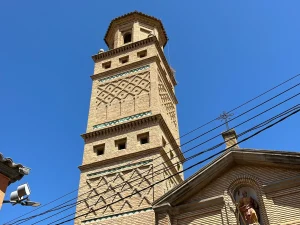
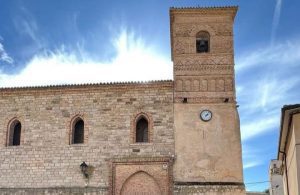
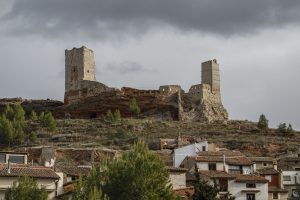
The town of Borja allows us to see the traces of its Islamic past just by listening to its name, which comes from the Arabic Burya, an Arabic etymology that derives from the ancient Roman Borsao. During the walk through Borja you can see interesting Mudejar religious and civil buildings, such as the castle, the collegiate church of Santa Maria, and also examples of Mudejar reminiscences such as the Casa de las Conchas, recently restored.
1. History of the town
From this place we are going to talk about the history of Borja. There was a first Roman settlement, calling the town at this time, Borsao. Later, the Muslims arrived in the Iberian Peninsula and also settled in Borja, forming the nucleus of Burya, which means tower and fort. Precisely, the name refers to the tower, a vestige of its ancient castle of Arab origin, which we know as La Zuda.
This point is linked to the didactic activity 1.
2. Coexistence of cultures
After the arrival of the Christians in Zaragoza in 1119 and Calatayud in 1120, we can say that the Mudejar period began.
Both Muslims and Jews were allowed to stay and maintain their religion and customs, but they were allowed to live segmented, in neighbourhoods that we call “morerías” and “juderías”. In Borja, the Moorish and Jewish quarters were divided into Upper and Lower, and both were located in the vicinity of the castle.
This point is linked to the didactic activity 2
3. Construction materials
The materials used by the Mudejars are materials that we can find in the environment. In this way, we will see how commonly used monuments and constructions are made with the same materials and construction techniques. The most common are clay, plaster, wood and alabaster. All of them are materials that we see reflected in the monuments and popular architecture. Many of these materials can be seen from this viewpoint.
This point is linked to the didactic activity 3
4. Masters of Mudejar works
The Mudéjars were particularly skilled in the construction of buildings of unique technical characteristics and beauty. They were highly sought-after master builders by the great patrons of the day and their works were in the taste of the time.
This point is linked to the didactic activity 4
5. Mudejar architecture
This building allows us to talk about the use of materials and construction techniques of Islamic tradition that continue to be used throughout time in our territory. Although in 1610 the Moors were definitively expelled, which meant the end of the Mudejar style, it continues to be built in other styles but with elements that remind us of this one: both in terms of materials and ornamentation.
This point is linked to the didactic activity 5.
6. Reminiscences
The palace of the shells is so called because of the scallop-shaped veneras that adorn its door. It was a hospital where pilgrims stopped on the Pilgrim’s Way to Santiago de Compostela. It is not a Mudejar building, as it was built at a later date. It is one of the many Renaissance palaces to be found in Borja. However, we can see how the materials we have mentioned are used in the same way and using the same building tradition and technique as their predecessors, the Mudejars.
This point is linked to the didactic activity 7