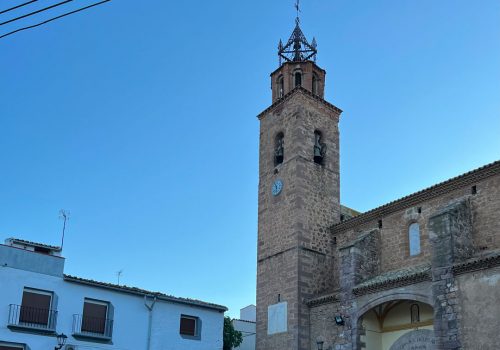
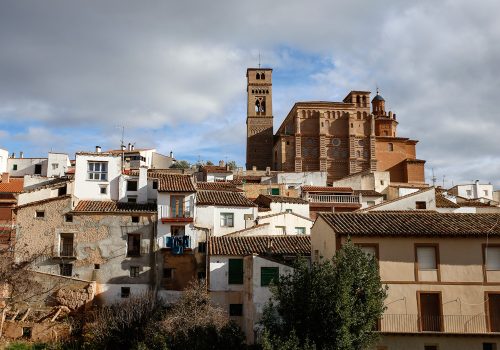
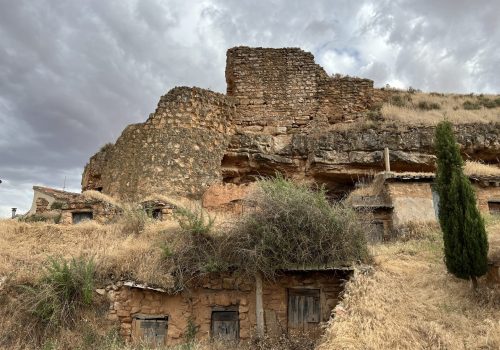
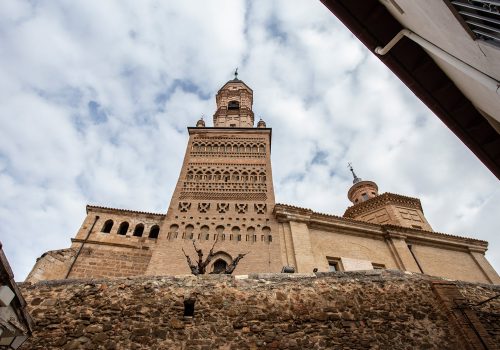
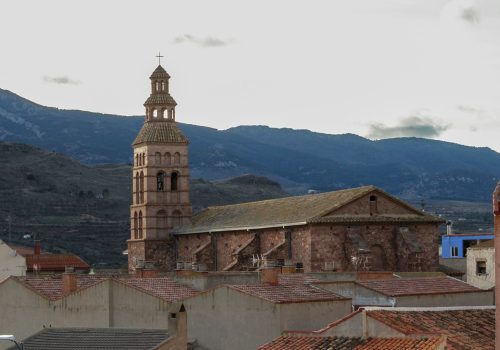
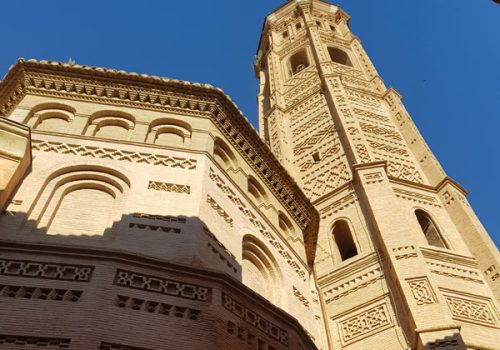
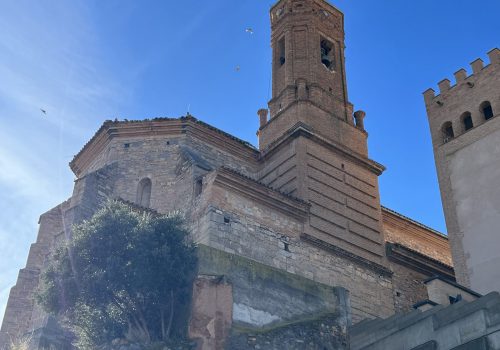
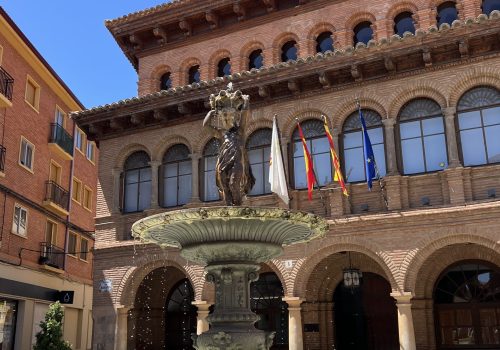
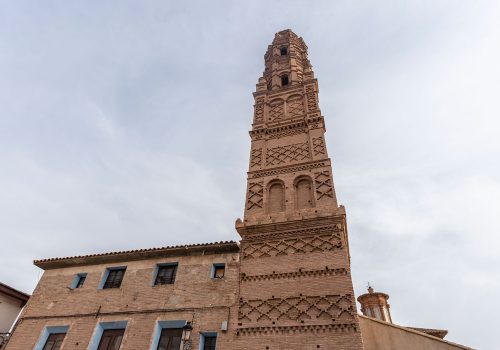
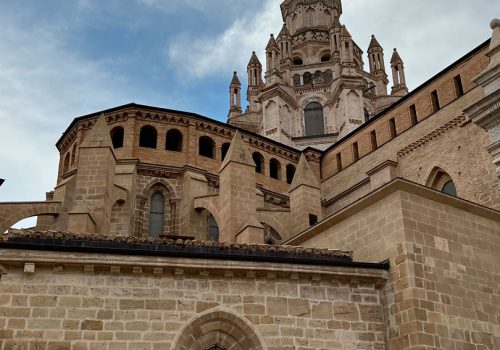
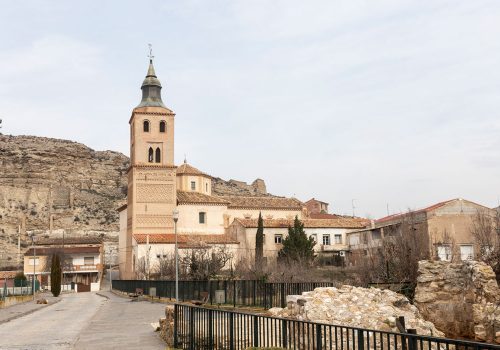
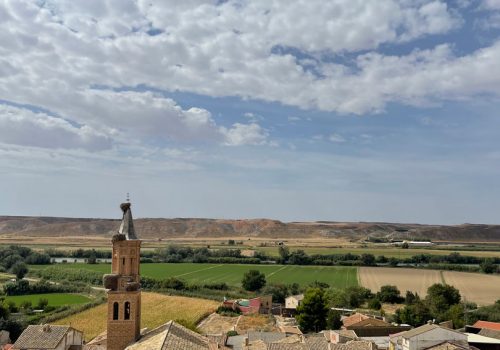
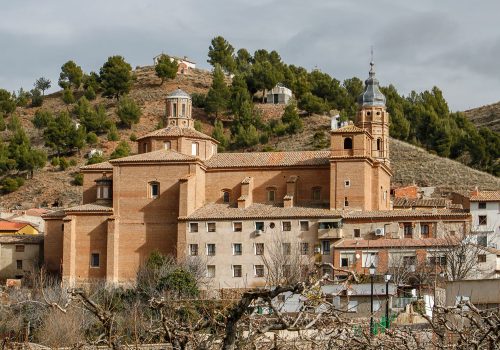
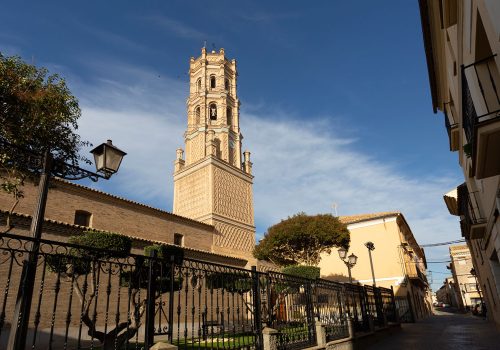
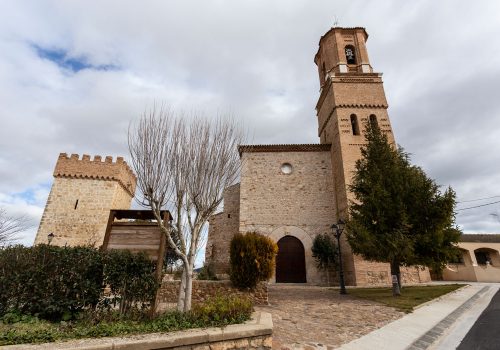
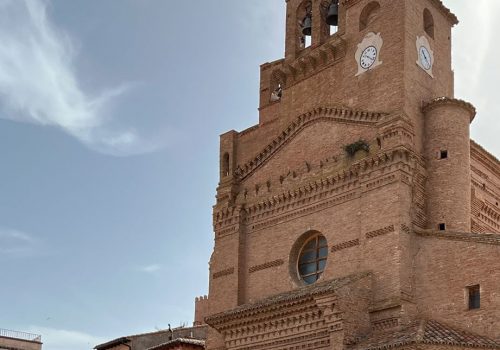
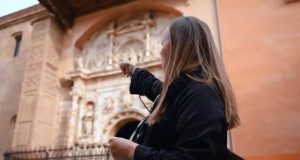
Illueca

Circular from the rural school

The “Circular from the rural school” project is a cooperation project between rural development groups led by the Asociación Territorio Mudéjar.

The following have participated in the project: ADRI Calatayud-Aranda, ADRI Jiloca-Gallocanta, FEDIVALCA -Valdejalón and Campo de Cariñena-, ASOMO Tarazona and el Moncayo, CEDEMAR -Bajo Aragón Caspe and Ribera Baja del Ebro-, ADRAE -Ribera Alta del Ebro- and ADEFO Cinco Villas.

The objective is to develop educational materials around the Mudejar identity of the towns, placing rural schools and the educational community of the towns as the center of the project.

Based on the work developed, for almost three years, the students of fifteen schools have designed a walk through their town in which we can learn about the main points of interest and their connection with the Mudejar culture.

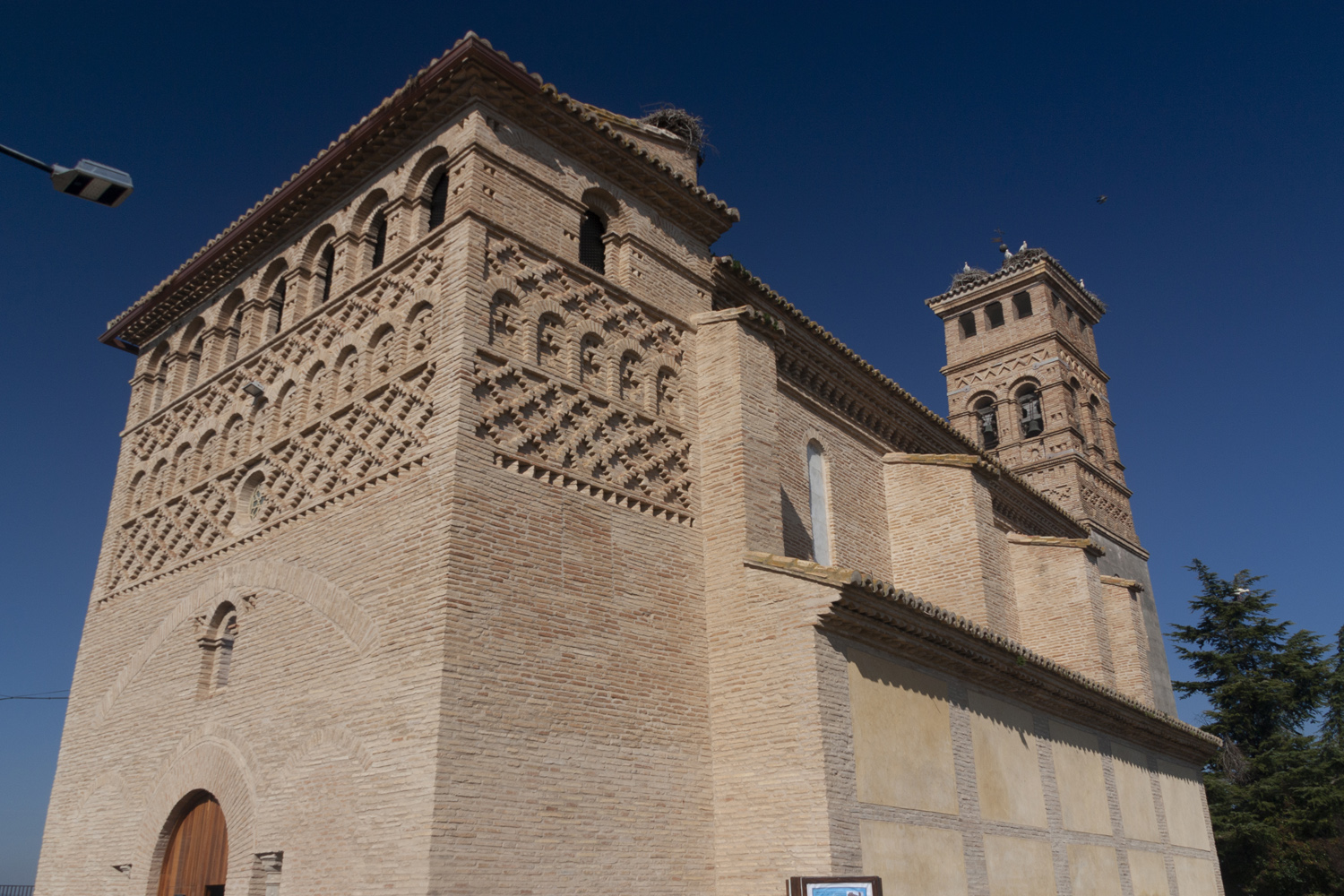
Illueca

The route has been carried out following the working model of the schools that participated in the project and adapted to the town of Illueca.

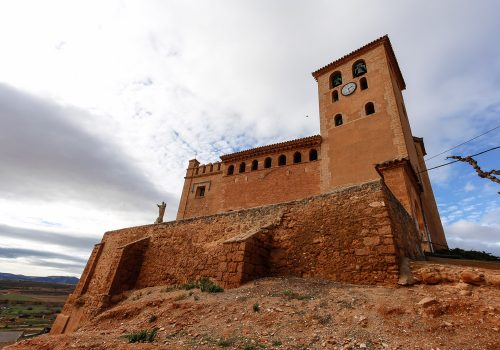
Illueca, like the other villages in the valleys of the Aranda and Isuela rivers, had a strong Mudejar population that coexisted with Christian and Jewish communities. On top of a rocky spur stands the castle-palace of the Count of Argillo, popularly known as the castle of Pope Luna. This was the birthplace of one of the most important and influential figures of the medieval period in Spain and abroad, who was also a great patron of Mudejar art: Pedro Martínez de Luna, who was appointed Pope in Avignon as Benedict XIII, known as “Papa Luna”.

1. History of the town

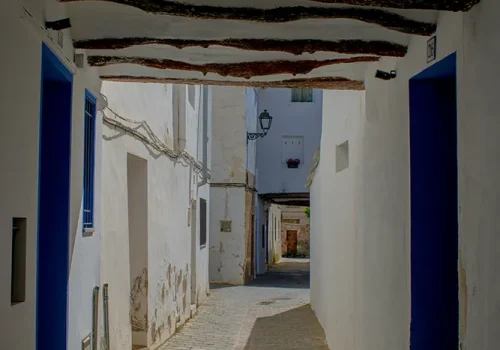
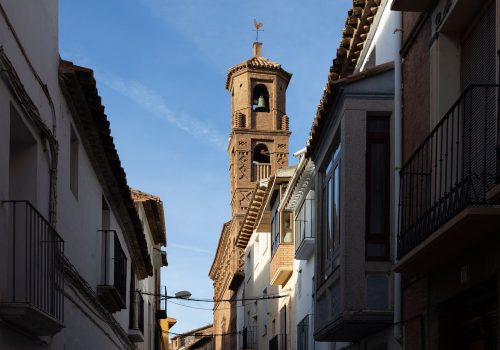
On the hillside, at the foot of the castle, there is an urban hamlet of historic character, very different from the new areas of expansion due to its Jewish-Muslim street layout, in which the numerous bends in the streets stand out, forming attractive corners of the façades, which combine the whitewashing of the simplest houses with the brick of the noblest buildings such as the Casa Saldaña.

This point is linked to the didactic activity 1.

2. Patronage

Mudejar art is art made by Mudejars and commissioned by Christians. But among Christians, only those who formed part of the social elite of medieval times could afford to commission buildings of such mastery. The castle-palace of Illueca is closely linked to the figure of Pope Luna. It has many phases of construction between the 16th and 17th centuries.

This point is linked to the didactic activity 2

3. Master builders

The Mudéjars were particularly skilled in the construction of buildings of unique technical characteristics and beauty. They were highly sought after by the great patrons of the time and their works were in the taste of the time. Some of the names of these masters have survived, such as Mahoram Calahorri and Mahoram Rami. In particular, Mahoram Rami was Benedict XIII’s favourite master builder and is associated with some of the elements built in the palace.

This point is linked to the didactic activity 4

4. Importance of water and landscape

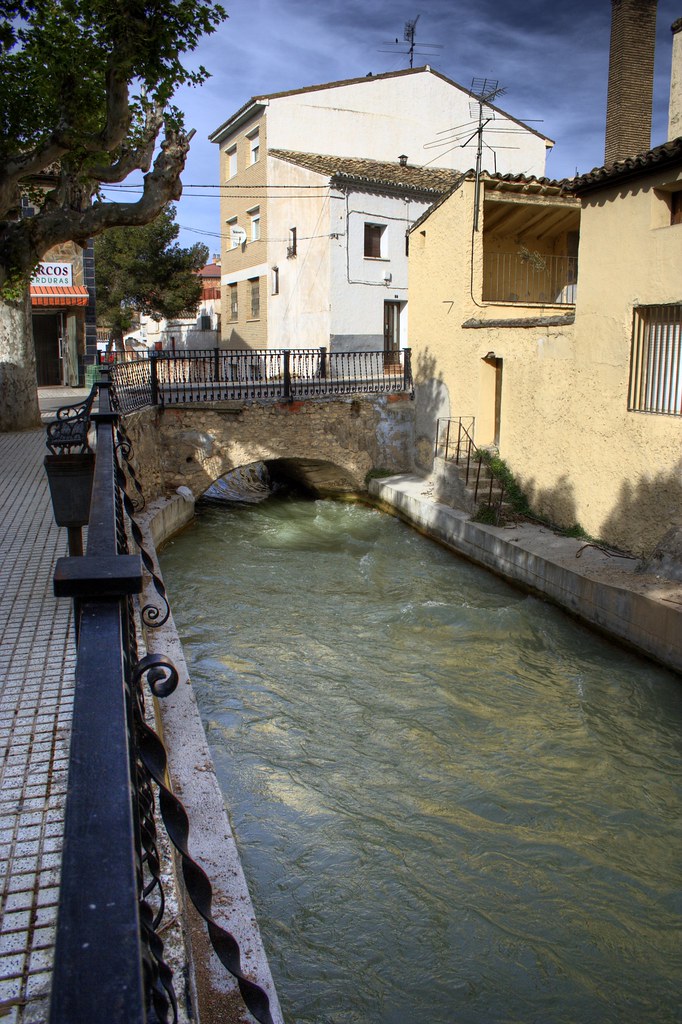
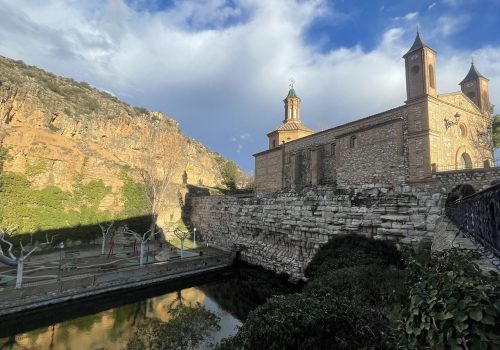
The Arabs were pioneers in the introduction of irrigation techniques in the rural world. Examples include waterwheels, waterwheels, cisterns and the most common, irrigation ditches. The introduction of agricultural products and techniques also favoured local crops, which grew better and faster. In addition, the idea of the agricultural landscape was generated, which is fundamental for understanding our localities. From here there is a marvellous view of the Moncayo.

This point is linked to the didactic activity 6

5. Mudejar architecture

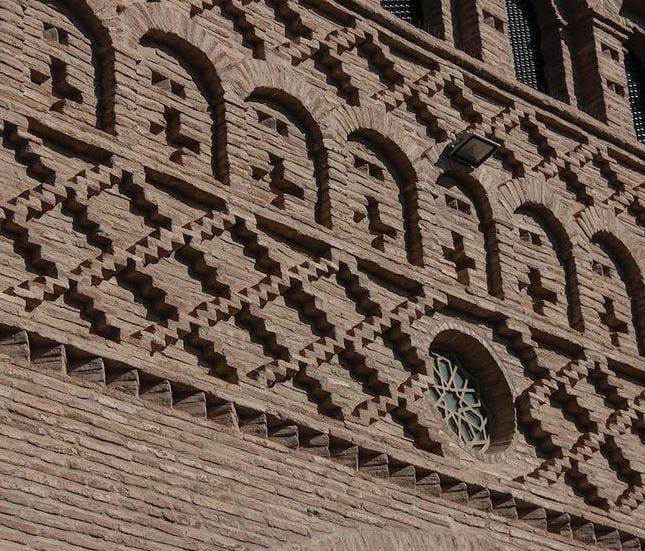
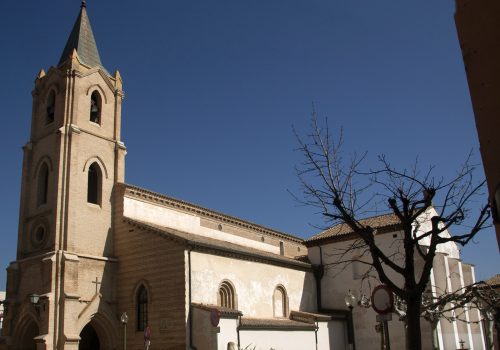
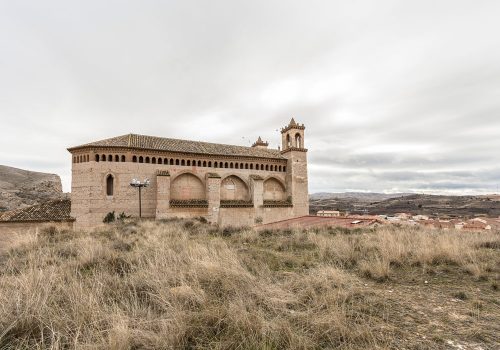
Mudejar architecture was established between the 12th century, when the territory inhabited by the Muslims was conquered by the Christians, and the 17th century, when the Moors (Mudejars converted to Christianity) were expelled. The interior of the parish church of St. John the Baptist shows us the survival of the Islamic tradition through the Baroque plasterwork carried out by the master Juan de Marca at the end of the 17th century.

This point is linked to the didactic activity 5.

6. Reminiscence

There are some buildings built after the expulsion of the Moors. These buildings allow us to talk about the use of materials and construction techniques of Islamic tradition that have continued to be used over time in our territory. We can speak of survival or reminiscences until the 60s of the 20th century.

This point is linked to the didactic activity 7

Fuentes de Ebro

Circular from the rural school

The “Circular from the rural school” project is a cooperation project between rural development groups led by the Asociación Territorio Mudéjar.

The following have participated in the project: ADRI Calatayud-Aranda, ADRI Jiloca-Gallocanta, FEDIVALCA -Valdejalón and Campo de Cariñena-, ASOMO Tarazona and el Moncayo, CEDEMAR -Bajo Aragón Caspe and Ribera Baja del Ebro-, ADRAE -Ribera Alta del Ebro- and ADEFO Cinco Villas.

The objective is to develop educational materials around the Mudejar identity of the towns, placing rural schools and the educational community of the towns as the center of the project.

Based on the work developed, for almost three years, the students of fifteen schools have designed a walk through their town in which we can learn about the main points of interest and their connection with the Mudejar culture.

Fuentes de Ebro

The tour has been carried out following the working model of the schools that participated in the project and adapted to the town of Fuentes de Ebro.

During the walk through the town of Fuentes de Ebro we will visit its old quarter, starting at the Moorish quarter, stopping at the church of San Miguel Arcángel and at some examples of Mudejar reminiscences in the Calle Mayor. We will also visit the old village of Rodén, from where we can better understand the use of local materials to build monuments and houses, as well as the surrounding landscape.

1. History of the town

The oldest remains of evidence of population in the area of Fuentes de Ebro are located at the Corona site, and correspond to the 2nd Iron Age and the Roman period. The same territory was later conquered by the Muslims, who left a deep mark on the territory.

This point is linked to the didactic activity 1.

2. Coexistence of cultures

The Christians conquered the Muslims, and from this point onwards we can speak of Mudejar. During this period, Muslims, Christians and Jews coexisted in the territory, giving rise to the Moorish and Jewish quarters. The Moorish quarter that we have preserved in Fuentes de Ebro is a vestige of its medieval past, reflected in its urban layout of Islamic tradition.

This point is linked to the didactic activity 2

3. Mudejar architecture

The Mudéjars were particularly skilled in the construction of buildings of unique technical characteristics and beauty. His works were highly sought after by the great patrons of the time. The church of San Miguel has been greatly transformed, but we can still locate the floor plan of the Mudejar building.

This point is linked to the didactic activity 4

4. Reminiscences of the Mudejar style

Mudejar art came to an end in the 17th century, when the Moors were expelled. However, we have a style that has survived through the centuries. This is why, in several later constructions, we find elements and materials that remind us of the Mudéjar style.

This point is linked to the didactic activity 7

5. Construction materials

One of the important moments in the 15th century in the town of Rodén was the construction of part of the church of San Martín. It is made of plaster, brick and walling, reminiscent of the materials of the Islamic tradition, those used by the Mudejars.

This point is linked to the didactic activity 3

6. Landscape

The landscape of Rodén allows us to understand the layout of the localities on the banks of the rivers, such as the Ginel and the Ebro, and the use of local materials for construction, in this case, gypsum and alabaster.

This point is linked to the didactic activity 6

San Mateo de Gállego

Circular from the rural school

The “Circular from the rural school” project is a cooperation project between rural development groups led by the Asociación Territorio Mudéjar.

The following have participated in the project: ADRI Calatayud-Aranda, ADRI Jiloca-Gallocanta, FEDIVALCA -Valdejalón and Campo de Cariñena-, ASOMO Tarazona and el Moncayo, CEDEMAR -Bajo Aragón Caspe and Ribera Baja del Ebro-, ADRAE -Ribera Alta del Ebro- and ADEFO Cinco Villas.

The objective is to develop educational materials around the Mudejar identity of the towns, placing rural schools and the educational community of the towns as the center of the project.

Based on the work developed, for almost three years, the students of fifteen schools have designed a walk through their town in which we can learn about the main points of interest and their connection with the Mudejar culture.

San Mateo de Gállego

The tour has been carried out following the working model of the schools that participated in the project and adapted to the town of San Mateo de Gállego.

San Mateo de Gállego has witnessed the passage of different cultures, especially Roman and Muslim. However, in our tour of the town we go back to the medieval village founded by the Aragonese King Alfonso I the Battler shortly before the conquest of the city of Zaragoza in 1118, becoming a village dependent on the nearby town of Zuera. Stopping points and educational activities.

1. History of the town

The materials used by the Mudejars can be found in the immediate vicinity of the landscape, what we would call ‘local materials’. The main materials used for construction are clay, plaster, alabaster and wood. In the valley of the river Gállego we have an abundance of all of them. This, together with the existence of a Mudejar population, made the construction of various monuments possible.

This point is linked to the didactic activity 1.

2. Construction materials

The river Gállego did not always have the appearance that we see today, as in the past the water reached as far as the ravine. A series of actions were carried out at the end of the 1970s to shorten the meander in order to protect the church of San Mateo Apóstol and provide it with a more stable base.

After the Christian conquest, the Jewish and Muslim populations remained in the territory, otherwise there would have been serious economic problems and depopulation. It was the coexistence of these three cultures that led to the emergence of the Mudéjar style.

This point is linked to the didactic activity 3

2. Mudejar Architecture

The Church of San Mateo Apóstol was built during the first decades of the 16th century in the Mudejar style. The temple was attached to an earlier tower, the lower part of which dates from the 14th century, and may have formed part of the old walled enclosure of the medieval town, as a defensive tower. On the façade, the ornamental motifs repeat those of the tower and it has a typical Aragonese gallery of semicircular arches.

This point is linked to the didactic activity 4

3. Reminiscences of the Mudejar

Mudejar art came to an end in the 17th century, when the Moors (Mudejars who converted to Christianity) were expelled. However, we have a style that has survived through the centuries. This is why, in several later constructions, we find elements that remind us of the Mudejar style. San Mateo de Gállego has several examples of reminiscences of Mudejar materials, construction techniques and ornamentation.

This point is linked to the didactic activity 5.

4. Importance of water

The Camarera irrigation channel is one of the four irrigation channels of the Lower Gállego, which originated in the 12th and 13th centuries. Tradition has it that it was founded by King James I the Conqueror in 1263 at the request of a chamberlain of his court in order to irrigate the lands within the municipality of San Mateo de Gállego, for which a weir had to be built.

Water is closely linked to Mudéjar art, as it is a key element for its materialisation in construction. It was also a key component in the coexistence of cultures as it was a symbol of religious purification.

This point is linked to the didactic activity 6

Mesones de Isuela

Circular from the rural school

The “Circular from the rural school” project is a cooperation project between rural development groups led by the Asociación Territorio Mudéjar.

The following have participated in the project: ADRI Calatayud-Aranda, ADRI Jiloca-Gallocanta, FEDIVALCA -Valdejalón and Campo de Cariñena-, ASOMO Tarazona and el Moncayo, CEDEMAR -Bajo Aragón Caspe and Ribera Baja del Ebro-, ADRAE -Ribera Alta del Ebro- and ADEFO Cinco Villas.

The objective is to develop educational materials around the Mudejar identity of the towns, placing rural schools and the educational community of the towns as the center of the project.

Based on the work developed, for almost three years, the students of fifteen schools have designed a walk through their town in which we can learn about the main points of interest and their connection with the Mudejar culture.

Mesones de Isuela

The tour has been carried out following the working model of the schools that participated in the project and adapted to the locality of Mesones de Isuela.

In Mesones de Isuela we are welcomed by its imposing castle, the starting point of our walk through the town. From here we have privileged views of the landscape and the town’s urban layout, which we will discover as we walk through its streets. Mesones de Isuela was, since the 13th century, a Mudejar town and its traces are still very much present.

1. History of the town

There is evidence of different settlements in the territory of Mesones de Isuela, of which the Arab population is particularly noteworthy. As a result of this, the layout of the town has been preserved and, at least since the 13th century, it has been inhabited by Mudejars, who left their mark on the territory. It was also a land of lordship, with the Casa de los Luna, a great patron of Mudejar art, standing out for its imposing castle. Inside, one of the most spectacular Aragonese Mudejar ceilings is preserved.

This point is linked to the didactic activity 1.

2. Water and agriculture

Water is the most important principle of the universe according to the Koran. It is a divine symbol, since water is necessary for life. For the Mudejars, who were also Muslims, water was essential. Moreover, the development of hydraulic engineering and agricultural techniques favoured indigenous crops, which grew better and faster. They also generated the idea of the agricultural landscape that we enjoy today.

This point is linked to the didactic activity 6

3. Coexistence of cultures

The Christians allowed the Muslims, previous settlers, to remain in the territory, as they were necessary to sustain the local economy. In Mesones de Isuela we know that the population coexisted. As a result of this coexistence, we find the urban layout of the town, at the foot of a castle and with a winding layout.

This point is linked to the didactic activity 2

4. Mudejar architecture

The Mudéjars were particularly skilled in the construction of buildings that were highly sought after by the great patrons of the time and their works were in the taste of the time. The materials used by the Mudejars are materials that can be found in the surroundings, what we would call, of proximity. The most common building materials were brick, plaster and wood. They also built many types of buildings, notably towers and churches.

This point is linked to the didactic activity 5.

5. Reminiscences

Calle Herrería is located very close to the church. This place allows us to talk about the use of materials and construction techniques of Islamic tradition that are still used throughout time in our territory.

In 1610 the Moors (Mudejars who converted to Christianity) were expelled from Aragon, which meant the end of the Mudejar style. Even so, we can still find buildings that are built following the same construction tradition. This is what we call the survival of the style, and we can find it in many architectural styles (houses, palaces, churches) until the 1960s.

This point is linked to the didactic activity 7

Morata de Jiloca

Circular from the rural school

The “Circular from the rural school” project is a cooperation project between rural development groups led by the Asociación Territorio Mudéjar.

The following have participated in the project: ADRI Calatayud-Aranda, ADRI Jiloca-Gallocanta, FEDIVALCA -Valdejalón and Campo de Cariñena-, ASOMO Tarazona and el Moncayo, CEDEMAR -Bajo Aragón Caspe and Ribera Baja del Ebro-, ADRAE -Ribera Alta del Ebro- and ADEFO Cinco Villas.

The objective is to develop educational materials around the Mudejar identity of the towns, placing rural schools and the educational community of the towns as the center of the project.

Based on the work developed, for almost three years, the students of fifteen schools have designed a walk through their town in which we can learn about the main points of interest and their connection with the Mudejar culture.

Morata de Jiloca

The tour has been carried out following the working model of the schools that participated in the project and adapted to the town of Morata de Jiloca.

Morata de Jiloca is located in a privileged natural enclave, surrounded by the Jiloca plain and the Cárcavas. The abundance of resources, water and materials favoured the settlement of different populations throughout history.

Undoubtedly it was the Arabs, and later the Mudejars, who left the greatest mark on the territory, which you will discover on this tour.

1. History of the town

During medieval times Morata de Jiloca had a Mudejar population. One of the remains of its history is the castle that dominated the town. We do not know when it was built, but we do know that it was besieged in 1357 during the wars against Castile. Nowadays there are hardly any remains, but you can still make out the beginnings of it on one of the highest points in the town.

This point is linked to the didactic activity 1.

2. Construction materials

The Casa Costea is a Renaissance palace from the 16th century. In this example of architecture, we can see the importance of the building materials. The most commonly used materials were clay, plaster, alabaster and wood, located in the vicinity of the towns, what we would call “local materials”. In Morata de Jiloca, the landscape of the Cárcavas stands out, with its clay formations of great interest.

This point is linked to the didactic activity 3

3. Coexistence of cultures

The Christians conquered the territory in the 12th century. The ancient settlers of our territory, the Muslims, remained in it because they were fundamental to sustain the economy and society of the time. They carried out valued jobs such as agriculture, craftsmanship and construction. In this way, and for many centuries, there was a cultural coexistence between Christians, Muslims and Jews that affected the way of life at the time.

This point is linked to the didactic activity 2

4. Mudejar Architecture

The great patrons of the time demanded architecture from Mudejar master builders, as it was to their taste. One of the best examples is the church of San Martín de Tours. It is a fortress church, which encompasses both religious and defensive functions through its construction. Furthermore, its façade is one of the best examples of ceramic wall decoration, which creates a play of light and shadow.

This point is linked to the didactic activity 4

5. Agriculture and landscape

The Muslims, on their arrival in the Iberian Peninsula, introduced their own crops and irrigation techniques to enable indigenous crops to flourish.

This fact completely changed the image of the landscape through the existence of irrigation elements such as irrigation ditches, waterwheels and waterwheels, the use of which has been maintained to the present day. In the case of Morata de Jiloca, the landscape of the fertile plain and its crops make up the main economic livelihood of the town, especially the cultivation of fruit trees (especially apple and pear trees).

In addition, the landscape surrounding the monument has become a symbol of the town’s identity.

This point is linked to the didactic activity 6

Maluenda

Circular from the rural school

The “Circular from the rural school” project is a cooperation project between rural development groups led by the Asociación Territorio Mudéjar.

The following have participated in the project: ADRI Calatayud-Aranda, ADRI Jiloca-Gallocanta, FEDIVALCA -Valdejalón and Campo de Cariñena-, ASOMO Tarazona and el Moncayo, CEDEMAR -Bajo Aragón Caspe and Ribera Baja del Ebro-, ADRAE -Ribera Alta del Ebro- and ADEFO Cinco Villas.

The objective is to develop educational materials around the Mudejar identity of the towns, placing rural schools and the educational community of the towns as the center of the project.

Based on the work developed, for almost three years, the students of fifteen schools have designed a walk through their town in which we can learn about the main points of interest and their connection with the Mudejar culture.

Maluenda

The route has been carried out following the working model of the schools that participated in the project and adapted to the locality of Maluenda.

The town of Maluenda is one of the places where Mudejar architecture acquires a powerful personality of its own. Its monumental complex is made up of three imposing churches: Santa María, Santas Justa y Rufina and San Miguel. All of them have a common characteristic: the use of plaster mortar to finish their walls. Added to all this is the survival of a magnificent urban complex from the 15th century, which grows on the slopes of the hillock where the 4th century rammed-earth castle and its watchtower stand.

1. History of the town

The church of Santas Justa and Rufina is located in the upper part of the southern part of Maluenda. It was built between the second half of the 14th century and the first decade of the 15th century. The altarpiece is by Domingo Ram, of Gothic style, and is one of the best examples we have preserved. It is dedicated to Saints Justa and Rufina, two sister saints of Sevillian origin.

This point is linked to the didactic activity 1.

2. Construction materials

Another important monument in the town is the church of San Miguel, which is in a state of ruin. Here the building materials can be appreciated very well. The materials used by the Mudejars can be found in the surrounding area. In this way, we will see how commonly used monuments and constructions are made with the same materials and construction techniques. These materials are: clay, plaster, wood and alabaster.

This point is linked to the didactic activity 3

3. Importance of water and agriculture

The Arabs, when they came to the territory, brought with them fruits and vegetables from the place where they lived, being pioneers in the introduction of irrigation techniques in the rural world. Some examples are waterwheels, waterwheels, cisterns and the most common, irrigation ditches.

They also generated the idea of the agricultural landscape that we enjoy today, and which is fundamental for understanding our town. The river Jiloca flows through Maluenda.

This point is linked to the didactic activity 6

4. Coexistence of cultures

The albarrana tower is coeval with the castle, from the Islamic period. It was one of the defensive points of the town. After the arrival of the Christians to the territory in the 12th century, we can say that the Mudejar period began. The Christians allowed the Muslims, the previous settlers, to stay in the territory, as they carried out work that was in great demand at the time, including crafts, agriculture and construction.

This point is linked to the didactic activity 2

4. Mudejar Architecture

The Church of Santa María or the Church of the Assumption of Our Lady is a Mudejar building, but it has undergone a great deal of work due to the fire it suffered inside at the beginning of the 20th century, in which all the plasterwork was lost. Only the imposing alfarje at the entrance to the church was saved, where the name of the master builder, Yusaf Aldomalih, is preserved.

This point is linked to the didactic activity 5.

4. Reminiscences

Mudejar art came to an end in the 17th century, when the Moors were expelled. However, we have a style that has survived through the centuries. This is why, in several later constructions, we find elements and materials that remind us of the Mudéjar style. In Maluenda we find several examples that inherit construction techniques, ornamental elements and materials from the Mudejar style.

This point is linked to the didactic activity 7

Acered

Circular from the rural school

The “Circular from the rural school” project is a cooperation project between rural development groups led by the Asociación Territorio Mudéjar.

The following have participated in the project: ADRI Calatayud-Aranda, ADRI Jiloca-Gallocanta, FEDIVALCA -Valdejalón and Campo de Cariñena-, ASOMO Tarazona and el Moncayo, CEDEMAR -Bajo Aragón Caspe and Ribera Baja del Ebro-, ADRAE -Ribera Alta del Ebro- and ADEFO Cinco Villas.

The objective is to develop educational materials around the Mudejar identity of the towns, placing rural schools and the educational community of the towns as the center of the project.

Based on the work developed, for almost three years, the students of fifteen schools have designed a walk through their town in which we can learn about the main points of interest and their connection with the Mudejar culture.

Acered

The tour has been carried out following the working model of the schools that participated in the project and adapted to the locality of Acered.

Acered, according to some research, comes from the Arabic “al sirat” (the road). It is located in the Sierra de Santa Cruz, and indeed, it must have been a means of communication between the Arab towns of Daruqa (Daroca) and Qalat Ayyub (Calatayud), as it still is today, a shortcut that would have been taken through the mountains.

The existence of a pre-Islamic population would not be surprising, as there are several examples of Pehistoric and Iberian settlements (Castellar de Berrueco, for example) in the surrounding area of the Comarca de Daroca.

1. History of the town

The original nucleus of the town is located in a small walled enclosure that is still preserved on a nearby hill, where the hermitage of the Virgen de Semón stands today. It was later rebuilt to face the various battles with Castile, although nothing can be taken for granted. Acered had a moment of splendour in the 17th century, the result of which are its main buildings.

This point is linked to the didactic activity 1.

2. Mudejar Architecture

The Church of Nuestra Señora de la Asunción in Acered allows us to speak of the reminiscences of the Mudejar style. The current building is the work of Juan de la Marca, dating from the 17th century. The plasterwork of Mudejar tradition in the interior stands out. Before the present church there was another one, of which the tower and a part of the wall with a brick arch have been preserved.

This point is linked to the didactic activity 5.

3. Coexistence of cultures

During the Middle Ages, three cultures coexisted in our territory: Christians, Jews and Muslims (called Mudejars after Christian rule). Each culture could freely develop its religion and customs, but they were forced to live separately in the so-called “morerías” and “juderías”. In our towns, we have preserved part of this medieval urban separation in the current plan, which is reflected in the layout of the streets.

This point is linked to the didactic activity 2

4. Construction materials

In Acered, as in other localities, we can see the materials used for the Mudejar monuments or later ones, such as the church, adapted to the houses in common use. The materials used by the Mudejars can also be found in the surrounding landscape. The most commonly used are clay, plaster, alabaster and wood.

This point is linked to the didactic activity 3

4. Importance of water

For the Arab world, water is a fundamental and divine principle. For the Mudejars, who were Muslims, it would also be so. When the Arabs arrived in the Iberian Peninsula, they introduced many irrigation systems and techniques that we still preserve and use today. Some examples are the irrigation ditches, waterwheels and waterwheels.

Fountains date back to Roman times, as they served to supply the big cities, and were later replicated in the rural world. There are many different types of fountains and they date from the most ancient to the most recent. In this case, the fountain, the trough and the washing place are in the same structure: it is a clever way of economising resources.

This point is linked to the didactic activity 6

Pozuel de Ariza

Circular from the rural school

The “Circular from the rural school” project is a cooperation project between rural development groups led by the Asociación Territorio Mudéjar.

The following have participated in the project: ADRI Calatayud-Aranda, ADRI Jiloca-Gallocanta, FEDIVALCA -Valdejalón and Campo de Cariñena-, ASOMO Tarazona and el Moncayo, CEDEMAR -Bajo Aragón Caspe and Ribera Baja del Ebro-, ADRAE -Ribera Alta del Ebro- and ADEFO Cinco Villas.

The objective is to develop educational materials around the Mudejar identity of the towns, placing rural schools and the educational community of the towns as the center of the project.

Based on the work developed, for almost three years, the students of fifteen schools have designed a walk through their town in which we can learn about the main points of interest and their connection with the Mudejar culture.

Pozuel de Ariza

The route has been carried out following the working model of the schools that participated in the project and adapted to the locality of Pozuel de Ariza.

Pozuel de Ariza is a border town between the autonomous community of Castilla y León and Aragón. This has been the case throughout the town’s history, as during the border wars between the two kingdoms in medieval times, the town was a key point. The roof of the Hermitage of Nuestra Señora de la Torre stands out from the medieval period. This route takes us through the town, crossing the river Nágima, passing by the parish church and strolling along the Calle Mayor.

IMG-2442

1. History of the town

Pozuel de Ariza was a strategic point in the wars over the border disputes between the kingdoms of Castile and Aragon. It is a town on the border between the two Autonomous Communities, even today. In fact, the castle on the border belongs to the Castile and León region and the Nuestra Señora de la Torre hermitage is in the Aragon region.

This point is linked to the didactic activity 1.

2. Mudejar Architecture

In the hermitage of Nuestra Señora de la Torre we find one of the few Mudéjar roofs in the whole of Aragon with a structure of moamares limes. There are others, such as the one in the parish church of La Seo in Zaragoza. Each Mudejar roof is named according to its structure. There is a rich variety of names, as many as there are types of structures: limas moamares, alfarjes, par y nudillo (pair and knuckle)…

This point is linked to the didactic activity 5.

3. Importance of water and landscape

The Arabs were pioneers in the introduction of irrigation techniques in the rural world. Examples include waterwheels, waterwheels, cisterns and the most common, irrigation ditches. The introduction of agricultural products and techniques also favoured local crops, which grew better and faster. In addition, the idea of the agricultural landscape was generated, which is fundamental for understanding our localities.

This point is linked to the didactic activity 6

4. Coexistence of cultures

After the arrival of the Christians in the territory in the 12th century, we can say that the Mudejar period began. The Christians allowed the Muslims to stay in the territory, as they were necessary to sustain the local economy. They allowed them to maintain their religion and customs, but forced them to live segmented, in neighbourhoods that we call morerías. The same would happen with the Jews, who would live in the Jewish quarters.

This point is linked to the didactic activity 2

5. Construction materials

The materials used by the Mudejars are materials that can be found in the surroundings, what we would call, of proximity. In this way, we will see how commonly used monuments and constructions are made with the same materials and construction techniques.

The most commonly used materials are clay, plaster, wood and alabaster. Pozuel de Ariza stands out for being a dry land, with an abundance of soil.

The colours of the architecture blend in with those of the landscape, with brown and reddish tones standing out. The earth has a specific way of being worked, in this case the technique of adobe and walling is used above all.

This point is linked to the didactic activity 3

Home

Territorio Mudéjar

We are an association of town councils and we work together for local development based on the Mudejar heritage through a unified and collaborative management network.

Partner villages

We are 49 partner villages. We work together to make our towns stronger and build their own identity through their heritage.

Visit our heritage

49 destinations and hundreds of possibilities. Our proposals and heritage routes are designed through the cultural elements that we have preserved from the roots in our territory of the Andalusian Islamic tradition since the 8th century and its permanence in the Christian western world since the 12th century, the fusion of which crystallises what we call Mudejar.
Are you a heritage professional or researcher?

At Territorio Mudéjar we connect researchers with projects and tools to generate impact on heritage. We have several programmes for you to join our team, contact us.

We also offer you uniqueresources to study and learn first-hand about our field of work and thus contribute to the preservation of Mudejar heritage. field of work and thus contribute to the preservation of the Mudejar heritage.

Who we are

Territorio Mudéjar was created as an association of town councils whose objective is to consolidate a unified and collaborative management network for the use of the historical-artistic resources linked to the important Mudejar heritage, understanding them as a driving force for the development of the villages and as an element of identity for the maintenance of the communities that make up our territory.

Nuestro programa de actuaciones para los próximos años ha sido diseñado de acuerdo a las líneas estratégicas definidas por el “Plan de trabajo del Consejo de la Unión Europea 2019-2022” que, alineadas a los objetivos de la Agenda 2030, tienen como principio rector que “la identidad cultural de los territorios contribuirán al desarrollo social y económico sostenible diferenciando mercados y a su vez permitiendo su integración en una economía diversificada que pueda asegurar su éxito futuro”.

Projects

Research projects allow us to generate a solid documentary and scientific base. Our work not only preserves knowledge, but also promotes the dissemination and enhancement of Mudejar heritage, connecting past and present through science and culture.

slider02
We are World Heritage
portada-rutas-scaled
Explore the Aragonese Mudejar Art Routes
slider-estancias-2022-concedidas
Research Stays
and Projects - Artistic Residencies 2023
slider01
We build
work networks
monumentos-slider
Study of Mudejar Art
portada-guia-didactica-scaled
We create future

Last news

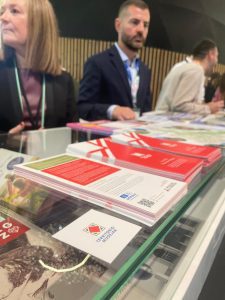
Material informativo de Territorio Mudéjar expuesto en el stand de Aragón durante FITUR, con atención al público.

Territorio Mudéjar rolls out the red carpet at FITUR for potential visitors from its network of partner towns.

Territorio Mudéjar has been at FITUR, rolling out the red carpet for potential visitors to
Leer más
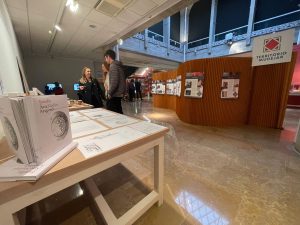
Vista de la exposición "Estrategias y proyectos de Territorio Mudéjar" en Muel, con visitantes conversando junto a paneles y publicaciones.
Guided tour in Muel to the exhibition “Strategies and Projects of the Mudejar Territory”

This morning, the Muel Ceramics School Workshop hosted a presentation on how Territorio Mudéjar works
Leer más
Equipo participante en la 25ª edición de MITM Europe 2025 durante CULTOURFAIR Madrid, frente al photocall oficial del evento.

CULTOURFAIR Madrid 2025: 37 meetings with premium tourism and corporate travel agencies to showcase our towns.
This year we returned to CULTOURFAIR Madrid 2025, an international B2B fair specializing in premium
Leer más
Guía señalando elementos arquitectónicos en la portada de una iglesia mudéjar durante la celebración del XXIII aniversario del Patrimonio Mundial.
23rd anniversary of the declaration of the churches of Tobed, Cervera de la Cañada, and the collegiate church of Calatayud as World Heritage Sites

On this day, 23 years ago, and after almost two years of work, the Church
Leer más

Tarazona

Circular from the rural school

The “Circular from the rural school” project is a cooperation project between rural development groups led by the Asociación Territorio Mudéjar.

The following have participated in the project: ADRI Calatayud-Aranda, ADRI Jiloca-Gallocanta, FEDIVALCA -Valdejalón and Campo de Cariñena-, ASOMO Tarazona and el Moncayo, CEDEMAR -Bajo Aragón Caspe and Ribera Baja del Ebro-, ADRAE -Ribera Alta del Ebro- and ADEFO Cinco Villas.

The objective is to develop educational materials around the Mudejar identity of the towns, placing rural schools and the educational community of the towns as the center of the project.

Based on the work developed, for almost three years, the students of fifteen schools have designed a walk through their town in which we can learn about the main points of interest and their connection with the Mudejar culture.

Tarazona

The tour has been carried out following the working model of the schools that participated in the project and adapted to the locality of Tarazona.

Tarazona was founded under the name of Turiaso, and according to local legend, it was built by Tubalcaín and rebuilt by Hercules. In the 1st century BC, the city probably already extended towards both banks of the river Queiles.

From the 3rd century onwards, the city was gradually abandoned due to the political instability of the Roman Empire. At the beginning of the 8th century, Tarazona was under Islamic rule until 1119, the year of the Christian conquest by Alfonso I the Battler. From this time onwards, three very important cultures coexisted in the town: Christians, Muslims and Jews.

1. History of the town

The Muslims who remained after this conquest became known as Mudejars, and preserved their religion, culture and customs.

As the Christians dominated the territory at that time, they commissioned the Mudejars, who were accustomed to using a series of techniques, materials and decoration typical of their culture, to carry out the constructions. The Christians admired the art built by the Mudejars.

This point is linked to the didactic activity 1.

2. Mudejar Architecture

The Mudejars built many types of architecture depending on the function and the person who commissioned it. In Tarazona we have many examples of Mudejar monuments The Mudejar style of Tarazona Cathedral appears after the War of the Two Peters. It was necessary to rebuild part of the building. There is also an example of a Mudejar cloister attached to the building.

This point is linked to the didactic activity 4

3. Importance of water and landscape

Mudejar architecture can be found around large rivers, as this was the place where the Muslim population usually settled. The Ebro was the backbone of the city, with its main tributaries, such as the Jalón, also gaining importance. The river that crosses Tarazona is the Queiles, an important population centre for all cultures throughout history.

This point is linked to the didactic activity 6

4. Reminiscences

Many examples of Renaissance palace-houses and even religious buildings are preserved in Tarazona. These buildings allow us to talk about the use of traditional Islamic building materials and techniques over time. In 1610 the Moors (Mudejars converted to Christianity) were expelled from Aragon, which meant the end of the Mudejar style. Even so, we can still find buildings that are built in the same construction tradition.

This point is linked to the didactic activity 7

4. Coexistence of cultures

With the arrival of Christianity, the previous settlers had to live segmented into different quarters, although their religion and customs were respected. These neighbourhoods, or aljamas, were like small cities with their own administration at the service of the Christian king.

In the aljamas were located, in addition to the houses where people lived, the main buildings for the conduct of life in each culture, such as mosques and synagogues. There are localities where this urban division is perfectly differentiated. Tarazona is one of the best examples. As well as having an extensive Moorish quarter, it also has a Jewish quarter, as the town had a large Jewish population.

This point is linked to the didactic activity 2