Fuentes de Ebro

Fuentes de Ebro
Monuments
THIS PROJECT PROVIDES AN UPDATED VISION OF THE MUDEJAR MONUMENTAL HERITAGE
Fuentes de Ebro
Pedagogy
SCHOOL MATERIALS TO WORK ON CULTURAL AND NATURAL HERITAGE
mudetrad-fuentes
Mudetrad Project
A PROJECT THAT VALUES THE TRADITIONAL ARCHITECTURE OF FUENTES DE EBRO
portada guia didactica
Didactic Mudejar, the guide
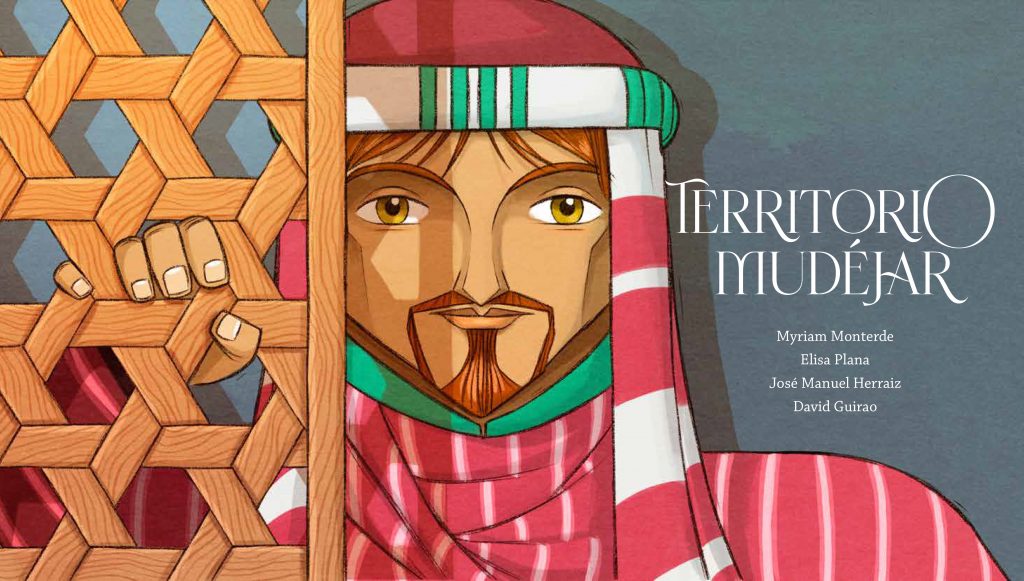
THE GUIDE ILLUSTRATED BY DAVID GUIRAO TO HELP YOU UNDERSTAND THE MUDEJAR STYLE
Imagen decorativa para Slider
Circular from the rural school
Family walks
COOPERATIVE PROJECT BETWEEN RURAL DEVELOPMENT GROUPS
Vista panorámica del pueblo viejo de Rodén con sus ruinas extendidas sobre la ladera, destacando la iglesia en lo alto del cerro.

Converging valleys

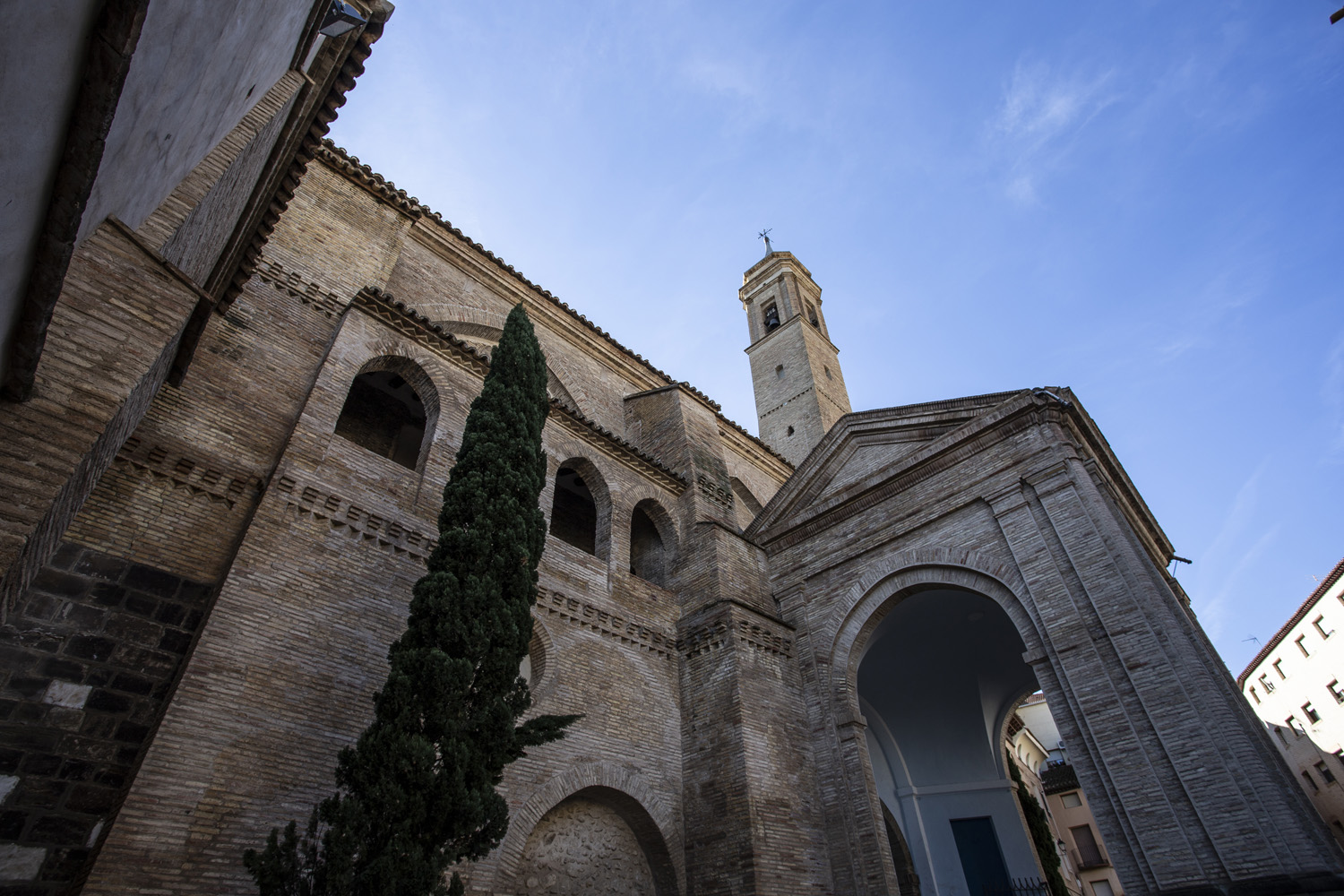
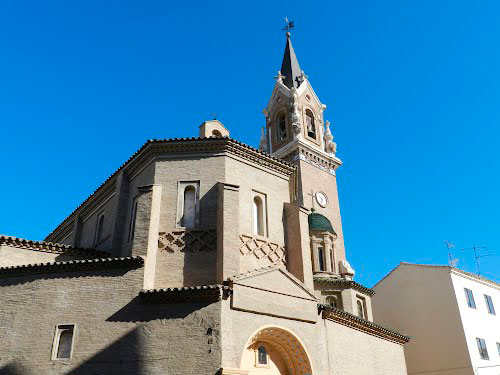
Fuentes de Ebro, a fertile land of crops with protected designation of origin, sits on an escarpment crowned by the church of San Miguel Arcángel, the cultural and artistic centrepiece of the town. On the outside, the slender neo-Gothic tower commissioned from the architect Félix Navarro at the beginning of the 20th century to replace the original Mudejar tower, which had stability problems.

The interior of the temple seduces at first sight with its spaciousness, luminosity, elegance and richness and makes us understand why it is one of the most beautiful works of the Renaissance in Aragon. On the exterior brick walls of the primitive apse of this church, which has been converted into an entrance, various Mudejar tracery motifs have been preserved, basically interlacing to form lozenges. The Palace of the Counts of Fuentes, the hermitage of Santa Bárbara and the Roman site of La Corona are also worth a visit.

Fuentes de Ebro, a fertile land of crops with protected designation of origin, sits on an escarpment crowned by the church of San Miguel Arcángel, the cultural and artistic centrepiece of the town. On the outside, the slender neo-Gothic tower commissioned from the architect Félix Navarro at the beginning of the 20th century to replace the original Mudejar tower, which had stability problems.

The interior of the temple seduces at first sight with its spaciousness, luminosity, elegance and richness and makes us understand why it is one of the most beautiful works of the Renaissance in Aragon. On the exterior brick walls of the primitive apse of this church, which has been converted into an entrance, various Mudejar tracery motifs have been preserved, basically interlacing to form lozenges. The Palace of the Counts of Fuentes, the hermitage of Santa Bárbara and the Roman site of La Corona are also worth a visit.

Rodén

The hamlet of Rodén deserves a separate chapter. Perched on a mound at an altitude of 300 metres, the Islamic ruins of the old village bear witness to the devastation wrought by the Civil War. It was destroyed and dismantled in 1937 and, after the war, a new settlement was built at the foot of the old one. The old town, which has been declared an Asset of Cultural Interest, was built with alabaster as a wall-building material, bound with mortar and plastered with plaster. These plaster stones blend in with the terrain on which they stand and their silhouette is still visible, with the houses and buildings used for secondary activities arranged in a staggered pattern on the northern slope, with the church tower and the remains of the castle as the main landmarks. The tower has been restored and is the best preserved element: built with alabaster ashlars, square in plan and without decorative elements. The castle preserves a room covered by a half-barrel vault, reinforced with a brick arch and open at both ends.

The hamlet of Rodén deserves a separate chapter. Perched on a mound at an altitude of 300 metres, the Islamic ruins of the old village bear witness to the devastation wrought by the Civil War.

It was destroyed and dismantled in 1937 and, after the war, a new settlement was built at the foot of the old one. The old town, which has been declared an Asset of Cultural Interest, was built with alabaster as a wall-building material, bound with mortar and plastered with plaster. These plaster stones blend in with the terrain on which they stand and their silhouette is still visible, with the houses and buildings used for secondary activities arranged in a staggered pattern on the northern slope, with the church tower and the remains of the castle as the main landmarks. The tower has been restored and is the best preserved element: built with alabaster ashlars, square in plan and without decorative elements. The castle preserves a room covered by a half-barrel vault, reinforced with a brick arch and open at both ends.

Information

Town Hall: 976 169 100
wwww.fuentesdeebro.es

Centre for the Development of the Sea Regions of Aragon
cedemar.es

VISIT TO FUENTES DE EBRO
976 633 296

DO YOU WANT TO KNOW MORE?
Aragon Tourism
turismodearagon.com

Territorio Mudéjar Network

The city council has been a full partner of Territorio Mudéjar since March 2019.

Projects Territorio Mudéjar in Fuentes de Ebro

Monuments | View the project
Pedagogy | View the project
Mudetrad Project | View the project
Mudejar plaster | View the project
Didactic Mudejar, the guide | View the project
‘Circular’ Family walks | View the project

Daroca

daroca-W2
Monuments
THIS PROJECT PROVIDES AN UPDATED VISION OF THE MUDEJAR MONUMENTAL HERITAGE
Daroca
Pedagogy
SCHOOL MATERIALS TO WORK ON CULTURAL AND NATURAL HERITAGE
daroca-W1
Podcast
A PODCAST THAT ENHANCES THE IMPORTANCE OF MUDEJAR ART
mudetrad-daroca
Mudetrad Project
A PROJECT THAT VALUES THE TRADITIONAL ARCHITECTURE OF DAROCA
Daroca-08
Mudéjar wood in Daroca
A TOUR THROUGH THE MUDEJAR CARPENTRY OF DAROCA AND ITS HISTORY
cartografia-identidades-rurales
Cartography of Rural Identities
MAP OF THE TERRITORY THAT COLLECTS THE IDENTITY OF ITS INHABITANTS, HISTORY AND HERITAGE
portada guia didactica
Didactic Mudejar, the guide
THE GUIDE ILLUSTRATED BY DAVID GUIRAO TO HELP YOU UNDERSTAND THE MUDEJAR STYLE
Imagen decorativa para Slider
Circular from the rural school
Family walks
COOPERATIVE PROJECT BETWEEN RURAL DEVELOPMENT GROUPS
El mudéjar y la geometría euclidiana
PLASTIC STUDY OF THE ARAGONESE MUDEJAR OF THE SPACE OF THE MUDEJAR TERRITORY

Daruqa

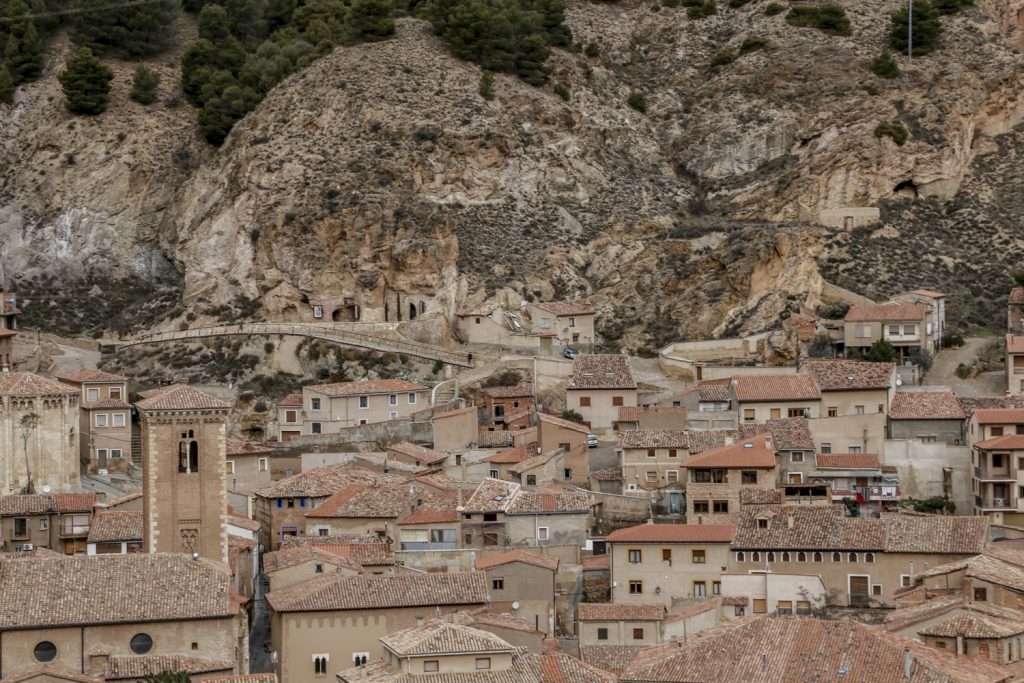
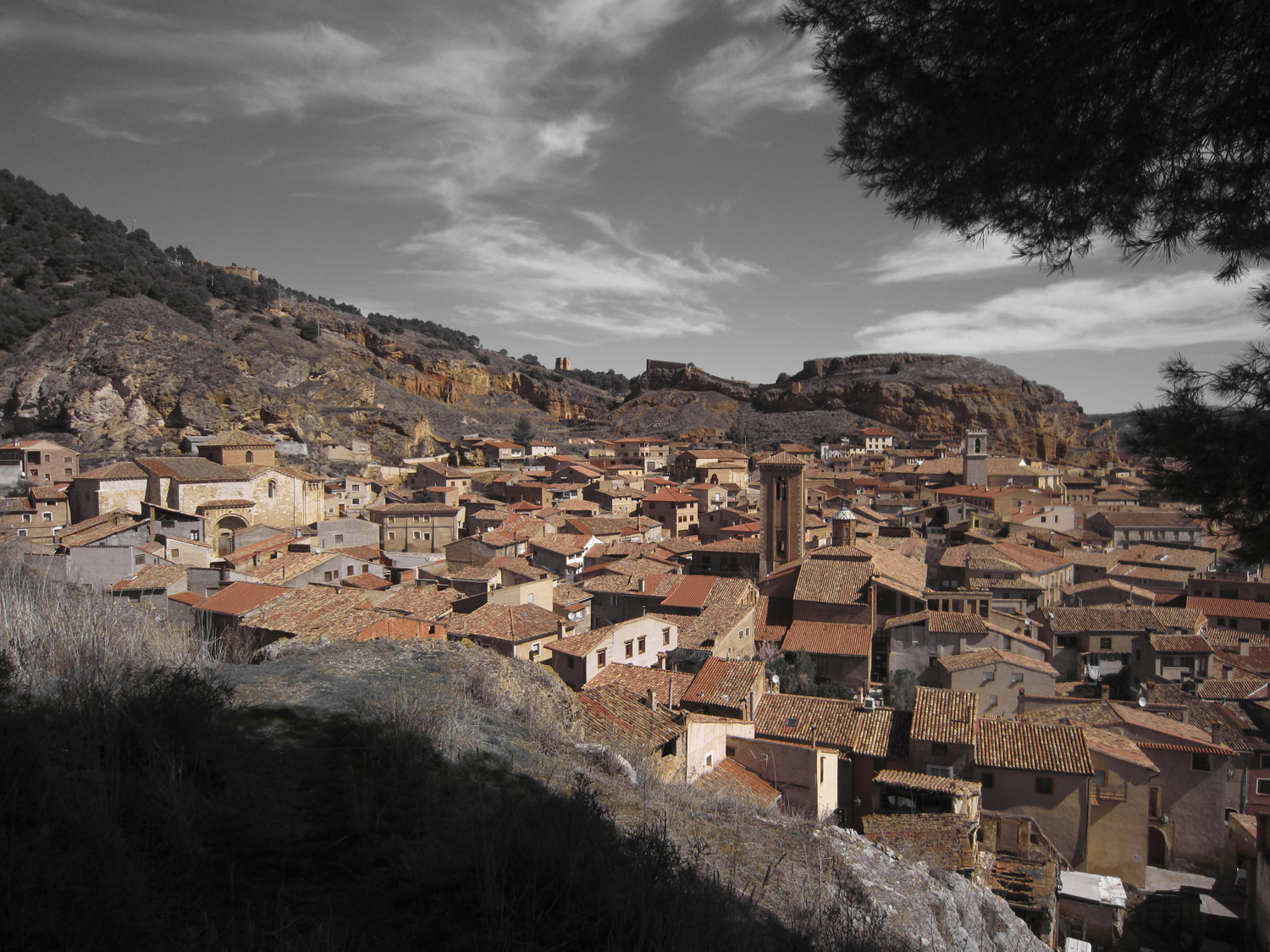
The city of Daroca is one of the most interesting Mudejar cities in Aragon. The town has been declared a historic-artistic site and to walk through its streets is to walk through a living museum of the Middle Ages, the period in which it experienced its greatest splendour.

Watched over by the remains of its ancient castle, the town is very much in keeping with its Mudejar heritage. It is enough to stroll through its narrow, stepped streets on the slope of a hillside or marvel at its towers such as that of the church of Santo Domingo de Silos, built in stone and brick, which is one of the best examples of transition between styles; its churches such as San Juan de la Cuesta – where its apse shows the transition from Romanesque to Mudejar – or discover treasures of its civil architecture such as the unknown Palacio de los Luna, without doubt the most important Aragonese Mudejar monument of its kind.

The city of Daroca is one of the most interesting Mudejar cities in Aragon. The town has been declared a historic-artistic site and to walk through its streets is to walk through a living museum of the Middle Ages, the period in which it experienced its greatest splendour.

Watched over by the remains of its ancient castle, the town is very much in keeping with its Mudejar heritage. It is enough to stroll through its narrow, stepped streets on the slope of a hillside or marvel at its towers such as that of the church of Santo Domingo de Silos, built in stone and brick, which is one of the best examples of transition between styles; its churches such as San Juan de la Cuesta – where its apse shows the transition from Romanesque to Mudejar – or discover treasures of its civil architecture such as the unknown Palacio de los Luna, without doubt the most important Aragonese Mudejar monument of its kind.

Stronghold of the Upper March

The condition of frontier land has marked the history of Daroca, which took its present name with the arrival of the Arabs, from the second half of the 8th century onwards.

Then the so-called Daruqa under the protection of the castle on San Cristobal hill. In 1120, Alfonso I the Battler, after the battle of Cutanda, conquered the town, which became an important border town. This led to the growth of its walled enclosure, which at more than four kilometres in length was once the largest in Aragon, with more than a hundred towers that mark out this complex with monumental gates leading to the city.

One of the charms of the city is to walk along its walls, with its imposing towers until you reach the castle, from where you can enjoy a beautiful panoramic view.

Daroca cannot be understood without its imposing collegiate church of Santa María or Nuestra Señora de los Corporales, where architecture, ornamentation and the magnificent collection of movable goods are combined.

The building is also of interest because it is the guardian of the relic of the Sacred Bodies, the protagonists of a miracle that for centuries made Daroca a place of pilgrimage for Christians and whose tradition is still preserved today.

The condition of frontier land has marked the history of Daroca, which took its present name with the arrival of the Arabs, from the second half of the 8th century onwards.

Then the so-called Daruqa under the protection of the castle on San Cristobal hill. In 1120, Alfonso I the Battler, after the battle of Cutanda, conquered the town, which became an important border town. This led to the growth of its walled enclosure, which at more than four kilometres in length was once the largest in Aragon, with more than a hundred towers that mark out this complex with monumental gates leading to the city.

One of the charms of the city is to walk along its walls, with its imposing towers until you reach the castle, from where you can enjoy a beautiful panoramic view.

Daroca cannot be understood without its imposing collegiate church of Santa María or Nuestra Señora de los Corporales, where architecture, ornamentation and the magnificent collection of movable goods are combined.

The building is also of interest because it is the guardian of the relic of the Sacred Bodies, the protagonists of a miracle that for centuries made Daroca a place of pilgrimage for Christians and whose tradition is still preserved today.

Information

Town Hall: 976 800 312
www.daroca.es

Association for the Integral Rural Development of the lands of Jiloca and Gallocanta
adri.es

VISIT DAROCA
976 633 296

DO YOU WANT TO KNOW MORE?
Aragon Tourism
turismodearagon.com
Daroca Region Tourism
turismo.comarcadedaroca.com
Centre for Darocese Studies
ifc.dpz.es
Jiloca Study Centre
www.xiloca.org
The Way of El Cid
www.caminodelcid.org

Territorio Mudéjar Network

The city council has been a founding member of Territorio Mudéjar since 13 September 2018.

Projects Territorio Mudéjar in Daroca

Monuments | View the project
Pedagogy | View the project
Podcast | View the project
Mudetrad Project | View the project
Mudejar wood | View the project
Identidades Rurales | View the project
Mudejar civil architecture | View the project
Mudejar plaster | View the project
New models for the management of Mudejar monumental civilian buildings | View the project
Mudejar and Euclidean Geometry | View the project
Didactic Mudejar, the guide | View the project
Preventive town planning | View the project
‘Circular’ Family walks | View the project

Borja

Borja-01
Monuments
THIS PROJECT PROVIDES AN UPDATED VISION OF THE MUDEJAR MONUMENTAL HERITAGE
Pedagogy
SCHOOL MATERIALS TO WORK ON CULTURAL AND NATURAL HERITAGE
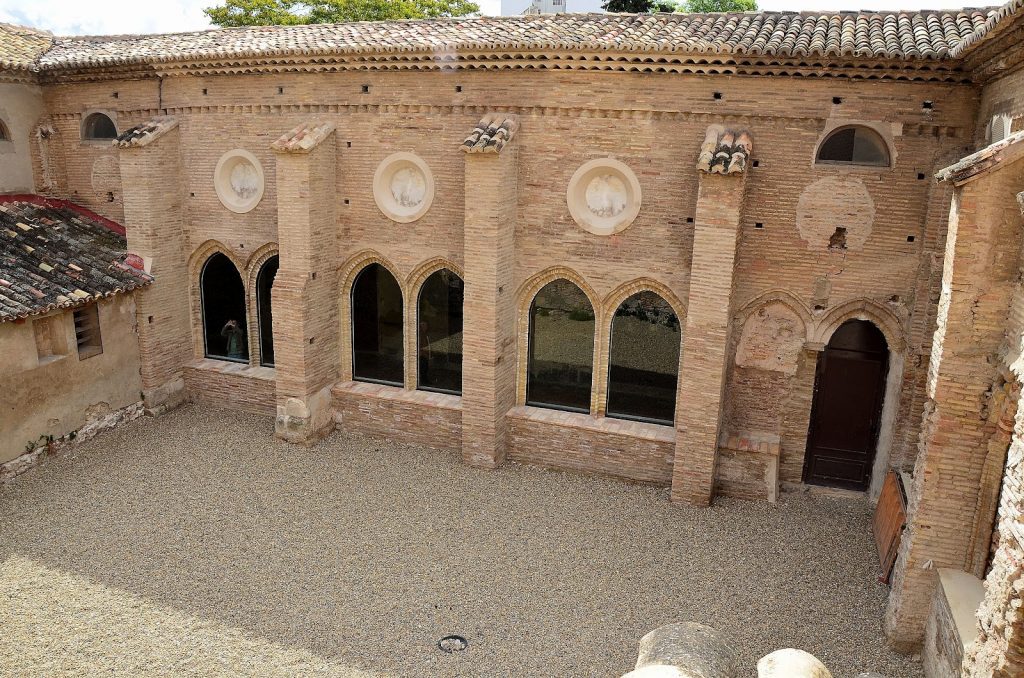
Claustro mudéjar de la ex colegiata de Santa María de Borja con ventanales góticos y muros de ladrillo.
Podcast
A PODCAST THAT ENHANCES THE IMPORTANCE OF MUDEJAR ART
mudetrad-borja
Mudetrad Project
A PROJECT THAT HIGHLIGHTS THE VALUE OF BORJA'S TRADITIONAL ARCHITECTURE
Borja-00-IMAGEN-INICIO
Mudejar wood in Borja
A JOURNEY THROUGH BORJA'S MUDEJAR CARPENTRY AND ITS HISTORY
portada guia didactica
Didactic Mudejar, the guide
THE GUIDE ILLUSTRATED BY DAVID GUIRAO TO HELP YOU UNDERSTAND THE MUDEJAR STYLE
Imagen decorativa para Slider
Circular from the rural school
Family walks
COOPERATIVE PROJECT BETWEEN RURAL DEVELOPMENT GROUPS

Cultural melting pot

The city of Borja, whose historic centre is recognised as an Asset of Cultural Interest, reflects the history of a city in which the Mudejar imprint can already be felt in the Arabic etymology of its name: Burya, which means tower and fort.

This name, derived from the Arabic etymology given to it by the Muslims who settled in the 8th century on the ancient Borsao, marks the character of the place and the fortification of the crag of the present castle.

The legacy of this period is still present in a rich historical-artistic heritage in which the ex-collegiate church of Santa María – a Romanesque temple that was replaced by another of Mudejar construction in the 14th century and extended in the following century – stands out.

Other Mudejar buildings include the old church of San Miguel, now the Archaeological Museum, and some interesting examples of the town’s civil architecture: the Baltasar González House Museum and the House of Estanca.

The city of Borja, whose historic quarter has been declared an Asset of Cultural Interest, reflects the history of a city whose Mudejar influence can be seen in the Arabic etymology of its name: Burya, which means tower and fortress.

This name, derived from the Arabic etymology given to it by the Muslims who settled in the 8th century on the ancient Borsao, marks the character of the place and the fortification of the crag of the present castle.

The legacy of this period is still present in a rich historical-artistic heritage in which the ex-collegiate church of Santa María – a Romanesque temple that was replaced by another of Mudejar construction in the 14th century and extended in the following century – stands out.

Other Mudejar buildings include the old church of San Miguel, now the Archaeological Museum, and some interesting examples of the town’s civil architecture: the Baltasar González House Museum and the House of Estanca.

The ancient Burya and urban space

Borja stands out for the structure of its farmhouses and its numerous examples of Renaissance architecture, which include some of the most valuable examples in Aragon.

Its Mudejar legacy is very interesting, with the excolegiata de Santa María, a 14th century temple built as a church of Mudejar fortress typology with a single nave – later reformed in Baroque and neoclassical style – over an earlier Romanesque temple. The exterior has two towers: the lower part of the clock tower is Romanesque and the following parts are Mudejar.

The old Church of San Miguel, which currently houses the municipal archaeological museum, is also a Mudejar construction from the late 14th century on top of a primitive Romanesque temple. The building, with a single nave and a wooden roof, preserves interesting ornamental elements in carved plaster.

The Baltasar González House Museum was built at the beginning of the 15th century and has a tapial façade rendered with plaster and pointed arches on the main windows.

The Casa de la Estanca -about 8 km from Borja- is one of the few remaining examples of 16th century Mudejar civil architecture in Aragon. The building, which served as the dwelling of the person in charge of water control and as a watchtower, is striking for its excellent state of preservation and its integration into the landscape, which makes it a unique place.

It currently houses a magnificent set of interpretative elements about the birds that inhabit the pond.

The Mudejar legacy can also be seen in the remains of the Castillo de la Zuda – a fortress of Muslim origin – and in the Casa de las Conchas (House of Shells) – with plaster decoration with interlacing in the Mudejar tradition.

Borja stands out for the structure of its farmhouses and its numerous examples of Renaissance architecture, which include some of the most valuable examples in Aragon.

Its Mudejar legacy is very interesting, with the excolegiata de Santa María, a 14th century temple built as a church of Mudejar fortress typology with a single nave – later reformed in Baroque and neoclassical style – over an earlier Romanesque temple. The exterior has two towers: the lower part of the clock tower is Romanesque and the following parts are Mudejar.

The old Church of San Miguel, which currently houses the municipal archaeological museum, is also a Mudejar construction from the late 14th century on top of a primitive Romanesque temple. The building, with a single nave and a wooden roof, preserves interesting ornamental elements in carved plaster.

The Baltasar González House Museum was built at the beginning of the 15th century and has a tapial façade rendered with plaster and pointed arches on the main windows.

The Casa de la Estanca -about 8 km from Borja- is one of the few remaining examples of 16th century Mudejar civil architecture in Aragon. The building, which served as the dwelling of the person in charge of water control and as a watchtower, is striking for its excellent state of preservation and its integration into the landscape, which makes it a unique place.

It currently houses a magnificent set of interpretative elements about the birds that inhabit the pond.

The Mudejar legacy can also be seen in the remains of the Castillo de la Zuda – a fortress of Muslim origin – and in the Casa de las Conchas (House of Shells) – with plaster decoration with interlacing in the Mudejar tradition.

Information

Town Hall: 976 852 001
www.borja.es

Association for the Development of the Lands of Moncayo
asomo.com

VISIT BORJA
976 633 296

DO YOU WANT TO KNOW MORE?
Aragon Tourism
turismodearagon.com
Centre for Borjan Studies
cesbor.blogspot.com
Grenache Route
www.rutadelagarnacha.es

Territorio Mudéjar Network

The city council has been a founding member of Territorio Mudéjar since 13 September 2018.

Projects Mudejar Territory in Borja

Monuments | View the project
Pedagogy | View the project
Podcast | View the project
Mudetrad Project | View the project
Mudejar wood | View the project
Mudejar civil architecture | View the project
Mudejar plaster | View the project
Didactic Mudejar, the guide | View the project
‘Circular’ Family walks | View the project
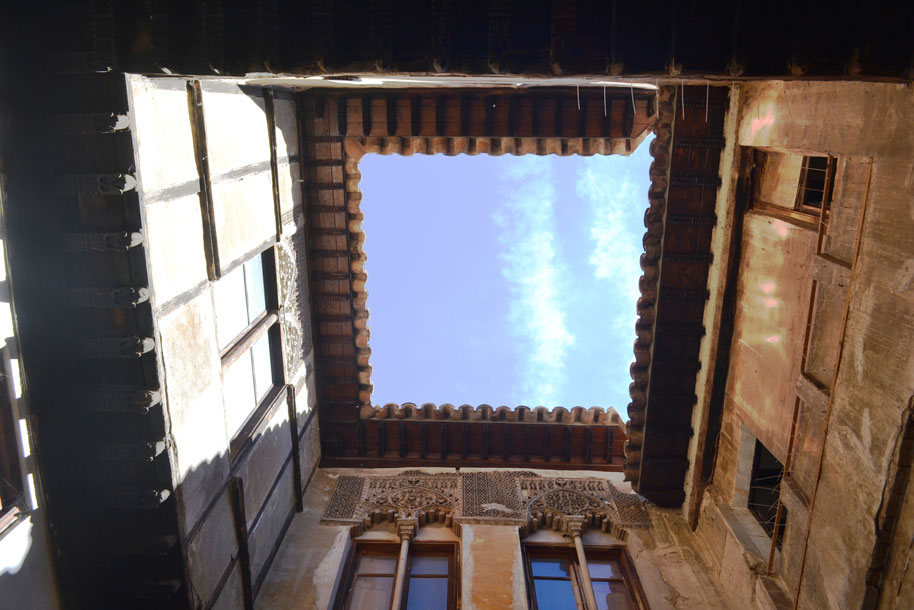
Sound contexts and Mudejar architecture | View the project

Belmonte de Gracián

Belmonte-01
Monuments
THIS PROJECT PROVIDES AN UPDATED VISION OF THE MUDEJAR MONUMENTAL HERITAGE
Belmonte-3049-baja
Pedagogy
SCHOOL MATERIALS TO WORK ON CULTURAL AND NATURAL HERITAGE
mudetrad-belmonte
Mudetrad Project
A PROJECT THAT HIGHLIGHTS THE TRADITIONAL ARCHITECTURE OF BELMONTE DE GRACIÁN
cartografia-identidades-rurales
Cartography of Rural Identities
MAP OF THE TERRITORY THAT COLLECTS THE IDENTITY OF ITS INHABITANTS, HISTORY AND HERITAGE
portada guia didactica
Didactic Mudejar, the guide
THE GUIDE ILLUSTRATED BY DAVID GUIRAO TO HELP YOU UNDERSTAND THE MUDEJAR STYLE
Imagen decorativa para Slider
Circular from the rural school
Family Outings
COOPERATIVE PROJECT BETWEEN RURAL DEVELOPMENT GROUPS

White gypsum stone

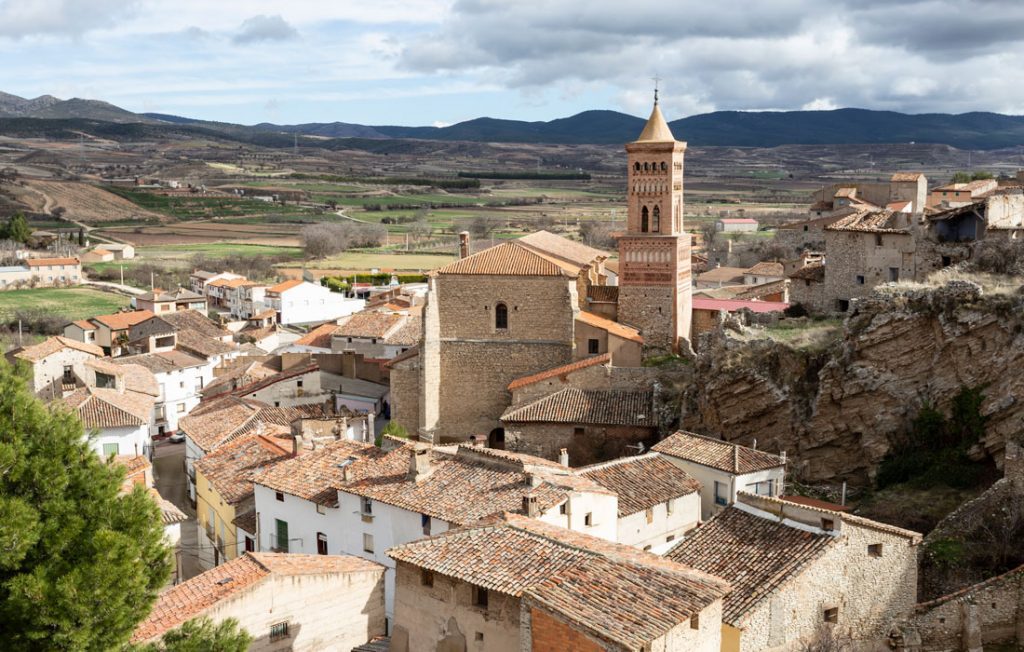
Belmonte de Gracián, perched on hills white with gypsum, is a place with deep Muslim traces. There we find the church of San Miguel, a temple with a polygonal apse of extraordinary Mudejar decoration.

It is worth looking up to see how the brick panels at the top form a grid of lozenges and crosses separated by friezes of angled bricks. On the south side stands the tower, also Mudejar, which is notable for its decoration of honey-coloured ceramic plates and shafts. The views are beautiful as you stroll through the corrals and threshing floors that surround this temple.

The town centre is located next to a hill that once crowned a Muslim castle. On its ruins now stands the church of Nuestra Señora del Castillo, a Baroque temple to which a bell tower in the Mudejar tradition was added, an exceptional lookout over the banks of the river Perejiles.

Belmonte de Gracián, perched on hills white with gypsum, is a place with deep Muslim traces. There we find the church of San Miguel, a temple with a polygonal apse of extraordinary Mudejar decoration.

It is worth looking up to see how the brick panels at the top form a grid of lozenges and crosses separated by friezes of angled bricks. On the south side stands the tower, also Mudejar, which is notable for its decoration of honey-coloured ceramic plates and shafts. The views are beautiful as you stroll through the corrals and threshing floors that surround this temple.

The town centre is located next to a hill that once crowned a Muslim castle. On its ruins now stands the church of Nuestra Señora del Castillo, a Baroque temple to which a bell tower in the Mudejar tradition was added, an exceptional lookout over the banks of the river Perejiles.

The ancient Secaisa

Belmonte de Gracián is a village of very ancient origin, formerly known as Secaisa, where the Muslims carried out fortification works, probably in the 10th century, and which passed into Christian hands at the beginning of the 12th century. The town stands on a steep hill “bello monte” (beautiful mountain) which gave it its name and was the birthplace of one of the most illustrious Spanish writers of the Golden Age: Baltasar Gracián. This municipality saw the birth on 8 January 1601 of the philosopher and writer who in 1985 gave his surname to the municipality, at that time known as Belmonte de Calatayud.

The layout of the town centre extends along the lower part of the hillside, between the road and its two churches: that of the Virgen del Castillo, the primitive parish church with its dome at the top of the village, and that of San Miguel, with an apse of extraordinary Mudejar decoration and a tower – also Mudejar – excellent for its glazed decoration. Above this church and at the foot of the gorge that crowns the other are the houses, the corrals, the threshing floors, the cellars and the abandoned haystacks: the kingdom of the aljez, a white and grey place, dreamlike and lost where there is only gypsum. A city that was carved out of the soft rocks of this material.

Belmonte de Gracián is a village of very ancient origin, formerly known as Secaisa, where the Muslims carried out fortification works, probably in the 10th century, and which passed into Christian hands at the beginning of the 12th century. The town stands on a steep hill “bello monte” (beautiful mountain) which gave it its name and was the birthplace of one of the most illustrious Spanish writers of the Golden Age: Baltasar Gracián. This municipality saw the birth on 8 January 1601 of the philosopher and writer who in 1985 gave his surname to the municipality, at that time known as Belmonte de Calatayud.

The layout of the town centre extends along the lower part of the hillside, between the road and its two churches: that of the Virgen del Castillo, the primitive parish church with its dome at the top of the village, and that of San Miguel, with an apse of extraordinary Mudejar decoration and a tower – also Mudejar – excellent for its glazed decoration. Above this church and at the foot of the gorge that crowns the other are the houses, the corrals, the threshing floors, the cellars and the abandoned haystacks: the kingdom of the aljez, a white and grey place, dreamlike and lost where there is only gypsum. A city that was carved out of the soft rocks of this material.

Territorio Mudéjar Network

The city council has been a founding member of Territorio Mudéjar since 13 September 2018.

More information

Town Hall 976 892 093
www.belmontedegracian.es

Association for the Integral Development of the Calatayud and Aranda Regions
galcar.es

VISIT BELMONTE DE GRACIÁN
976 633 296

DO YOU WANT TO KNOW MORE?
Tourism Comarca Comunidad de Calatayud
comarcacalatayud.com
Centro de Estudios Bilbilitanos
cebilbilitanos.com

Projects Territorio Mudéjar in Cariñena

Monuments | See the project
Pedagogy | See the project
Mudetrad project | See the project
Rural Identities | See the project
Mudéjar didactic, the guide | See the project
Preventive urbanism | See the project
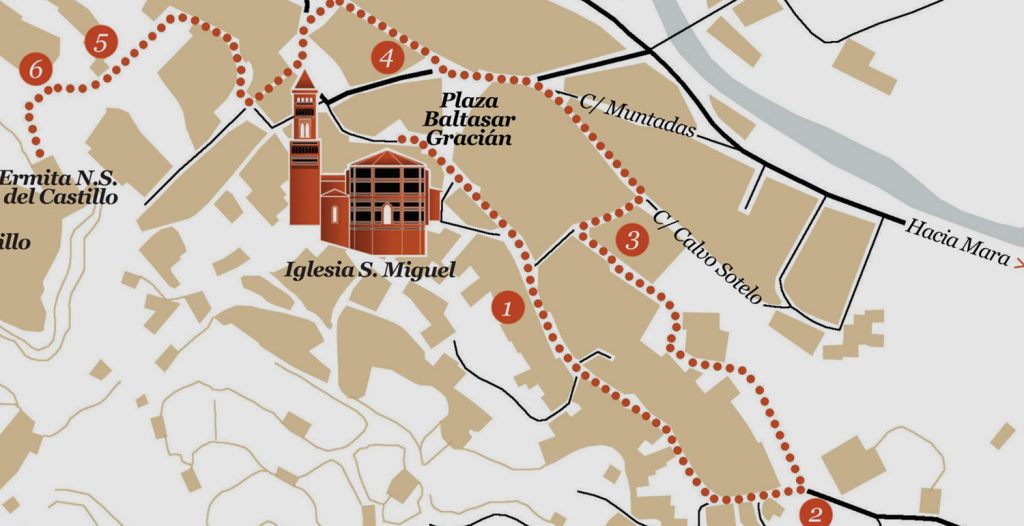
“Circular” Family Walks | See the project
Mudéjar RGB | See the project
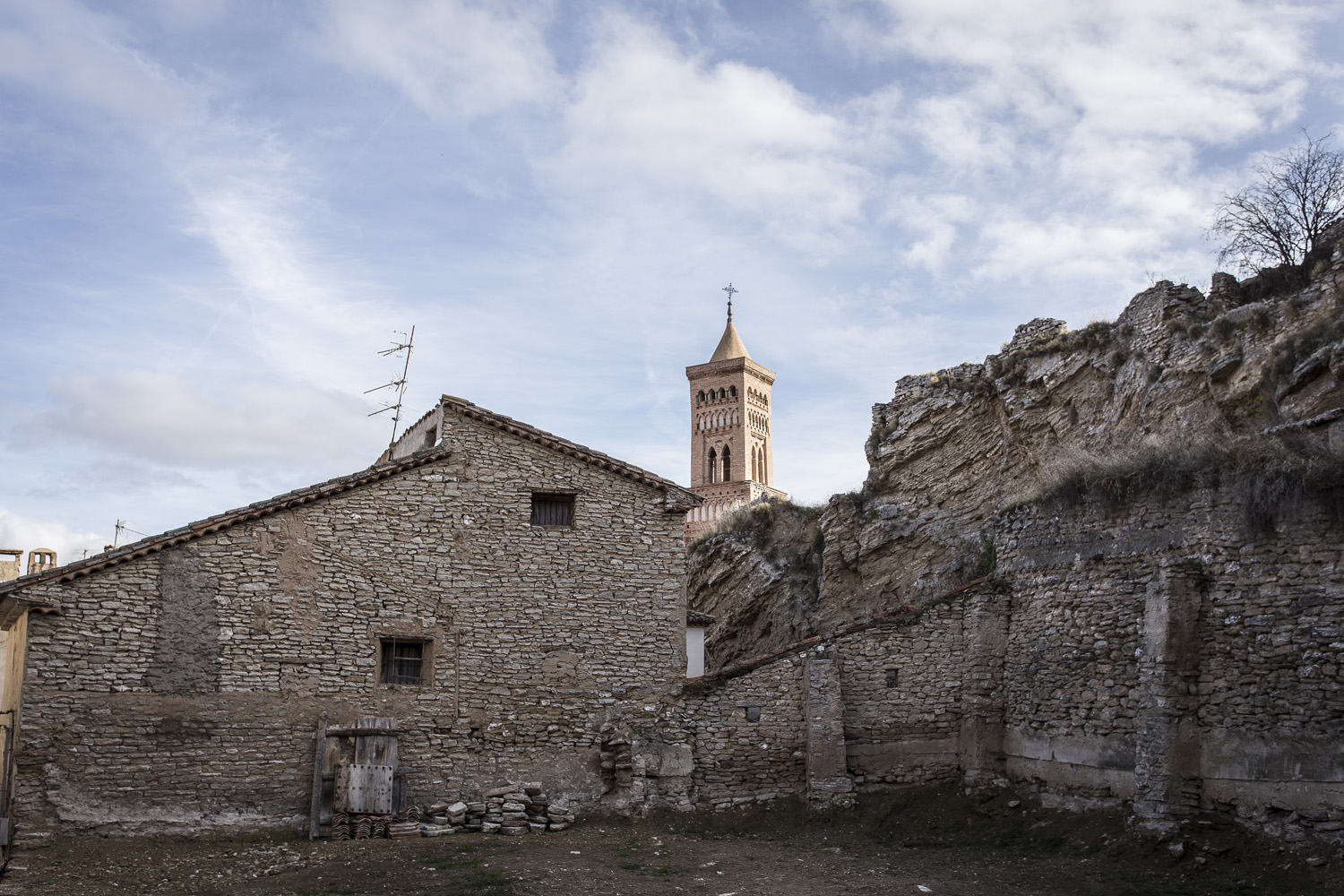
Valuing the muslim-friendly potential of Mudéjar Territory | See the project