Circular from
the country school

The “Circular from the rural school” project is a cooperation project between rural development groups led by the Asociación Territorio Mudéjar.

The following have participated in the project: ADRI Calatayud-Aranda, ADRI Jiloca-Gallocanta, FEDIVALCA -Valdejalón and Campo de Cariñena-, ASOMO Tarazona and el Moncayo, CEDEMAR -Bajo Aragón Caspe and Ribera Baja del Ebro-, ADRAE -Ribera Alta del Ebro- and ADEFO Cinco Villas.

The objective is to develop educational materials around the Mudejar identity of the towns, placing rural schools and the educational community of the towns as the center of the project.

Based on the work developed, for almost three years, the students of fifteen schools have designed a walk through their town in which we can learn about the main points of interest and their connection with the Mudejar culture.

Ateca

This walk shows us the work of the pupils of the CEIP Virgen de la Peana school in Ateca.

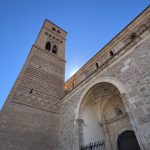
Ateca is located in a strategic position between the rivers Jalón, Manubles and Mesa-Piedra, which led to the settlement of the area. Its name, derived from the Arabic toponym “la antigua”, indicates a strong legacy of Islamic origin and is complemented by a hamlet with an urban layout of Islamic character. The ensemble dialogues with the landscape marked by the use of water resources. The main landmark is the Mudejar tower of the church of Santa María.

1. History of Ateca

Ateca was at its most splendid in medieval times. It was defended by a walled complex which was accessed through four main gates. One of them is the Ariza gate, from which we explain the origin and history of the town.

This point is linked to the didactic activity 1

2. Water and agriculture

For the Islamic culture, water was a sacred asset. Ateca was the ideal place to settle because it was surrounded by different rivers. The abundance of water favoured the development of agricultural work and, therefore, the improvement and development of hydraulic engineering that can still be seen today.

This point is linked to the didactic activity 6

3. Coexistence of cultures

The three cultures that make up the Mudejar culture coexisted in Ateca: Jewish, Christian and Muslim. We can appreciate this fact through the urban planning that we have preserved: winding streets, dead ends, alleys… In addition to these urban characteristics of Islamic tradition, there are the callizos, passages with roofs that connect one street to another. The one in which we find ourselves is the so-called “callizo de la calle Mundillo”.

This point is linked to the didactic activity 2

4. Construction materials

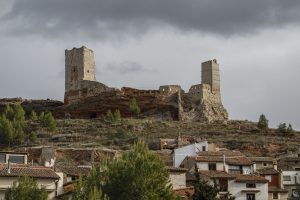
The castle is one of the oldest parts of the town. Although it is built with masonry, the materials used in traditional Islamic buildings used to be made of mud or brick, mud being one of the materials used in Mudejar architecture, together with plaster, wood and alabaster.

This point is linked to the didactic activity 3

5. Mudejar architecture

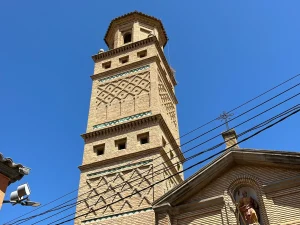
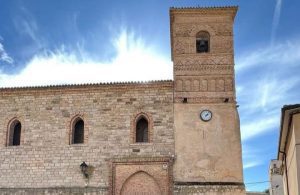
The tower of the church of Santa María was built before the rest of the church. It is remarkable for its complex interior structure and decoration.

The exterior decoration is based on the play of light and shadow, using brick highlights and ceramics, which makes the building change depending on the light and weather conditions.

This point is linked to the didactic activity 7

Related Works