Fréscano

FRÉSCANO
FRÉSCANO
Pedagogy
SCHOOL MATERIALS TO WORK ON CULTURAL AND NATURAL HERITAGE
Fréscano Mudetrad
Mudetrad Project
A PROJECT THAT ENHANCES THE TRADITIONAL ARCHITECTURE OF FRÉSCANO
FRÉSCANO
Podcast
A PODCAST THAT ENHANCES THE IMPORTANCE OF MUDEJAR ART
La guía didáctica
Didactic Mudejar, the guide
PRODUCTION OF AN EDUCATIONAL MATERIAL FOR PRIMARY AND SECONDARY SCHOOL PUPILS TO HELP THEM INTERPRET THE MUDEJAR STYLE
Fréscano Circular
Circular from the rural school
Family Outings
COOPERATIVE PROJECT BETWEEN RURAL DEVELOPMENT GROUPS
FRÉSCANO

Old population centre

The area around the town of Fréscano preserves archaeological remains of very ancient settlements. Specifically, they are located on the hills of Burrén, Burrena, La Cruz, El Solado and El Morredón. They correspond to the Late Bronze Age and Early Iron Age and are the foundations for the development of the “Burrén Iron Age I Archaeological Park” project.

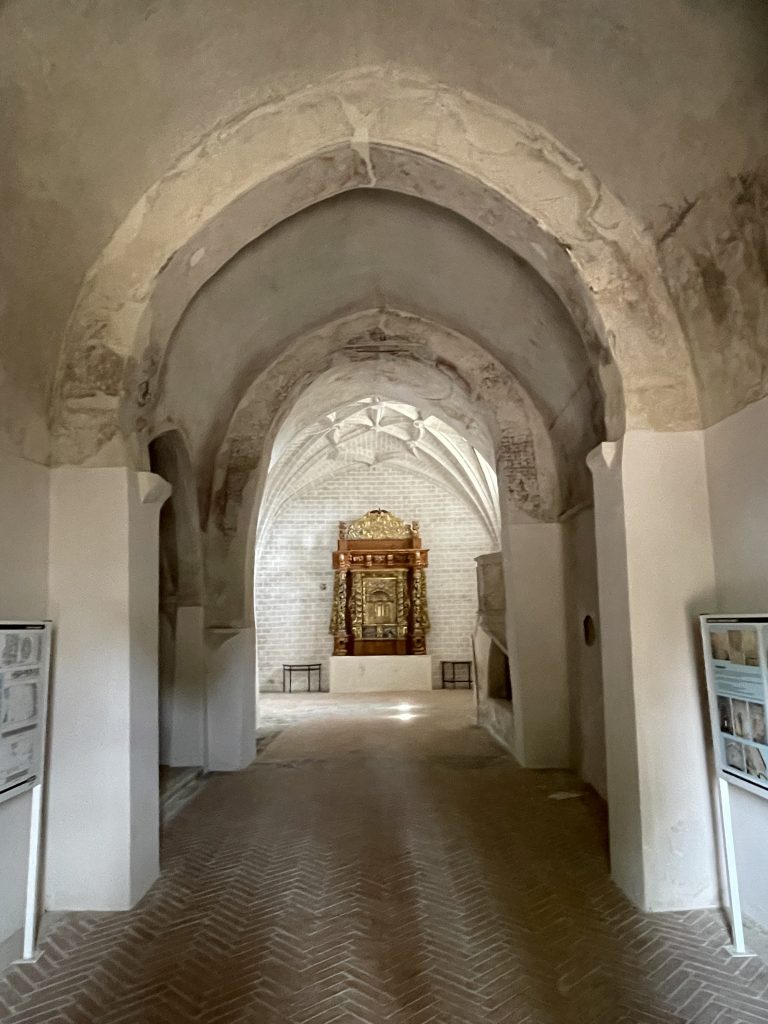
However, the first documentary mention of the locality of Fréscano appears in 1134 as a place of lordship. The existence of a medieval population is also attested by the preservation of buildings such as the hermitage of Santa María de Huerta, which, according to various studies, dates from between the 13th and 14th centuries. Inside we can find an exceptional collection of mural paintings that correspond to the linear Gothic style, dating from the first half of the 14th century. They are one of the few examples to be found south of the Ebro.

The area around the town of Fréscano preserves archaeological remains of very ancient settlements. Specifically, they are located on the hills of Burrén, Burrena, La Cruz, El Solado and El Morredón. They correspond to the Late Bronze Age and Early Iron Age and are the foundations for the development of the “Burrén Iron Age I Archaeological Park” project.

However, the first documentary mention of the locality of Fréscano appears in 1134 as a place of lordship. The existence of a medieval population is also attested by the preservation of buildings such as the hermitage of Santa María de Huerta, which, according to various studies, dates from between the 13th and 14th centuries. Inside we can find an exceptional collection of mural paintings that correspond to the linear Gothic style, dating from the first half of the 14th century. They are one of the few examples to be found south of the Ebro.

Agricultural use

Although it is true that we have not preserved a moment in the locality, we can affirm that Fréscano is closely linked to Mudejar culture. This is due to the existence of a Muslim population residing in the locality. We know that 450 people left Fréscano during the expulsion of the Moors.

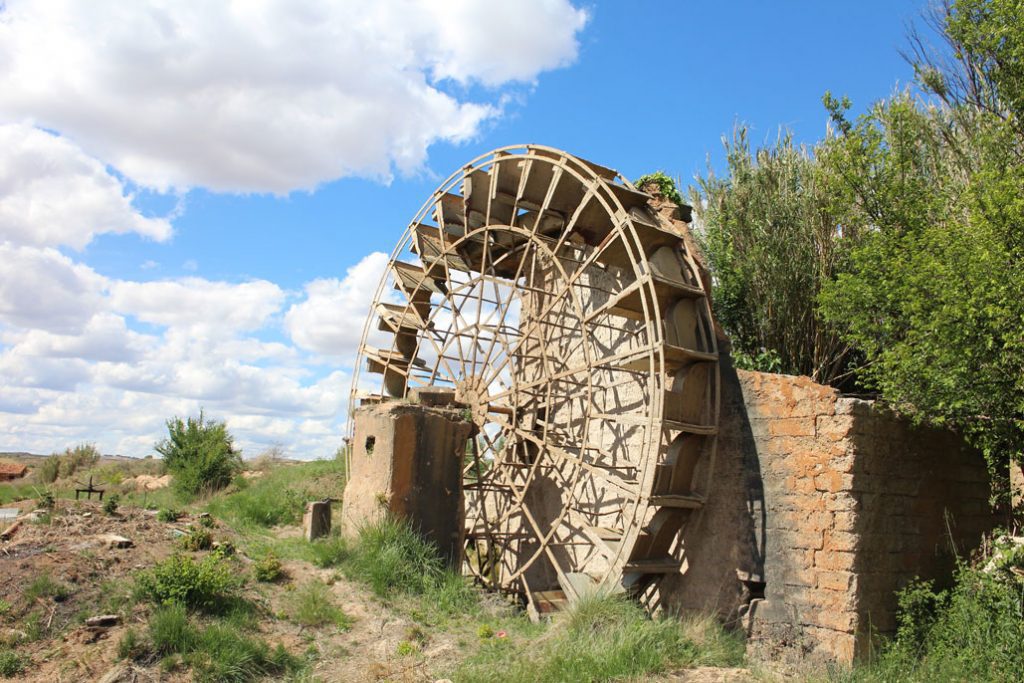
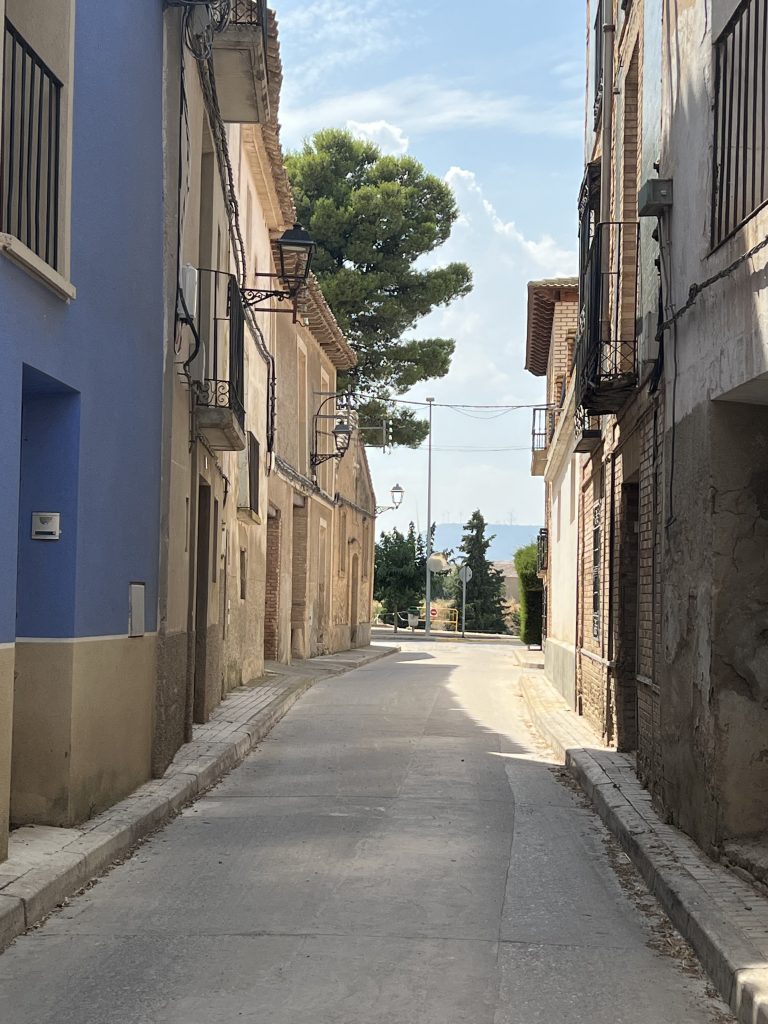
In addition, we can still see part of the urban layout inherited from the Moorish period, which we can see through narrow streets, alleys and bends. However, the most notable survival can be found in the use of water resources in the form of extensive irrigation networks, the most outstanding example of which are the irrigation ditches. We also have an example of 20th century hydraulic engineering, the Casa de Elevación de Aguas, which today houses a museum.

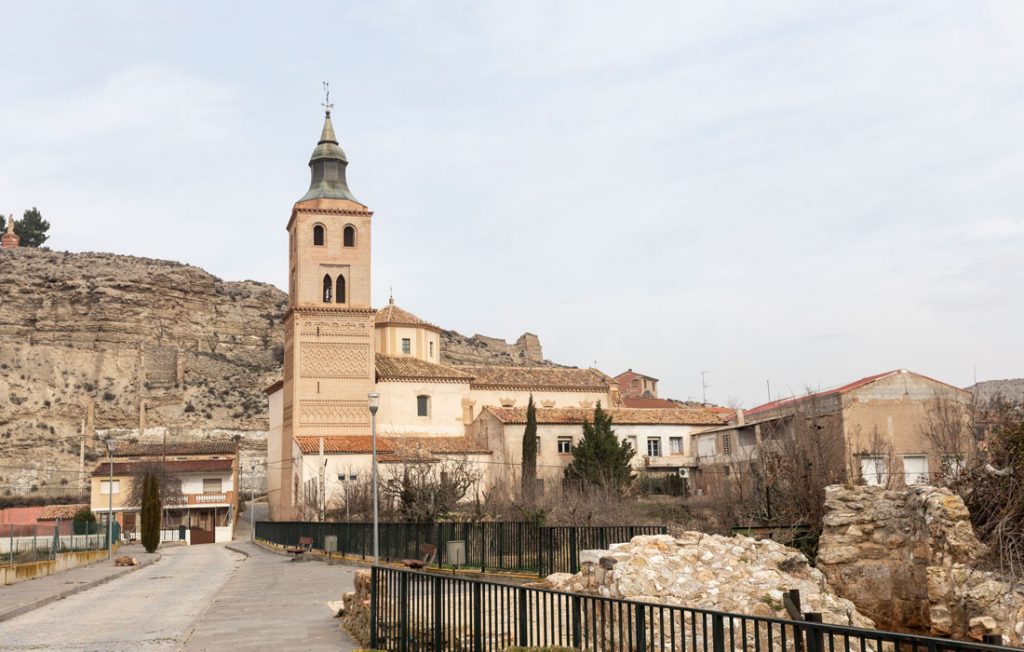
A visit to its Baroque parish church dedicated to the Virgen del Pilar and the Palace of the Dukes of Villahermosa, a fine example of 16th century Aragonese Renaissance architecture, are not to be missed.

In addition, we can still see part of the urban layout inherited from the Moorish period, which we can see through narrow streets, alleys and bends. However, the most notable survival can be found in the use of water resources in the form of extensive irrigation networks, the most outstanding example of which are the irrigation ditches. We also have an example of 20th century hydraulic engineering, the Casa de Elevación de Aguas, which today houses a museum.

A visit to its Baroque parish church dedicated to the Virgen del Pilar and the Palace of the Dukes of Villahermosa, a fine example of 16th century Aragonese Renaissance architecture, are not to be missed.

Territorio Mudéjar Network

The city council has been a full member of Territorio Mudéjar since April 2021.

More information

Town Hall:  976 850 460
https://frescano.es

DO YOU WANT TO KNOW MORE?
Provincial Tourism of Zaragoza
www.turismodezaragoza.es
Comarca Campo de Borja
https://campodeborja.es
Centro de Estudios Borjanos
cesbor.blogspot.com

Projects Mudejar Territory in Fréscano

Pedagogy | See project
Mudetrad | See project
Podcast | See project
Mudéjar didactic, the guide | See project
“Circular” from the rural school | See project

Villarreal de Huerva

villarreal-5
Monuments
THIS PROJECT PROVIDES AN UPDATED VISION OF THE MUDEJAR MONUMENTAL HERITAGE
villarreal-4
Pedagogy
SCHOOL MATERIALS TO WORK ON CULTURAL AND NATURAL HERITAGE
mudetrad-villarreal
Mudetrad Project
A PROJECT THAT VALUES THE TRADITIONAL ARCHITECTURE OF VILLARREAL DE HUERVA
Imagen decorativa para Slider
Circular from the rural school
Family walks
COOPERATIVE PROJECT BETWEEN RURAL DEVELOPMENT GROUPS

Cultural wealth

With a past marked by the passage of Celtiberian, Roman and Mozarabic peoples, among others, Villarreal de Huerva preserves a latent historical and artistic pulse represented by the remains of its castle and church.

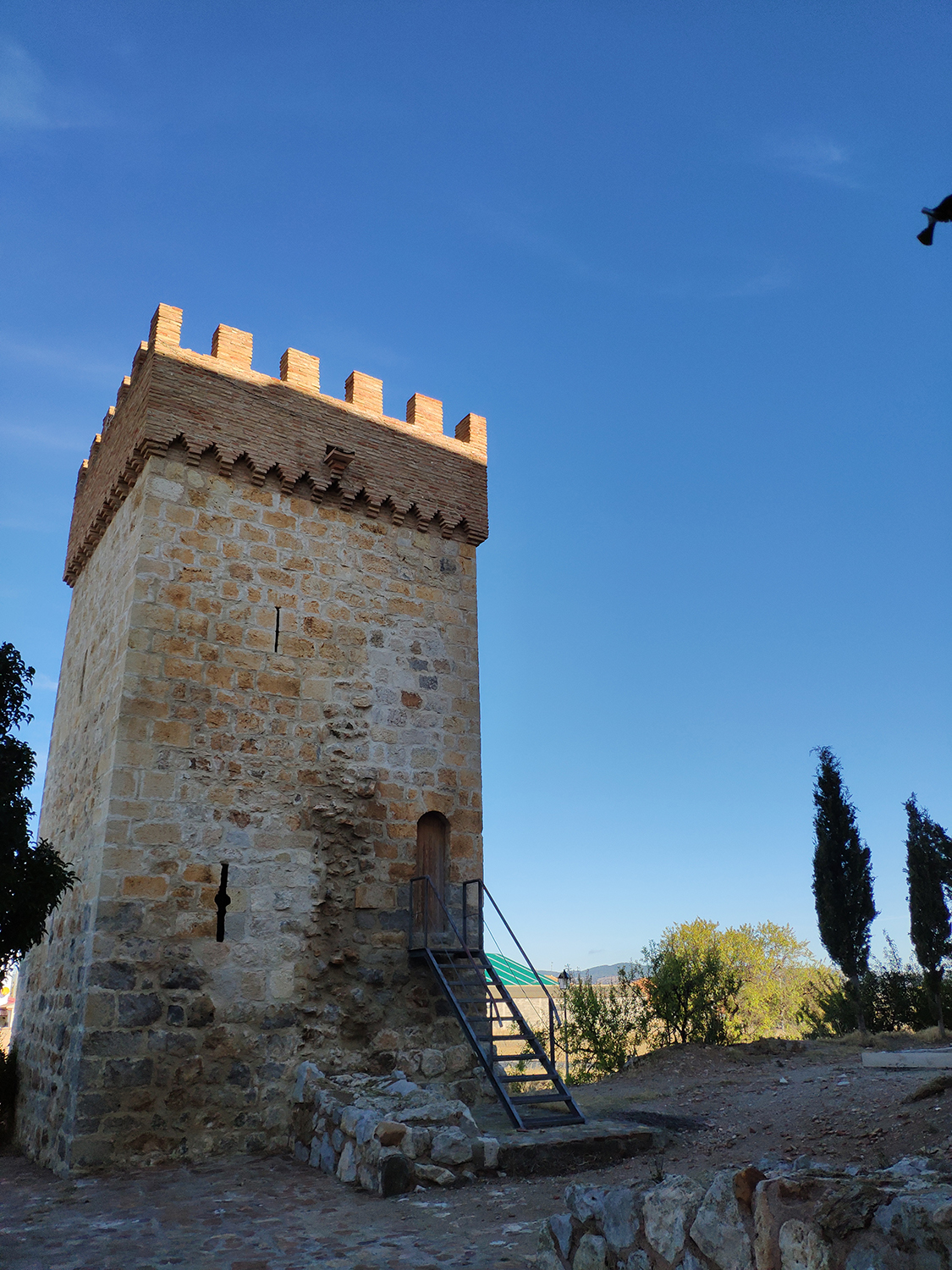
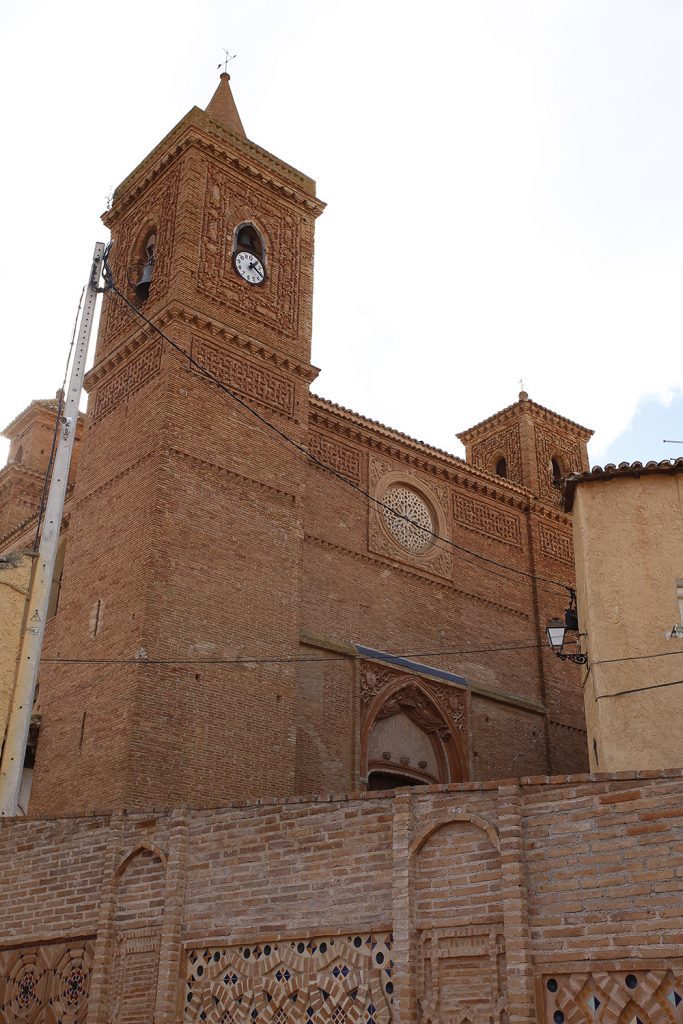
The remains of one of the towers of the old medieval fortress remain. Dating from the 14th century, it is made of ashlar stone and formed part of the fortified complex on which stands the Baroque church of San Miguel which, although dated 1686, retains an earlier element: its spectacular 15th century Mudejar tower.

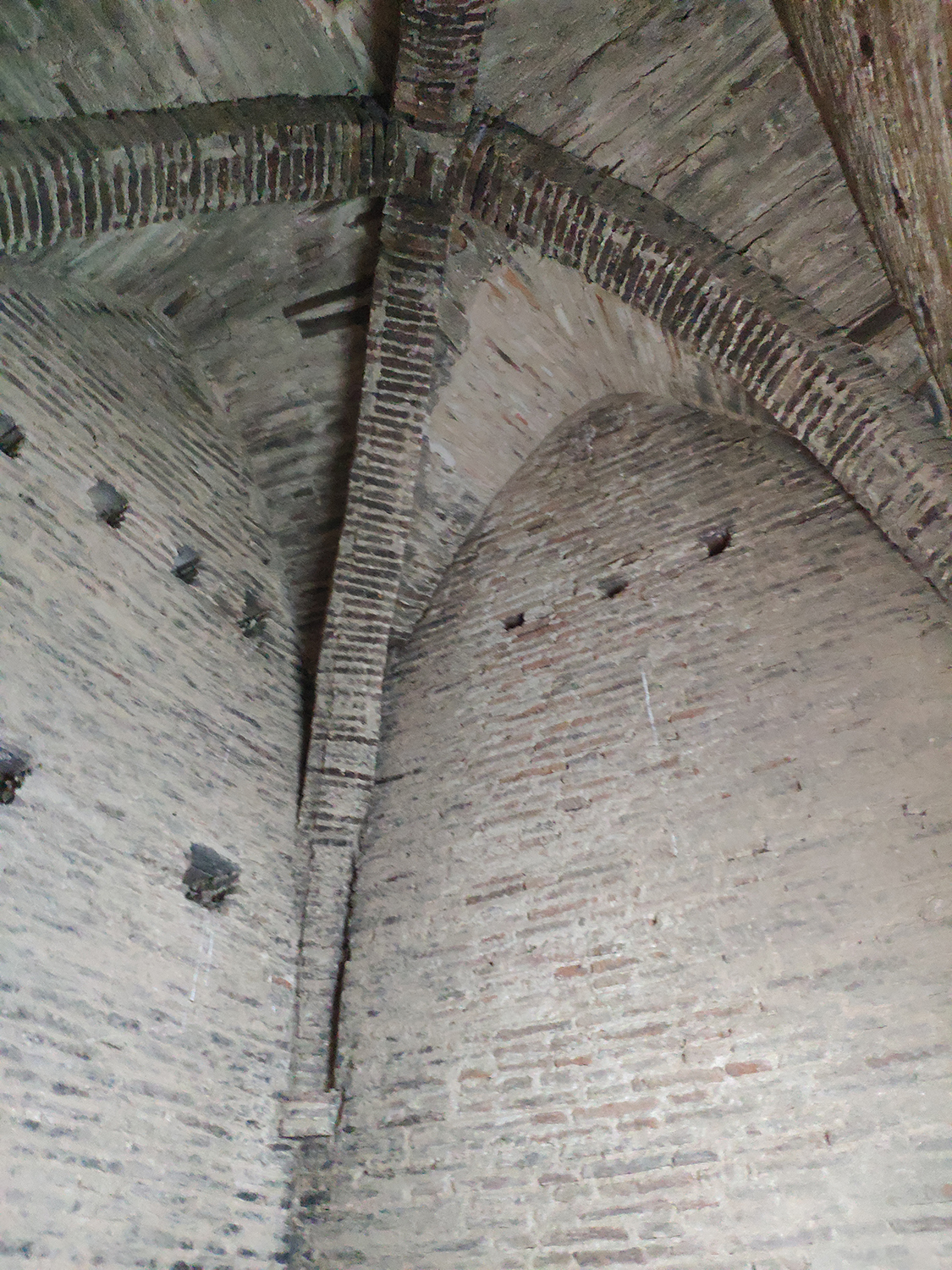
It is the only preserved element of the old church. It has a square floor plan and a solid body with two superimposed rooms. Its exterior is sober with some bands of angled brick and a frieze of lozenges interrupted by the bells.

The tower is accessed from the choir loft inside the church and its layout resembles that of a Christian tower rather than an Islamic tower.

With a past marked by the passage of Celtiberian, Roman and Mozarabic peoples, among others, Villarreal de Huerva preserves a latent historical and artistic pulse represented by the remains of its castle and church.

The remains of one of the towers of the old medieval fortress can still be seen. Dating from the 14th century, it is made of ashlar stone and formed part of the fortified complex on which stands the Baroque church of San Miguel which, although dated 1686, retains an earlier element: its spectacular 15th century Mudejar tower.

It is the only preserved element of the old church. It has a square floor plan and a solid body with two superimposed rooms. Its exterior is sober with some bands of angled brick and a frieze of lozenges interrupted by the bells.

The tower is accessed from the choir loft inside the church and its layout resembles that of a Christian tower rather than an Islamic tower.

Enduring tradition

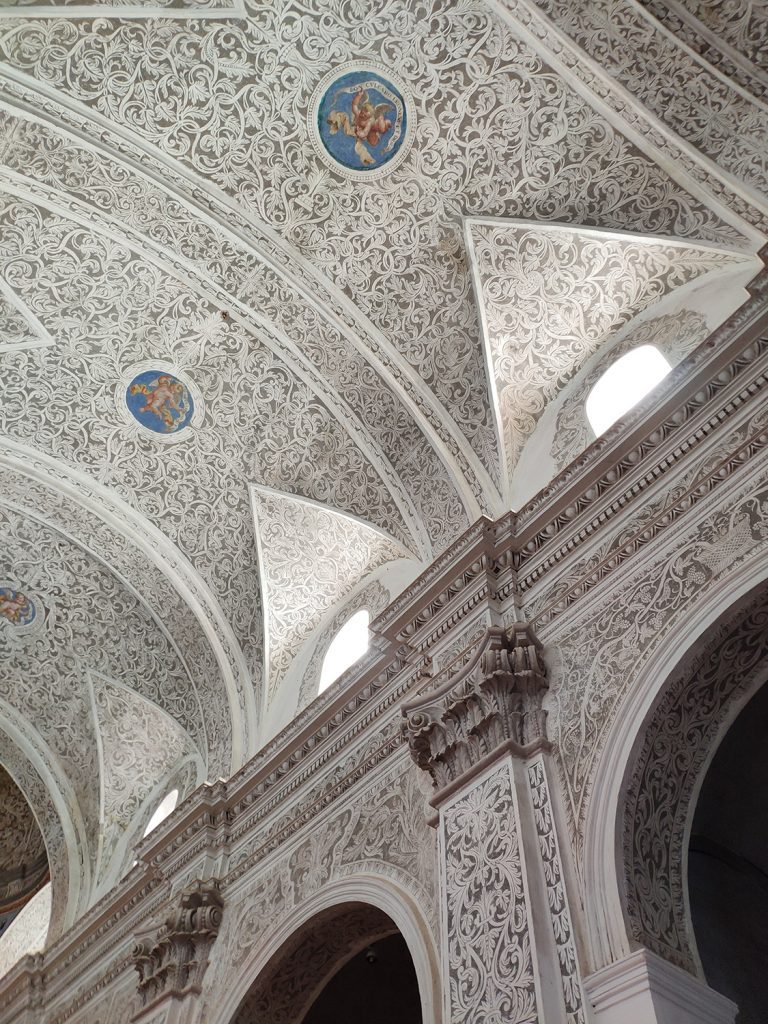
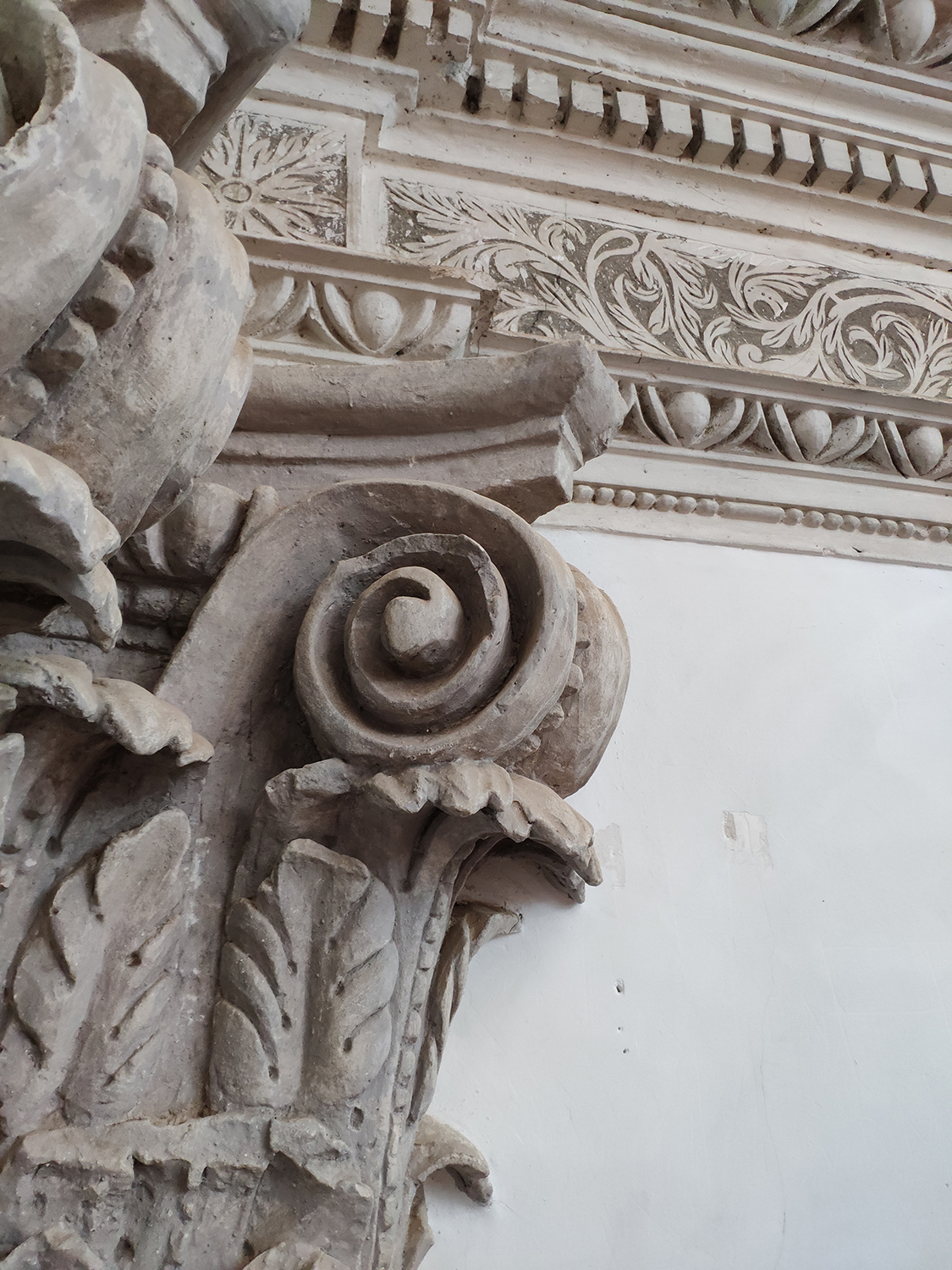
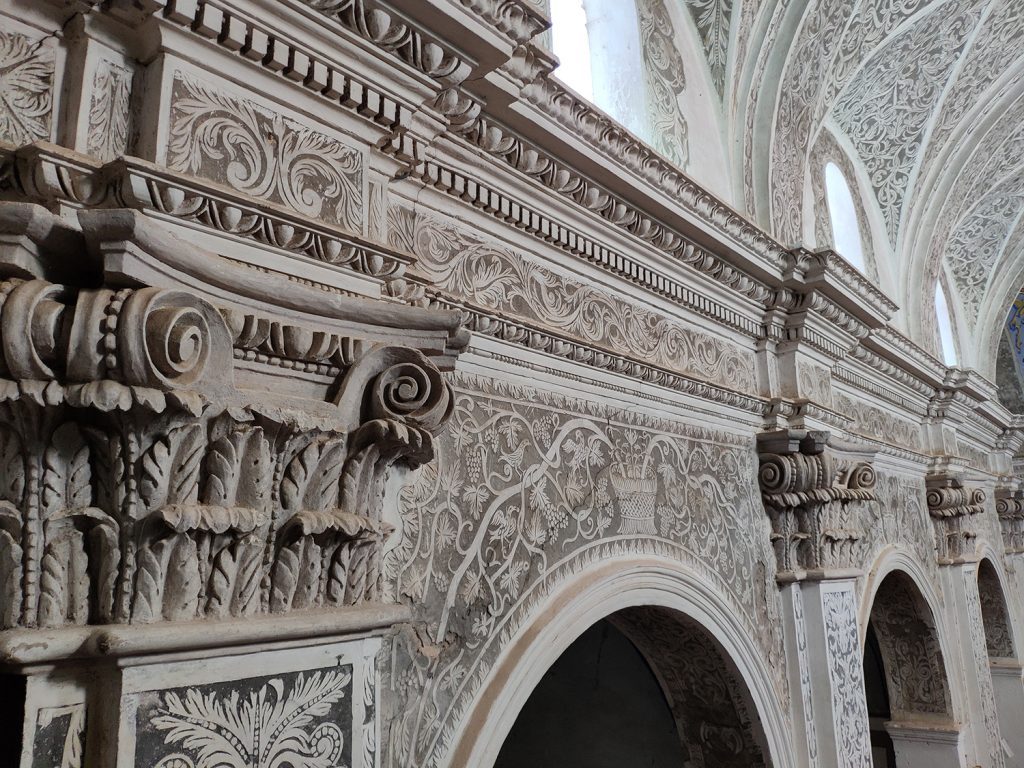
The interior of the church contrasts with the austere exterior and it is surprising to see how its walls and vaults are completely covered with a striking white sgraffito from the modern period on a black background which, together with the carefully studied natural lighting, makes the baroque altarpiece and medallions stand out even more.

A few kilometres from the town is the hermitage of Nuestra Señora del Rosario, a neoclassical temple that replaced an earlier one. Its Mudejar brick tower is the only legacy of the original church. Slightly rectangular in plan, it is in the belfry where the brick decoration is concentrated.

Another of the most outstanding buildings in Villarreal de Huerva is the Venta del Peirón, a typical roadside inn of the kind that used to line the roads of Spain and which offered everything from medical services to stables. The town also preserves traces of the importance of water in its history as the power of mills and a source of irrigation, a legacy that can be seen in the bridge of La Venta and the Roman bridge.

The interior of the church contrasts with the austere exterior, and it is surprising to see that the walls and vaults are completely covered with a striking white modernist sgraffito on a black background, which, together with the carefully studied natural lighting, enhances the Baroque altarpiece and medallions.

A few kilometres from the town is the hermitage of Nuestra Señora del Rosario, a neoclassical temple that replaced an earlier one. Its Mudejar brick tower is the only legacy of the original church. Slightly rectangular in plan, it is in the bell tower that the brick decoration is concentrated.

Another of the most outstanding buildings in Villarreal de Huerva is the Venta del Peirón, a typical roadside inn of the kind that used to line the roads of Spain and which offered everything from medical services to stables. The town also preserves traces of the importance of water in its history as the power of mills and a source of irrigation, a legacy that can be seen in the bridge of La Venta and the Roman bridge.

Information

Town Hall: 976 807 041
aytovillarrealdehuerva.es

Association for Integral Rural Development
The lands of Jiloca and Gallocanta
adri.es

VISIT VILLARREAL DE HUERVA
976 633 296

DO YOU WANT TO KNOW MORE?

Aragon Tourism
turismodearagon.com
Daroca Region Tourism
turismo.comarcadedaroca.com
Centre for Darocese Studies
ifc.dpz.es
Center of Jiloca Studies
www.xiloca.org

Territorio Mudéjar Network

The city council has been a full partner of Territorio Mudéjar since December 2019.

Projects Territorio Mudéjar in Villarreal de Huerva

Monuments | View the project
Pedagogy | View the project
Mudetrad Project | View the project
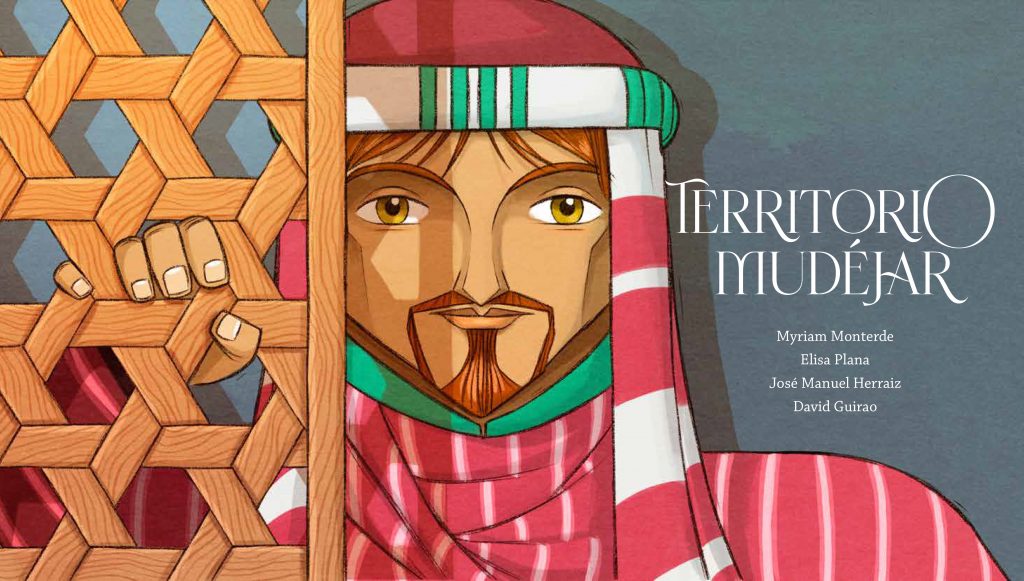
Didactic Mudejar, the guide | View the project
‘Circular’ Family walks | View the project

Villar de los Navarros

Monuments
THIS PROJECT PROVIDES AN UPDATED VISION OF THE MUDEJAR MONUMENTAL HERITAGE
Villar de los Navarros
Pedagogy
SCHOOL MATERIALS TO WORK ON CULTURAL AND NATURAL HERITAGE
mudetrad-villar
Mudetrad Project
A PROJECT THAT VALUES THE TRADITIONAL ARCHITECTURE OF VILLAR DE LOS NAVARROS
Imagen decorativa para Slider
Circular from the rural school
Family walks
COOPERATIVE PROJECT BETWEEN RURAL DEVELOPMENT GROUPS

At the foot of the mountains

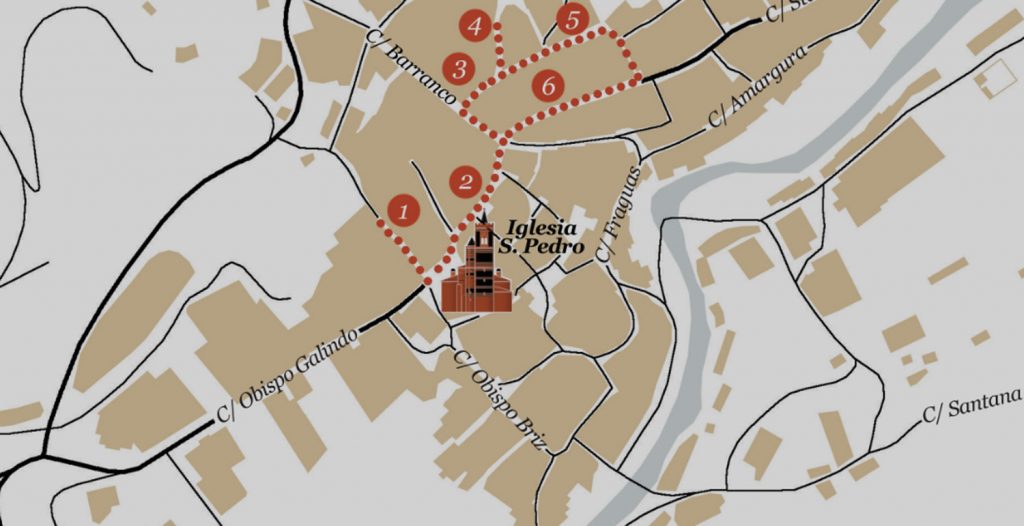
Villar de los Navarros sits at the foot of the Sierra de Herrera mountain range, was the scene of one of the most crucial battles of the first Carlist war and preserves a great wealth of Islamic historical and artistic heritage as a result of its proximity to the focal point of the Mudejar presence in Aragon: located in the Jalón valley and its parallel to the Huerva. As an example, in the centre of the town stands the parish church of San Pedro, a 15th century temple that nowadays is the result of two extensions to the original Mudejar building in the 16th and 18th centuries. Inside, the choir, whose walls have preserved the remains of Mudejar stonework in which we can distinguish motifs of mixtilinear loops and interlaced Gothic quadrilobes, is particularly striking. But it is on the outside, where the Mudejar bell tower is the centre of attention.

Villar de los Navarros, at the foot of the Sierra de Herrera mountain range, was the scene of one of the most decisive battles of the First Carlist War, and its proximity to the centre of the Mudejar presence in Aragon, in the valley of the Jalón and its parallel with the Huerva, means that it preserves a great wealth of Islamic historical and artistic heritage.

As an example, in the centre of the town stands the parish church of San Pedro, a 15th century temple that nowadays is the result of two extensions to the original Mudejar building in the 16th and 18th centuries. Inside, the choir, whose walls have preserved the remains of Mudejar stonework in which we can distinguish motifs of mixtilinear loops and interlaced Gothic quadrilobes, is particularly striking. But it is on the outside, where the Mudejar bell tower is the centre of attention.

The beauty of Mudejar “horror vacui”

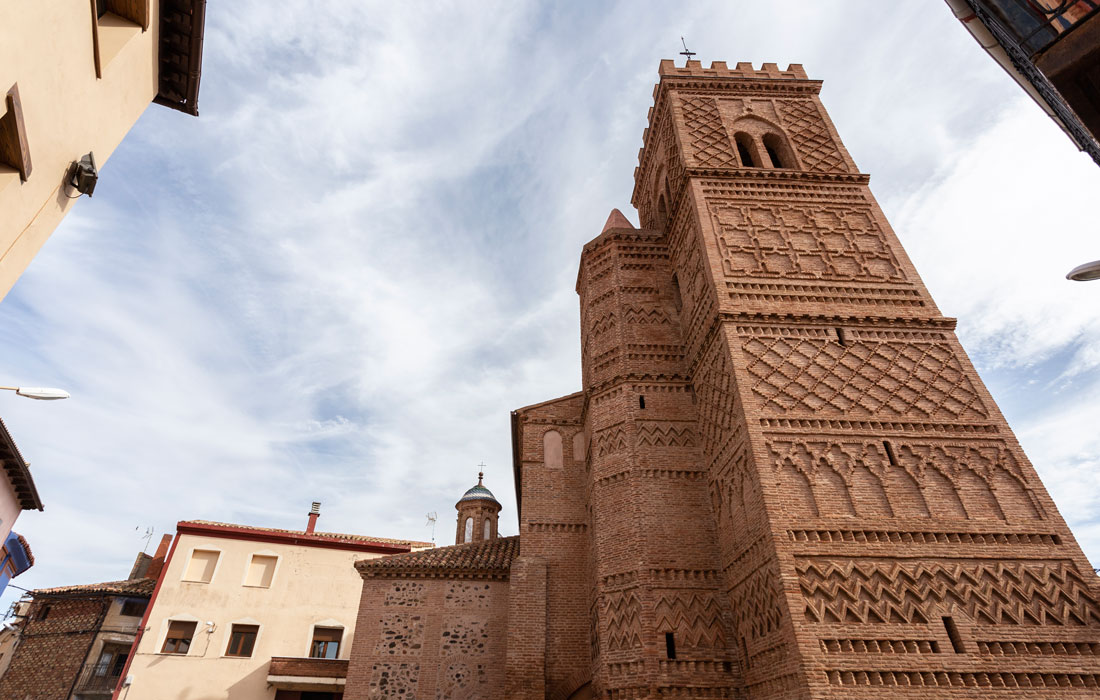
The tower of the church of San Pedro, attached to the foot of the church and built in the first decades of the 15th century, has a curious layout. It consists of a main tower with the function of a belfry – with a square ground plan and a height of five interconnected rooms – to which a second tower of smaller proportions is attached. The latter houses the spiral staircase, which is the only possible access to the rooms of the first tower. These rooms are vaulted with simple ribbed vaulting and their height decreases as one ascends in height. The exterior decoration is dominated by typical 14th-century systems of drapery: friezes of simple angles, double-thread zigzag strips, interlaced mixtilinear arches and crosses forming lozenges. The main tower has a crenellated top and a pyramidal spire.

The heritage of Villar de los Navarros is completed with the hermitages of Santa Bárbara and Santa Ana, the peirons that preserve such an ancestral tradition, a walk to the Calvario – on one of the hills – and to the sanctuary of the Virgen de Herrera.

The tower of the church of San Pedro, attached to the foot of the church and built in the first decades of the 15th century, has a curious layout. It consists of a main tower with the function of a bell tower – with a square plan and a height of five interconnected rooms – to which is attached a second tower of smaller proportions.

The latter houses the spiral staircase, which is the only possible access to the rooms of the first tower. These rooms are vaulted with simple ribbed vaulting and their height decreases as one ascends in height. The exterior decoration is dominated by typical 14th-century systems of drapery: friezes of simple angles, double-thread zigzag strips, interlaced mixtilinear arches and crosses forming lozenges. The main tower has a crenellated top and a pyramidal spire.

The heritage of Villar de los Navarros is completed with the hermitages of Santa Bárbara and Santa Ana, the peirons that preserve such an ancestral tradition, a walk to the Calvario – on one of the hills – and to the sanctuary of the Virgen de Herrera.

Information

Town Hall: 976 14 28 01

Association for Integral Rural Development
The lands of Jiloca and Gallocanta
adri.es

VISIT TO VILLAR DE LOS NAVARROS
976 633 296

DO YOU WANT TO KNOW MORE?
Aragon Tourism
turismodearagon.com
Daroca Region Tourism
turismo.comarcadedaroca.com
Centre for Darocese Studies
ifc.dpz.es
Center of Jiloca Studies
www.xiloca.org

Territorio Mudéjar Network

The city council has been a founding member of Territorio Mudéjar since 13 September 2018.

Projects Mudejar Territory in Villar de los Navarros

Monuments | View the project
Pedagogy | View the project
Mudetrad Project | View the project

Didactic Mudejar, the guide | View the project
‘Circular’ Family walks | View the project

Villamayor de Gállego

villamayor-W2
Pedagogy
SCHOOL MATERIALS TO WORK ON CULTURAL AND NATURAL HERITAGE
mudetrad-villamayor
Mudetrad Project
THIS PROJECT PROVIDES AN UPDATED VISION OF THE MUDEJAR MONUMENTAL HERITAGE
cartografia-identidades-rurales
Cartography of Rural Identities
MAP OF THE TERRITORY THAT COLLECTS THE IDENTITY OF ITS INHABITANTS, HISTORY AND HERITAGE
Imagen decorativa para Slider
Circular from the rural school
Family walks
COOPERATIVE PROJECT BETWEEN RURAL DEVELOPMENT GROUPS

The Gállego River kitchen garden

Villamayor de Gállego is a municipality located near the confluence of the rivers Gállego and Ebro with a rich past as an area of Roman and Muslim settlements.

The Arab presence in the locality is visible especially in the watchtower of the Loma del Pesebre. and above all in the inherited tradition that takes shape in the town from the construction of a spectacular landscape of water resources, as well as in a town planning marked by palatial brick houses and the spectacular Mudejar tower of the church of the Assumption of Our Lady, the only preserved element of the Mudejar church and a clear manifestation of the economic strength of the town at the dawn of the modern era.

The tower was commissioned by the master builder Domingo de Estala in 1587 and is a superb example of late Mudejar architecture. It is divided into two sections: the lower, two-storey section with a square floor plan, and the upper, three-storey octagonal section with corner turrets between them. It combines an exuberant brick decoration with Muel tiles.

Villamayor de Gállego is a municipality located near the confluence of the rivers Gállego and Ebro with a rich past as an area of Roman and Muslim settlements.

The Arab presence in the locality is visible especially in the watchtower of the Loma del Pesebre. and above all in the inherited tradition that takes shape in the town from the construction of a spectacular landscape of water resources, as well as in a town planning marked by palatial brick houses and the spectacular Mudejar tower of the church of the Assumption of Our Lady, the only preserved element of the Mudejar church and a clear manifestation of the economic strength of the town at the dawn of the modern era.

The tower was commissioned by the master builder Domingo de Estala in 1587 and is a superb example of late Mudejar architecture. It is divided into two sections: the lower, two-storey section with a square floor plan, and the upper, three-storey octagonal section with corner turrets between them. It combines an exuberant brick decoration with Muel tiles.

The ancient “Almamblas”

Villamayor de Gállego was established on an ancient village that the Muslims called Mamblas or Almamblas, which could be located near the Torre de la Hacienda and the old irrigation ditch. It was founded in the mid-12th century, after the conquest of Saragossa by Alfonso I and as part of the royal plans to establish a population in the areas recently won from the Muslims.

Dominating the town is the Sanctuary of Nuestra Señora del Pueyo, on a hillock where the monumental complex is concentrated, formed by the church, with a corridor or cloister, the santero’s house, a building for residential use and a small hermitage or chapel attached. The sanctuary is a Mudejar-style building built in the 15th century, enlarged in the 16th century and remodelled at the beginning of the 18th century.

Its natural heritage features the famous Sabina de Villamayor, of the albar or white species, which is a bimillenary tree, of great stature, whose rough trunk and solitary stamp in the middle of cultivated fields make it worthy of a stop.

Villamayor de Gállego was founded on an ancient village that the Muslims called Mamblas or Almamblas, located near the Torre de la Hacienda and the old irrigation channel. It was founded in the middle of the 12th century, after the conquest of Saragossa by Alfonso I, as part of the royal plans to settle the territories recently won from the Muslims.

The town is dominated by the Sanctuary of Nuestra Señora del Pueyo, on a hill where the monumental complex is concentrated, made up of the church with a corridor or cloister, the santero’s house, a house for living and a small hermitage or chapel. The sanctuary is a Mudejar-style building from the 15th century, enlarged in the 16th century and remodelled at the beginning of the 18th century.

Its natural heritage includes the famous Sabina de Villamayor, of the albar or white species, a bimillenary tree of great stature whose rough trunk and solitary presence in the middle of cultivated fields make it worth stopping to admire.

Information

Town Hall: 976 574 550
www.villamayordegallego.es

VISIT VILLAMAYOR DE GÁLLEGO

976 633 296

DO YOU WANT TO KNOW MORE?
Aragon Tourism
https://www.turismodearagon.com/ficha/villamayor-de-gallego/

Territorio Mudéjar Network

The city council has been a founding member of Territorio Mudéjar since enero 2019.

Projects Territorio Mudéjar in Villamayor de Gállego

Pedagogy | View the project
Mudetrad Project | View the project
Identidades Rurales | View the project
Mudéjar plaster | View the project
Didactic Mudejar, the guide | View the project
‘Circular’ Family walks | View the project

Torralba de Ribota

torralba-W1
Pedagogy
SCHOOL MATERIALS TO WORK ON CULTURAL AND NATURAL HERITAGE
mudetrad-torralba
Mudetrad Project
A PROJECT THAT HIGHLIGHTS THE VALUE OF ACERED'S TRADITIONAL ARCHITECTURE
portada guia didactica
Didactic Mudejar, the guide
THE GUIDE ILLUSTRATED BY DAVID GUIRAO TO HELP YOU UNDERSTAND THE MUDEJAR STYLE
El mudéjar y la geometría euclidiana
PLASTIC STUDY OF THE ARAGONESE MUDEJAR OF THE SPACE OF THE MUDEJAR TERRITORY
Imagen decorativa para Slider
Circular from the rural school
COOPERATIVE PROJECT BETWEEN RURAL DEVELOPMENT GROUPS

The “white tower”

Located on a mound on the course of the river Ribota, the medieval village seems to have been established, and therefore has some connection, near the site of Lardallén, where Roman artefacts and modenae were found.

The name, derived from Turris Alba, Torre Alba or Torre Blanca, is linked to the large limestone tower that was part of the walled enclosure, dating from the fourteenth or fifteenth century.

Crowning the town centre is the powerful volume of its parish church dedicated to San Felix, built between 1367 and 1433 under the mandate of the bishops of Tarazona, Pedro Pérez Calvillo and Juan de Valtierra, bishop of Tarazona, whose heraldry is visible in the magnificent interior of the building.

torralba-W5
Monuments
THIS PROJECT PROVIDES AN UPDATED VISION OF THE MUDEJAR MONUMENTAL HERITAGE
torralba-W3
Pedagogy
SCHOOL MATERIALS TO WORK ON CULTURAL AND NATURAL HERITAGE
mudetrad-torralba
Mudetrad Project
A PROJECT THAT VALUES THE TRADITIONAL ARCHITECTURE OF TORRALBA DE RIBOTA
Torralba-00-IMAGEN-INICIO
Mudéjar wood
A TOUR THROUGH THE MUDEJAR CARPENTRY OF TORRALBA DE RIBOTA AND ITS HISTORY
Imagen decorativa para Slider
Circular from the rural school
Family walks
COOPERATIVE PROJECT BETWEEN RURAL DEVELOPMENT GROUPS

Located on a mound on the course of the river Ribota, the medieval village seems to have been established, and therefore has some connection, near the site of Lardallén, where Roman artefacts and modenae were found.

The name, derived from Turris Alba, Torre Alba or Torre Blanca, is linked to the large limestone tower that was part of the walled enclosure, dating from the fourteenth or fifteenth century.

Crowning the town centre is the powerful volume of its parish church dedicated to San Felix, built between 1367 and 1433 under the mandate of the bishops of Tarazona, Pedro Pérez Calvillo and Juan de Valtierra, bishop of Tarazona, whose heraldry is visible in the magnificent interior of the building.

A crucial moment for fortified churches

The building follows the characteristic typology of Aragonese Mudejar churches with one nave, with tribunes open to the exterior and a strong military character. The interior space, together with that of the church of the Virgin of Tobed, is the paradigm of a Mudéjar religious space, accentuated by the plaster decoration on the windows and lighting oculi, the painted and scribbled decoration that covers the walls and vaults, and the magnificent alfarje that supports the choir. The interior is also home to an impressive collection of furniture from different periods and styles, including the Gothic altarpieces located in the chancel, which give the building a striking personality.

The austere exterior reserves the decoration for the western façade and the two towers that flank it, drawing particular attention to the ornamental type whose precedents can be found in the art of Cordoba and in the Aljafería in Saragossa.

The locality completes an interesting walk through a hillside urban development and a traditional hamlet of timeless beauty whose surroundings, linked to the Sierra de Armantes, contain the remains of the old chapel of Nuestra Señora de Cigüela, as well as the New Chapel and an old mill.

The building follows the characteristic typology of Aragonese Mudejar churches with one nave, with tribunes open to the exterior and a strong military character. The interior space, together with that of the church of the Virgin of Tobed, is the paradigm of a Mudéjar religious space, accentuated by the plaster decoration on the windows and lighting oculi, the painted and scribbled decoration that covers the walls and vaults, and the magnificent alfarje that supports the choir. The interior is also home to an impressive collection of furniture from different periods and styles, including the Gothic altarpieces located in the chancel, which give the building a striking personality.

The austere exterior reserves the decoration for the western façade and the two towers that flank it, drawing particular attention to the ornamental type whose precedents can be found in the art of Cordoba and in the Aljafería in Saragossa.

The locality completes an interesting walk through a hillside urban development and a traditional hamlet of timeless beauty whose surroundings, linked to the Sierra de Armantes, contain the remains of the old chapel of Nuestra Señora de Cigüela, as well as the New Chapel and an old mill.

Information

Town Hall: 976 899 302

Association for the Integral Development of the Region of Calatayud and the Region of Aranda
galcar.es

VISIT TORRALBA DE RIBOTA 976 633 296

DO YOU WANT TO KNOW MORE?
Aragon Tourism
turismodearagon.com
Tourism Calatayud Region
comarcacalatayud.com
Centre for Bilbilitan Studies
cebilbilitanos.com

Territorio Mudéjar Network

The city council has been a founding member of Territorio Mudéjar since 13 September 2018.

Projects Territorio Mudéjar in Torralba de Ribota

Monuments | View the project
Pedagogy | View the project
Mudetrad Project | View the project
Mudejar wood | View the project
Mudejar civil architecture | View the project
Mudejar and Euclidean Geometry | View the project
Didactic Mudejar, the guide | View the project
Preventive town planning | View the project
‘Circular’ Family walks | View the project
Mudéjar RGB | View the project
Mudéjar Smart 3D | View the project

Torralba de Ribota in the social media

Facebook: @AyuntamientoTorralbadeRibota @turismo.comunidadcalatayud
Instagram: @torralbamudejar @comarcacalatayud

Terrer

Terrer-01
Monuments
THIS PROJECT PROVIDES AN UPDATED VISION OF THE MUDEJAR MONUMENTAL HERITAGE
Terrer
Pedagogy
SCHOOL MATERIALS TO WORK ON CULTURAL AND NATURAL HERITAGE
mudetrad-terrer
Mudetrad Project
A PROJECT THAT VALUES THE TRADITIONAL ARCHITECTURE OF TERRER
portada guia didactica
Didactic Mudejar, the guide
THE GUIDE ILLUSTRATED BY DAVID GUIRAO TO HELP YOU UNDERSTAND THE MUDEJAR STYLE
Imagen decorativa para Slider
Circular from the rural school
Family walks
COOPERATIVE PROJECT BETWEEN RURAL DEVELOPMENT GROUPS

The Jalón River plains

A place of the Luna lordship, Terrer dominates the plain of the river Jalón from a promontory on which the Muslims built a rectangular castle in the 9th century, surrounded by a double defensive enclosure – which has now almost disappeared – and which was conquered bya the Cid Campeador in 1081, according to the Cantar de mío Cid (Song of the Cid).

But the parish church of the Assumption of the Virgin is the monument that takes the greatest prominence. The overall sobriety that characterizes the temple after a deep transformation in Baroque period, makes stand out its tower preserved of the original building of mudéjar style. The interior of the 14th century has been decorated with elements such as the traditional Islamic arches and the agrammilated decoration, with a theme that is fully related to the decoration of the churches of Tobed, Cervera de la Cañada and Torralba de Ribota.

A place of the Luna lordship, Terrer dominates the plain of the river Jalón from a promontory on which the Muslims built a rectangular castle in the 9th century, surrounded by a double defensive enclosure – which has now almost disappeared – and which was conquered bya the Cid Campeador in 1081, according to the Cantar de mío Cid (Song of the Cid).

But the parish church of the Assumption of the Virgin is the monument that takes the greatest prominence.x The overall sobriety that characterizes the temple after a deep transformation in Baroque period, makes stand out its tower preserved of the original building of mudéjar style. The interior of the 14th century has been decorated with elements such as the traditional Islamic arches and the agrammilated decoration, with a theme that is fully related to the decoration of the churches of Tobed, Cervera de la Cañada and Torralba de Ribota.

The open Muslim quarter, home of trades linked to the landscape

The construction of the church dates from the fourteenth and fifteenth centuries and the Mudejar tower that rises attached to the south side of the temple headland has been dated around 1400. This square tower is built with two superimposed brick bodies: the lower one -with stairs- of Hispanic minaret structure and the upper one intended to house the body of bells, topped with a spire. The lower body concentrates the decorative work in highlighted brick and ceramic.

Historically Terrer was a land of weaver’s and had an activity linked to the manufacture of bricks and other pieces designed for the moldings of covers, vaults, etc., a craft work of the Mudéjar. Already in a document of 1496 it is mentioned that in the furnaces of Terrer “rejolas of Zaragoza mold” are manufactured.

Terrer is also notable for its cellars dug out of the clay hills and sandstone terraces, and also has several stalls scattered throughout the municipality, such as San Antonio de Padua, San Juan or San Jorge, and the old sugar factory in the district of the station.

La construcción de la iglesia data de los siglos XIV y XV y la torre mudéjar que se alza unida al lado sur del promontorio del templo se ha fechado alrededor del año 1400. This square tower is built with two superimposed brick bodies: the lower one -with stairs- of Hispanic minaret structure and the upper one intended to house the body of bells, topped with a spire. The lower body concentrates the decorative work in highlighted brick and ceramic.

Historically Terrer was a land of weaver’s and had an activity linked to the manufacture of bricks and other pieces designed for the moldings of covers, vaults, etc., a craft work of the Mudéjar. Already in a document of 1496 it is mentioned that in the furnaces of Terrer “rejolas of Zaragoza mold” are manufactured.

Terrer is also notable for its cellars dug out of the clay hills and sandstone terraces, and also has several stalls scattered throughout the municipality, such as San Antonio de Padua, San Juan or San Jorge, and the old sugar factory in the district of the station.

Information

Town hall: 976 898 002

Association for the Integral Development of the Region of Calatayud and the Region of Aranda
galcar.es

VISIT TERRER 976 633 296

DO YOU WANT TO KNOW MORE?
Tourism Calatayud Region
comarcacalatayud.com
Centre for Bilbilitan Studies
cebilbilitanos.com
The Cid’s Way
www.caminodelcid.org

Territorio Mudéjar Network

The city council has been a founding member of Territorio Mudéjar since 13 September 2018.

Projects Territorio Mudéjar in Terrer

Monuments | View the project
Pedagogy | View the project
Mudetrad Project | View the project
Mudejar plaster | View the project
Didactic Mudejar, the guide | View the project
Preventive town planning | View the project
‘Circular’ Family walks | View the project
Mudéjar RGB | View the project

Terrer in the social media

Facebook @ayuntamientodeterrer @turismo.comunidadcalatayud
Intsagram:@ayuntamientodeterrer @comarcacalatayud

Tauste

Monuments
THIS PROJECT PROVIDES AN UPDATED VISION OF THE MUDEJAR MONUMENTAL HERITAGE
tauste-W3
Pedagogy
SCHOOL MATERIALS TO WORK ON CULTURAL AND NATURAL HERITAGE
mudetrad-tauste
Mudetrad Project
A PROJECT THAT VALUES THE TRADITIONAL ARCHITECTURE OF TAUSTE
portada guia didactica
Didactic Mudejar, the guide
THE GUIDE ILLUSTRATED BY DAVID GUIRAO TO HELP YOU UNDERSTAND THE MUDEJAR STYLE
Imagen decorativa para Slider
Circular from the rural school
Family walks
COOPERATIVE PROJECT BETWEEN RURAL DEVELOPMENT GROUPS

Meeting point between the valley and the Altas Cinco Villas

Tauste is one of the historic Cinco Villas of Aragon, which also had an important population during the Islamic period. Proof of this is the Muslim necropolis found in the town centre, one of the largest and oldest Muslim cemeteries on the Iberian Peninsula.

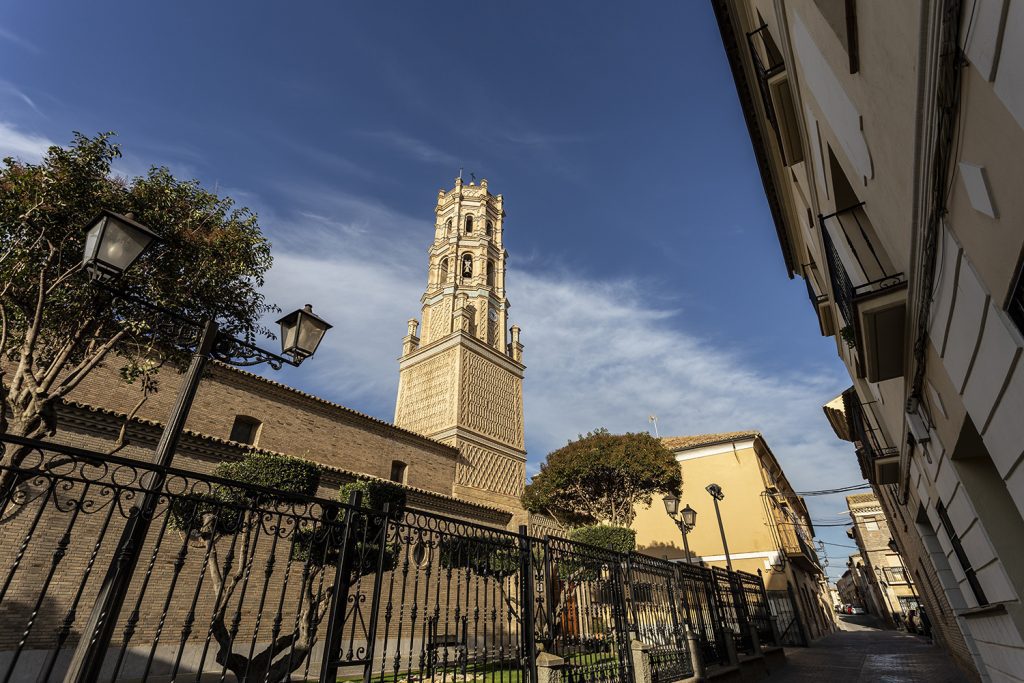
The best known and most visible symbol of the town is the tower of the church of Santa María, an imposing octagonal building 46 metres high, built in brick with plaster paste, which serves as a directional landmark for the traditional communication routes.

This tower was defined by Professor Borrás as an Almohad minaret, in whose structure an outer tower surrounds an inner tower divided into rooms, in the form of a central buttress around which the staircase ascends, closed by means of false vaulting by approximation of courses.

The exterior walls of the bell-tower, which some researchers consider to be the reused minaret of the old mosque of the town, are decorated with bands of brickwork in a variety of patterns: intersecting semi-circular arches, lozenges of diamonds or loops of four octagonal arches, among other ornamentation.

Tauste is one of the historic Cinco Villas of Aragon, which also had an important population during the Islamic period. Proof of this is the Muslim necropolis found in the town centre, one of the largest and oldest Muslim cemeteries on the Iberian Peninsula.

The best known and most visible symbol of the town is the tower of the church of Santa María, an imposing octagonal building 46 metres high, built in brick with plaster paste, which serves as a directional landmark for the traditional communication routes.

This tower was defined by Professor Borrás as an Almohad minaret, in whose structure an outer tower surrounds an inner tower divided into rooms, in the form of a central buttress around which the staircase ascends, closed by means of false vaulting by approximation of courses.

The exterior walls of the bell-tower, which some researchers consider to be the reused minaret of the old mosque of the town, are decorated with bands of brickwork in a variety of patterns: intersecting semi-circular arches, lozenges of diamonds or loops of four octagonal arches, among other ornamentation.

Santa Maria church

The church of Santa María was built between the 13th and 14th centuries and, in general, it shows influences of the Levantine Gothic style that was widespread in our territory at the end of the 13th century and assimilated by the Mudejar masters through the influence of their commissioners. It has a single nave with chapels between the buttresses and a polygonal apse on the outside and a semi-circular apse on the inside. It is covered with simple ribbed vaults and the walls were once sgraffitoed and painted in bright colours. Its inner heritage is indispensable.

The Mudejar style is also present in the lower part of the town centre, where the church of San Antón is located. At the foot of the tower is a Mudejar tower of mixed character, i.e. a square lower body and an octagonal upper body, topped by a glazed tile spire. It dates from the 15th-16th centuries, although its plaster stone base seems to belong to an older tower, perhaps a remnant of the wall.

Walking around Tauste you can also discover magnificent examples of Aragonese brick civil architecture, such as the Casa de la Cámara, and contemplate the convent of the Poor Clares. A few kilometres away is the sanctuary of the Virgen de Sancho Abarca, where the Bardenas Reales nature reserve begins.

The church of Santa María was built between the 13th and 14th centuries and, in general, it shows influences of the Levantine Gothic style that was widespread in our territory at the end of the 13th century and assimilated by the Mudejar masters through the influence of their commissioners. It has a single nave with chapels between the buttresses and a polygonal apse on the outside and a semi-circular apse on the inside. It is covered with simple ribbed vaults and the walls were once sgraffitoed and painted in bright colours. Its inner heritage is indispensable.

The Mudejar style is also present in the lower part of the town centre, where the church of San Antón is located. At the foot of the tower is a Mudejar tower of mixed character, i.e. a square lower body and an octagonal upper body, topped by a glazed tile spire. It dates from the 15th-16th centuries, although its plaster stone base seems to belong to an older tower, perhaps a remnant of the wall.

Walking around Tauste you can also discover magnificent examples of Aragonese brick civil architecture, such as the Casa de la Cámara, and contemplate the convent of the Poor Clares. A few kilometres away is the sanctuary of the Virgen de Sancho Abarca, where the Bardenas Reales nature reserve begins.

Information

Town hall: 976 854 950
tauste.es
Association for the Development and Promotion of Cinco Villas
adefo.com

VISIT TAUSTE 976 633 296

DO YOU WANT TO KNOW MORE?
Aragon Tourism
turismodearagon.com
Comarca de Cinco Villas
comarcacincovillas.es

Territorio Mudéjar Network

The city council has been a founding member of Territorio Mudéjar since 13 September 2018.
He is a member of the board of directors of the entity.

Projects Territorio Mudéjar in Tauste

Monuments | View the project
Pedagogy | View the project
Mudetrad Project | View the project
Mudejar plaster | View the project
Didactic Mudejar, the guide | View the project
‘Circular’ Family walks | View the project

Tauste in the social media

Facebook: @casadecultura.tauste
@oficinaturismotauste @CiviturTurismoCincoVillas
Instagram: @cultura_tauste @oficinaturismotauste
@civitur

Saviñán

saviñan-W2
Monuments
THIS PROJECT PROVIDES AN UPDATED VISION OF THE MUDEJAR MONUMENTAL HERITAGE
Pedagogy
SCHOOL MATERIALS TO WORK ON CULTURAL AND NATURAL HERITAGE
mudetrad-savinan
Mudetrad Project
A PROJECT THAT VALUES THE TRADITIONAL ARCHITECTURE OF SAVIÑÁN
portada guia didactica
Didactic Mudejar, the guide
THE GUIDE ILLUSTRATED BY DAVID GUIRAO TO HELP YOU UNDERSTAND THE MUDEJAR STYLE
Imagen decorativa para Slider
Circular from the rural school
Family walks
COOPERATIVE PROJECT BETWEEN RURAL DEVELOPMENT GROUPS

The Islamic imprint

Located in the gorges of the river Jalón, in a natural setting of great beauty, the town, characterised by its strategic location, was an important point for the defence of the Kingdom of Aragon during the Middle Ages. The remains of ancient defensive structures from that period date back to those times, such as the Torre de las Encantadas, built in the 15th century in the Mudejar tradition and one of the few examples of this type of structure in Aragon.

The Islamic imprint of the locality is no coincidence, as it constituted an important nucleus of Mudejar population, taking as a reference the 120 fires of Moorish population that were counted at the time of the expulsion in 1610. Characterised by an urban layout of irregular streets, twists and turns and alleys, its houses with simple façades and few openings are reminiscent of Mudejar domestic architecture, a style that will reach its highest levels of quality in civil buildings such as the Palace of the Counts of Argillo and in religious buildings such as La Señoría or the parish church of San Pedro.

Located in the gorges of the river Jalón, in a natural setting of great beauty, the town, characterised by its strategic location, was an important point for the defence of the Kingdom of Aragon during the Middle Ages. The remains of ancient defensive structures from that period date back to those times, such as the Torre de las Encantadas, built in the 15th century in the Mudejar tradition and one of the few examples of this type of structure in Aragon.

The Islamic imprint of the locality is no coincidence, as it constituted an important nucleus of Mudejar population, taking as a reference the 120 fires of Moorish population that were counted at the time of the expulsion in 1610. Characterised by an urban layout of irregular streets, twists and turns and alleys, its houses with simple façades and few openings are reminiscent of Mudejar domestic architecture, a style that will reach its highest levels of quality in civil buildings such as the Palace of the Counts of Argillo and in religious buildings such as La Señoría or the parish church of San Pedro.

The Palace of the Condes de Argillo, custodian of the skull of “Papa Luna”

The town is particularly noteworthy for its monuments and the magnificent landscape that surrounds them. Particularly noteworthy is the church of San Miguel, popularly known as the church of La Señoría, which is located in the Moorish quarter and was built during the second half of the 16th century, preserving some parts of the façade and its tower. The latter was built at the foot of the south wall, with two octagonal bodies and a Christian structure with an interior spiral staircase. On the outside, the brick decoration in the Mudejar tradition stands out.

Among the palatial houses, the palace of the Counts of ArgilloThe building is a massive brick and rammed earth construction that still conserves to a large extent its status as a palace or noble house, as can be seen especially in the façade that opens onto the Plaza de la Muñoza. The skull of Pope Luna has been kept there since the War of the Spanish Succession, according to some authors consulted, and since the War of Independence, according to others.

The walk should not forget the parish church of San Pedro Apóstol, which in the 17th century was built on top of a previous Mudejar temple to become a Baroque temple accessed through a lintelled doorway and which has a tower attached to it in the Mudejar tradition with a square floor plan.

The town is particularly noteworthy for its monuments and the magnificent landscape that surrounds them. Particularly noteworthy is the church of San Miguel, popularly known as the church of La Señoría, which is located in the Moorish quarter and was built during the second half of the 16th century, preserving some parts of the façade and its tower. The latter was built at the foot of the south wall, with two octagonal bodies and a Christian structure with an interior spiral staircase. On the outside, the brick decoration in the Mudejar tradition stands out.

Among the palatial houses, the palace of the Counts of ArgilloThe building is a massive brick and rammed earth construction that still conserves to a large extent its status as a palace or noble house, as can be seen especially in the façade that opens onto the Plaza de la Muñoza. The skull of Pope Luna has been kept there since the War of the Spanish Succession, according to some authors consulted, and since the War of Independence, according to others.

The walk should not forget the parish church of San Pedro Apóstol, which in the 17th century was built on top of a previous Mudejar temple to become a Baroque temple accessed through a lintelled doorway and which has a tower attached to it in the Mudejar tradition with a square floor plan.

Information

Town hall: 976 826 043
www.sabinius.org
Association for the Integral Development of the Region of Calatayud and the Region of Aranda
galcar.es

VISIT SAVIÑÁN 976 633 296

DO YOU WANT TO KNOW MORE?
The skull of Pope Luna
craneopapaluna.com
Centre for Bilbilitan Studies
cebilbilitanos.com

Territorio Mudéjar Network

The city council has been a founding member of Territorio Mudéjar since enero 2019.

Projects Territorio Mudéjar in Saviñán

Monuments | View the project
Pedagogy | View the project
Mudetrad Project | View the project
Mudejar civil architecture | View the project
Didactic Mudejar, the guide | View the project
Preventive town planning | View the project
‘Circular’ Family walks | View the project

San Mateo de Gállego

sanmateo-W7
Monuments
THIS PROJECT PROVIDES AN UPDATED VISION OF THE MUDEJAR MONUMENTAL HERITAGE
sanmateo-W3
Pedagogy
SCHOOL MATERIALS TO WORK ON CULTURAL AND NATURAL HERITAGE
mudetrad-mateo
Mudetrad Project
A PROJECT THAT VALUES THE TRADITIONAL ARCHITECTURE OF SAN MATEO DE GÁLLEGO
portada guia didactica
Didactic Mudejar, the guide
THE GUIDE ILLUSTRATED BY DAVID GUIRAO TO HELP YOU UNDERSTAND THE MUDEJAR STYLE
Imagen decorativa para Slider
Circular from the rural school
Family walks
COOPERATIVE PROJECT BETWEEN RURAL DEVELOPMENT GROUPS

Water as an identifying feature

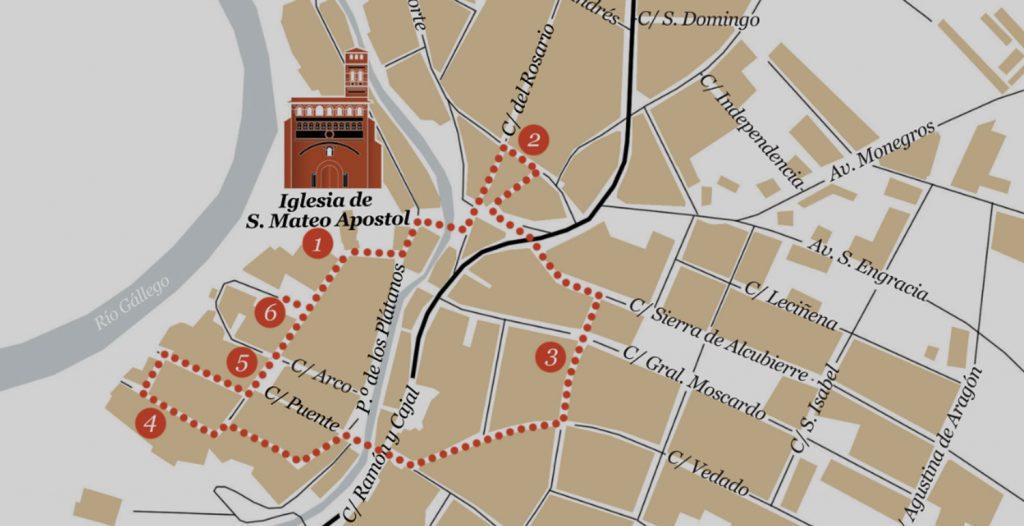
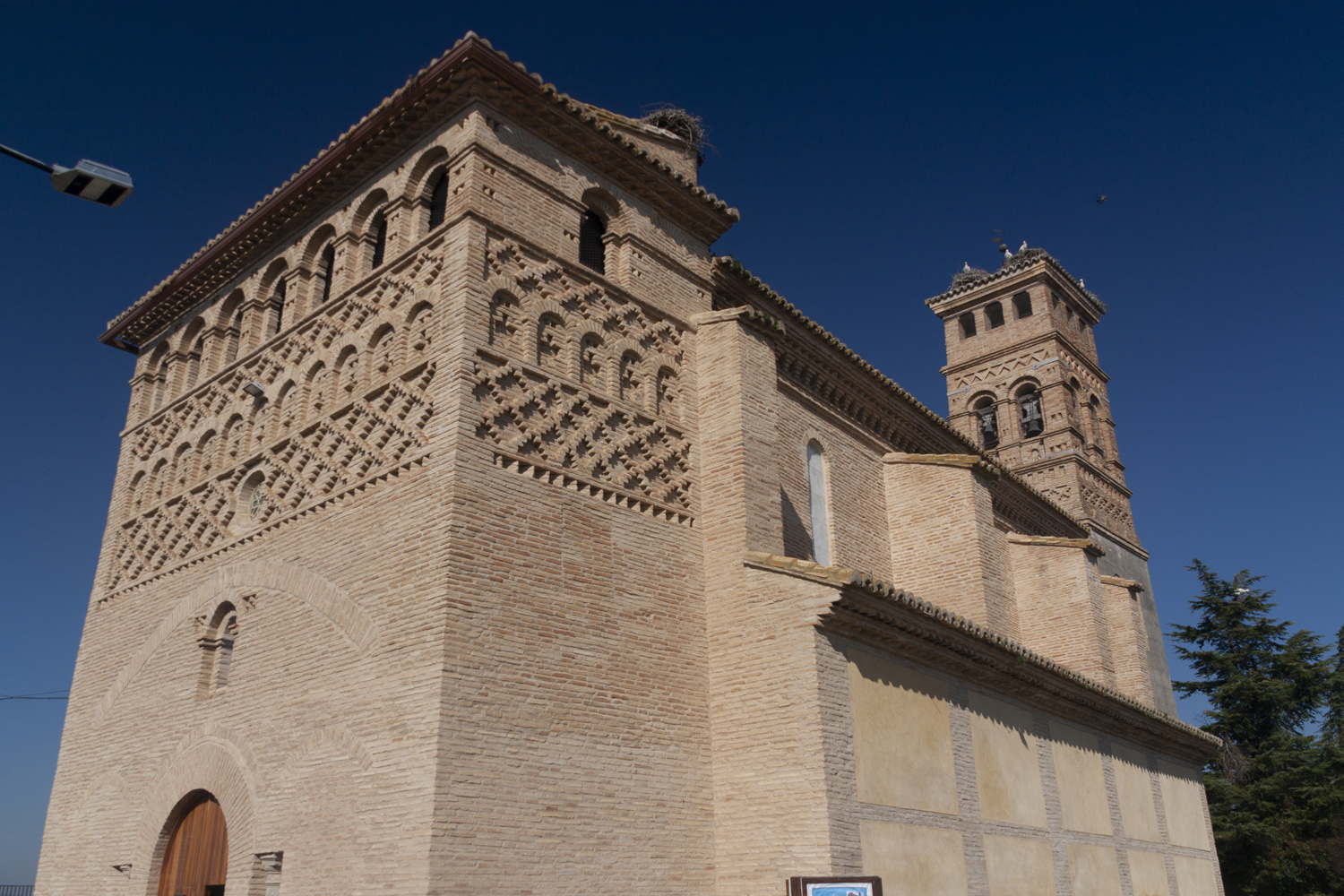
The church of San Mateo Apóstol stands watch in a defensive position from a vantage point over the river that gives its name to a town known as the ‘little Venice’ because of the Camarena irrigation channel that runs through the centre of its town centre, flanked by shady plane trees. The temple was built in the 16th century and was originally a church-fortress, hence its location on the top and its tower.

The position of the tower behind the chancel of the church, the prismatic character of its lower body, without decoration, with no openings other than the windows near its top, and the fact that it is accessed from the first floor, suggest that it existed as a defensive tower that was part of the castle that still gives its name to the square in which it stands.

The church of San Mateo Apóstol stands watch in a defensive position from a vantage point over the river that gives its name to a town known as the ‘little Venice’ because of the Camarena irrigation channel that runs through the centre of its town centre, flanked by shady plane trees. The temple was built in the 16th century and was originally a church-fortress, hence its location on the top and its tower.

The position of the tower behind the chancel of the church, the prismatic character of its lower body, without decoration, with no openings other than the windows near its top, and the fact that it is accessed from the first floor, suggest that it existed as a defensive tower that was part of the castle that still gives its name to the square in which it stands.

Mudejar balcony over the Gállego River plains

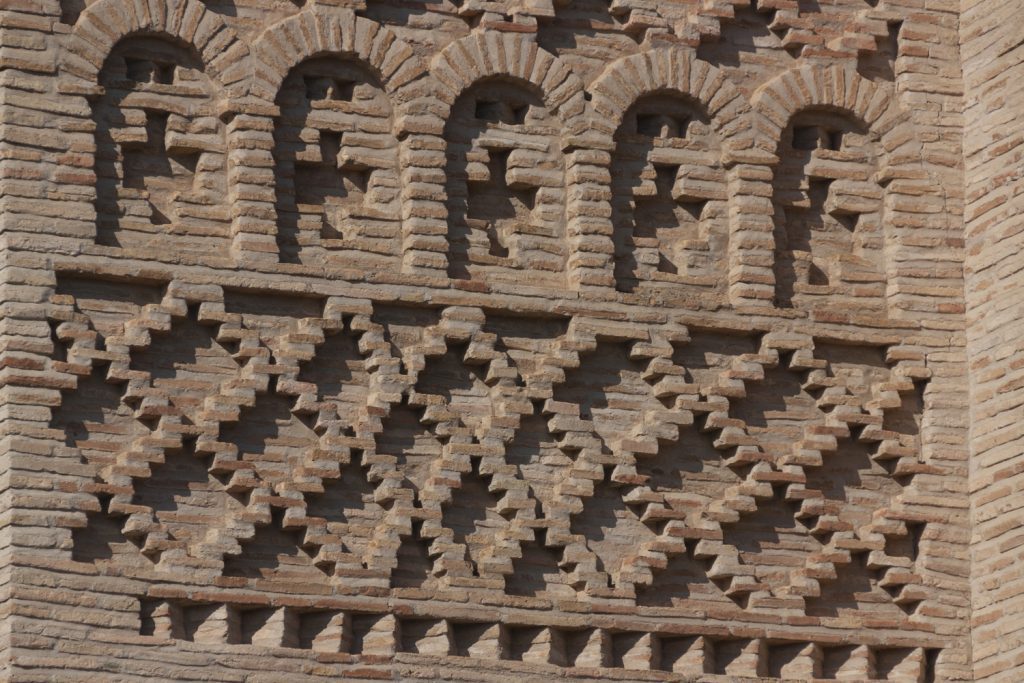
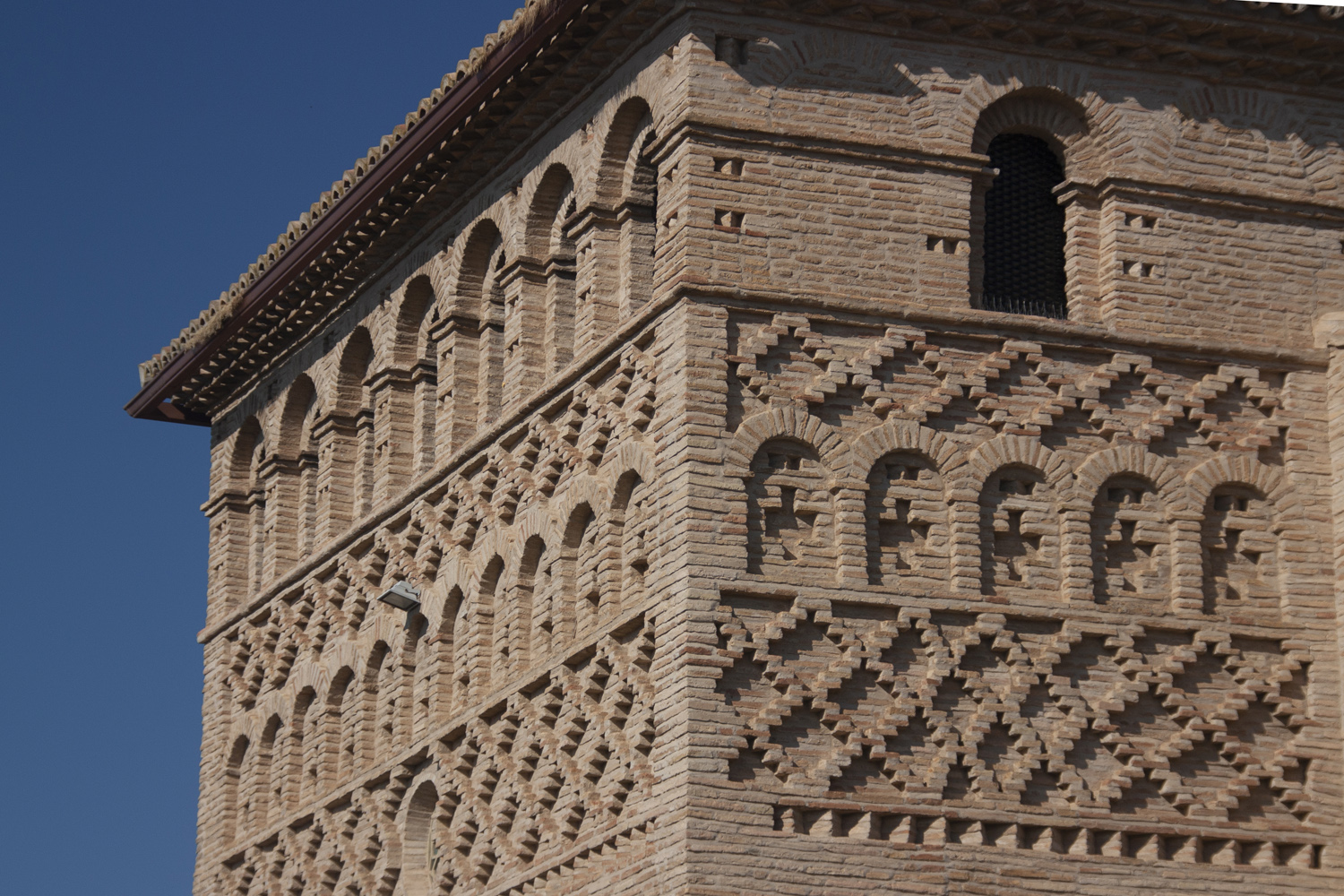
The church of San Mateo Apóstol has one of the most decorated façades of the Aragonese Mudejar style and is, without doubt, one of the symbols of the town. The church has a single nave divided into two sections covered with a ribbed vault, with side chapels and another space for the choir at the foot of the church. The chevet is straight and covered with a star-shaped ribbed vault. The choir dates from the end of the 15th century and its altarpiece is Renaissance. The main altarpiece in the Plateresque style features an image of the apostle San Mateo and other paintings that are similar to those found in the parish church of Zuera.

San Mateo de Gállego has a centre for the interpretation of 21st century Mudejar ceramics which is a space for knowledge, culture and the exchange of creative experiences. This Fernando Malo Workshop-Museum is a first-rate cultural resource for discovering the value of ceramic craftsmanship throughout history.

It is also worth visiting the hermitage of Santa Engracia, from where you can enjoy an unbeatable view of the Ebro depression.

The church of San Mateo Apóstol has one of the most decorated façades of the Aragonese Mudejar style and is, without doubt, one of the symbols of the town. The church has a single nave divided into two sections covered with a ribbed vault, with side chapels and another space for the choir at the foot of the church. The chevet is straight and covered with a star-shaped ribbed vault. The choir dates from the end of the 15th century and its altarpiece is Renaissance. The main altarpiece in the Plateresque style features an image of the apostle San Mateo and other paintings that are similar to those found in the parish church of Zuera.

San Mateo de Gállego has a centre for the interpretation of 21st century Mudejar ceramics which is a space for knowledge, culture and the exchange of creative experiences. This Fernando Malo Workshop-Museum is a first-rate cultural resource for discovering the value of ceramic craftsmanship throughout history.

It is also worth visiting the hermitage of Santa Engracia, from where you can enjoy an unbeatable view of the Ebro depression.

Information

Town hall: 976 684 180
wwww.sanmateodegallego.es

VISIT SAN MATEO DE GÁLLEGO 976 633 296

DO YOU WANT TO KNOW MORE?
Aragon Tourism
turismodearagon.com

Territorio Mudéjar Network

The city council has been a founding member of Territorio Mudéjar since march 2019.

Projects Territorio Mudéjar in San Mateo de Gállego

Monuments | View the project
Pedagogy | View the project
Mudetrad Project | View the project
Mudejar plaster | View the project
Didactic Mudejar, the guide | View the project
‘Circular’ Family walks | View the project

Romanos

Romanos-4659
Monuments
THIS PROJECT PROVIDES AN UPDATED VISION OF THE MUDEJAR MONUMENTAL HERITAGE
romanos-W3
Pedagogy
SCHOOL MATERIALS TO WORK ON CULTURAL AND NATURAL HERITAGE
mudetrad-romanos
Mudetrad Project
A PROJECT THAT VALUES THE TRADITIONAL ROMAN ARCHITECTURE
portada guia didactica
Didactic Mudejar, the guide
THE GUIDE ILLUSTRATED BY DAVID GUIRAO TO HELP YOU UNDERSTAND THE MUDEJAR STYLE
Imagen decorativa para Slider
Circular from the rural school
Family walks
COOPERATIVE PROJECT BETWEEN RURAL DEVELOPMENT GROUPS

Romanos field

Romanos holds within its firm medieval walls a rich history whose story unfolds in the shelter of the Alto Huerva, in an extensive high plateau.

One of the best examples of Mudejar architecture is preserved there, the tower of the church of San Pedro Apóstol. The church stands on the site of what was once the castle, a fortress whose three cylindrical towers and parapet can still be seen.

The tower is about 30 metres high and its characteristics date it to around 1400. It was used as a defensive watchtower, an example of the role played by the town during the Reconquest. Specifically, it belongs to the group of so-called gate towers.

Access to the interior is from the first floor, which reinforces its defensive function. The interior is divided into superimposed rooms covered with pointed barrel vaults.

Romanos holds within its firm medieval walls a rich history whose story unfolds in the shelter of the Alto Huerva, in an extensive high plateau.

One of the best examples of Mudejar architecture is preserved there, the tower of the church of San Pedro Apóstol. The church stands on the site of what was once the castle, a fortress whose three cylindrical towers and parapet can still be seen.

The tower is about 30 metres high and its characteristics date it to around 1400. It was used as a defensive watchtower, an example of the role played by the town during the Reconquest. Specifically, it belongs to the group of so-called gate towers.

Access to the interior is from the first floor, which reinforces its defensive function. The interior is divided into superimposed rooms covered with pointed barrel vaults.

Defense tower

The decoration of the tower is very rich and differentiates the different parts of the tower. The first, with almost smooth walls, is ornamented only at the top with a line of angled, zigzag and checkerboard patterns. The second has interlacing mixtilinear arches knotted at the top. On the west side of this second body there is a cantilevered balcony or matacán, which interrupts the decoration and reinforces its defensive function. The third section is decorated with a band of loops of eights, a Muslim decorative motif rarely used in Mudéjar towers and which also appears in the towers of Santa María de Calatayud and the tower of Quinto.

The church to which it is attached was built in masonry with ashlar stone reinforcements. Inside, it has a single nave with a polygonal apse and side chapels, and contains altarpieces from the 16th, 17th and 18th centuries, including the Renaissance main altarpiece dedicated to Saint Peter.

Romanos also has a hermitage dedicated to Nuestra Señora de los Remedios, a fountain from the Roman period and several peirons: the Virgen del Pilar and San Antonio de Padua.

The decoration of the tower is very rich and differentiates the different parts of the tower. The first, with almost smooth walls, is ornamented only at the top with a line of angled, zigzag and checkerboard patterns. The second has interlacing mixtilinear arches knotted at the top. On the west side of this second body there is a cantilevered balcony or matacán, which interrupts the decoration and reinforces its defensive function. The third section is decorated with a band of loops of eights, a Muslim decorative motif rarely used in Mudéjar towers and which also appears in the towers of Santa María de Calatayud and the tower of Quinto.

The church to which it is attached was built in masonry with ashlar stone reinforcements. Inside, it has a single nave with a polygonal apse and side chapels, and contains altarpieces from the 16th, 17th and 18th centuries, including the Renaissance main altarpiece dedicated to Saint Peter.

Romanos also has a hermitage dedicated to Nuestra Señora de los Remedios, a fountain from the Roman period and several peirons: the Virgen del Pilar and San Antonio de Padua.

Information

Town hall: 976 803 909
Association for the Integral Rural Development of the lands of Jiloca and Gallocanta
adri.es

VISIT ROMANOS 976 633 296

DO YOU WANT TO KNOW MORE?
Aragon Tourism
turismodearagon.com
Daroca Region Tourism
turismo.comarcadedaroca.com
Centre for Darocese Studies
ifc.dpz.es
Center of Jiloca Studies
www.xiloca.org

Territorio Mudéjar Network

The city council has been a founding member of Territorio Mudéjar since 13 September 2018.

Projects Territorio Mudéjar in Romanos

Monuments | View the project
Pedagogy | View the project
Mudetrad Project | View the project
Didactic Mudejar, the guide | View the project
Preventive town planning | View the project
‘Circular’ Family walks | View the project