
Villarreal de Huerva
Village Territorio Mudejar
Cultural wealth
With a past marked by the passage of Celtiberian, Roman and Mozarabic peoples, among others, Villarreal de Huerva preserves a latent historical and artistic pulse represented by the remains of its castle and church.
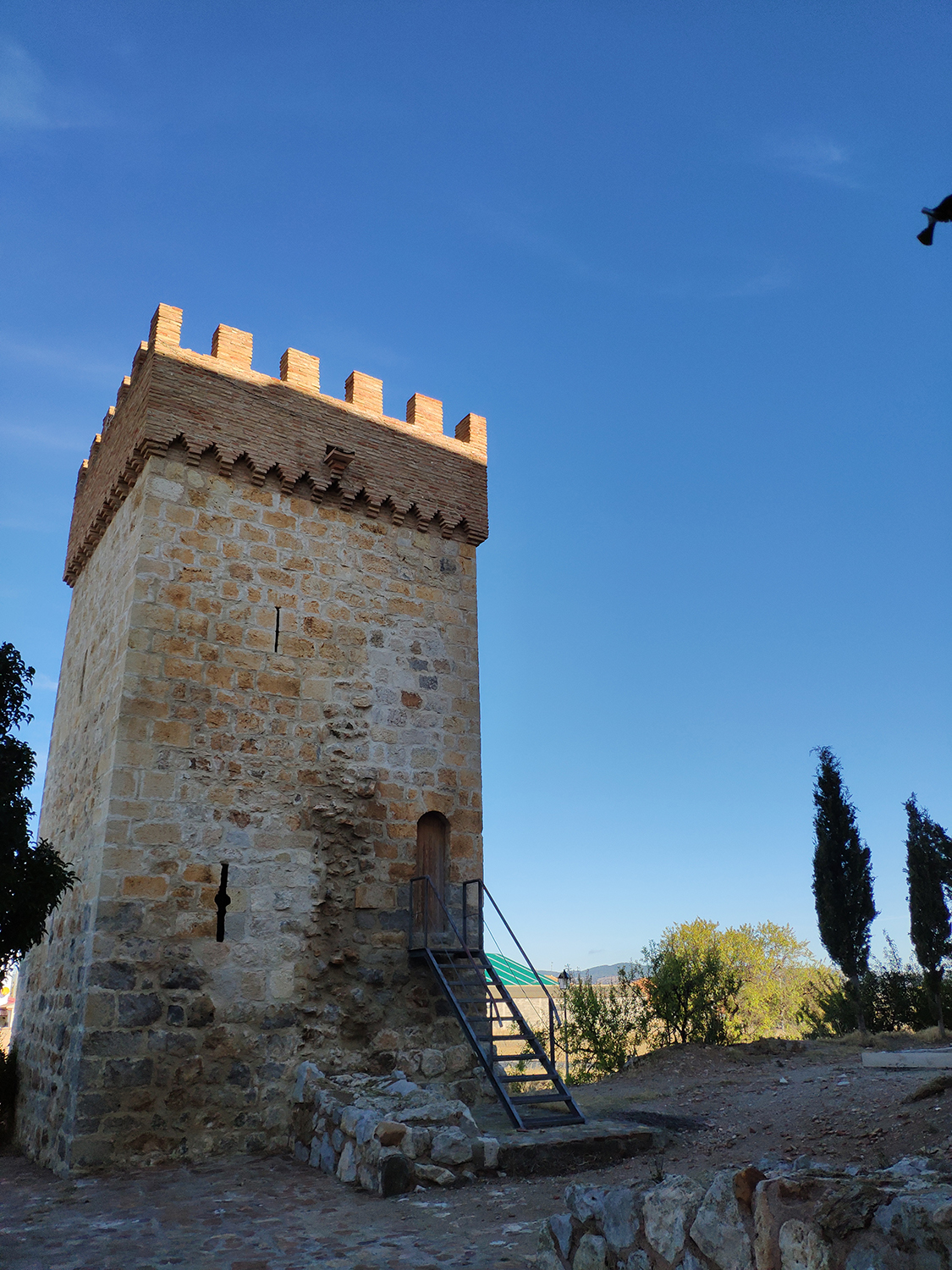
The remains of one of the towers of the old medieval fortress can still be seen. Dating from the 14th century, it is made of ashlar stone and formed part of the fortified complex on which stands the Baroque church of San Miguel which, although dated 1686, retains an earlier element: its spectacular 15th century Mudejar tower.
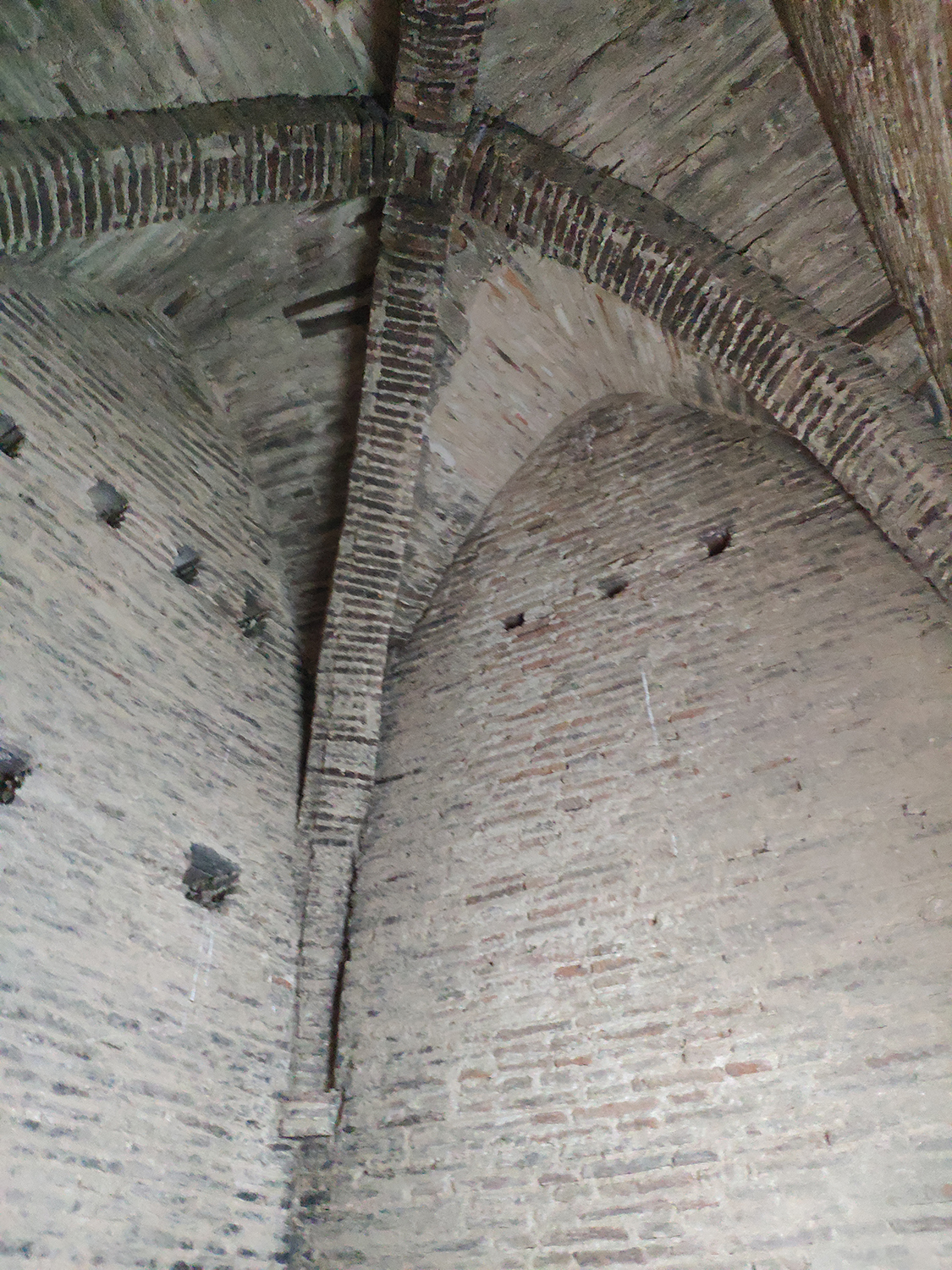
It is the only preserved element of the old church. It has a square floor plan and a solid body with two superimposed rooms. Its exterior is sober with some bands of angled brick and a frieze of lozenges interrupted by the bells.
The tower is accessed from the choir loft inside the church and its layout resembles that of a Christian tower rather than an Islamic tower.
With a past marked by the passage of Celtiberian, Roman and Mozarabic peoples, among others, Villarreal de Huerva preserves a latent historical and artistic pulse represented by the remains of its castle and church.
The remains of one of the towers of the old medieval fortress can still be seen. Dating from the 14th century, it is made of ashlar stone and formed part of the fortified complex on which stands the Baroque church of San Miguel which, although dated 1686, retains an earlier element: its spectacular 15th century Mudejar tower.
It is the only preserved element of the old church. It has a square floor plan and a solid body with two superimposed rooms. Its exterior is sober with some bands of angled brick and a frieze of lozenges interrupted by the bells.
The tower is accessed from the choir loft inside the church and its layout resembles that of a Christian tower rather than an Islamic tower.
Projects Territorio Mudéjar in Villarreal de Huerva
Monuments | View the project
Education | View the project
Project Mudetrad | View the project
Mudéjar educational, the guide | View the project
“Circular” Walks for the family | View the project
More information
Town Hall: 976 807 041
aytovillarrealdehuerva.es
Association for the Comprehensive Rural Development
of the lands of Jiloca and Gallocanta
adri.es
VISIT VILLARREAL DE HUERVA
976 633 296
WOULD YOU LIKE TO FIND OUT MORE?
Tourism in Aragón
turismodearagon.com
Tourism of the Daroca Comarca
turismo.comarcadedaroca.com
Centre of Darocense Studies
ifc.dpz.es
Centre for Studies in Jiloca
www.xiloca.com
Territorio Mudéjar Network
The city council has been a full partner of Territorio Mudéjar since December 2019.


Enduring tradition
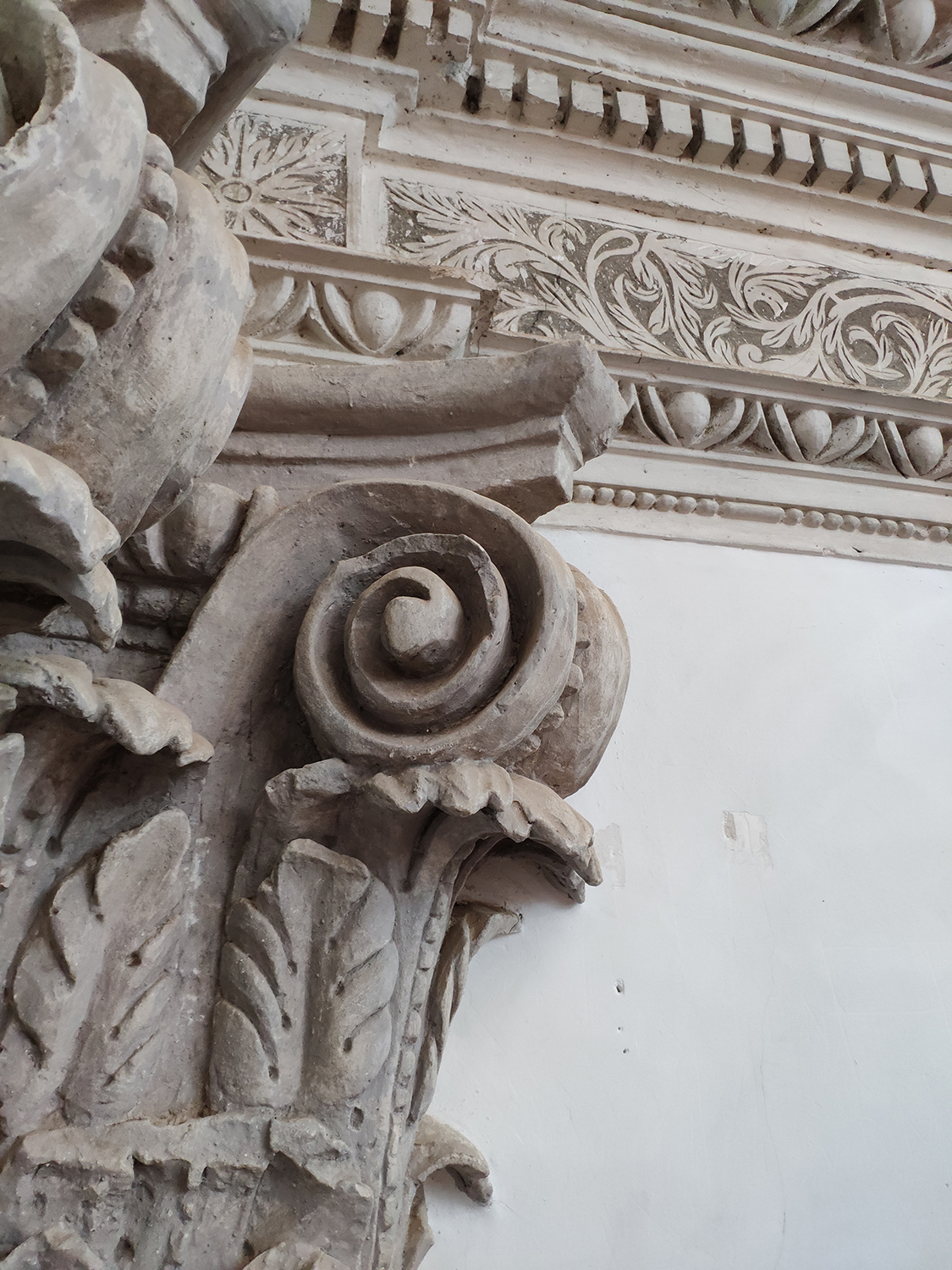
The interior of the church contrasts with the austere exterior and it is surprising to see how its walls and vaults are completely covered with a striking white sgraffito from the modern period on a black background which, together with the carefully studied natural lighting, makes the baroque altarpiece and medallions stand out even more.
A few kilometres from the town is the hermitage of Nuestra Señora del Rosario, a neoclassical temple that replaced an earlier one. Its Mudejar brick tower is the only legacy of the original church. Slightly rectangular in plan, it is in the bell tower that the brick decoration is concentrated.
Another of the most outstanding buildings in Villarreal de Huerva is the Venta del Peirón, a typical roadside inn of the kind that used to line the roads of Spain and which offered everything from medical services to stables. The town also preserves traces of the importance of water in its history as the power of mills and a source of irrigation, a legacy that can be seen in the bridge of La Venta and the Roman bridge.
The interior of the church contrasts with the austere exterior and it is surprising to see how its walls and vaults are completely covered with a striking white sgraffito from the modern period on a black background which, together with the carefully studied natural lighting, makes the baroque altarpiece and medallions stand out even more.
A few kilometres from the town is the hermitage of Nuestra Señora del Rosario, a neoclassical temple that replaced an earlier one. Its Mudejar brick tower is the only legacy of the original church. Slightly rectangular in plan, it is in the bell tower that the brick decoration is concentrated.
Another of the most outstanding buildings in Villarreal de Huerva is the Venta del Peirón, a typical roadside inn of the kind that used to line the roads of Spain and which offered everything from medical services to stables. The town also preserves traces of the importance of water in its history as the power of mills and a source of irrigation, a legacy that can be seen in the bridge of La Venta and the Roman bridge.