
Tobed
Village Territorio Mudéjar
Identity Mudejar
In the heart of the valley of the river Grío, between the mountain ranges of Vicor and of Algairén, Tobed has become the gateway to Mudejar not only because of the imposing church of the Virgin, one of the monuments most authentic of the Mudejar in Aragon and designated a World Heritage Site by UNESCO in the year 2001, but rather because the town has made of this unique style a project for the region’s future which encompasses history, art, education, landscape, traditions and people and which has made it possible to use these resources to create identity and wealth.
One example is the creation of the Espacio Mudéjar Mahoma Calahorrí, museum dedicated to the history of the Mudejar housed in the Palace of the canons and which displays Mudejar art from Aragon and the social and cultural context in which it developed.
The town is also noted for its preservation of various traditions linked to the crafts of Islamic tradition such as working with clay and pottery, alongside the revival of part of the neighbourhood of the Obradores, where there came to be in operation around 50 workshops with workspaces for work in 50 workshops with spaces for work shared such as the raft-makers or some of their kilns.
In the heart of the valley of the river Grío, between the mountain ranges of Vicor and of Algairén, Tobed has become the gateway to Mudejar not only because of the imposing church of the Virgin, one of the monuments most authentic of the Mudejar in Aragon and designated a World Heritage Site by UNESCO in the year 2001, but rather because the town has made of this unique style a project for the region’s future which encompasses history, art, education, landscape, traditions and people and which has made it possible to use these resources to create identity and wealth.
One example is the creation of the Espacio Mudéjar Mahoma Calahorrí, museum dedicated to the history of the Mudejar housed in the Palace of the canons and which displays Mudejar art from Aragon and the social and cultural context in which it developed.
The town is also noted for its preservation of various traditions linked to the crafts of Islamic tradition such as working with clay and pottery, alongside the revival of part of the neighbourhood of the Obradores, where there came to be in operation around 50 workshops with workspaces for work in 50 workshops with spaces for work shared such as the raft-makers or some of their kilns.

Projects Territorio Mudéjar en Tobed
Monuments | View the project
Education | View the project
Podcast | View the project
Project Mudetrad | View the project
Wood Mudéjar | View the project
Identities Rural | View the project
Mudéjar World Heritage 3D | View the project
Plaster Mudéjar | View the project
The Mudejar style and geometry Euclidean | View the project
Mudejar educational guide, the guide | View the project
Urban planning preventive | View the project
“Circular” walks for families | View the project
The wall as dermis. The light in the Mudéjar | View the project
Mudéjar Smart 3D | View the project
Contexts sound and architecture Mudejar | View the project
Projects Territorio Mudéjar en Tobed
Recognition and promotion of traditional architecture through a a series of itineraries.
More information
Town Hall 976 629 101
www.tobed.es
Association for DevelopmentIntegral Development of the Region of Calatayud and Region of Aranda
galcar.es
VISIT TOBED
976 633 296
tobedpatrimoniomundial.es
WOULD YOU LIKE TO FIND OUT MORE?
Tourism in Aragón
turismodearagon.com
Tourism Region Community of Calatayud
comarcalatayud.com
Centre for Studies Bilbilitanos
cebilbilitanos.com
Territorio Mudéjar Network
The town council has been a founding member of Territorio Mudéjar since 13 September 2018.
He is a member of the board of directors of the organisation as Chairman.




The paradigm of the church fortress in the Mudéjar style:
UNESCO World Heritage Site
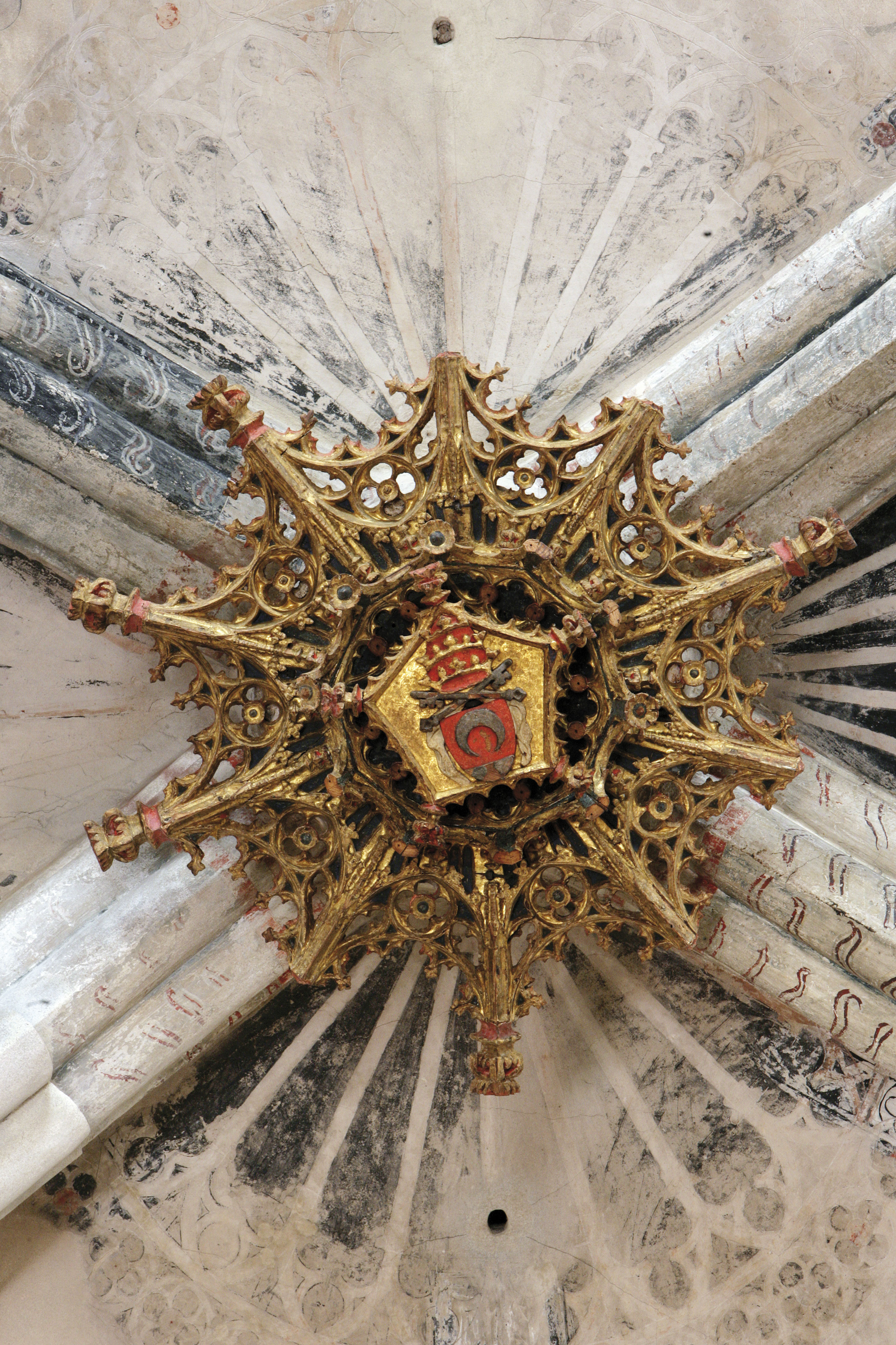
The church of the Virgin of Tobed is one of the architectural gems of Mudejar art. It is an archetype of a church-fortress which began to be built in 1356 as a result of the influence of the Order of the Holy Sepulchre, with the patronage of Peter IV of Aragon, the kings of Castile, the archbishop of Zaragoza, Lope Fernández de Luna, and Pope Benedict XIII; including in addition the finest Mudejar masters of the time: Mahoma Calahorri and Mahoma Rami.
The power of its exterior with its compact volumetry, punctuated by buttress-like turrets, and its impressive main façade with abundant decoration in the form of tracery and glazed glazed two-tone contrasts with the delicacy and elegance of its interior, magnificent with its walls covered with decoration in relief and ornaments ornate in aljez with plasterwork carved and openwork.
This temple thus represents the concept of Mudejar space in a state pure form, with spaces constructed on the basis of variations in light. Spaces that are intimate and evocative, where the light with its subtle nuances breathes life into walls beautifully decorated. The interior completes its repertoire with a stucco ceiling made of wood carved and polychrome which currently serves as the high choir at thefoot of the nave leaving the limelight to the organ Baroque.
The influence of the Order of the Holy Sepulchre in Tobed is evident throughout its town centre urban area, which does indeed catch the eye because of its simplicity and appearance of a “white village” preserves buildings from important buildings from the modern era such as the Lonja, the church parish church of San Pedro and the Palace of the Canons, also known as the Commandery, from the Baroque period.
The town preserves, in addition other features of interest such as the tower of the castle Islamic and the chapel of Saint Valentine on the ridge of the Algairén mountain range .
The church of the Virgin of Tobed is one of the architectural gems of Mudejar art. It is an archetype of a church-fortress which began to be built in 1356 as a result of the influence of the Order of the Holy Sepulchre, with the patronage of Peter IV of Aragon, the kings of Castile, the archbishop of Zaragoza, Lope Fernández de Luna, and Pope Benedict XIII; including in addition the finest Mudejar masters of the time: Mahoma Calahorri and Mahoma Rami.
The power of its exterior with its compact volumetry, punctuated by buttress-like turrets, and its impressive main façade with abundant decoration in the form of tracery and glazed glazed two-tone contrasts with the delicacy and elegance of its interior, magnificent with its walls covered with decoration in relief and ornaments ornate in aljez with plasterwork carved and openwork.
This temple thus represents the concept of Mudejar space in a state pure form, with spaces constructed on the basis of variations in light. Spaces that are intimate and evocative, where the light with its subtle nuances breathes life into walls beautifully decorated. The interior completes its repertoire with a stucco ceiling made of wood carved and polychrome which currently serves as the high choir at thefoot of the nave leaving the limelight to the organ Baroque.
The influence of the Order of the Holy Sepulchre in Tobed is evident throughout its town centre urban area, which does indeed catch the eye because of its simplicity and appearance of a “white village” preserves buildings from important buildings from the modern era such as the Lonja, the church parish church of San Pedro and the Palace of the Canons, also known as the Commandery, from the Baroque period.
The town preserves, in addition other features of interest such as the tower of the castle Islamic and the chapel of Saint Valentine on the ridge of the Algairén mountain range .
The content and updates to news items are produced in collaboration with the Town Council of Tobed through the Mahoma Calahorri Museum.
*This collaboration took place within the framework of the project run by the council of Tobed, funded by the Ministry of Culture and Sport under its grants for 2020 for local organisations with World Heritage sites listed by UNESCO.*Esta colaboración se desarrolló en el marco del proyecto del ayuntamiento de Tobed, financiado por el Ministerio de Cultura y Deporte en sus ayudas 2020 para entidades locales con Patrimonio Mundial inscrito por la Unesco.