
Villanueva de Gállego
Village Territorio Mudéjar
Witness in the orchard of Zaragoza
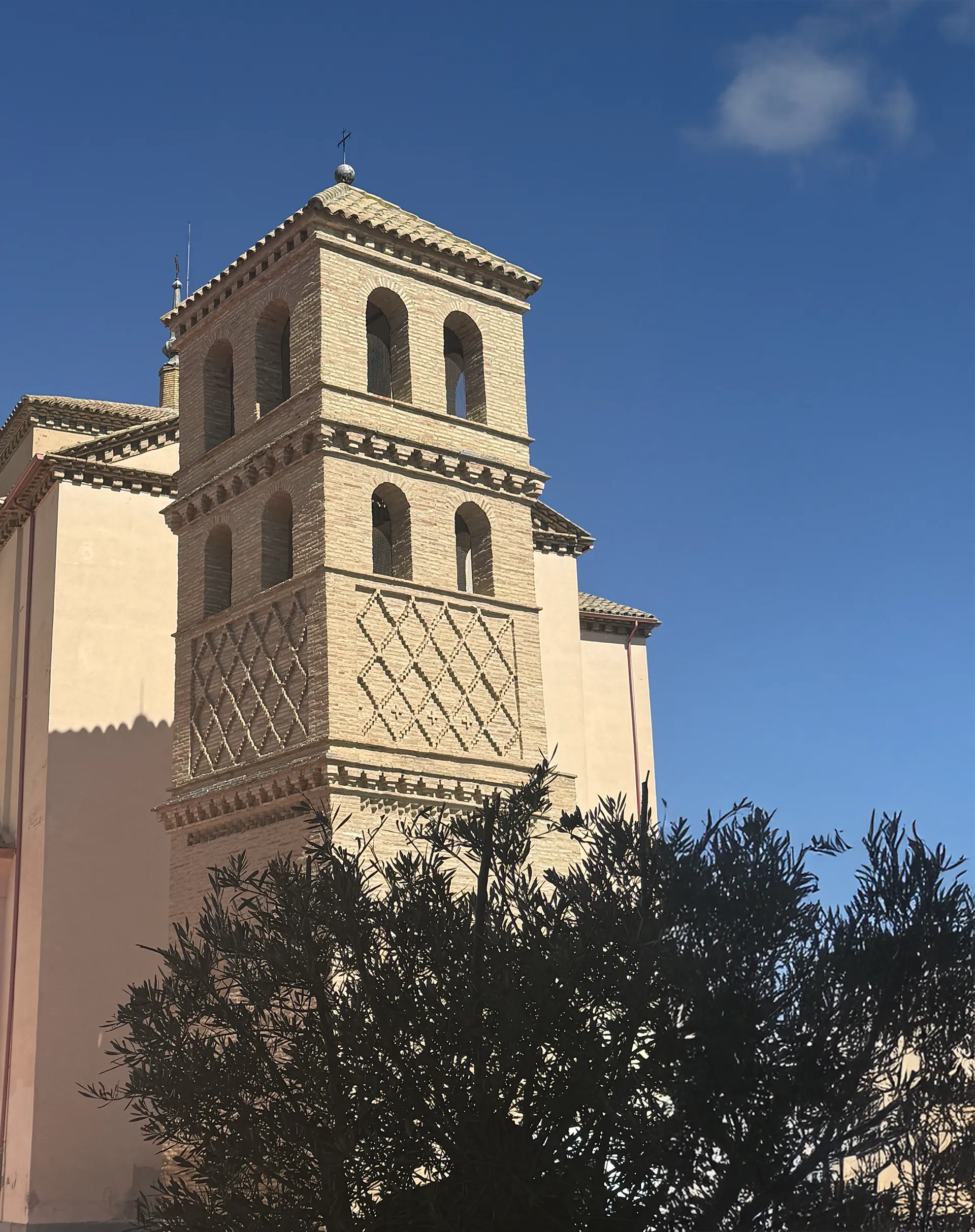
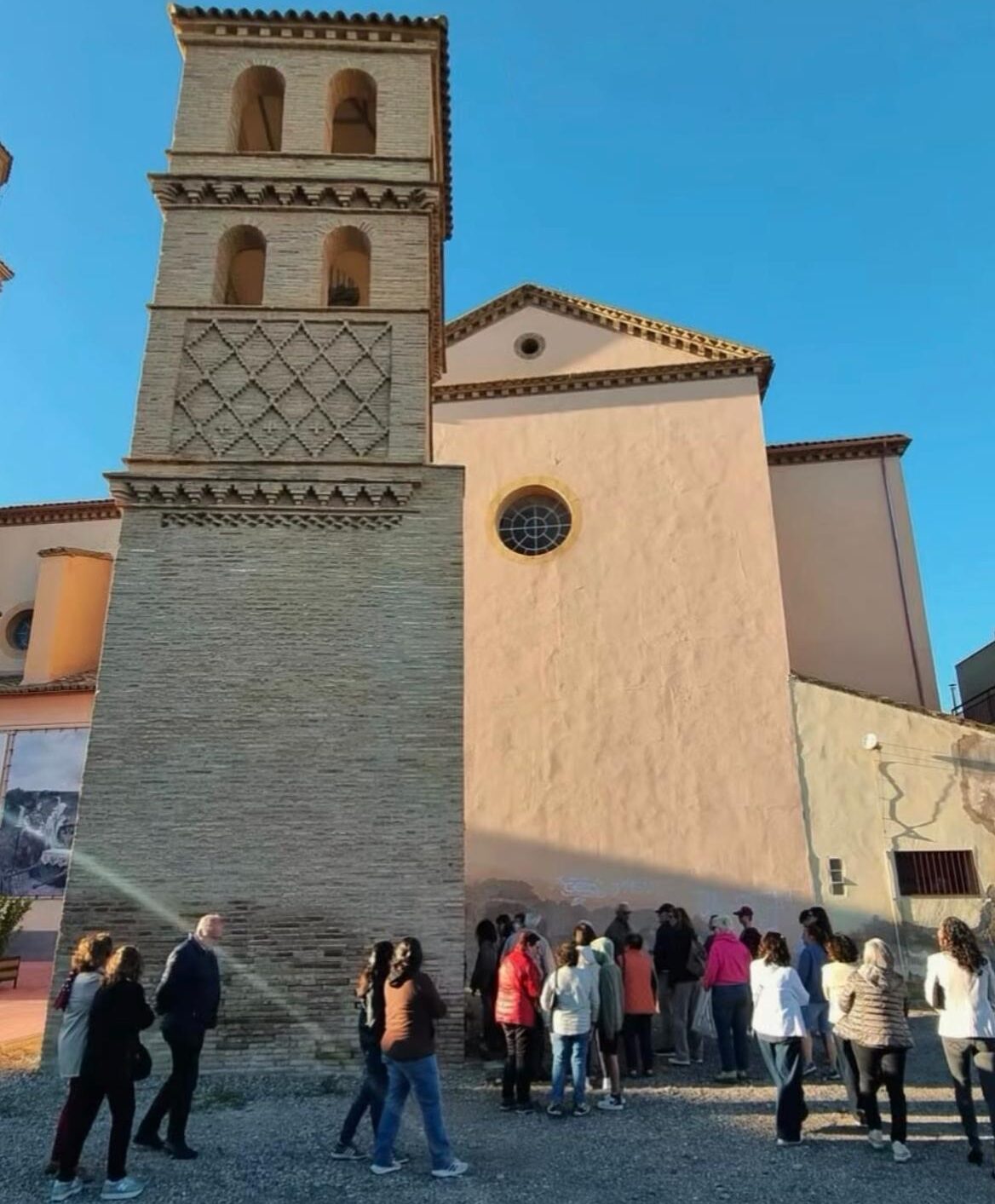
Just 17 kilometres from Zaragoza, on the right bank of the River Gállego and in the heart of the Ebro depression, lies Villanueva de Gállego, a town whose history dates back to the High Middle Ages. In 1248, the Council of Villanueva, together with the residents of Burjazud and Merzalar, decided to merge into a single settlement which came to be known as Villanueva de Burjazud, and they built a church on what is now the Plaza de España. Of that first medieval parish church, the most eloquent
remnant to have survived to the present day is its Mudejar tower, popularly known as the ‘Torre Vieja’.
The tower, built between the 15th and 16th centuries, is the only surviving part of the original Mudejar church, which was designated a Listed Asset of Aragonese Cultural Heritage in 2002. Featuring a Christian structure with two sections separated by projecting brick corbels forming a cornice, the lower section is decorated with a frieze of staggered chevrons and a rhomboidal lattice pattern, whilst the upper section features two arches
partially blind with facing brick. The tower stands some three metres away from the present church; it was built in the last third of the 17th century and rebuilt following the damage sustained during the War of Independence.
Just 17 kilometres from Zaragoza, on the right bank of the River Gállego and in the heart of the Ebro depression, lies Villanueva de Gállego, a town whose history dates back to the High Middle Ages. In 1248, the Council of Villanueva, together with the residents of Burjazud and Merzalar, decided to merge into a single settlement which came to be known as Villanueva de Burjazud, and they built a church on what is now the Plaza de España. Of that first medieval parish church, the most eloquent
remnant to have survived to the present day is its Mudejar tower, popularly known as the ‘Torre Vieja’.
The tower, built between the 15th and 16th centuries, is the only surviving part of the original Mudejar church, which was designated a Listed Asset of Aragonese Cultural Heritage in 2002. Featuring a Christian structure with two sections separated by projecting brick corbels forming a cornice, the lower section is decorated with a frieze of staggered chevrons and a rhomboidal lattice pattern, whilst the upper section features two arches
partially blind with facing brick. The tower stands some three metres away from the present church; it was built in the last third of the 17th century and rebuilt following the damage sustained during the War of Independence.
Projects Territorio Mudéjar in Villanueva de Gállego
Pedagogy | View the project
Mudéjar teaching guide, the guide | View the project
Projects Territorio Mudéjar in Villanueva de Gállego
Recognition and promotion of traditional architecture through a a series of itineraries.
More information
Town Hall 976 185 004
https://www.villanuevadegallego.org/
Visit Villanueva de Gállego 976 185 004
WOULD YOU LIKE TO FIND OUT MORE?
Tourism in Aragón
turismodearagon.com
Tourism and heritage in the Central Region
https://turismoriberaaltadelebro.es/
Territorio Mudéjar Network
The town council has been a founding partner of Territorio Mudéjar since 2025.

Tower of Azud
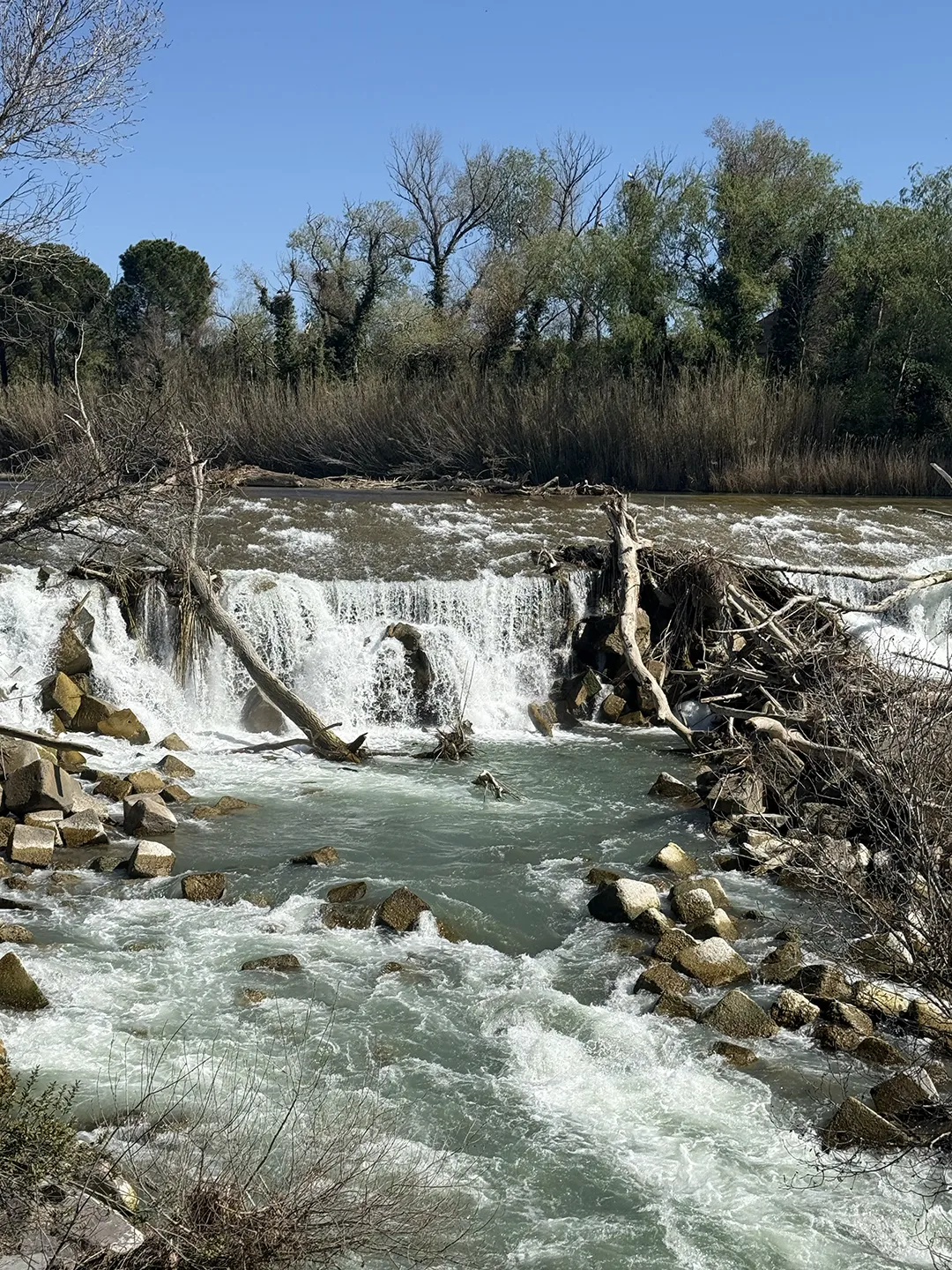
Water, however, is the true protagonist of this place’s history. Even before the village as we know it existed, the settlement owed its
importance to a first-rate hydraulic infrastructure: a weir on the River Gállego that channelled water towards the city of Zaragoza via what is now known as the Rabal irrigation channel. This weir was so central to life in the area that, during the Muslim period, the settlement came to be known as Burjazud – ‘tower of the weir’ – a name that persisted until the three settlements were united in 1248. The Rabal irrigation channel, whose origins can be traced back to Roman or Arab times, is one of the oldest hydraulic infrastructures in the Zaragoza area.
The influence of water does not end there. By the end of the 15th century, the district already had several flour and paper mills that harnessed the power of its irrigation channels, including those situated alongside the Rabal irrigation channel in the district of Merzalar. The Urdán irrigation channel, whose weir is situated upstream next to the Cartuja de Aula Dei and which is probably of Arab origin, also runs through the area around Villanueva and has sustained the irrigation of the market gardens for centuries. Today, Villanueva’s so-called ‘Harinera’ stands on the site of the old communal mill that was powered by the irrigation channels,
making it the oldest active industrial complex in the municipality and a living testament to that centuries-old relationship between the community and its canals.
The municipal area also preserves numerous country houses or “torres” that formerly belonged to religious and noble institutions, such as the Torre Hospitalico and the Torre Guallart, forming a peri-urban landscape that preserves the area’s agricultural and stately heritage.
Water, however, is the true protagonist of this place’s history. Even before the village as we know it existed, the settlement owed its
importance to a first-rate hydraulic infrastructure: a weir on the River Gállego that channelled water towards the city of Zaragoza via what is now known as the Rabal irrigation channel. This weir was so central to life in the area that, during the Muslim period, the settlement came to be known as Burjazud – ‘tower of the weir’ – a name that persisted until the three settlements were united in 1248. The Rabal irrigation channel, whose origins can be traced back to Roman or Arab times, is one of the oldest hydraulic infrastructures in the Zaragoza area.
The influence of water does not end there. By the end of the 15th century, the district already had several flour and paper mills that harnessed the power of its irrigation channels, including those situated alongside the Rabal irrigation channel in the district of Merzalar. The Urdán irrigation channel, whose weir is situated upstream next to the Cartuja de Aula Dei and which is probably of Arab origin, also runs through the area around Villanueva and has sustained the irrigation of the market gardens for centuries. Today, Villanueva’s so-called ‘Harinera’ stands on the site of the old communal mill that was powered by the irrigation channels,
making it the oldest active industrial complex in the municipality and a living testament to that centuries-old relationship between the community and its canals.
The municipal area also preserves numerous country houses or “torres” that formerly belonged to religious and noble institutions, such as the Torre Hospitalico and the Torre Guallart, forming a peri-urban landscape that preserves the area’s agricultural and stately heritage.
The content and updates to news items are produced in collaboration with the Town Council of Tobed through the Mahoma Calahorri Museum.
*This collaboration took place within the framework of the project run by the council of Tobed, funded by the Ministry of Culture and Sport under its grants for 2020 for local organisations with World Heritage sites listed by UNESCO.*Esta colaboración se desarrolló en el marco del proyecto del ayuntamiento de Tobed, financiado por el Ministerio de Cultura y Deporte en sus ayudas 2020 para entidades locales con Patrimonio Mundial inscrito por la Unesco.