
Villafeliche
Village Territorio Mudéjar
Home of Moorish artisans
Villafeliche, a manor of the Camarasa marquisate, is one of the best examples of rural mortuary, as in Torrellas or Terrer, and it is enough to stroll through its streets to feel the urban imprint of Islamic tradition.
We know that the town had two quarters, one of Old Christians and the other first of Mudejars and then New Christians, after the expulsion of the Moors. Its urban layout is organised around a main artery with narrow streets and alleys that form a picturesque layout punctuated by ancestral homes, the nucleus where the mosque would have stood, of which remains were preserved until well into the 20th century.
The hamlet was dominated by a fortress of Muslim origin, which in 1221 became part of the kingdom of Aragon and which today imposingly defines the profile of the town.
Villafeliche, a manor of the Camarasa marquisate, is one of the best examples of rural mortuary, as in Torrellas or Terrer, and it is enough to stroll through its streets to feel the urban imprint of Islamic tradition.
We know that the town had two quarters, one of Old Christians and the other first of Mudejars and then New Christians, after the expulsion of the Moors. Its urban layout is organised around a main artery with narrow streets and alleys that form a picturesque layout punctuated by ancestral homes, the nucleus where the mosque would have stood, of which remains were preserved until well into the 20th century.
The hamlet was dominated by a fortress of Muslim origin, which in 1221 became part of the kingdom of Aragon and which today imposingly defines the profile of the town.

Projects Mudejar Territory in Villafeliche
Monuments | View the project
Education | View the project
Project Mudetrad | View the project
Plaster Mudejar | View the project
Mudejar educational, the guide | View the project
Urban planning preventive | View the project
“Circular” Walks with the family | View the project
Projects Territorio Mudéjar en Tobed
Recognition and promotion of traditional architecture through a a series of itineraries.
More information
Town Hall
villafelicheturismo.es
Association for the Comprehensive Rural Development
of the lands of Jiloca and Gallocanta
adri.es
VISIT VILLAFELICHE
976 633 296
WOULD YOU LIKE TO FIND OUT MORE?
Camino del Cid
caminodelcid.org
Centre for Bilbilitan Studies Bilbilitanos
cebilbilitanos.com
Association Torre Albarrana
torrealbarrana.com
Territorio Mudéjar Network
The city council has been a founding member of Territorio Mudéjar since enero 2019.




The Royal Gunpowder Factory
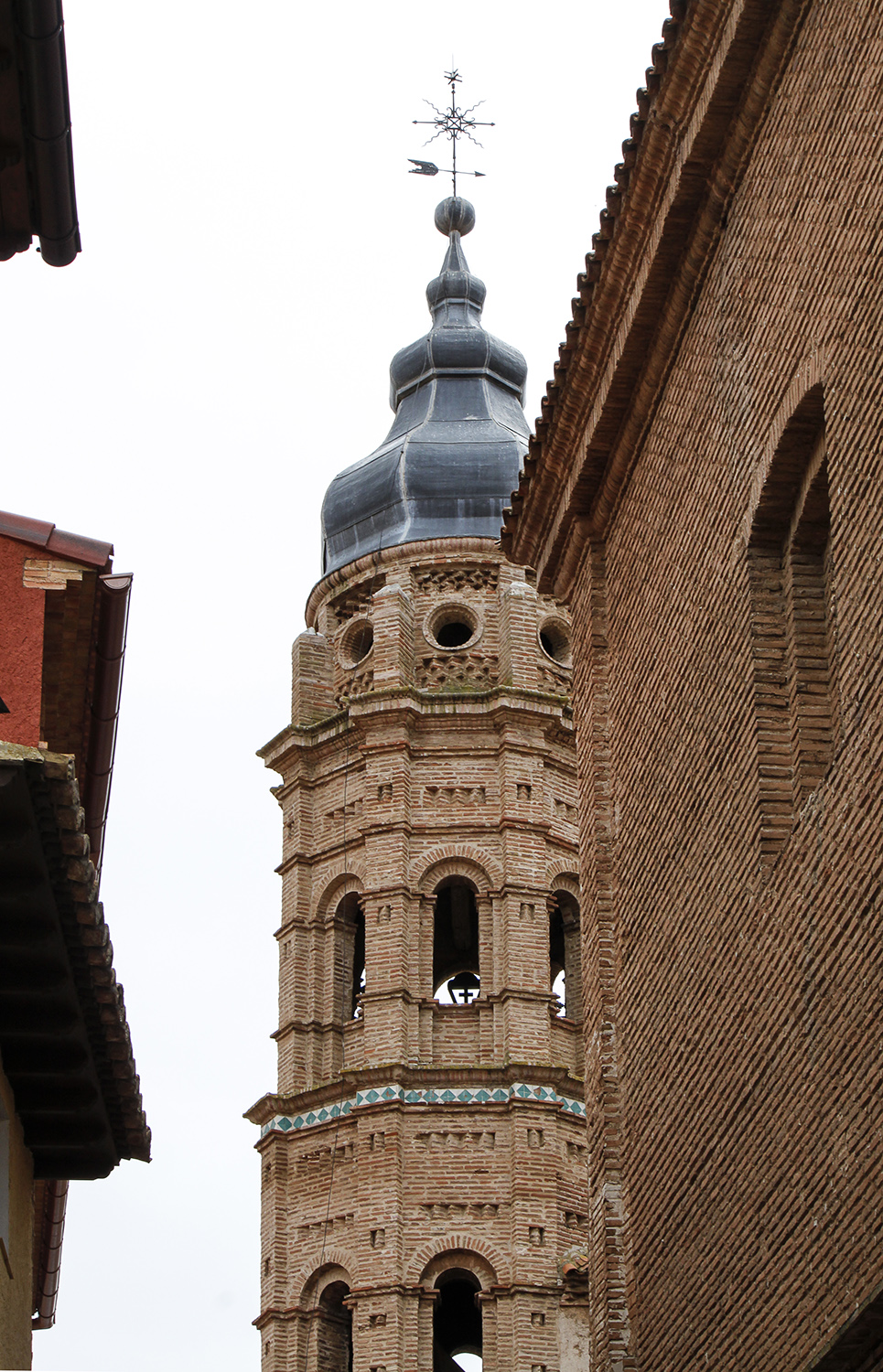
In the town centre, the Baroque church of San Miguel stands out especially, with a tower that reminds us of the Mudejar tradition of the town; decorated with groined ceramic tiles and highlighted brickwork, this tower is an example of how the deep roots of Mudejar forms in Aragonese society, due to the late expulsion of the Moors (1610), favoured the survival of the building tradition.
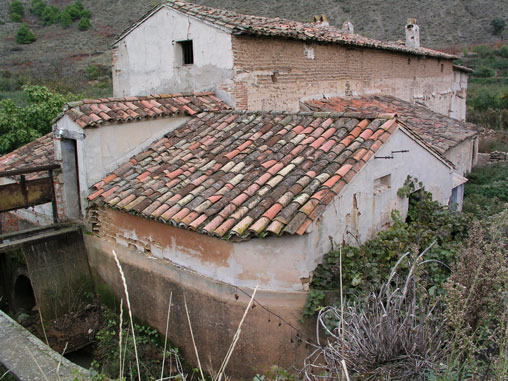
Villafeliche also has a Mudejar stamp in its crafts. On the one hand, it has a renowned pottery tradition dating back to the 15th century and is known to have been the largest supplier of pots in the region. On the other hand, the gunpowder mills and the Real Fábrica de Pólvora of the town constituted, in its more than four hundred years of existence, one of the main economic activities of the province of Zaragoza and Aragon.
Today, now definitively closed, they form a pre-industrial landscape of great heritage importance which, due to its geographical extension and the complexity of the production process, still reveals its past economic, social and strategic importance. The origin of the gunpowder mills of Villafeliche seems to go back to the Mudejar period, although their peak was between the 18th and 19th centuries: in 1764 there were 165 powder mills in operation and in 1800 there were some 180.
Also worth seeing is the striking Way of the Cross marked by small pantheon shrines.
In the town centre, the Baroque church of San Miguel stands out especially, with a tower that reminds us of the Mudejar tradition of the town; decorated with groined ceramic tiles and highlighted brickwork, this tower is an example of how the deep roots of Mudejar forms in Aragonese society, due to the late expulsion of the Moors (1610), favoured the survival of the building tradition.
Villafeliche also has a Mudejar stamp in its crafts. On the one hand, it has a renowned pottery tradition dating back to the 15th century and is known to have been the largest supplier of pots in the region. On the other hand, the gunpowder mills and the Real Fábrica de Pólvora of the town constituted, in its more than four hundred years of existence, one of the main economic activities of the province of Zaragoza and Aragon.
Today, now definitively closed, they form a pre-industrial landscape of great heritage importance which, due to its geographical extension and the complexity of the production process, still reveals its past economic, social and strategic importance. The origin of the gunpowder mills of Villafeliche seems to go back to the Mudejar period, although their peak was between the 18th and 19th centuries: in 1764 there were 165 powder mills in operation and in 1800 there were some 180.
Also worth seeing is the striking Way of the Cross marked by small pantheon shrines.