Velilla de Ebro

Velilla de Ebro
Velilla de Ebro
Pedagogy
SCHOOL MATERIALS TO WORK ON CULTURAL AND NATURAL HERITAGE
Velilla-de-Ebro-Mudetrad
Mudetrad Project
A PROJECT THAT HIGHLIGHTS THE TRADITIONAL ARCHITECTURE OF VELILLA DE EBRO
Velilla de Ebro
Podcast
A PODCAST THAT ENHANCES THE IMPORTANCE OF MUDEJAR ART
La guía didáctica
Didactic Mudejar, the guide
PRODUCTION OF AN EDUCATIONAL MATERIAL FOR PRIMARY AND SECONDARY SCHOOL PUPILS TO HELP THEM INTERPRET THE MUDEJAR STYLE
Velilla de Ebro circular
Circular from the rural school
Family Outings
COOPERATIVE PROJECT BETWEEN RURAL DEVELOPMENT GROUPS
Velilla de Ebro

Lepida Celsa

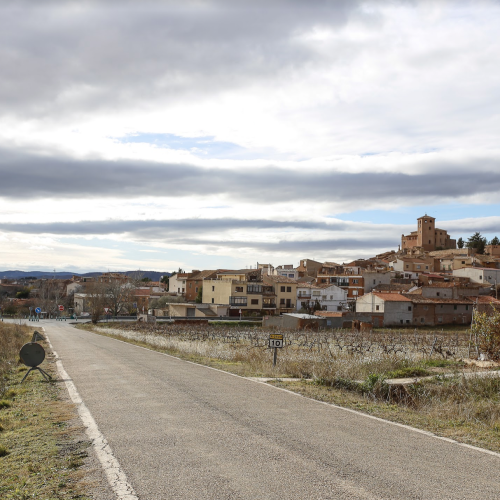
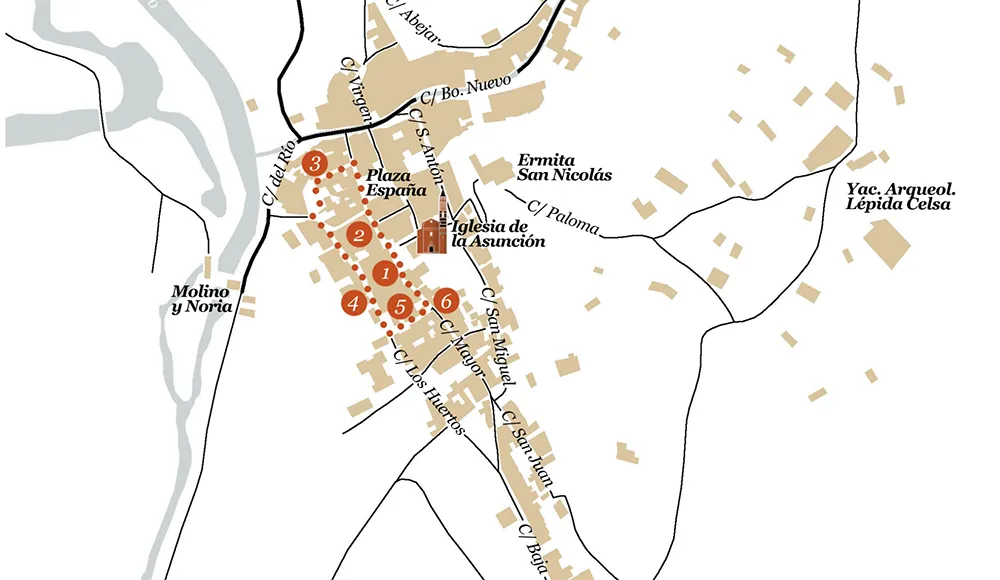
The origins of Velilla de Ebro date back to 44 B.C.: it was in that year that Marcus Emilius Lepidus founded the colony known as “Victiux Iulia Lepida”, thus consolidating control of the Ebro and its passage along the Via Augusta. The colony of Celsa was recognised as one of the most important in the Ebro valley, even minting its own coinage. Around the same time, other colonies of particular importance arose, such as Caesaraugusta, now known as Saragossa. The splendour of Lepida Celsa lasted until the time of Nero.

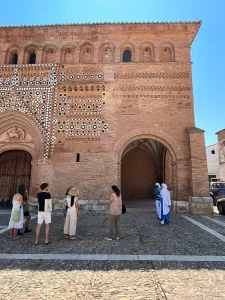
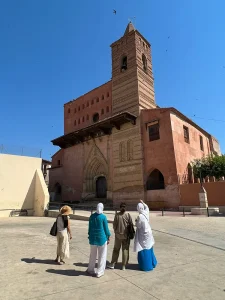
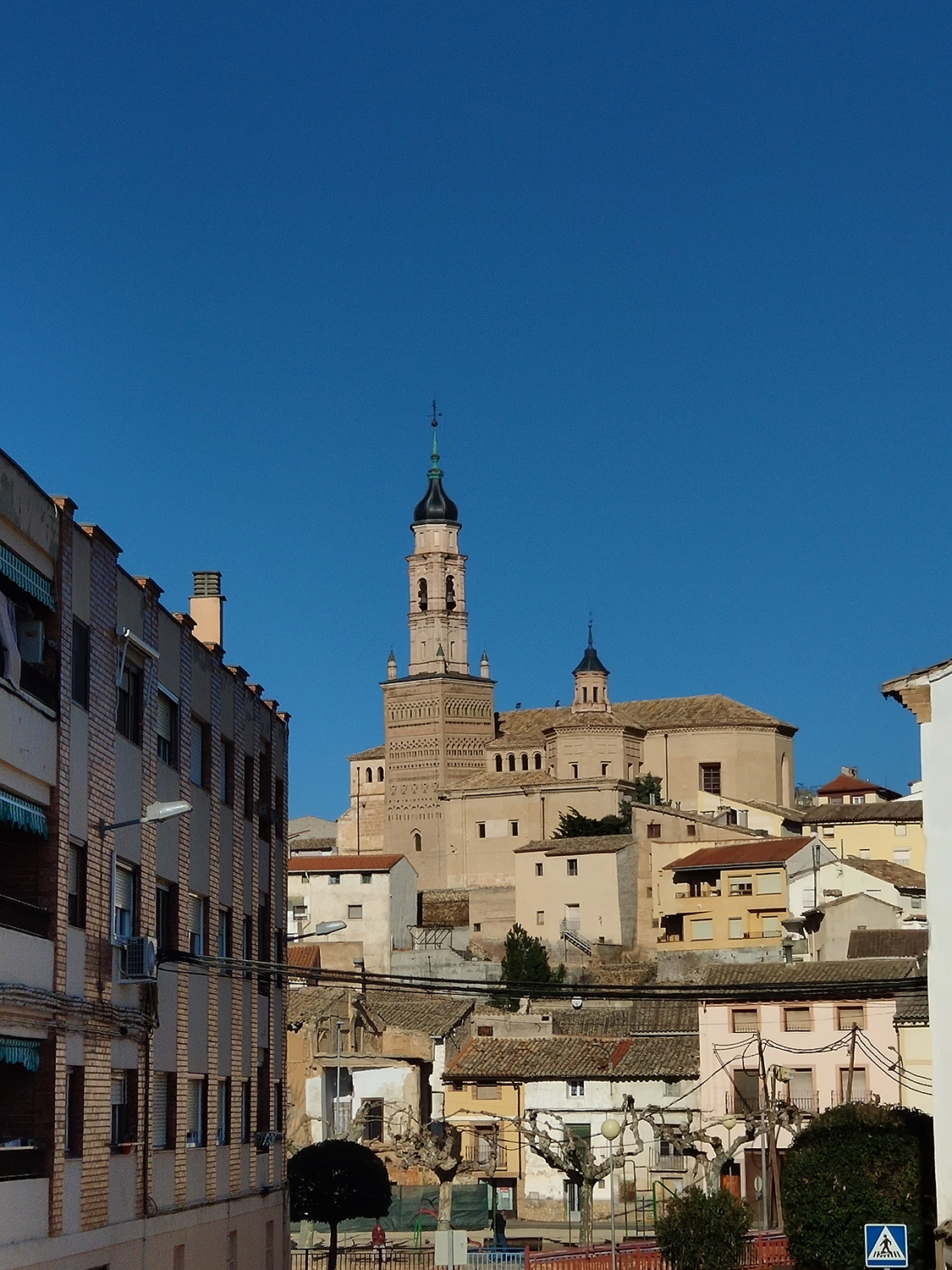
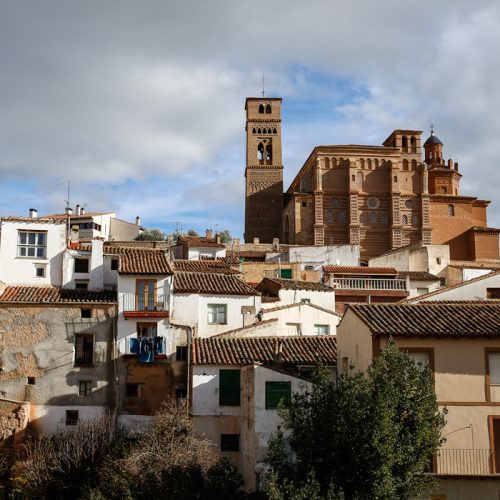
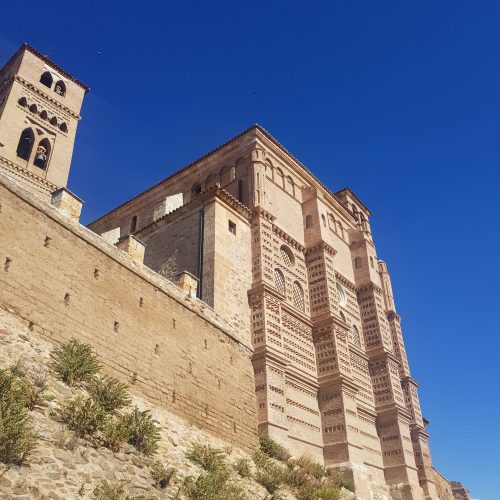
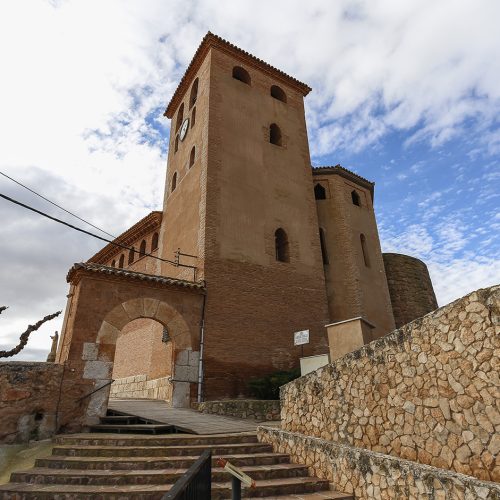
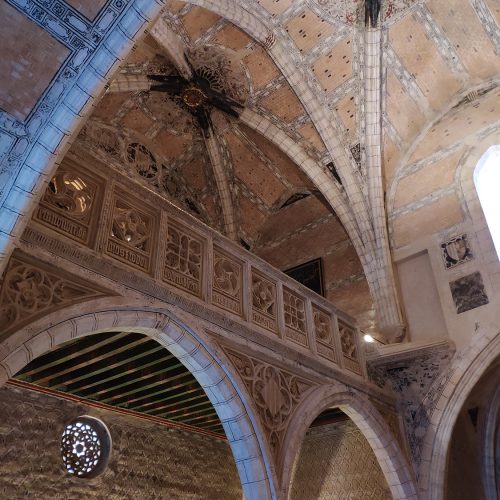
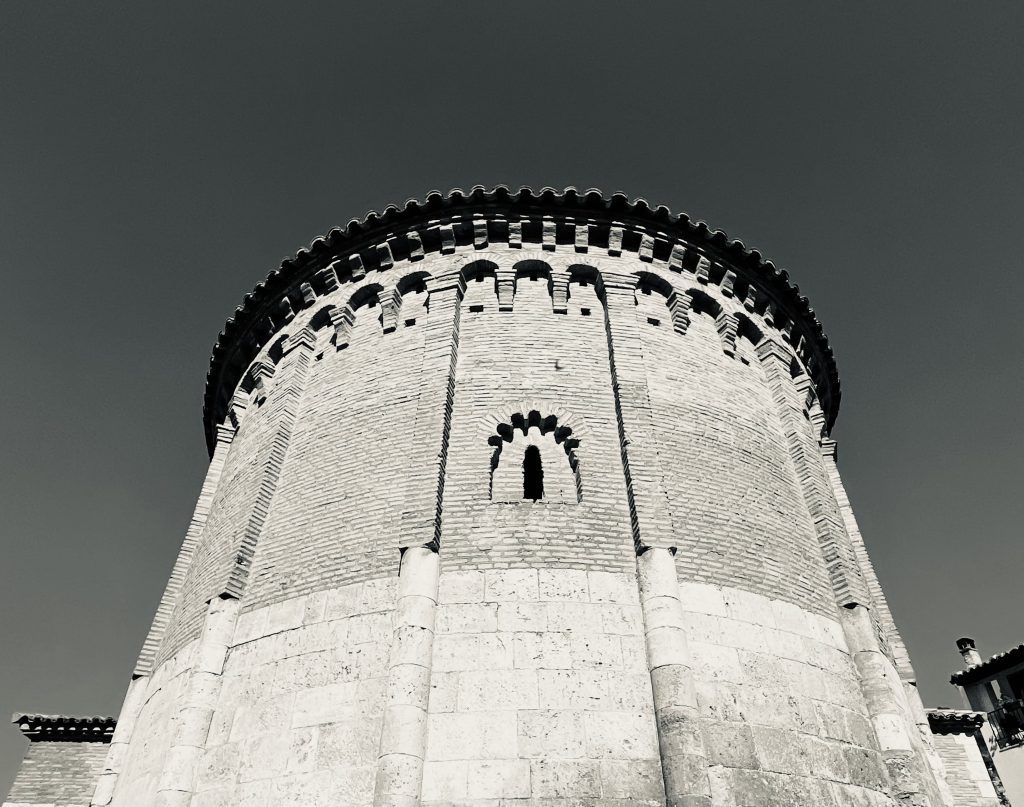
In the town centre we find a beautiful church from the 16th-17th centuries, of very harmonious proportions, with a single nave with side chapels between the buttresses – in a reform of the 18th century the buttresses were perforated, giving the impression of three naves. The church has a Mudejar typology in terms of its ground plan and the layout of its elements, although it is resolved with Renaissance formal solutions.

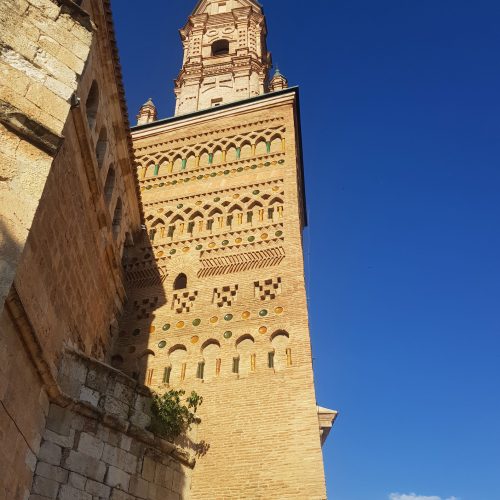
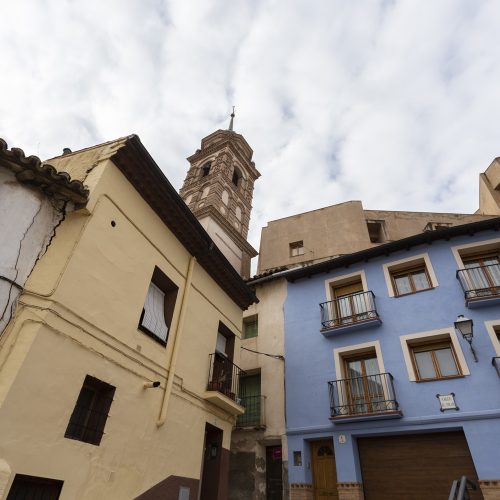
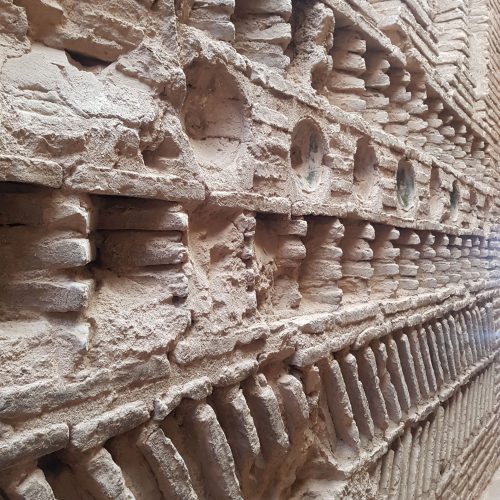
The slender Mudejar tower, built in brick and with three sections, stands out. The upper part of the lower body is decorated with bands of staggered or saw-toothed angled bands.

The origins of Velilla de Ebro date back to 44 B.C.: it was in that year that Marcus Emilius Lepidus founded the colony known as “Victiux Iulia Lepida”, thus consolidating control of the Ebro and its passage along the Via Augusta. The colony of Celsa was recognised as one of the most important in the Ebro valley, even minting its own coinage. Around the same time, other colonies of particular importance arose, such as Caesaraugusta, now known as Saragossa. The splendour of Lepida Celsa lasted until the time of Nero.

In the town centre we find a beautiful church from the 16th-17th centuries, of very harmonious proportions, with a single nave with side chapels between the buttresses – in a reform of the 18th century the buttresses were perforated, giving the impression of three naves. The church has a Mudejar typology in terms of its ground plan and the layout of its elements, although it is resolved with Renaissance formal solutions.

The slender Mudejar tower, built in brick and with three sections, stands out. The upper part of the lower body is decorated with bands of staggered or saw-toothed angled bands.

Vega of the river Ebro

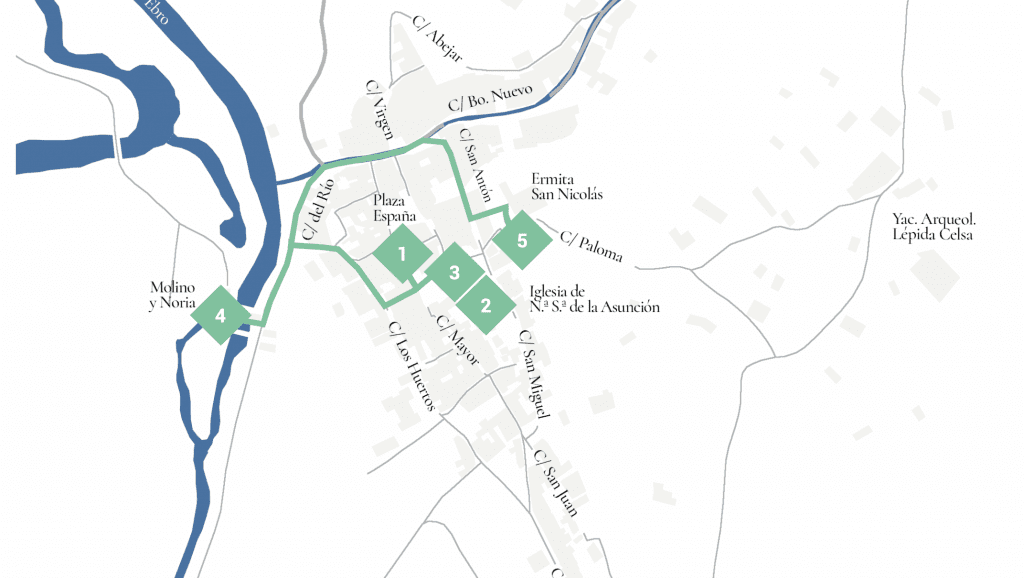
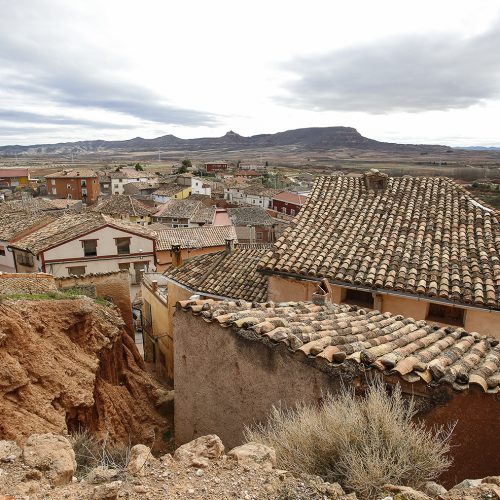
Velilla conserves an interesting hydraulic complex comprising a wash house, a flour mill and a double-wheeled waterwheel, possibly of Arab origin. These purely utilitarian architectures speak to us of the ancient relationship of its inhabitants with the river, the raison d’être of this territory. They are characterised by their location and construction in a natural area in front of the town centre, on a branch of the river that surrounds a fertile meadow.

The subsoil hides another of the town’s riches: alabaster, an ornamental stone that has been appreciated since ancient times. From the Velilla quarries was extracted, for example, the alabaster of the main altarpiece of the Pilar de Zaragoza, the work of the sculptor Damián Forment, a material used to carve the missing altarpiece of the chapel of San Nicolás de Velilla de Ebro, which was the work of the same sculptor.

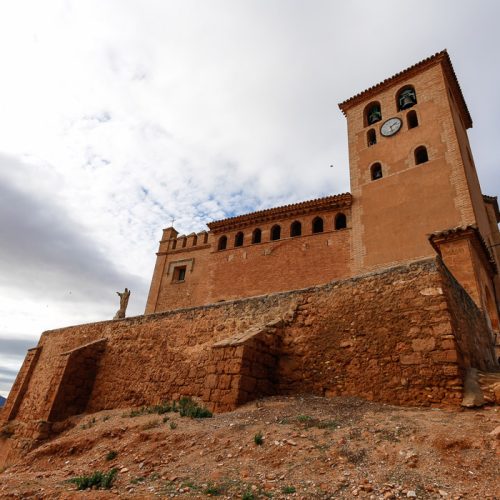
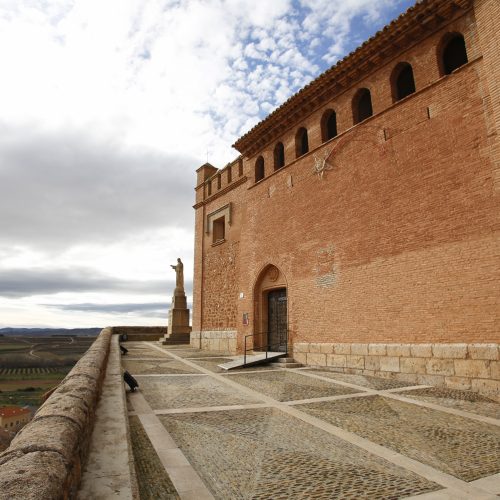
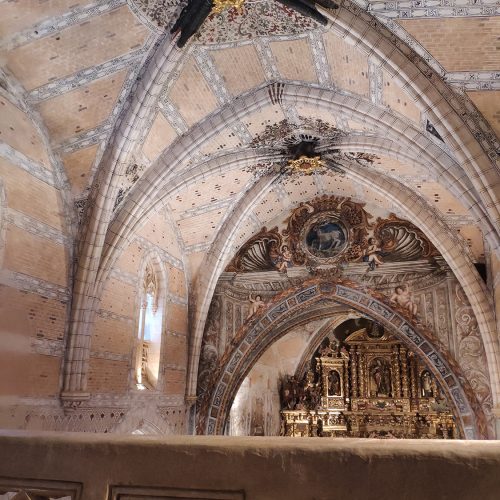
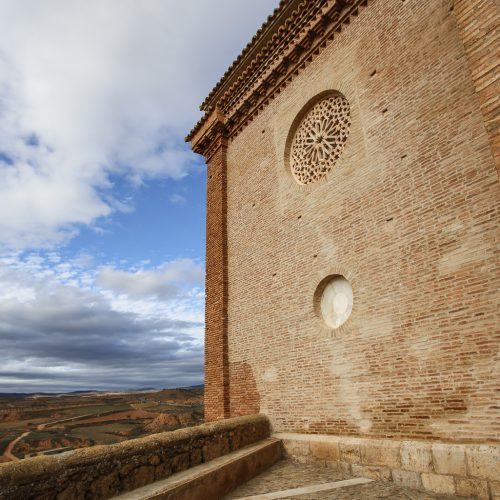
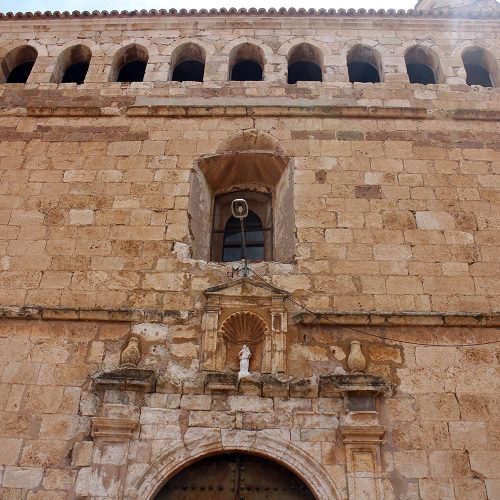
It is well worth climbing up to this hermitage of San Nicolás, of Romanesque origin, although it was extensively renovated in the 17th and 18th centuries. The façade is crowned by a belfry with three openings in which the Miracle Bell was located, a legend that begins in the year 418 and is probably related to the Christianisation of the place. In the side chapels inside the chapel, remains of Baroque paintings have been preserved.

Velilla conserves an interesting hydraulic complex comprising a wash house, a flour mill and a double-wheeled waterwheel, possibly of Arab origin. These purely utilitarian architectures speak to us of the ancient relationship of its inhabitants with the river, the raison d’être of this territory. They are characterised by their location and construction in a natural area in front of the town centre, on a branch of the river that surrounds a fertile meadow.

The subsoil hides another of the town’s riches: alabaster, an ornamental stone that has been appreciated since ancient times. From the Velilla quarries was extracted, for example, the alabaster of the main altarpiece of the Pilar de Zaragoza, the work of the sculptor Damián Forment, a material used to carve the missing altarpiece of the chapel of San Nicolás de Velilla de Ebro, which was the work of the same sculptor.

It is well worth climbing up to this hermitage of San Nicolás, of Romanesque origin, although it was extensively renovated in the 17th and 18th centuries. The façade is crowned by a belfry with three openings in which the Miracle Bell was located, a legend that begins in the year 418 and is probably related to the Christianisation of the place. In the side chapels inside the chapel, remains of Baroque paintings have been preserved.

Territorio Mudéjar Network

The city council has been a full member of Territorio Mudéjar since April 2021.

More information

Town Hall: 976 176 350
https://www.velilladeebro.es

Centre for the Development of the Sea Regions of Aragon
cedemar.es

VISIT VELILLA DE EBRO
976 633 296

DO YOU WANT TO KNOW MORE?
Turismo de Aragón
turismodearagon.com
Comarca Ribera Baja del Ebro
https://riberabaja.es/

Projects Territorio Mudéjar in Velilla de Ebro

Pedagogy | See project
Mudetrad project | See project
Podcast | See project
Mudéjar didactic, the guide | See project
“Circular” Family walks | See project
Extraordinary Call: Sustainability Plan Daroca

SELECTION OF A PROFESSIONAL ASSISTANT TO PROJECT MANAGEMENT.

Advice, consultation, monitoring and scientific support in the management of historical-artistic heritage for the development of the Tourism Sustainability Plan for the city of Daroca.

Deadline for submission: Until August 31, 2023. [Until 3:00 p.m.]

Territorio Mudéjar is an association of municipalities, currently forty-seven member municipalities and one collaborating partner, whose objective is to strengthen a unified and collaborative management network for the use of historical and artistic resources linked to the important Mudejar heritage, understanding them as an engine for the development of the towns and as an element of identity for the maintenance of the communities that make up our territory.

Our programme of actions for the coming years has been designed in accordance with the strategic lines defined by the defined by the ” Roadmap of the Council of the European Union 2019- 2022″, which2022″ which, aligned with the goals of the 2030 Agenda, have as a guiding principle that “the cultural identity of territories will contribute to territories will contribute to sustainable social and economic development by differentiating markets and in turn allowing their integration into a diversified a diversified economy that can ensure their future success.

The CITY COUNCIL OF DAROCA has been a founding member of the Territorio Mudéjar Association since 2018, ratified in a founding assembly on September 13, 2018.

According to the statutes approved in assembly on September 13, 2018, some of the actions for the partner municipalities go through:

  • To assist in the management and search for funding for projects that allow for the conservation, restoration, maintenance and dissemination of the assets, in all their extension, […]
  • To promote and collaborate with the Administration in the tasks of a social nature that facilitate the maintenance and increase of the population members of the association, and which are mentioned in Chapter I Article 4, as well as the rest of the figures attached to the association, assuming training and employment programs.
  • Drafting and updating public or private endogenous and sustainable development plans and programmes.
  • Encourage collaboration with entities of the same nature or purpose.

According to art.7 of the Statutes approved in assembly on September 13, 2018, the development of the purposes may be carried out “through contracts, concerts or agreements entered into with public or private entities, either to carry out programs of such entities, or to develop the association’s own duly approved action programs”.

"Plan of Sustainability and Tourist Modernization of the City Council of Daroca. Facilitating access to Heritage from accessibility".

The municipality of Daroca participated in the extraordinary call for Territorial Plans of Tourism Sustainability in Destination, hereinafter PSTD, in the call for the year 2021.

The project was approved by the Secretary of State for Tourism of the Ministry of Industry, Trade and Tourism and the Department of Industry, Competitiveness and Business Development of the Government of Aragon on October 17, 2022.
The approved project is defined through projects and actions focused on:

* The adequacy of the walled enclosure. Daroca has almost 4 kilometers of walls that make it one of the most extensive walled enclosures in Spain that requires urgent intervention for its conservation. The intervention consists of the restoration in 3 years of the sections with greater visual impact of the tourist.

* The adequacy of the area of the Castillo Mayor. Although the Torre del Homenaje has already been consolidated, it is necessary to continue with the intervention in the rest of the castle to ensure its conservation and attractiveness for tourists. Both in the access areas, as in the consolidation of the wall of the enclosure.

* The adequacy of roads and trails that allow access and visit both castle, walls and other existing monuments (towers, La Mina, green areas, etc.). Although there is already a path, it is necessary to have funds for its adaptation and maintenance. In addition, the municipality’s green areas will be adapted and new ones will be proposed.

* The decoration of facades within the LIENZOS DE HISTORIA project, also known as Muralea. The proposal allows highlighting the historical diversity and historical cultural fusion of Christian, Muslim and Jewish cultures. The project, recently launched, will be continued over the next three years, expanding the areas of action.

* The adequacy and rehabilitation of streets with the burying of wiring. The street network needs to be improved and rehabilitated together with the burying of cables that have a great visual impact on the urban landscape.

DAROCA. MONUMENTAL HISTORICAL SITE.

A large part of the actions approved in the sustainability plan affect the Historic-Artistic Site of Cultural Interest of the city of Daroca, declared in accordance with Decree 1450/1968 of June 6 and published in BOE No. 158 of July 2, 1968.

And in addition to the aforementioned declaration, the actions affect assets of different nature included, among others, in the Order of April 17, 2006, of the Department of Education, Culture and Sports, which approves the list of Castles and their location, considered Assets of Cultural Interest under the provisions of the second additional provision of Law 3/1999, of March 10, of the Aragonese Cultural Heritage, for the Daroca fortified enclosureDecree 267/2002, of July 23, 2002, of the Government of Aragón, declaring the “La Mina” of Daroca (Zaragoza) an Asset of Cultural Interest, in the category of Monument; Decree 572/1963, of March 14, 2003, second additional provision of the law.

As well as the assets included in the catalogs of architectural heritage and archaeological heritage of the PGOU of Daroca. The catalog of architectural heritage includes 31 properties that require integral protection, 35 that require structural protection and 143 that require environmental protection.

DAROCA. SPECIAL AGREEMENT MUDEJAR TERRITORY PARTNERS

The CITY COUNCIL OF DAROCA has been a founding member of the Territorio Mudéjar Association since 2018, ratified in a founding assembly on September 13, 2018.

The MUDÉJAR TERRITORY ASSOCIATION has been working since its foundation in 2018 on the creation of specific advisory structures for the partner municipalities, currently 47 partners and 1 collaborating municipality, whose objective is to strengthen a unified and collaborative management network for the use of historical-artistic resources linked to the important heritage of the villages and understanding them as an engine for the development of the villages and as an element of identity for the maintenance of the communities that make up our territory.

The agreement regulates the collaboration between both entities for:

  • Assist in the planning and execution of consulting, technical, legal or financial advisory actions, among others, necessary and foreseen in the PSTD to ensure the proper development of those actions within the provisions of the plan and specifically in accordance with the general regime of protection of Historical Heritage at the state and autonomous community level.
  • To create a specific work team to support the Daroca town council in the development of the PSTD, with a group of experts coordinated by the management team:

    A scientific-technical advisor expert in the management of the historical-artistic heritage of Daroca from the field of preventive conservation, intervention and the study of the use of heritage in the service of cultural and heritage tourism.

    It will also have two emerging professionals as project assistants and will create a training internship position for recent graduates through an agreement signed with UNIVERSA – Employment Counseling Office of the University of Zaragoza-.

    Finally, it will create a PSTD office for neighbors, companies and those interested in the project in order to study the synergies arising from the Plan.
EXTRAORDINARY PROFESSIONAL CALL

SELECTION OF A PROFESSIONAL TO JOIN THE PROJECT MANAGEMENT TEAM:

Advice, consultation, monitoring and scientific support in the management of historical-artistic heritage for the development of the Tourism Sustainability Plan for the city of Daroca.

PUBLICATION OF THE RULES: August 16, 2023.

PRESENTATION OF PROPOSALS. Until August 31 at 3:00 pm.

REQUEST FOR CONSULTATION OF THE DOCUMENTATION ON THE SUSTAINABILITY PLAN: Until August 31 before 3:00 p.m. through info@territoriomudejar.es.

AWARD

The Contracting Committee meeting held on September 18, 2023, agreed to award the contract to the bid submitted by:

DÑA. IRENE RUIZ BAZÁN

RULES CALL FOR PROPOSALS: Research stays and projects 2023

5th Call for researchstays for artistic projects and residencies “Gonzalo M. Borrás Gualis”.

Deadline for submission: Until 31 August.

Territorio Mudéjar announces the FIFTH EDITION of the Gonzalo M. Gonzalo M. Borrás Gualis researchstays and projects. Borrás Gualis aimed at directly supporting the work of researchers and project of researchers and project promoters who want to work on the development of the to work for the development of villages through the responsible and sustainable use of cultural and natural heritage resources. and sustainable use of cultural and natural heritage resources.
Territorio Mudéjar is an association of town councils, currently thirty-six member town councils and one collaborating partner, whose objective is to consolidate a unified and collaborative management network for the use of the historical and artistic resources linked to the important Mudejarartistic resources linked to the important Mudejar heritage , understanding them as a driving force for the development of the villages and as an and as an element of identity for the maintenance of the communities that make up our territory.

Our programme of actions for the coming years has been designed in accordance with the strategic lines defined by the defined by the ” Roadmap of the Council of the European Union 2019- 2022″, which2022″ which, aligned with the goals of the 2030 Agenda, have as a guiding principle that “the cultural identity of territories will contribute to territories will contribute to sustainable social and economic development by differentiating markets and in turn allowing their integration into a diversified a diversified economy that can ensure their future success.

The projects carried out since 2019 have strengthened this initiative as one of our initiative as one of our most important lines of of our most important lines of work based on the development of actions that enhance the retention and attraction of talent, actions aimed at the construction of highly qualified professional networks networks linked to the use of historical, artistic and cultural resources , contributing to medium- and long-term territorial development.artistic and cultural resources , contributing to medium and long-term territorial development.

Our project, dedicated to Professor Gonzalo M. Borrás Gualis, a staunch defender of the management of Aragonese heritage and the territory, as an action of the people and as an innovative field of work full of future. His work exemplified with perfect coherence the possibility of combining research work of high scientific impact with a commitment to the land and its people, not only favouring the knowledge, conservation and dissemination of its historical and artistic heritage, but also modernising work processes and proposing innovative projects in which natural, cultural and heritage resources are a key element in the future of the people.

FOCUS
Transdisciplinary thinking as a tool for innovation.

DIGITALISATION = STRATEGIC TOOL

The management of historical, artistic and cultural heritage is evolving rapidly thanks to digital technologies. The challenge now is to apply a strategic vision to these processes and the unprecedented opportunities offered by new technologies, and to use them in the most and the unprecedented opportunities offered by new technologies and to use them in the most efficient way possible, ensuring that the efforts efficient way possible , ensuring that the efforts made at this time of “boom ” have a long “boom” are sustainable over time and allow for the development of future projects.

Therefore, one of the criteria being continued this year is that all deliverables in a digital version (photographs, photographs, videos, etc.) must year is that all deliverable products in digital version (photographs, videos, digital models, audio files, etc.) must be videos, digital models, audio files, etc.) comply with the study Study on quality in 3D digitisation of tangible cultural heritage: mapping parameters, formats, standards, benchmarks, methodologies, and guidelines  published in 2022 and follow the lines of work indicated in the recommendation of 10/11/2021 on a common European data space for cultural heritage , thus adapting the quality criteria in this way quality criteria established in the in the DigitalisationStrategy of Territorio Mudéjar.

This strategy is in line with the latest recommendations of the European Commission and also takes into account, the standards of the most commonly used platforms and repositories such as Europeana and such as Europeana or Google Arts.

All the beneficiaries of the aid will receive information and training on the the DigitisationStrategy of Territorio Mudéjar during the first phase of their the first phase of their project and they will have a specific continuous specific ongoing monitoring during its development to help them comply with it.

ARTISTIC RESIDENCY. THE PLACE WHERE PROJECT IDEAS ARE BORN

Territorio Mudéjar is emerging as a place of action and creativity from areas often place of action and creativity from areas that are often ordered and differentiated and differentiated areas that often dissolve boundaries and take us to places that are complex to manage.

This workspace allows us to work on the concept of ” artisticresidence “ with the aim of understanding the heritage space and the context in which it is located as a multifaceted space. to understand the heritage space and the context in which it is located as a polyhedral space, promoting artistic creation projects with a strong link to the territory, the landscape and/or the heritage space.

This area is oriented towards research, experimentation, exchange, learning, critical reflection and the dissemination of local practices and knowledge, through dialogue between artisticresearch, communities, territory, places and non-places.

The aim is to generate the opening of new processes and directions of knowledge to explore new paths; to encourage creative thinking by generating spaces for dialogue and starting points between art, science and technology from artistic practice with a view to the development and maintenance of the people and their inhabitants.

FUTURE: CALL FOR EXCHANGES OF EUROPEAN PROFESSIONALS

The activity started in 2019 has been consolidated as one of the most important actions of our one of the most important actions of our entity , which strategy called R&D+innovation, with 23 pilot projects involving more than 40 involving more than 40 management professionals.

The project has been considered as an exemplary case study by the Ministry of Culture and Sport at the of Culture and Sport at the Meeting of World Heritage Managers 2022, held in Granada, which is held every year.

It has also been considered asan example of innovation and good practice in various best practices in various European cooperation projects. In this aspect, we must highlight the positioning of our entity, through the Estancias project, in the Interreg Europe project MOMAr Models of Management for Singular Rural Heritage, in which our project has been chosen by the government of the province of Groningen and the Libau Fondation as a reference model for their Heritage Lab project. Groningen and the Libau Fondation as a reference model for its Heritage Lab project, at the heart of its action plan.

With the aim of building international professional networks, we will soon announce the opening of different international networks , we will soon be announcing the opening of different calls for applications designed on the basis of different framework agreements with partners such as the Chamber of Commerce of the provinces of South Sardinia and Oristano, on the Italian island of Sardinia, the province of Groningen, in the Netherlands, through the “Heritage Lab” project, or with the Medinas Network, in the framework of an international partnership.

Research and projects

TERMS AND CONDITIONS

SUBMISSION OF PROPOSALS. Until 31 August

TOPICS: Pilot projects

  • New perspectives: Research, tools, applied data, etc.
  • Strategic management: Ideas linked to strategic management.
  • Communication and social function: didactics of heritage, language and communication, audiences, etc.

AMOUNT: €7,500

DURATION OF THE SCHOLARSHIP: Between 4 and 7 months.

OBLIGATIONS: To plan a non-continuous stay or residence in one or several localities from among the Territorio Mudéjar partner town councils. It will be assessed according to the project proposal.  

ARTISTIC RESIDENCIES

TERMS AND CONDITIONS

SUBMISSION OF PROPOSALS. Until 31 August

TEMAS: Creative Workshop

  • Artistic creation and research: materials, crafts, etc.
  • Sound, acoustics, speech, looking and listening.
  • Virtual space or metaverse.

AMOUNT: €4,500

DURATION OF THE RESIDENCY: The proposal must include a residency in a locality of. Territorio Mudéjar for a duration of between 30 and 60 days.

Estancias 2022: Prevention and conservation through urban planning

Prevention and conservation from urban planning. Development of a tool for the protection of traditional architecture: the case of Alpartir.

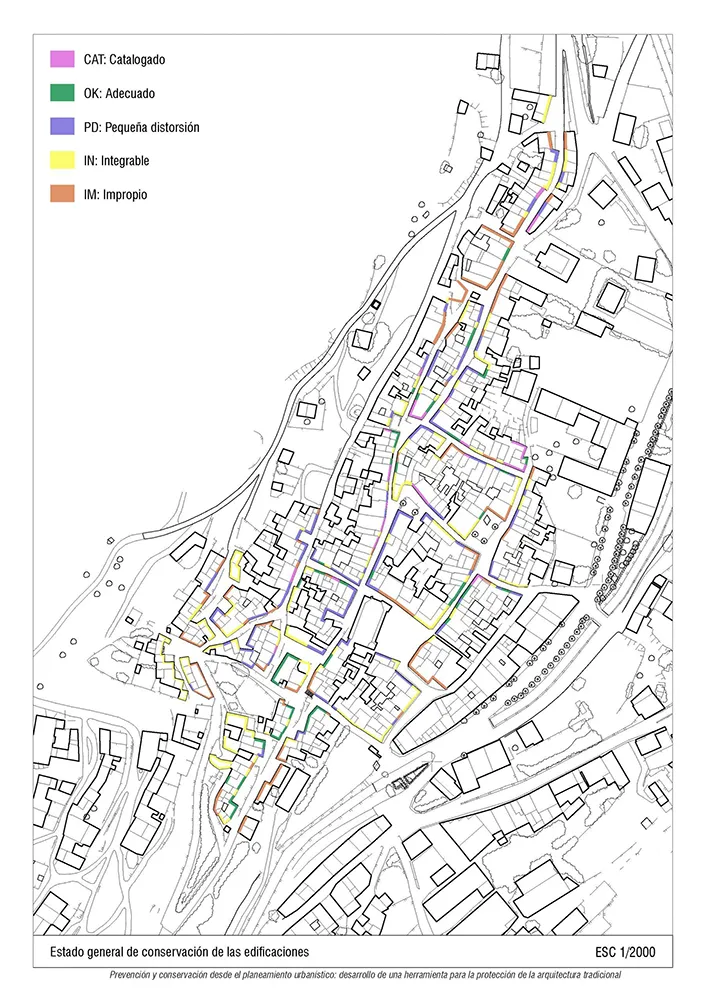
This research stay brings together the results of a project developed in the previous call, which analysed the protection framework that the urban planning of several towns in the Mudejar Territory entailed for the conservation of their traditional architecture, and specifies its practical application through the piloting of a reference document centred on the town of Alpartir.

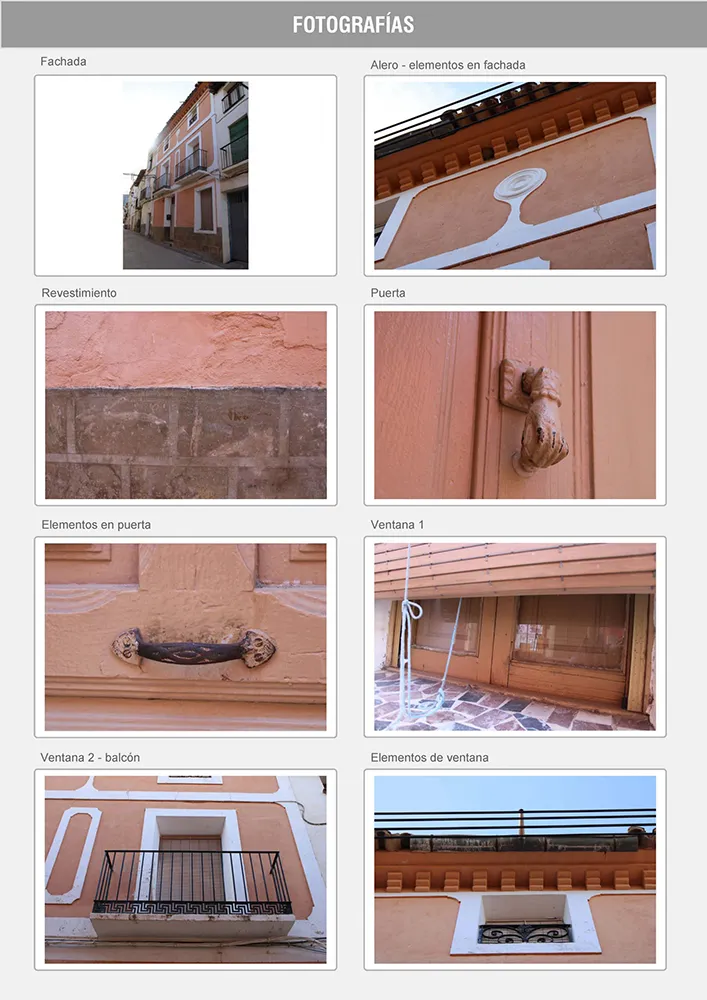
For this study, we have analysed in detail the existing traditional architecture in the locality, defining its state of transformation and identifying all those vernacular constructions that are worthy of protection by local planning, and we have reviewed this planning in depth, evaluating the influence of each of its provisions on them.

Based on this analysis, a model tool has been generated, in the form of a white paper, which lists the areas of the municipal regulations that can be revised to improve their influence on the vernacular heritage, enhancing its conservation, compares them with the equivalent headings of other general plans in the area and proposes a complementary and alternative wording. Similarly, it proposes an extension of the catalogue of protections to include the best examples of local traditional architecture, with an exhaustive cataloguing form specifically oriented towards the protection of the constructive characteristics that make it valuable.

In total, the reference document developed proposes the revision or addition of 28 articles in the Urban Development Regulations of the General Plan and proposes the incorporation of 25 elements and ensembles to the Catalogue of Protections, establishing a protection regime for each of them.

Based on these observations, the main aim of the proposed project is to generate, through a pilot study centred on the town of Alpartir, a model tool that will enable the implementation of criteria and strategies for the protection of traditional architecture in urban planning.

In doing so, it aims to meet the following general objectives:

  • To promote the appreciation of traditional architecture in the sphere of influence of Aragonese Mudejar art, encouraging the perception of traditional construction techniques and elements as a valuable cultural heritage that must be preserved and protected.
  • To promote the conservation, restoration and compatible rehabilitation of traditional architecture, offering tools adapted to the specific casuistry of the area of influence of Aragonese Mudejar architecture.
  • Promote coordination between municipal administrations and private sector initiatives to develop flexible and conservative interventions.
  • Promote the regeneration of the rural territory through its heritage, proposing alternative uses beyond the tourist sector and offering tools that allow the development of interventions that are compatible with and respectful of the local cultural identity.

These general objectives are developed into a series of specific objectives that this work aims to achieve:

  • To study and record in detail the existing traditional architecture in Alpartir, identifying all those vernacular constructions that are worthy of protection by local planning and determining the elements and values on which this merit is based.
  • To analyse in depth the current urban planning in Alpartir, evaluating the influence of the different determinations contained in it on the conservation of traditional architecture and comparing it with the plans studied previously in order to detect aspects in which its influence on this heritage can be improved.
  • To generate a model tool that gathers the results of the study of the planning and traditional architecture of the locality that is the object of the pilot project and develops them to create a framework that allows the implementation of criteria for the conservation of local traditional architecture in the urban management of the locality. In the development of this objective, special attention has been paid to the reproducibility of the resource generated in other surrounding municipalities.
  • Encourage the Administration’s involvement in the implementation of the guidelines, involving and involving municipal technicians in the process of analysing and developing the tool.
  • Raise awareness of the value of traditional architecture and encourage acceptance of the resources to be implemented by the community, through citizen participation actions.
  • Raise awareness about the value of traditional architecture through outreach activities that emphasize the irreplaceable nature of this architecture and the importance of its preservation.

LINE OF RESEARCH: Strategic management of heritage resources. Urban landscape and cultural landscape.

AUTHOR: Fº Javier Gómez Patrocinio, Laura Villacampa

Estancias 2022: Assessment of the muslim-friendly potential of Territorio Mudéjar for the reception of knowledge tourism.

Assessment of the muslim-friendly potential of Territorio Mudéjar for the reception of knowledge tourism.

The research project “Assessment of the Muslim-friendly potential of Mudejar Territory for the reception of knowledge tourism” has focused on the evaluation of the resources available in the territory to configure in the short term a coordinated offer to attract Muslim tourists. The Muslim Friendly traveller is an unexplored opportunity to boost the economic and tourist activity of the towns that make up the Mudejar Territory.

Considering previous experiences in Western Andalusia and Algarve-Alentejo, it is possible to group tourist resources adapted to this tourism profile around the Mudejar heritage of the selected localities. The logistical opportunity represented by the AVE connection with Calatayud could facilitate the marketing of a Mudejar-friendly route for Muslim tourism that already visits the peninsula, and which normally focuses on Eastern Andalusia.

The municipalities selected for the study are Calatayud, Morata del Jiloca, Maluenda and Belmonte de Gracián. They all belong to the Comarca of Calatayud, which has been chosen as the starting point due to its AVE connection with Madrid (55 minutes).

Taking into account the current preference of Muslim travellers for Andalusia, the proposal is to use the AVE station as a logistical node to enable tourists to travel to Aragon for a first contact with the Mudejar heritage in less than an hour. Once in Calatayud, private transport is necessary, due to the scarce interconnection of territories and localities in the region.

The target profile has been identified as travellers from Europe and the Gulf who are looking for experiences that are different from the current offer. They are high-income, English-speaking tourists who can travel semi-independently, but for whom a narrative that awakens their interest in the territory and its heritage is still necessary, as well as the possibility of specialised guides and access to heritage interiors.

Medium-term objectives should focus on:

  • Make up for logistical shortcomings (lack of connections beyond Calatayud) with a personalised transport model that reinforces the uniqueness of the places.
  • To strengthen the short trip offer by consolidating and adapting the tourism business model.
  • Create a grouping of the heritage offer and tourism assets (designing a programme that combines heritage and natural attractions).
  • To work on a narrative, reinforced with signposting materials, that allows us to understand the historical coexistence of the population in the Aragonese territory.

LINE OF RESEARCH: Strategic management of Mudejar heritage. Cultural landscape and urban landscape.

AUTHOR: Dr Bárbara Ruiz Bejarano.

Tower of the church of Santa María, Ateca

Tower of the church of Santa María, Ateca

Plaza de Jesús, 10. Ateca (Zaragoza)

TYPE OF ASSET: Property

CATEGORY: Religious

ARCHITECTURAL STYLE: Mudejar

CONSTRUCTION DATE:

Middle Ages: Second half of the 13th century

Modern Era, 17th century: The second section of the Baroque tower replaced the original Mudejar tower.
This is a square-plan tower with two distinct sections, based on typology. It is attached to the last bay at the west end of the church of Santa María in Ateca, on the Epistle side of the temple. The tower was originally free-standing and traces of an ancient minaret can be seen in the lowest section. It was attached in an irregular manner in the 16th century to this final bay of the church.

The first section of the tower has a square floor plan and was built in the style of the Mudejar towers featuring an inner tower structure, around which another tower is wrapped, with a stairway between the two. The tower is divided rooms on four levels, one above the other, covered by barrel vaults. The stairway provides access to these rooms.

It is worth noting that, as one ascends the tower, the lower part of the stairway is covered by eight small barrel vaults made of brick laid in a sardinel bond arrangement. There follow six small quadripartite rib vaults and, finally, this roofing system, which is rather “experimental” in nature, is completed with a system of narrowing courses of brick like that seen in other towers such as the one in the church of Santa María in Tobed, which is the most widespread system in the second half of the 14th century and the 15th century.
The strong Muslim influence is noticeable on the tower exterior, which boasts protruding brick and ceramic decorative motifs. Pointed horseshoe arches, cross shapes and ceramic discs are some of the ornamental features that were widely used in Aragonese Mudejar art.

The lower part of the first section has apertures to allow light into the stairway. This light was subsequently blocked when the tower was attached to the church at a later date. The openings were built at the level where the stairs provide access to the rooms in the inner tower, with an ogee arch of oriental influence in the south wall while the west wall features a surbased arch with voussoirs that are split at the center and thick perpends between those near the impost molding.

At the top of this first section of the tower, there is a series of decorative horizontal friezes forming large panels filled with seven blind pointed horseshoe arches resting on cylindrical honey-colored and green shafts with ceramic discs of the same colors and stamped fleurs-de-lis within the spandrels of the arches; a frieze of five cross shapes inscribed within a square to form a fishbone pattern; and a frieze of angled bricks adorning discs, as well as friezes of intertwined pointed arches resting on brick pilasters, flanked by ceramic shafts.

Interventions

RESTORATION, 20th CENTURY
The ceramic decorative work on the exterior was restored in 1970. The belfry, spire, façades and interior of the different sections have undergone diverse types of restoration work in recent years.

RESTORATION PROJECT, 20th CENTURY The restoration project was carried out in two phases, spanning from 1985 to 1994. A second restoration project was completed in 2001.

Projects and interventions

Projects and interventions, and the driving forces behind them, define the history of monumental buildings and how they are perceived.

Declarations

DECLARATION, 20th TO 21st CENTURY (1983-2001)
The church and tower of Santa María in Ateca were declared an Asset of Cultural Interest under the Ministry of Culture Decree dated January 12, 1983, which was published the Official State Gazette of March 5, 1983.
The Official Gazette of Aragon (BOA) dated October 22, 2001 published the Department of Culture and Tourism Order of September 25, 2001, whereby the original declaration of the church and tower of Santa María in Ateca (Zaragoza) is supplemented pursuant to Transitional Provision One of Aragonese Cultural Heritage Act 3/1999, of March 10.

Current condition

The tower of Santa María in Ateca is currently in ideal conditions of restoration and cleanliness after the successive phases of restoration work indicated above. One wise decision in this restoration work was to leave the interior wall of the tower leading to the arcade inside the church bare, without replacing the ceramic pieces, thus affording a view of the tower in its original condition prior to the restoration.

Bibliography

BORRÁS GUALIS, GONZALO M., Arte Mudéjar Aragonés, Caja de Ahorros y Monte de Piedad de Zaragoza Aragón y Rioja y el Colegio Oficial de Aparejadores y Arquitectos técnicos de Zaragoza, Zaragoza, 1985. 

GALIAY, JOSÉ. Arte mudéjar aragonés, Institución Fernando el Católico, Zaragoza, 2002.

MARTÍNEZ GARCÍA, FRANCISCO J. Ateca, desde sus orígenes hasta el año 1500, Institución Fernando el Católico, Zaragoza, 2015.

MILLÁN GIL, JULIÁN Y SANMIGUEL MATEO, AGUSTÍN (COORD.). Comarca de la Comunidad de Calatayud, Colección Territorio nº 20, Departamento dePresidencia y Relaciones Institucionales del Gobierno de Aragón, Zaragoza, 2005.

SANMIGUEL MATEO, AGUSTÍN. Torres de ascendencia islámica en las comarcas de Calatayud y Daroca, Centro de estudios bilbilitanos, Institución“Fernando el Católico”, Calatayud, 1998.

  • VV. AA. Tierra Mudéjar. El Mudéjar Aragonés, Patrimonio Mundial, Heraldo de Aragón, D.L. 2002.
  • VV. AA. Comunidad de Calatayud y El Monasterio de Piedra, Colección RutasCai por Aragón nº 12, Zaragoza, 2004.
  • VV. AA. Las supuestas características almohades de la torre de Ateca, IV Encuentro de Estudios Bilbilitanos, I, Calatayud: Centro de Estudios Bilbilitanos, 1997.
  • MARTÍNEZ GARCÍA, Francisco José. Ateca, desde sus orígenes hasta el año 1500. Zaragoza: Institución Fernando el Católico, 2015.
  • SANMIGUEL MATEO, Agustín. Torres de ascendencia islámica en las comarcas de Calatayud y Daroca. Aragón (España). Calatayud: Centro de Estudios Bilbilitanos, 1998.

Appendixes

Tower of the church of Santa María

Plaza de Jesús, 10.
Ateca (Zaragoza)

Visit Ateca

City Hall: 976 842 005 www.aytoateca.es WOULD YOU LIKE TO KNOW MORE? www.turismodezaragoza.es

El Salvador tower, Teruel

El Salvador tower, Teruel

Calle el Salvador, 44001 Teruel

CURRENT PROTECTION STATUS: Asset of Cultural Interest (ACI)

TYPE OF ASSET: Property

CATEGORY: Religious

ARCHITECTURAL STYLE: Mudejar

CONSTRUCTION DATE:
  • Original construction, 13th to 14th century. Repair, 17th century to 20th century. The addition of the belfry led to structural problems for the tower as a whole.
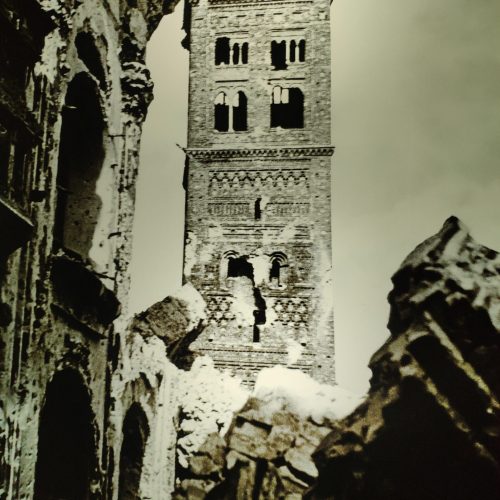
  • 17th century, partial substitution. The adjacent church of El Salvador collapsed in 1677 and was replaced by a Baroque structure in the late 17th century.
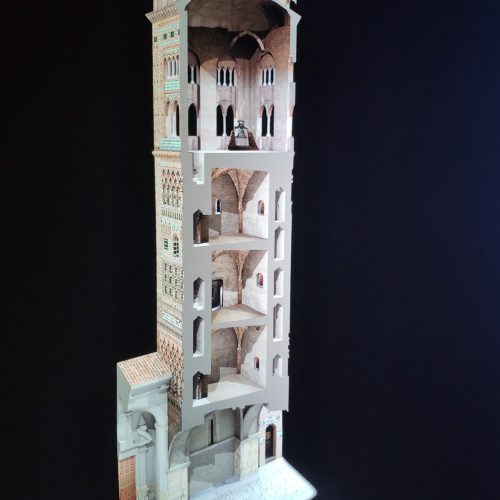
This is the most recent Mudejar tower in Teruel. It has a rectangular floor plan with three vertical sections and an Almohad minaret structure featuring two concentric towers with a stairway nestled between the two. The exterior tower is built of brick, whereas the interior one is made of plaster and masonry and divided into three stories, one above the other, covered by a rib vault (the lowest one) and pointed barrel vaults (the upper two); over this, there is a belfry on the exterior.

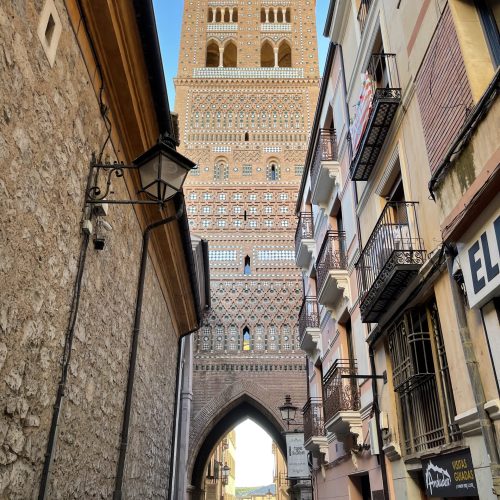
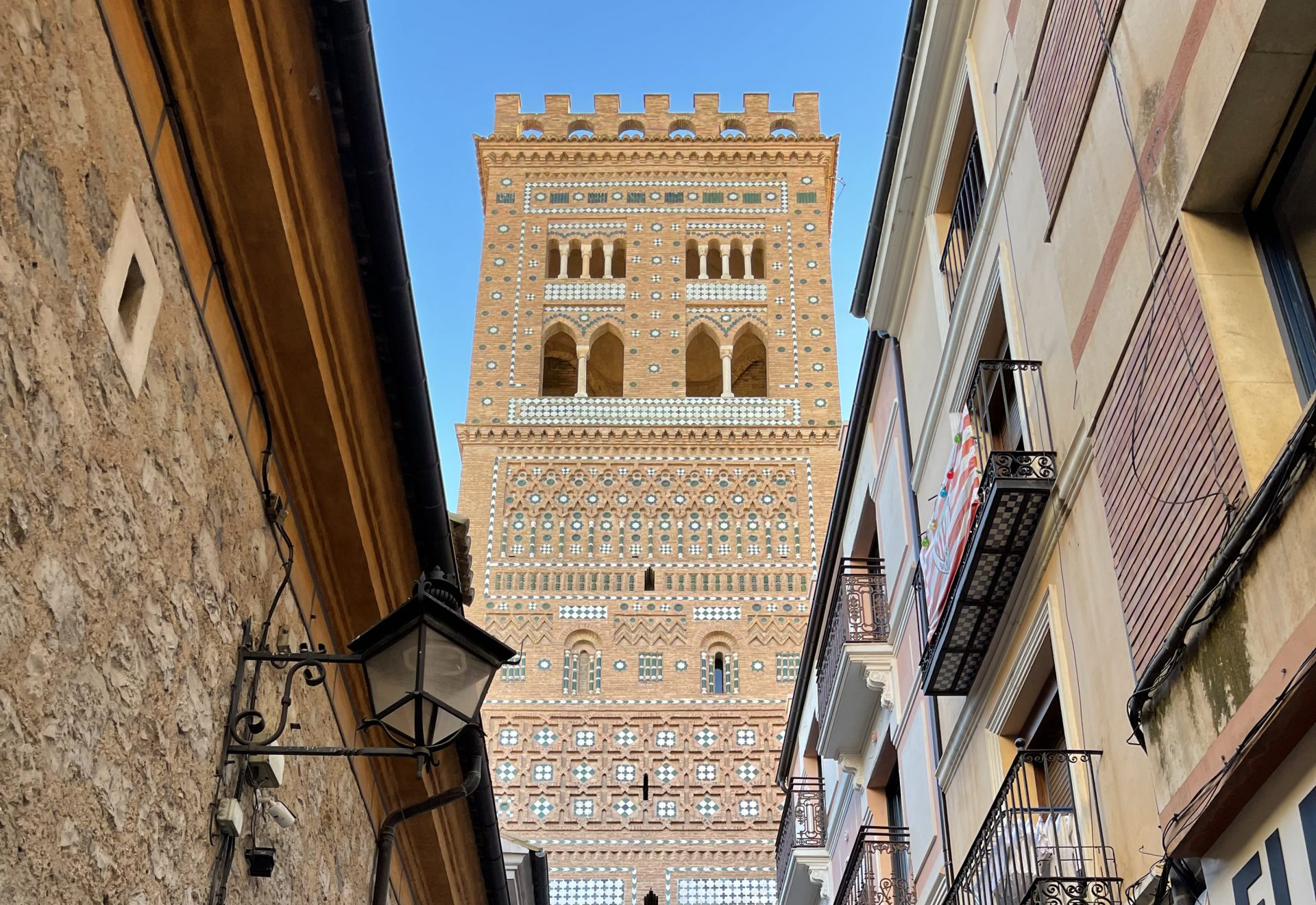
The lower section of the tower is pierced by a gate in the longer two façades, creating a passageway with a pointed arch covered by a quadripartite rib vault. All the decorative motifs ornamenting the tower are found above this level, featuring series of strips, panels and patterns framed by lines of tile work and angled brick: thus, in the first section of the tower there is a frieze of simple angled brick with a panel of intertwined mixtilinear arches above it; the arches rest on ceramic colonettes alternating with ceramic star details in green and white. Two more friezes of simple angled brick are seen above this panel, framing two beautifully decorated rectangular panels of ceramic tile with a small opening between them topped by a corbelled arch.
The second section of the tower has a panel of interlacing eight-point stars inset with ceramic motifs, over which there are two round-arched openings, brick detail work in a zig-zag pattern and another frieze of intertwined mixtilinear arches. Finally, the third section, or belfry level, features two rows of openings, with two pairs of pointed arches below and two colonnades of four round arches each above.

Located adjacent to the now-lost Guadalaviar Gate, the western entrance to the medieval compound of the city of Teruel, the tower of San Salvador is the only existing remnant of the Mudejar church and bell tower of the same name.

Interventions

Restoration, 20th century

The tower was restored between 1990 and 1993 by the Government of Aragon, which invested a total of 1,057,875 euros in the restoration work. The project succeeded in returning the building to its original splendor and adapted it for tours of the inside. The restoration project stemmed from the tower’s declaration as a UNESCO World Heritage Site, and was designed by architects Antonio Pérez Sánchez and José María Saz.

Projects and interventions

Declarations

Declaration, 20th to 21st century

The tower of the church of San Salvador was declared a National Monument under the Order dated March 10, 1911 issued by the Ministry of Public Instruction and Fine Arts, published in the Madrid Gazette on March 19, 1911. The original declaration was supplemented by the Asset of Cultural Interest declaration issued in the Department of Education, Culture and Sport Order of May 10, 2004, whereby the original declaration of the tower of the church of San Salvador in Teruel as an Asset of Cultural Interest is supplemented pursuant to Transitional Provision One of Aragonese Cultural Heritage Act 3/1999, of March 10. On November 28, 1986 UNESCO added the Mudejar architecture of Teruel to its World Heritage list, in which four of its most important monuments are included: the tower, ceiling and lantern tower of the Santa María de Mediavilla Cathedral, the tower and church of San Pedro, the El Salvador church tower and the tower of the church of San Martin.

Current condition

Conversion into a museum, 21st century. The tower now houses the Mudejar Interpretation Center.

Bibliography

ALCALÁ PRATS, ICÍAR, PÉREZ SÁNCHEZ, ANTONIO Y SANZ ZARAGOZA, JOSÉ MARÍA. La arquitectura mudéjar de Teruel: balance de veinte años como Patrimonio Mundial (1986-2006), en Turia (revista cultural) nº80 (nov. 2006 – feb. 2007), Instituto de Estudios Turolenses, Teruel, 2007, p. 361-377.

ALCALÁ PRATS, ICÍAR, REVILLA HERNANDO, ANA MARÍA Y RODRIGO GARZA, BEATRIZ. Guía del arte mudéjar en Aragón, Centro de Estudios Mudéjares, Prames, 2005.´

BORRÁS GUALIS, GONZALO M. Arte Mudéjar Aragonés, Caja de Ahorros de Zaragoza, Aragón y La Rioja, Zaragoza, 1985.

GALIAY, JOSÉ. Arte mudéjar aragonés, Institución Fernándo el Católico, Zaragoza, 2002. MÉNDEZ DE JUAN, JOSÉ FÉLIX, GALINDO PÉREZ, SILVIA Y LASHERAS RODRÍGUEZ, JAVIER. Aragón Patrimonio Cultural Restaurado. 1984/2009. Bienes inmuebles, Gobierno de Aragón, Zaragoza, 2010.

  • SANMIGUEL MATEO, AGUSTÍN. Torres de ascendencia islámica en las comarcas de Calatayud y Daroca, Centro de estudios bilbilitanos, institución “Fernando el Católico”, Calatayud, 1998.
  • ALCALÁ PRATS, Icíar. El arte mudéjar en la Comunidad de Teruel. En LOSANTOS SALVADOR, Antonio. (coord.). Comunidad de Teruel. Diputación General de Aragón, 2010.p. 185-196.
  • BENITO, Félix. Patrimonio histórico de Aragón: Inventario arquitectónico. Teruel. Zaragoza: Diputación General de Aragón, 1991. BORRÁS GUALIS, Gonzalo. Arte mudéjar aragonés. Zaragoza: CAZAR, 1985.
  • CABAÑERO SUBIZA, Bernabé. Las torres mudéjares aragonesas y su relación con los alminares islámicos y los campanarios cristianos que les sirvieron de modelo. Turiaso. 1995 , nº XII, p. 11-51.
  • HERNÁNDEZ MARTÍNEZ, Ascensión. La actuación de la Dirección General de Bellas Artes en Aragón (1938-1958): la labor de los arquitectos conservadores Manuel Lorente Junquera y Fernando Chueca Goitia. En GARCÍA CUETOS, María del Pilar; ALMARCHA NUÑEZ-HERRADOR, María Esther; HERNÁNDEZ MARTÍNEZ, Ascensión. (coord.). Restaurando la memoria: España e Italia ante la recuperación monumental de posguerra. Trea, 2010.p. 41-66.
  • LABORDA YNEVA, José. Teruel. Guía de Arquitectura. Zaragoza: Caja de Ahorros de la Inmaculada, 1996.
  • MORENO, María Ángeles. La reposición de azulejos de la torre del Salvador arrancará en abril. Heraldo de Aragón. 21/03/2018 p. 21.
  • MÉNDEZ DE JUAN, José Félix et al. (coord.). Aragón. Patrimonio cultural restaurado. 1984/2009: Bienes inmuebles. Zaragoza: Gobierno de Aragón, 2010.
  • NOVELLA MATEO, Angel. La transformación urbana de Teruel a través de los tiempos. Teruel: Instituto de Estudios Turolenses, 1988.
  • SEBASTIÁN, Santiago. Inventario artístico de Teruel y su provincia [En línea]. Madrid: Ministerio de Cultura, 1974.[Consulta: 11 de junio de 2021].
  • SEPÚLVEDA SAURAS, María Isabel. Torre de El Salvador. En El Mudéjar de Teruel. Patrimonio de la Humanidad. Instituto de Estudios Turolenses, 1989.p. 29- 31.
  • SERRANO PELLEJERO, Lucía . (dir.). El Mudéjar Aragonés, Patrimonio Mundial: Tierra Mudéjar. Zaragoza: Heraldo de Aragón, 2002.

El Salvador tower

Calle el Salvador,
44001 Teruel

Visit Teruel

City Hall: 978 61 99 00
wwww.teruel.es
WOULD YOU LIKE TO KNOW MORE?
www.turismo.teruel.es

Tower of the parish church of Nuestra Señora del Castillo, Aniñón

Tower of the parish church of Nuestra Señora del Castillo, Aniñón

Placeta de la Iglesia. 50313 Aniñón (Zaragoza)

CURRENT PROTECTION STATUS:

Asset of Cultural Interest (ACI)

TYPE OF ASSET: Property

CATEGORY: Religious

ARCHITECTURAL STYLE: Mudejar

CONSTRUCTION DATE: Original construction, 14th to 16th century. This was originally a Mudejar monument from the 14th century, which underwent extensive remodeling in the 16th century when the church was expanded and the gables and top part of the tower were built.
The defensive nature of the fortified church of Nuestra Señora del Castillo in Aniñón is highly pronounced, due to its position in the terrain and its imposing façade, which is completely covered in ornamentation. While it is unusual to find such profuse decoration on the façades of churches, this is more commonly seen on towers. Other examples of this type of façade can be found on the churches in Morata de Jiloca and Tobed.

The tower is attached to a side chapel on the Gospel side of the parish church. It has a square floor plan and a completely solid, square central buttress inside. The stairway is set between the inner and outer volumes.

What makes the tower in Añinón unique is the vaulting system, featuring pointed barrel vaults in this case, which are rare in Aragonese Mudejar towers, apparently, since no other examples have been found to date; its Gothic origins are clear.
The decorative elements found on the tower of the church in Aniñón include diamond or lozenge shapes, zig-zags and intertwined mixtilinear arches, all created using protruding bricks.

This tower and the west end gable wall were built prior to the current church, which dates from the second half of the 16th century; they belong to a previous building for which, on June 17, 1283, the bishop of Tarazona granted forty days of indulgence to anyone who assisted in the construction work, which extended for a very lengthy amount of time. It may date from between the end of the 14th century and the first half of the 15th century.

Interventions

20th-21st century: In 1985 and 2005, restoration work was done in several phases, encompassing the entire building.

Projects and interventions

Projects and interventions, and the driving forces behind them, define the history of monumental buildings and how they are perceived.

Declarations

20th century: The church of Nuestra Señora del Castillo in Aniñón was declared an Asset of Cultural Interest under the Ministry of Culture Decree dated June 5, 1981, which was published the Official State Gazette of August 10, 1981.
The Official Gazette of Aragon (BOA) dated November 30, 2001 published the Department of Culture and Tourism Order of November 9, 2001, whereby the original declaration of the church of Nuestra Señora del Castillo in Aniñón (Zaragoza) is supplemented pursuant to Transitional Provision One of Aragonese Cultural Heritage Act 3/1999, of March 10.

Bibliography

BORRÁS GUALIS, GONZALO M., Arte Mudéjar Aragonés, Caja de Ahorros y Monte de Piedad de Zaragoza Aragón y Rioja y el Colegio Oficial de Aparejadores y Arquitectos técnicos de Zaragoza, Zaragoza, 1985. 

CRIADO MAINAR, JESÚS. La escultura romanista en la comarca de la Comunidad de Calatayud, Institución Fernando el Católico, Zaragoza, 2013.

MÉNDEZ DE JUAN, JOSÉ FÉLIX ET AL. (COORD.). Aragón Patrimonio Cultural Restaurado. 1984/2009. Bienes inmuebles, Gobierno de Aragón, Zaragoza, 2010.

SANMIGUEL MATEO, AGUSTÍN. Torres de ascendencia islámica en las comarcas de Calatayud y Daroca, Centro de estudios bilbilitanos, Institución “Fernando el Católico”, Calatayud, 1998. VV.AA. Tierra Mudéjar. El mudéjar Aragonés, Patrimonio Mundial, Heraldo de Aragón, D.L. 2002.

MORTE GARCÍA, CARMEN. Damián Forment: Escultor del Renacimiento. Zaragoza: Caja de Ahorros de la Inmaculada, 2009.

Appendixes

Tower of the parish church of Nuestra Señora del Castillo

Placeta de la Iglesia. 50313
Aniñón (Zaragoza)

Visit Aniñón

City Hall: 976 899 106
www.aninon.es
WOULD YOU LIKE TO KNOW MORE?
www.turismodezaragoza.es

Santa Tecla, Cervera de la Cañada

Santa Tecla, Cervera de la Cañada

Cuatro Esquinas. 50312 Cervera de la Cañada (Zaragoza)

CURRENT PROTECTION STATUS: Asset of Cultural Interest (ACI)

TYPE OF ASSET: Property

CATEGORY: Religious

ARCHITECTURAL STYLE: Mudejar

CONSTRUCTION DATE: ca. 14th c., completed in 1426
The church of Santa Tecla in Cervera de la Cañada is perched above the town over the site of the ancient castle, of which there are still traces: an ashlar stone block in the presbytery and a square tower of rammed earth.

The military nature of the temple must be highlighted, as it bears numerous similarities to the ‘fortified churches’ of Tobed, Torralba de Ribota, Morata de Jiloca and La Peña de Calatayud. In addition, this is one of the buildings included within the scope of the Aragonese Mudejar World Heritage classification in 2001, which features 6 buildings in the province of Zaragoza.

While the exterior is rather austere, the inside offers surprising ornamentation in the form of painted brick designs typical of the Aragonese Mudejar style as well as black dragons decorating the ribbed vaults and large rose windows.

The church has a single nave with a polygonal presbytery that is offset from the longitudinal axis. The nave has three bays, the last of which, at the west end, features a raised choir over a polychrome wood alfarje ceiling structure resting on two slightly pointed arches supported by an octagonal column.

The three bays in the nave are covered by a quadripartite rib vault with diagonal arches and they are separated by transverse arches. Furthermore, the side chapels in the first two bays are deeper on the Epistle side than they are on the Gospel side.
The date and designer of the choir are known thanks to an inscription on the choir parapet, which reads:

“En nombre de: dios todo: poderoso seyor: fue acabada: esta iglesia: cuatro çietos: e vint seys: fueron: jurados: de aqueste: dito: ayo: don: pascual: verdejo: don joan: Aznar: regidores: don: anton: morant: don: domigel: morant: anton: cuynillo: mateu: cubero: percurador: migel: fraye: con dios”.

Below that, in one of the pendentives between the edge of the choir parapet and the Gospel wall of the church, another inscription also sculpted in plaster can be seen, which indicates the name of the master bricklayer: “obra y (=et) dificada: por: mahoma: rami: con dios”.

Thanks to this inscription, it is known that the work was done by Mahoma Rami, the favorite master bricklayer of Papa Luna, after the pope’s death.

The octagonal column holding up the choir is another significant feature. It is decorated with crockets, an ornamental motif typical of the master builder Mahoma Rami. Preceding the choir there is a parapet sculpted in plaster with decorative motifs that can be considered a forerunner for the plasterwork in the main hall of the palace of the Count of Argillo in Illueca. Because they can be dated so precisely, they represent important examples in the study of the evolution of decorative Mudejar plasterwork elements in the 15th and 16th centuries.

Interventions

Restoration, 20th century

The church of Santa Tecla was restored in various phases, running from 1994 to 2001. The building was restored by Alfredo San Gil Lapuerta following the design of Miguel Ángel Bordejé. This restoration consisted in stabilizing the walls, rebuilding the entire wood roof and restoring the north gallery. In the second phase, the work focused on the interior, restoring the choir staircase and rearranging the baptismal font. The plasterwork and plinths were also restored and the painted decoration and altarpiece were retouched.

The south façade was remodeled by Fernando Chueca Goitia, who added the crenelated top and a window framed by a stone cornice in the section housing the stairway that leads to the choir and gallery. It has been restored to bring back some of the Mudejar motifs and to stabilize others, such as the original 15th century paintwork covering the entire nave.

Projects and interventions

Projects and interventions, and the driving forces behind them, define the history of monumental buildings and how they are perceived.

Declarations

20th to 21st century

The church of Santa Tecla in Cervera de la Cañada was declared an Asset of Cultural Interest under the Ministry of Culture Decree dated July 27, 1943, which was published the Official State Gazette of August 3, 1943.

The Official Gazette of Aragon (BOA) dated October 29, 2001 published the Department of Culture and Tourism Order of October 3, 2001, whereby the original declaration of the church of Santa Tecla in Cervera de la Cañada is supplemented pursuant to Transitional Provision One of Aragonese Cultural Heritage Act 3/1999, of March 10.
On December 14, 2001, UNESCO expanded its declaration of the Mudejar art of Aragon as World Heritage, declaring it an asset that is unique, universal and irreplaceable for Humanity. One of the assets listed in this declaration is the church of Santa Tecla, considered one of the best examples of the Mudejar art of Aragon.

The fortified church of La Asunción or Santa Tecla in Cervera de la Cañada was declared a UNESCO World Heritage site, included in this list for its unique style, well-preserved condition and unmatched beauty.

Bibliography

ALCALÁ PRATS, ICÍAR, REVILLA HERNANDO, ANA MARÍA Y RODRIGO GARZA, BEATRIZ. Guía del arte mudéjar en Aragón, Centro de Estudios Mudéjares, Prames, 2005.

BORRÁS GUALIS, GONZALO M. Arte Mudéjar Aragonés, Caja de Ahorros de Zaragoza, Aragón y La Rioja, Zaragoza, 1985.

CABAÑAS BOYANO, A. Aragón, una tierra de castillos, Edit. Prensa Diaria Aragonesa S.A. (El Periódico de Aragón. Grupo Z), Zaragoza, 1999.

  • GALIAY, JOSÉ. Arte mudejar aragonés, Institución Fernándo el Católico, Zaragoza, 2002. GALINDO PÉREZ, SILVIA (COORD.). Aragón Patrimonio Cultural Restaurado. 1984/2009. Bienes muebles, Gobierno de Aragón, Zaragoza, 2010.
  • IÑIGUEZ ALMECH, FRANCISCO. Iglesia parroquial de Santa Tecla, de Cervera de la Cañada (Zaragoza), En BORRÁS GUALIS, Gonzalo. (ed.). Estudios de arte mudéjar aragonés. Institución Fernando el Católico, 2001.p. 39-59.
  • MÉNDEZ DE JUAN, JOSÉ FÉLIX, GALINDO PÉREZ, SILVIA Y LASHERAS RODRÍGUEZ, JAVIER. Aragón Patrimonio Cultural Restaurado. 1984/2009. Bienes inmuebles, Gobierno de Aragón, Zaragoza, 2010.
  • VV.AA. Tierra Mudéjar. El mudéjar Aragonés, Patrimonio Mundial, Heraldo de Aragón, D.L. 2002

Appendixes

Santa Tecla

Cuatro Esquinas. 50312 Cervera de la Cañada (Zaragoza)

Visit Cervera de la Cañada

Palace of the Luna family, Daroca

Palace of the Luna family, Daroca

Calle Mayor, 44. 50360 Daroca (Zaragoza)

CURRENT PROTECTION STATUS: Asset of Cultural Interest (ACI)

TYPE OF ASSET: Property

CATEGORY: Residential OWNER:
  • From: Contemporary era- 21st century
  • To: Contemporary era- 21st century. Two thirds of the palace were purchased by Fundación Campo de Daroca with the aim of restoring it and using it for cultural purposes. The remaining third is still owned by a private owner and used as a residence.
ARCHITECTURAL STYLE: Mudejar

CONSTRUCTION DATE: 14th to 15th century
The palace of the Luna family in Daroca is an excellent example of Mudejar civil architecture in Aragon. Its construction dates back to the late 14th and early 15th century. It was commissioned by the Luna family, whose heraldic symbols can be seen throughout the building.

The original building had a U-shaped floor plan distributed on the ground floor, main floor and granaries, all arranged around a central interior courtyard.

On the ground floor, the original entrance to the palace was through a round arch in the façade facing Calle Mayor. Given the considerable height of the ground floor level, it was divided into two parts, thus creating a mezzanine level.

The ground floor is divided into three parts perpendicular to the façade to create a U-shaped floor plan wrapped around an inner courtyard.

This division is created by means of arcades resting on columns. Although their spans have been covered over, those on the left-hand side still exist and could be fully recovered, while the arcades to the right were replaced with Tuscan columns and wood lintels resting on bolsters when remodeling work was done in the late 16th century.
The main floor is the focus of great interest, covered almost entirely by a wood ceiling in which the alfarje structure displays painted decorative motifs of heraldic symbols. The ceiling can be dated between the 14th and 15th centuries thanks to an inscription of the word “BENEDICTUS”, directly referring to the papacy of Benedict XII (1397-1416).

The eaves found on both the exterior and interior of this level are striking, particularly those facing the exterior, which, like the ceiling inside, are decorated with highly deteriorated tempera paintings depicting heraldic symbols, coats of arms and references to the owners of those crests.

The upper level must have been used as a granary and features the thick frames holding up the roof.

The main floor looks out onto the inner courtyard through three windows, one in the center and two on the left side, boasting colonettes and a surround featuring interlacing decorative motifs and Mudejar plasterwork.

Interventions

The property is currently divided into two residences, with commercial establishments on the ground floor.

The building has undergone several interventions in the 21st century. In the first phase, the Government of Aragon invested 300,000 euros in stabilizing the building. In June 2011, the second phase began, sponsored by Obra Social de Ibercaja with 150,000 euros. That work focused on restoring the coffered wood ceilings on the main floor.

After the purchase of two thirds of the original palace by Fundación Campo de Daroca, the architect Javier Ibargüen was entrusted with the restoration project. The work was broken down into two phases: in 2010, the focus was on cleaning and tearing down added elements, in addition to testing walls, architectural and pictorial features with a view to gathering information so as to plan other activities. One year later, in 2011, cleaning and debris removal tasks were carried out in two storerooms, besides restoring the coffered wood ceiling on the main floor.

Projects and interventions

Projects and interventions, and the driving forces behind them, define the history of monumental buildings and how they are perceived.

Declarations

DECLARATION (1931-2002)

The Palace of the Luna family was declared a National Monument on June 3, 1931 (published in the Gazette of June 4, 1931).
The Official Gazette of Aragon (BOA) dated March 22, 2002 published Decree 94/2002, March 6, by the Government of Aragon, declaring the Palace of the Luna Family in Daroca (Zaragoza) an Asset of Cultural Interest, Monument category.

Current condition

Currently, part of the palace constructed by the Martínez de Luna family in the late 14th century remains standing, including the load-bearing walls, several wood ceilings and certain decorative elements, mainly plasterwork.

It is divided into two private residences facing an inner courtyard dating from the 16th century, in addition to businesses on the ground floor.

Bibliography

MAÑAS BALLESTÍN, FABIÁN (COORD.). Comarca del Campo de Daroca, Colección Territorio 8, Diputación General de Aragón, 2003.

VV.AA. Campo de Daroca, Colección RUTASCAI por Aragón nº 27, Zaragoza, 2005.

VV.AA. Guía de Daroca, Centro de Estudios Darocenses, 1994.

VV.AA. Tierra Mudéjar. El mudéjar aragonés, Patrimonio Mundial., Heraldo de Aragón. D.L., 2002.

VV.AA. El Arte Mudéjar. La estética islámica en el arte cristiano, Madrid, 2000.

ADÁN, Cristina. El palacio de los Luna de Daroca recibe otra ayuda, pero aún queda medio millón de euros por invertir . Heraldo de Aragón. 01/11/2013 p. 14.

ADÁN, Cristina. El reto: devolver el esplendor a la casa de los Luna. Heraldo de Aragón. 28/02/2010 p. 20.

ADÁN, Cristina. La Fundación Campo de Daroca compra el palacio de los Luna para Heraldo de Aragón. 23/12/2009 p. 14.

ADÁN, Cristina. Nueva inyección económica para el palacio de los Luna. Heraldo de Aragón. 12/12/2010 p. 20.

Ibercaja colabora en la restauración del palacio de los Luna. Heraldo de Aragón. 25/03/2011 p.13.

Appendixes

Palace of the Luna family

Calle Mayor, 44
50360 Daroca (Zaragoza)

Visit Daroca

City Hall: 976 800 312
www.daroca.es
WOULD YOU LIKE TO KNOW MORE?
www.turismodezaragoza.es