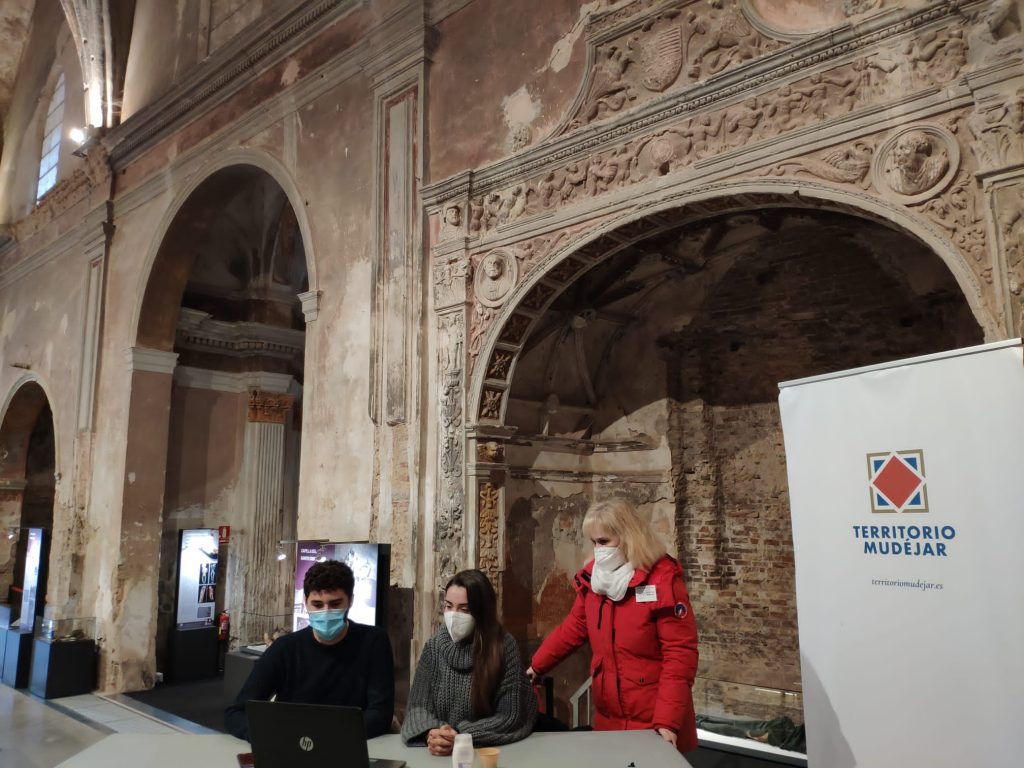
CALL FOR APPLICATIONS: Grants for Internship and projects 2025

6th Call for Applications for Grants for Internship for Projects and Artist Residencies “Gonzalo M. Borrás Gualis”

Submission deadline: Until Monday, 3rd November 2025

Territorio Mudéjar announces the SIXTH EDITION of Gonzalo M. Borrás Gualis research stays and projects aimed at directly supporting the work of researchers and project promoters who want to work on the development of villages through the responsible and sustainable use of cultural and natural heritage resources.

The projects carried out since 2019 have strengthened this initiative as one of our initiative as one of our most important lines of of our most important lines of work based on the development of actions that enhance the retention and attraction of talent, actions aimed at the construction of highly qualified professional networks networks linked to the use of historical, artistic and cultural resources , contributing to medium- and long-term territorial development.artistic and cultural resources , contributing to medium and long-term territorial development.

Territorio Mudéjar is an association of local councils, currently comprising 49 member councils, one council pending membership and one collaborating partner, whose objective is to consolidate a unified and collaborative management network for the use of historical and artistic resources linked to the important Mudejar heritage, understanding them as a driving force for the development of towns and as an element of identity for the maintenance of the communities that make up our territory.

Our action program follows strategic lines aligned with the objectives of the 2030 Agenda, whose guiding principle is that “the cultural identity of territories will contribute to sustainable social and economic development by differentiating markets and, in turn, enabling their integration into a diversified economy that can ensure their future success.”

This project is dedicated to Professor Gonzalo M. Borrás Gualis, a staunch defender of the management of Aragonese heritage, villages, and territory, as an action of the people and as an innovative field of work with a promising future.

His work exemplified with perfect coherence the possibility of combining research work of high scientific impact with a commitment to the land and its people. of high scientific impact with a commitment to the land and its people, not only favouring the knowledge, conservation and dissemination of its historical-artistic heritage, but also by modernising work processes and by proposing innovative innovation projects in which natural, cultural and heritage resources are a key element in the future of the towns.
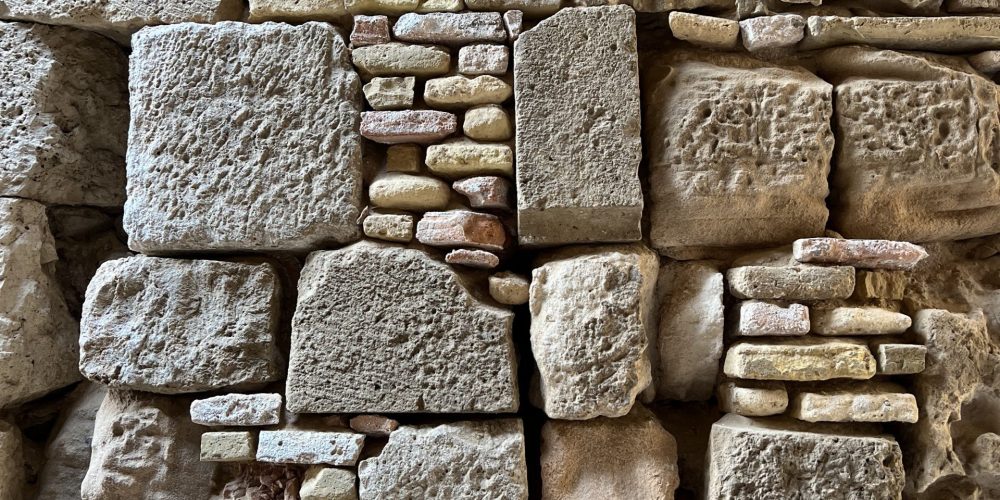
Vista panorámica del casco urbano de Tarazona con la catedral, la torre de la Magdalena y la plaza de toros octogonal.

Transdisciplinary thinking, networking, and partnerships as tools for innovation

RESEARCH STAYS FOR PROJECTS. THE OPPORTUNITY TO FORM ALLIANCES WITH STRATEGIC ENTITIES AND PROFESSIONALS TO DEVELOP PROJECTS WITH GREATER IMPACT.

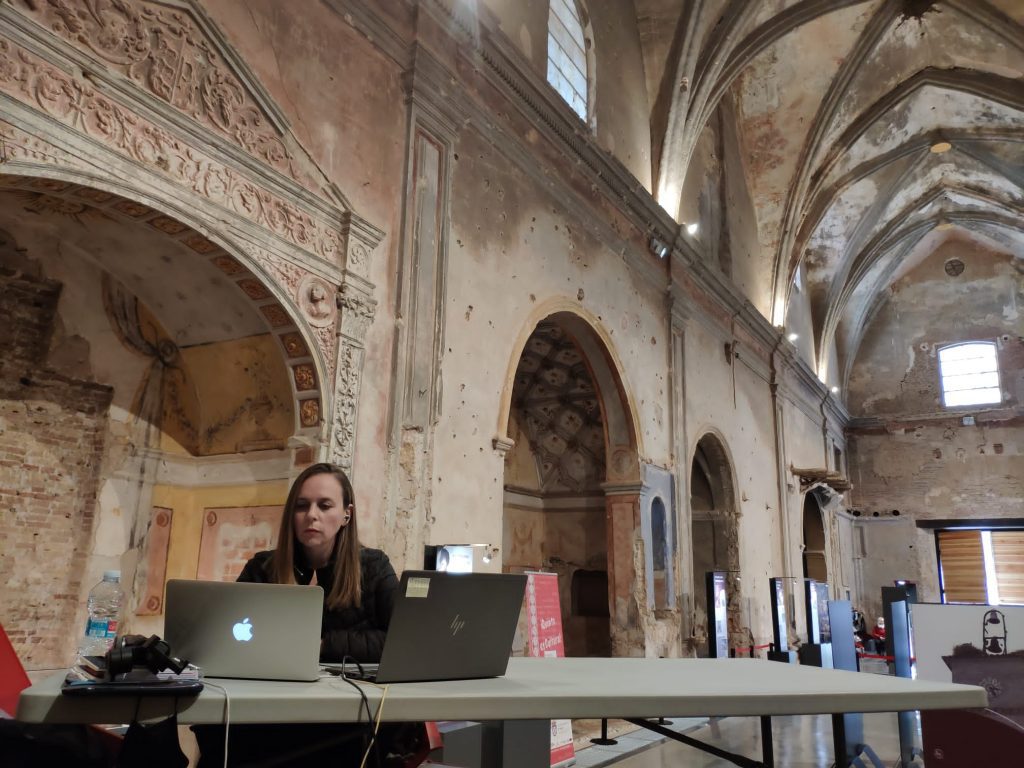
The activity, which began in 2019, has established itself as our organization’s most important strategic project, consolidating the R&D&I strategy with 29 pilot projects involving more than 40 management professionals.

The project was considered an exemplary case study by the Ministry of Culture and Sport at the World Heritage Managers Meeting held in Mérida in 2022.

It has also been considered an example of innovation and good practice in various European cooperation projects. In this regard, we should highlight our organization’s position, through the Estancias project, in the Interreg Europe program: between 2019 and 2023, as part of the MOMAr Models of Management for Singular Rural Heritage project, our project was chosen by the provincial government of Groningen and the Libau Foundation as a reference model for their Heritage Lab project, the centerpiece of their action plan. in 2024, our organization took part in the launch event for the REliHE Religious Heritage in Rural Areas project at the Polytechnic University of Turin, invited to present the project as a case study of good practices.

The long-term goal is to build an innovative structure that supports an international network designed to meet the needs of managing heritage resources located in villages.

Thus, in 2025, the association has partnerships with administrations and entities with which it shares objectives and methodology for growth: the Alliance of Cultural Landscapes and Related Sites, with management entities from fourteen UNESCO heritage sites; the Network of Medinas, within the framework of a collaboration on international projects and routes; the architecture and design department of the Polytechnic University of Turín and various other universities.
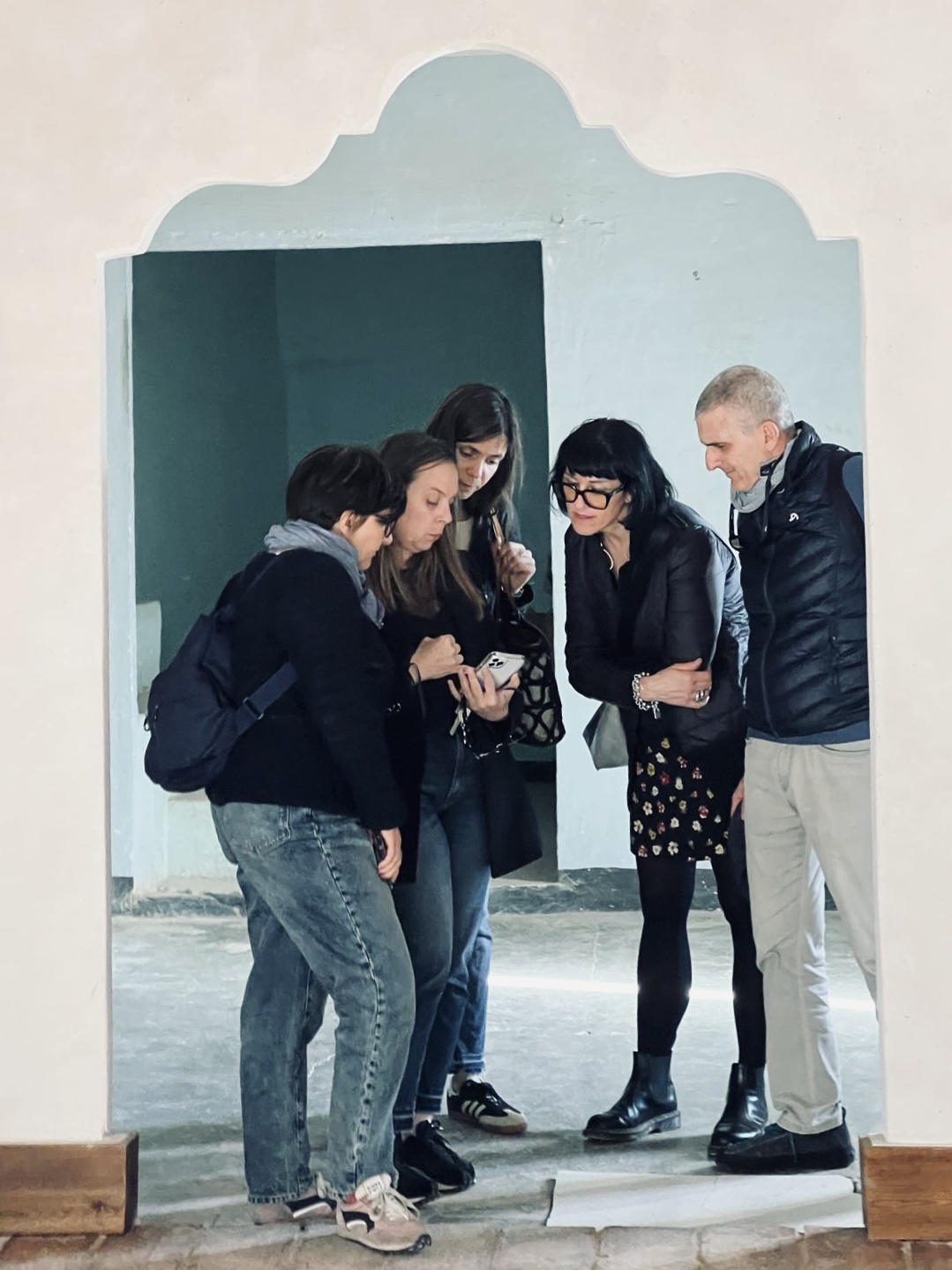
The activity, which began in 2019, has established itself as our organization’s most important strategic project, consolidating the R&D&I strategy with 29 pilot projects involving more than 40 management professionals.

The project was considered an exemplary case study by the Ministry of Culture and Sport at the World Heritage Managers Meeting held in Mérida in 2022.

It has also been considered an example of innovation and good practice in various European cooperation projects. In this regard, we should highlight our organization’s position, through the Estancias project, in the Interreg Europe program: between 2019 and 2023, as part of the MOMAr Models of Management for Singular Rural Heritage project, our project was chosen by the provincial government of Groningen and the Libau Foundation as a reference model for their Heritage Lab project, the centerpiece of their action plan. in 2024, our organization took part in the launch event for the REliHE Religious Heritage in Rural Areas project at the Polytechnic University of Turin, invited to present the project as a case study of good practices.

The long-term goal is to build an innovative structure that supports an international network designed to meet the needs of managing heritage resources located in villages.

Thus, in 2025, the association has partnerships with administrations and entities with which it shares objectives and methodology for growth: the Alliance of Cultural Landscapes and Related Sites, with management entities from fourteen UNESCO heritage sites; the Network of Medinas, within the framework of a collaboration on international projects and routes; the architecture and design department of the Polytechnic University of Turín and various other universities.

THE ARTISTIC RESIDENCY. THE PLACE WHERE IDEAS ARE BORN
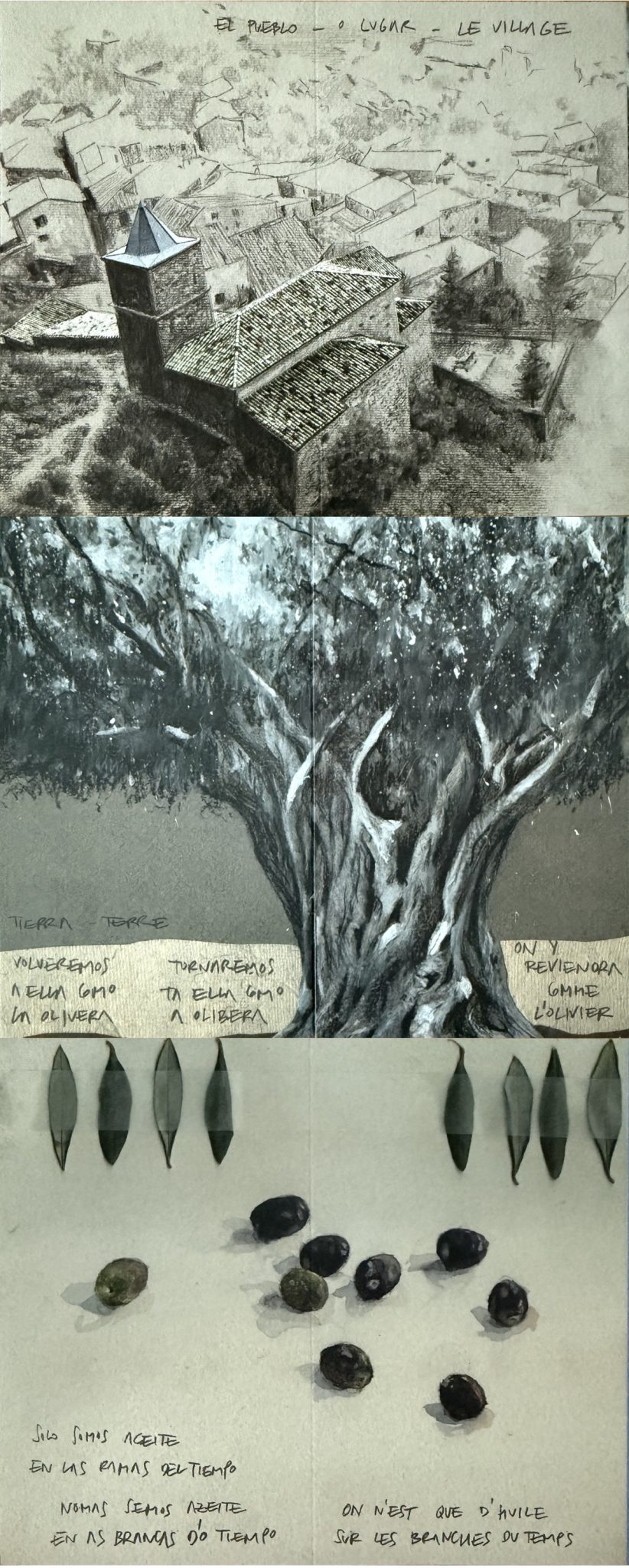
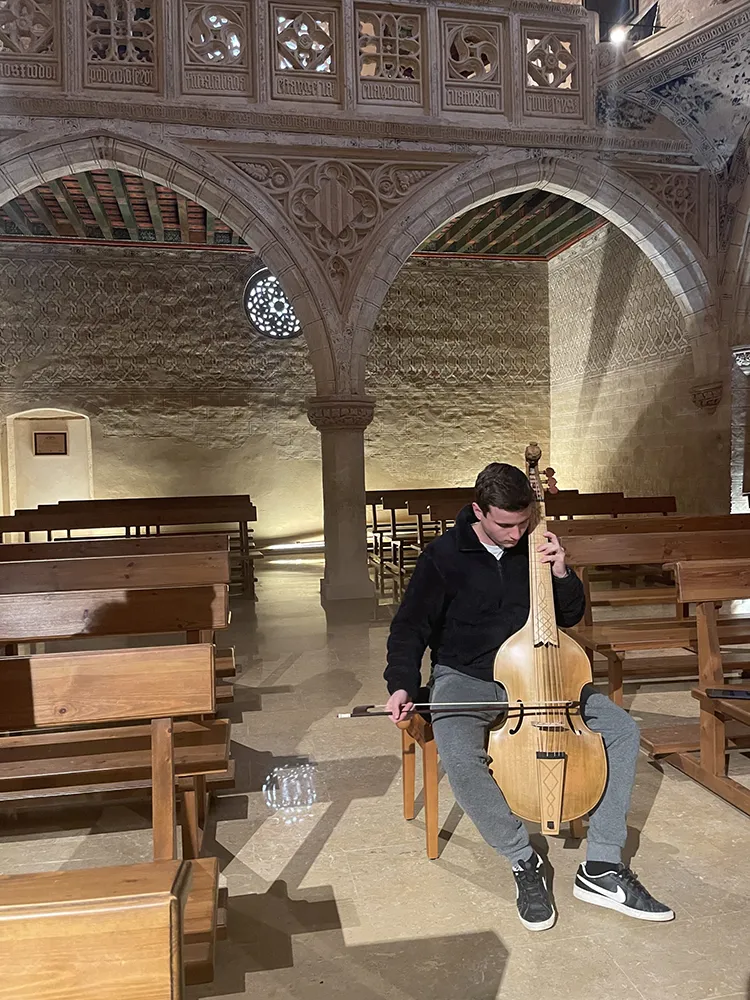
Since the 2022 call for proposals, the Estancias project has incorporated a work area called the Creative Laboratory, a space within the research for projects that allowed for the exploration of Territorio Mudéjar as a place of action and creativity, dissolving the boundaries between areas of knowledge, which were orderly and differentiated, and often led us to places that were complex to manage.

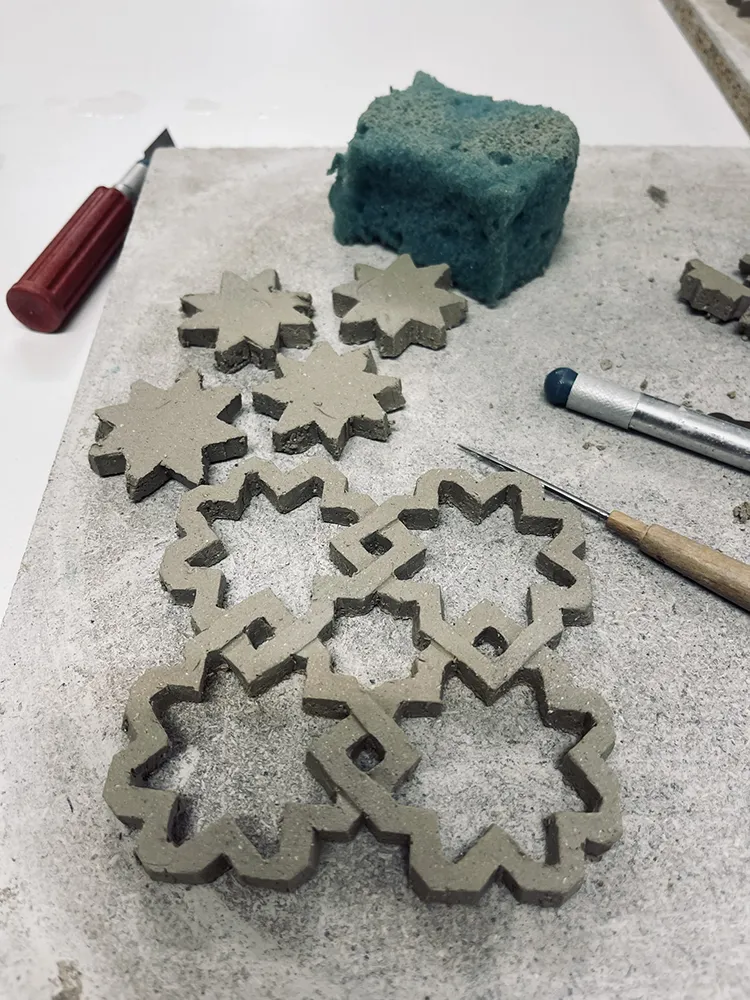
This workspace allowed us to work on the concept of “artistic residency” with the aim of understanding the heritage space and the context in which it is located as a multifaceted space, promoting artistic creation projects with a strong connection to the territory, the landscape, and/or the heritage space.

Following the success of the first call for artistic residencies, this area continues to focus on research, experimentation, exchange, learning, critical reflection, and the dissemination of local practices and knowledge through dialogue between artistic research, communities, the territory, places, and non-places.

The aim is to encourage the opening up of new processes and directions of knowledge in order to explore new paths; to foster creative thinking by generating spaces for dialogue and starting points between art, science, and technology from an artistic perspective, with a view to the development and maintenance of communities and their inhabitants.

To improve the monitoring and support process for the selected residency, this second call for applications focuses on working with the concept of Cultural Landscape, in support of the designation of Cariñena as European Wine City 2025.

CONSULT:

Image: Courtesy of the artist-researcher ©ChemaAgustín Riglorámico Project

Since the 2022 call for proposals, the Estancias project has incorporated a work area called the Creative Laboratory, a space within the research for projects that allowed for the exploration of Territorio Mudéjar as a place of action and creativity, dissolving the boundaries between areas of knowledge, which were orderly and differentiated, and often led us to places that were complex to manage.

This workspace allowed us to work on the concept of “artistic residency” with the aim of understanding the heritage space and the context in which it is located as a multifaceted space, promoting artistic creation projects with a strong connection to the territory, the landscape, and/or the heritage space.

Following the success of the first call for artistic residencies, this area continues to focus on research, experimentation, exchange, learning, critical reflection, and the dissemination of local practices and knowledge through dialogue between artistic research, communities, the territory, places, and non-places.

The aim is to encourage the opening up of new processes and directions of knowledge in order to explore new paths; to foster creative thinking by generating spaces for dialogue and starting points between art, science, and technology from an artistic perspective, with a view to the development and maintenance of communities and their inhabitants.

To improve the monitoring and support process for the selected residency, this second call for applications focuses on working with the concept of Cultural Landscape, in support of the designation of Cariñena as European Wine City 2025.

CONSULT:

Image: Courtesy of the artist-researcher ©ChemaAgustín Riglorámico Project

DIGITALISATION = STRATEGIC TOOL

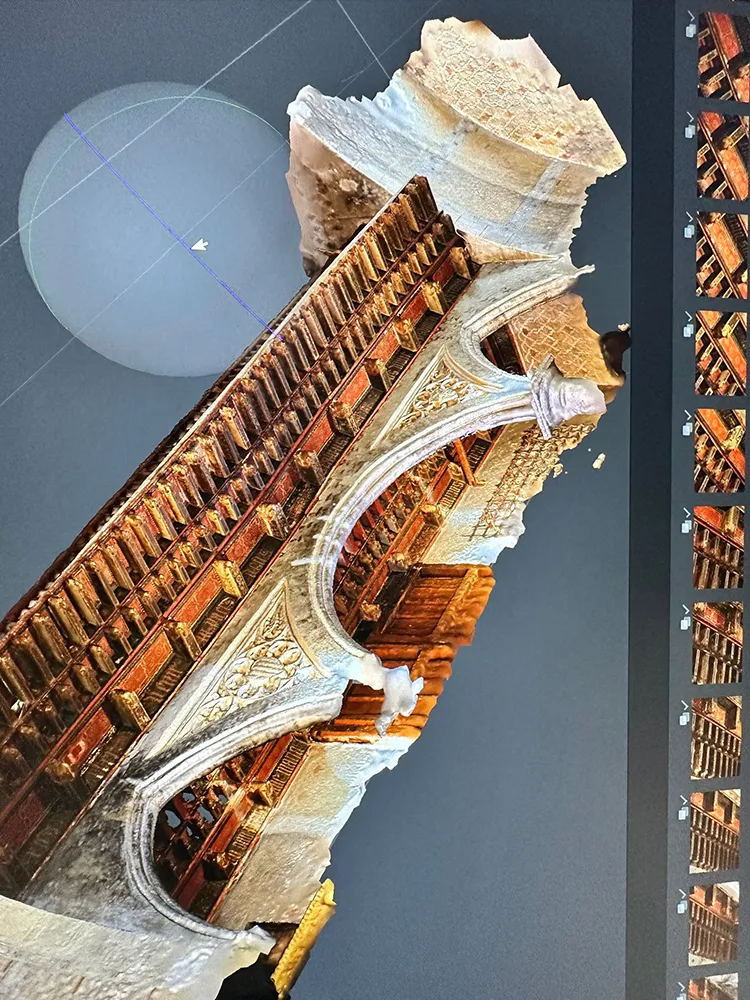
The management of historical, artistic and cultural heritage is evolving rapidly thanks to digital technologies. The challenge now is to apply a strategic vision to these processes and the unprecedented opportunities offered by new technologies, and to use them in the most and the unprecedented opportunities offered by new technologies and to use them in the most efficient way possible, ensuring that the efforts efficient way possible , ensuring that the efforts made at this time of “boom ” have a long “boom” are sustainable over time and allow for the development of future projects.

Therefore, one of the criteria being continued this year is that all deliverables in a digital version (photographs, photographs, videos, etc.) must year is that all deliverable products in digital version (photographs, videos, digital models, audio files, etc.) must be videos, digital models, audio files, etc.) comply with the study Study on quality in 3D digitisation of tangible cultural heritage: mapping parameters, formats, standards, benchmarks, methodologies, and guidelines published in 2022 and follow the lines of work indicated in the recommendation of 10/11/2021 on a common European data space for cultural heritage , thus adapting the quality criteria in this way quality criteria established in the in the Digitalisation Strategy of Territorio Mudéjar.

This strategy is in line with the latest recommendations of the European Commission and also takes into account, the standards of the most commonly used platforms and repositories such as Europeana and such as Europeana or Google Arts.

The aim of Territorio Mudéjar is for all projects to have a digital focus that allows for the implementation of adapted transfer channels. To this end, all beneficiaries of the aid will receive information and training on the Territorio Mudéjar Digitalization Strategy during the first phase of their project and will be monitored continuously throughout its development to help them comply with it.
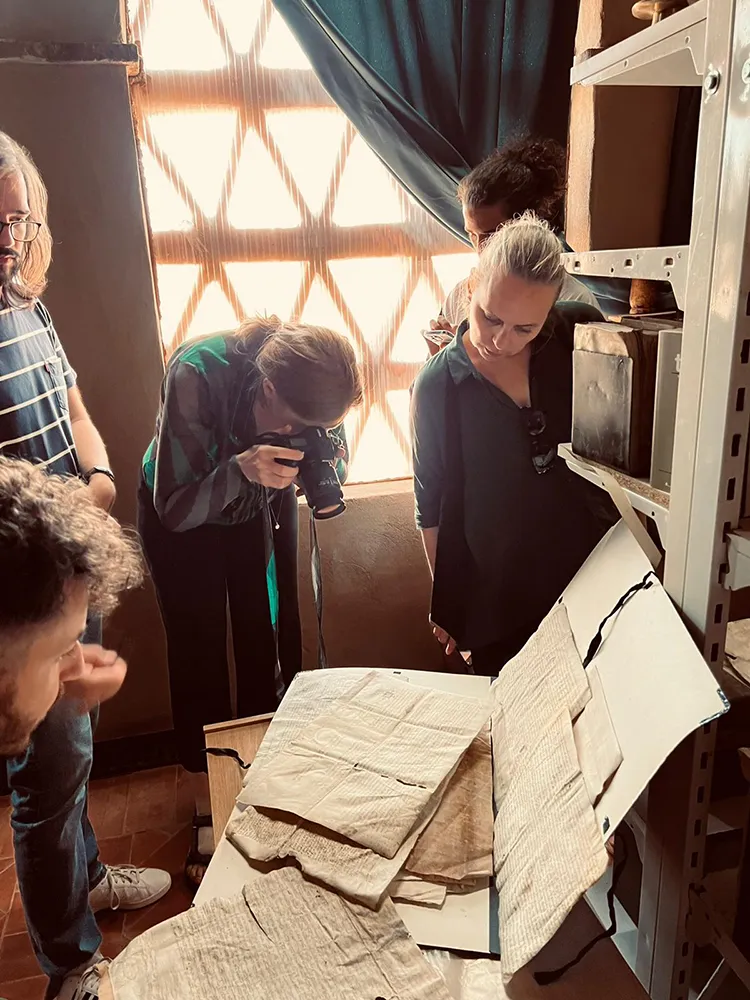
The management of historical, artistic and cultural heritage is evolving rapidly thanks to digital technologies. The challenge now is to apply a strategic vision to these processes and the unprecedented opportunities offered by new technologies, and to use them in the most and the unprecedented opportunities offered by new technologies and to use them in the most efficient way possible, ensuring that the efforts efficient way possible , ensuring that the efforts made at this time of “boom ” have a long “boom” are sustainable over time and allow for the development of future projects.

Therefore, one of the criteria being continued this year is that all deliverables in a digital version (photographs, photographs, videos, etc.) must year is that all deliverable products in digital version (photographs, videos, digital models, audio files, etc.) must be videos, digital models, audio files, etc.) comply with the study Study on quality in 3D digitisation of tangible cultural heritage: mapping parameters, formats, standards, benchmarks, methodologies, and guidelines published in 2022 and follow the lines of work indicated in the recommendation of 10/11/2021 on a common European data space for cultural heritage , thus adapting the quality criteria in this way quality criteria established in the in the Digitalisation Strategy of Territorio Mudéjar.

This strategy is in line with the latest recommendations of the European Commission and also takes into account, the standards of the most commonly used platforms and repositories such as Europeana and such as Europeana or Google Arts.

The aim of Territorio Mudéjar is for all projects to have a digital focus that allows for the implementation of adapted transfer channels. To this end, all beneficiaries of the aid will receive information and training on the Territorio Mudéjar Digitalization Strategy during the first phase of their project and will be monitored continuously throughout its development to help them comply with it.

Terms and conditions of calls for applications

Research for projects: modality 1

THE USES OF HERITAGE IN THE VILLAGES OF THE MUDÉJAR TERRITORY
AMOUNT: €7,500

DURATION OF THE SCHOLARSHIP: Between 4 and 7 months.

CONTEXT: Interreg Europe Project. REliHE Religious heritage in rural areas.

COMMENTS: The proposal must include a minimum justified stay in two member towns of Territorio Mudéjar. It will be evaluated based on the project submitted.

Research and projects: modality 2

MODELS FOR MANAGING THE MONUMENT AND ITS PROTECTED ENVIRONMENT FROM THE PERSPECTIVE OF AUTHENTICITY AND PREVENTIVE CONSERVATION
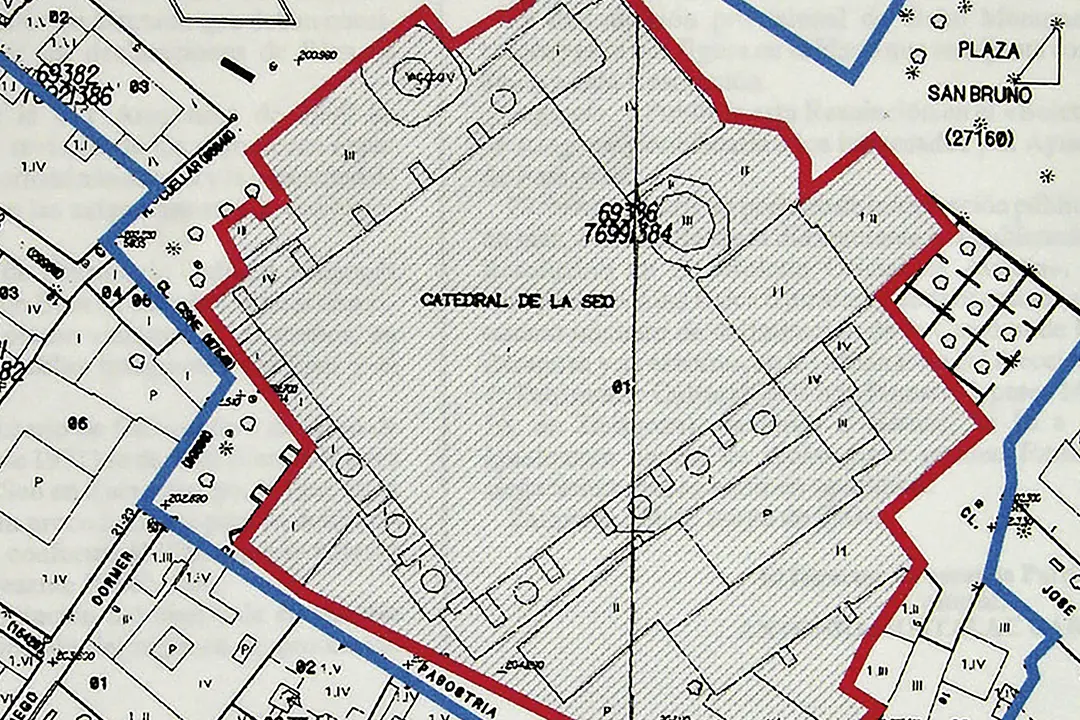
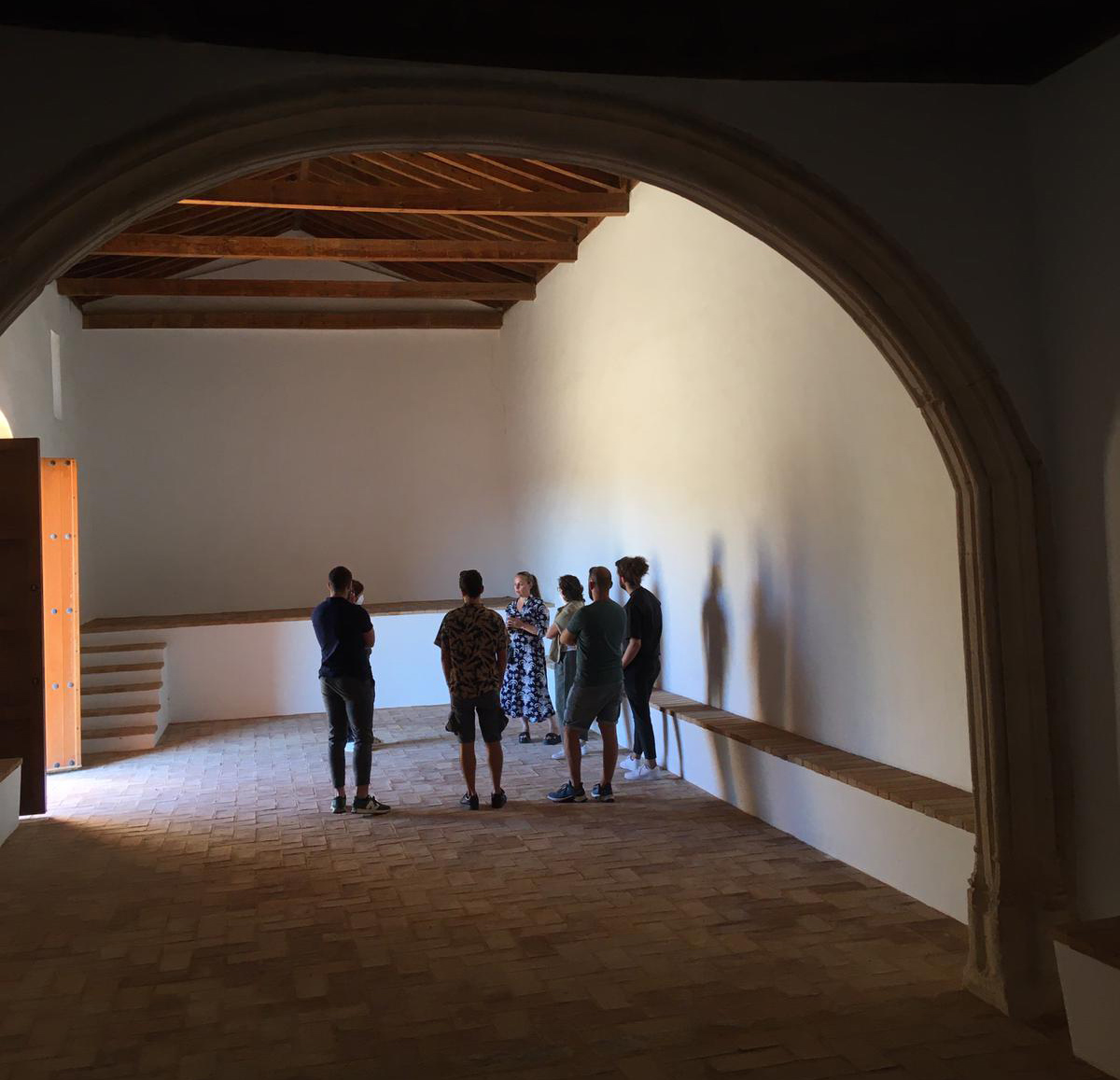
AMOUNT: €7,500

DURATION OF THE SCHOLARSHIP: Between 4 and 7 months.

CONTEXT: Collaboration with the parish of La Seo in Zaragoza. The Archbishopric of Zaragoza has been an honorary member of Territorio Mudéjar since 2018.

COMMENTS: The proposal must include a justified minimum stay in at least two member towns of Territorio Mudéjar and work with a minimum of three monuments. It will be evaluated based on the project submitted.

Research and projects: modality 3

STUDY OF ALABASTER PLASTER AND ITS IMPACT ON THE TERRITORY: INNOVATION AND QUALITY FROM ITS HISTORICAL STUDY

AMOUNT: €7,500

DURATION OF THE SCHOLARSHIP: Between 4 and 7 months.

CONTEXT: Collaboration with CIDA, the Alabaster Development Center.

COMMENTS: The proposal must include a justified minimum stay in at least four member locations of Territorio Mudéjar and CIDA. In addition, work must be carried out on at least two monuments and two landscapes. It will be evaluated based on the project submitted.

Artistic residencies

CULTURAL LANDSCAPE: ARTISTIC STUDY OF THE WINE LANDSCAPE
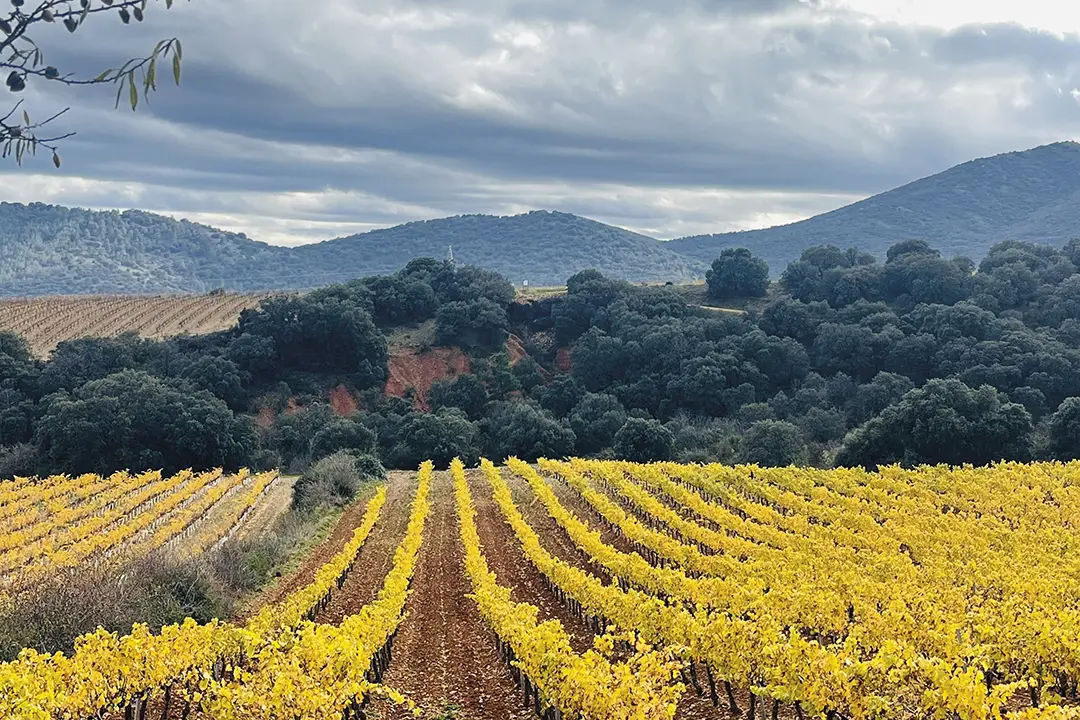
AMOUNT: €4,500

DURATION OF THE SCHOLARSHIP: Between 4 and 7 months.

CONTEXT: Cariñena European City of Wine 2025.

COMMENTS: The proposal must include a justified minimum stay in Cariñena and in at least two member towns of Territorio Mudéjar. It will be evaluated based on the project submitted.

Activities and promotional events related to the call for applications

If you are interested, please contact us at: convocatoria@territoriomudejar.es

Schedule to be determined

Visits to heritage sites in the towns of the Mudéjar Territory for evaluation as case studies.

September 30 [10:00 am - 11:00 a.m]

Albalate del Arzobispo Castle. Integral Center for Alabaster Development.


Webinar: Key points for applying for the call for proposals.

Open to the public in person

7 October - Webinar 2 from La Seo Parish Church (Zaragoza)

La SEO parakeet (Zaragoza)


Webinar 2

For in-person assistance and technical visits, prior registration and allocation of places will be mandatory.

14 October - Webinar 3 from Ariza

Webinar 3

Zoom meeting

21 October - Webinar 4 from Maluenda

Webinar 4

Zoom meeting

27 October – Webinar 5 from Tobed

Webinar 4

Final doubts. From the headquarters of Territorio Mudéjar in Tobed
Extraordinary Call: Sustainability Plan Daroca

SELECTION OF A PROFESSIONAL ASSISTANT TO PROJECT MANAGEMENT.

Advice, consultation, monitoring and scientific support in the management of historical-artistic heritage for the development of the Tourism Sustainability Plan for the city of Daroca.

Deadline for submission: Until August 31, 2023. [Until 3:00 p.m.]

Territorio Mudéjar is an association of municipalities, currently forty-seven member municipalities and one collaborating partner, whose objective is to strengthen a unified and collaborative management network for the use of historical and artistic resources linked to the important Mudejar heritage, understanding them as an engine for the development of the towns and as an element of identity for the maintenance of the communities that make up our territory.

Our programme of actions for the coming years has been designed in accordance with the strategic lines defined by the defined by the ” Roadmap of the Council of the European Union 2019- 2022″, which2022″ which, aligned with the goals of the 2030 Agenda, have as a guiding principle that “the cultural identity of territories will contribute to territories will contribute to sustainable social and economic development by differentiating markets and in turn allowing their integration into a diversified a diversified economy that can ensure their future success.

The CITY COUNCIL OF DAROCA has been a founding member of the Territorio Mudéjar Association since 2018, ratified in a founding assembly on September 13, 2018.

According to the statutes approved in assembly on September 13, 2018, some of the actions for the partner municipalities go through:

  • To assist in the management and search for funding for projects that allow for the conservation, restoration, maintenance and dissemination of the assets, in all their extension, […]
  • To promote and collaborate with the Administration in the tasks of a social nature that facilitate the maintenance and increase of the population members of the association, and which are mentioned in Chapter I Article 4, as well as the rest of the figures attached to the association, assuming training and employment programs.
  • Drafting and updating public or private endogenous and sustainable development plans and programmes.
  • Encourage collaboration with entities of the same nature or purpose.

According to art.7 of the Statutes approved in assembly on September 13, 2018, the development of the purposes may be carried out “through contracts, concerts or agreements entered into with public or private entities, either to carry out programs of such entities, or to develop the association’s own duly approved action programs”.

"Plan of Sustainability and Tourist Modernization of the City Council of Daroca. Facilitating access to Heritage from accessibility".

The municipality of Daroca participated in the extraordinary call for Territorial Plans of Tourism Sustainability in Destination, hereinafter PSTD, in the call for the year 2021.

The project was approved by the Secretary of State for Tourism of the Ministry of Industry, Trade and Tourism and the Department of Industry, Competitiveness and Business Development of the Government of Aragon on October 17, 2022.

The approved project is defined through projects and actions focused on:

* The adequacy of the walled enclosure. Daroca has almost 4 kilometers of walls that make it one of the most extensive walled enclosures in Spain that requires urgent intervention for its conservation. The intervention consists of the restoration in 3 years of the sections with greater visual impact of the tourist.

* The adequacy of the area of the Castillo Mayor. Although the Torre del Homenaje has already been consolidated, it is necessary to continue with the intervention in the rest of the castle to ensure its conservation and attractiveness for tourists. Both in the access areas, as in the consolidation of the wall of the enclosure.

* The adequacy of roads and trails that allow access and visit both castle, walls and other existing monuments (towers, La Mina, green areas, etc.). Although there is already a path, it is necessary to have funds for its adaptation and maintenance. In addition, the municipality’s green areas will be adapted and new ones will be proposed.

* The decoration of facades within the LIENZOS DE HISTORIA project, also known as Muralea. The proposal allows highlighting the historical diversity and historical cultural fusion of Christian, Muslim and Jewish cultures. The project, recently launched, will be continued over the next three years, expanding the areas of action.

* The adequacy and rehabilitation of streets with the burying of wiring. The street network needs to be improved and rehabilitated together with the burying of cables that have a great visual impact on the urban landscape.

DAROCA. MONUMENTAL HISTORICAL SITE.

A large part of the actions approved in the sustainability plan affect the Historic-Artistic Site of Cultural Interest of the city of Daroca, declared in accordance with Decree 1450/1968 of June 6 and published in BOE No. 158 of July 2, 1968.

And in addition to the aforementioned declaration, the actions affect assets of different nature included, among others, in the Order of April 17, 2006, of the Department of Education, Culture and Sports, which approves the list of Castles and their location, considered Assets of Cultural Interest under the provisions of the second additional provision of Law 3/1999, of March 10, of the Aragonese Cultural Heritage, for the Daroca fortified enclosureDecree 267/2002, of July 23, 2002, of the Government of Aragón, declaring the “La Mina” of Daroca (Zaragoza) an Asset of Cultural Interest, in the category of Monument; Decree 572/1963, of March 14, 2003, second additional provision of the law.

As well as the assets included in the catalogs of architectural heritage and archaeological heritage of the PGOU of Daroca. The catalog of architectural heritage includes 31 properties that require integral protection, 35 that require structural protection and 143 that require environmental protection.

DAROCA. SPECIAL AGREEMENT MUDEJAR TERRITORY PARTNERS

The CITY COUNCIL OF DAROCA has been a founding member of the Territorio Mudéjar Association since 2018, ratified in a founding assembly on September 13, 2018.

The MUDÉJAR TERRITORY ASSOCIATION has been working since its foundation in 2018 on the creation of specific advisory structures for the partner municipalities, currently 47 partners and 1 collaborating municipality, whose objective is to strengthen a unified and collaborative management network for the use of historical-artistic resources linked to the important heritage of the villages and understanding them as an engine for the development of the villages and as an element of identity for the maintenance of the communities that make up our territory.

The agreement regulates the collaboration between both entities for:

  • Assist in the planning and execution of consulting, technical, legal or financial advisory actions, among others, necessary and foreseen in the PSTD to ensure the proper development of those actions within the provisions of the plan and specifically in accordance with the general regime of protection of Historical Heritage at the state and autonomous community level.
  • To create a specific work team to support the Daroca town council in the development of the PSTD, with a group of experts coordinated by the management team:

    A scientific-technical advisor expert in the management of the historical-artistic heritage of Daroca from the field of preventive conservation, intervention and the study of the use of heritage in the service of cultural and heritage tourism.

    It will also have two emerging professionals as project assistants and will create a training internship position for recent graduates through an agreement signed with UNIVERSA – Employment Counseling Office of the University of Zaragoza-.

    Finally, it will create a PSTD office for neighbors, companies and those interested in the project in order to study the synergies arising from the Plan.

EXTRAORDINARY PROFESSIONAL CALL

SELECTION OF A PROFESSIONAL TO JOIN THE PROJECT MANAGEMENT TEAM:

Advice, consultation, monitoring and scientific support in the management of historical-artistic heritage for the development of the Tourism Sustainability Plan for the city of Daroca.

PUBLICATION OF THE RULES: August 16, 2023.

PRESENTATION OF PROPOSALS. Until August 31 at 3:00 pm.

REQUEST FOR CONSULTATION OF THE DOCUMENTATION ON THE SUSTAINABILITY PLAN: Until August 31 before 3:00 p.m. through info@territoriomudejar.es.

AWARD

The Contracting Committee meeting held on September 18, 2023, agreed to award the contract to the bid submitted by:

DÑA. IRENE RUIZ BAZÁN

RULES CALL FOR PROPOSALS: Research stays and projects 2023

5th Call for researchstays for artistic projects and residencies “Gonzalo M. Borrás Gualis”.

Deadline for submission: Until 31 August.

Territorio Mudéjar announces the FIFTH EDITION of the Gonzalo M. Gonzalo M. Borrás Gualis researchstays and projects. Borrás Gualis aimed at directly supporting the work of researchers and project of researchers and project promoters who want to work on the development of the to work for the development of villages through the responsible and sustainable use of cultural and natural heritage resources. and sustainable use of cultural and natural heritage resources.

Territorio Mudéjar is an association of town councils, currently thirty-six member town councils and one collaborating partner, whose objective is to consolidate a unified and collaborative management network for the use of the historical and artistic resources linked to the important Mudejarartistic resources linked to the important Mudejar heritage , understanding them as a driving force for the development of the villages and as an and as an element of identity for the maintenance of the communities that make up our territory.

Our programme of actions for the coming years has been designed in accordance with the strategic lines defined by the defined by the ” Roadmap of the Council of the European Union 2019- 2022″, which2022″ which, aligned with the goals of the 2030 Agenda, have as a guiding principle that “the cultural identity of territories will contribute to territories will contribute to sustainable social and economic development by differentiating markets and in turn allowing their integration into a diversified a diversified economy that can ensure their future success.

The projects carried out since 2019 have strengthened this initiative as one of our initiative as one of our most important lines of of our most important lines of work based on the development of actions that enhance the retention and attraction of talent, actions aimed at the construction of highly qualified professional networks networks linked to the use of historical, artistic and cultural resources , contributing to medium- and long-term territorial development.artistic and cultural resources , contributing to medium and long-term territorial development.

Our project, dedicated to Professor Gonzalo M. Borrás Gualis, a staunch defender of the management of Aragonese heritage and the territory, as an action of the people and as an innovative field of work full of future. His work exemplified with perfect coherence the possibility of combining research work of high scientific impact with a commitment to the land and its people, not only favouring the knowledge, conservation and dissemination of its historical and artistic heritage, but also modernising work processes and proposing innovative projects in which natural, cultural and heritage resources are a key element in the future of the people.

FOCUS
Transdisciplinary thinking as a tool for innovation.

DIGITALISATION = STRATEGIC TOOL

The management of historical, artistic and cultural heritage is evolving rapidly thanks to digital technologies. The challenge now is to apply a strategic vision to these processes and the unprecedented opportunities offered by new technologies, and to use them in the most and the unprecedented opportunities offered by new technologies and to use them in the most efficient way possible, ensuring that the efforts efficient way possible , ensuring that the efforts made at this time of “boom ” have a long “boom” are sustainable over time and allow for the development of future projects.

Therefore, one of the criteria being continued this year is that all deliverables in a digital version (photographs, photographs, videos, etc.) must year is that all deliverable products in digital version (photographs, videos, digital models, audio files, etc.) must be videos, digital models, audio files, etc.) comply with the study Study on quality in 3D digitisation of tangible cultural heritage: mapping parameters, formats, standards, benchmarks, methodologies, and guidelines  published in 2022 and follow the lines of work indicated in the recommendation of 10/11/2021 on a common European data space for cultural heritage , thus adapting the quality criteria in this way quality criteria established in the in the DigitalisationStrategy of Territorio Mudéjar.

This strategy is in line with the latest recommendations of the European Commission and also takes into account, the standards of the most commonly used platforms and repositories such as Europeana and such as Europeana or Google Arts.

All the beneficiaries of the aid will receive information and training on the the DigitisationStrategy of Territorio Mudéjar during the first phase of their the first phase of their project and they will have a specific continuous specific ongoing monitoring during its development to help them comply with it.

ARTISTIC RESIDENCY. THE PLACE WHERE PROJECT IDEAS ARE BORN

Territorio Mudéjar is emerging as a place of action and creativity from areas often place of action and creativity from areas that are often ordered and differentiated and differentiated areas that often dissolve boundaries and take us to places that are complex to manage.

This workspace allows us to work on the concept of ” artisticresidence “ with the aim of understanding the heritage space and the context in which it is located as a multifaceted space. to understand the heritage space and the context in which it is located as a polyhedral space, promoting artistic creation projects with a strong link to the territory, the landscape and/or the heritage space.

This area is oriented towards research, experimentation, exchange, learning, critical reflection and the dissemination of local practices and knowledge, through dialogue between artisticresearch, communities, territory, places and non-places.

The aim is to generate the opening of new processes and directions of knowledge to explore new paths; to encourage creative thinking by generating spaces for dialogue and starting points between art, science and technology from artistic practice with a view to the development and maintenance of the people and their inhabitants.

FUTURE: CALL FOR EXCHANGES OF EUROPEAN PROFESSIONALS

The activity started in 2019 has been consolidated as one of the most important actions of our one of the most important actions of our entity , which strategy called R&D+innovation, with 23 pilot projects involving more than 40 involving more than 40 management professionals.

The project has been considered as an exemplary case study by the Ministry of Culture and Sport at the of Culture and Sport at the Meeting of World Heritage Managers 2022, held in Granada, which is held every year.

It has also been considered asan example of innovation and good practice in various best practices in various European cooperation projects. In this aspect, we must highlight the positioning of our entity, through the Estancias project, in the Interreg Europe project MOMAr Models of Management for Singular Rural Heritage, in which our project has been chosen by the government of the province of Groningen and the Libau Fondation as a reference model for their Heritage Lab project. Groningen and the Libau Fondation as a reference model for its Heritage Lab project, at the heart of its action plan.

With the aim of building international professional networks, we will soon announce the opening of different international networks , we will soon be announcing the opening of different calls for applications designed on the basis of different framework agreements with partners such as the Chamber of Commerce of the provinces of South Sardinia and Oristano, on the Italian island of Sardinia, the province of Groningen, in the Netherlands, through the “Heritage Lab” project, or with the Medinas Network, in the framework of an international partnership.

Research and projects

TERMS AND CONDITIONS

SUBMISSION OF PROPOSALS. Until 31 August

TOPICS: Pilot projects

  • New perspectives: Research, tools, applied data, etc.
  • Strategic management: Ideas linked to strategic management.
  • Communication and social function: didactics of heritage, language and communication, audiences, etc.

AMOUNT: €7,500

DURATION OF THE SCHOLARSHIP: Between 4 and 7 months.

OBLIGATIONS: To plan a non-continuous stay or residence in one or several localities from among the Territorio Mudéjar partner town councils. It will be assessed according to the project proposal.  

ARTISTIC RESIDENCIES

TERMS AND CONDITIONS

SUBMISSION OF PROPOSALS. Until 31 August

TEMAS: Creative Workshop

  • Artistic creation and research: materials, crafts, etc.
  • Sound, acoustics, speech, looking and listening.
  • Virtual space or metaverse.

AMOUNT: €4,500

DURATION OF THE RESIDENCY: The proposal must include a residency in a locality of. Territorio Mudéjar for a duration of between 30 and 60 days.

We started the project “Circular from the rural school “.

Would you like to work in the classroom with educational materials on the Mudejar identity of the villages? Do you understand the heritage space as an innovative learning space?

In the coming weeks the first action of the project “Rural school in motion” will begin, an introductory course to the project in which Territorio Mudéjar offers to those interested in linking education, heritage and innovation to know the starting point and the methodology with which it will work until mid 2022 together with seven of the local development groups in the province of Zaragoza coordinated by the ADRI Calatayud Aranda group.

“Rural school in motion” is a cooperation project between rural development groups coordinated by the ADRI Calatayud-Aranda group, together with Cedemar, Adefo Cinco Villas, Asomo Moncayo, Adrae Comarca Alta del Ebro, Fedivalca y Adri Jiloca Gallocanta, and financed by the Government of Aragon through the Leader programme and the Provincial Council of Zaragoza through the Territorio Mudéjar association, as a private collaborating entity that manages the implementation and execution of the initiative.

The aim is to develop educational materials related to the Mudejar identity of the villages, placing rural schools and the educational community of the villages at the centre of the project, with a triple purpose:

◾️Work on the introduction of the Mudejar heritage identity in the work programmes of schools beyond the artistic or complementary areas.

◾️To involve the educational community in the valuation of the Mudejar heritage as part of their personal history, which favours the knowledge, conservation and dissemination of the identity of the localities.

◾️To use the work carried out in schools as material for dissemination and tourist use on the Mudejar heritage of the villages for a family and children audience.

???? In the COURSE we will explain the working methodology and the results of the pilot project that was carried out in the CRA Vicort Isuela in the 2018-2019 academic year and which is the starting point for the implementation of the project in the schools of the villages of Territorio Mudéjar.

It will be taught by Laura Castejón and Víctor Gumiel, teachers who carried out the design and testing of the pilot project, and Victoria E. Trasobares, director of Territorio Mudéjar who has extensive experience in the management and implementation of Mudejar heritage management projects in rural areas.

The Department of Education has included it as an approved course in its catalogue of ongoing teacher training activities and recognises the training hours.

The course will be carried out on-line through the entity’s digital work platform that we will set up for the specific training.

Course information: https://mcusercontent.com/…/c70fb223…/CURSO_CIRCULAR.pdf

Application form:

Option 1: If you have a certificate or electronic signature https://doceo.catedu.es/…/portadaInitConsultarActividad…

Option 2: If you do not have a certificate or electronic signature, write a message to: info@territoriomudejar.es

Project information: https://mcusercontent.com/…/9591a…/PROYECTO_CIRCULAR.pdf

If you have any doubts or you want to consult us about any particular issue you can call us on 876 634 125 or write an email to info@territoriomudejar.es

CALL FOR APPLICATIONS: Research stays and projects 2022

4th Call for Research Stays and Projects Gonzalo M. Borrás Gualis.

4th Call for Research Stays
Submission deadline: July 20.

Territorio Mudéjar is hosting the fourth edition of the Gonzalo M. Borrás Gualis Research and Project Internships, designed to directly support the work of researchers and project promoters who want to contribute to the development of communities through the responsible and sustainable use of cultural and natural heritage resources.

Territorio Mudéjar is an association of town councils, currently thirty-six member town councils and one collaborating partner, whose objective is to consolidate a unified and collaborative management network for the use of the historical and artistic resources linked to the important Mudejarartistic resources linked to the important Mudejar heritage , understanding them as a driving force for the development of the villages and as an and as an element of identity for the maintenance of the communities that make up our territory.

Our programme of actions for the coming years has been designed in accordance with the strategic lines defined by the defined by the ” Roadmap of the Council of the European Union 2019- 2022″, which2022″ which, aligned with the goals of the 2030 Agenda, have as a guiding principle that “the cultural identity of territories will contribute to territories will contribute to sustainable social and economic development by differentiating markets and in turn allowing their integration into a diversified a diversified economy that can ensure their future success.

The projects carried out in 2021, and the implementation of actions derived from projects in previous calls for proposals, have consolidated this initiative as one of our most important lines of work, based on the development of actions that enhance the retention and attraction of talent, actions aimed at building highly qualified professional networks linked to the use of historical, artistic, and cultural resources, contributing to medium- and long-term territorial development.

Dedicated to Professor Gonzalo M. Borrás Gualis, a staunch defender of the management of Aragonese heritage and of the territory, as an action of the people and as an innovative field of work full of future. His work exemplified with perfect coherence the possibility of combining research work of high scientific impact with a commitment to the land and its people. of high scientific impact with a commitment to the land and its people, not only favouring the knowledge, conservation and dissemination of its historical-artistic heritage, but also by modernising work processes and by proposing innovative innovation projects in which natural, cultural and heritage resources are a key element in the future of the towns.

FOCUS
Transdisciplinary thinking as a tool for innovation.

The Mudéjar Territory digitalization strategy

The management of historical, artistic, and cultural heritage is evolving rapidly thanks to digital technologies. The current challenge is to apply a strategic vision to these unprecedented processes and opportunities offered by new technologies and utilize them as efficiently as possible, ensuring that the efforts made during this boom are sustainable and allow for the development of future projects.

Digitalization should not be an end in itself, but rather a driving force for improving heritage management efforts, taking into account the different possibilities that digitalization offers as a tool for conservation, dissemination, knowledge, and recognition of value. It should also take into account that new opportunities can arise from it in the form of projects that, without the use of these tools, would have a lower degree of scope, relevance, or specialization.

Therefore, at Territorio Mudéjar we are working on a clear strategy, still in the development phase in some of its aspects, which serves as a guide prior to carrying out any action in future projects and which is also inclusive of the actions already carried out in its different municipalities and in previous calls, applying the principle of reusing and improving all initiatives already carried out or underway. This strategy is adapted to the latest recommendations of the European Commission and also takes into account the standards of the most commonly used platforms and repositories such as Europeana or Google Arts.

The 4th call for Gonzalo M. Borrás Gualis Research Fellowships reaffirms our vision of applied research in heritage management that seeks real impact on localities by fostering networking. Once the various experiences and projects derived from them are underway, we aim to work with all the resources already created to establish quality and strategic parameters that will contribute to a dynamic digitalization strategy focused on improving heritage management.

For this reason, one of the criteria introduced this year in the call for stays is that all deliverables in digital version (photographs, videos, digital models, audio files, etc.) comply with the provisions of the recently published Study on quality in 3D digitisation of tangible cultural heritage: mapping parameters, formats, standards, benchmarks, methodologies, and guidelines and follow the lines of work indicated in the recommendation of 10/11/2021 on a common European data space for cultural heritage, thus adapting the quality criteria established in the Mudejar Territory Digitisation Strategy.

All the beneficiaries of the aid will receive information and training on the the DigitisationStrategy of Territorio Mudéjar during the first phase of their the first phase of their project and they will have a specific continuous specific ongoing monitoring during its development to help them comply with it.

DISRUPTIVE THINKING FROM ARTISTIC PRACTICE

Territorio Mudéjar is emerging as a place of action and creativity from areas often place of action and creativity from areas that are often ordered and differentiated and differentiated areas that often dissolve boundaries and take us to places that are complex to manage.

In this sense, the new call offers renewed areas of work and introduces a new area of ​​knowledge linked to artistic creation projects with a strong connection to the territory, landscape, and/or heritage sites.

This new workspace allows us to take the first steps in our “artist residency” model, with the goal of understanding the heritage space and its context as a multifaceted space.

This area is oriented towards research, experimentation, exchange, learning, critical reflection and the dissemination of local practices and knowledge, through dialogue between artisticresearch, communities, territory, places and non-places.

The heritage we call “Mudejar” presents itself to us as a disruption in medieval art, an enclave between Western art and Hispano-Muslim art that still raises questions and captivates all who experience and study it.

This new area of ​​work and knowledge aims to explore emotion and foster creative thinking by generating spaces for dialogue and points of departure between art, science, and technology.

It’s about opening up new processes and directions of knowledge, which are often difficult to channel, to explore new paths through artistic practice with an eye toward the development and preservation of communities and their inhabitants.

BASES

1/ Subject matter and scope

The purpose of this call is to award four research stays and two runner-up prizes to researchers and professionals in the management of cultural and natural heritage for the development of a highly innovative territorial research project within one of the fields of activity or work specified below.

Proposals may address zero or preparatory phases, development phases or piloting and testing phases of ongoing projects.

Proposals must include as a fundamental part of their development a justified physical stay in one or more of the localities of Territorio Mudéjar. The projects presented must demonstrate a direct impact on at least three partner towns of Territorio Mudéjar and provide evidence of the influence of this impact on the rest of the territory.

Objectives:

  • To promote the knowledge of the rural territory from its Mudejar identity through innovative approaches whose main purpose is to have a positive impact on the villages.
  • To incentivise work with a high territorial impact developed from the experience of people’s habitability.
  • To help the creation and implementation of a working network under a common vision of the possibilities of heritage, cultural and natural resources that helps to strengthen the rest of the sectors through interdisciplinary and collaborative work.
  • To create mechanisms for social participation in the field of heritage resource management from a territorial perspective.

Specific objectives:

  • To promote knowledge of heritage resources in order to encourage the implementation of projects, contribute to better protection and promote the conservation of the Mudejar heritage of the villages.
  • Contribute to a better understanding of UNESCO World Heritage and the benefits it brings to the territory as an international brand.
  • To give special support to projects that refer to the previous sections and that include two or more localities in the Mudejar Territory.
  • To support projects that serve as a framework for action for a wide range of sites or assets, or that propose solutions and formulas that contribute to improving the sustainability and management capacities of Mudejar Heritage at a general level.
  • Support projects that help to promote the social function of cultural heritage.

The areas covered by the call are the following:

AREA 1. New perspectives on Mudejar art

  • Updating data and knowledge on Mudejar heritage in all its diversity: monumental, urban, ethnographic, linguistic, agricultural, hydraulic, geographical, materials, processes, etc.
  • Technical languages ​​applied to Mudejar: planimetry, photogrammetry and 3D Mudejar.
  • Geolocation, cartography and maps.
  • Any topic that allows us to expand the scientific basis on Mudejar art.

AREA 2. Strategic management of Mudejar heritage. Cultural Landscape and Urban Landscape

  • New models of use beyond the classic concept of “tourist or recreational use”
  • Studies of physical, economic and intellectual accessibility
  • Future models for conservation or intervention.
  • Heritage resources and people’s actions
  • Natural and social contexts
  • Interactions between landscape and monumentality

AREA 3. Mudejar heritage: Communication, dissemination and social function as a key element of territorial development

  • Mudejar heritage and media
  • New media discourses
  • Interpretation and accessibility methods for knowledge of Mudejar heritage
  • Emotional bonding as a key element for the care, protection, and management of assets.
  • Population contexts: The value of intergenerational experience
  • Social participation in the valorization, exchange, and collective construction of knowledge and new forms of learning.

AREA 4. Laboratory for “Artist Residencies.” Mudejar Territory as a space for exploring new avenues through artistic thought.

  • Artistic creation and research from the intellectual concept and its reflection in the material, form or processes that characterise Mudejar heritage.
  • Crafts as a living space past, present and future. New considerations from creative thinking or from historical use linked to the establishment and maintenance of historical and current communities.
  • Sound, acoustics, speech, looking and listening. The heritage space as a space for emotional learning of contents.
  • The exploration of an “other place”, real or imaginary, specific or heterogeneous, natural or artificial, temporary or timeless in the heritage space.
  • The construction of the virtual space or metaverse from the need for the existence of the physical heritage space as a connecting thread. Thoughts, proposals and possibilities.

The procedure for awarding grants will be processed on a competitive basis according to the assessment criteria established in the call for applications and, in accordance with Article 22.1 of Law 38/2003, of 17 November, General Law on Subsidies.

2/ Applicants

Proposals may be submitted by natural persons and groups of natural persons without legal personality who fulfil all the requirements of this call for proposals.

The applicant (or group of applicants) may be at an early or intermediate stage of their research career or professional activity and must be able to demonstrate:

  • Higher education related to the areas covered by the call.
  • Documentary accreditation of a minimum of two years of research or professional experience – paid or unpaid –
  • A professional career will be considered equivalent to the completion of specialized studies related to the management of cultural, historical, and artistic heritage, or to any of the proposed work areas, which add up to a minimum of two effective years of training and in which work has been carried out using “Project” methodologies.

The call is not open to legal entities of any kind: companies, partnerships, associations, communities of property or groups under any other type of legal associative formula.

When the project is submitted by two or more persons, the formula is called “team” and each member of the team must be accredited individually.

If the project submitted is part of a research project linked to a university, public research centre or private (non-profit) centre, this must be indicated in the project report.

The acceptance of the project and the development of the stay is compatible with other professional activities as long as the compatibility mode is specified and justified in the project report.

The project submitted may have other sources of funding as long as they are complementary and are specified in the report.

Total income may never exceed the development costs of the projects.

3/ Requirements

  • Hold a Bachelor’s degree, Graduate or Architect’s degree or equivalent.
  • Master’s degree specializing in heritage and/or in the various areas related to heritage, or proof of a minimum of two years of research experience and/or professional career in the field in which the proposal is developed (whether paid or not).
  • Be up to date with their tax and social security obligations, as well as accrediting compliance with obligations for the reimbursement of subsidies.
  • Not be subject to any of the causes established in art. 13 of the LGS.

4/ Deadline for submission

The deadline for submitting applications is Wednesday, July 20, 2022.

Proposals sent by e-mail will be accepted until 23.59 hours (Spanish time).

If the application contains errors that can be rectified, the organisation will inform the applicant so that, within a period of three days from the date of communication, they can proceed to rectify them as an essential condition for the application to be taken into account in the evaluation process.

5/ Characteristics and conditions

Period: The project and internship schedule can be completed until December 24, 2022. The project completion report must be submitted by December 29, 2022.

Duration: Proposals must be developed within a minimum of THREE months and a maximum of FIVE months.

Allocation: Projects will have a maximum financial allocation of €6,000.00 (STAYS) and €4,000.00 (ACCESIT) which must be justified in the project report according to the expenses indicated in the following section.

Expenses attributable to the grant: In all proposals, the budget must identify the concepts subject to and directly derived from the needs of the project—for example: expenses derived from the development of the work, materials, travel, maintenance, accommodation, etc.—including, if applicable, the corresponding taxes, as well as payment for reproduction, exhibition, and public communication rights, if the project requires it.

Proposals included in Area 4 must also include, if the project requires it, all the elements necessary for the complete execution of the artistic work: materials, permits, auxiliary means, etc.

In the event that the project has other sources of funding, the following must be specified: Entity, duration, actions financed (object and content) and to which part of the project it is addressed.

Compatibility: The development of the stay is compatible with other work, professional or research activities justified to the organisation. The project must indicate the degree of compatibility and the method of work to be carried out in order to avoid overlapping and non-compliance with the conditions indicated in this call.

Number of calls: Beneficiaries may not obtain full support in more than two consecutive calls for the same project. Therefore, resident researchers who have been beneficiaries in the last two calls will not be eligible to apply for the call and will be excluded if they do so.

** Exceptionally, researchers who have not exceeded the amount of €12,000.00 in two consecutive calls may be considered as beneficiaries if they have been awarded an accesit in previous years’ calls.

Others:

The beneficiaries will be included in the entity’s civil liability insurance.

Beneficiaries shall not enter into any kind of employment relationship with the entity.

All aid shall be subject to deductions and taxes as stipulated in the legislation in force, which shall be deducted from the corresponding financial envelope.

6/ Applications

Applications should be sent to the Asociación Territorio Mudéjar in digital format to the following e-mail address: info@territoriomudejar.es

  1. Application-Basic identification data of the applicant and the project
  2. Copy of ID card.
  3. Summary of the applicant/s professional career (maximum 2,000 characters)
  4. Project/proposal summary (max. 2,000 characters)
  5. Abbreviated academic and professional CV (max. 5 pages)
  6. Five developed works that, in the applicant’s opinion, are relevant as a starting point for the proposal (Summary of each project of max. 2,000 characters).
  7. Report on the project to be carried out, including (max. 5 pages): Title; Background and current status of the subject; Hypothesis, methodology, work plan and timetable; Description of the specific objectives of the project; Locations directly and indirectly affected by the proposal; Location or locations proposed for the stay and expected length of stay; Detailed budget for the research, which will refer to the amount requested.
  8. Optionally, a letter of recommendation from a relevant person in the field of the proposed work may be provided.
  9. In the case of teams, both the application and the award decision must expressly state the implementation commitments undertaken by each member of the team, as well as the amount of subsidy to be applied by each of them, who will also be considered as beneficiaries. A sole representative or proxy of the grouping must be appointed, with sufficient powers to fulfil the obligations which, as beneficiary, correspond to the grouping. The team will undertake not to dissolve the grouping until the limitation period provided for in Articles 39 and 65 of Law 38/2003 of 17 November 2003 has elapsed.

7/ Selection process and criteria

The project selection process will be carried out on the basis of the evaluations of the Scientific Committee and the entity’s management team, which will draw up a ranking according to the following criteria:

  • Curricular profile, training and previous achievements of the applicant: 10%. The orientation of the curricular profile in relation to the area of work chosen by the applicant will be assessed.
  • Quality of the project and innovative nature of the proposal: 30%. The project must be well thought out and presented in a rigorous and detailed manner. The framework of objectives/actions/resources/budget must be well planned. The timetable must be realistic. The project should provide for its evaluation and future viability.
  • Territory of impact / number of localities involved: 35%. The way in which the project acts on the territory will be assessed. It may be a direct present or future impact, but in any case it will be an essential requirement. It will be highly valued to foresee a realistic impact without falling into the tendentious and mediatic.
  • Complementary activities involving the local population: 15%. An activity involving the local population in the development of the project will be assessed. Involvement does not necessarily have to be through a cultural activity. The introduction of activities that have an unconventional cultural impact will be valued.
  • Digitisation strategy Mudejar Territory: 10%. Adaptation of the expected results to the criteria published for the “Common European Space for Cultural Heritage”. Contribution of ideas and perspectives.

8/ Evaluation and resolution

The decision on the grants will be announced starting Wednesday, July 20, 2022.

The call may be declared totally or partially void and the decision of the commissions shall be final.

Once the call has been resolved, the list of beneficiaries and the composition of the evaluation commission will be published on the Territorio Mudéjar Association’s website www.territoriomudejar.es.

In no case will individualised information on the applications received or on the deliberation of the evaluation committee be provided.

9/ Formalisation, justification and payment of aid

Formalization: Beneficiaries must sign the acceptance agreement, which will serve as an essential document for receiving the grant, before the project start date, according to the schedule, and no later than August 1, 2022. Once the acceptance agreement has been signed, they must join the project on the date indicated on the schedule.

Payment: The grant will be paid in three instalments: 40% at the start, once the acceptance commitment has been signed; 40% halfway through the project; and the remaining 20% on delivery of the final project report. These conditions will be general to all beneficiaries unless, exceptionally, the project report justifies the need for a different financial distribution over time.

Justification and presentation of results:

Beneficiaries will be obliged to justify compliance with the requirements and conditions established in this call for proposals by means of: An intermediate report halfway through the stay that allows the progress of the project to be evaluated. A final report on digital support of the project describing objectives, fulfilment of aims and results; and a financial report justifying the cost of the activities carried out.

Beneficiaries must deliver to Territorio Mudéjar all the results derived from the project financed according to the proposal presented in the application, it being understood that this proposal will act as a contractual document for the grants.

In the case of works subject to intellectual property, current legislation will be applied with regard to authorship and the transfer of rights of use and reproduction will be assigned to Territorio Mudéjar.

Financial control:

The interim report shall include a revision of the estimated budget either confirming its continuity or proposing necessary adjustments where justified.

The final report shall include a detailed financial report as follows:

  • A list of expenses incurred indicating the creditor, amount, date of issue and payment. As the project includes an estimated budget, the list of expenses will be classified according to the items of the subsidised project or activity. Where applicable, any deviations that may have occurred in the development of the project must be justified.
  • Proof of payment: Invoices, tickets or supporting documents and proof of payment. If the payment has been made in cash, this must be indicated on the expense document with the concept correctly specified.
  • The justification of fees shall be made by sworn declaration and shall be detailed in the report according to the results developed, specifying the working hours assigned to the actions carried out.
  • The justification of mileage expenses shall be made by means of a sworn statement and a detail shall be included in the report according to the results developed, specifying the journeys made and assigned to specific actions.

Non-compliance:

The aid will be cancelled and the amounts received will be reimbursed when the conditions established in these rules are not fulfilled and in general in the cases established in article 37 of the General Law on Subsidies.

10/ Dissemination of project results

The Asociación Territorio Mudéjar may request the collaboration of the beneficiaries of the grants in activities to disseminate the projects. To this end, the beneficiary will provide the Asociación Territorio Mudéjar with all the information and documentation required and will grant the latter, free of charge, the appropriate rights for the dissemination of the results.

Beneficiaries must mention the source of the aid on their materials or results using the phrase “Project carried out with funding from Territorio Mudéjar through the Gonzalo M. Borrás Gualis 2022 Estancias call” and include the entity’s logo whenever possible.

For its part, the association Territorio Mudéjar will always identify the authorship of the projects.

11/ Acceptance of the rules

Participation in this call for applications implies acceptance of its rules and its decision, which shall be final, as well as the waiver of any type of claim.

Exceptionally and for duly justified reasons, the Asociación Territorio Mudéjar reserves the right to interpret and modify the wording of the rules in order to clarify or specify their content, without this implying a substantial or arbitrary alteration of the same.

For any queries, applicants may contact the Asociación Territorio Mudéjar by e-mail at info@territoriomudejar.es

RULES CALL FOR PROPOSALS: Research stays and projects 2021

3rd Call for research stays and projects Gonzalo M. Borrás Gualis

Territorio Mudéjar announces the third edition of the Gonzalo M. Borrás Gualis research stays and projects aimed at directly supporting the work of researchers and project promoters who want to work on the development of villages based on the responsible and sustainable use of cultural and natural heritage resources.

Territorio Mudéjar is an association of town councils, currently thirty-six member town councils and one collaborating partner, whose objective is to consolidate a unified and collaborative management network for the use of the historical and artistic resources linked to the important Mudejarartistic resources linked to the important Mudejar heritage , understanding them as a driving force for the development of the villages and as an and as an element of identity for the maintenance of the communities that make up our territory.

Our programme of actions for the coming years has been designed in accordance with the strategic lines defined by the defined by the ” Roadmap of the Council of the European Union 2019- 2022″, which2022″ which, aligned with the goals of the 2030 Agenda, have as a guiding principle that “the cultural identity of territories will contribute to territories will contribute to sustainable social and economic development by differentiating markets and in turn allowing their integration into a diversified a diversified economy that can ensure their future success.

The projects carried out in 2020 have strengthened one of our most important lines of work based on the development of actions that promote the retention and attraction of talent, actions aimed at the construction of highly qualified professional networks linked to the use of historical-artistic and cultural resources, contributing to medium and long-term territorial development.

Dedicated to Professor Gonzalo M. Borrás Gualis, a staunch defender of the management of Aragonese heritage and of the territory, as an action of the people and as an innovative field of work full of future. His work exemplified with perfect coherence the possibility of combining research work of high scientific impact with a commitment to the land and its people. of high scientific impact with a commitment to the land and its people, not only favouring the knowledge, conservation and dissemination of its historical-artistic heritage, but also by modernising work processes and by proposing innovative innovation projects in which natural, cultural and heritage resources are a key element in the future of the towns.

Basis

1/ Subject matter and scope

The purpose of this call is to award FIVE GRANTS and ONE ACCESIT to researchers and professionals in the management of cultural and natural heritage for the development of a research or territorial project with a highly innovative character within one of the fields of activity or area of work specified below.

Proposals may address zero or preparatory phases, development phases or piloting and testing phases of ongoing projects.

Proposals must include as a fundamental part of their development a justified physical stay in one or more of the localities of Territorio Mudéjar. The projects presented must demonstrate a direct impact on at least three partner towns of Territorio Mudéjar and provide evidence of the influence of this impact on the rest of the territory.

Objectives:

  • To promote the knowledge of the rural territory from its Mudejar identity through innovative approaches whose main purpose is to have a positive impact on the villages.
  • To incentivise work with a high territorial impact developed from the experience of people’s habitability.
  • To help the creation and implementation of a working network under a common vision of the possibilities of heritage, cultural and natural resources that helps to strengthen the rest of the sectors through interdisciplinary and collaborative work.
  • To create mechanisms for social participation in the field of heritage resource management from a territorial perspective.

Specific objectives:

  • To promote knowledge of heritage resources in order to encourage the implementation of projects, contribute to better protection and promote the conservation of the Mudejar heritage of the villages.
  • Contribute to a better understanding of UNESCO World Heritage and the benefits it brings to the territory as an international brand.
  • To give special support to projects that refer to the previous sections and that include two or more localities in the Mudejar Territory.
  • To support projects that serve as a framework for action for a wide range of sites or assets, or that propose solutions and formulas that contribute to improving the sustainability and management capacities of Mudejar Heritage at a general level.
  • Support projects that help to promote the social function of cultural heritage.

The areas covered by the call are the following:

AREA 1. New perspectives on Mudejar art:

– Updating of data and knowledge on Mudejar heritage in all its diversity: monumental, urban, ethnographic, linguistic, agrarian, hydraulic, geography, materials, processes, etc.

– Technical languages applied to the Mudejar: planimetry, photogrammetry and Mudejar 3D.

– Geolocation, cartographies and maps.

– Any subject that allows the scientific base on Mudejar art to be broadened.

AREA 2. Mudejar Territory-Cultural Landscape

– Property resources and the actions of individuals

– Natural and social contexts

– Interactions between landscape and monumentality

AREA 3. Cultural heritage management:

– New models of use beyond the classic concept of “tourist or leisure use”.

– Physical, economic and intellectual accessibility studies

– Future models for conservation or intervention.

AREA 4. Communication and dissemination of Mudejar heritage

– Mudejar heritage and the media

– New media discourses

– Interpretation and ways of accessibility to knowledge of the Mudejar heritage

AREA 5. Mudejar heritage and its social function as a key element of territorial development

– The emotional bond as a key element for the care, protection and management of heritage.

– Population contexts: The value of intergenerational experience

– Social participation in the enhancement, exchange and collective construction of knowledge and new forms of learning.

The procedure for awarding grants will be processed on a competitive basis according to the assessment criteria established in the call for applications and, in accordance with Article 22.1 of Law 38/2003, of 17 November, General Law on Subsidies.

2/ Applicants

Proposals may be submitted by natural persons and groups of natural persons without legal personality who fulfil all the requirements of this call for proposals.

The applicant (or group of applicants) may be at an early or intermediate stage of their research career or professional activity and must be able to demonstrate:

  • Higher education related to the areas covered by the call for proposals
  • Master’s degree in Cultural Heritage Management, or related to one of the proposed fields of work, or documentary proof of at least two years of research or professional experience -remunerated or not-.

The call is not open to legal entities of any kind: companies, partnerships, associations, communities of property or groups under any other type of legal associative formula.

When the project is submitted by two or more persons, the formula is called “team” and each member of the team must be accredited individually.

If the project submitted is part of a research project linked to a university, public research centre or private (non-profit) centre, this must be indicated in the project report.

The acceptance of the project and the development of the stay is compatible with other professional activities as long as the compatibility mode is specified and justified in the project report.

The project submitted may have other sources of funding as long as they are complementary and are specified in the report.

Total income may never exceed the development costs of the projects.

3/ Requirements

  • Hold a Bachelor’s degree, Graduate or Architect’s degree or equivalent.
  • Master’s degree in specialised heritage and/or in the various related areas or accredit a minimum of two years of research experience and/or professional career in the field in which the proposal is developed (whether paid or unpaid).
  • Be up to date with their tax and social security obligations, as well as accrediting compliance with obligations for the reimbursement of subsidies.
  • Not be subject to any of the causes established in art. 13 of the LGS.

4/ Deadline for submission

The deadline for submission of applications is MONDAY, 12 July 2021.

Proposals sent by e-mail will be accepted until 23.59 hours (Spanish time).

If the application contains errors that can be rectified, the organisation will inform the applicant so that, within a period of three days from the date of communication, they can proceed to rectify them as an essential condition for the application to be taken into account in the evaluation process.

5/ Characteristics and conditions

Timeframe: The timetable of projects and placements will run until 24 December 2021. The project completion report must be submitted by 29 December 2021.

Duration: Proposals must be developed within a minimum of THREE months and a maximum of FIVE months.

Endowment: The projects will have a maximum financial allocation of 6,000.00 € (in the case of the accesit the maximum financial allocation will be 4,000.00 €) which must be justified in the project report according to the expenses indicated in the following section.

Expenditure chargeable to the grant: The budget must identify the items subject to and deriving directly from the needs of the project – for example: expenses arising from the development of the work, materials, travel, meals, accommodation, etc. – including, where applicable, the corresponding taxes.

In the event that the project has other sources of funding, the following must be specified: Entity, duration, actions financed (object and content) and to which part of the project it is addressed.

Compatibility: The development of the stay is compatible with other work, professional or research activities justified to the organisation. The project must indicate the degree of compatibility and the method of work to be carried out in order to avoid overlapping and non-compliance with the conditions indicated in this call.

Number of calls: Beneficiaries may not obtain full support in more than two consecutive calls for the same project. Therefore, resident researchers who have been beneficiaries in the last two calls will not be eligible to apply for the call and will be excluded if they do so.

** Exceptionally, researchers who have not exceeded the amount of €12,000.00 in two consecutive calls may be considered as beneficiaries if they have been awarded an accesit in previous years’ calls.

Others:

The beneficiaries will be included in the entity’s civil liability insurance.

Beneficiaries shall not enter into any kind of employment relationship with the entity.

All aid shall be subject to deductions and taxes as stipulated in the legislation in force, which shall be deducted from the corresponding financial envelope.

6/ Applications

Applications should be sent to the Asociación Territorio Mudéjar in digital format to the following e-mail address: info@territoriomudejar.es

  1. Application-Basic identification data of the applicant and the project
  2. Copy of ID card.
  3. Summary of the applicant/s professional career (maximum 2,000 characters)
  4. Project/proposal summary (max. 2,000 characters)
  5. Abbreviated academic and professional CV (max. 5 pages)
  6. Five developed works that, in the applicant’s opinion, are relevant as a starting point for the proposal (Summary of each project of max. 2,000 characters).
  7. Report on the project to be carried out, including (max. 5 pages): Title; Background and current status of the subject; Hypothesis, methodology, work plan and timetable; Description of the specific objectives of the project; Locations directly and indirectly affected by the proposal; Location or locations proposed for the stay and expected length of stay; Detailed budget for the research, which will refer to the amount requested.
  8. Optionally, a letter of recommendation from a relevant person in the field of the proposed work may be provided.
  9. In the case of teams, both the application and the award decision must expressly state the implementation commitments undertaken by each member of the team, as well as the amount of subsidy to be applied by each of them, who will also be considered as beneficiaries. A sole representative or proxy of the grouping must be appointed, with sufficient powers to fulfil the obligations which, as beneficiary, correspond to the grouping. The team will undertake not to dissolve the grouping until the limitation period provided for in Articles 39 and 65 of Law 38/2003 of 17 November 2003 has elapsed.

7/ Selection process and criteria

The project selection process will be carried out on the basis of the evaluations of the Scientific Committee and the entity’s management team, which will draw up a ranking according to the following criteria:

  • Curricular profile, training and previous achievements of the applicant: 15%. The orientation of the curricular profile in relation to the area of work chosen by the applicant will be assessed.
  • Quality of the project and innovative nature of the proposal: 35%. The project must be well thought out and presented in a rigorous and detailed manner. The framework of objectives/actions/resources/budget should be well planned. The timetable should be realistic. The project should provide for its evaluation and future viability.
  • Territory of impact / number of localities involved: 35%. The way in which the project acts on the territory will be assessed. It may be a direct present or future impact, but in any case it will be an essential requirement. It will be highly valued to foresee a realistic impact without falling into the tendentious and mediatic.
  • Complementary activities involving the local population: 15%. An activity involving the local population in the development of the project will be assessed. Involvement does not necessarily have to be through a cultural activity. The introduction of activities that have an unconventional cultural impact will be valued.

8/ Evaluation and resolution

The decision on the grants will be communicated as of Monday 19 July 2021.

The call may be declared totally or partially void and the decision of the commissions shall be final.

Once the call has been resolved, the list of beneficiaries and the composition of the evaluation commission will be published on the Territorio Mudéjar Association’s website www.territoriomudejar.es.

In no case will individualised information on the applications received or on the deliberation of the evaluation committee be provided.

9/ Formalisation, justification and payment of aid

Formalisation: Beneficiaries must sign before the start date of their project, according to the calendar, and at the latest before 1 August 2021, the acceptance commitment that will act as an indispensable document for the receipt of the aid. Once the acceptance document has been signed, they must join the project on the date indicated in the calendar.

Payment: The grant will be paid in three instalments: 40% at the start, once the acceptance commitment has been signed; 40% halfway through the project; and the remaining 20% on delivery of the final project report. These conditions will be general to all beneficiaries unless, exceptionally, the project report justifies the need for a different financial distribution over time.

Justification and presentation of results:

Beneficiaries will be obliged to justify compliance with the requirements and conditions established in this call for proposals by means of: An intermediate report halfway through the stay that allows the progress of the project to be evaluated. A final report on digital support of the project describing objectives, fulfilment of aims and results; and a financial report justifying the cost of the activities carried out.

Financial control:

The interim report shall include a revision of the estimated budget either confirming its continuity or proposing necessary adjustments where justified.

The final report shall include a detailed financial report as follows:

  • A list of expenses incurred indicating the creditor, amount, date of issue and payment. As the project includes an estimated budget, the list of expenses will be classified according to the items of the subsidised project or activity. Where applicable, any deviations that may have occurred in the development of the project must be justified.
  • Proof of payment: Invoices, tickets or supporting documents and proof of payment. If the payment has been made in cash, this must be indicated on the expense document with the concept correctly specified.
  • The justification of fees shall be made by sworn declaration and shall be detailed in the report according to the results developed, specifying the working hours assigned to the actions carried out.
  • The justification of mileage expenses shall be made by means of a sworn statement and a detail shall be included in the report according to the results developed, specifying the journeys made and assigned to specific actions.

Non-compliance:

The aid will be cancelled and the amounts received will be reimbursed when the conditions established in these rules are not fulfilled and in general in the cases established in article 37 of the General Law on Subsidies.

10/ Dissemination of project results

The Asociación Territorio Mudéjar may request the collaboration of the beneficiaries of the grants in activities to disseminate the projects. To this end, the beneficiary will provide the Asociación Territorio Mudéjar with all the information and documentation required and will grant the latter, free of charge, the appropriate rights for the dissemination of the results.

Beneficiaries must mention in materials or results the origin of the aid by means of the phrase “Project carried out with funding from Territorio Mudéjar through the call for applications Estancias Gonzalo M. Borrás Gualis 2021” and include the organisation’s logo whenever possible.

For its part, the association Territorio Mudéjar will always identify the authorship of the projects.

11/ Acceptance of the rules

Participation in this call for applications implies acceptance of its rules and its decision, which shall be final, as well as the waiver of any type of claim.

Exceptionally and for duly justified reasons, the Asociación Territorio Mudéjar reserves the right to interpret and modify the wording of the rules in order to clarify or specify their content, without this implying a substantial or arbitrary alteration of the same.

For any queries, applicants may contact the Asociación Territorio Mudéjar by e-mail at info@territoriomudejar.es

We are back in the classroom in the Master’s course on cultural heritage management

Last week, the director of Territorio Mudéjar, Victoria Trasobares, taught one of the sessions in the Master’s course on cultural heritage management at University of Zaragoza in in-person mode, discussing how important it is to have a line of research and cataloguing of historical and artistic heritage in order to carry out significant long-term projects that have an impact on the region.

In connection with the anniversary celebrated a few days ago – World Science Day for Peace and Development – we would like to point out that the scientific method is also applied to the humanities and, obviously, to heritage. The scientific method consists in obtaining a set of knowledge through systematically structured observation and reasoning.

At Territorio Mudéjar we are committed to research as a key element and to scientific rigor in our work. Our ongoing efforts have a cross-disciplinary approach involving researchers from diverse fields, and we participate in academic networks and national and international activities such as conferences and workshops, in order to find common ground on important outcomes and conclusions based on scientific evidence, to share good practices, establish new ways of collaborating and researching, and to create synergies.

Getting back into the classroom motivated us to believe that we will soon be able go back to performing activities on-site with students like the one seen here in the photo, taken last year. This activity consisted in applying theoretical contents, using a heritage space as a place of learning.

Thus, Territorio Mudéjar progresses in its project for educating heritage professionals, which we are developing in conjunction with the Spanish Ministry of Culture and Sports, to define the characteristics required of managers of historical and artistic heritage in rural settings.

Training for developing a line of work on preventive conservation

At Territorio Mudéjar, we have completed the course offered by the Cultural Heritage Institute of Spain (IPCE) entitled “Guía para planes de conservación preventiva” (Guide to preventive conservation plans), which took place over the past four weeks. We started out by identifying and analyzing conservation issues related to cultural assets and ended with the design and implementation of procedures to address these issues. During the course, which seeks to generate standardized working procedures to which quality control rules can be applied, we discussed examples such as the actions underway in Magallón and on the tower in Ricla.

This training activity through the IPCE allows us to develop a line of work at Territorio Mudéjar related to preventive conservation plans.

Project MOMAr: Heritage beyond tourism

At Territorio Mudéjar we strive to develop Mudejar heritage management practices that foster responsible, sustainable tourism designed by those in the places where the heritage is located, always in conjunction with their inhabitants. We are convinced that preservation, research and dissemination of the Mudejar identity are key factors in the creation of tourism activities.

To consolidate this aim and share best practices, from today until November 13, we will be attending the second Interregional Event for Exchange of Experiences 2 (IEE 2), held in the province of Groningen, in the north of the Netherlands, entitled “Heritage, further than tourism: a sustainable future”.

Researcher Irene Ruiz Bazán (professor at the Polytechnic of Turin and Territorio Mudéjar fieldwork researcher) was in charge of moderating the good practice seminars in which several towns belonging to our network stood out in the presentation of unique projects.

The mayor of Torrellas, María Pilar Pérez, presented the Miau urban art project, which has been in place in the town since 2016.

From Alagón, as part of the Heritage and Education seminar, Julián Millán and Pablo Sebastián discussed the interesting work they are doing at the Ribera Alta del Ebro Workshop School.

And from Daroca, Irene Ruiz mentioned the work being done in Territorio Mudéjar, with contributions from researchers Ricardo Monreal and Marta López – 2020 Fieldwork grants – in the Mudejar civil architecture management project, which they are carrying out in accordance with the objectives of the new Fundación Campo de Daroca management body, reaching an important milestone by converting the Palacio de los Luna into a benchmark and a management model for private civil architecture.

On Friday, streaming from the Museo de Momias in Quinto, it will be time to look to the future in the conclusion sessions and also in the workshop on rural heritage management in the era of COVID-19, an issue that Territorio Mudéjar has thoroughly addressed so as to remain active while complying with all the safety measures and ensuring the safety of our visitors, but also, above all, that of the inhabitants of our towns.

Moreover, we have launched a multiplatform digital work solution in order to continue progressing with our projects online, aiming to work in an effective, innovative manner with historical and artistic resources, to the benefit of Mudejar heritage and our region.

Territorio Mudéjar has a strong presence in this forum, in which up to 12 people from our network are participating: students in the Challenge Program, members of city councils like those of Villarreal de Huerva and Maluenda, 2019 and 2020 fieldwork researchers, and more.

* Territorio Mudéjar is a member of MOMAr Interreg Europe (Models of Management for Singular Rural Heritage / Modelos de Gestión para el Patrimonio Rural Singular), which, under the leadership of the Provincial Government of Zaragoza and funded by the European Union, involves entities from six different countries.

Territorio Mudéjar as a role model of adapting one’s work in the era of the pandemic

Territorio Mudéjar outlined today, at the MOMAr Interregional Event, its strategy and the measures taken to continue its projects during the pandemic, in the hopes that our experience aids others in finding windows of opportunity at a time in which we must remain committed to sustainable heritage management and safe culture.

The director of Territorio Mudéjar, Victoria Trasobares, connected from the Museo de las Momias in Quinto to talk about the ways in which Territorio Mudéjar acted responsibly to protect both its network and the inhabitants of the member towns when COVID-19 broke out and the lockdowns began in March. First, the entity analyzed its action plan for 2020 and then arranged new ways of working with the towns, partners and professionals that are part of Territorio Mudéjar.

  • Daily tours of the region were replaced with virtual efforts thanks to the development of a platform that was already in progress and has proven to be highly efficient, overcoming the distances between the member towns. This has also prompted a move to develop a similar model for smart working in each of the towns.
  • Meetings also went online and we took part in national and international conversations to prepare transnational calls for proposals. Thus, the entity has constructed a network of professionals able to work remotely at the same pace and with the same goals.
  • In addition, Territorio Mudéjar has expanded its communication environments, linking our towns with international entities.
  • This has enabled them to continue using their heritage spaces, even while working remotely. And to continue focusing on creating new models of use for heritage spaces.
  • In the process, they have had to overcome difficulties, such as having to constantly reorganize their teamwork efforts and their project timelines.
  • Another complex issue was ensuring that the work done was always certain to be respectful of the inhabitants living in the historical and artistic heritage settings.
  • They also had to reorganize catering and projects.

As the director of Territorio Mudéjar, Victoria Trasobares, explained, “Our biggest success over these past months was our ability to naturally adapt to the unexpected situations, finding and taking advantage of the opportunities that arose along the way. For example, we have had a considerable presence in high impact projects like Google Arts and we were able to participate in high level events that, under normal circumstances, would have been hard for us to attend”.

In general, Territorio Mudéjar has not only continued its projects, but it even expects to see significant growth in 2021.