Circular from the rural school

The “Circular from the rural school” project is a cooperation project between rural development groups led by the Asociación Territorio Mudéjar.

The following have participated in the project: ADRI Calatayud-Aranda, ADRI Jiloca-Gallocanta, FEDIVALCA -Valdejalón and Campo de Cariñena-, ASOMO Tarazona and el Moncayo, CEDEMAR -Bajo Aragón Caspe and Ribera Baja del Ebro-, ADRAE -Ribera Alta del Ebro- and ADEFO Cinco Villas.

The objective is to develop educational materials around the Mudejar identity of the towns, placing rural schools and the educational community of the towns as the center of the project.

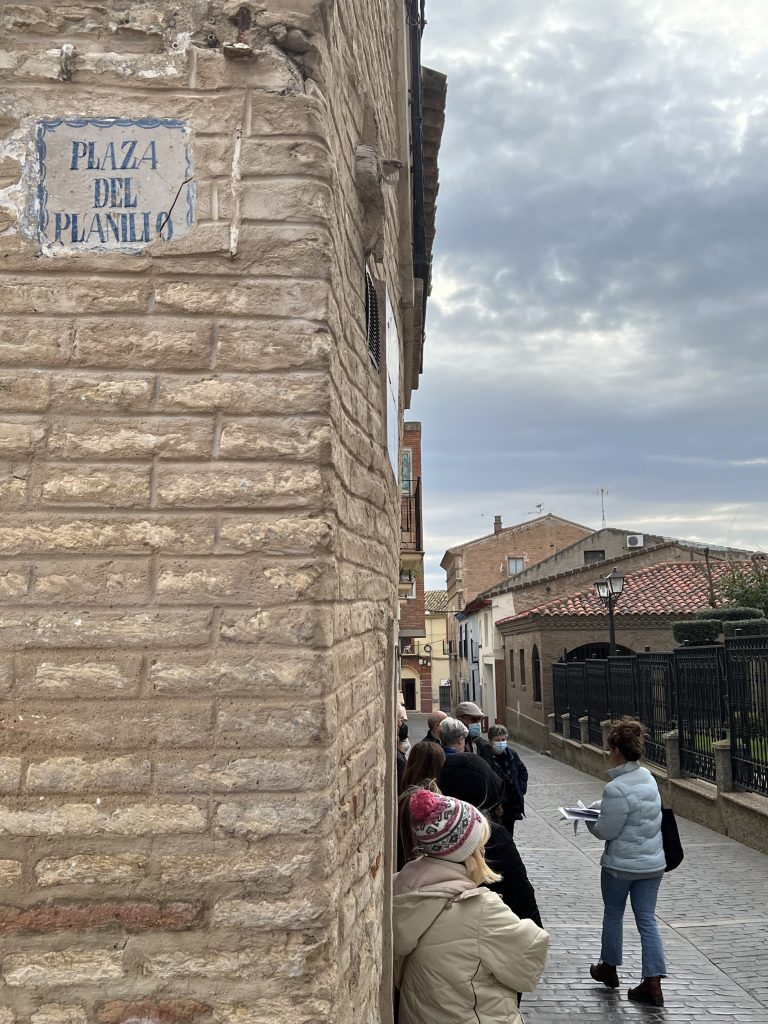
Based on the work developed, for almost three years, the students of fifteen schools have designed a walk through their town in which we can learn about the main points of interest and their connection with the Mudejar culture.

Villamayor de Gállego

The route has been carried out following the working model of the schools that participated in the project and adapted to the town of Villamayor de Gállego.

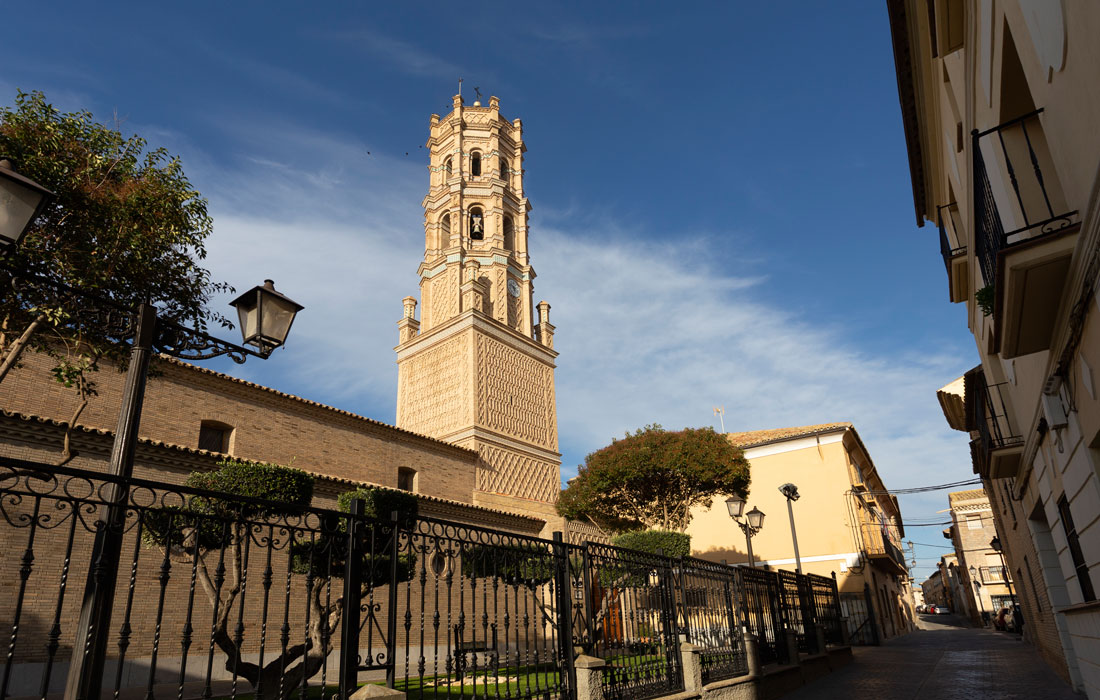
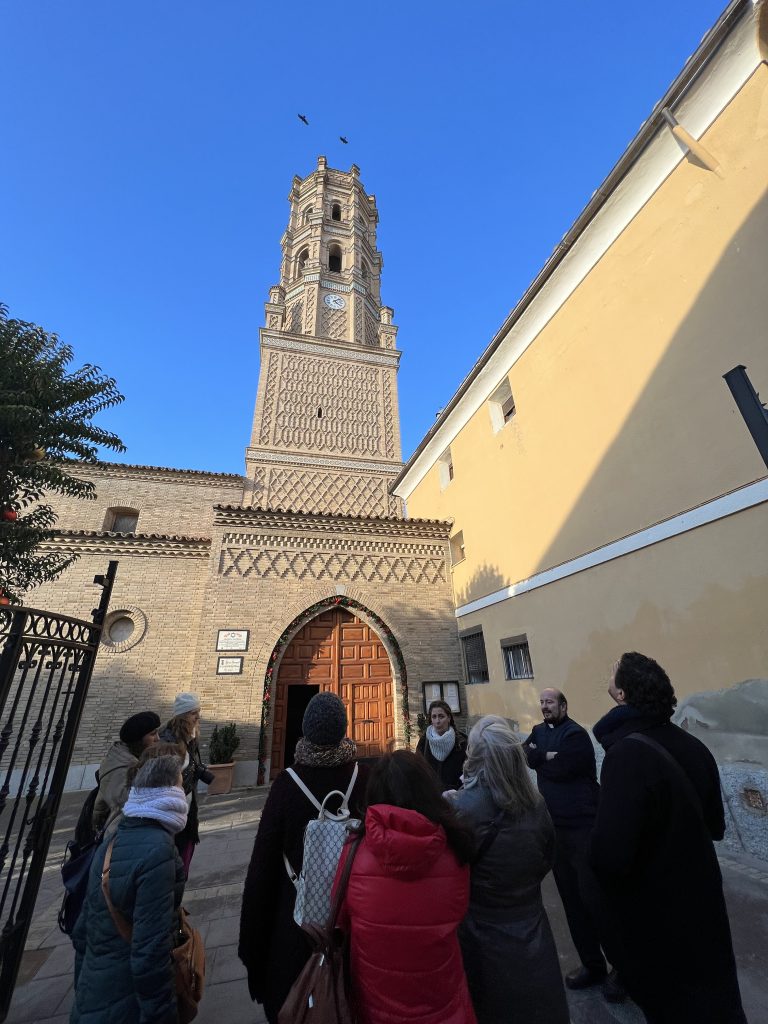
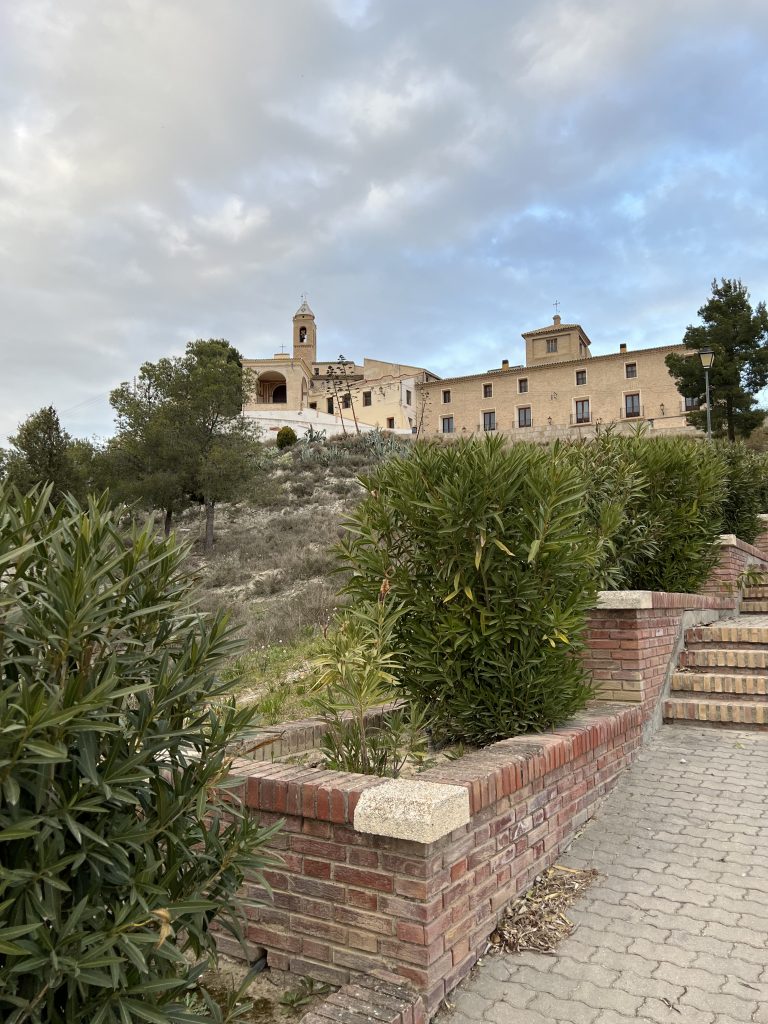
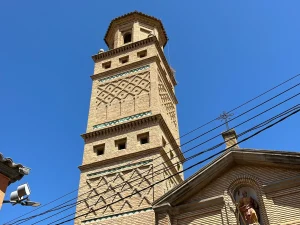
In Villamayor de Gállego, we can see one of the last Mudejar constructions in our territory. This is the tower of the church of the Asunción de Nuestra Señora, a Mudejar tower from the 16th century. We will also see an example of Mudejar reminiscences in one of the many palaces in the town. We will finish with panoramic views of the surroundings of Villamayor de Gállego from the Hermitage of Nuestra Señora del Pueyo.

1. History of the town

Villamayor de Gállego witnessed the passage of different cultures. The Muslim presence in the town is visible in the watchtower of Loma del Pesebre. Villamayor was born after the conquest of Zaragoza by Alfonso I in 1118. The exact date of its foundation is unknown, but it may well have occurred in the mid-12th century (1150) as part of the royal plans to establish a population in the areas recently won from the Muslims.

This point is linked to the didactic activity 1.

2. Mudejar Architecture

In 1425, Archbishop Alonso de Argüello ordered the old church to be demolished due to its poor condition. In its place a new one was to be built in the Mudejar style. This church underwent a major renovation in 1973. In 1587, the bell tower was built, attached to the foot section. It is of a mixed type, with a square lower section and an octagonal upper section. This tower was commissioned by the local Council to Domingo de Estala.

This point is linked to the didactic activity 4

3. Reminiscences of the Mudejar

Mudejar art came to an end in the 17th century, when the Moors were expelled. However, we have a style that has survived through the centuries. Several great families stand out in the town, responsible for the construction of the numerous 16th century manor houses in Villamayor. Families such as the Arañón, Casbas and Nadal families. The Casa Catalán is considered to be the best example of all those preserved.

This point is linked to the didactic activity 5.

4. Coexistence of cultures

After the arrival of the Christians in the territory in the 12th century, we can say that the Mudejar period began. The Christians allowed the Muslims, the previous settlers, to remain in the territory, as they carried out work that was in great demand at the time, including crafts, agriculture and construction. They allowed them to maintain their religion and customs, but they allowed them to live segmented, in neighbourhoods that we call morerías.

This point is linked to the didactic activity 2

5. Landscape

During the 13th century, Villamayor was still not clearly defined. During the 13th century, Villamayor still did not have a clear definition, but little by little the main features of a territory that is perfectly recognisable today became clear. Documents from the beginning of the 14th century, and others immediately afterwards, report the existence of the Brotherhood of Santa María del Pueyo, confirming the longevity of an association that has remained deeply rooted to the present day.

The 15th century marked the economic and social development of the town thanks to the use and enjoyment of the waters of the new irrigation channels, whose influence derives from the Arabs. It was in this century that the first details of Villamayor’s town planning as we know it today appear.

This point is linked to the didactic activity 6

Related Works