
Territorio Mudéjar Routes, a journey to beauty

In a strategic alliance with the Tourism Department of the Provincial Council of Zaragoza, we offer you twelve routes accompanied by a complete tour of the villages of Territorio Mudéjar in a temporary journey through the Mudejar of our province that begins in the middle of the 13th century and ends in the last decades of the 16th century.

This journey takes us from the urban beauty of the coexistence of the Christian, Jewish and Muslim populations, to the emergence of the key works of the 14th and 15th centuries: the fortress churches and the towers.

Not forgetting that we are in a place full of life and activity, with a wide range of handicrafts and a rich gastronomy based on local produce and the traditional use of the landscape.

We want you to get to know our places, full of professionals who work with works that are unique in the world in a territory marked by the creation of beautiful places, respectful of the landscape and where the inhabitants are the beginning and the end of all actions.

Will you join us?

The routes under the theme Mudejar, Mestizo and Frontier lead us to the localities in which the Christian, Jewish and Muslim cultures developed in an extraordinary and lasting way. The planned trips will allow us to understand how this period of cultural fusion is still clearly reflected today in the town planning, the houses and monuments of these towns that played an important role in the Aragonese territory during the 12th and 13th centuries. We will discover this in the Jewish quarters, Moorish quarters and Christian quarters of large urban centres such as Calatayud, Daroca and Borja, as well as in towns with a more rural structure such as Villafeliche, Mesones de Isuela, Torrellas, Magallón and Tauste.

Route 1. The Mudejars, mestizo and frontier.
Calatayud, Villafeliche and Daroca

Daroca Tourist Office. 976 800 129
Calatayud Tourist Office. 976 886 322

SATURDAY, 2 JULY.
CLICK TO BOOK ROUTE 1

Route 2. The Mudejars, mestizo and frontier.
Torrellas, Fréscano and Magallón

Borja Tourist Office. 976 852 001
Tourist Office of Tarazona: 976 640 074

SATURDAY, 24 SEPTEMBER.
CLICK TO BOOK ROUTE 2

Route 3. The Mudejars, mestizo and frontier.
Saviñán, Mesones de Isuela, La Almunia de Doña Godina and Alpartir

Illueca Tourist Office. 626 345 202
Tourist information point in La Almunia de Doña Godina.
El Fuerte Museum: 976 600 923

SUNDAY, 30 OCTOBER.
CLICK TO BOOK ROUTE 3

Route 4. The Mudejars, mestizo and frontier.
Fuentes de Ebro, Velilla de Ebro and Quinto

Tourist information point.
Museum of Mummies of Quinto: 976 177 011

SATURDAY, 19 NOVEMBER.
CLICK TO BOOK ROUTE 4

Keys to a style. Origins and typologies

These routes allow us to immerse ourselves in the origins of the style from the transition from fully Western languages to a new language in which the Islamic building tradition will gradually gain ground, with its particular technical solutions, its quality and its attractive and captivating aesthetics.

Route 5. Keys to a style, origins.
Illueca, Ateca, Villarroya de la Sierra and Torralba de Ribota

Ateca Tourist Office: 686 716 631
Calatayud Tourist Office. 976 886 322

SATURDAY, 27 AUGUST.
CLICK TO BOOK ROUTE 5

Route 6. Keys to a style, origins.
Zuera, Alagón and Tauste

Tauste Tourist Office. 722 535 259
Alagón Tourist Office: 976 611 814
La Almunia de Doña Godina Tourist Information Point.
El Fuerte Museum: 976 600 923

SUNDAY, 20 NOVEMBER.
CLICK TO BOOK ROUTE 6

Keys to a style. Towers

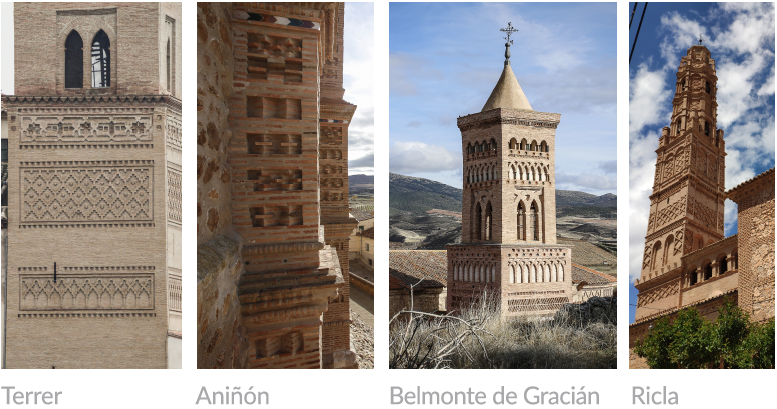
The incredible building activity during the medieval period in Aragon, and especially in the valleys of Zaragoza, offers attractive itineraries with magnificent buildings that are the key to the construction of the style.

Route 7. Keys to a style, Torres.
Terrer, Aniñón, Belmonte de Gracián and Ricla

Ateca Tourist Office: 686 716 631
Calatayud Tourist Office. 976 886 322

SUNDAY, 28 AUGUST.
CLICK TO BOOK ROUTE 7

Route 8. Keys to a style. Torres.
Romanos, Villarreal de Huerva, Mainar and Villar de los Navarros

Daroca Tourist Office. 976 800 129

SUNDAY, 25 SEPTEMBER.
CLICK TO BOOK ROUTE 8

Route 9. Keys to a style. Torres.
Cosuenda, Longares, Villamayor and Utebo

Cariñena Tourist Office: 976 620 897

SATURDAY, 10 DECEMBER.
CLICK TO BOOK ROUTE 9

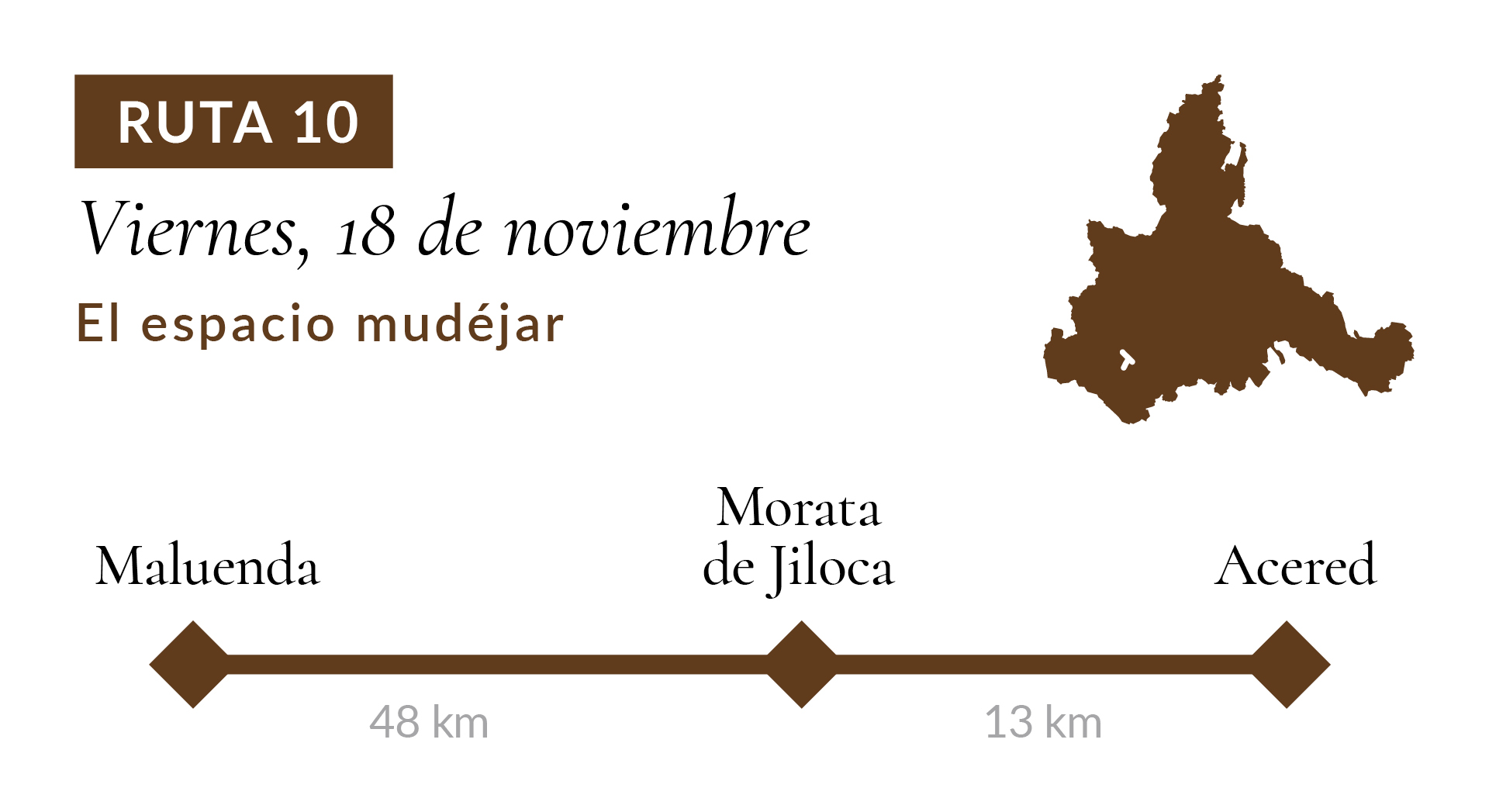
The Mudejar space

The route of the fortress churches, located in beautiful farmhouses perfectly designed in accordance with the orography of the landscape, takes us through urban centres designed in an effort to create spaces for life in which the use of resources is compatible with respect for nature and the sustainability of the territory.

Route 10. The Mudejar space.
Maluenda, Morata de Jiloca and Acered

Calatayud Tourist Office. 976 886 322
Tourist information point.
Mudejar Museum of Tobed: 976 150 475

FRIDAY, 18 NOVEMBER.
CLICK TO BOOK ROUTE 10

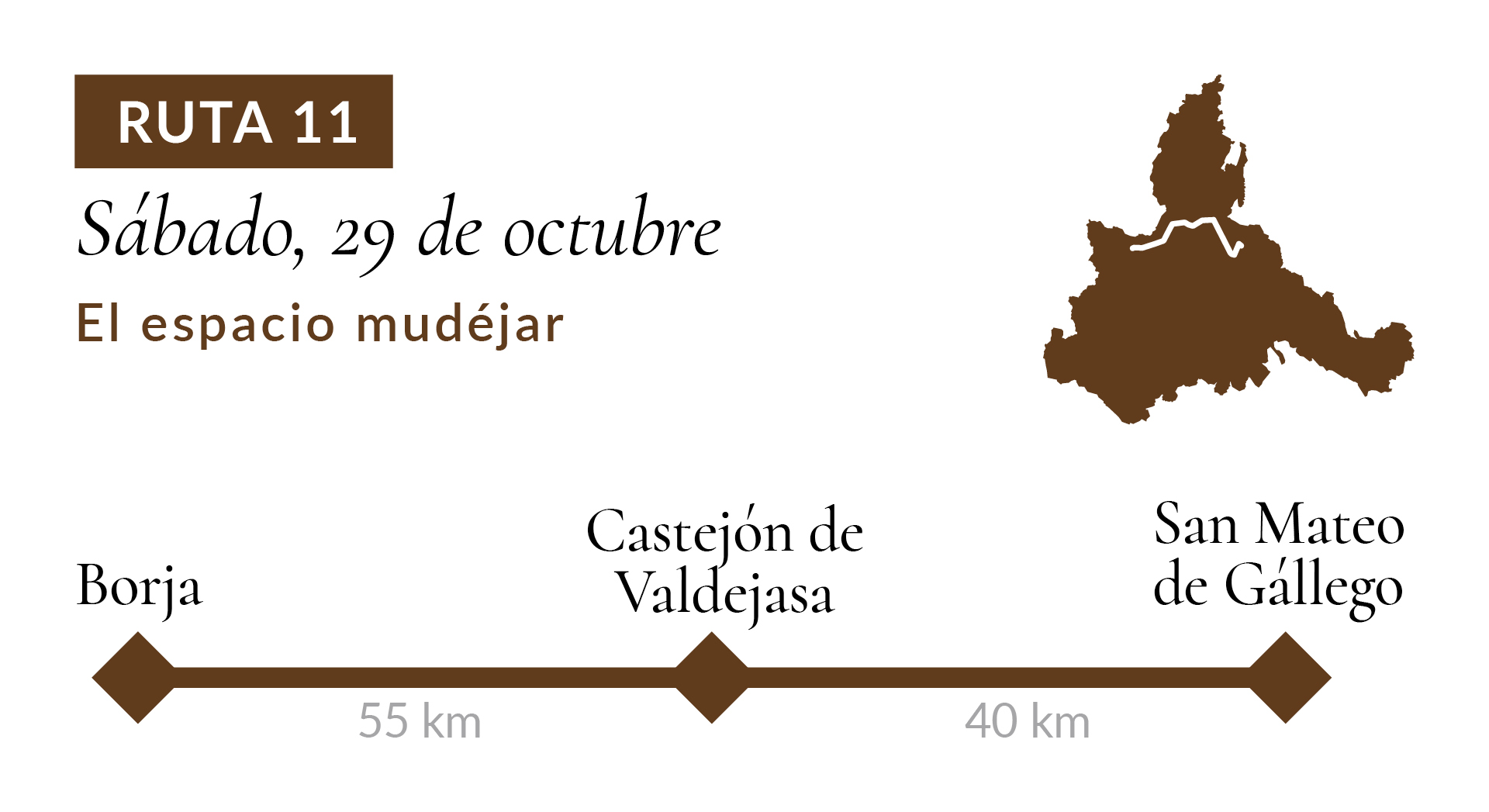
Route 11. The Mudejar space.
Borja, Castejón de Valdejasa and San Mateo de Gállego

Borja Tourist Office. 976 852 001

SATURDAY, 29 OCTOBER.
CLICK TO BOOK ROUTE 11

Mudéjar
World Heritage

The last route is dedicated to the paradigms of the style that hold the Unesco World Heritage mark. The collegiate church of Santa María de Calatayud, the church of Santa Tecla de Cervera de la Cañada and the church of the Virgin of Tobed reveal a magnificent heritage legacy located in urban complexes and landscapes of surprising beauty and endowed with character and intelligence.

Route 12. Mudejar World Heritage.
Tobed, Cervera de la Cañada and Calatayud

Calatayud Tourist Office. 976 886 322
Tourist information point.
Mudejar Museum of Tobed: 976 150 475

SUNDAY, 11 DECEMBER.
CLICK TO BOOK ROUTE 12

NOTE: The actions of this project related to the dissemination of Aragonese Tourism at the ARATUR 2022 Fair, the management of the booking system and the logistical needs of our visitors during their travels have received financial support from the Government of Aragon through the 2022 grants for private non-profit tourism organisations for tourism promotion activities.

Historical

MOMAr Study Tour of Mehedinti County, Romania

Territorio Mudéjar participated in the latest study visit of the European MOMAr (‘Models of Management for Singular Rural Heritage’) project to Mehedinti County in Romania.

This rural area of ​​the country has served as inspiration for 24 European experts to learn about best practices in rural heritage management models.

On this trip, we visited the Iron Gates Regional Museum, located in the town of Drobeta Turnu Severin, and its exhibits on the communities of Mehedinti County.

On a cruise along the Danube, we observe the natural diversity and historical sites nestled along the river’s banks.

We visited the village of Eibenthal in the Banat Mountains, inhabited by a Czech community and which has become a meeting and celebration place.

They also explained the success story of the DiGiParks initiative, which reproduces 3D models of the region’s notable heritage sites.

The visit continued at the Romanian Hydroelectric Power Station Museum. In Balta Cave, we enjoyed a concert performed by a local music school.

We arrived at the so-called ‘Bridge of God’, the largest natural bridge in Romania, located in the village of Ponoarele.

And the last stage of the tour took place at the church of Selistea.

The Aragonese delegation was made up of the DPZ team: the coordinator of the Citizenship Area, Juan José Borque; the head of the Culture and Heritage Section, Lorena Laga; and the culture technician and member of the MOMAr coordination team, Isabel Soria. Traveling with them were the director of Mudejar Territory, Victoria Trasobares; the mayor of Gotor, José Ángel Calvo; the mayor of Quinto, Jesús Morales; the mayor of Velilla de Ebro, María Rosario Gómez; and the culture technician from the Utebo City Council, Walter Espada.

Representatives of the European partners also attended the trip from Saxony-Anhalt (Germany), South Bohemia (Czech Republic), and the province of Groningen (Netherlands), as well as the project’s technical advisory committee, made up of Irene Ruiz and Marisa Sebastián.

CALL FOR APPLICATIONS: Research stays and projects 2022

4th Call for Research Stays and Projects Gonzalo M. Borrás Gualis.

4th Call for Research Stays
Submission deadline: July 20.

Territorio Mudéjar is hosting the fourth edition of the Gonzalo M. Borrás Gualis Research and Project Internships, designed to directly support the work of researchers and project promoters who want to contribute to the development of communities through the responsible and sustainable use of cultural and natural heritage resources.

Territorio Mudéjar is an association of town councils, currently thirty-six member town councils and one collaborating partner, whose objective is to consolidate a unified and collaborative management network for the use of the historical and artistic resources linked to the important Mudejarartistic resources linked to the important Mudejar heritage , understanding them as a driving force for the development of the villages and as an and as an element of identity for the maintenance of the communities that make up our territory.

Our programme of actions for the coming years has been designed in accordance with the strategic lines defined by the defined by the ” Roadmap of the Council of the European Union 2019- 2022″, which2022″ which, aligned with the goals of the 2030 Agenda, have as a guiding principle that “the cultural identity of territories will contribute to territories will contribute to sustainable social and economic development by differentiating markets and in turn allowing their integration into a diversified a diversified economy that can ensure their future success.

The projects carried out in 2021, and the implementation of actions derived from projects in previous calls for proposals, have consolidated this initiative as one of our most important lines of work, based on the development of actions that enhance the retention and attraction of talent, actions aimed at building highly qualified professional networks linked to the use of historical, artistic, and cultural resources, contributing to medium- and long-term territorial development.

Dedicated to Professor Gonzalo M. Borrás Gualis, a staunch defender of the management of Aragonese heritage and of the territory, as an action of the people and as an innovative field of work full of future. His work exemplified with perfect coherence the possibility of combining research work of high scientific impact with a commitment to the land and its people. of high scientific impact with a commitment to the land and its people, not only favouring the knowledge, conservation and dissemination of its historical-artistic heritage, but also by modernising work processes and by proposing innovative innovation projects in which natural, cultural and heritage resources are a key element in the future of the towns.

FOCUS
Transdisciplinary thinking as a tool for innovation.

The Mudéjar Territory digitalization strategy

The management of historical, artistic, and cultural heritage is evolving rapidly thanks to digital technologies. The current challenge is to apply a strategic vision to these unprecedented processes and opportunities offered by new technologies and utilize them as efficiently as possible, ensuring that the efforts made during this boom are sustainable and allow for the development of future projects.

Digitalization should not be an end in itself, but rather a driving force for improving heritage management efforts, taking into account the different possibilities that digitalization offers as a tool for conservation, dissemination, knowledge, and recognition of value. It should also take into account that new opportunities can arise from it in the form of projects that, without the use of these tools, would have a lower degree of scope, relevance, or specialization.

Therefore, at Territorio Mudéjar we are working on a clear strategy, still in the development phase in some of its aspects, which serves as a guide prior to carrying out any action in future projects and which is also inclusive of the actions already carried out in its different municipalities and in previous calls, applying the principle of reusing and improving all initiatives already carried out or underway. This strategy is adapted to the latest recommendations of the European Commission and also takes into account the standards of the most commonly used platforms and repositories such as Europeana or Google Arts.

The 4th call for Gonzalo M. Borrás Gualis Research Fellowships reaffirms our vision of applied research in heritage management that seeks real impact on localities by fostering networking. Once the various experiences and projects derived from them are underway, we aim to work with all the resources already created to establish quality and strategic parameters that will contribute to a dynamic digitalization strategy focused on improving heritage management.

For this reason, one of the criteria introduced this year in the call for stays is that all deliverables in digital version (photographs, videos, digital models, audio files, etc.) comply with the provisions of the recently published Study on quality in 3D digitisation of tangible cultural heritage: mapping parameters, formats, standards, benchmarks, methodologies, and guidelines and follow the lines of work indicated in the recommendation of 10/11/2021 on a common European data space for cultural heritage, thus adapting the quality criteria established in the Mudejar Territory Digitisation Strategy.

All the beneficiaries of the aid will receive information and training on the the DigitisationStrategy of Territorio Mudéjar during the first phase of their the first phase of their project and they will have a specific continuous specific ongoing monitoring during its development to help them comply with it.

DISRUPTIVE THINKING FROM ARTISTIC PRACTICE

Territorio Mudéjar is emerging as a place of action and creativity from areas often place of action and creativity from areas that are often ordered and differentiated and differentiated areas that often dissolve boundaries and take us to places that are complex to manage.

In this sense, the new call offers renewed areas of work and introduces a new area of ​​knowledge linked to artistic creation projects with a strong connection to the territory, landscape, and/or heritage sites.

This new workspace allows us to take the first steps in our “artist residency” model, with the goal of understanding the heritage space and its context as a multifaceted space.

This area is oriented towards research, experimentation, exchange, learning, critical reflection and the dissemination of local practices and knowledge, through dialogue between artisticresearch, communities, territory, places and non-places.

The heritage we call “Mudejar” presents itself to us as a disruption in medieval art, an enclave between Western art and Hispano-Muslim art that still raises questions and captivates all who experience and study it.

This new area of ​​work and knowledge aims to explore emotion and foster creative thinking by generating spaces for dialogue and points of departure between art, science, and technology.

It’s about opening up new processes and directions of knowledge, which are often difficult to channel, to explore new paths through artistic practice with an eye toward the development and preservation of communities and their inhabitants.

BASES

1/ Subject matter and scope

The purpose of this call is to award four research stays and two runner-up prizes to researchers and professionals in the management of cultural and natural heritage for the development of a highly innovative territorial research project within one of the fields of activity or work specified below.

Proposals may address zero or preparatory phases, development phases or piloting and testing phases of ongoing projects.

Proposals must include as a fundamental part of their development a justified physical stay in one or more of the localities of Territorio Mudéjar. The projects presented must demonstrate a direct impact on at least three partner towns of Territorio Mudéjar and provide evidence of the influence of this impact on the rest of the territory.

Objectives:

  • To promote the knowledge of the rural territory from its Mudejar identity through innovative approaches whose main purpose is to have a positive impact on the villages.
  • To incentivise work with a high territorial impact developed from the experience of people’s habitability.
  • To help the creation and implementation of a working network under a common vision of the possibilities of heritage, cultural and natural resources that helps to strengthen the rest of the sectors through interdisciplinary and collaborative work.
  • To create mechanisms for social participation in the field of heritage resource management from a territorial perspective.

Specific objectives:

  • To promote knowledge of heritage resources in order to encourage the implementation of projects, contribute to better protection and promote the conservation of the Mudejar heritage of the villages.
  • Contribute to a better understanding of UNESCO World Heritage and the benefits it brings to the territory as an international brand.
  • To give special support to projects that refer to the previous sections and that include two or more localities in the Mudejar Territory.
  • To support projects that serve as a framework for action for a wide range of sites or assets, or that propose solutions and formulas that contribute to improving the sustainability and management capacities of Mudejar Heritage at a general level.
  • Support projects that help to promote the social function of cultural heritage.

The areas covered by the call are the following:

AREA 1. New perspectives on Mudejar art

  • Updating data and knowledge on Mudejar heritage in all its diversity: monumental, urban, ethnographic, linguistic, agricultural, hydraulic, geographical, materials, processes, etc.
  • Technical languages ​​applied to Mudejar: planimetry, photogrammetry and 3D Mudejar.
  • Geolocation, cartography and maps.
  • Any topic that allows us to expand the scientific basis on Mudejar art.

AREA 2. Strategic management of Mudejar heritage. Cultural Landscape and Urban Landscape

  • New models of use beyond the classic concept of “tourist or recreational use”
  • Studies of physical, economic and intellectual accessibility
  • Future models for conservation or intervention.
  • Heritage resources and people’s actions
  • Natural and social contexts
  • Interactions between landscape and monumentality

AREA 3. Mudejar heritage: Communication, dissemination and social function as a key element of territorial development

  • Mudejar heritage and media
  • New media discourses
  • Interpretation and accessibility methods for knowledge of Mudejar heritage
  • Emotional bonding as a key element for the care, protection, and management of assets.
  • Population contexts: The value of intergenerational experience
  • Social participation in the valorization, exchange, and collective construction of knowledge and new forms of learning.

AREA 4. Laboratory for “Artist Residencies.” Mudejar Territory as a space for exploring new avenues through artistic thought.

  • Artistic creation and research from the intellectual concept and its reflection in the material, form or processes that characterise Mudejar heritage.
  • Crafts as a living space past, present and future. New considerations from creative thinking or from historical use linked to the establishment and maintenance of historical and current communities.
  • Sound, acoustics, speech, looking and listening. The heritage space as a space for emotional learning of contents.
  • The exploration of an “other place”, real or imaginary, specific or heterogeneous, natural or artificial, temporary or timeless in the heritage space.
  • The construction of the virtual space or metaverse from the need for the existence of the physical heritage space as a connecting thread. Thoughts, proposals and possibilities.

The procedure for awarding grants will be processed on a competitive basis according to the assessment criteria established in the call for applications and, in accordance with Article 22.1 of Law 38/2003, of 17 November, General Law on Subsidies.

2/ Applicants

Proposals may be submitted by natural persons and groups of natural persons without legal personality who fulfil all the requirements of this call for proposals.

The applicant (or group of applicants) may be at an early or intermediate stage of their research career or professional activity and must be able to demonstrate:

  • Higher education related to the areas covered by the call.
  • Documentary accreditation of a minimum of two years of research or professional experience – paid or unpaid –
  • A professional career will be considered equivalent to the completion of specialized studies related to the management of cultural, historical, and artistic heritage, or to any of the proposed work areas, which add up to a minimum of two effective years of training and in which work has been carried out using “Project” methodologies.

The call is not open to legal entities of any kind: companies, partnerships, associations, communities of property or groups under any other type of legal associative formula.

When the project is submitted by two or more persons, the formula is called “team” and each member of the team must be accredited individually.

If the project submitted is part of a research project linked to a university, public research centre or private (non-profit) centre, this must be indicated in the project report.

The acceptance of the project and the development of the stay is compatible with other professional activities as long as the compatibility mode is specified and justified in the project report.

The project submitted may have other sources of funding as long as they are complementary and are specified in the report.

Total income may never exceed the development costs of the projects.

3/ Requirements

  • Hold a Bachelor’s degree, Graduate or Architect’s degree or equivalent.
  • Master’s degree specializing in heritage and/or in the various areas related to heritage, or proof of a minimum of two years of research experience and/or professional career in the field in which the proposal is developed (whether paid or not).
  • Be up to date with their tax and social security obligations, as well as accrediting compliance with obligations for the reimbursement of subsidies.
  • Not be subject to any of the causes established in art. 13 of the LGS.

4/ Deadline for submission

The deadline for submitting applications is Wednesday, July 20, 2022.

Proposals sent by e-mail will be accepted until 23.59 hours (Spanish time).

If the application contains errors that can be rectified, the organisation will inform the applicant so that, within a period of three days from the date of communication, they can proceed to rectify them as an essential condition for the application to be taken into account in the evaluation process.

5/ Characteristics and conditions

Period: The project and internship schedule can be completed until December 24, 2022. The project completion report must be submitted by December 29, 2022.

Duration: Proposals must be developed within a minimum of THREE months and a maximum of FIVE months.

Allocation: Projects will have a maximum financial allocation of €6,000.00 (STAYS) and €4,000.00 (ACCESIT) which must be justified in the project report according to the expenses indicated in the following section.

Expenses attributable to the grant: In all proposals, the budget must identify the concepts subject to and directly derived from the needs of the project—for example: expenses derived from the development of the work, materials, travel, maintenance, accommodation, etc.—including, if applicable, the corresponding taxes, as well as payment for reproduction, exhibition, and public communication rights, if the project requires it.

Proposals included in Area 4 must also include, if the project requires it, all the elements necessary for the complete execution of the artistic work: materials, permits, auxiliary means, etc.

In the event that the project has other sources of funding, the following must be specified: Entity, duration, actions financed (object and content) and to which part of the project it is addressed.

Compatibility: The development of the stay is compatible with other work, professional or research activities justified to the organisation. The project must indicate the degree of compatibility and the method of work to be carried out in order to avoid overlapping and non-compliance with the conditions indicated in this call.

Number of calls: Beneficiaries may not obtain full support in more than two consecutive calls for the same project. Therefore, resident researchers who have been beneficiaries in the last two calls will not be eligible to apply for the call and will be excluded if they do so.

** Exceptionally, researchers who have not exceeded the amount of €12,000.00 in two consecutive calls may be considered as beneficiaries if they have been awarded an accesit in previous years’ calls.

Others:

The beneficiaries will be included in the entity’s civil liability insurance.

Beneficiaries shall not enter into any kind of employment relationship with the entity.

All aid shall be subject to deductions and taxes as stipulated in the legislation in force, which shall be deducted from the corresponding financial envelope.

6/ Applications

Applications should be sent to the Asociación Territorio Mudéjar in digital format to the following e-mail address: info@territoriomudejar.es

  1. Application-Basic identification data of the applicant and the project
  2. Copy of ID card.
  3. Summary of the applicant/s professional career (maximum 2,000 characters)
  4. Project/proposal summary (max. 2,000 characters)
  5. Abbreviated academic and professional CV (max. 5 pages)
  6. Five developed works that, in the applicant’s opinion, are relevant as a starting point for the proposal (Summary of each project of max. 2,000 characters).
  7. Report on the project to be carried out, including (max. 5 pages): Title; Background and current status of the subject; Hypothesis, methodology, work plan and timetable; Description of the specific objectives of the project; Locations directly and indirectly affected by the proposal; Location or locations proposed for the stay and expected length of stay; Detailed budget for the research, which will refer to the amount requested.
  8. Optionally, a letter of recommendation from a relevant person in the field of the proposed work may be provided.
  9. In the case of teams, both the application and the award decision must expressly state the implementation commitments undertaken by each member of the team, as well as the amount of subsidy to be applied by each of them, who will also be considered as beneficiaries. A sole representative or proxy of the grouping must be appointed, with sufficient powers to fulfil the obligations which, as beneficiary, correspond to the grouping. The team will undertake not to dissolve the grouping until the limitation period provided for in Articles 39 and 65 of Law 38/2003 of 17 November 2003 has elapsed.

7/ Selection process and criteria

The project selection process will be carried out on the basis of the evaluations of the Scientific Committee and the entity’s management team, which will draw up a ranking according to the following criteria:

  • Curricular profile, training and previous achievements of the applicant: 10%. The orientation of the curricular profile in relation to the area of work chosen by the applicant will be assessed.
  • Quality of the project and innovative nature of the proposal: 30%. The project must be well thought out and presented in a rigorous and detailed manner. The framework of objectives/actions/resources/budget must be well planned. The timetable must be realistic. The project should provide for its evaluation and future viability.
  • Territory of impact / number of localities involved: 35%. The way in which the project acts on the territory will be assessed. It may be a direct present or future impact, but in any case it will be an essential requirement. It will be highly valued to foresee a realistic impact without falling into the tendentious and mediatic.
  • Complementary activities involving the local population: 15%. An activity involving the local population in the development of the project will be assessed. Involvement does not necessarily have to be through a cultural activity. The introduction of activities that have an unconventional cultural impact will be valued.
  • Digitisation strategy Mudejar Territory: 10%. Adaptation of the expected results to the criteria published for the “Common European Space for Cultural Heritage”. Contribution of ideas and perspectives.

8/ Evaluation and resolution

The decision on the grants will be announced starting Wednesday, July 20, 2022.

The call may be declared totally or partially void and the decision of the commissions shall be final.

Once the call has been resolved, the list of beneficiaries and the composition of the evaluation commission will be published on the Territorio Mudéjar Association’s website www.territoriomudejar.es.

In no case will individualised information on the applications received or on the deliberation of the evaluation committee be provided.

9/ Formalisation, justification and payment of aid

Formalization: Beneficiaries must sign the acceptance agreement, which will serve as an essential document for receiving the grant, before the project start date, according to the schedule, and no later than August 1, 2022. Once the acceptance agreement has been signed, they must join the project on the date indicated on the schedule.

Payment: The grant will be paid in three instalments: 40% at the start, once the acceptance commitment has been signed; 40% halfway through the project; and the remaining 20% on delivery of the final project report. These conditions will be general to all beneficiaries unless, exceptionally, the project report justifies the need for a different financial distribution over time.

Justification and presentation of results:

Beneficiaries will be obliged to justify compliance with the requirements and conditions established in this call for proposals by means of: An intermediate report halfway through the stay that allows the progress of the project to be evaluated. A final report on digital support of the project describing objectives, fulfilment of aims and results; and a financial report justifying the cost of the activities carried out.

Beneficiaries must deliver to Territorio Mudéjar all the results derived from the project financed according to the proposal presented in the application, it being understood that this proposal will act as a contractual document for the grants.

In the case of works subject to intellectual property, current legislation will be applied with regard to authorship and the transfer of rights of use and reproduction will be assigned to Territorio Mudéjar.

Financial control:

The interim report shall include a revision of the estimated budget either confirming its continuity or proposing necessary adjustments where justified.

The final report shall include a detailed financial report as follows:

  • A list of expenses incurred indicating the creditor, amount, date of issue and payment. As the project includes an estimated budget, the list of expenses will be classified according to the items of the subsidised project or activity. Where applicable, any deviations that may have occurred in the development of the project must be justified.
  • Proof of payment: Invoices, tickets or supporting documents and proof of payment. If the payment has been made in cash, this must be indicated on the expense document with the concept correctly specified.
  • The justification of fees shall be made by sworn declaration and shall be detailed in the report according to the results developed, specifying the working hours assigned to the actions carried out.
  • The justification of mileage expenses shall be made by means of a sworn statement and a detail shall be included in the report according to the results developed, specifying the journeys made and assigned to specific actions.

Non-compliance:

The aid will be cancelled and the amounts received will be reimbursed when the conditions established in these rules are not fulfilled and in general in the cases established in article 37 of the General Law on Subsidies.

10/ Dissemination of project results

The Asociación Territorio Mudéjar may request the collaboration of the beneficiaries of the grants in activities to disseminate the projects. To this end, the beneficiary will provide the Asociación Territorio Mudéjar with all the information and documentation required and will grant the latter, free of charge, the appropriate rights for the dissemination of the results.

Beneficiaries must mention the source of the aid on their materials or results using the phrase “Project carried out with funding from Territorio Mudéjar through the Gonzalo M. Borrás Gualis 2022 Estancias call” and include the entity’s logo whenever possible.

For its part, the association Territorio Mudéjar will always identify the authorship of the projects.

11/ Acceptance of the rules

Participation in this call for applications implies acceptance of its rules and its decision, which shall be final, as well as the waiver of any type of claim.

Exceptionally and for duly justified reasons, the Asociación Territorio Mudéjar reserves the right to interpret and modify the wording of the rules in order to clarify or specify their content, without this implying a substantial or arbitrary alteration of the same.

For any queries, applicants may contact the Asociación Territorio Mudéjar by e-mail at info@territoriomudejar.es

Study trip to the Netherlands to explore best practices within the framework of the MOMAr project

The European MOMAr (Models of Management for Singular Rural Heritage) project, led by the Provincial Council of Zaragoza and in which Territorio Mudéjar participates, has brought together 28 heritage experts, including a delegation from Zaragoza, on a study visit to the province of Groningen (Netherlands). The goal is to exchange best practices and learn about Dutch management models firsthand.

The visit took place on April 27 and 28 and was attended by the Zaragoza Provincial Council, including Juan José Borque, coordinator of the Citizenship Department, and Mª Carmen Gracia, head of the Culture Service; Victoria Trasobares, director of Territorio Mudéjar; three of the mayors who belong to the association: Maria Rosario Lázaro, mayor of Villarreal de Huerva; Marta Gracia Blanco, mayor of Almunia de Doña Godina; and Alfonso Puertas, mayor of Torralba de Ribota; and Julio Zaldívar, manager of the Tarazona Monumental Foundation.

MOMAr’s European partners from Mehedinti County (Romania), the Saxony-Anhalt region (Germany), South Bohemia (Czech Republic), the Dutch hosts, and the project’s technical advisory committee, formed by Irene Ruiz and Marisa Sebastián, also participated.

This study visit is the third of a total of four, which seek to exchange knowledge on asset management models among European experts, all from rural areas. The ultimate goal is to import best practices and, with them, develop an Action Plan in which each region will develop new proposals for improving local projects.

The rehabilitation of historical heritage, giving it new social and educational uses for the benefit of local communities, through cooperation between public administrations and private properties, marked the practical visits on this trip.

The first stop on the tour was Maarhuizen, an architectural complex located atop an artificial mound, remnant of what was once a farming village centuries ago. Today, one of its former farms is being reconstructed as part of a holistic project seeking to create a cultural and natural meeting point, involving educational centers in the rehabilitation process.

We visited one of the churches of the Groningen Historic Church Foundation. This organization manages nearly 100 churches, most of them medieval and privately owned. In these churches, religious space has become a community space, open to the public and serving social purposes. Proof of this is the exhibition “Festivity! In the East and in the West,” located in a restored medieval tower and exploring celebrations of different religions (Catholic, Jewish, and Muslim). Through an interactive experience, the exhibition seeks to create common ground between different faiths and open up a non-judgmental intercultural dialogue among its visitors.

The expedition also approached the Wadden Sea, the largest intertidal flat system in the world, listed by UNESCO as a World Heritage Site for its unique geological and ecological values ​​and high biological diversity.

The rural region of Oldamst, located near the German border, was the focus of experts’ attention during the second day of work. This area was considered the breadbasket of Holland decades ago thanks to its fertile land. However, depopulation and the loss of local agriculture have left hundreds of farms abandoned or in serious danger of collapse. Adding to this process of degradation are earthquakes, largely caused by gas extraction, and soil oxidation, which causes significant subsidence. Thus, an enormous historical heritage, in private hands, faces the costly challenge of reconstruction and rehabilitation, but they are not doing it alone, as public administrations are contributing financially and strategically to the preservation of these centuries-old buildings.

Circular from the rural school: exchange between the schools of Alparir and Ricla

The Circular project from the rural school advances and has allowed us to share a special exchange between the schools of Ricla and Alpartir in which students have been able to learn about the heritage of another locality and show their own to other classmates. This twinning activity has been a peer-to-peer and cooperative learning experience in which students have interacted with other students to achieve educational objectives.

The first visit took place on 30 March. The third year primary pupils of the CEIP Maestro Monreal de Ricla welcomed the pupils of the CEIP Ramoìn y Cajal de Alpartir and told them the first ideas about the local mudeìjar and the cultural landscape.

They visited the ‘Aula mudéjar’, a museum space dedicated to exhibiting everything that has been worked on, adding period costumes and handicrafts.

The Alpartir schoolchildren then strolled through the streets of Ricla – full of twists and turns, alleyways and lanes – to reach the church of the Assumption with its slender Mudejar tower.

There, the pupils learned about the most important moments of the church (which was built in three stages) from Hilario, the parish priest. They also climbed to the top of the tower, from where they could see the town planning of Ricla, which we also talked about later.

There was time to go up to the castle of Muslim origin, although it is very much renovated, the result of an interesting existence. Today it has the appearance of a manor house and shows its great past importance as a defensive position.

The children from Ricla returned the visit to their classmates from Alpartir on 6 April. The Alpartir school team was in charge of welcoming the guests at a reception attended by the mayoress of Alpartir, Marta Gimeno, and the director of Territorio Mudéjar, Victoria Trasobares.

They then began the tour with a first stop at a point in the town from which La Almunia de Doña Godina, another of the towns that form part of the Mudejar Territory network, can be seen. Allí hicieron una presentación sobre los mudéjares, su forma de vida y el legado que todavía hoy conservamos. Además, aprendieron el origen del nombre de La Almunia de Doña Godina (Al-munia significa «huerto» y su apellido lo tomó de Doña Godina, una rica propietaria de Cabañas que en el siglo XII). La segunda parada dio a los participantes una perspectiva de Alpartir y de su entorno urbano que les permitió aprender sobre el caserío y la distribución de sus calles. Y el recorrido llegó hasta la calle de los obradores, donde conocieron los restos de un antiguo alfar.

The excursion was accompanied by a musical atmosphere and served to learn about the orientation of the village and the reason why it is on an “m” shaped slope, the importance of agriculture was also discussed and, of course, they went to the church, where they recognised elements such as the alabaster, the colopial arch and other decorative motifs.

The schoolchildren took part in various workshops. Among them, a crossword puzzle with words related to heritage or another in which they had to help Maribel, a historical character who ‘lands’ in the year 2022 somewhat disoriented and who must be helped so that she can get the building materials she needs. They also learnt to relate the Mudejar towers of our villages with their names and were introduced to the art of construction: sticks and plasticine were the raw materials with which they had to put themselves to the test to build towers of between two and five storeys high.

They also learned traditional crafts and became tanners for a day to learn how to make their own purses.

Circular from the Rural School allows learning by doing with an active, globalising, playful and participative methodology that manages to motivate students and helps them to gain knowledge about heritage.

Circular from the Rural School is a cooperation project between rural development groups coordinated by the Adri Calatayud-Aranda group, together with CEDEMAR, Adefo Cinco Villas, Asomo Moncayo, ADRAE Comarca Ribera Alta del Ebro – Zaragoza, Fedivalca and ADRI Jiloca-Gallocanta, and financed by the Government of Aragón through the Leader programme, and the Diputación de Zaragoza through the Territorio Mudéjar association, as a private collaborating entity that manages the implementation and execution of the initiative.

Circular from the rural school broadens horizons: Tobed, the first school to host the event

Last week, the students of Tobed (CRA Vicort-Isuela), where in 2017 the didactic pilot project that was the seed of Circular from the Rural School was developed, hosted the students of the SchoolHouse Zaragoza school.

The project continues to grow because we are extending the presentations to schools beyond the localities of Territorio Mudéjar. It is a small test that opens up a wide range of possibilities.

After a great welcome at the Mudejar Museum “Espacio Mudéjar Mahoma Calahorri”, Marta and Diego, 5th grade and 3rd grade students, respectively, from the Tobed school, accompanied and helped Eugenia Gallego, who is part of our network of professionals, explaining the details of the location, landscape and urban planning.

They then visited the Mudejar church of the Virgin, declared a World Heritage Site by UNESCO in 2001, learnt how bread and sweets are prepared in the “Horno de Pan Cocer”, walked and played around the village to get to know its heritage.

In this way, the schoolchildren of Zaragoza had a first contact with the Mudejar that helps them to begin to identify concepts and to value and care for heritage.

MOMAr study tour: 18 European experts share best practices in the Czech Republic

Territorio Mudéjar has taken part in the study trip-visit to South Bohemia, in the Czech Republic, as part of the MOMAr programme, in which it participates.

After two years of work identifying good practices in heritage management in rural areas of Europe, this trip has allowed the projects presented by the partner from the Czech Republic to be seen on the ground. A form of knowledge exchange between international experts that offers the possibility of assessing the importation of successful cases to the reality of heritage in Zaragoza.

The conference began with a presentation of the tourist offer of the South Bohemia region by the director of the regional tourist office, together with a visit to the castle hotel in the town of Hluvoboká nad vltavou.

Afterwards, a visit was made to a historic malting plant in the village of Písek as an example of reconstruction of industrial heritage for social use. The building is now a public toy library offering educational exhibitions for children, with great success among the local population.

The experts got to know the Soběslav municipal library, a success story in the recovery of a disused historical space. The public facility is located in what used to be a medieval castle, which, thanks to the architectural renovation initiated by the residents, now offers a communal space for the local community dedicated to culture.

On the second day, the trip began with a visit to the monument to the national hero, Jan Žižka, in the village of Trocnov, a replica of a medieval farmhouse completely reconstructed with original materials and techniques. It is a necessary and unique place for the recovery of historical memory in the whole country, as no original building from that time has been preserved.

There was also a visit to a 14th century castle which the Malše River Castles Association is rebuilding through a cross-border cooperation project with Austria and which is part of an extensive line of defence along the common border.

There, a working session was held between the project partners to analyse cases of heritage infragestion and from which it was concluded that it is necessary to include the local population in all heritage management projects. Together with the Libau Foundation of Groningen, Territorio Mudéjar participated as a stakeholder, contributing its experience in the management of heritage resources in rural areas as part of local development in all its facets.

The day ended with a tour of the Renaissance town of Český Krumlov, a UNESCO World Heritage Site. The town attracted millions of tourists before the pandemic but the consequences on international mobility have made it a case study because of the challenges and opportunities that are now opening up in the field of heritage management.

The Spanish delegation was made up of those responsible for the project on behalf of the Diputación de Zaragoza, Lorena Laga and Isabel Soria, as well as the director of Territorio Mudéjar, Victoria Trasobares; and the mayors of Quinto, Jesús Morales; of Torrellas, María Pilar Pérez; and of Velilla de Ebro, María Rosario Gómez.

They were accompanied by MOMAr’s European partners from Mehedinti County (Romania), the region of Saxony-Anhalt (Germany), the province of Groningen (The Netherlands), the Czech hosts, and the project’s technical advisory committee formed by Irene Ruíz and Marisa Sebastián.

RULES CALL FOR PROPOSALS: Research stays and projects 2021

3rd Call for research stays and projects Gonzalo M. Borrás Gualis

Territorio Mudéjar announces the third edition of the Gonzalo M. Borrás Gualis research stays and projects aimed at directly supporting the work of researchers and project promoters who want to work on the development of villages based on the responsible and sustainable use of cultural and natural heritage resources.

Territorio Mudéjar is an association of town councils, currently thirty-six member town councils and one collaborating partner, whose objective is to consolidate a unified and collaborative management network for the use of the historical and artistic resources linked to the important Mudejarartistic resources linked to the important Mudejar heritage , understanding them as a driving force for the development of the villages and as an and as an element of identity for the maintenance of the communities that make up our territory.

Our programme of actions for the coming years has been designed in accordance with the strategic lines defined by the defined by the ” Roadmap of the Council of the European Union 2019- 2022″, which2022″ which, aligned with the goals of the 2030 Agenda, have as a guiding principle that “the cultural identity of territories will contribute to territories will contribute to sustainable social and economic development by differentiating markets and in turn allowing their integration into a diversified a diversified economy that can ensure their future success.

The projects carried out in 2020 have strengthened one of our most important lines of work based on the development of actions that promote the retention and attraction of talent, actions aimed at the construction of highly qualified professional networks linked to the use of historical-artistic and cultural resources, contributing to medium and long-term territorial development.

Dedicated to Professor Gonzalo M. Borrás Gualis, a staunch defender of the management of Aragonese heritage and of the territory, as an action of the people and as an innovative field of work full of future. His work exemplified with perfect coherence the possibility of combining research work of high scientific impact with a commitment to the land and its people. of high scientific impact with a commitment to the land and its people, not only favouring the knowledge, conservation and dissemination of its historical-artistic heritage, but also by modernising work processes and by proposing innovative innovation projects in which natural, cultural and heritage resources are a key element in the future of the towns.

Basis

1/ Subject matter and scope

The purpose of this call is to award FIVE GRANTS and ONE ACCESIT to researchers and professionals in the management of cultural and natural heritage for the development of a research or territorial project with a highly innovative character within one of the fields of activity or area of work specified below.

Proposals may address zero or preparatory phases, development phases or piloting and testing phases of ongoing projects.

Proposals must include as a fundamental part of their development a justified physical stay in one or more of the localities of Territorio Mudéjar. The projects presented must demonstrate a direct impact on at least three partner towns of Territorio Mudéjar and provide evidence of the influence of this impact on the rest of the territory.

Objectives:

  • To promote the knowledge of the rural territory from its Mudejar identity through innovative approaches whose main purpose is to have a positive impact on the villages.
  • To incentivise work with a high territorial impact developed from the experience of people’s habitability.
  • To help the creation and implementation of a working network under a common vision of the possibilities of heritage, cultural and natural resources that helps to strengthen the rest of the sectors through interdisciplinary and collaborative work.
  • To create mechanisms for social participation in the field of heritage resource management from a territorial perspective.

Specific objectives:

  • To promote knowledge of heritage resources in order to encourage the implementation of projects, contribute to better protection and promote the conservation of the Mudejar heritage of the villages.
  • Contribute to a better understanding of UNESCO World Heritage and the benefits it brings to the territory as an international brand.
  • To give special support to projects that refer to the previous sections and that include two or more localities in the Mudejar Territory.
  • To support projects that serve as a framework for action for a wide range of sites or assets, or that propose solutions and formulas that contribute to improving the sustainability and management capacities of Mudejar Heritage at a general level.
  • Support projects that help to promote the social function of cultural heritage.

The areas covered by the call are the following:

AREA 1. New perspectives on Mudejar art:

– Updating of data and knowledge on Mudejar heritage in all its diversity: monumental, urban, ethnographic, linguistic, agrarian, hydraulic, geography, materials, processes, etc.

– Technical languages applied to the Mudejar: planimetry, photogrammetry and Mudejar 3D.

– Geolocation, cartographies and maps.

– Any subject that allows the scientific base on Mudejar art to be broadened.

AREA 2. Mudejar Territory-Cultural Landscape

– Property resources and the actions of individuals

– Natural and social contexts

– Interactions between landscape and monumentality

AREA 3. Cultural heritage management:

– New models of use beyond the classic concept of “tourist or leisure use”.

– Physical, economic and intellectual accessibility studies

– Future models for conservation or intervention.

AREA 4. Communication and dissemination of Mudejar heritage

– Mudejar heritage and the media

– New media discourses

– Interpretation and ways of accessibility to knowledge of the Mudejar heritage

AREA 5. Mudejar heritage and its social function as a key element of territorial development

– The emotional bond as a key element for the care, protection and management of heritage.

– Population contexts: The value of intergenerational experience

– Social participation in the enhancement, exchange and collective construction of knowledge and new forms of learning.

The procedure for awarding grants will be processed on a competitive basis according to the assessment criteria established in the call for applications and, in accordance with Article 22.1 of Law 38/2003, of 17 November, General Law on Subsidies.

2/ Applicants

Proposals may be submitted by natural persons and groups of natural persons without legal personality who fulfil all the requirements of this call for proposals.

The applicant (or group of applicants) may be at an early or intermediate stage of their research career or professional activity and must be able to demonstrate:

  • Higher education related to the areas covered by the call for proposals
  • Master’s degree in Cultural Heritage Management, or related to one of the proposed fields of work, or documentary proof of at least two years of research or professional experience -remunerated or not-.

The call is not open to legal entities of any kind: companies, partnerships, associations, communities of property or groups under any other type of legal associative formula.

When the project is submitted by two or more persons, the formula is called “team” and each member of the team must be accredited individually.

If the project submitted is part of a research project linked to a university, public research centre or private (non-profit) centre, this must be indicated in the project report.

The acceptance of the project and the development of the stay is compatible with other professional activities as long as the compatibility mode is specified and justified in the project report.

The project submitted may have other sources of funding as long as they are complementary and are specified in the report.

Total income may never exceed the development costs of the projects.

3/ Requirements

  • Hold a Bachelor’s degree, Graduate or Architect’s degree or equivalent.
  • Master’s degree in specialised heritage and/or in the various related areas or accredit a minimum of two years of research experience and/or professional career in the field in which the proposal is developed (whether paid or unpaid).
  • Be up to date with their tax and social security obligations, as well as accrediting compliance with obligations for the reimbursement of subsidies.
  • Not be subject to any of the causes established in art. 13 of the LGS.

4/ Deadline for submission

The deadline for submission of applications is MONDAY, 12 July 2021.

Proposals sent by e-mail will be accepted until 23.59 hours (Spanish time).

If the application contains errors that can be rectified, the organisation will inform the applicant so that, within a period of three days from the date of communication, they can proceed to rectify them as an essential condition for the application to be taken into account in the evaluation process.

5/ Characteristics and conditions

Timeframe: The timetable of projects and placements will run until 24 December 2021. The project completion report must be submitted by 29 December 2021.

Duration: Proposals must be developed within a minimum of THREE months and a maximum of FIVE months.

Endowment: The projects will have a maximum financial allocation of 6,000.00 € (in the case of the accesit the maximum financial allocation will be 4,000.00 €) which must be justified in the project report according to the expenses indicated in the following section.

Expenditure chargeable to the grant: The budget must identify the items subject to and deriving directly from the needs of the project – for example: expenses arising from the development of the work, materials, travel, meals, accommodation, etc. – including, where applicable, the corresponding taxes.

In the event that the project has other sources of funding, the following must be specified: Entity, duration, actions financed (object and content) and to which part of the project it is addressed.

Compatibility: The development of the stay is compatible with other work, professional or research activities justified to the organisation. The project must indicate the degree of compatibility and the method of work to be carried out in order to avoid overlapping and non-compliance with the conditions indicated in this call.

Number of calls: Beneficiaries may not obtain full support in more than two consecutive calls for the same project. Therefore, resident researchers who have been beneficiaries in the last two calls will not be eligible to apply for the call and will be excluded if they do so.

** Exceptionally, researchers who have not exceeded the amount of €12,000.00 in two consecutive calls may be considered as beneficiaries if they have been awarded an accesit in previous years’ calls.

Others:

The beneficiaries will be included in the entity’s civil liability insurance.

Beneficiaries shall not enter into any kind of employment relationship with the entity.

All aid shall be subject to deductions and taxes as stipulated in the legislation in force, which shall be deducted from the corresponding financial envelope.

6/ Applications

Applications should be sent to the Asociación Territorio Mudéjar in digital format to the following e-mail address: info@territoriomudejar.es

  1. Application-Basic identification data of the applicant and the project
  2. Copy of ID card.
  3. Summary of the applicant/s professional career (maximum 2,000 characters)
  4. Project/proposal summary (max. 2,000 characters)
  5. Abbreviated academic and professional CV (max. 5 pages)
  6. Five developed works that, in the applicant’s opinion, are relevant as a starting point for the proposal (Summary of each project of max. 2,000 characters).
  7. Report on the project to be carried out, including (max. 5 pages): Title; Background and current status of the subject; Hypothesis, methodology, work plan and timetable; Description of the specific objectives of the project; Locations directly and indirectly affected by the proposal; Location or locations proposed for the stay and expected length of stay; Detailed budget for the research, which will refer to the amount requested.
  8. Optionally, a letter of recommendation from a relevant person in the field of the proposed work may be provided.
  9. In the case of teams, both the application and the award decision must expressly state the implementation commitments undertaken by each member of the team, as well as the amount of subsidy to be applied by each of them, who will also be considered as beneficiaries. A sole representative or proxy of the grouping must be appointed, with sufficient powers to fulfil the obligations which, as beneficiary, correspond to the grouping. The team will undertake not to dissolve the grouping until the limitation period provided for in Articles 39 and 65 of Law 38/2003 of 17 November 2003 has elapsed.

7/ Selection process and criteria

The project selection process will be carried out on the basis of the evaluations of the Scientific Committee and the entity’s management team, which will draw up a ranking according to the following criteria:

  • Curricular profile, training and previous achievements of the applicant: 15%. The orientation of the curricular profile in relation to the area of work chosen by the applicant will be assessed.
  • Quality of the project and innovative nature of the proposal: 35%. The project must be well thought out and presented in a rigorous and detailed manner. The framework of objectives/actions/resources/budget should be well planned. The timetable should be realistic. The project should provide for its evaluation and future viability.
  • Territory of impact / number of localities involved: 35%. The way in which the project acts on the territory will be assessed. It may be a direct present or future impact, but in any case it will be an essential requirement. It will be highly valued to foresee a realistic impact without falling into the tendentious and mediatic.
  • Complementary activities involving the local population: 15%. An activity involving the local population in the development of the project will be assessed. Involvement does not necessarily have to be through a cultural activity. The introduction of activities that have an unconventional cultural impact will be valued.

8/ Evaluation and resolution

The decision on the grants will be communicated as of Monday 19 July 2021.

The call may be declared totally or partially void and the decision of the commissions shall be final.

Once the call has been resolved, the list of beneficiaries and the composition of the evaluation commission will be published on the Territorio Mudéjar Association’s website www.territoriomudejar.es.

In no case will individualised information on the applications received or on the deliberation of the evaluation committee be provided.

9/ Formalisation, justification and payment of aid

Formalisation: Beneficiaries must sign before the start date of their project, according to the calendar, and at the latest before 1 August 2021, the acceptance commitment that will act as an indispensable document for the receipt of the aid. Once the acceptance document has been signed, they must join the project on the date indicated in the calendar.

Payment: The grant will be paid in three instalments: 40% at the start, once the acceptance commitment has been signed; 40% halfway through the project; and the remaining 20% on delivery of the final project report. These conditions will be general to all beneficiaries unless, exceptionally, the project report justifies the need for a different financial distribution over time.

Justification and presentation of results:

Beneficiaries will be obliged to justify compliance with the requirements and conditions established in this call for proposals by means of: An intermediate report halfway through the stay that allows the progress of the project to be evaluated. A final report on digital support of the project describing objectives, fulfilment of aims and results; and a financial report justifying the cost of the activities carried out.

Financial control:

The interim report shall include a revision of the estimated budget either confirming its continuity or proposing necessary adjustments where justified.

The final report shall include a detailed financial report as follows:

  • A list of expenses incurred indicating the creditor, amount, date of issue and payment. As the project includes an estimated budget, the list of expenses will be classified according to the items of the subsidised project or activity. Where applicable, any deviations that may have occurred in the development of the project must be justified.
  • Proof of payment: Invoices, tickets or supporting documents and proof of payment. If the payment has been made in cash, this must be indicated on the expense document with the concept correctly specified.
  • The justification of fees shall be made by sworn declaration and shall be detailed in the report according to the results developed, specifying the working hours assigned to the actions carried out.
  • The justification of mileage expenses shall be made by means of a sworn statement and a detail shall be included in the report according to the results developed, specifying the journeys made and assigned to specific actions.

Non-compliance:

The aid will be cancelled and the amounts received will be reimbursed when the conditions established in these rules are not fulfilled and in general in the cases established in article 37 of the General Law on Subsidies.

10/ Dissemination of project results

The Asociación Territorio Mudéjar may request the collaboration of the beneficiaries of the grants in activities to disseminate the projects. To this end, the beneficiary will provide the Asociación Territorio Mudéjar with all the information and documentation required and will grant the latter, free of charge, the appropriate rights for the dissemination of the results.

Beneficiaries must mention in materials or results the origin of the aid by means of the phrase “Project carried out with funding from Territorio Mudéjar through the call for applications Estancias Gonzalo M. Borrás Gualis 2021” and include the organisation’s logo whenever possible.

For its part, the association Territorio Mudéjar will always identify the authorship of the projects.

11/ Acceptance of the rules

Participation in this call for applications implies acceptance of its rules and its decision, which shall be final, as well as the waiver of any type of claim.

Exceptionally and for duly justified reasons, the Asociación Territorio Mudéjar reserves the right to interpret and modify the wording of the rules in order to clarify or specify their content, without this implying a substantial or arbitrary alteration of the same.

For any queries, applicants may contact the Asociación Territorio Mudéjar by e-mail at info@territoriomudejar.es

Project MOMAr: Heritage beyond tourism

At Territorio Mudéjar we strive to develop Mudejar heritage management practices that foster responsible, sustainable tourism designed by those in the places where the heritage is located, always in conjunction with their inhabitants. We are convinced that preservation, research and dissemination of the Mudejar identity are key factors in the creation of tourism activities.

To consolidate this aim and share best practices, from today until November 13, we will be attending the second Interregional Event for Exchange of Experiences 2 (IEE 2), held in the province of Groningen, in the north of the Netherlands, entitled “Heritage, further than tourism: a sustainable future”.

Researcher Irene Ruiz Bazán (professor at the Polytechnic of Turin and Territorio Mudéjar fieldwork researcher) was in charge of moderating the good practice seminars in which several towns belonging to our network stood out in the presentation of unique projects.

The mayor of Torrellas, María Pilar Pérez, presented the Miau urban art project, which has been in place in the town since 2016.

From Alagón, as part of the Heritage and Education seminar, Julián Millán and Pablo Sebastián discussed the interesting work they are doing at the Ribera Alta del Ebro Workshop School.

And from Daroca, Irene Ruiz mentioned the work being done in Territorio Mudéjar, with contributions from researchers Ricardo Monreal and Marta López – 2020 Fieldwork grants – in the Mudejar civil architecture management project, which they are carrying out in accordance with the objectives of the new Fundación Campo de Daroca management body, reaching an important milestone by converting the Palacio de los Luna into a benchmark and a management model for private civil architecture.

On Friday, streaming from the Museo de Momias in Quinto, it will be time to look to the future in the conclusion sessions and also in the workshop on rural heritage management in the era of COVID-19, an issue that Territorio Mudéjar has thoroughly addressed so as to remain active while complying with all the safety measures and ensuring the safety of our visitors, but also, above all, that of the inhabitants of our towns.

Moreover, we have launched a multiplatform digital work solution in order to continue progressing with our projects online, aiming to work in an effective, innovative manner with historical and artistic resources, to the benefit of Mudejar heritage and our region.

Territorio Mudéjar has a strong presence in this forum, in which up to 12 people from our network are participating: students in the Challenge Program, members of city councils like those of Villarreal de Huerva and Maluenda, 2019 and 2020 fieldwork researchers, and more.

* Territorio Mudéjar is a member of MOMAr Interreg Europe (Models of Management for Singular Rural Heritage / Modelos de Gestión para el Patrimonio Rural Singular), which, under the leadership of the Provincial Government of Zaragoza and funded by the European Union, involves entities from six different countries.

El Viajero, a project serving the towns and the people who work there.


Following long hours of work and preparation, we are now finishing up the details on our project entitled “El Viajero” (The Traveler), in which we are now doing pilot testing on three activities, never losing sight of sustainability: implementing specialized tours of our heritage based on the research projects we are involved in, creating a central information and booking office, and launching a podcast channel that can be accessed via our website.

In collaboration with Turismo de Aragón a(the Aragon tourism office), which called upon non-profit private entities to submit proposals for actions promoting tourism, this initiative seeks to create rural innovation concentrators based on heritage, an objective that we are also developing as part of the LEADER Local Development Strategy through the local action group ADRI Calatayud-Aranda in the projects approved for 2020.

At Territorio Mudéjar, as an artistic and historical heritage management entity focused on the Mudejar, we believe that heritage is a driving force for the development and identity of our towns. And we consider preservation, research and dissemination of the Mudejar identity to be key factors in the creation of tourism activities, which must always be designed from within the region and in conjunction with its inhabitants. This is how we explained it in January at FITUR and this remains our guiding principle in the “El Viajero” project.

The project aims, on the one hand, to enhance the possibilities for bringing visitors of several kinds to the region: traditional travelers, attracted by businesses and activities such as nature, cuisine and spas, to name a few, already existing in the towns, research or educational travelers, and even business travelers; and on the other, it seeks to improve job opportunities and uphold the businesses of professionals related to Mudejar monuments and heritage in each of the towns, such as city council tour guides and heritage and nature-related business owners.


Four signature tours of our member towns have been pilot tested with small groups. Designed by students in the 2020 Challenge Program (DPZ-Universa) the central theme is knowledge about the Mudejar, given that we are supported by superb guides who can explain the topics based on scientific facts.

These tours endeavor to define the towns in this region as a space for tourism focused on preserving our heritage, upholding local communities and opening up hard to reach spaces by means of tailored management and outstanding customer service.

After thoroughly defining the subject matter, in the end the students decided to group the tours around four topics:

a) The origin of the Mudejar: coexisting cultures. Here, we observe how coexisting Christian, Jewish and Muslim communities are reflected in the urban design, dwellings and main monuments.

b) Mudejar highlights, including tours of buildings that clearly reflect the characteristics of Aragonese Mudejar art.

c) Mudejar towers, discovering monumental heritage, urban design and the landscape through these towers.

d) World Heritage, focused on visiting the UNESCO World Heritage sites in Territorio Mudéjar and learning about all the complexities of the Mudejar phenomenon.

Central information and booking office: We have designed and implemented, on a trial basis, a digital switchboard that gives us a line of communication 24 hours a day/7 days a week to meet the information needs of anyone interested in Aragonese Mudejar art and the towns where the monuments are located.

It also enables us to offer our member towns an assessment tool in terms of accessibility to heritage buildings and analysis of demand. The virtual switchboard can be reached by telephone and will forward calls to the pertinent information providers in each town after offering introductory information about Mudejar heritage.

El Viajero: a Territorio Mudéjar podcast channel. The aim is to accompany visitors with entertaining audio clips about the context, history, customs and interesting facts about the places visited. This offers an opportunity to become more familiar with the destination and prepare the journey beforehand, or to be accompanied at all times. This podcast channel got started thanks to one of the Territorio Mudéjar 2020 fieldwork grants, and it will now become part of the El Viajero project.

Like all of our projects, El Viajero is the result of a significant amount of networking and cross-disciplinary collaboration. In this case, students in the 2020 Challenge Program participated (Cátedra de DPZ (DPZ Chair) and Universa), in collaboration with researchers involved in the 2020 Gonzalo M. Borrás Gualis fieldwork grants; Estudio Mique is in charge of technology and usability issues, and Viajar por Aragón has advised us on how to create a model for the Territorio Mudéjar routes in order to complement the existing heritage tourism options and combine proper use of heritage with tourism activities, never losing sight of sustainability and the impact these activities have on the relevant town and its inhabitants.

Our work always takes into account the sustainability of the projects and respect for the inhabitants of our towns. For this reason the activities, which required moving around the towns and were scheduled to take place in October and November, were carried out in highly reduced formats, following diverse recommendations and regulations.

Access is possible via our website homepage (www.territoriomudejar.es).

Further information will be available very soon!