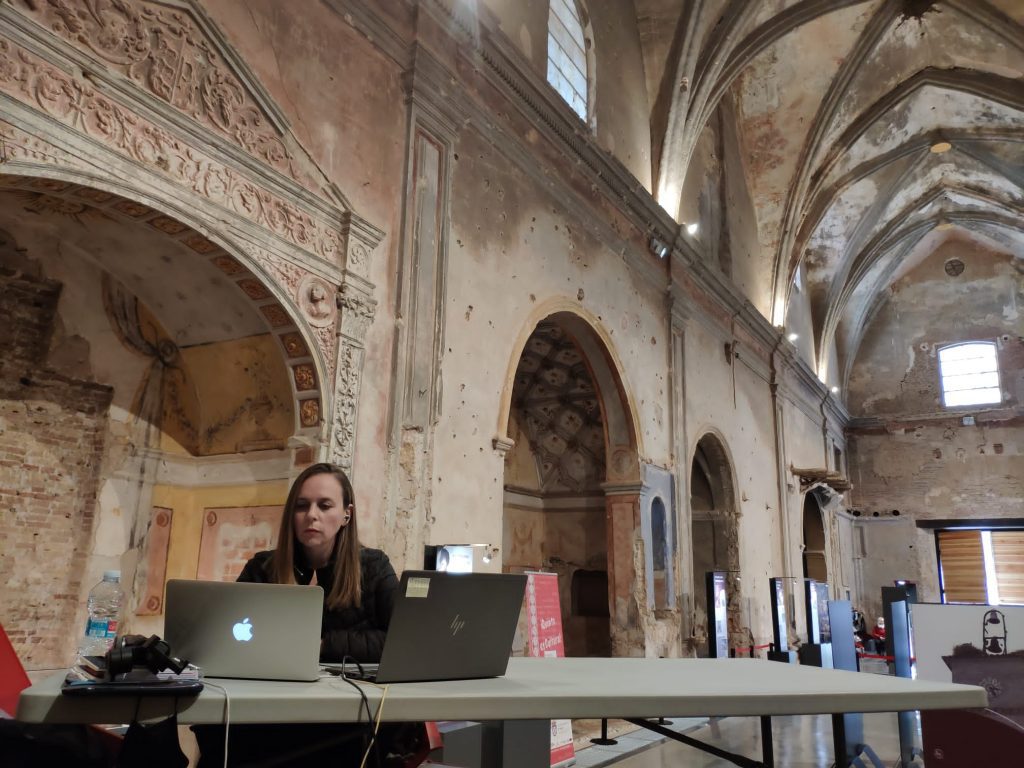
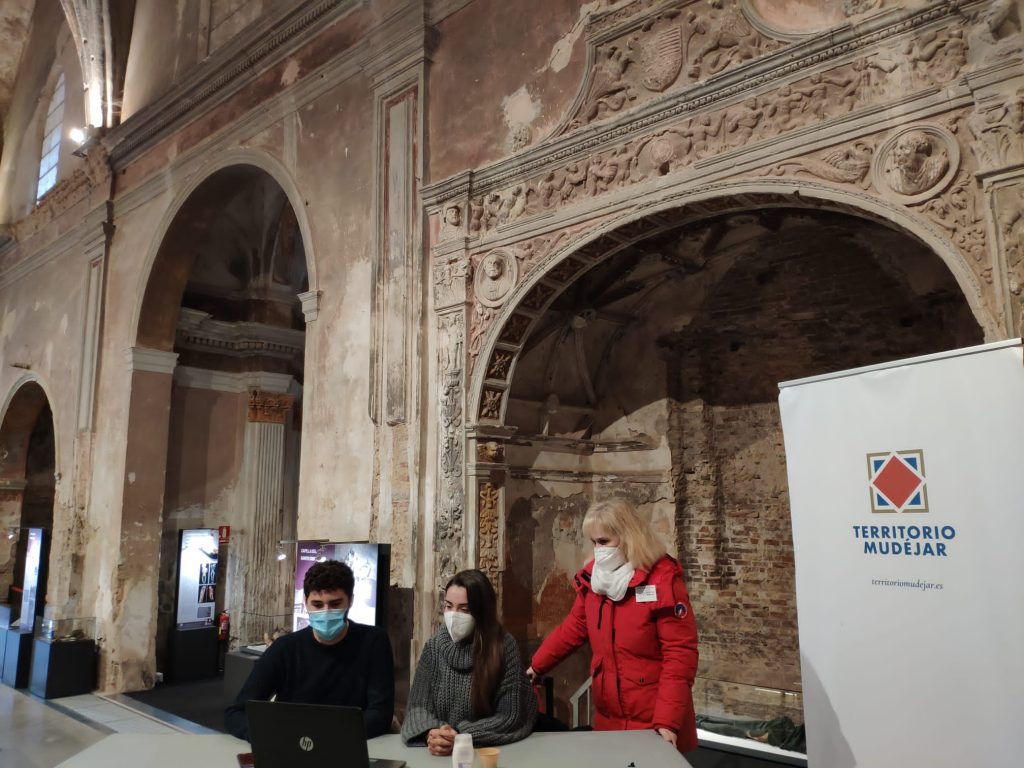
El Viajero, a project serving the towns and the people who work there.


Following long hours of work and preparation, we are now finishing up the details on our project entitled “El Viajero” (The Traveler), in which we are now doing pilot testing on three activities, never losing sight of sustainability: implementing specialized tours of our heritage based on the research projects we are involved in, creating a central information and booking office, and launching a podcast channel that can be accessed via our website.

In collaboration with Turismo de Aragón a(the Aragon tourism office), which called upon non-profit private entities to submit proposals for actions promoting tourism, this initiative seeks to create rural innovation concentrators based on heritage, an objective that we are also developing as part of the LEADER Local Development Strategy through the local action group ADRI Calatayud-Aranda in the projects approved for 2020.

At Territorio Mudéjar, as an artistic and historical heritage management entity focused on the Mudejar, we believe that heritage is a driving force for the development and identity of our towns. And we consider preservation, research and dissemination of the Mudejar identity to be key factors in the creation of tourism activities, which must always be designed from within the region and in conjunction with its inhabitants. This is how we explained it in January at FITUR and this remains our guiding principle in the “El Viajero” project.

The project aims, on the one hand, to enhance the possibilities for bringing visitors of several kinds to the region: traditional travelers, attracted by businesses and activities such as nature, cuisine and spas, to name a few, already existing in the towns, research or educational travelers, and even business travelers; and on the other, it seeks to improve job opportunities and uphold the businesses of professionals related to Mudejar monuments and heritage in each of the towns, such as city council tour guides and heritage and nature-related business owners.


Four signature tours of our member towns have been pilot tested with small groups. Designed by students in the 2020 Challenge Program (DPZ-Universa) the central theme is knowledge about the Mudejar, given that we are supported by superb guides who can explain the topics based on scientific facts.

These tours endeavor to define the towns in this region as a space for tourism focused on preserving our heritage, upholding local communities and opening up hard to reach spaces by means of tailored management and outstanding customer service.

After thoroughly defining the subject matter, in the end the students decided to group the tours around four topics:

a) The origin of the Mudejar: coexisting cultures. Here, we observe how coexisting Christian, Jewish and Muslim communities are reflected in the urban design, dwellings and main monuments.

b) Mudejar highlights, including tours of buildings that clearly reflect the characteristics of Aragonese Mudejar art.

c) Mudejar towers, discovering monumental heritage, urban design and the landscape through these towers.

d) World Heritage, focused on visiting the UNESCO World Heritage sites in Territorio Mudéjar and learning about all the complexities of the Mudejar phenomenon.

Central information and booking office: We have designed and implemented, on a trial basis, a digital switchboard that gives us a line of communication 24 hours a day/7 days a week to meet the information needs of anyone interested in Aragonese Mudejar art and the towns where the monuments are located.

It also enables us to offer our member towns an assessment tool in terms of accessibility to heritage buildings and analysis of demand. The virtual switchboard can be reached by telephone and will forward calls to the pertinent information providers in each town after offering introductory information about Mudejar heritage.

El Viajero: a Territorio Mudéjar podcast channel. The aim is to accompany visitors with entertaining audio clips about the context, history, customs and interesting facts about the places visited. This offers an opportunity to become more familiar with the destination and prepare the journey beforehand, or to be accompanied at all times. This podcast channel got started thanks to one of the Territorio Mudéjar 2020 fieldwork grants, and it will now become part of the El Viajero project.

Like all of our projects, El Viajero is the result of a significant amount of networking and cross-disciplinary collaboration. In this case, students in the 2020 Challenge Program participated (Cátedra de DPZ (DPZ Chair) and Universa), in collaboration with researchers involved in the 2020 Gonzalo M. Borrás Gualis fieldwork grants; Estudio Mique is in charge of technology and usability issues, and Viajar por Aragón has advised us on how to create a model for the Territorio Mudéjar routes in order to complement the existing heritage tourism options and combine proper use of heritage with tourism activities, never losing sight of sustainability and the impact these activities have on the relevant town and its inhabitants.

Our work always takes into account the sustainability of the projects and respect for the inhabitants of our towns. For this reason the activities, which required moving around the towns and were scheduled to take place in October and November, were carried out in highly reduced formats, following diverse recommendations and regulations.

Access is possible via our website homepage (www.territoriomudejar.es).

Further information will be available very soon!


Territorio Mudéjar, an example of good practices at the seminar on cultural heritage as a sustainable resource in ‘empty Spain’

Territorio Mudéjar participates in the leading forums on heritage and innovation, including the online seminar entitled “El patrimonio cultural como recurso sostenible en la España vaciada” (Cultural heritage as a sustainable resource in empty Spain), sponsored by the Spanish Ministry of Culture and Sports. We not only attended, in this case, but also stood out as a role model of good practices.

At this meeting, coordinated by the Cultural Heritage Institute of Spain (IPCE) and held on October 5 and 6, the lecturers included full professors of the art history department at University of Zaragoza Ascensión Hernández Martínez and María Pilar Biel Ibáñez, who gave a conference entitled “La cultura y el patrimonio como recurso: la lucha de Aragón contra la despoblación” (Culture and heritage as a resource: Aragon’s fight against depopulation).

In line with the theme of the seminar, they discussed how this demographic challenge requires coming up with strategies to encourage people to stay in places with difficulties and studying measures that generate social benefits for the residents, attract visitors and possible new residents, and turn heritage into a driver of the economy, tourism and employment and, above all, to uphold a cultural identity.

In this regard, they explained how we, at Territorio Mudéjar, strive to consolidate a unified, collaborative management network for the use of historical and artistic resources linked to important Mudejar heritage in our towns. And also how we see these resources as a driving force in the development of the towns and as emblems of identity for upholding the communities existing in our region.

They further highlighted that our entity ensures that the projects directly affect the region through responsible and sustainable management of Mudejar cultural heritage.

Experts from the IPCE, the University of Seville’s Industrial Heritage Laboratory, the Santa María la Real and DeClausura Foundations, the Polytechnic University of Madrid School of Architecture, and Asociación Amigos de los Castillos, to name a few, also participated in the seminar. They discussed the issue of desertion of rural areas and the ensuing consequences for heritage, including the loss of traditional architecture and monuments, movable assets, habits and intangible customs.

They also assessed good practices such as reputable cultural routes, famous restoration projects, preserved monuments, foundations whose efforts have had excellent outcomes and models such as that of Territorio Mudéjar.

University of Zaragoza colloquium on the entrepreneurial adventure in rural settings

On October 15, Territorio Mudéjar took part in the discussion entitled: “Tu desafío: Conocer el mundo rural y sus posibilidades” (Your challenge: Discovering the rural world and its possibilities), organized by University of Zaragoza as part of its rural exchange program (Challenge Program) to talk about the entrepreneurial adventure.

Territorio Mudéjar is an active participant in this initiative, and has just started the second phase with its student internships. The director of Territorio Mudéjar, Victoria Trasobares, explained this, stressing that the program offers an opportunity for young people, who learn from it, and for the rural setting in which they develop their ideas.

Victoria Trasobares noted that Territorio Mudéjar makes use of its resources by generating a professional workplace; in other words, each area developed is professionalized. Since the entity works with historical and artistic heritage, there are obviously professionals with skills in this field.

Therefore, art history students are being trained in Territorio Mudéjar to construct learning experiences that take the context into account: Mudejar art, Aragonese art and a general context, because all genres are subject to some kind of influence.

Through this project, Territorio Mudéjar provides support in skills-building for art historians, so that they know how to search for information and how to use it. They also learn to discern the key components in ensuring that a project can be implemented with a likelihood of success.

In addition, this work helps further the project aimed at defining a specialized job profile for cultural heritage designated as UNESCO World Heritage located in rural settings. This Territorio Mudéjar project is funded by the Spanish Ministry of Culture and Sports, and by the Provincial Government of Zaragoza through its direct support for our entity.

Adrián Tambo from Ecotambo, Alicia Sáchez from #DulcesLocuras, Fran Saura Armelles, veterinarian, María Fernández Pérez Muro with the human resources recruiting and development department of Caja Rural de Aragón, Sandra Barceló, psychologist and independent educator specializing in social matters and mindfulness, and Yolanda Gimeno Cuenca, an environmental expert at Riegos del Alto Aragón, also took part in the University of Zaragoza course, sharing their experiences.

Meeting on depopulation: new job profiles for building a rural future

Territorio Mudéjar participated in the meeting on depopulation sponsored by Cadena SER in collaboration with the Provincial Government of Zaragoza on October 15 and 16 in Daroca and Paracuellos de Jiloca, reflecting on rural areas as a place for opportunities.

At the meeting, it was explained that towns need more than infrastructures to survive; specifically, intangible strategies are required, such as networking by public and private entities and a commitment to creativity and talent, ideas that form the foundations of Territorio Mudéjar.

Territorio Mudéjar sees the rural world as a place for opportunities at all levels, in which – as remarked during the meeting – disruptive elements that prompt a turning point are needed.

For Territorio Mudéjar, one key disruptive feature is professionalizing job profiles* linked to heritage, because this makes it possible to boost employment in rural settings, attract professionals and develop projects entailing investments.

For this reason, we are committed to finding new uses for heritage spaces and landscapes, such as technical tours, teaching specific subjects in these spaces, funding for internships, etc.

We further strengthen this course of action by attracting highly qualified professionals who generate diverse entrepreneurship projects that prompt them to settle in Mudejar locations. A clear example of this is our fieldwork grants for project development.

Furthermore, Territorio Mudéjar is seen as a role model of management and good practices in cooperation projects and transnational funding, with round tables, workshops, conferences and more.

In addition, Territorio Mudéjar engages in another of the leading lines of work highlighted at the Cadena SER meeting: education. Through projects such as ‘Territorio Mudéjar Circular desde la escuela’ (Territorio Mudéjar, Circular from schools), we strive to integrate heritage and its methods into curricula in order to raise awareness in school children about the identity of their towns and help them discover the professional options in their region. We do this through a cooperation project with local development groups, in which we are a partner.

*This Territorio Mudéjar project is funded by the Spanish Ministry of Culture and Sports, and by the Provincial Government of Zaragoza through its direct support for our entity.

Mudejar valley culture, in the Ruta 67 digital catalog of the Community of Calatayud

The Ruta 67 digital catalog was created as part of the “Descubre tu comarca” (Discover your district) employment workshop, in which Territorio Mudéjar participated by presenting one of the sessions. It maps out tours of the Community of Calatayud district, to discover its historical, cultural and culinary treasures. These routes invite travelers to enjoy the Mudejar heritage in these towns:

Territorio Mudéjar participated in this employment workshop last year by offering a training session that included a field trip to the entity’s offices in Tobed. Participants who took part in the workshop, sponsored by the Community of Calatayud district and subsidized by the Government of Aragon and the INAEM, for a full year received a level 3 professionalism certificate for local tourism promotion and visitor information, which qualifies them to work in visitor information settings.

Posters with QR codes will be set up in the towns through which the routes pass, which travelers can scan with their mobile phones to read the digital brochure. You can also download it here.

The role of civil society in the preservation of cultural heritage in rural settings, a debate

The ties between society and cultural heritage represent a potential factor for social cohesion, and this human dimension plays a key role in protecting heritage. This is one of baseline premises of the online seminar “La sociedad civil en la conservación del patrimonio cultural en el medio rural” (Civil society in the preservation of cultural heritage in rural settings) organized by the Spanish Ministry of Culture and Sport on October 26 and 27, in which Territorio Mudéjar took part.

The seminar entailed a collective reflection on the importance of cultural associations created by civil society for the preservation of heritage in rural settings. Courses of action and management instruments focusing on safeguarding cultural heritage in rural settings were outlined during the seminar. The participants also shared examples of good practices applied to regions and heritage sites with great cultural value, so as to generate a sense of belonging among the inhabitants through this attention and even help to create jobs and improve social and economic management.

The seminar was kicked off by Dolores Jiménez Blanco, director general of Fine Arts, and Ana Cabrera Lafuente, deputy director general of the IPC. Lectures were also given by Mikel Landa (ICOMOS), María Pía Timón and Elena Agromayor (IPCE), Sergio Pérez Martín (program for the recovery and educational use of abandoned villages in Granadilla, Extremadura), Manuel García Félix (FEMP Committee for Historical and Cultural Heritage), Francisco Mestre (Federación de los pueblos más bonitos de España, the federation of the most beautiful villages in Spain), Vicente Carvajal (Asociación Cluny Ibérica and Sociedad Económica de los Amigos del País, León), Araceli Pereda (Hispania Nostra), Antonio Berenguer (Campanero), María Concepción Benítez (heritage expert for the District of Sobrarbe and for Sobrarbe-Pirineos UNESCO Global Geopark), José Manuel Rodríguez Montañés (Asociación de Municipios del Camino de Santiago, the association of municipalities along the Way of St. James) and Aniceto Delgado Méndez (IAPH).

Furthermore, Territorio Mudéjar will also be participating in the online course “Guía para planes de conservación preventiva” (Guide to preventive conservation plans) by the IPCE (Cultural Heritage Institute of Spain), which proposes a framework for generating standardized procedures to which quality control rules can be applied.

Territorio Mudéjar will use this training to contribute to knowledge-building that can help our member towns identify and analyze cultural asset conservation issues in order to subsequently advise them on the implementation of procedures that address these issues.

▫️

The first students of the Desafío 2020 Programme arrive at Territorio Mudéjar

The first students of the Desafío Programme, funded by the DPZ and managed by the University of Zaragoza, are already in Territorio Mudéjar learning and putting into practice applied cultural heritage management models. This is the third edition of an initiative that allows young university students to do work experience in towns in the province of Zaragoza and that seeks to help young people with ideas to reach – and stay – in rural areas.

“By showing students how we work with the heritage in these towns, we pave the way for them to choose how they want to focus their careers in the future, and we hope that this future is closely related to our region,” explains Victoria Trasobares, director of Territorio Mudéjar.

The team of Art History students participating in the Desafío Programme – María Foradada, María Domínguez, Elena López and Sarai Salvo – have been living since the beginning of August in the organisation’s headquarters, Tobed, where they are getting to know the work system. They are joined by Eugenia Gallego, María Irazabal and Derry Holgado, who are working from a distance.

The program’s first phase consists in an introduction to the entity and its working methods, familiarizing the students with the networking system and the partners involved: city councils, culture officials and individuals in charge of cultural and heritage dissemination programs, combining classroom learning with fieldwork. In addition, the students are being trained in the cultural heritage management project methodology by professionals in diverse disciplines such as project design and assessment, awareness of the applied management models implemented in our region, and in the fields of project dissemination management and communication.

The Challenge Programme – now in its third edition – is aligned with Territorio Mudéjar’s strategic objective of promoting curricular or training internships and professionalising profiles linked to heritage in order to boost employment in rural areas, attract professionals and develop projects that involve the conservation of our heritage and investment in our villages as a differentiating element.

What is special about Territorio Mudéjar? It is framed in the rural environment, it works in a network with 34 municipalities and with interdisciplinary professionals, it also works with an international brand such as the UNESCO World Heritage declaration of three of the monuments of its member towns and with a model that is committed to professionalism, scientific rigour, vanguard and sustainability and that makes the inhabitants of the villages an essential part of its projects.

Territorio Mudéjar, two years working for heritage and our towns

Territorio Mudéjar has now been working for two years, guided by Mudejar heritage in the broadest sense, and we are tremendously grateful to everyone who makes it possible for us to continue building this collaborative network. We now form a community of 34 towns with their active inhabitants and a multi-disciplinary team of researchers, partners and students. Together we strive to make Mudejar heritage a driver of development for the towns and also an emblem of identity that helps uphold the population.

Over these two years, we have worked with scientific rigor to further the knowledge about Mudejar culture, we have acted as its spokesperson, and we have launched projects that contribute to the sustainable social and economic development of our network of towns.

Among the actions in our annual work plan, two initiatives stand out:

One, the Challenge Program, sponsored by the Provincial Government of Zaragoza through the Cátedra DPZ de Despoblación y Creatividad (Zaragoza Provincial Government Chair for Depopulation and Creativity), which enabled University of Zaragoza students to carry out internships in Territorio Mudéjar (four in 2019 and seven this year). The students in the 2019 edition wrapped up the program by putting what they had learned into practice with a tour of the towers in Ricla, Longares, Romanos, Terrer and Tauste. The participants in 2020, in turn, began in August with an introduction to the entity and its working methods, familiarizing them with the Territorio Mudéjar network and its main stakeholders, followed by training in diverse disciplines and fieldwork.

Two, the Gonzalo M. Borrás Gualis Fieldwork Grants, which make it possible to develop responsible, sustainable and innovative projects that have a direct impact on rural settings, foster their visibility and raise awareness about the area. In the spring, we completed the first edition with project presentations given by researchers. Now, we have just chosen the winning candidates in the second call for proposals, awarding five grants and one second prize in fields such as the recovery of construction materials like Mudejar plaster work, the conservation of traditional architecture, designing tours that combine agricultural cycles and Mudejar heritage, the creation of a Territorio Mudéjar podcast channel, a guide about historical carpentry in our towns and the study of new cultural management models for Mudejar civil architecture.

As part of our networking endeavors, through our collaboration with the ADRI groups, we continue working on the initiative called “Territorio Mudéjar circular desde la escuela” (Territorio Mudéjar, circular from schools), which aims to help the children in our towns learn to recognize and appreciate from a young age the heritage surrounding them, thus bolstering a sense of regional identity.

Furthermore, we are increasingly present at forums on heritage and innovation. In this regard, we participated in the 1st Annual ICOMOS Spain Symposium of Natural and Cultural Heritage, held in Madrid in November, where the latest research done in the field of monument preservation, restoration, documentation, awareness and dissemination was presented. Also in November, we attended the Meeting of Spanish World Heritage Managers, which gathered in Cordoba to discuss the topic of ‘World Heritage accessible to everyone’, organized by the Spanish Ministry of Culture and Sports.

In conjunction with other entities devoted to heritage management and rural development, in January we took part in the first meeting with local agents from the province of Zaragoza in the MOMAr Interreg Europe projectModels of Management for Singular Rural Heritage, an initiative led by the Provincial Government of Zaragoza for the purpose of designing new rural heritage management models that foster sustainable development and adapt to the specific features of each region. Along these lines, we also presented our working model at the MOMAr Interreg Europe meeting held in Corsica in March.

And in August we shared our innovative management of artistic and historical heritage in a rural setting at the CortonaOpen3D workshop , a specialized course in computer graphics and smart city design applied to cultural heritage, which was held in the Italian city of Cortona, in the province of Arezzo (Tuscany).

In terms of outreach and communication, the towns and heritage of Territorio Mudéjar were featured in the January issue of “World Heritage“ magazine, published by the UNESCO World Heritage Centre.

Moreover, the Mudejar architecture in our member towns can now be accessed at the click of a mouse by anyone, anywhere in the world, thanks to an initiative by the Provincial Government of Zaragoza in collaboration with Territorio Mudéjar, which made it possible to include these monuments in the “UNESCO World Heritage” collection on Google Arts and Culture. This multi-lingual platform has received more than 175 million visits and includes a mobile application that has been downloaded more than 30 million times, offering virtual tours of museums and heritage treasures around the world.

In addition, for yet another year, we participated in the course entitled Viaje al arte mudéjar (Journey into Mudejar art) in July, one of the special courses offered by University of Zaragoza, aimed at directly studying Mudejar art by taking in-depth tours of the most emblematic monuments in these areas.

In terms of special events, in December we set up a special schedule of activities to commemorate the 18th anniversary of the designation of Mudejar architecture of Aragon as UNESCO World Heritage. This included promoting visits to the towns, project activities and a live radio broadcast from Tobed.

In January, at FITUR 2020, the important tourism trade fair, we presented our proposal for developing Mudejar heritage management practices that foster responsible, sustainable tourism designed by those in the places where the heritage is located, always in conjunction with their inhabitants.

And on April 18, we joined in on the celebration of the International Day for Monuments and Sites with special videos.

During the year we also bolstered our presence in the media and in social media by creating our own content (videos, live broadcasts…) and new YouTube and LinkedIn channels. Our goal is to make our networks the benchmark space for information and knowledge about Mudejar, in the broadest sense, and to spotlight our member towns and the activities taking place there.

5 research stays and 1 runner-up awarded for study, resource management and project development in partner localities

Territorio Mudéjar, the network of 34 municipalities promoted by the Diputación de Zaragoza that works to conserve and promote Mudejar art in the province, has awarded 5 research stays and one runner-up for the study, development of projects and management of the natural and heritage resources of its member towns.

This is the second call for these stays, named after Gonzalo M. Borrás Gualis as a tribute to the distinguished professor and expert on the Mudejar. Each of them is endowed with 6,000 euros and will allow the development of responsible, sustainable and innovative research projects with a direct impact on the rural environment and that favour its visibility and knowledge.

This edition has been characterised by the high level of the proposals, which include multidisciplinary teams of researchers from different Spanish and Italian countries, with the advice of prestigious experts. The selected projects will allow the development of projects in areas such as the recovery of building materials such as Mudejar plaster, the conservation of traditional architecture, the design of visits that combine the agricultural calendar and Mudejar heritage, the creation of a podcast channel of Territorio Mudéjar, a guide to the historical carpentry of our villages and the study of new models of cultural management of Mudejar civil architecture.

The aim of these stays is to promote knowledge of the rural territory from its Mudejar identity through innovative approaches that have a positive impact on the villages and promote a network of work on the possibilities offered by the resources of the territory and collaborative and interdisciplinary work. In addition, specifically, the aim is to improve knowledge of the Mudejar as a World Heritage Site and the benefits it brings as an international brand recognised by Unesco.

The selected projects are framed within five lines of research: new perspectives on Mudejar art, Mudejar territory and cultural landscape, cultural heritage management, communication and dissemination of Mudejar heritage and Mudejar heritage and its social function as a key element of territorial development.

The projects one by one

1-“Mudejar plaster, an element of identity, knowledge and future opportunities”.

Traditional plaster is a key material in Mudejar architecture and is used in monumental and popular architecture, but it is largely unknown, as it is often misidentified and confused with lime-based materials. In the 2019 research stay, the architect Pedro Bel exhaustively documented the manufacturing process of traditional plaster in 16 municipalities and drew attention to the difficulties of rehabilitating plaster constructions due to the lack of compatible materials. With the 2020 research stay, he is looking for solutions to the conservation limitations of traditional plaster with ambitious objectives: to learn more about this material, to disseminate its role in traditional Aragonese architecture and to develop a plaster that can be manufactured today and that preserves the legacy it has received. In this way, it aims to reactivate the quarries, to obtain a material compatible with Mudejar plaster for restoration and rehabilitation and to reintroduce it in contemporary architecture.

This project has a strong team of researchers from the universities of Zaragoza, Granada, Malaga and the Polytechnic of Madrid and high-level advisors such as Ramón Rubio Domene, head of the tiled plasterwork restoration workshop of the Patronato de La Alhambra, and Antonio Almagro Gorbea, member of the Royal Academy of Fine Arts of San Fernando.

2-“Vernacular architecture in Mudejar villages: tools and networks for adaptive re-use and compatible intervention”.

In addition to monuments of great historical and artistic value, the towns and villages of Mudejar Territory have a more humble architecture, but of great social and ethnological value, integrated into the environment and reflecting the cultural identity of the area. The proper conservation and enhancement of this traditional architecture can be the starting point for economic regeneration based on the use of heritage sites by private individuals, which can increase the attractiveness and competitiveness of historic towns. To this end, it is necessary to balance the conservation of architectural heritage and socio-economic development.

Javier Gómez Patrocinio, PhD in architecture from the University of Valencia, studied the construction techniques and intervention dynamics prevailing in Territorio Mudéjar during his 2019 stay. Now, he is continuing his research and plans to design and implement tools to raise awareness among local communities about the value of vernacular architecture and the importance of its preservation in order to help developers improve the compatibility of interventions on traditional buildings.

3-“Mudejar heritage and agricultural calendar: The poetics of the landscape. Design and programming of pilot experiences for visits during the seasons of the year”.

Agricultural heritage, considered as a cultural asset and understood in a similar way to intangible heritage, is a reference point for identity and a unique and irreplaceable part of the landscape in which it is framed. With this research stay, the art historians Juan Ignacio Santos Rodríguez and Elvira del Pilar Domínguez Castro will diagnose the degree of representativeness and typology of this heritage, as well as its characterisation and capacity to generate new heritage resources linked to both the agricultural calendar and the Mudejar heritage. The aim is to design a plan of activities that link the agricultural heritage with Mudejar architecture, which is the result of this landscape, and which are linked to the agricultural calendar.

It also includes pilot itinerary tests in order to show the undeniable and unique symbiosis between the land, agricultural production and the materials of the environment with Mudejar architecture and decoration, as well as to strengthen the emotional link of the population with the land, its agricultural economic activity and its products.

4-“Loqui Walls. The walls speak. Podcast to give voice to the territory”.

This communication project consists of the creation of a podcast channel for Territorio Mudéjar to encourage and complement visits to the monuments in our towns. The traveller will be able to listen to these podcasts through mobile technologies at any time of the day or week, which allows us to respond to the needs of sustainable and small-scale tourism.

The content of the podcasts will not replace the experience of visiting the main monument, which should always be explained in situ by a specialist, but will complement it with proposals for tours of the territory that will enhance visits between localities, with additional information about the locality that will complement existing visits, and with suggestions for activities that can be carried out in the area. The project will also help to consolidate the idea of Mudejar culture beyond the monumental. The proposal will be developed by a team formed by Gianluca Vita (Politecnico di Milano), Irene Ruiz (Politecnico di Torino and University of Zaragoza) and the expert in new technologies Marco Marcellini.

5-“Mudejar wood. Guide to historic carpentry in the towns of Territorio Mudéjar”.

This research project is part of the area of new perspectives on Mudéjar art and aims to promote knowledge and appreciation of the manifestations of Mudéjar art made in wood to the fullest extent: ceilings (alfarjes and file frames), doors, windows, eaves, choirs, organ bases, choir stalls, choir stalls, carillons… It will consist of creating a specialised online publication containing an inventory of the works with descriptions, status and images. It will also include texts by specialists on the techniques and fundamentals of Mudéjar carpentry, a complete bibliography on the subject and special chapters on the most important works of historical carpentry in Territorio Mudéjar.

Myriam Monterde, a professional in cultural management and museology, and José Manuel Herraiz, an audiovisual producer and scriptwriter specialising in the historical and cultural genre, are in charge of developing this research.

6-Accesit: “New models of cultural management and financing for restoration projects of historic-monumental Mudejar civil buildings in the province of Zaragoza”.

Territorio Mudéjar has awarded a second prize to a research project on Mudéjar civil architecture. The art historians Ricardo Monreal Lafuente and Marta López Veamonte are responsible for this initiative with which they will continue a process of research and data collection begun in 2019. The aim of this work was to obtain current and technologically advanced material on the civil architecture of the Mudejar Territory that preserves Mudejar elements and to document the management model of these buildings. The current 2020 phase will consist of specific work on one of the most important civil spaces in our territory, the Palacio de los Luna de Daroca. Its development will entail defining a working model for this type of Mudejar architecture as well as the analysis of new models for the management of historical-artistic heritage that will allow these buildings to be put to use, thus contributing to their sustainability, their social function and their incorporation into the life of the towns. It will also address how to finance restoration projects for these buildings.

Territorio Mudéjar participates in the CortonaOpen3D workshop as an example of innovative heritage management

Territorio Mudéjar took part in the CortonaOpen3D workshop, a specialized course in computer graphics and smart city design applied to cultural heritage, which was held from August 1 to 10 in the Italian city of Cortona, in the province of Arezzo (Tuscany), to share its example of innovative management of artistic and historical heritage in a rural setting.

During this workshop, the participants work individually or as a group to develop an architectural design project or an art installation inserted into the context of the city of Cortona. To do this, they receive specialized training in different areas related to architecture.

In this regard, Victoria Trasobares, director of Territorio Mudéjar, gave a conference to explain the Territorio Mudéjar model “as a strategic example of heritage management: the project behind the projects”.

The lecture was streamed live from the town of Tobed and in it, Victoria Trasobares discussed how the Territorio Mudéjar network began and grew, outlined its activity program and, in line with the course contents, explained how a technological vision can guide the work of historical, artistic and cultural heritage management.

She also talked about the “Mudéjar Patrimonio Mundial 3D” (3D Mudejar World Heritage) project, a cross-disciplinary initiative led by Luis Agustín Hernández, architect and professor at the School of Engineering and Architecture of University of Zaragoza, aimed at revaluing Mudejar heritage. The project arose from the 2019 fieldwork grants and will continue in a major new cross-disciplinary, multi-university project between Spain and Italy. The University of Zaragoza (School of Engineering and Architecture, and the Art History department of the School of Humanities), the Polytechnic of Turin, Polytechnic of Milan and the University of Salerno will all take part.

In addition, the conference at CortonaOpen3D represented the first of numerous wide-ranging activities open to the students in the 2020 Challenge Program internships, an initiative funded by the Provincial Government of Zaragoza and managed by Universa, the job orientation and employment service of University of Zaragoza.