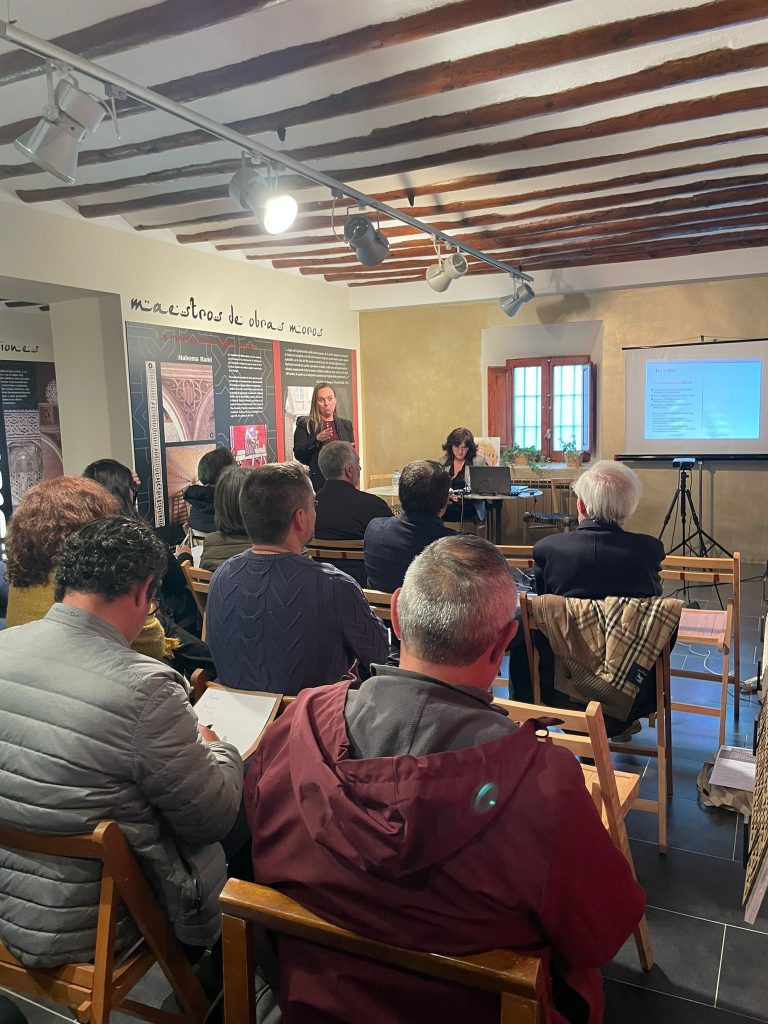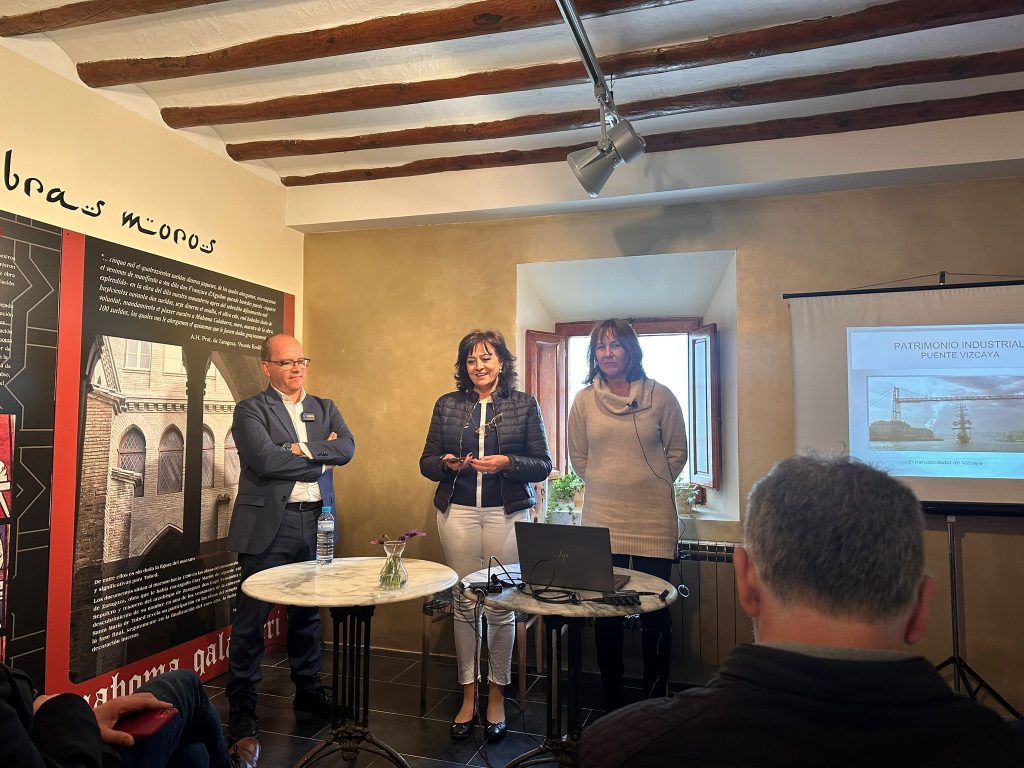
Territorio Mudéjar concludes the first phase of the preliminary study to draw up a Management Plan for Mudéjar Architecture in Aragon as a World Heritage Site.

Territorio Mudéjar has completed the first phase of the preliminary studies for the drafting of the management plan for the Mudejar architecture of Aragon as a UNESCO World Heritage Site. In this phase of the project, which is funded by the Ministry of Culture*, working groups have been held with the different stakeholders, field visits and working meetings with a full list of collaborators.

Territorio Mudéjar is responsible for the development and drafting of the study and diagnostic work necessary for the drafting of the Management Plan for the Mudéjar Architecture of Aragon property. The aim is to have an instrument that will enable all areas of management to be addressed in a comprehensive, sustainable and effective manner: protection, preservation, research, dissemination and territorial and social impact.

The work of Territorio Mudéjar has included the creation of working groups by areas of work that have enabled the analysis, diagnosis and drafting of preliminary documents to compose the management plan.

In this sense, the organisation has held a round of meetings with the different actors involved: managers, town councils and competent administrations.

As an example, an initial meeting-visit was held at the beginning of February in the church of San Pablo (Zaragoza), followed by another analysis and diagnosis visit. In these meetings, the parish and Sergio García, head of management, collaborated.

Two meetings were held in La Seo: an initial working group and a diagnostic one, in which Daniel Granada, canon of La Seo and of the Cabildo and parish priest of La Seo, took part.

In Calatayud, the meetings were held with José Manuel Gimeno as representative of the City Council and with Salvador Esteras, technical expert.

In Cervera de la Cañada there have been meetings with the town and parish councils. In addition.

In the case of Tobed, work has been carried out with the Town Council’s management team through the Mahoma Calahorrí Museum.

There has also been a meeting with the Directorate General for Patrimony and a round table with the heads of service of this directorate.

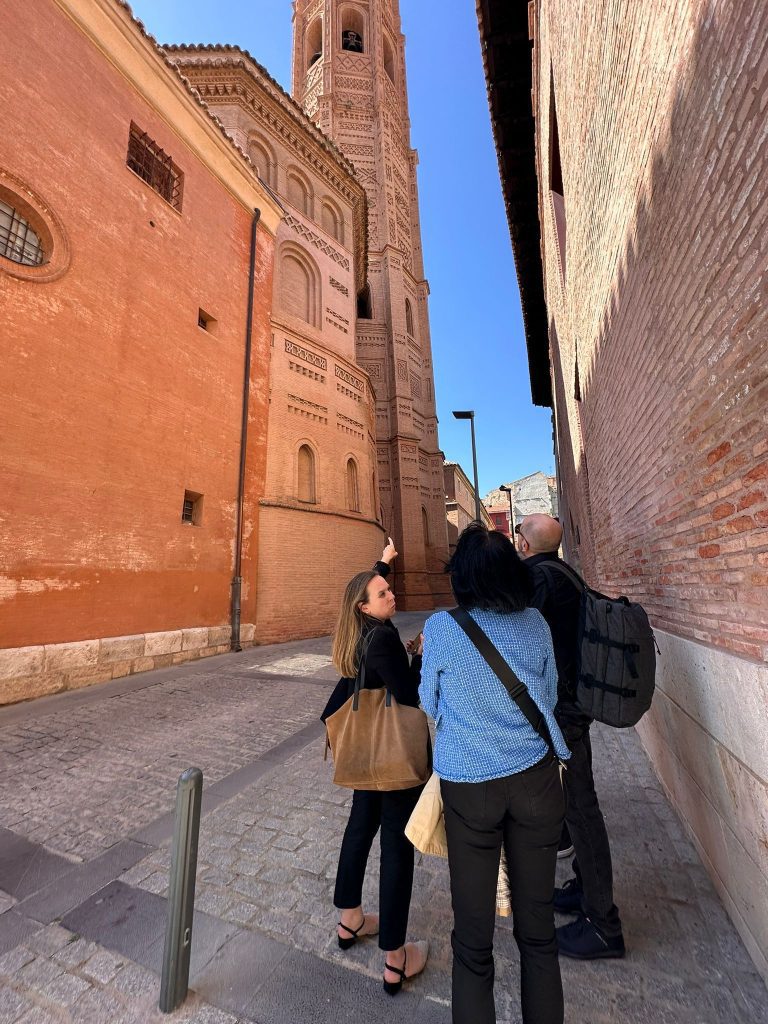
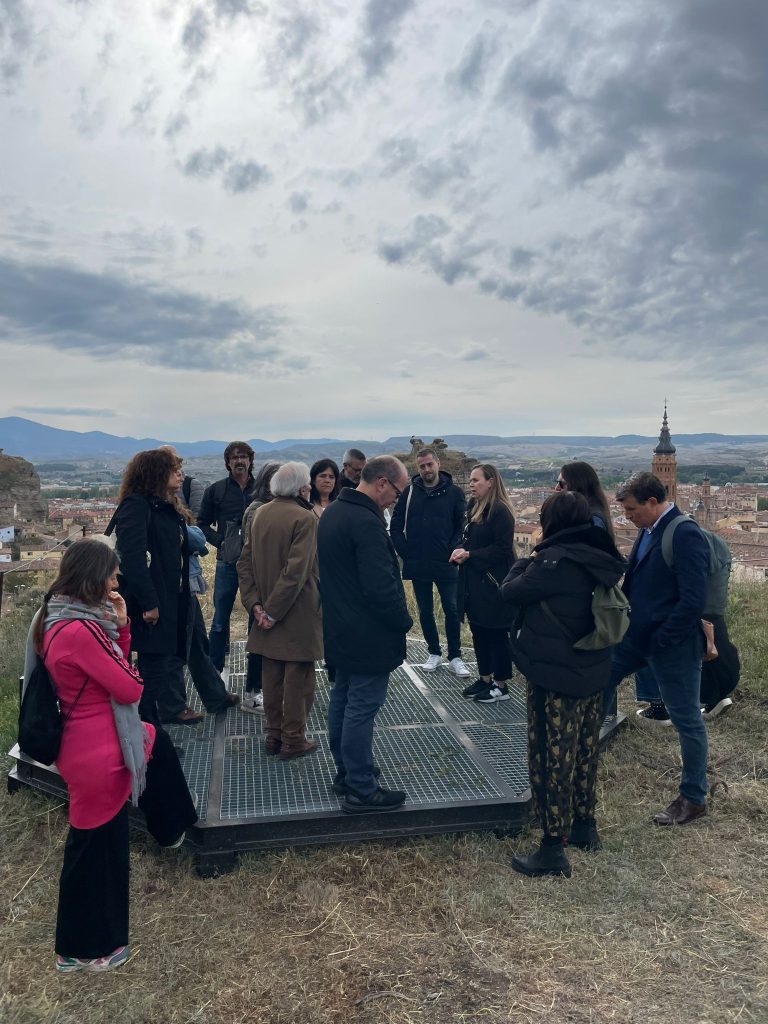
In April, a European visit-meeting was organised in Calatayud, Tobed and Cervera de la Cañada with a team from the University of Zaragoza, the Politecnico di Torino and the Politecnico di Milano.

In addition, there have been meetings with ZaragozaCity Council, the Diocese of Tarazona and the different interlocutors of the Administration.

There have also been technical visits. For example, one of them, held in April, was attended by participants at European level, specifically from the Politecnico di Torino.

In addition, some of the issues diagnosed and worked on during these months were presented at the technical conference of the Alliance of Cultural Landscapes and Related Places held on 25 and 26 April in Tobed, Cervera de la Cañada and Calatayud. This issue was presented as part of the knowledge of the host property.

LIST OF COLLABORATORS:

During this first phase of the project , the collaboration of:

Area of collaboration: State of the art in terms of research.

Esteban Sarasa Sánchez. PhD in Philosophy and Letters (History) from the University of Zaragoza, professor emeritus and director of the J. Zurita Chair of History at the Fernando el Católico Institution in Zaragoza.

Mar Vals Fusté. PhD in History from the Rovira i Virgili University and researcher on the Territorio Mudéjar project “Reading the Mudejar: Arabic inscriptions in medieval Aragonese churches (13th-15th centuries). Based on this stay and her speciality in Art History from the inscriptions, she has collaborated in approaching the monument as a document.

Ascensión Hernández. Professor in the Department of Art History at the University of Zaragoza. She has collaborated on the state of the question of the authenticity criticism of buildings declared World Heritage, taking as a reference the work carried out on the parish church of La Seo a few years ago.

Luis Alberto Longares. PhD in Geography and lecturer in the Department of Geography and Territorial Planning at the University of Zaragoza. The area of collaboration has been the palaeoenvironmental evolution of the landscape and its knowledge for a correct management of the environment.

José Castillo Ruiz. Professor of Art History at the University of Granada. He contributes from the point of view of agrarian heritage, that is, how people have intervened in the landscape in which the monuments declared World Heritage by UNESCO are contextualised.

Area of collaboration: building management

Daniel Granada, secretary of the Cabildo de La Seo and parish priest of the parish of La Seo, and Sergio Blanco, heritage delegate of the Diocese of Zaragoza and manager at San Pablo.

Jesús Vicente Bueno, abbot of the Collegiate Church of Calatayud and heritage delegate of the Diocese of Tarazona.

Pedro Luis Hernando, professor of art history at the University of Zaragoza in Teruel and heritage delegate of the Diocese of Teruel-Albarracín.

Victoria Trasobares Ruiz, Director of Territorio Mudéjar and art historian. Manager of Tobed Mudéjar.

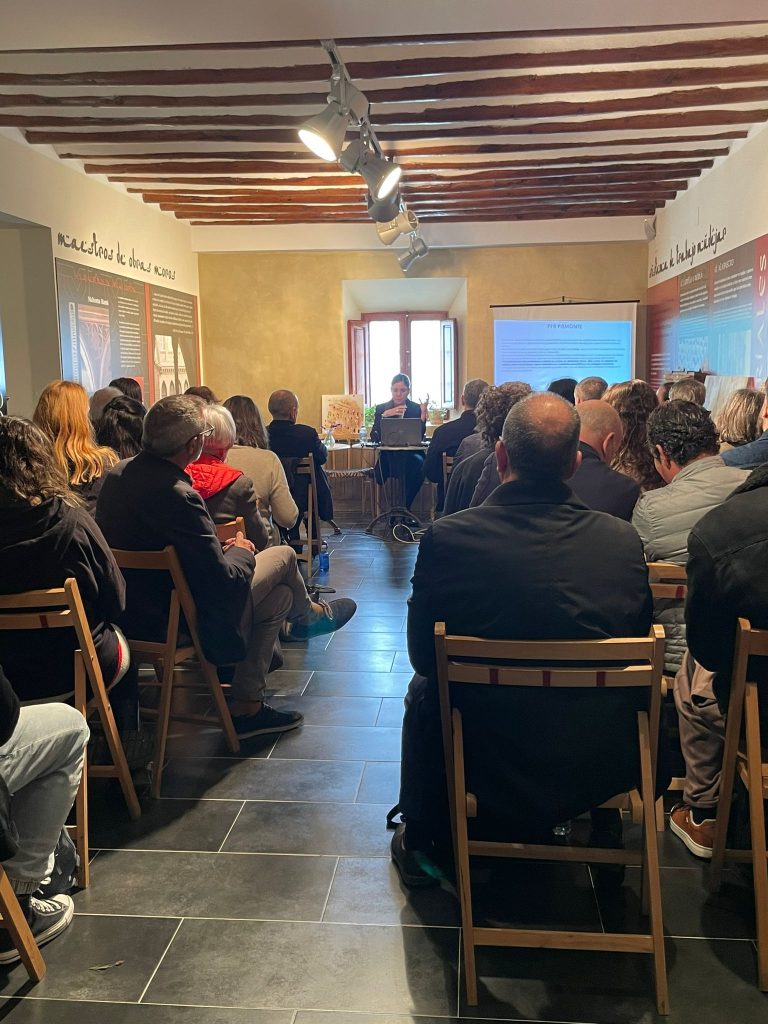
Working groups were held with them to analyse and diagnose aspects to be taken into account for the diagnosis of management, the state of conservation, the state of research, signposting and dissemination.

Area of collaboration: Dissemination

Irene Ruiz Bazán, professor at the Politecnico di Torino; Gianluca Vita, professor at the Fine Arts Academy of Urbino in the Department of Applied Heritage Technologies, have collaborated on digitisation strategies applied to diagnosis, dissemination and communication.

Patricia Ciria. Multimedia journalist specialising in strategic communication and marketing. She has collaborated in the diagnosis of communication, audience analysis, positioning and strategic lines of communication.

Estudio Mique. Graphic design studio specialising in branding, logos, labels, packaging, advertising and communication. He has collaborated in the analysis of branding and signage analysis of the Mudejar architecture of Aragon.

European meeting-visit to advance in the preliminary study of the management plan for the Mudejar Architecture of Aragon.

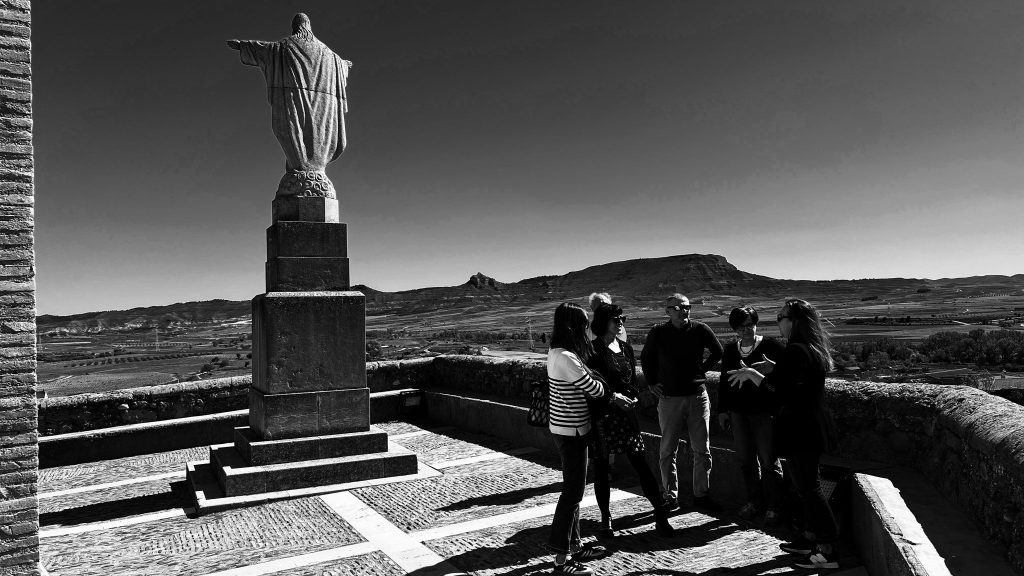
The Alliance of Cultural Landscapes and Related World Heritage Sites has held its biannual assembly in several towns of Territorio Mudéjar: Calatayud, Cervera de la Cañada and Tobed. The assembly included a technical conference for members organised around the theme “Cultural landscape and management plans for UNESCO World Heritage sites”, which was attended by speakers and members from Spain, Andorra, Portugal and Italy. On this occasion, Territorio Mudéjar organised a European meeting-visit in Calatayud, Tobed and Cervera de la Cañada with a team from the University of Zaragoza, the Politecnico di Torino and the Politecnico di Milano, which has served to advance the preliminary study for the drafting of a management plan for the Mudéjar Architecture of Aragon.

* This project of Territorio Mudéjar has been selected in the 2023 call for grants for projects for the conservation and dissemination of World Heritage properties of the Ministry of Culture and Sport. Territorio Mudéjar is thus part of a group of more than 20 Spanish organisations working to promote and improve the application of the World Heritage Convention and its guidelines. These grants are financed by the Ministry of Culture and aim to promote the development of projects for the management, protection and conservation of these assets, as well as to promote their accessibility, visibility and dissemination at national and international level.

Territorio Mudéjar and the Alliance of World Territory Cultural Landscapes hold their biannual assembly in Calatayud, Cervera de la Cañada and Tobed

Territorio Mudéjar and the Alliance of Cultural Landscapes and Related World Heritage Sites are holding their biannual assembly on 25 and 26 April in Calatayud, Tobed, Cervera de la Cañada and Zaragoza. The meeting, entitled “Cultural Landscape and Management Plans for UNESCO World Heritage Sites ” will be attended by speakers from Spain and Italy.

The Alliance, which brings together World Heritage properties in the categories of landscapes and sites or monuments, aims to serve as a link between landscapes and sites to share experiences, seek solutions to various common problems, train their technicians in specific areas and obtain resources to develop joint activities. Specifically, the following are part of the Alliance: the Cultural Landscape of Aranjuez, Ibiza-Biodiversity and Culture, the Cultural Landscape of the Sierra de la Tramuntana, the city of Sintra, the Palm Grove of Elche, the Alhambra and the Generalife, the Cultural Landscape of Las Médulas and the Hercules Lighthouse in A Coruña.

The meeting will begin on Thursday 25th with a study visit to Calatayud, the church of Santa Tecla in Cervera de la Cañada and the church of the Virgin of Tobed, monuments declared UNESCO World Heritage Sites.

In the afternoon, the technical sessions will begin at the Mudéjar Museum of Tobed, with the participation of experts from Icomos Spain, Complutense University of Madrid, Andalusian Heritage Institute, Landscape Observatory of Catalonia, University of Zaragoza, and Territorio Mudéjar (both from the direction and with the experiences of the artistic residencies).

On Friday, the talks will continue with specialists from the IPH-Heritage and Humanities Institute, the University of Granada, the Politecnico di Torino and the Landscape Alliance.

Victoria Trasobares, director of Territorio Mudéjar, highlighted the essential work to reconnect the monument with its context, especially that of the inhabitants of the villages. And she recalled that the priority objective is to ensure not only the conservation of the identity and uniqueness of the territories, but also to address the immediate future, in the medium term, the innovative and sustainable management of the villages.

It should be remembered that the General Assembly of the Alliance of Cultural Landscapes and Related World Heritage Sites approved in November in A Coruña the inclusion of Territorio Mudéjar as a new member.

Inclusion in the Alliance allows Territorio Mudéjar to participate jointly in national and international fairs, to seek funding for joint projects, to disseminate its activities among the other partners and to hold technical conferences to address challenges, opportunities and analysis of common problems.

The last technical conferences of the Landscape Alliance were held in November under the title ‘Landscapes and Sites. Participate to coexist’ and were organised by the Tower of Hercules and the Alliance of Landscapes and Related World Heritage Sites, with the support of the City Council of A Coruña and the Tourism and Congress Consortium. The Ministry of Culture and Sport and the Provincial Council of A Coruña also collaborated. The event addressed the role of society in the conservation of World Heritage landscapes and sites, inviting reflection on the participation of institutions, communities and associations to protect and enhance these places.

This assembly includes a technical conference for partners organised around the theme “Cultural landscape and management plans for UNESCO World Heritage Sites”, which will be attended by speakers and partners from Spain, Andorra, Portugal and Italy. On this occasion, Territorio Mudéjar organised a European visit-meeting in Calatayud, Tobed and Cervera de la Cañada with a team from the University of Zaragoza, the Politecnico di Torino and the Politecnico di Milano. This meeting served to present and reflect on the preliminary study for the elaboration of the management plan for Mudejar Architecture in Aragon.

* This project of Territorio Mudéjar has been selected in the 2023 call for grants for projects for the conservation and dissemination of World Heritage properties of the Ministry of Culture and Sport. Territorio Mudéjar is thus part of a group of more than 20 Spanish organisations working to promote and improve the application of the World Heritage Convention and its guidelines. These grants are financed by the Ministry of Culture and aim to promote the development of projects for the management, protection and conservation of these assets, as well as to promote their accessibility, visibility and dissemination at national and international level.

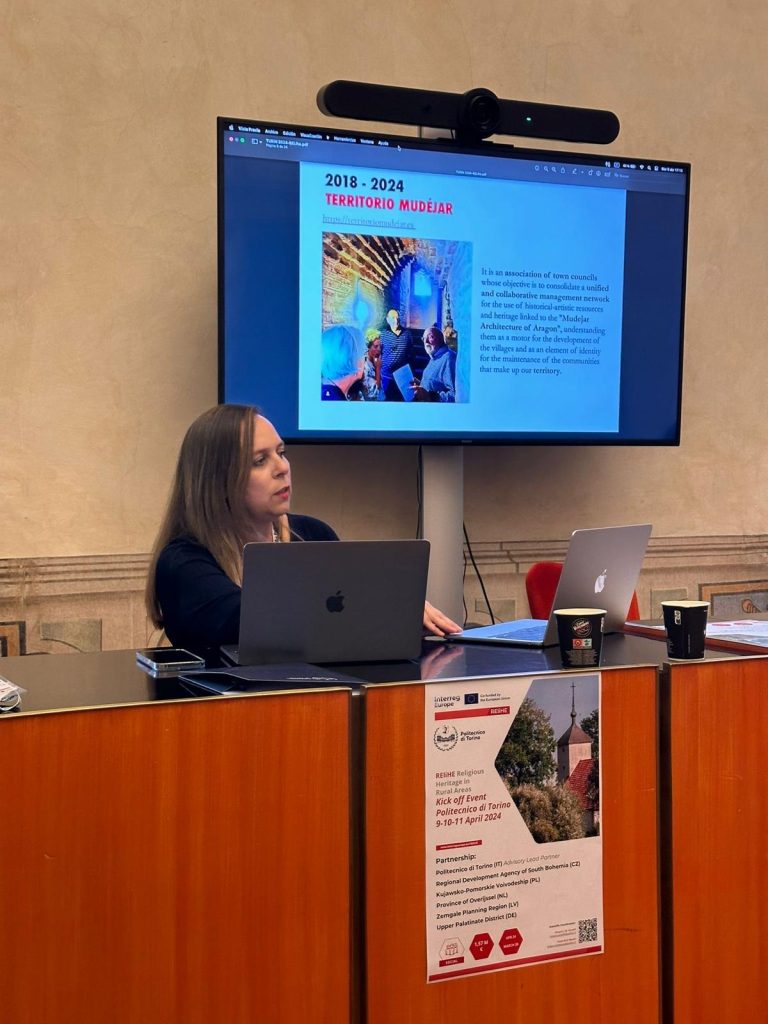
European technical visit of management plans in Turin: religious heritage in rural areas

The director of Territorio Mudéjar, Victoria Trasobares, participated from 9 to 11 April in Turin (Italy) in the European technical meeting for the study of management plans:Religious Heritage in Rural Areas (REliHE Interreg Europe Project). There, different European models were studied that can contribute to the preliminary study for the elaboration of the management plan for Mudejar Architecture in Aragon*.

Participating in the kick off event on behalf of the Politecnico di Torino are: Silvia Barbero, Francesco Novelli, Enrica Asselle, Roberto Caterino, Giulia Assalve, Riccardo Rudiero, Silvia Beltramo and Riccardo Palma. On behalf of Territorio Mudéjar, its director Victoria Trasobares is taking part.

At this meeting, a tour of the city was held, in which examples of new uses of religious buildings were studied and, among other places, the Castello di San Valentino and the headquarters of the Politecnico were visited.

* This project of Territorio Mudéjar has been selected in the 2023 call for grants for projects for the conservation and dissemination of World Heritage properties of the Ministry of Culture and Sport. Territorio Mudéjar is thus part of a group of more than 20 Spanish organisations working to promote and improve the application of the World Heritage Convention and its guidelines. These grants are financed by the Ministry of Culture and aim to promote the development of projects for the management, protection and conservation of these assets, as well as to promote their accessibility, visibility and dissemination at national and international level.
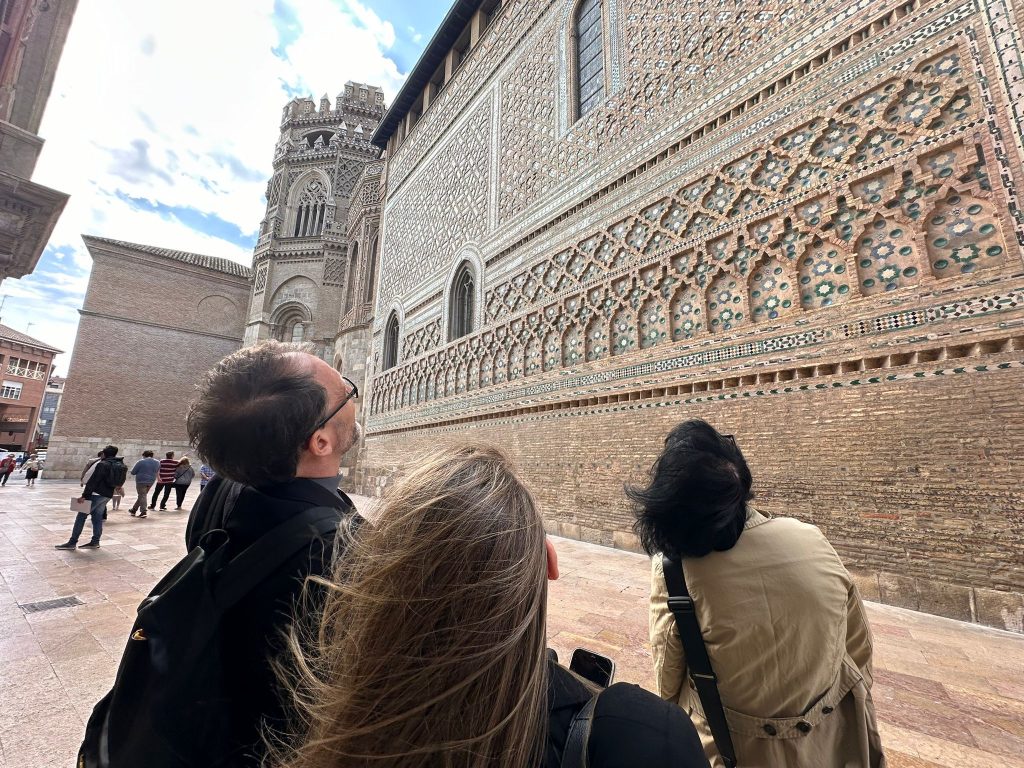
Ariza shows the exhibition “Mudéjar, the guide” at the Palacio de los Marqueses

The exhibition “Mudejar, the guide” travels this Friday to Ariza. Territorio Mudéjar will present this exhibition at 19.00 in the Palacio de los Marqueses. There will also be a guided tour.

???? It can be seen from 22nd to 24th March.
????At the Palacio de los Marqueses.
???? Friday 22nd from 19.00 to 20.30. Saturday 23rd from 12.00 to 13.30 and from 18.00 to 20.00. Sunday 24th will be open from 12.00 to 13.30.

Ricla and TM create a technical office to develop a strategic tourism and heritage plan.

Ricla Town Council and Territorio Mudéjar have signed a special agreement to develop a strategic plan for sustainable tourism and heritage action, which consists of the creation of a technical management office to advance strategic projects and develop a calendar of activities in the town.

The agreement will have an initial duration of six months. To develop it, the association Territorio Mudéjar has set up a work team made up of young professionals who have been trained in the organisation thanks to the Desafío-Arraigo internship programme, with which Territorio Mudéjar has been collaborating since 2019 and which has made it possible to create a pool of emerging professionals with the necessary skills for the needs specified by the Ricla Town Council.

This morning this collaboration was presented at the Diputación de Zaragoza by the Deputy Delegate for Culture, Charo Lázaro, the Mayor of Ricla, Ignacio Gutiérrez, and the Director of Territorio Mudéjar, Victoria Trasobares.

The Deputy Delegate for Culture, Charo Lázaro, pointed out that the collaboration presented today “is in line with the work of the Diputación de Zaragoza: offering services to citizens and promoting collaboration between municipalities”. “I would like to highlight the value of these actions that Territorio Mudéjar carries out with its partner towns and villages and that manage to become a strategic pillar of development and directly involve the localities”, said the deputy.

The mayor of Ricla, Ignacio Gutiérrez, has argued the great potential that Ricla has. “Thanks to this agreement we are going to take advantage of this potential to contribute to local development through a tourism and heritage strategy,” he explained. “Using heritage as an engine for development is a great opportunity to establish new pillars of growth and wealth creation that are sustainable and inclusive,” added the mayor.

The director of Territorio Mudéjar, Victoria Trasobares, pointed out that this is the third special agreement that the organisation has signed with a partner town council and that it involves introducing a way of working based on the quality and sustainability of resources from a strategic and unitary supervision. “The model consists of creating advisory committees that the partner town councils can use to contribute a strategic vision to their local resource management work”, she pointed out.

Citizen participation

The team will be supervised by the project management area of Territorio Mudéjar, which will define the strategic lines and integrate the local actions with the different innovation projects that Territorio Mudéjar develops in its Research and Project Stays. A strategy for citizen participation will also be developed in order to gather the contributions that neighbours wish to make to the design of the strategic plan.

This agreement will allow new professionals to work in Ricla to implement pilot actions of preventive heritage conservation, accessibility and heritage visits, as well as actions of citizen participation with the different local agents.

It will also contribute to advancing the concept of cultural landscape and rediscovering the local castle under restoration from a unique model of transdisciplinarity in the teams currently working on the project.

The project started in February with the first sectoral meetings, which will continue in the coming months, and will start different public activities from March with a calendar of conference visits. The activities will have a fixed part (historical-artistic visit to the heritage of Ricla) and another thematic part that will change on each date with specialists or local experts.

Calendar of activities

Saturday 16 March: architecture and town planning. Urban tour in which the history of Ricla will be explained through the evolution of urban planning and the explanation of its main architectural landmarks, such as the church of the Assumption or the castle.

Saturday 20 April: Landscape. There will be a visit to the architecture and town planning of the town that bring together the life of the residents of Ricla with special attention to the landscape, which is the context that has conditioned and made the town evolve in a certain way.

Saturday 11 May: palaeontology. Ricla has a rich palaeontological heritage located in the surrounding area. Through the route, you can see how this legacy from thousands of years ago still conditions the town today.

By mid-June. Ricla with the family. Educational activity. This is a route with a markedly didactic and educational character. It is aimed at all ages and will take up the work carried out in the 2021-2022 school year with CEIP Maestro Monreal on the project “Circular. Family walks” project. A project of materials for family and educational visits, carried out thanks to the Rural Development Programme (PDR) of Aragon 2014-2020 in the call for aid for the preparation and implementation of cooperation projects between local action groups, for the year 2019 through the group Fedivalca – Comarcas de Valdejalón and Cariñena.

Each dissemination activity will have the collaboration of local people and different gastronomic presentations such as seasonal fruits (cherries, peaches and different varieties of stone fruit), garlic, oil and wine, honey and preserved candied fruit such as figs, as well as meats and bakery and pastry preparations.

Offer of curricular and training internships for profiles linked to heritage

Territorio Mudéjar’s strategic objective is to promote curricular or training internships and to professionalise profiles linked to heritage in order to boost employment in rural areas, attract professionals and develop projects that involve the conservation of our heritage and investment in our villages as a differentiating element.

Rural Campus: This initiative, developed by the Ministry for Ecological Transition and the Demographic Challenge, in collaboration with the Ministry of Universities and public universities, will allow university students of any official qualification to carry out academic internships in municipalities of less than 5,000 inhabitants.

Desafío and Arraigo Programmes. Territorio Mudéjar will participate one more year in the edition of ‘Erasmus Rural’, funded by the Diputación de Zaragoza and managed by the University of Zaragoza, so that students and graduates of the Aragonese academic institution carry out internships in the rural areas of the province of Zaragoza and that seeks to contribute to the knowledge and talent to reach the rural environment. We will soon know more details about this initiative. Here you have the information about last year’s initiative:

For another year, we are participating in the rural mobility internship programme between the partner universities of the UNITA project.

Territorio Mudéjar is also working on the European Universities for the European Union (EU4EU) initiative that connects universities, companies and young professionals from all over Europe.

Our entity also offers the possibility of co-supervising final degree projects (TFG) and final master’s degree projects (TFM) linked to our territory and our strategic lines of work.

The call for proposals is open on a permanent basis. If you have a proposal, do not hesitate to contact us and tell us about your project.

The exhibition “Mudejar, the guide” travels to Tauste

The exhibition “Mudejar, the guide” has travelled to Tauste. The director of Territorio Mudéjar, Victoria Trasobares, has been in charge of presenting this exhibition in the Casa de Cultura of the town. Eugenia Gallego, project assistant at Territorio Mudéjar, explained the exhibition. In addition, there has been a guided tour in which we have also been accompanied by the Councillor for Culture of the City Council of Tauste, Ángel Ansó; Pilar Fresca, technician of Culture of the City Council; José Ángel Cardona, responsible for Tourism of the City Council; and Isabel Ferrer, from the office of local development of Tauste.

The exhibition can be seen from 20 February to 3 March at the Casa de Cultura, from Monday to Friday from 9.00 to 13.00 and from 17.00 to 20.00. On Sundays, from 17.00 to 20.00.

Territorio Mudéjar incorporates 8 partner towns and now has a network of 47 municipalities working to promote the management and dissemination of Mudejar culture.

Territorio Mudéjar has added 8 municipalities to its network, making a total of 47 associated localities that benefit from an action programme to strengthen the management, research and dissemination of Mudejar heritage, as well as the creation of a network of professionals and jobs linked to the management of these historical-artistic resources.

The association of municipalities, promoted by the Diputación de Zaragoza, has ratified the incorporation of the towns of Ariza, Calatorao, Cariñena, Gelsa, Herrera de los Navarros, Muel, Pozuel de Ariza and Tarazona in its general assembly of members.

At the assembly, chaired by the mayor of Tobed, Juan Antonio Sánchez Quero, and attended by the mayors of the member municipalities, Victoria Trasobares, director of the entity, presented the action plan to be developed in 2024.

The programme maintains a commitment to research for the development of projects on Mudejar culture through the Gonzalo M. Borrás Gualis Research and Project Stays, through which some 40 professionals have already participated. Currently, three stays and three artistic residencies are underway and there will be a new call for applications in 2024. In addition, the organisation continues to strengthen its network of heritage management professionals through curricular and extracurricular internship programmes and participation in programmes such as Desafío-Arraigo and UNITA: 29 students have already been trained at Territorio Mudéjar and this year there will be a new call for internships.

Territorio Mudéjar will continue to offer personalised management to its members, studying their needs and signing special agreements with them to form technical and scientific advisory work teams for projects such as the Daroca Destination Tourism Sustainability Plan, or the special agreements with Fuentes de Ebro, Ricla and San Mateo de Gállego to carry out specific activities.

The entity will continue to make progress on key projects such as Didactics of the Mudejar -which makes it possible to generate heritage-based learning activities for rural schools and to make available materials; the Territorio Mudéjar routes by the partner localities, which have been a success with the public at their launch and are already highly occupied for the coming months; or the project Study of Aragonese Mudejar art, the legacy of Gonzalo M. Borrás Gualis, which implies having a growing, interdisciplinary and international working team, a high-level European team that can lay the foundations for future European and international cooperation work.

In parallel, the entity is working on framework agreements to create teams of solvent partners such as the Medina Network, to form a working team and collaborate on international tourism experience projects; the Alliance of Cultural Landscapes, of which Territorio Mudéjar has been a member since November last year; and the Turin Polytechnic Institute.

In addition, Territorio Mudéjar will continue to participate in national and internationalevents that position the entity as an example of management and in international projects such as the continuity of the Digitour project or fairs such as Cultourfair 2024.