Territorio Mudéjar, two years working for heritage and our towns

Territorio Mudéjar has now been working for two years, guided by Mudejar heritage in the broadest sense, and we are tremendously grateful to everyone who makes it possible for us to continue building this collaborative network. We now form a community of 34 towns with their active inhabitants and a multi-disciplinary team of researchers, partners and students. Together we strive to make Mudejar heritage a driver of development for the towns and also an emblem of identity that helps uphold the population.

Over these two years, we have worked with scientific rigor to further the knowledge about Mudejar culture, we have acted as its spokesperson, and we have launched projects that contribute to the sustainable social and economic development of our network of towns.

Among the actions in our annual work plan, two initiatives stand out:

One, the Challenge Program, sponsored by the Provincial Government of Zaragoza through the Cátedra DPZ de Despoblación y Creatividad (Zaragoza Provincial Government Chair for Depopulation and Creativity), which enabled University of Zaragoza students to carry out internships in Territorio Mudéjar (four in 2019 and seven this year). The students in the 2019 edition wrapped up the program by putting what they had learned into practice with a tour of the towers in Ricla, Longares, Romanos, Terrer and Tauste. The participants in 2020, in turn, began in August with an introduction to the entity and its working methods, familiarizing them with the Territorio Mudéjar network and its main stakeholders, followed by training in diverse disciplines and fieldwork.

Two, the Gonzalo M. Borrás Gualis Fieldwork Grants, which make it possible to develop responsible, sustainable and innovative projects that have a direct impact on rural settings, foster their visibility and raise awareness about the area. In the spring, we completed the first edition with project presentations given by researchers. Now, we have just chosen the winning candidates in the second call for proposals, awarding five grants and one second prize in fields such as the recovery of construction materials like Mudejar plaster work, the conservation of traditional architecture, designing tours that combine agricultural cycles and Mudejar heritage, the creation of a Territorio Mudéjar podcast channel, a guide about historical carpentry in our towns and the study of new cultural management models for Mudejar civil architecture.

As part of our networking endeavors, through our collaboration with the ADRI groups, we continue working on the initiative called “Territorio Mudéjar circular desde la escuela” (Territorio Mudéjar, circular from schools), which aims to help the children in our towns learn to recognize and appreciate from a young age the heritage surrounding them, thus bolstering a sense of regional identity.

Furthermore, we are increasingly present at forums on heritage and innovation. In this regard, we participated in the 1st Annual ICOMOS Spain Symposium of Natural and Cultural Heritage, held in Madrid in November, where the latest research done in the field of monument preservation, restoration, documentation, awareness and dissemination was presented. Also in November, we attended the Meeting of Spanish World Heritage Managers, which gathered in Cordoba to discuss the topic of ‘World Heritage accessible to everyone’, organized by the Spanish Ministry of Culture and Sports.

In conjunction with other entities devoted to heritage management and rural development, in January we took part in the first meeting with local agents from the province of Zaragoza in the MOMAr Interreg Europe projectModels of Management for Singular Rural Heritage, an initiative led by the Provincial Government of Zaragoza for the purpose of designing new rural heritage management models that foster sustainable development and adapt to the specific features of each region. Along these lines, we also presented our working model at the MOMAr Interreg Europe meeting held in Corsica in March.

And in August we shared our innovative management of artistic and historical heritage in a rural setting at the CortonaOpen3D workshop , a specialized course in computer graphics and smart city design applied to cultural heritage, which was held in the Italian city of Cortona, in the province of Arezzo (Tuscany).

In terms of outreach and communication, the towns and heritage of Territorio Mudéjar were featured in the January issue of “World Heritage“ magazine, published by the UNESCO World Heritage Centre.

Moreover, the Mudejar architecture in our member towns can now be accessed at the click of a mouse by anyone, anywhere in the world, thanks to an initiative by the Provincial Government of Zaragoza in collaboration with Territorio Mudéjar, which made it possible to include these monuments in the “UNESCO World Heritage” collection on Google Arts and Culture. This multi-lingual platform has received more than 175 million visits and includes a mobile application that has been downloaded more than 30 million times, offering virtual tours of museums and heritage treasures around the world.

In addition, for yet another year, we participated in the course entitled Viaje al arte mudéjar (Journey into Mudejar art) in July, one of the special courses offered by University of Zaragoza, aimed at directly studying Mudejar art by taking in-depth tours of the most emblematic monuments in these areas.

In terms of special events, in December we set up a special schedule of activities to commemorate the 18th anniversary of the designation of Mudejar architecture of Aragon as UNESCO World Heritage. This included promoting visits to the towns, project activities and a live radio broadcast from Tobed.

In January, at FITUR 2020, the important tourism trade fair, we presented our proposal for developing Mudejar heritage management practices that foster responsible, sustainable tourism designed by those in the places where the heritage is located, always in conjunction with their inhabitants.

And on April 18, we joined in on the celebration of the International Day for Monuments and Sites with special videos.

During the year we also bolstered our presence in the media and in social media by creating our own content (videos, live broadcasts…) and new YouTube and LinkedIn channels. Our goal is to make our networks the benchmark space for information and knowledge about Mudejar, in the broadest sense, and to spotlight our member towns and the activities taking place there.

5 research stays and 1 runner-up awarded for study, resource management and project development in partner localities

Territorio Mudéjar, the network of 34 municipalities promoted by the Diputación de Zaragoza that works to conserve and promote Mudejar art in the province, has awarded 5 research stays and one runner-up for the study, development of projects and management of the natural and heritage resources of its member towns.

This is the second call for these stays, named after Gonzalo M. Borrás Gualis as a tribute to the distinguished professor and expert on the Mudejar. Each of them is endowed with 6,000 euros and will allow the development of responsible, sustainable and innovative research projects with a direct impact on the rural environment and that favour its visibility and knowledge.

This edition has been characterised by the high level of the proposals, which include multidisciplinary teams of researchers from different Spanish and Italian countries, with the advice of prestigious experts. The selected projects will allow the development of projects in areas such as the recovery of building materials such as Mudejar plaster, the conservation of traditional architecture, the design of visits that combine the agricultural calendar and Mudejar heritage, the creation of a podcast channel of Territorio Mudéjar, a guide to the historical carpentry of our villages and the study of new models of cultural management of Mudejar civil architecture.

The aim of these stays is to promote knowledge of the rural territory from its Mudejar identity through innovative approaches that have a positive impact on the villages and promote a network of work on the possibilities offered by the resources of the territory and collaborative and interdisciplinary work. In addition, specifically, the aim is to improve knowledge of the Mudejar as a World Heritage Site and the benefits it brings as an international brand recognised by Unesco.

The selected projects are framed within five lines of research: new perspectives on Mudejar art, Mudejar territory and cultural landscape, cultural heritage management, communication and dissemination of Mudejar heritage and Mudejar heritage and its social function as a key element of territorial development.

The projects one by one

1-“Mudejar plaster, an element of identity, knowledge and future opportunities”.

Traditional plaster is a key material in Mudejar architecture and is used in monumental and popular architecture, but it is largely unknown, as it is often misidentified and confused with lime-based materials. In the 2019 research stay, the architect Pedro Bel exhaustively documented the manufacturing process of traditional plaster in 16 municipalities and drew attention to the difficulties of rehabilitating plaster constructions due to the lack of compatible materials. With the 2020 research stay, he is looking for solutions to the conservation limitations of traditional plaster with ambitious objectives: to learn more about this material, to disseminate its role in traditional Aragonese architecture and to develop a plaster that can be manufactured today and that preserves the legacy it has received. In this way, it aims to reactivate the quarries, to obtain a material compatible with Mudejar plaster for restoration and rehabilitation and to reintroduce it in contemporary architecture.

This project has a strong team of researchers from the universities of Zaragoza, Granada, Malaga and the Polytechnic of Madrid and high-level advisors such as Ramón Rubio Domene, head of the tiled plasterwork restoration workshop of the Patronato de La Alhambra, and Antonio Almagro Gorbea, member of the Royal Academy of Fine Arts of San Fernando.

2-“Vernacular architecture in Mudejar villages: tools and networks for adaptive re-use and compatible intervention”.

In addition to monuments of great historical and artistic value, the towns and villages of Mudejar Territory have a more humble architecture, but of great social and ethnological value, integrated into the environment and reflecting the cultural identity of the area. The proper conservation and enhancement of this traditional architecture can be the starting point for economic regeneration based on the use of heritage sites by private individuals, which can increase the attractiveness and competitiveness of historic towns. To this end, it is necessary to balance the conservation of architectural heritage and socio-economic development.

Javier Gómez Patrocinio, PhD in architecture from the University of Valencia, studied the construction techniques and intervention dynamics prevailing in Territorio Mudéjar during his 2019 stay. Now, he is continuing his research and plans to design and implement tools to raise awareness among local communities about the value of vernacular architecture and the importance of its preservation in order to help developers improve the compatibility of interventions on traditional buildings.

3-“Mudejar heritage and agricultural calendar: The poetics of the landscape. Design and programming of pilot experiences for visits during the seasons of the year”.

Agricultural heritage, considered as a cultural asset and understood in a similar way to intangible heritage, is a reference point for identity and a unique and irreplaceable part of the landscape in which it is framed. With this research stay, the art historians Juan Ignacio Santos Rodríguez and Elvira del Pilar Domínguez Castro will diagnose the degree of representativeness and typology of this heritage, as well as its characterisation and capacity to generate new heritage resources linked to both the agricultural calendar and the Mudejar heritage. The aim is to design a plan of activities that link the agricultural heritage with Mudejar architecture, which is the result of this landscape, and which are linked to the agricultural calendar.

It also includes pilot itinerary tests in order to show the undeniable and unique symbiosis between the land, agricultural production and the materials of the environment with Mudejar architecture and decoration, as well as to strengthen the emotional link of the population with the land, its agricultural economic activity and its products.

4-“Loqui Walls. The walls speak. Podcast to give voice to the territory”.

This communication project consists of the creation of a podcast channel for Territorio Mudéjar to encourage and complement visits to the monuments in our towns. The traveller will be able to listen to these podcasts through mobile technologies at any time of the day or week, which allows us to respond to the needs of sustainable and small-scale tourism.

The content of the podcasts will not replace the experience of visiting the main monument, which should always be explained in situ by a specialist, but will complement it with proposals for tours of the territory that will enhance visits between localities, with additional information about the locality that will complement existing visits, and with suggestions for activities that can be carried out in the area. The project will also help to consolidate the idea of Mudejar culture beyond the monumental. The proposal will be developed by a team formed by Gianluca Vita (Politecnico di Milano), Irene Ruiz (Politecnico di Torino and University of Zaragoza) and the expert in new technologies Marco Marcellini.

5-“Mudejar wood. Guide to historic carpentry in the towns of Territorio Mudéjar”.

This research project is part of the area of new perspectives on Mudéjar art and aims to promote knowledge and appreciation of the manifestations of Mudéjar art made in wood to the fullest extent: ceilings (alfarjes and file frames), doors, windows, eaves, choirs, organ bases, choir stalls, choir stalls, carillons… It will consist of creating a specialised online publication containing an inventory of the works with descriptions, status and images. It will also include texts by specialists on the techniques and fundamentals of Mudéjar carpentry, a complete bibliography on the subject and special chapters on the most important works of historical carpentry in Territorio Mudéjar.

Myriam Monterde, a professional in cultural management and museology, and José Manuel Herraiz, an audiovisual producer and scriptwriter specialising in the historical and cultural genre, are in charge of developing this research.

6-Accesit: “New models of cultural management and financing for restoration projects of historic-monumental Mudejar civil buildings in the province of Zaragoza”.

Territorio Mudéjar has awarded a second prize to a research project on Mudéjar civil architecture. The art historians Ricardo Monreal Lafuente and Marta López Veamonte are responsible for this initiative with which they will continue a process of research and data collection begun in 2019. The aim of this work was to obtain current and technologically advanced material on the civil architecture of the Mudejar Territory that preserves Mudejar elements and to document the management model of these buildings. The current 2020 phase will consist of specific work on one of the most important civil spaces in our territory, the Palacio de los Luna de Daroca. Its development will entail defining a working model for this type of Mudejar architecture as well as the analysis of new models for the management of historical-artistic heritage that will allow these buildings to be put to use, thus contributing to their sustainability, their social function and their incorporation into the life of the towns. It will also address how to finance restoration projects for these buildings.

Territorio Mudéjar participates in the CortonaOpen3D workshop as an example of innovative heritage management

Territorio Mudéjar took part in the CortonaOpen3D workshop, a specialized course in computer graphics and smart city design applied to cultural heritage, which was held from August 1 to 10 in the Italian city of Cortona, in the province of Arezzo (Tuscany), to share its example of innovative management of artistic and historical heritage in a rural setting.

During this workshop, the participants work individually or as a group to develop an architectural design project or an art installation inserted into the context of the city of Cortona. To do this, they receive specialized training in different areas related to architecture.

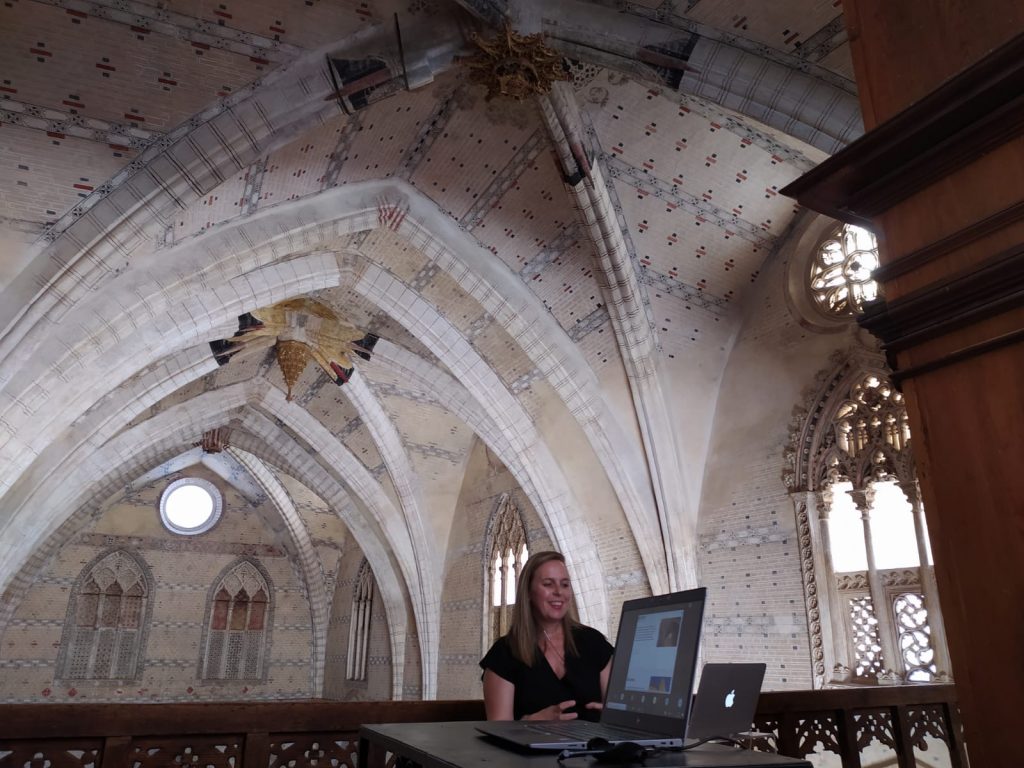
In this regard, Victoria Trasobares, director of Territorio Mudéjar, gave a conference to explain the Territorio Mudéjar model “as a strategic example of heritage management: the project behind the projects”.

The lecture was streamed live from the town of Tobed and in it, Victoria Trasobares discussed how the Territorio Mudéjar network began and grew, outlined its activity program and, in line with the course contents, explained how a technological vision can guide the work of historical, artistic and cultural heritage management.

She also talked about the “Mudéjar Patrimonio Mundial 3D” (3D Mudejar World Heritage) project, a cross-disciplinary initiative led by Luis Agustín Hernández, architect and professor at the School of Engineering and Architecture of University of Zaragoza, aimed at revaluing Mudejar heritage. The project arose from the 2019 fieldwork grants and will continue in a major new cross-disciplinary, multi-university project between Spain and Italy. The University of Zaragoza (School of Engineering and Architecture, and the Art History department of the School of Humanities), the Polytechnic of Turin, Polytechnic of Milan and the University of Salerno will all take part.

In addition, the conference at CortonaOpen3D represented the first of numerous wide-ranging activities open to the students in the 2020 Challenge Program internships, an initiative funded by the Provincial Government of Zaragoza and managed by Universa, the job orientation and employment service of University of Zaragoza.

Journey into the Mudejar with the special course at University of Zaragoza

For yet another year, Territorio Mudéjar is participating in the course entitled “Viaje al arte mudéjar” (Journey into Mudejar art), which will take place on July 13, 14 and 15, 2020, as part of the special courses at University of Zaragoza, aimed at directly studying Mudejar art by taking in-depth tours of the most emblematic monuments in these areas. The course provides a thorough explanation of the geographic, historical, ethnographic and artistic framework of this genre, and represents a continuation of the journey that began seven years ago under the leadership of professor Gonzalo M. Borrás Gualis, a constant presence in our work.

This year, we’ll be visiting 16 towns, all of which are part of Territorio Mudéjar, and traveling hundreds of kilometers between the valleys in the districts of CalatayudArandaDaroca and Valdejalón with the director of Territorio Mudéjar, Victoria Trasobares; supervising professor of the UNED in Calatayud, José Luis Cortés; University of Zaragoza professor, Rebeca Carretero; art historian at Centro de Estudios Bilbilitanos, Silvia Molina, and Elena Paulino, from the Complutense University.

The Mudejar architecture of Aragon was designated as UNESCO World Heritage in 1986 in the city of Teruel and in 2001 it was extended to the province of Zaragoza, with the city of Zaragoza, the Santa María collegiate church in Calatayud, the church of La Virgen in Tobed and the church of Santa Tecla in Cervera de la Cañada. “This course focuses on the conceptual hub around Calatayud, which features a web of rivers linked to the Jalón River, bolstering the concept of valley culture through learning on site. The course affords a complete understanding by learning on the ground and through the unique contribution of each individual place,” explains Victoria Trasobares. The director of Territorio Mudéjar added that monuments are just the tip of the iceberg in Mudejar culture, because it is the context of the towns and the valleys that provides room for comprehension. “In this course, we show that learning can have a scientific side, but it can also have a fun approach entailing a journey that is open to all audiences, with universal access, and this element has defined our courses ever since we first began in 2014,” she concludes.

COURSE SCHEDULE

Monday, July 13

  • 9:30 AM. Tour of the chapel of La Virgen de Cabañas in La Almunia de Doña Godina. Lecture “El génesis del mudéjar” (The genesis of Mudejar).
  • 10:15 AM. Tour of the tower and church of Santa María in Ricla. Lecture “El mudéjar en la Comarca de Valdejalón, Ricla” (Mudejar in the district of Valdejalón, Ricla).
  • 12:00 PM. Tour of the church of Santa María in Tobed. Lecture “Mahoma Calahorri y el Santo Sepulcro” (Mahoma Calahorri and the Holy Sepulcher).
  • 1:00 PM. Tour of Espacio Mudéjar-Mahoma Calahorri. “La Gestión del Patrimonio y el territorio” (Heritage management and the countryside).
  • 2:00 PM. Tour of the church of San Miguel in Belmonte de Gracián. “Épocas y estética del mudéjar en la torre y el ábside de la torre de Belmonte de Gracián” (Mudejar periods and esthetics in the tower and tower apse in Belmonte de Gracián).
  • 4:30 PM. Tour of the church of Santa María in Maluenda. “La personalidad del mudéjar de Maluenda” (The Mudejar personality of Maluenda).
  • 5:30 PM. Tour of the church of Santas Justa y Rufina, Maluenda. “El binomio, arte mudéjar-pintura gótica” (The pairing of Mudejar art and Gothic painting).
  • 6:30 PM. Tour of the church of San Martín de Tours in Morata de Jiloca. “Transformaciones de las iglesias fortaleza” (Transformations in fortified churches).
  • 8:30 PM. Tour of the church of San Pedro de los Francos in Calatayud. “Espacios mudéjares” (Mudejar spaces).

Tuesday, July 14

  • 9:30 AM. Tour of the castle in Mesones de Isuela. “Las techumbres mudéjares I” (Mudejar ceilings I).
  • 11:00 AM. Tour of the castle of Papa Luna in Illueca. “Las techumbres mudéjares II” (Mudejar ceilings II).
  • 12:00 PM. Tour of the church of San Juan Bautista in Illueca. “Pervivencias mudéjares en el siglo XVII” (Enduring Mudejar elements in the 17th century).
  • 1:00 PM. Tour of the church of Santa Ana in Brea de Aragón. “La obra de Juan de Marca” (The work of Juan de Marca).
  • 4:30 PM. Tour of the church of Nª Sª del Castillo, Aniñón. “Las iglesias fortaleza del Valle del Ribota I” (The fortified churches in the Ribota Valley I).
  • 5:45 PM. Tour of the church of La Asunción or Santa Tecla. Cervera de la Cañada. “Las iglesias fortaleza del Valle del Ribota II” (The fortified churches in the Ribota Valley II).
  • 7:15 PM. Tour of the church of San Félix, Torralba de Ribota. “Las iglesias fortaleza del Valle del Ribota III” (The fortified churches in the Ribota Valley III).
  • 8:30 PM. Sanctuary of La Virgen de la Peña, Calatayud.

Wednesday, July 15

  • 9:15 AM. Tour of the Luna family home, Daroca. “El mudéjar civil” (Civil Mudejar).
  • 10:15 AM. Tour of the church of San Juan. “La fusión del mudéjar y el románico I” (The fusion of Mudejar and Romanesque I).
  • 11:30 AM. Tour of the Santo Domingo de Silos church tower. “La fusión del mudéjar y el románico I” (The fusion of Mudejar and Romanesque I).
  • 12:45 PM. Tour of the Santa María church tower in Ateca. “Las torres de ascendencia islámica I” (Towers of Islamic origin I).
  • 1:45 PM. Tour of the Asunción church tower in Terrer. “Las torres de ascendencia islámica II” (Towers of Islamic origin II).
  • 5:00 PM. Tour of the church of San Andrés in Calatayud. “El mudéjar después de la Guerra de los Pedros I” (Mudejar after the War of Two Peters I).
  • 6:00 PM. Tour of the cloister of the Santa María collegiate church in Calatayud. “La figura y mecenazgo del Papa Luna” (The figure and patronage of Papa Luna).
  • 6:30 PM. Closing ceremony.

The Aragonese Mudejar, a mouse-click away around the world with the Google Arts and Culture platform

The Mudejar architecture of the province of Zaragoza can be accessed at the click of a mouse by anyone, anywhere around the world, thanks to its inclusion in the “UNESCO World Heritage” collection on Google Arts and Culture, a multi-lingual platform that has received more than 175 million visits and a mobile application that has been downloaded more than 30 million times, which offers virtual tours of museums and heritage treasures around the world.

Thanks to the initiative of the Provincial Government of Zaragoza and Territorio Mudéjar’s collaboration, the platform has included the Mudejar architecture of Aragon in a special UNESCO project for the promotion and dissemination of World Heritage sites. Specifically, the platform displays the monuments designated as UNESCO World Heritage sites in 2001: the church of Santa Tecla in Cervera de la Cañada, the church of La Virgen in Tobed and the Santa María collegiate church in Calatayud, in Zaragoza province, and the Seo, the San Pablo tower and the Aljafería palace, in the city of Zaragoza. Mudejar sites in the province of Teruel, declared UNESCO World Heritage 15 years earlier, thus triggering the process of promotion and rediscovery of the Mudejar as the most authentic art form in Aragon, can also be seen.

The Mudejar art of Aragon has a strong regional component and cannot be understood through a single site. Its diversity and wealth is much more thoroughly explained when it is defined as “valley culture”, in which the valleys of Zaragoza are a highlight. To discover all its splendor, Google Arts and Culture has also included photographs of some monuments in Territorio Mudéjar that are not listed as World Heritage, such as the church in Torralba de Ribota, the San Andrés tower in Calatayud, the magnificent views of the city of Daroca and the church in Aniñón, just a few of the many wonderful examples found scattered throughout the valleys of Zaragoza. In addition, there are also images of the Seo in Zaragoza, the San Pablo tower and the Aljafería palace in the city of Zaragoza, as well as the El Salvador church tower in the city of Teruel. All of them offer a glimpse of the scope of Mudejar heritage as a cultural expression found nowhere else in the world.

The platform offers photographs, a video about the Mudejar identity of the towns in Zaragoza that share this rich heritage, and a photogrammetric model of some of the World Heritage churches. This model was created as a result of the work done in one of the Territorio Mudéjar fieldwork grants in 2019, representing a launching pad for many other projects in the field of 3D heritage. The owners of the more than 30 million mobile phones that have downloaded the Google Arts and Culture app have received a message containing a link to all of these contents.


Universality, uniqueness and authenticity

This initiative spotlights the Mudejar World Heritage brand internationally and provides a powerful tool for heritage outreach and for the towns in the province.

The Mudejar architecture of Aragon was declared World Heritage by UNESCO in 2001 for its “universality, uniqueness and authenticity”. Although Mudejar is usually described as Christian architecture built by Mudejars, Muslims who remained in the lands conquered by Christian rulers, this avant-garde movement from the medieval period is actually much more complex. This genre, which extends across several centuries and has a regional component entailing journeys across valleys, mountains and urban settings, has stamped each town with a unique personality that goes beyond mere monuments to encompass urban design, the division of land, the landscape and society, impacting the intangible heritage of the towns and their idiosyncrasy.


Link to Aragonese Mudejar architecture on Google Arts and Culture:

https://artsandculture.google.com/story/VwVBrGnQt1ZofQ


Territorio Mudéjar holds its annual assembly with 34 towns in attendance and an action plan for spotlighting Mudejar heritage and creating jobs in rural areas

Territorio Mudéjar now has 34 member towns – it started with 22 in 2018 – that will benefit from an activity program in 2020 designed to support the management, research and dissemination of Mudejar heritage and to create a network of professionals and jobs linked to the management of these historical and artistic resources. The association of towns promoted by the Provincial Government of Zaragoza held its annual assembly online this year and ratified the inclusion of the towns of Mainar, featuring the slender Mudejar tower of the church of Santa Ana, Magallón, represented by the chapel of Nuestra Señora de la Huerta and the church of San Lorenzo, Villarreal de Huerva, with the San Miguel tower and the chapel of Nuestra Señora del Rosario, and Zuera, with the San Pedro church.

At the assembly, chaired by the mayor of Tobed, Juan Antonio Sánchez Quero, and attended by the mayors of the member towns, Victoria Trasobares, director of the entity, presented the activity program that is being carried out in 2020 and the adjustments made in response to the COVID-19 situation.

The plan will continue promoting knowledge applied to Mudejar culture thanks to the second call for proposals to the Gonzalo M. Borrás Gualis grants for projects and fieldwork, which will make it possible to implement up to six fieldwork projects and will help create a network of professionals linked to the towns, with the training and skills needed to ensure that projects are launched and that they remain feasible and are implemented in the future.

Territorio Mudéjar will continue progressing on projects aimed at designing job profiles related to the heritage in the towns in order to attract highly qualified professionals who can generate business ventures in Mudejar locations.

Work will also be done on educational innovation projects, such as the so-called “Circular Desde la Escuela Rural” (Circular from Rural Schools), to include contents related to Mudejar heritage in the curricula and to generate value in the schools to make teaching positions in these towns more attractive and, therefore, more stable.

In turn, Territorio Mudéjar will participate in calls for proposals and European projects that bring investments and foster development in the towns, such as the MOMAr Interreg project by the Provincial Government of Zaragoza and Cultural Heritage in Action, in which the entity was selected in the ‘peer learning visits’ category, generating learning visits among European entities with common goals.

Similarly, the members will continue to receive advice on developing projects and seeking funding, and the dissemination and communication of Mudejar culture will be strengthened through the creation of our own contents, workshops in the towns and activities in the media.

Deadline for submission of proposals for research stays extended until 29 June

Territorio Mudéjar is extending the deadline for submitting proposals for the call for five research stays for the study and management of the heritage and natural resources of its villages until Monday 29 June due to the high number of enquiries received in recent days. This is the second edition of these stays, which bear the name of Gonzalo M. Borrás Gualis in homage to the distinguished professor and expert in Mudejar art who died last year. Each of the grants is endowed with 6,000 euros and all of them will be aimed at developing responsible, sustainable and innovative projects that have a direct impact on the rural environment and that favour its visibility and knowledge. Territorio Mudéjar is an initiative promoted by the Diputación de Zaragoza that brings together 34 municipalities to conserve and promote Mudejar art in the province.

Interested parties can submit their ideas until 29 June 2020 at 23.59 pm (CET). Both novice and mid-career researchers and professionals in heritage management with innovative territorial work or projects that also consider responsible and sustainable uses of local resources are eligible to apply. It will also be essential that they contemplate and justify the permanence for a certain period of time in one or more localities of Territorio Mudéjar. Proposals may be in an initial phase, under development, being tested or being implemented, and must demonstrate the direct impact on at least three associated municipalities, as well as their influence on the rest of the territory.

Applicants may apply as individuals or as a research group; they may be at an initial or intermediate stage of their research career or professional activity; and they must provide proof of higher education related to the areas covered by the call and a minimum of two years of research or professional experience, whether paid or unpaid. However, the professional career may be replaced by a master’s degree in areas related to cultural heritage.

With this second call for Gonzalo Borrás Gualis research stays and projects, Territorio Mudéjar has set itself the objective of promoting knowledge of the rural territory from its Mudejar identity through innovative approaches that have a positive impact on the villages and that promote a network of work on the possibilities offered by the resources of the territory and collaborative and interdisciplinary work. It also aims to create dynamics of social participation in the field of heritage. Furthermore, the specific aim is to improve knowledge of the Mudejar as a World Heritage Site and the benefits it brings as an international brand recognised by Unesco.

Five different lines of research

The first of the five areas on which the projects submitted to the call for proposals may focus is New perspectives on Mudejar art, which includes updating data on this heritage in terms of monuments, urban, ethnographic and linguistic aspects, as well as technical languages applied to this style. Geolocation and cartographies are also included, as well as other aspects that allow the scientific base on this artistic style to be broadened.

A second line of research is Mudejar Territory and cultural landscape. It will assess the action of people on heritage resources, social and natural contexts and the interaction and relationship between landscape and monumentality.

The management of cultural heritage is the third area of action, which encompasses new models of uses in heritage management other than tourism or leisure. It also includes studies of physical, economic or intellectual accessibility, as well as future ideas for conservation and intervention in heritage.

New media discourses and knowledge or information for a general public will be the subject of the proposals in Communication and dissemination of Mudejar heritage.

Finally, in Mudejar Heritage and its social function as a key element of territorial development, projects related to social participation in the enhancement and collective construction of new forms of learning, intergenerational experiences, or emotional ties and roots as a basis for the protection and management of heritage will be considered.

Basis of the call: https://www.territoriomudejar.es/estancias-de-investigacion-y-proyectos-2020/

Stays 2019: Contemporary Imaginary of the Mudejar: broadening the view of what it means to be Mudejar and creating a map of the territory through memories and emotions.

The project Contemporary Imaginary of the Mudejar aims to renew the set of symbols and memories associated with this artistic and cultural phenomenon, going beyond mere architectural elements. It proposes an investigation and reflection from an image-centred point of view on the relationships that the inhabitants of these places have maintained not only with the monuments, but also with the landscape, the traditions, the trades or even the construction materials that reflect the true attachment to the territory. This initiative has provided a new look at the already existing visual heritage, creating and integrating a new ‘level’ which, from the present time, is added to the set of references that until now have defined what is understood as Mudejar.

In its first phase, the project has worked on the state of the question by reviewing all the photographic archives produced by different local entities and agents, seeking to construct new stories that help to disseminate the importance of the image for communication in the 21st century and that serve to teach the new visual languages that can be used to transmit a new way of “being Mudejar”.

The second phase of the stay was linked to the Cartografías de Identidades Locales project, selected by the Ministry of Culture and Sport in the 2019 call for projects for Cultural Industries for the company Ad Hoc Gestión Cultural, in the execution of which local photography was collected with neighbourhood groups. The collection activities have been carried out in several localities -Cervera de la Cañada, Belmonte de Gracián and Tobed- but have had resonance in the rest of the Mudejar Territory through the internet and social networks, which has allowed to obtain a ‘feedback’ not only virtually, but also through small displacements and meetings that are helping to “create community”. More info at: https://www.cartografiadeidentidadesrurales.es/

This research has concluded, among other things, that it is necessary to develop a specific methodology for collecting family images in rural areas in order to recover the history and “intrahistory” of the communities and to try to “professionalise” the cataloguing process. The study also points out that the concept of vernacular/popular photography should be overcome as a mere instrument of documentation and memory and understood as an instrument for building identity and projecting specific values into the future. Furthermore, it opens the door to building a network between municipalities that allows the exchange of knowledge of the images, comparing them, finding similarities and reinforcing the sense of identity of the Mudejar territory. And also to establish and strengthen the link between the citizens and the Mudejar heritage by appealing to the common history.

LINE OF RESEARCH. It can be framed in a double line of research (1) New views on Mudejar art and (5) Heritage from its social function

THE AUTHOR. Irene Ruiz holds a PhD in Art History, a degree in Fine Arts with a specialisation in photography, a technical architect, a master’s degree in restoration and a diploma in business studies. She is currently a post-doctoral researcher at the Department of Architecture and Design of the Politecnico di Torino, a job she combines with her work as a professional photographer. More info: https://polito.academia.edu/IreneRuiz

2019 Residencies: Mudejar Heritage and Learning, the pedagogical material: knowing the heritage to value it and devise rural development models

A multidisciplinary team of seven researchers has developed the research stay Landscape, cultural heritage and depopulation, which consists of the development of school materials that allow secondary school students to work in the classroom on the relationship between depopulation and cultural heritage in the villages of Territorio Mudéjar. The aim is for students to acquire skills that enable them to understand and value this heritage and to be able to formulate models and proposals for rural development that will enable them to tackle depopulation.

The materials are available in open access so that they can be used by other educational centres, thus promoting knowledge of Mudejar heritage outside the towns that form part of the Mudejar Territory. They can be accessed at: https://paisaje-patrimonio-cultural-y-despoblacin-cmzgz.hub.arcgis.com/

These materials introduce the use of ICT in the classroom, with tools similar to those already in widespread use in the professional world, and provide students with a tool for geographical analysis to work on the curricular content of the subject of Geography. Moreover, they are an educational resource that favours methodological and didactic renewal and the teacher can adapt them to the characteristics of his or her group or to specific students. All this with an online accompaniment, support and training in the use and development of this application during the course.

The materials produced are presented on a website organised into sections. On the one hand, there are multimedia applications on a specific thematic content that have been developed with Story Map Cascade, a template that allows combining narrative text, maps, images and multimedia content. In each application there are interactive maps to work with different layers of information and with activities and instructions for students. In addition, there are field project viewers for planning, capturing, analysing and presenting different field projects on intangible heritage, natural heritage, cultural heritage and landscape types. Finally, short explanatory videos on interactive maps and their tools have been added.

This project for Secondary completes Territorio Mudéjar’s initiative for Primary Education called “Rural school as the beginning of the circle” with which we want to introduce the way of working with heritage into the curricula of rural schools. The aim is for pupils to learn about and value the heritage that surrounds them and thus reinforce their roots and identity in their territory.

LINE OF RESEARCH (2) Mudejar Territory and cultural landscape

THE AUTHORS:

  • Carlos Guallart Moreno, coordinator of the project, graduate in Geography and History, master’s degree in Territorial and Environmental Organisation, Santa María del Pilar school (Zaragoza).
  • Noelia Cuartero Latorre, degree in Geography and Territorial Planning from the University of Zaragoza.
  • María Felisa Ferraz Gracia, PhD in Information and Documentation, Colegio Sagrado Corazón de Jesús (Zaragoza).
  • María Laguna Marín-Yaseli, PhD in Geography, Colegio El Salvador (Zaragoza).
  • Alfredo Ollero Ojeda, PhD in Geography, Zaragoza University
  • Beatriz Rodrigo Garza, BA in Art History and MA in Cultural Heritage Management, teacher at IES La Azucarera (Zaragoza).
  • Javier Velilla Gil, graduate in Geography and History and high school teacher at IES El Portillo (Zaragoza).

Stays 2019: Mudejar World Heritage 3D: digital graphic documentation and scholarly dissemination to revalue Mudejar architecture

The Mudejar World Heritage 3D project is a multidisciplinary initiative that proposes two complementary actions aimed at the revaluation of Mudejar heritage. On the one hand, a digital inventory has been carried out of several buildings and their virtual reconstruction using a combination of 3D scanning, photogrammetry and flight recording techniques – the Collegiate Church of Santa María in Calatayud, the church of Santa Tecla in Cervera de la Cañada, the church of the Virgin of Tobed, declared a UNESCO World Heritage Site, and the church of the Virgin of Tobed, declared a UNESCO World Heritage Site, the church of La Virgen de Tobed, declared UNESCO World Heritage Sites, which have completed a previous work carried out by the research group on the church of San Félix de Torralba and to which a previous phase of work on the church of Santas Justa y Rufina de Maluenda has been added. On the other hand, the materials have been designed to bring data collection and analysis techniques and technologies closer to the school environment in the villages of Territorio Mudéjar. The first action, of a scientific nature, has allowed the virtual reconstruction of these buildings, having a high impact on the scientific community. The second, of a participatory nature, has enabled the generation of value through the creation of a brand image, Territorio Mudéjar, with a high impact on the population of these towns.

The virtual survey of the 3D building consists of capturing the real geometry of the constructed building, with current point cloud technology, which allows buildings to be replicated with sufficient precision to guarantee its knowledge, at least virtually, in the event of any eventuality. Having a three-dimensional survey makes it possible to preserve a copy of the current state of the building with absolute precision that allows it to be replicated; it helps in its maintenance because, for example, through geometric knowledge it is possible to simulate structures, damp, etc. Furthermore, it is useful for the knowledge of the building and for its dissemination, as the three-dimensional model can be inventoried and placed in three-dimensional databases, allowing the building to be visible from anywhere in the world for its study. Even scale replicas can be made with a 3D printer.

As a second action, this project proposes initiatives to raise awareness among the inhabitants of the villages of Territorio Mudéjar that they possess emblematic assets of universal value. The most accurate way to create opinion and brand image – in this case the Territorio Mudéjar brand – is through schools, as the younger population is more apt to learn and more sensitive to the digital world. Therefore, in order to revalue Mudejar art, educational exhibitions and workshops are proposed in schools with the participation of teachers, AMPAs and researchers and through the project-based learning methodology.

LINE OF RESEARCH. (1) New perspectives on Mudéjar art.

THE AUTHORS:

  • Luis Agustín Hernández, architect, PhD in Mechanical Engineering and lecturer at the School of Engineering and Architecture of the University of Zaragoza.
  • Miguel Sancho Mir, architect, PhD in Architectural Graphic Expression and lecturer at the School of Engineering and Architecture of the University of Zaragoza.
  • Beatriz Martin Domínguez, architect and lecturer at the Polytechnic University School of La Almunia, University of Zaragoza.