Territorio Mudéjar announces a new edition of its research stays to promote projects related to heritage in rural areas.

¿Te gustaría trabajar en el aula con materiales educativos en torno a la identidad mudéjar de los pueblos? ¿Entiendes el espacio patrimonial como un espacio de aprendizaje innovador?

En las próximas semanas dará comienzo la primera acción del proyecto “Circular por la escuela rural”, un curso de introducción al proyecto en el que Territorio Mudéjar ofrece a los interesados en vincular educación, patrimonio e innovación conocer el punto de partida y la metodología con la que se trabajará hasta mediados del 2022 junto a siete de los grupos de desarrollo local de la provincia de Zaragoza coordinados por el grupo ADRI Calatayud Aranda.

“Circular desde la Escuela Rural” es un proyecto de cooperación entre grupos de desarrollo rural coordinado por el grupo ADRI Calatayud-Aranda, junto a Cedemar, Adefo Cinco Villas, Asomo Moncayo, Adrae Comarca Ribera Alta del Ebro, Fedivalca y Adri Jiloca Gallocanta, y financiado por el Gobierno de Aragón, desde el programa Leader, y la Diputación Provincial de Zaragoza a través de la asociación Territorio Mudéjar, como entidad privada colaboradora que dirige la puesta en marcha y ejecución de la iniciativa.

El objetivo es desarrollar materiales educativos en torno a la identidad mudéjar de los pueblos poniendo como centro del proyecto a las escuelas rurales y a la comunidad educativa de los pueblos con una triple finalidad:

◾️Trabajar en la introducción de la identidad patrimonial mudéjar en los programas de trabajo de las escuelas más allá de las áreas artísticas o complementarias.

◾️Implicar a la comunidad educativa en la valoración del patrimonio mudéjar como parte de su historia personal lo cual favorece el conocimiento, la conservación y la difusión de la identidad de las localidades.

◾️Utilizar el trabajo realizado en las escuelas como material de difusión y uso turístico sobre el patrimonio mudéjar de los pueblos para un público familiar e infantil.

🔺 En el CURSO explicaremos la metodología de trabajo y los resultados del proyecto piloto que se llevó a cabo en el CRA Vicort Isuela en el curso 2018-2019 y que supone el punto de inicio para la implantación del proyecto en las escuelas de los pueblos de Territorio Mudéjar.

Los encargados de impartirlo serán Laura Castejón y Víctor Gumiel, maestros que llevaron a cabo el diseño y prueba del proyecto piloto, y Victoria E. Trasobares, directora de Territorio Mudéjar y con amplia experiencia en gestión e implantación de proyectos de gestión de patrimonio mudéjar en ámbito rural.

El Departamento de Educación lo ha incluido como curso homologado en su catálogo de actividades de formación permanente del profesorado y reconoce las horas de formación.

El curso se desarrollará telemáticamente a través de la plataforma digital de trabajo de la entidad que habilitaremos para la formación específica.

Información sobre el curso: https://mcusercontent.com/…/c70fb223…/CURSO_CIRCULAR.pdf

Solicitud de inscripción:

Opción 1: Si dispones de certificado o firma electrónica https://doceo.catedu.es/…/portadaInitConsultarActividad…

Opción 2: Si no dispones de certificado o firma electrónica escribe un mensaje a: info@territoriomudejar.es

Información sobre el proyecto: https://mcusercontent.com/…/9591a…/PROYECTO_CIRCULAR.pdf


Si tienes dudas o quieres consultarnos cualquier asunto particular puedes llamarnos al teléfono 876 634 125 o escribir un correo electrónico a info@territoriomudejar.es


Estancias 2022: Sound contexts and Mudejar architecture.

Sound contexts and Mudejar art, an incipient approach from the “historically informed interpretation” (16th-18th centuries): echoes of the past and future project.
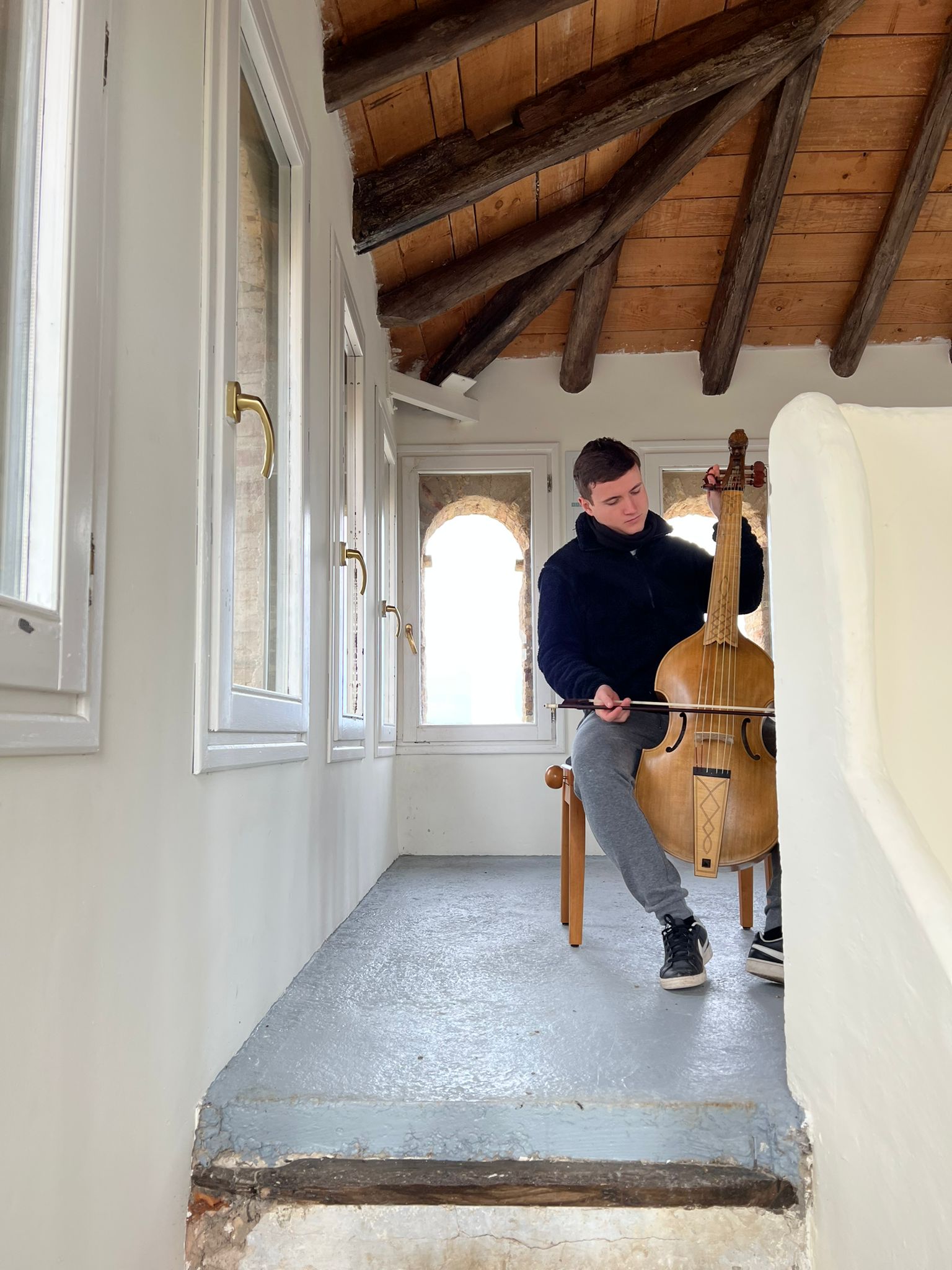
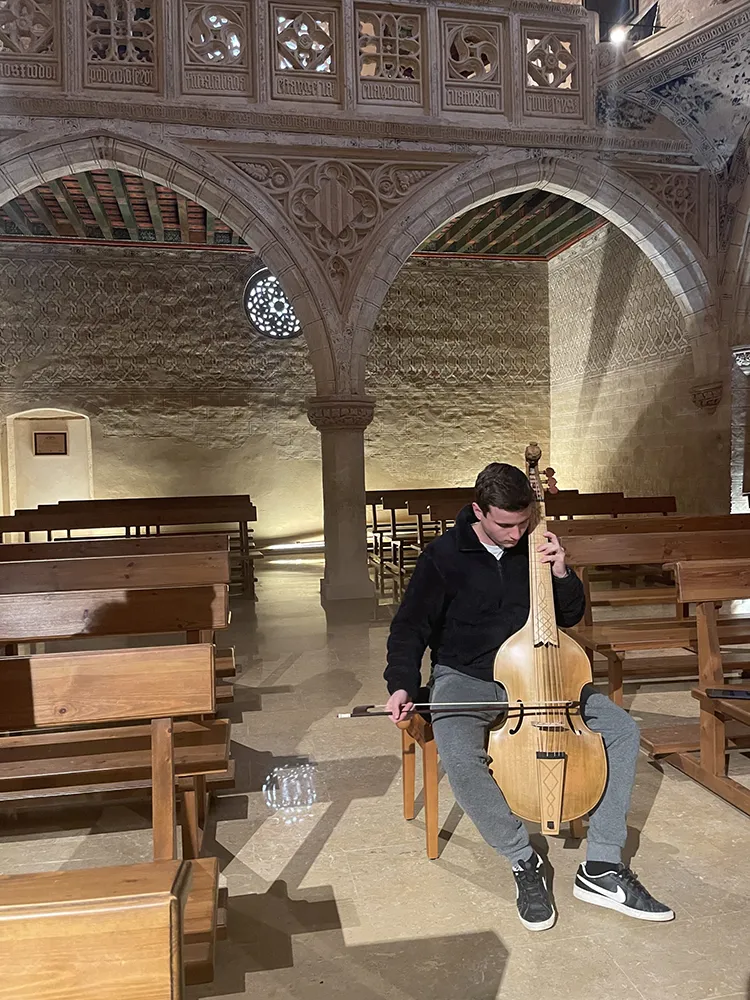
The research stay explored the artistic possibilities offered by Mudejar spaces through musical practice, specifically through Early Music and “historically informed interpretation”.
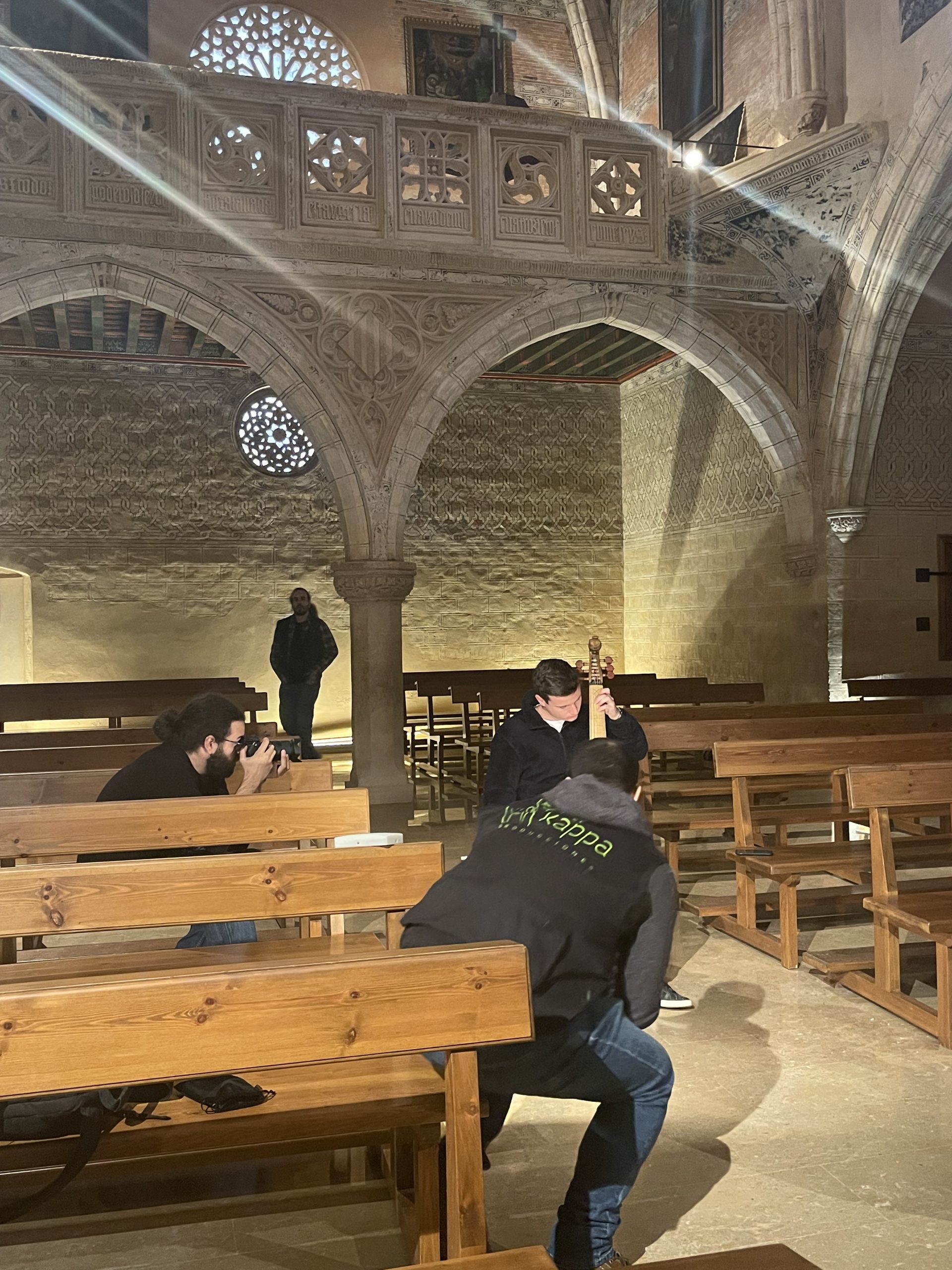
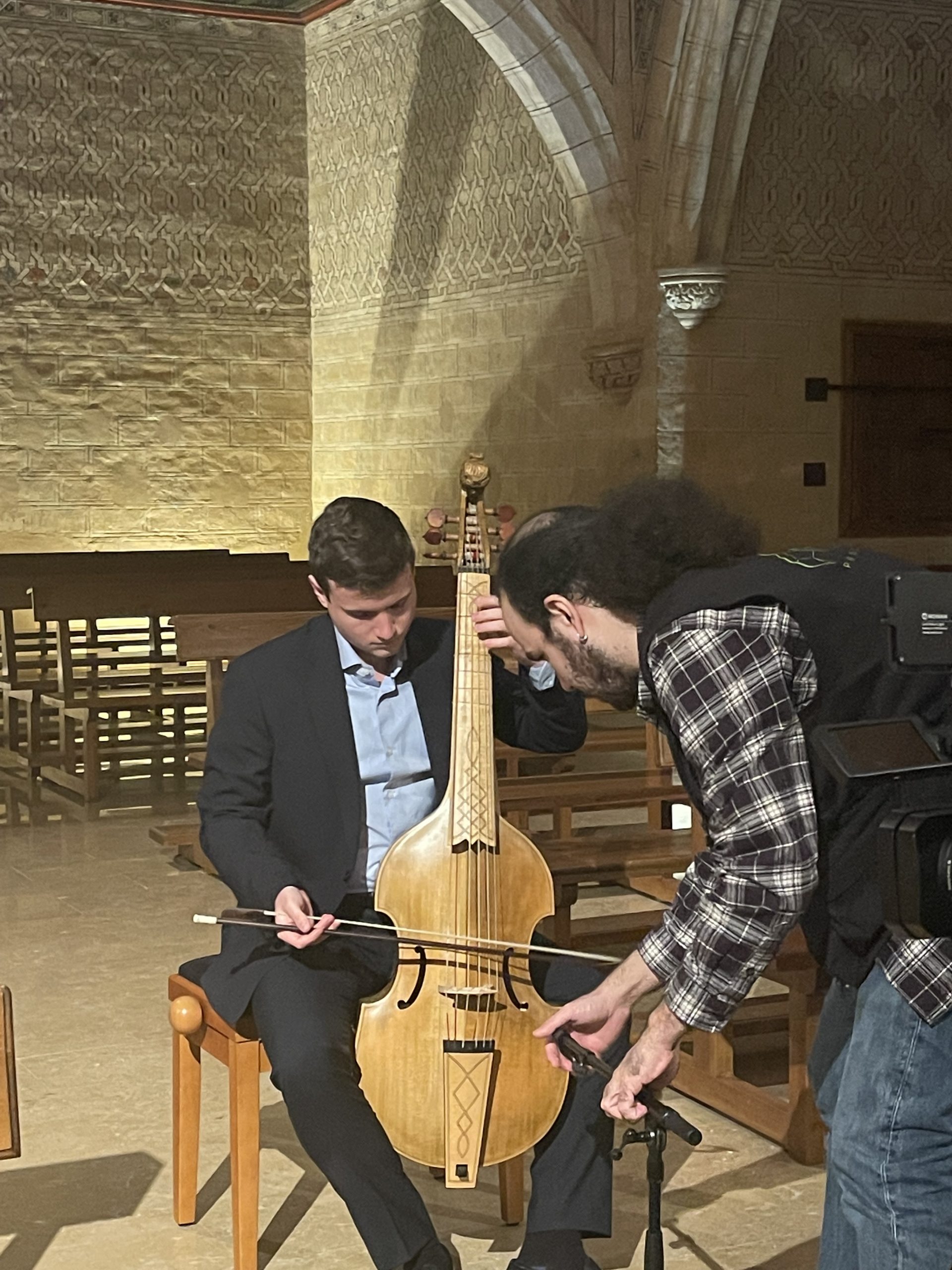
The project, developed together with “El Kappa Producciones”, has made it possible to collect diverse data related to the acoustics of the churches of Santa María de Tobed and Santa Tecla de Cervera de la Cañada, as well as the Casa de la Estanca de Borja (taking measurements and recordings, accompanied by their respective analysis and subsequent study) and, on the other hand, to propose, in a reflexive manner, based on the compilations and interpretations made, different musical projects, whose realization in a Mudejar context would enable the generation of new artistic contexts, associated, of course, to the heritage (tangible and intangible), but which, in turn, given the interdisciplinary nature, would contribute to artistic innovation in the rural environment through Mudejar art and its possibilities in musical terms, with a multidisciplinary perspective.

The objectives of the project have been the following:

  • Select a repertoire  related to each space and its characteristics with which to analyze the artistic possibilities of each space through different sound planes.
  • Work with<  instruments contextualized to the artistic context of the object of study such as recorders, organ and viola da gamba, to extract data for analysis.
  • From a strictly musical point of view, working with the musical production of the periods closest to architecture and space, which would have similar application in other aesthetic contexts – Renaissance, early Baroque and late Baroque – to study the realization of a work (and sound experimentation) with radically different repertoires such as contemporary music, other instrumentations and even electronic media.

The results have favored the knowledge of the sound possibilities of the Mudejar architecture that has come down to us with hardly any transformations, gathering a set of sound archives that serves Territorio Mudéjar to create an incipient set of its own recordings that may form part of the documentary corpus for research that is being built.

The church of Santa María de Tobed, Santa Tecla de Cervera de la Cañada and the Casa de la Estanca, a surprising civil space in the middle of nature for a 16th century water management use, have provided valuable sound documents that we have considered the zero phase of our own project of sound management of the Mudejar space in order to approach a strategy of cultural activities based on music in heritage spaces.

The results, sound objects in themselves, can be heard and seen on our youtube channel. 

LINE OF RESEARCH: New perspectives on Mudejar art.

AUTHORS: Carlos Bonal Asensio, Miguel Bonal Asensio, Carlos González Martínez.

50af1885-b862-4c86-83e0-af407d6d4c6e
c75815b5-725e-41fd-9b7e-381cac1e1f70
IMG-8169
IMG-8175

Previous
Next

RULES CALL FOR PROPOSALS: Research stays and projects 2023

5th Call for researchstays for artistic projects and residencies “Gonzalo M. Borrás Gualis”.

Deadline for submission: Until 31 August.

Territorio Mudéjar announces the FIFTH EDITION of the Gonzalo M. Gonzalo M. Borrás Gualis researchstays and projects. Borrás Gualis aimed at directly supporting the work of researchers and project of researchers and project promoters who want to work on the development of the to work for the development of villages through the responsible and sustainable use of cultural and natural heritage resources. and sustainable use of cultural and natural heritage resources.

Territorio Mudéjar is an association of town councils, currently thirty-six member town councils and one collaborating partner, whose objective is to consolidate a unified and collaborative management network for the use of the historical and artistic resources linked to the important Mudejarartistic resources linked to the important Mudejar heritage , understanding them as a driving force for the development of the villages and as an and as an element of identity for the maintenance of the communities that make up our territory.

Our programme of actions for the coming years has been designed in accordance with the strategic lines defined by the defined by the ” Roadmap of the Council of the European Union 2019- 2022″, which2022″ which, aligned with the goals of the 2030 Agenda, have as a guiding principle that “the cultural identity of territories will contribute to territories will contribute to sustainable social and economic development by differentiating markets and in turn allowing their integration into a diversified a diversified economy that can ensure their future success.

The projects carried out since 2019 have strengthened this initiative as one of our initiative as one of our most important lines of of our most important lines of work based on the development of actions that enhance the retention and attraction of talent, actions aimed at the construction of highly qualified professional networks networks linked to the use of historical, artistic and cultural resources , contributing to medium- and long-term territorial development.artistic and cultural resources , contributing to medium and long-term territorial development.

Our project, dedicated to Professor Gonzalo M. Borrás Gualis, a staunch defender of the management of Aragonese heritage and the territory, as an action of the people and as an innovative field of work full of future. His work exemplified with perfect coherence the possibility of combining research work of high scientific impact with a commitment to the land and its people, not only favouring the knowledge, conservation and dissemination of its historical and artistic heritage, but also modernising work processes and proposing innovative projects in which natural, cultural and heritage resources are a key element in the future of the people.

FOCUS
Transdisciplinary thinking as a tool for innovation.

DIGITALISATION = STRATEGIC TOOL

The management of historical, artistic and cultural heritage is evolving rapidly thanks to digital technologies. The challenge now is to apply a strategic vision to these processes and the unprecedented opportunities offered by new technologies, and to use them in the most and the unprecedented opportunities offered by new technologies and to use them in the most efficient way possible, ensuring that the efforts efficient way possible , ensuring that the efforts made at this time of “boom ” have a long “boom” are sustainable over time and allow for the development of future projects.

Therefore, one of the criteria being continued this year is that all deliverables in a digital version (photographs, photographs, videos, etc.) must year is that all deliverable products in digital version (photographs, videos, digital models, audio files, etc.) must be videos, digital models, audio files, etc.) comply with the study Study on quality in 3D digitisation of tangible cultural heritage: mapping parameters, formats, standards, benchmarks, methodologies, and guidelines  published in 2022 and follow the lines of work indicated in the recommendation of 10/11/2021 on a common European data space for cultural heritage , thus adapting the quality criteria in this way quality criteria established in the in the DigitalisationStrategy of Territorio Mudéjar.

This strategy is in line with the latest recommendations of the European Commission and also takes into account, the standards of the most commonly used platforms and repositories such as Europeana and such as Europeana or Google Arts.

All the beneficiaries of the aid will receive information and training on the the DigitisationStrategy of Territorio Mudéjar during the first phase of their the first phase of their project and they will have a specific continuous specific ongoing monitoring during its development to help them comply with it.

ARTISTIC RESIDENCY. THE PLACE WHERE PROJECT IDEAS ARE BORN

Territorio Mudéjar is emerging as a place of action and creativity from areas often place of action and creativity from areas that are often ordered and differentiated and differentiated areas that often dissolve boundaries and take us to places that are complex to manage.

This workspace allows us to work on the concept of ” artisticresidence “ with the aim of understanding the heritage space and the context in which it is located as a multifaceted space. to understand the heritage space and the context in which it is located as a polyhedral space, promoting artistic creation projects with a strong link to the territory, the landscape and/or the heritage space.

This area is oriented towards research, experimentation, exchange, learning, critical reflection and the dissemination of local practices and knowledge, through dialogue between artisticresearch, communities, territory, places and non-places.

The aim is to generate the opening of new processes and directions of knowledge to explore new paths; to encourage creative thinking by generating spaces for dialogue and starting points between art, science and technology from artistic practice with a view to the development and maintenance of the people and their inhabitants.

FUTURE: CALL FOR EXCHANGES OF EUROPEAN PROFESSIONALS

The activity started in 2019 has been consolidated as one of the most important actions of our one of the most important actions of our entity , which strategy called R&D+innovation, with 23 pilot projects involving more than 40 involving more than 40 management professionals.

The project has been considered as an exemplary case study by the Ministry of Culture and Sport at the of Culture and Sport at the Meeting of World Heritage Managers 2022, held in Granada, which is held every year.

It has also been considered asan example of innovation and good practice in various best practices in various European cooperation projects. In this aspect, we must highlight the positioning of our entity, through the Estancias project, in the Interreg Europe project MOMAr Models of Management for Singular Rural Heritage, in which our project has been chosen by the government of the province of Groningen and the Libau Fondation as a reference model for their Heritage Lab project. Groningen and the Libau Fondation as a reference model for its Heritage Lab project, at the heart of its action plan.

With the aim of building international professional networks, we will soon announce the opening of different international networks , we will soon be announcing the opening of different calls for applications designed on the basis of different framework agreements with partners such as the Chamber of Commerce of the provinces of South Sardinia and Oristano, on the Italian island of Sardinia, the province of Groningen, in the Netherlands, through the “Heritage Lab” project, or with the Medinas Network, in the framework of an international partnership.

Research and projects

TERMS AND CONDITIONS

SUBMISSION OF PROPOSALS. Until 31 August

TOPICS: Pilot projects

  • New perspectives: Research, tools, applied data, etc.
  • Strategic management: Ideas linked to strategic management.
  • Communication and social function: didactics of heritage, language and communication, audiences, etc.

AMOUNT: €7,500

DURATION OF THE SCHOLARSHIP: Between 4 and 7 months.

OBLIGATIONS: To plan a non-continuous stay or residence in one or several localities from among the Territorio Mudéjar partner town councils. It will be assessed according to the project proposal.  

ARTISTIC RESIDENCIES

TERMS AND CONDITIONS

SUBMISSION OF PROPOSALS. Until 31 August

TEMAS: Creative Workshop

  • Artistic creation and research: materials, crafts, etc.
  • Sound, acoustics, speech, looking and listening.
  • Virtual space or metaverse.

AMOUNT: €4,500

DURATION OF THE RESIDENCY: The proposal must include a residency in a locality of. Territorio Mudéjar for a duration of between 30 and 60 days.

Rooms 2022: The wall as dermis. Light in the Mudejar.

The wall as dermis. Light in the Mudéjar

This project studies the ways in which light affects and evolves on the walls of certain churches in various towns belonging to the Mudejar Territory network that combine different types of materials on their façades, the aim being the plastic development of an artistic project.

The project The wall as dermis. Light in the Mudéjar is an artistic proposal that, based on the symbolic and metaphysical concepts of light, shadow, unity and ephemerality, highlights the highest function of Mudejar art: to highlight the presence of the divine.

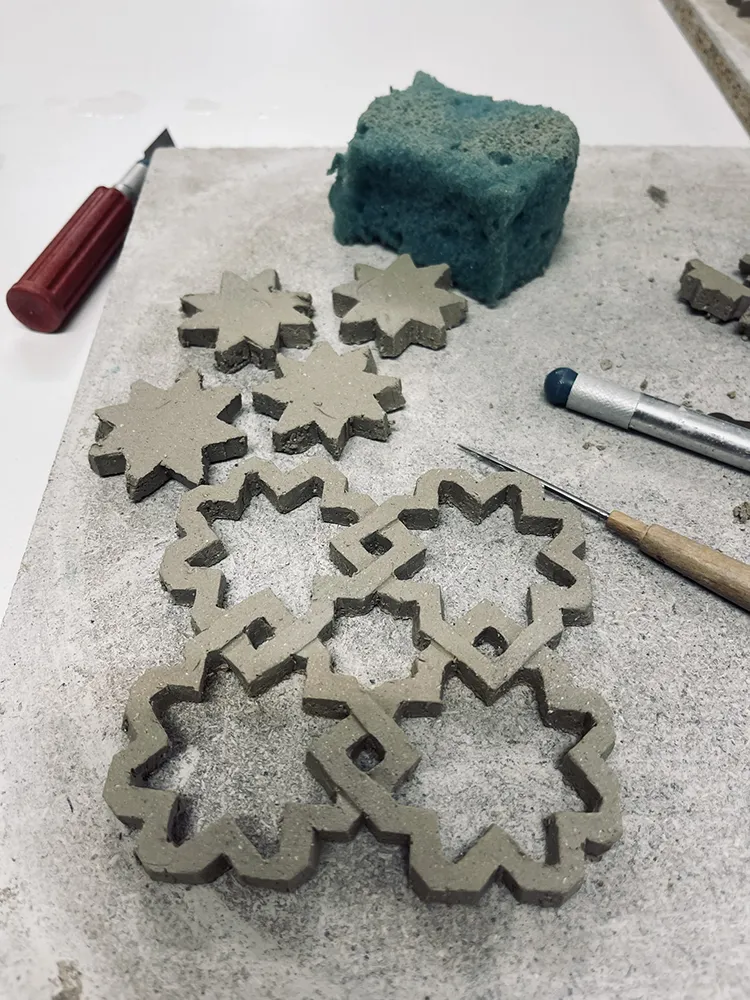
In total, a collection of 25 works has been created in different media and techniques that propose a journey around the idea of the dematerialisation of the wall in reference to the architectural elements of the Mudéjar style (plasterwork, ceramics and flattened bricks), differentiating their study from different points of view:

  • As free-standing construction elements (analysis of the original parts and those intended for restoration).
  • Integrated into the environment and perceived as a whole.

The working methodology was based on the direct observation of the evolution of light on the chosen façades, of which a photographic and stop-motion record was made, from the analysis of which the pictorial process was derived in three intertwined phases: approaching the question, analysis of materials and conclusions.

The research visit was carried out in the church of San Martín de Tours in Morata de Jiloca, in the church of Santa María in Tobed and in the tower of the church of Nuestra Señora de la Asunción in Utebo.

The working methodology was based on the direct observation of the evolution of light on the chosen façades, of which a photographic and stop-motion record was made, from the analysis of which the pictorial process was derived in three intertwined phases: approaching the question, analysis of materials and conclusions.

The resulting collection of works will be the subject of various exhibition projects over the coming months.

The project’s objectives were as follows:

  • To artistically demonstrate the phenomenon of the dematerialisation of the wall, focusing on the elements that influence it.
  • To value the use of contrast as a key to the creative process, both in Mudejar architectural construction and in pictorial practice.
  • Experiment with the use of Mudejar architectural facing materials in the priming and creation of the works, such as wood and plaster.
  • Experiment with materials that generate material sensations similar to the original materials and demonstrate their interaction with light.
  • To promote awareness of the richness of Mudejar art.
  • To develop a pictorial project that encourages identification with the Mudejar heritage.
  • To generate reflection on the spiritual and symbolic message of Mudejar architecture.

LINE OF RESEARCH: New perspectives on Mudejar art.

AUTHOR: Pilar García Verón

Rooms 2022: Mudejar RGB

Mudejar RGB

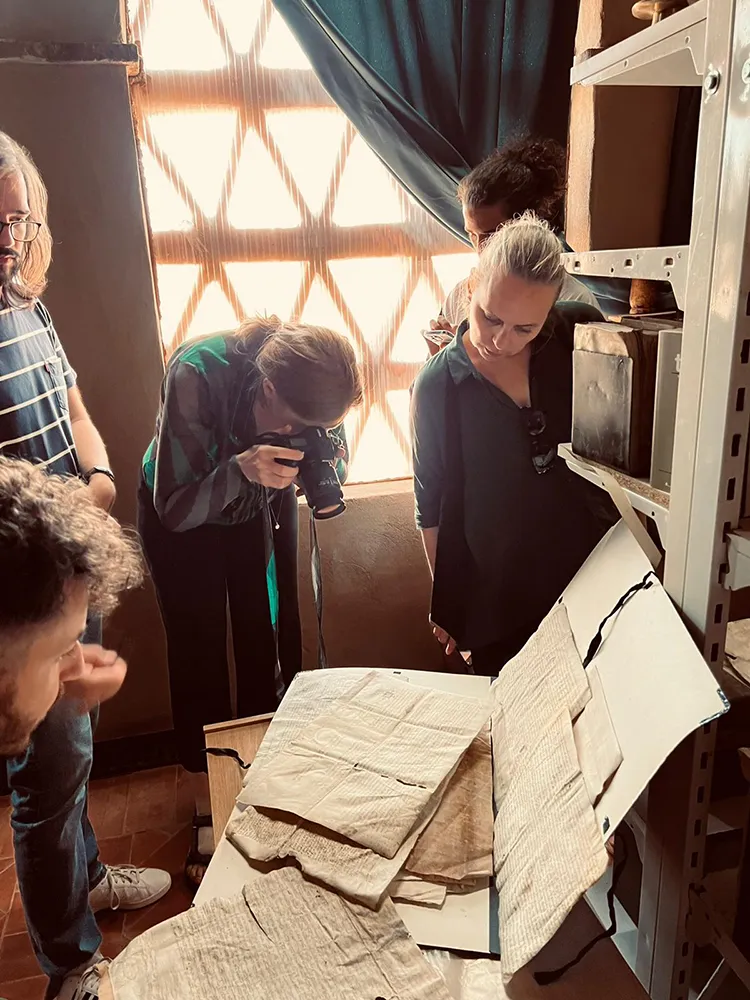
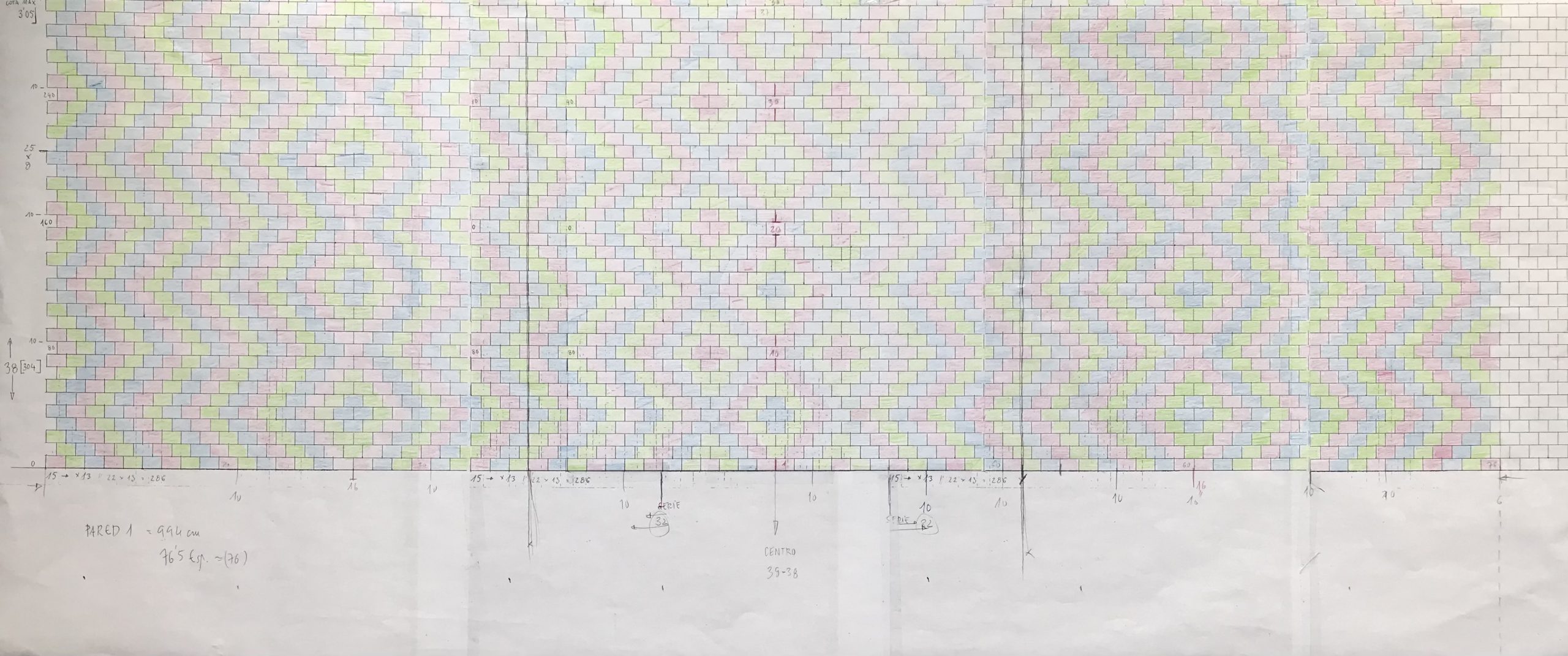
The proposal is framed within the objectives of a Creative Laboratory in which the geometric elements used on the exterior of the main Mudejar churches in the Calatayud area were studied in order to obtain a series of “motifs” that have subsequently been taken as a reference for future artistic interventions in museums and art galleries. The most representative geometric elements have been photographed and, using these references, the drawings and sketches that will serve as the basis for the large-format interventions have been designed.

In this way, the elements taken directly from Mudéjar art become a source of artistic thought that allows bridges and connections to be established between the art of the past, historical and artistic heritage, and the art of the present, being applied directly in the production of the researcher’s own creative work and making the project grow in both conceptual and formal interest.

The localities in which the stays have been carried out and whose heritage has been worked on are: Ateca, Terrer, Calatayud, Maluenda, Morata de Jiloca, Belmonte de Gracián, Cervera de la Cañada and Torralba de Ribota.

The work was carried out in four phases. After the taking of photographs and the appropriate bibliographical review, the selection (with a catalographic approach) of the geometric motifs that make up part of the work developed as a documentary and graphic archive followed. The third phase focused on the design of the motifs for the interventions and the fourth and final phase focused on the design work for the interventions to be carried out in the exhibition halls and museums during the 2023 and 2024 season.

The project’s objectives were as follows:

  • To obtain a series of geometric “motifs” to serve as a reference for future artistic interventions.
  • Designing drawings and sketches to serve as a basis for large-format works.
  • Establish bridges and connections between the art of the past, historical-artistic heritage and the artistic actions of the present.
  • To disseminate the Mudejar heritage through artistic thought and intervention.
  • Create citizen participation so that the public can learn first-hand about the geometries and motifs used.

LINE OF RESEARCH: Laboratory for artistic residencies. Mudéjar Territory as a space of thought to explore new paths through artistic thought”.

AUTHOR: Victor Solanas Díaz

Stays 2022: Mudejar landscape. Dynamics, processes and strategies.

Mudejar landscape. Dynamics, processes and strategies.

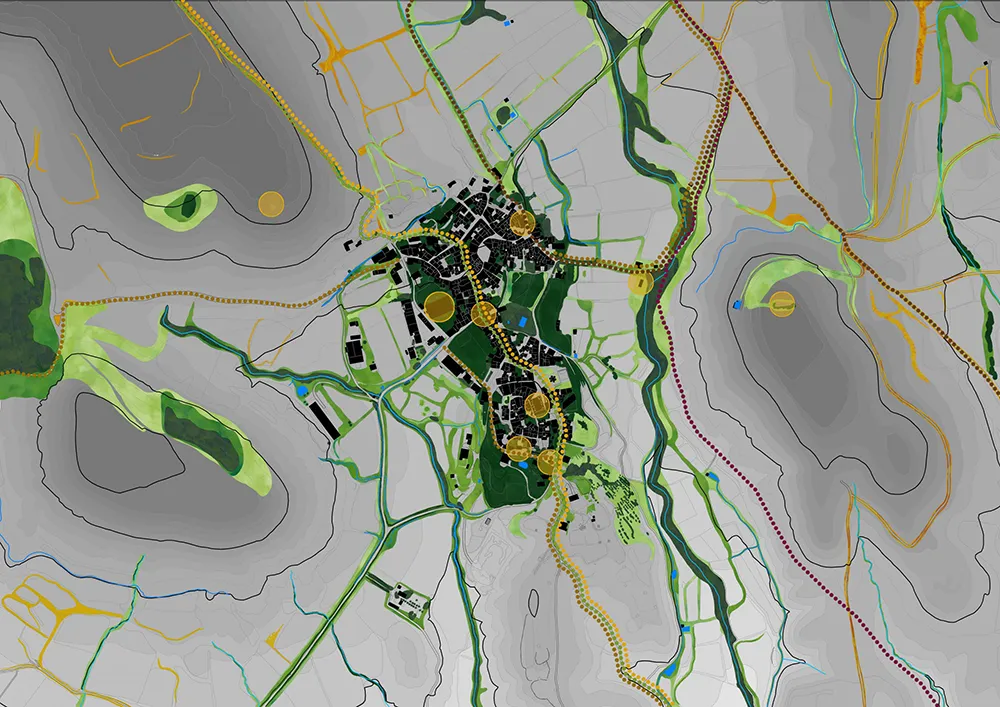
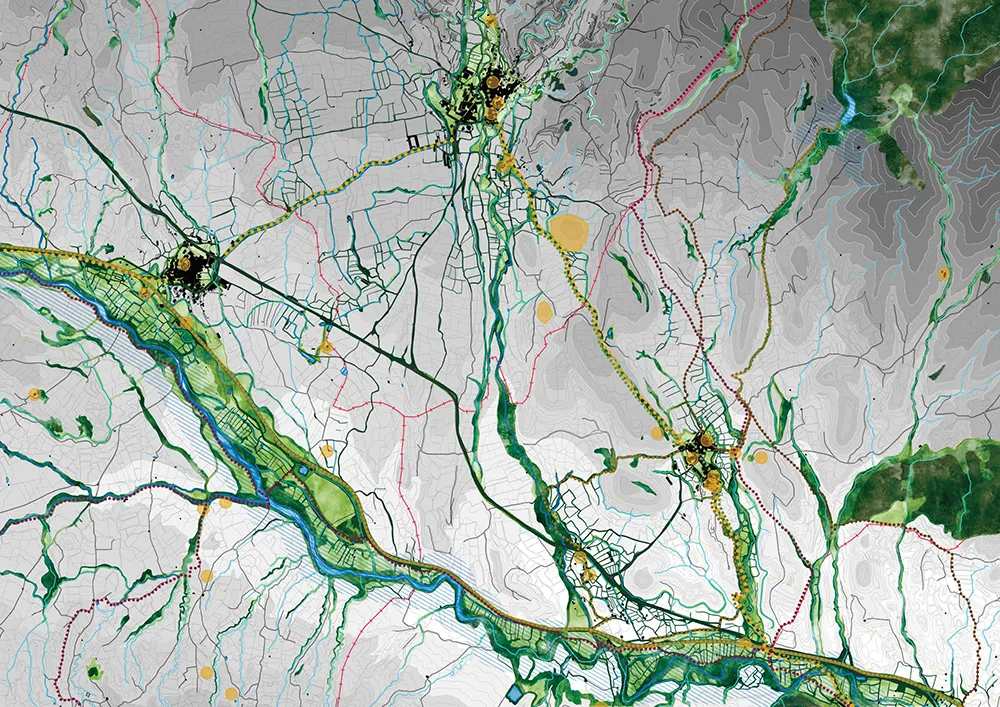
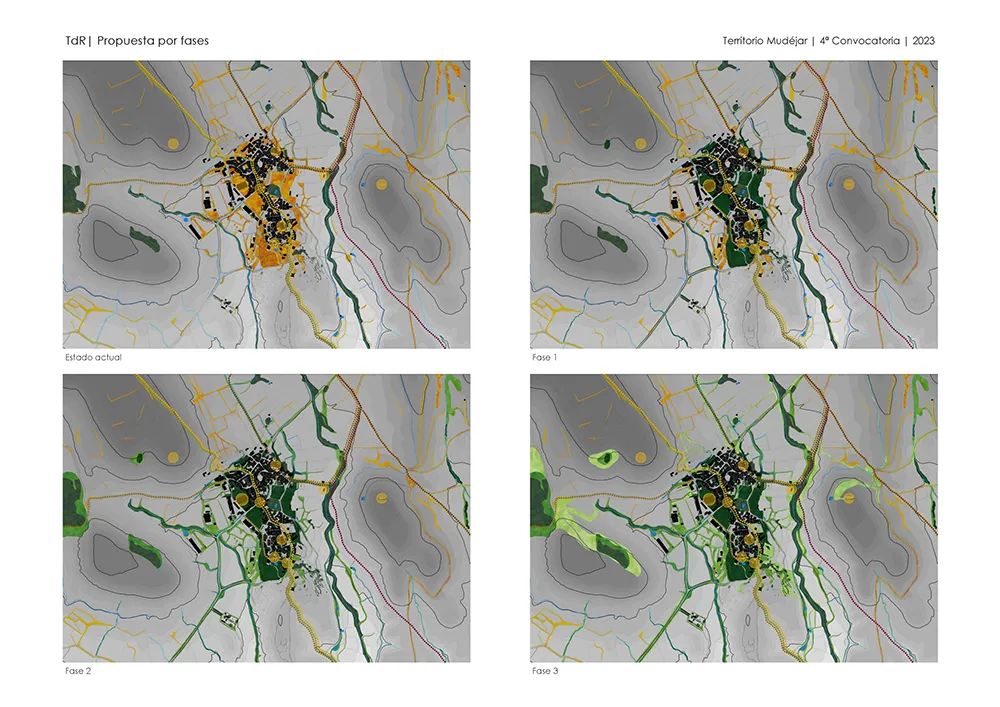
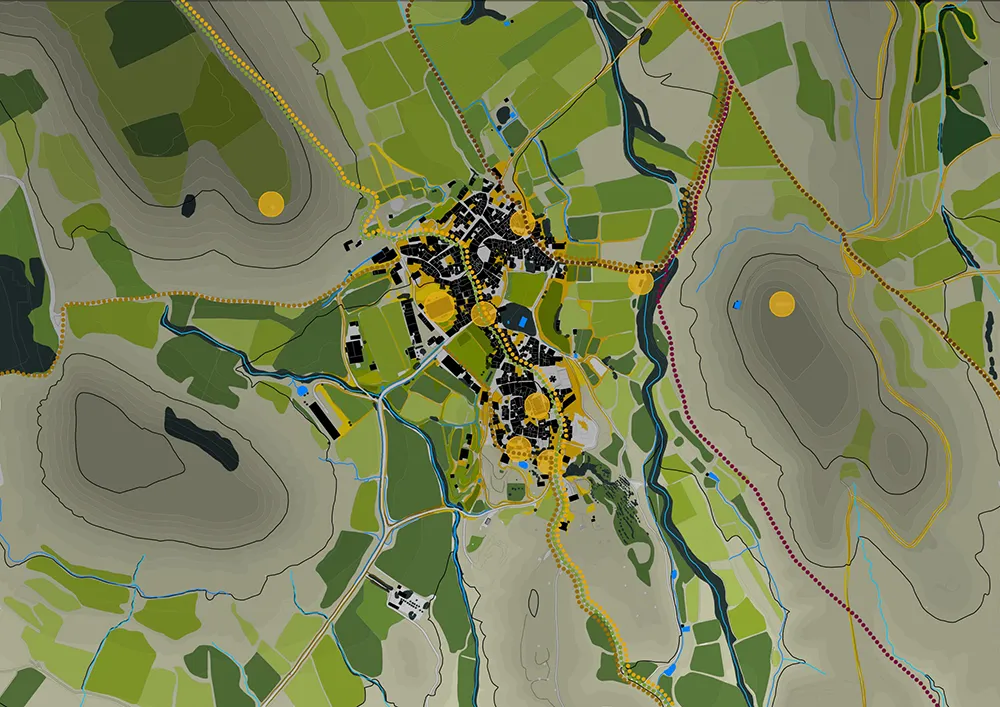
Paisaje Mudéjaris a project that investigates the relationship between landscape and historical heritage, the trace of human intervention that transforms the landscape in the localities of the Rambla del Ribota. Through a series of cartographic analyses , the result of travelling around the towns and developing their photogrammetric models, the fundamental landscape elements and phenomena are identified. Based on this study, a guide and propositive cartographies are drawn up with the aim of improving the landscape at different scales and time phases, following the contemporary theories of landscape architecture.

Historical heritage is one of the most valuable treasures of a society. It represents the history, traditions and culture of a region or country. However, the fundamental role that landscape can play in the conservation and enhancement of this heritage is often overlooked. It is a key element in the perception of historic heritage and can significantly enhance people’s understanding and enjoyment of it.

This paper aims to collect several contemporary landscape theories together with the analysis plans and apply them to the three populations under investigation.

The set of measures proposed understand the landscape as a key resource for the conservation and enhancement of the historical heritage. They have been designed taking into account that they can represent opportunities for the development of the territory and that their implementation requires a moderate investment.

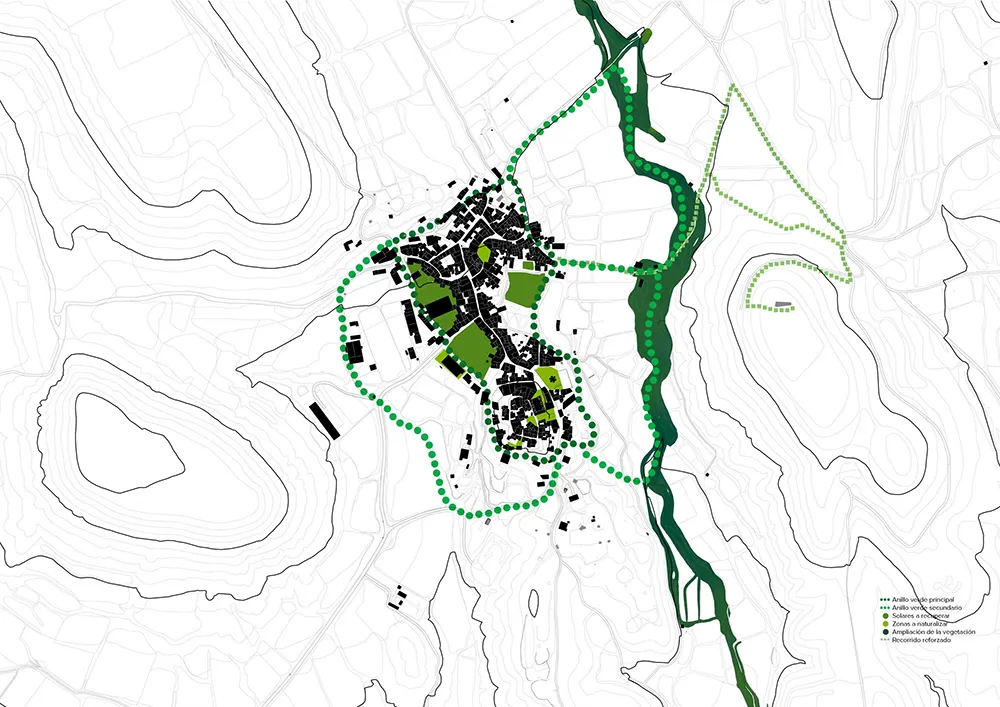
The main idea and guiding thread of these strategies is to create a landscape fabric that connects the villages around the natural landscape and the existing historical heritage, conserving and reinforcing the forests and vegetation of the area by relying on its natural and artificial watercourses.

The results have focused on a series of proposals for intervention at two levels: territorial and local.
  • The most effective way of weaving the green structure is born in the most powerful element of the landscape: the river Ribota as a space to reinforce and extend the riverside vegetation and to extend the greenway along the old railway line as a great biological corridor.
  • Connecting localities through the topography of the area which, with the exception of some small hills, descends into the valley through ravines, irrigation channels and streams.
  • Use the concept of Third Landscape: reinforce the landscape character of boundaries, unused plots or abandoned infrastructures, which are often places of native vegetation reserves, rich in biodiversity and markers of uniqueness.
Having addressed the territorial scale, we move on to define the proposals for the local scale.
These are subordinate to the previous ones, draw on the same influences and have the same objective. However, the approach is more thorough and detailed, which makes it possible to include measures specific to this dimension. As in the territorial scale, the intervention proposal at this scale is made up of several actions:
The first is based on the idea that all the localities should form part of a territorial green structure. Biological continuity is lost when we reach the villages, given their materiality and urban morphology; so that this does not happen, we propose to continue the landscape by integrating it into the limits of each locality with a green ring.

LINE OF RESEARCH: New perspectives on Mudejar art.

AUTHORS: Javier Montori. Esteban Lahoz

Estancias 2022: Prevention and conservation through urban planning

Prevention and conservation from urban planning. Development of a tool for the protection of traditional architecture: the case of Alpartir.

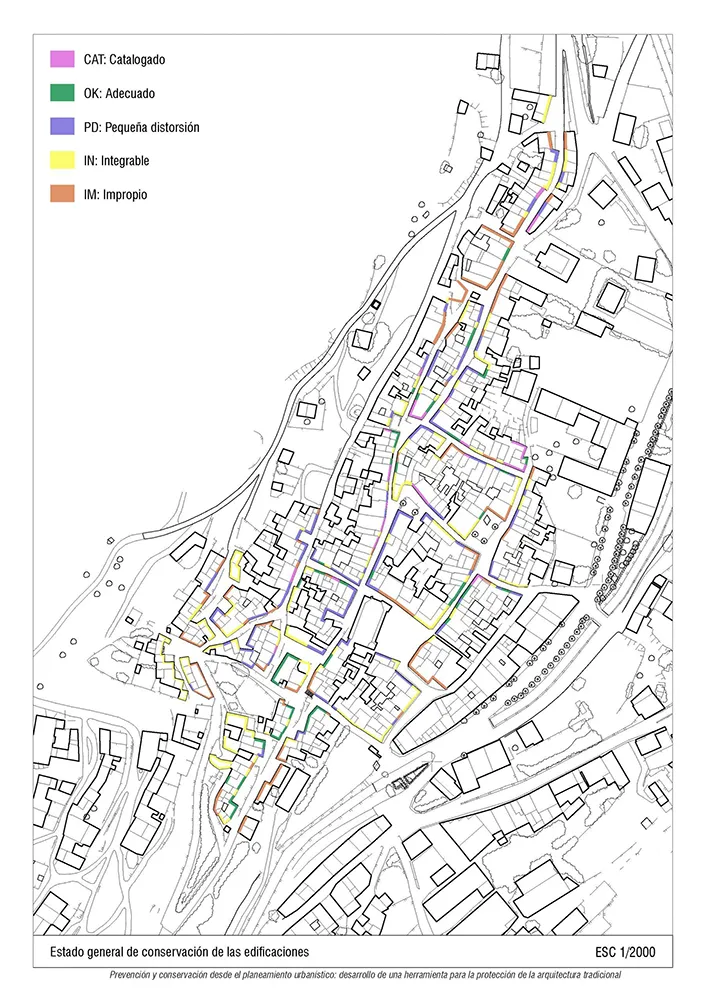
This research stay brings together the results of a project developed in the previous call, which analysed the protection framework that the urban planning of several towns in the Mudejar Territory entailed for the conservation of their traditional architecture, and specifies its practical application through the piloting of a reference document centred on the town of Alpartir.

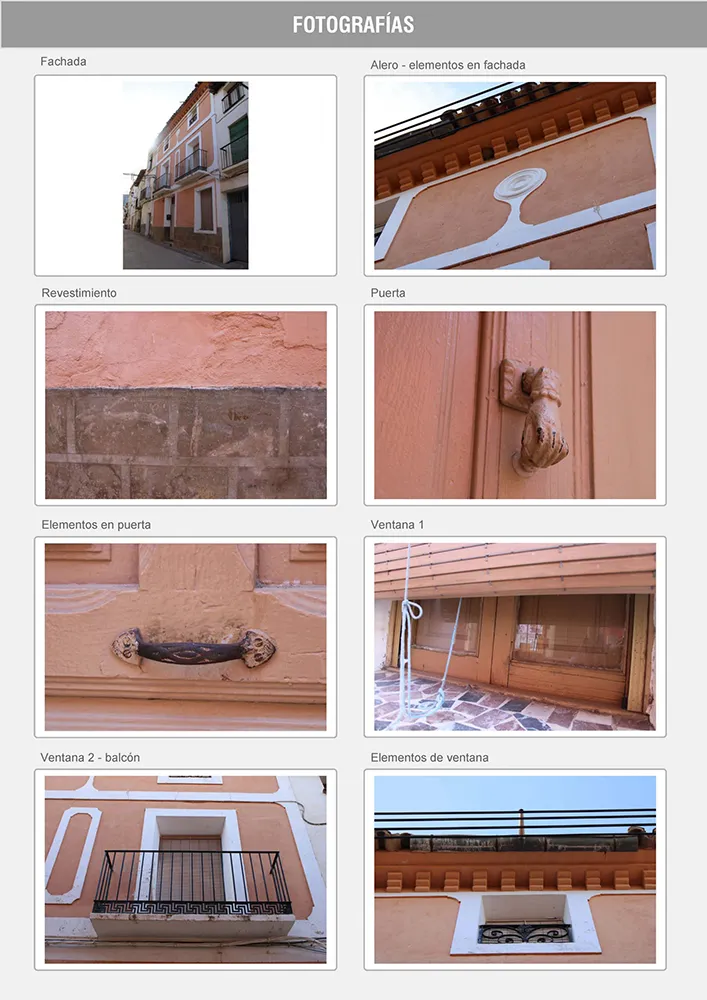
For this study, we have analysed in detail the existing traditional architecture in the locality, defining its state of transformation and identifying all those vernacular constructions that are worthy of protection by local planning, and we have reviewed this planning in depth, evaluating the influence of each of its provisions on them.

Based on this analysis, a model tool has been generated, in the form of a white paper, which lists the areas of the municipal regulations that can be revised to improve their influence on the vernacular heritage, enhancing its conservation, compares them with the equivalent headings of other general plans in the area and proposes a complementary and alternative wording. Similarly, it proposes an extension of the catalogue of protections to include the best examples of local traditional architecture, with an exhaustive cataloguing form specifically oriented towards the protection of the constructive characteristics that make it valuable.

In total, the reference document developed proposes the revision or addition of 28 articles in the Urban Development Regulations of the General Plan and proposes the incorporation of 25 elements and ensembles to the Catalogue of Protections, establishing a protection regime for each of them.

Based on these observations, the main aim of the proposed project is to generate, through a pilot study centred on the town of Alpartir, a model tool that will enable the implementation of criteria and strategies for the protection of traditional architecture in urban planning.

In doing so, it aims to meet the following general objectives:

  • To promote the appreciation of traditional architecture in the sphere of influence of Aragonese Mudejar art, encouraging the perception of traditional construction techniques and elements as a valuable cultural heritage that must be preserved and protected.
  • To promote the conservation, restoration and compatible rehabilitation of traditional architecture, offering tools adapted to the specific casuistry of the area of influence of Aragonese Mudejar architecture.
  • Promote coordination between municipal administrations and private sector initiatives to develop flexible and conservative interventions.
  • Promote the regeneration of the rural territory through its heritage, proposing alternative uses beyond the tourist sector and offering tools that allow the development of interventions that are compatible with and respectful of the local cultural identity.

These general objectives are developed into a series of specific objectives that this work aims to achieve:

  • To study and record in detail the existing traditional architecture in Alpartir, identifying all those vernacular constructions that are worthy of protection by local planning and determining the elements and values on which this merit is based.
  • To analyse in depth the current urban planning in Alpartir, evaluating the influence of the different determinations contained in it on the conservation of traditional architecture and comparing it with the plans studied previously in order to detect aspects in which its influence on this heritage can be improved.
  • To generate a model tool that gathers the results of the study of the planning and traditional architecture of the locality that is the object of the pilot project and develops them to create a framework that allows the implementation of criteria for the conservation of local traditional architecture in the urban management of the locality. In the development of this objective, special attention has been paid to the reproducibility of the resource generated in other surrounding municipalities.
  • Encourage the Administration’s involvement in the implementation of the guidelines, involving and involving municipal technicians in the process of analysing and developing the tool.
  • Raise awareness of the value of traditional architecture and encourage acceptance of the resources to be implemented by the community, through citizen participation actions.
  • Raise awareness about the value of traditional architecture through outreach activities that emphasize the irreplaceable nature of this architecture and the importance of its preservation.

LINE OF RESEARCH: Strategic management of heritage resources. Urban landscape and cultural landscape.

AUTHOR: Fº Javier Gómez Patrocinio, Laura Villacampa

Estancias 2022: Mudéjar Smart 3D. Digitalisation strategy for Mudejar Territory

Mudejar Smart 3D. Digitalisation strategy for Mudéjar territory

The project has worked on the drafting of a digitalisation strategy for Territorio Mudéjar that is adapted to the specific circumstances of the territory and its heritage.

The European Commission has recommended that Member States accelerate the digitisation of monuments, cultural heritage sites, objects and artefacts in order to protect and preserve them for future generations. It also seeks to boost their re-use in areas such as education, sustainable tourism and the creative cultural sectors. To this end, member states are encouraged to digitise as many monuments as possible by 2030.

This data should be included in the new version of the Commission Recommendation revising the Recommendation issued on 27 October 2011 on the digitisation and online accessibility of cultural material and digital preservation, which has served as the basis for the study of the digitisation strategy of Territorio Mudéjar.

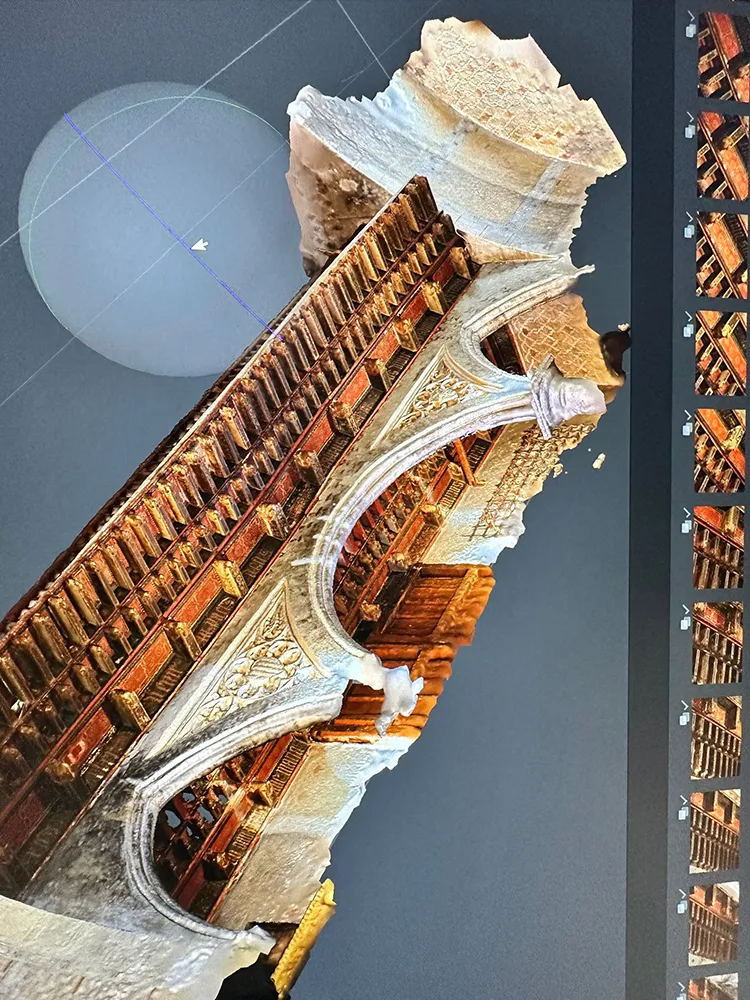
While awaiting new recommendations and directives, Territorio Mudéjar has launched its strategy to address the challenges of smart digitisation of heritage. Some of these challenges include the acquisition of 3D virtual models, the relationship between geometric and cultural-historical description of heritage objects, the organisation of digital objects with appropriate metadata, the presentation and display of 3D objects for non-specialised users, the development of attractive 3D content, the creation of open repositories, and the use of 3D printing technologies.

Territorio Mudéjar seeks with this stay to follow the principles of the UNESCO Digital Heritage Conservation Charter, recognising that digital archives require specific production, maintenance and management to preserve them. These digital resources have a lasting value and constitute a heritage that must be protected and preserved for present and future generations. Therefore, it is considered essential to create a specific strategy for the digitisation, conservation, reuse and efficient management of digital heritage in the localities of Territorio Mudéjar, based on principles of sustainable management, cultural and heritage awareness, and international scope.

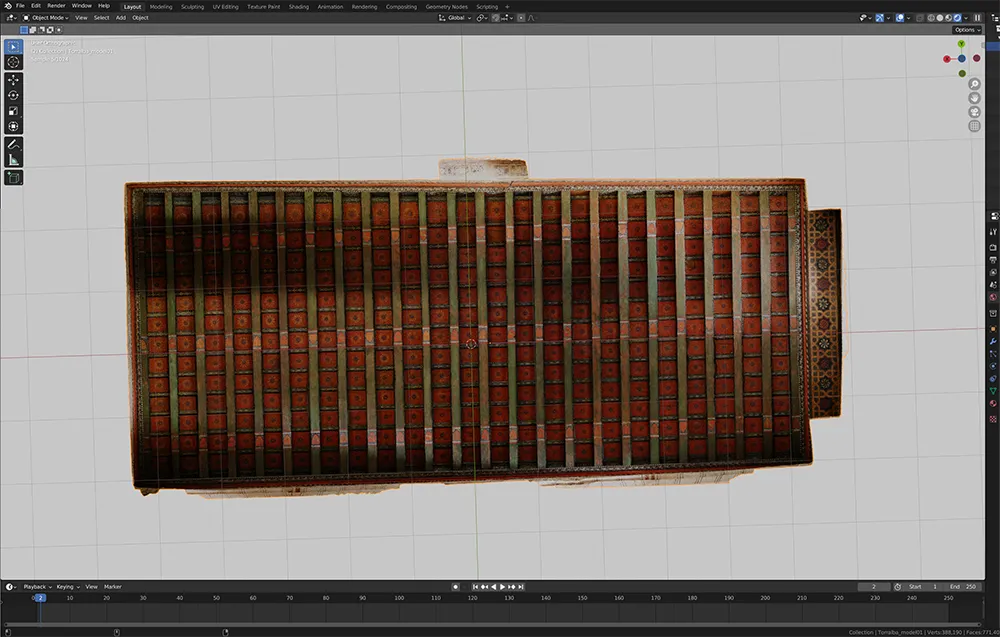
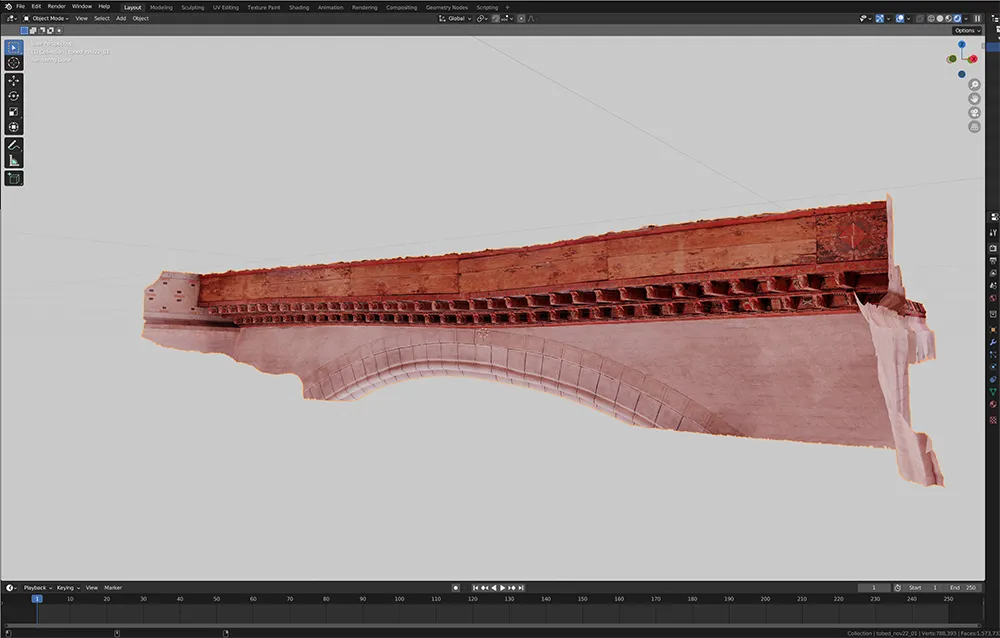
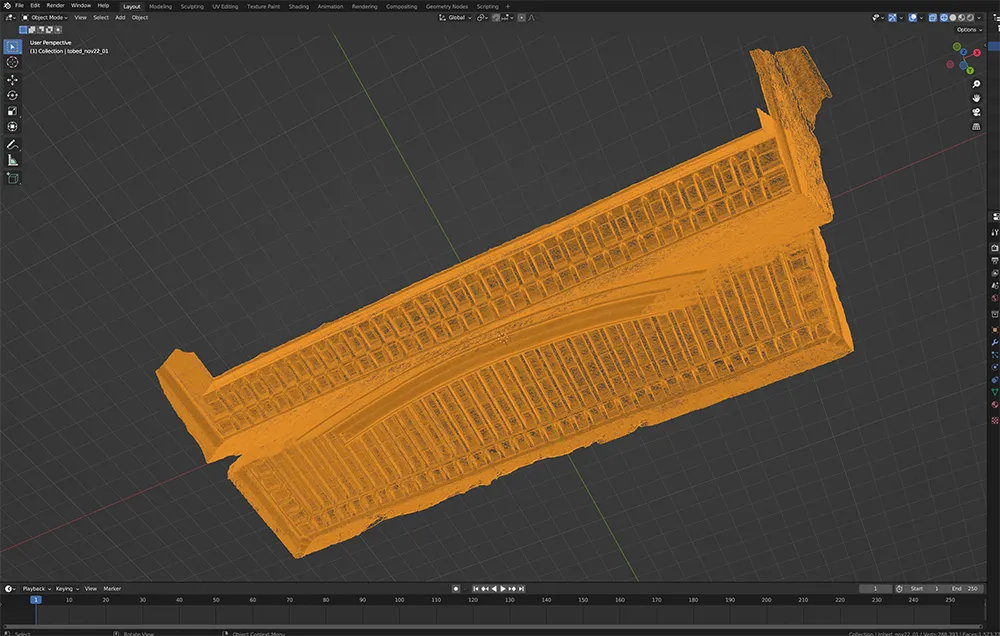
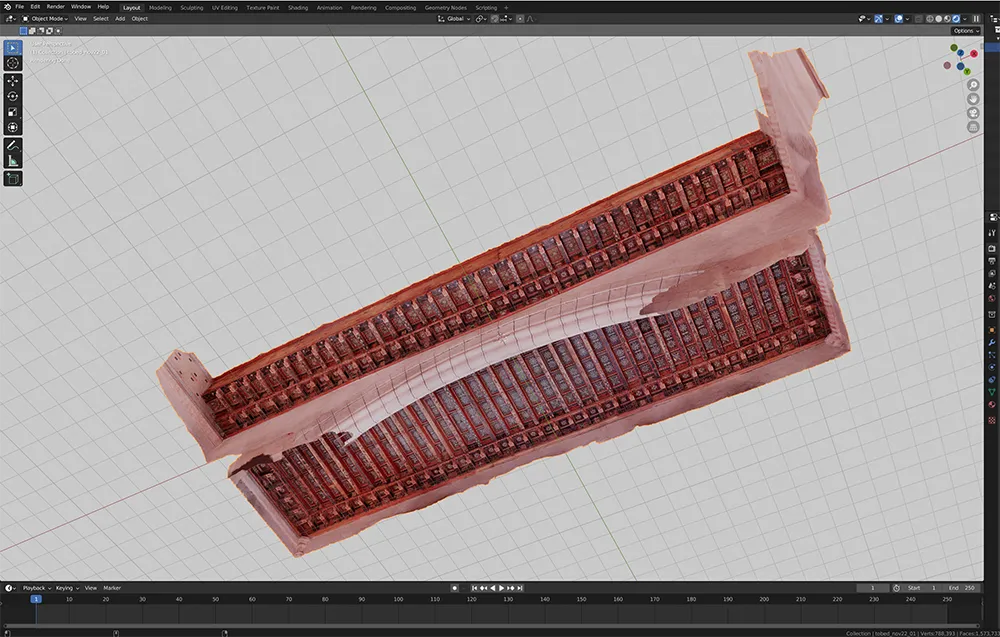
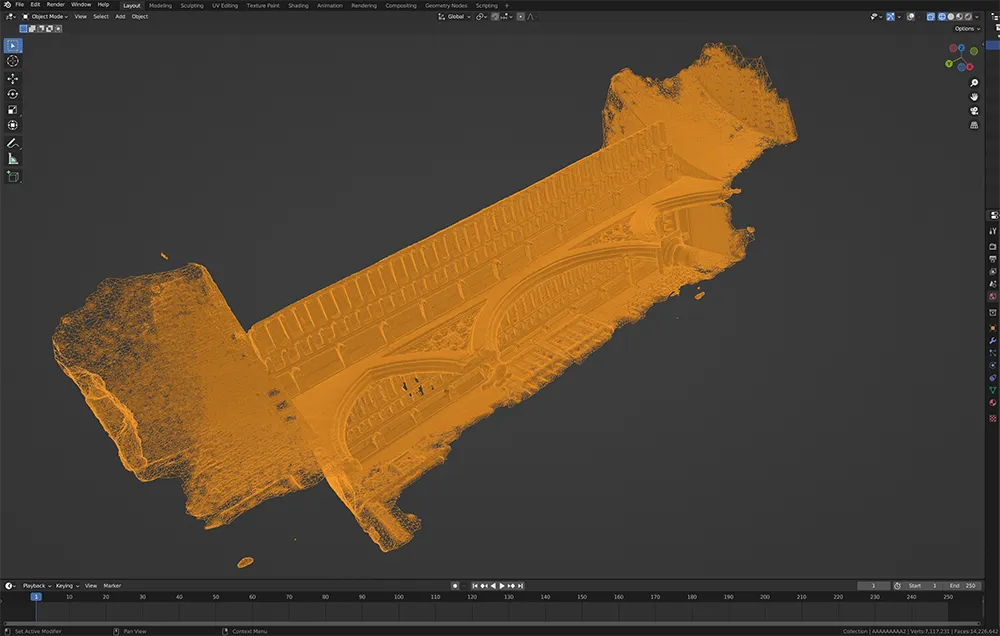
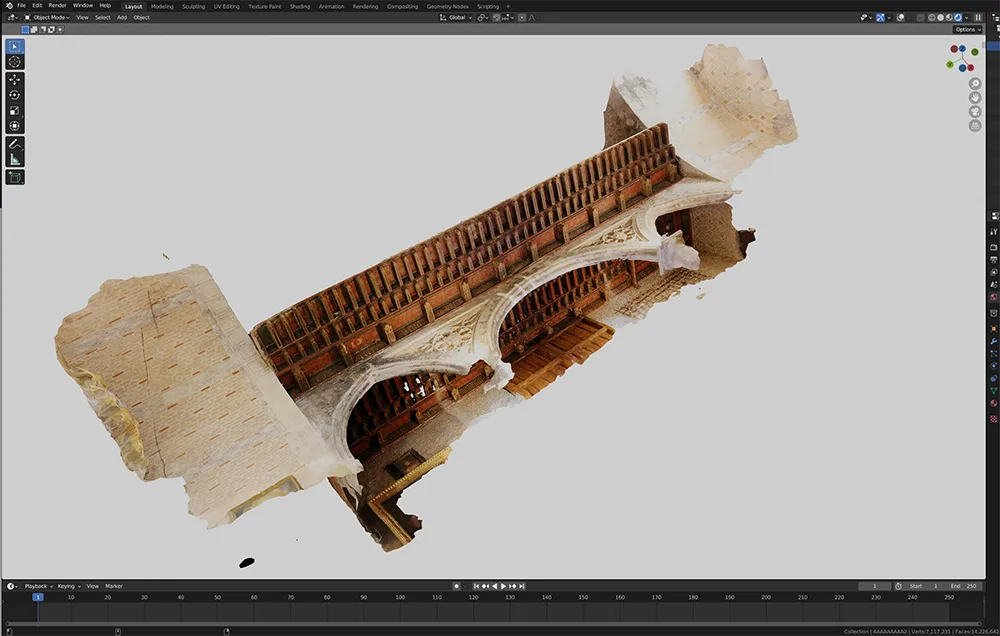
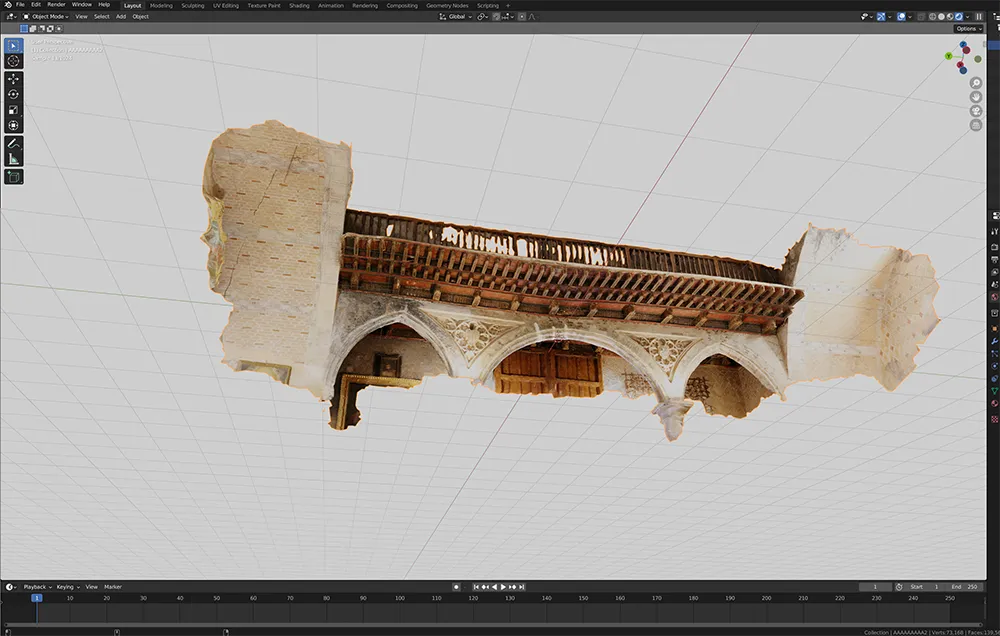
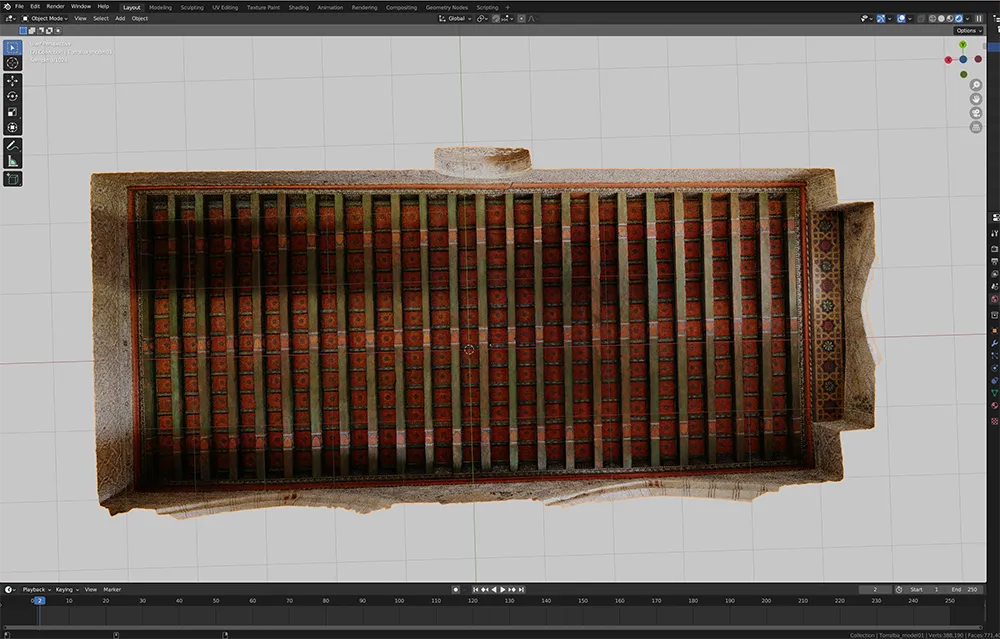
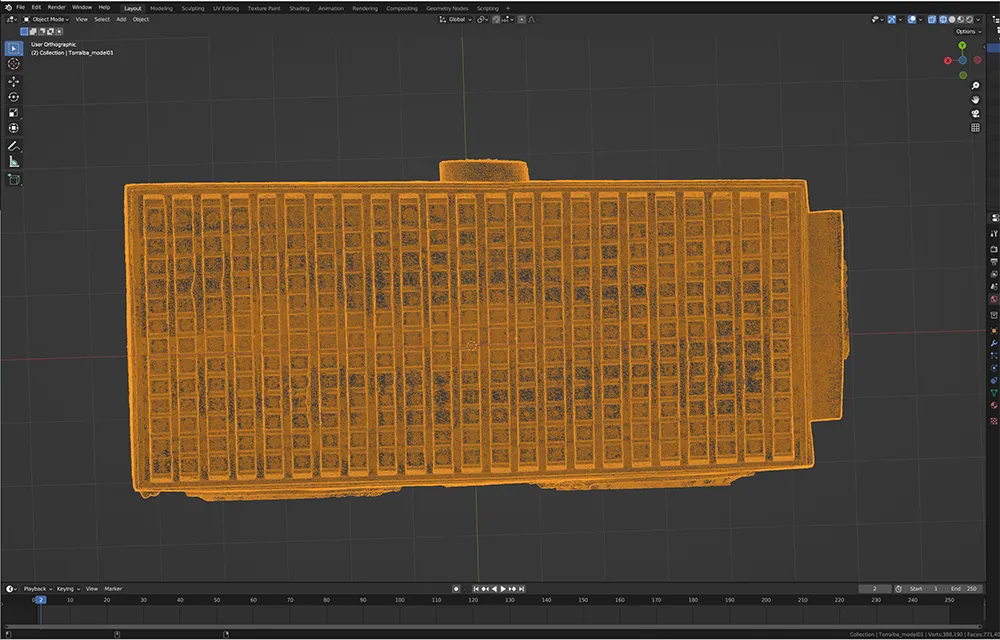
The strategy is based on 4 pillars that are applied to all the projects carried out in Territorio Mudéjar and whose piloting has been carried out with the digitisation by means of convergent photogrammetry and bringing the alfarjes of the churches of Cervera de la Cañada, Torralba de Ribota and Tobed online.

Pillar I: Maintenance and updating of the strategy: The strategy will be reviewed and updated annually to adapt to European recommendations and new technologies. A committee of experts will be set up to carry out this task.

Pillar II: Reuse and creation of interoperable archives: Standards have been established to ensure that all digitisations are interoperable and can be reused for other purposes. The recommendations and quality criteria set out in the strategy will be followed.

Pillar III: Harmonising metadata and making it available online: The Linked Open Data system promoted by Europeana has been adopted to publish structured data and link related resources. A balance is sought between the rights of creators and public access to digital heritage.

Pillar IV: Communication and dissemination: It is considered important to digitise all phases of the process, not only for quality and traceability, but also to facilitate communication and transfer of the work done.

LINE OF RESEARCH: New perspectives on Mudejar art. Management.

AUTHOR: Gianluca Vita, Marco Lucchini

Estancias 2022: Assessment of the muslim-friendly potential of Territorio Mudéjar for the reception of knowledge tourism.

Assessment of the muslim-friendly potential of Territorio Mudéjar for the reception of knowledge tourism.

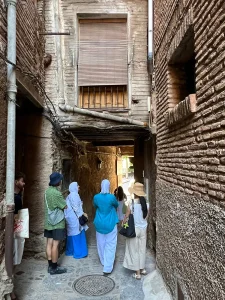
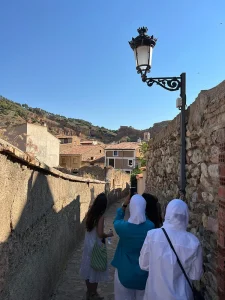
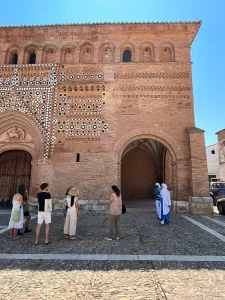
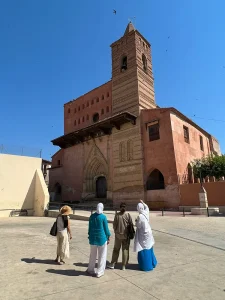
The research project “Assessment of the Muslim-friendly potential of Mudejar Territory for the reception of knowledge tourism” has focused on the evaluation of the resources available in the territory to configure in the short term a coordinated offer to attract Muslim tourists. The Muslim Friendly traveller is an unexplored opportunity to boost the economic and tourist activity of the towns that make up the Mudejar Territory.

Considering previous experiences in Western Andalusia and Algarve-Alentejo, it is possible to group tourist resources adapted to this tourism profile around the Mudejar heritage of the selected localities. The logistical opportunity represented by the AVE connection with Calatayud could facilitate the marketing of a Mudejar-friendly route for Muslim tourism that already visits the peninsula, and which normally focuses on Eastern Andalusia.

The municipalities selected for the study are Calatayud, Morata del Jiloca, Maluenda and Belmonte de Gracián. They all belong to the Comarca of Calatayud, which has been chosen as the starting point due to its AVE connection with Madrid (55 minutes).

Taking into account the current preference of Muslim travellers for Andalusia, the proposal is to use the AVE station as a logistical node to enable tourists to travel to Aragon for a first contact with the Mudejar heritage in less than an hour. Once in Calatayud, private transport is necessary, due to the scarce interconnection of territories and localities in the region.

The target profile has been identified as travellers from Europe and the Gulf who are looking for experiences that are different from the current offer. They are high-income, English-speaking tourists who can travel semi-independently, but for whom a narrative that awakens their interest in the territory and its heritage is still necessary, as well as the possibility of specialised guides and access to heritage interiors.

Medium-term objectives should focus on:

  • Make up for logistical shortcomings (lack of connections beyond Calatayud) with a personalised transport model that reinforces the uniqueness of the places.
  • To strengthen the short trip offer by consolidating and adapting the tourism business model.
  • Create a grouping of the heritage offer and tourism assets (designing a programme that combines heritage and natural attractions).
  • To work on a narrative, reinforced with signposting materials, that allows us to understand the historical coexistence of the population in the Aragonese territory.

LINE OF RESEARCH: Strategic management of Mudejar heritage. Cultural landscape and urban landscape.

AUTHOR: Dr Bárbara Ruiz Bejarano.

Territorio Mudéjar Routes 2021

In a strategic alliance with the Tourism Department of the Provincial Council of Zaragoza, we present twelve routes accompanied by a complete tour of the villages of Territorio Mudéjar in a journey through the Mudejar period in our province that begins in the middle of the 13th century and ends in the last decades of the 16th century.

This journey takes us from the urban beauty of the coexistence of the Christian, Jewish and Muslim populations, to the emergence of the key works of the 14th and 15th centuries: the fortress churches and towers.

We want you to get to know our places, which is why each route will have a presentation date on which you can join us for free but always by making a reservation in advance through the agency that collaborates with us in this project and the link to which we leave you below.

We have organised presentations for the months of June, September and November that we will open progressively and we will finish in December with a great route through the Mudejar of Aragon, declared World Heritage by UNESCO and with which we celebrate the 20th Anniversary of the international declaration.

Would you like to join us?

The routes under the theme the Mudejar, Mestizo Land and borderland lead us to the localities in which the Christian, Jewish and Muslim cultures developed in an extraordinary and lasting way. The planned trips will allow us to understand how this period of cultural fusion is still clearly reflected today in urbanism, the houses and monuments of these towns that played an important role in the Aragonese territory during the 12th and 13th centuries. We will discover it in the Jewish, Moorish and Christian quarters of large urban centres such as Calatayud, Daroca and Borja, as well as in more rural towns such as Villafeliche, Mesones de Isuela, Torrellas, Magallón and Tauste.

Route 1. The mudejars, mestizo land and borderland.
Daroca, Villafeliche and Calatayud

SATURDAY, 12 JUNE.
CLICK HERE TO MAKE A RESERVATION
https://www.viajarporaragon.com/territorio-mudejar-ruta-01/ 

Route 2. The mudejars, mestizo land and borderland.
Magallón, Torrellas and Fréscano

SATURDAY, 25 SEPTEMBER.
CLICK HERE TO MAKE A RESERVATION
https://www.viajarporaragon.com/territorio-mudejar-ruta-02/ 

Route 3. The mudejars, mestizo land and borderland.
Saviñán, Mesones de Isuela and La Almunia de Doña Godina

SUNDAY, 17 OCTOBER.
CLICK HERE TO MAKE A RESERVATION
https://www.viajarporaragon.com/territorio-mudejar-ruta-03/ 

Route 4. The mudejars, mestizo land and borderland.
Velilla de Ebro, Fuentes de Ebro and Quinto

SATURDAY, 13 NOVEMBER.
CLICK HERE TO MAKE A RESERVATION
https://www.viajarporaragon.com/territorio-mudejar-ruta-04/ 

Keys to a style. Origins and typologies

These routes allow us to immerse ourselves in the origins of the style, from the transition from fully Western languages to a new language in which the Islamic building tradition will gradually gain ground, with its particular technical solutions, its quality and an attractive and captivating aesthetic.

Route 5. Keys to a style. ILLUECA, ATECA, CERVERA DE LA CAÑADA AND TORRALBA DE RIBOTA

SATURDAY, 19 JUNE.
CLICK HERE TO MAKE A RESERVATION
https://www.viajarporaragon.com/territorio-mudejar-ruta-05/ 

ROUTE 6. KEYS TO A STYLE. ZUERA, ALAGÓN, TAUSTE AND ERMITA DE CABAÑAS (LA ALMUNIA DE DOÑA GODINA)

SUNDAY, 14 NOVEMBER.
CLICK HERE TO MAKE A RESERVATION
https://www.viajarporaragon.com/territorio-mudejar-ruta-06/ 

Keys to a style. Towers

The incredible building activity during the medieval period in Aragon, and especially in the valleys of Zaragoza, offers attractive itineraries with magnificent buildings that are the keys to the construction of the style.

Route 7. Keys to a style. Towers:
Terrer, Aniñón, Ricla and Belmonte de Gracián

SUNDAY, 20 JUNE.
CLICK HERE TO MAKE A RESERVATION
https://www.viajarporaragon.com/territorio-mudejar-ruta-07/ 

Route 8. Keys to a style. Towers.
Romanos, Villarreal de Huerva, Mainar and Villar de los Navarros

SUNDAY, 26 SEPTEMBER.
CLICK HERE TO MAKE A RESERVATION
https://www.viajarporaragon.com/territorio-mudejar-ruta-08/ 

Route 9. Keys to a style. Towers.
Longares, Cosuenda and Villamayor

SATURDAY, 26 FEBRUARY.
CLICK HERE TO MAKE A RESERVATION
https://www.viajarporaragon.com/territorio-mudejar-ruta-09/ 

The Mudejar space

The route of the fortress churches, located in beautiful country houses perfectly designed in accordance with the orography of the landscape, takes us through urban centres designed in an effort to create spaces for life in which the use of resources is compatible with respect for nature and the sustainability of the territory.

Route 10. The Mudejar space.
Tobed, Maluenda and Morata de Jiloca

SUNDAY, 21 NOVEMBER.
CLICK HERE TO MAKE A RESERVATION
https://www.viajarporaragon.com/territorio-mudejar-ruta-10/ 

Route 11. The Mudejar space..
Borja, Castejón de Valdejasa and San Mateo de Gállego

SATURDAY, 16 OCTOBER.
CLICK HERE TO MAKE A RESERVATION
https://www.viajarporaragon.com/territorio-mudejar-ruta-11/ 

20th Anniversary Mudejar World Heritage

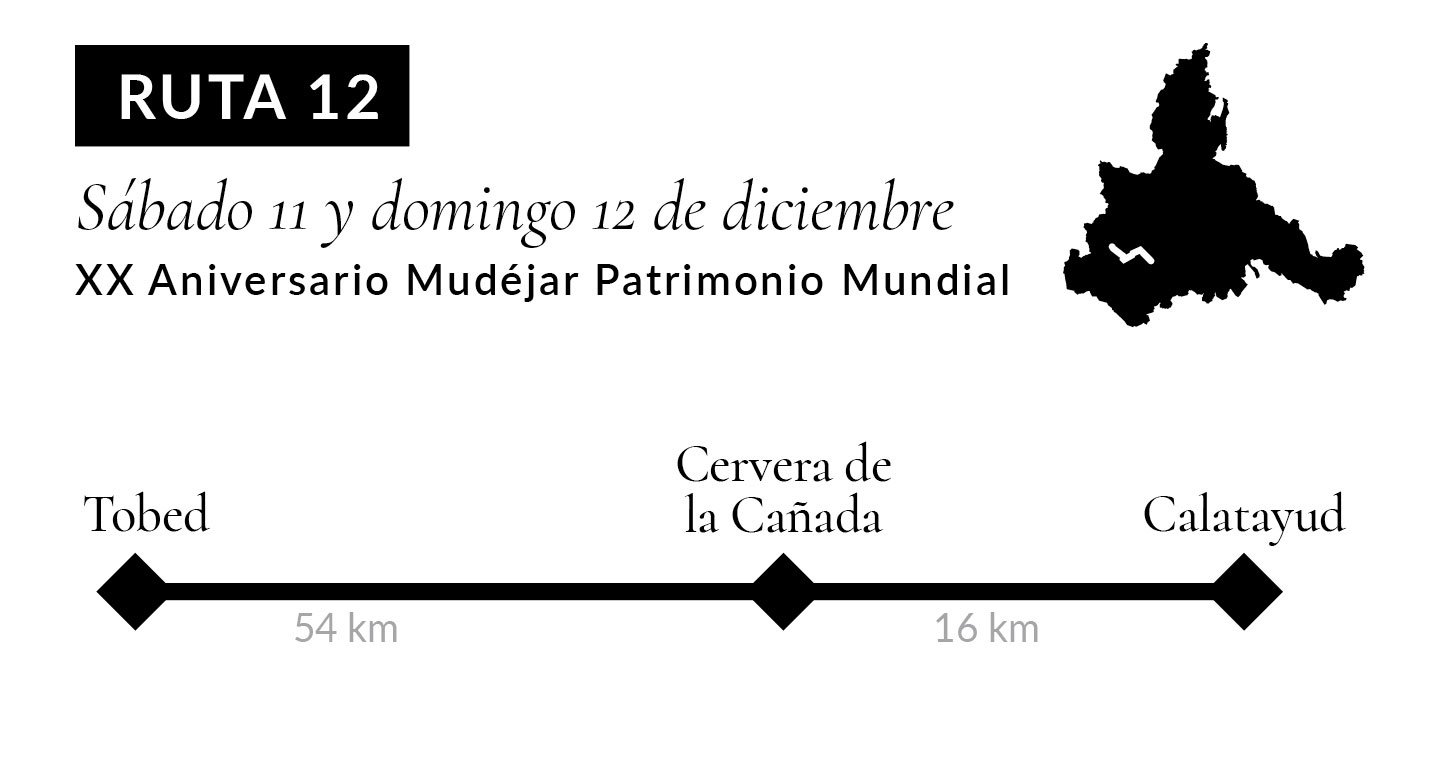
The last route is dedicated to the paradigms of the style that hold the UNESCO World Heritage brand. The collegiate church of Santa María de Calatayud, the church of Santa Tecla de Cervera de la Cañada and the church of la Virgen de Tobed reveal a magnificent heritage legacy located in urban complexes and landscapes of surprising beauty and endowed with character and intelligence.

Route 12. 20th Anniversary Mudejar World Heritage.
Tobed, Calatayud and Cervera de la Cañada

SATURDAY, 11 DECEMBER.
CLICK HERE TO MAKE A RESERVATION
https://www.viajarporaragon.com/territorio-mudejar-ruta-12/ 

Route 12. 20th Anniversary Mudejar World Heritage.
Tobed, Calatayud and Cervera de la Cañada

SUNDAY, 12 DECEMBER.
CLICK HERE TO MAKE A RESERVATION
https://www.viajarporaragon.com/territorio-mudejar-ruta-12/ 

NOTE. The actions of this project related to the dissemination in the ARATUR 2022 Aragonese Tourism Fair, the management of the reservation system and the logistical needs of travel have had the economic collaboration of the Government of Aragon through the aid of the year 2022 for private non-profit tourism entities for tourism promotion actions.