Territorio Mudéjar and Fuentes de Ebro launch a plan for the integration of emerging professionals to develop a strategic plan of action for tourism and heritage.

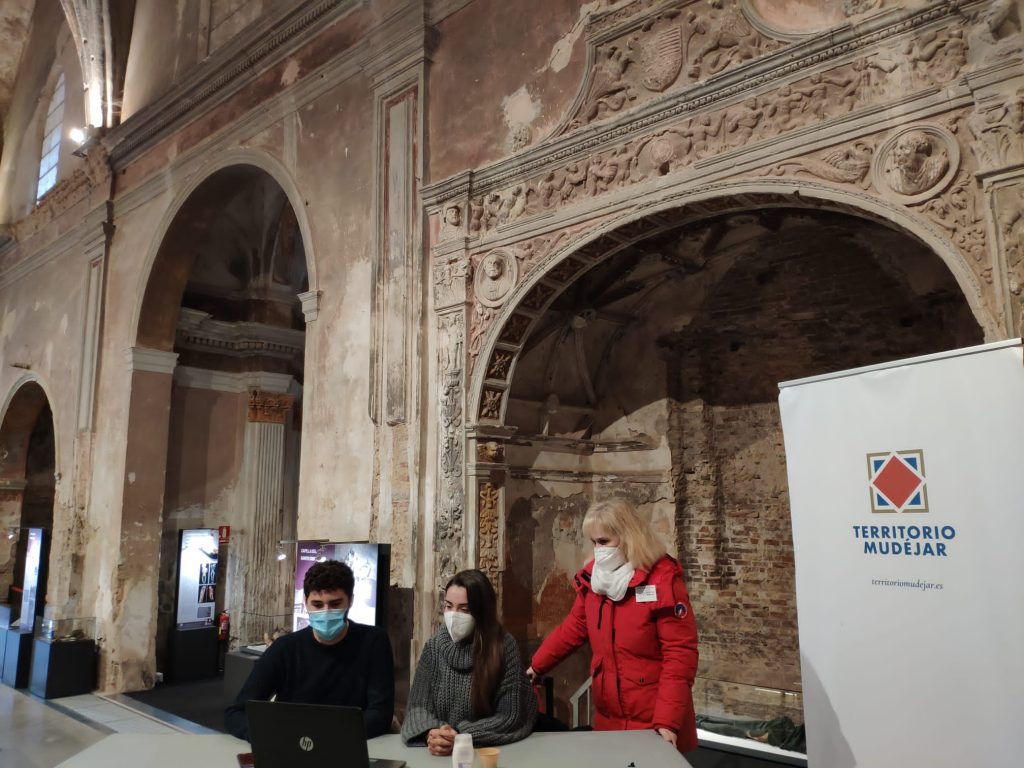
Territorio Mudéjar and the Town Council of Fuentes de Ebro have signed the first special agreement between the entity and a partner town council to develop a strategic plan of sustainable tourism and heritage action through the insertion of emerging professionals and the development of a calendar of activities in that town.

The activities will consist of a recreational activity and a visit to Fuentes de Ebro guided by heritage professionals in which the Mudejar culture and its relationship with the town will be explored in depth. There will also be a dynamic of citizen participation to listen to the contributions that the neighbours want to make to the design of the strategic plan.

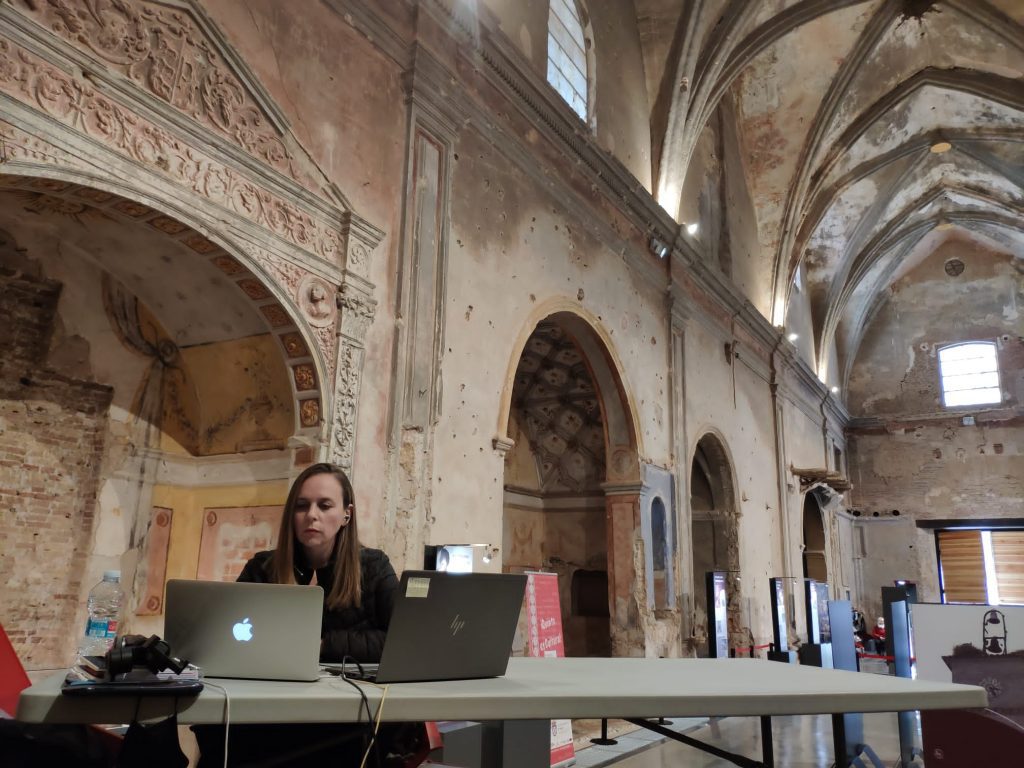
The agreement will last for six months. To develop it, the association Territorio Mudéjar has set up a work team made up of two young professionals who have been trained in the organisation thanks to the Desafío-Arraigo internship programme, better known as rural Erasmus, a pioneering project in Spain that the Diputación de Zaragoza and the University of Zaragoza launched in 2018 to enable university students to do internships in companies, institutions and associations in rural areas of Zaragoza. Territorio Mudéjar is collaborating with this project in 2019 and has made it possible to create a pool of emerging professionals with the necessary skills for the needs specified by the Fuentes de Ebro Town Council.

The team will be supervised by the project management area of the Territorio Mudéjar entity, which will define the strategic lines and integrate the locality’s own actions with the different innovation projects that Territorio Mudéjar has been developing since 2019 in its research stays and projects.

The mayoress of Fuentes de Ebro, María Pilar Palacín, explained that this agreement advances the local tourism strategy of the town, which seeks to make cultural resources, nature tourism and events visible to different target audiences. Among the heritage resources, she recalled that Fuentes de Ebro has the Gothic-Renaissance and Mudejar church of San Miguel, the Moorish and Jewish quarter in the town centre, vestiges of the civil war (trenches, machine gun nests) and the village of Rodén Viejo, declared a site of cultural interest; interesting post-war architecture and rationalist architecture (library), among others, to which are added the resources of landscape, gastronomy and nature.

The director of Territorio Mudéjar, Victoria Trasobares, added that this project is an interesting pilot model of collaboration with the partners that allows for progress in a line of work such as an “observatory” or “advisory committee” that the town councils can use to provide a strategic vision for their work in the management of local resources. Moreover, Trasobares added that “in the case of Fuentes de Ebro, the potential of the town and the great work done so far is evident, but also the intention to work with a vision of the future that would provide a link between the results of other previous projects such as: photography for different uses, the use of educational materials for families, the design of tourist awareness days or the impact of research actions on local development”.

This agreement will be a pilot test that could be extended to the rest of the partner municipalities that wish to incorporate emerging trained professionals who can be linked to the localities in the medium or long term, and introduce a way of working based on the quality and sustainability of the resources of the locality from a strategic and unitary supervision.

Calendar of activities:

The project began in January with various sectorial meetings and will continue with public activities from March with a calendar of conference-visits. The activities will have a fixed part (historical-artistic visit to the heritage of Fuentes -church and town planning- and to the historical complex of Rodén) and another thematic part that will change on each date with specialists or local experts:

  • Sunday 19 March: architecture and urban planning. Explanation of the urban development of Fuentes de Ebro and Rodén with specialists in the field linked to the town.
  • Sunday 16 April: Holy Week. Explanation of Easter Week linked to Fuentes de Ebro.
  • Sunday 7 May: Landscape and materials. Explanation of the extraction, work and use of the materials found in the area around Fuentes de Ebro, which are traditionally used for construction. Special emphasis will be placed on clay and alabaster. In addition, from the privileged enclave of Rodén, issues such as the explanation of the water resources and their importance in the configuration of the agricultural landscape that forms one of the signs of identity of Fuentes de Ebro and Rodén will be addressed.
  • Sunday 21 May: gastronomy and trade. Emphasis will be placed on local businesses and gastronomic traditions linked to the town of Fuentes de Ebro with various options such as micro-stops in invited businesses along the route and presentation of local products.
  • Sunday 11 June: activities for families. The visit will incorporate a didactic vision of the history of Fuentes de Ebro and Rodén through the different materials developed in the ‘Mudejar Pedagogy’ and ‘Mudejar Territory Circular’ projects.

Territorio Mudéjar currently has 40 member town councils in the province of Zaragoza and works to preserve and disseminate the Mudejar heritage as a driving force for local development.

Pilot project to recognise local services suitable for scientific tourism

Territorio Mudéjar is participating in a pilot project with European funding to design its own quality seal to distinguish local establishments with services suitable for scientific tourism linked to heritage and cultural resources.

The project, called Digitour, is funded by the European Commission’s Executive Agency for Small and Medium-sized Enterprises within the framework of the Cosme Cos-Tourinn-2020-3-04 programme and aims to boost the tourism sector by bringing together companies in this sector with providers of innovative and digital solutions using territorial and cultural heritage for tourism purposes. It is also linked to the work of creating networks of professionals with activity and impact in the villages that Territorio Mudéjar develops through its Research Stays and Projects.

The pilot project will begin with the redesign of the brand of the Posada del Almudí in Daroca – a historic building in the centre of the town – with an interesting rehabilitation – and an establishment in Romania, Pensiunea Septiembrie in the town of Elsenita – a recently constructed building integrated in the landscape of the Danube Gorges, in the surroundings of the Natural Park of the Iron Gates, a geopark declared World Heritage by UNESCO, whose associated heritage offers a high cultural value as well as a very interesting ethnographic development.

This union of European companies is, moreover, the result of the exchange trips of good practices of the European project MOMAr Interreg Europe led by the Diputación de Zaragoza and in which the association Territorio Mudéjar has actively participated since its inception in 2019.

This seal of quality recognises establishments that are prepared to cater for the tourism of people and professionals who travel to research, learn about or develop projects related to the heritage and history of the network of towns and villages in the Mudejar Territory and then translate this into their studies.

The pilot project will define the characteristics of hotel services for these customers with the aim of generating a European-wide flow of knowledge-driven travellers.

Globally, the Digitour project, in which Territorio Mudéjar participates, with 12 partner countries will launch 19 collaborative projects in which tourism SMEs and digital providers will collaborate. This will involve improving the tourism skills and capabilities in the cultural field of small and medium-sized enterprises through training and advice. It will also promote innovative ideas for SMEs to improve their offer and the management, marketing and promotion of their services in a new and sustainable way.

SMEs are the backbone of the tourism sector in Europe (they represent 90% of the companies in the sector) and, in this context, they play a crucial role in innovating and relaunching the sector. They often find it difficult to access digital tools and Digitour aims to help them become part of an innovative ecosystem. It does so by granting two types of vouchers.

One, for individual SMEs that want to improve their skills in digital tools. The other is for groups of SMEs cooperating on innovative projects or who want to participate in an international digital ecosystem.

We started the project “Circular from the rural school “.

Would you like to work in the classroom with educational materials on the Mudejar identity of the villages? Do you understand the heritage space as an innovative learning space?

In the coming weeks the first action of the project “Rural school in motion” will begin, an introductory course to the project in which Territorio Mudéjar offers to those interested in linking education, heritage and innovation to know the starting point and the methodology with which it will work until mid 2022 together with seven of the local development groups in the province of Zaragoza coordinated by the ADRI Calatayud Aranda group.

“Rural school in motion” is a cooperation project between rural development groups coordinated by the ADRI Calatayud-Aranda group, together with Cedemar, Adefo Cinco Villas, Asomo Moncayo, Adrae Comarca Alta del Ebro, Fedivalca y Adri Jiloca Gallocanta, and financed by the Government of Aragon through the Leader programme and the Provincial Council of Zaragoza through the Territorio Mudéjar association, as a private collaborating entity that manages the implementation and execution of the initiative.

The aim is to develop educational materials related to the Mudejar identity of the villages, placing rural schools and the educational community of the villages at the centre of the project, with a triple purpose:

◾️Work on the introduction of the Mudejar heritage identity in the work programmes of schools beyond the artistic or complementary areas.

◾️To involve the educational community in the valuation of the Mudejar heritage as part of their personal history, which favours the knowledge, conservation and dissemination of the identity of the localities.

◾️To use the work carried out in schools as material for dissemination and tourist use on the Mudejar heritage of the villages for a family and children audience.

???? In the COURSE we will explain the working methodology and the results of the pilot project that was carried out in the CRA Vicort Isuela in the 2018-2019 academic year and which is the starting point for the implementation of the project in the schools of the villages of Territorio Mudéjar.

It will be taught by Laura Castejón and Víctor Gumiel, teachers who carried out the design and testing of the pilot project, and Victoria E. Trasobares, director of Territorio Mudéjar who has extensive experience in the management and implementation of Mudejar heritage management projects in rural areas.

The Department of Education has included it as an approved course in its catalogue of ongoing teacher training activities and recognises the training hours.

The course will be carried out on-line through the entity’s digital work platform that we will set up for the specific training.

Course information: https://mcusercontent.com/…/c70fb223…/CURSO_CIRCULAR.pdf

Application form:

Option 1: If you have a certificate or electronic signature https://doceo.catedu.es/…/portadaInitConsultarActividad…

Option 2: If you do not have a certificate or electronic signature, write a message to: info@territoriomudejar.es

Project information: https://mcusercontent.com/…/9591a…/PROYECTO_CIRCULAR.pdf

If you have any doubts or you want to consult us about any particular issue you can call us on 876 634 125 or write an email to info@territoriomudejar.es

We are back in the classroom in the Master’s course on cultural heritage management

Last week, the director of Territorio Mudéjar, Victoria Trasobares, taught one of the sessions in the Master’s course on cultural heritage management at University of Zaragoza in in-person mode, discussing how important it is to have a line of research and cataloguing of historical and artistic heritage in order to carry out significant long-term projects that have an impact on the region.

In connection with the anniversary celebrated a few days ago – World Science Day for Peace and Development – we would like to point out that the scientific method is also applied to the humanities and, obviously, to heritage. The scientific method consists in obtaining a set of knowledge through systematically structured observation and reasoning.

At Territorio Mudéjar we are committed to research as a key element and to scientific rigor in our work. Our ongoing efforts have a cross-disciplinary approach involving researchers from diverse fields, and we participate in academic networks and national and international activities such as conferences and workshops, in order to find common ground on important outcomes and conclusions based on scientific evidence, to share good practices, establish new ways of collaborating and researching, and to create synergies.

Getting back into the classroom motivated us to believe that we will soon be able go back to performing activities on-site with students like the one seen here in the photo, taken last year. This activity consisted in applying theoretical contents, using a heritage space as a place of learning.

Thus, Territorio Mudéjar progresses in its project for educating heritage professionals, which we are developing in conjunction with the Spanish Ministry of Culture and Sports, to define the characteristics required of managers of historical and artistic heritage in rural settings.

Training for developing a line of work on preventive conservation

At Territorio Mudéjar, we have completed the course offered by the Cultural Heritage Institute of Spain (IPCE) entitled “Guía para planes de conservación preventiva” (Guide to preventive conservation plans), which took place over the past four weeks. We started out by identifying and analyzing conservation issues related to cultural assets and ended with the design and implementation of procedures to address these issues. During the course, which seeks to generate standardized working procedures to which quality control rules can be applied, we discussed examples such as the actions underway in Magallón and on the tower in Ricla.

This training activity through the IPCE allows us to develop a line of work at Territorio Mudéjar related to preventive conservation plans.

Project MOMAr: Heritage beyond tourism

At Territorio Mudéjar we strive to develop Mudejar heritage management practices that foster responsible, sustainable tourism designed by those in the places where the heritage is located, always in conjunction with their inhabitants. We are convinced that preservation, research and dissemination of the Mudejar identity are key factors in the creation of tourism activities.

To consolidate this aim and share best practices, from today until November 13, we will be attending the second Interregional Event for Exchange of Experiences 2 (IEE 2), held in the province of Groningen, in the north of the Netherlands, entitled “Heritage, further than tourism: a sustainable future”.

Researcher Irene Ruiz Bazán (professor at the Polytechnic of Turin and Territorio Mudéjar fieldwork researcher) was in charge of moderating the good practice seminars in which several towns belonging to our network stood out in the presentation of unique projects.

The mayor of Torrellas, María Pilar Pérez, presented the Miau urban art project, which has been in place in the town since 2016.

From Alagón, as part of the Heritage and Education seminar, Julián Millán and Pablo Sebastián discussed the interesting work they are doing at the Ribera Alta del Ebro Workshop School.

And from Daroca, Irene Ruiz mentioned the work being done in Territorio Mudéjar, with contributions from researchers Ricardo Monreal and Marta López – 2020 Fieldwork grants – in the Mudejar civil architecture management project, which they are carrying out in accordance with the objectives of the new Fundación Campo de Daroca management body, reaching an important milestone by converting the Palacio de los Luna into a benchmark and a management model for private civil architecture.

On Friday, streaming from the Museo de Momias in Quinto, it will be time to look to the future in the conclusion sessions and also in the workshop on rural heritage management in the era of COVID-19, an issue that Territorio Mudéjar has thoroughly addressed so as to remain active while complying with all the safety measures and ensuring the safety of our visitors, but also, above all, that of the inhabitants of our towns.

Moreover, we have launched a multiplatform digital work solution in order to continue progressing with our projects online, aiming to work in an effective, innovative manner with historical and artistic resources, to the benefit of Mudejar heritage and our region.

Territorio Mudéjar has a strong presence in this forum, in which up to 12 people from our network are participating: students in the Challenge Program, members of city councils like those of Villarreal de Huerva and Maluenda, 2019 and 2020 fieldwork researchers, and more.

* Territorio Mudéjar is a member of MOMAr Interreg Europe (Models of Management for Singular Rural Heritage / Modelos de Gestión para el Patrimonio Rural Singular), which, under the leadership of the Provincial Government of Zaragoza and funded by the European Union, involves entities from six different countries.

Territorio Mudéjar as a role model of adapting one’s work in the era of the pandemic

Territorio Mudéjar outlined today, at the MOMAr Interregional Event, its strategy and the measures taken to continue its projects during the pandemic, in the hopes that our experience aids others in finding windows of opportunity at a time in which we must remain committed to sustainable heritage management and safe culture.

The director of Territorio Mudéjar, Victoria Trasobares, connected from the Museo de las Momias in Quinto to talk about the ways in which Territorio Mudéjar acted responsibly to protect both its network and the inhabitants of the member towns when COVID-19 broke out and the lockdowns began in March. First, the entity analyzed its action plan for 2020 and then arranged new ways of working with the towns, partners and professionals that are part of Territorio Mudéjar.

  • Daily tours of the region were replaced with virtual efforts thanks to the development of a platform that was already in progress and has proven to be highly efficient, overcoming the distances between the member towns. This has also prompted a move to develop a similar model for smart working in each of the towns.
  • Meetings also went online and we took part in national and international conversations to prepare transnational calls for proposals. Thus, the entity has constructed a network of professionals able to work remotely at the same pace and with the same goals.
  • In addition, Territorio Mudéjar has expanded its communication environments, linking our towns with international entities.
  • This has enabled them to continue using their heritage spaces, even while working remotely. And to continue focusing on creating new models of use for heritage spaces.
  • In the process, they have had to overcome difficulties, such as having to constantly reorganize their teamwork efforts and their project timelines.
  • Another complex issue was ensuring that the work done was always certain to be respectful of the inhabitants living in the historical and artistic heritage settings.
  • They also had to reorganize catering and projects.

As the director of Territorio Mudéjar, Victoria Trasobares, explained, “Our biggest success over these past months was our ability to naturally adapt to the unexpected situations, finding and taking advantage of the opportunities that arose along the way. For example, we have had a considerable presence in high impact projects like Google Arts and we were able to participate in high level events that, under normal circumstances, would have been hard for us to attend”.

In general, Territorio Mudéjar has not only continued its projects, but it even expects to see significant growth in 2021.

El Viajero, a project serving the towns and the people who work there.


Following long hours of work and preparation, we are now finishing up the details on our project entitled “El Viajero” (The Traveler), in which we are now doing pilot testing on three activities, never losing sight of sustainability: implementing specialized tours of our heritage based on the research projects we are involved in, creating a central information and booking office, and launching a podcast channel that can be accessed via our website.

In collaboration with Turismo de Aragón a(the Aragon tourism office), which called upon non-profit private entities to submit proposals for actions promoting tourism, this initiative seeks to create rural innovation concentrators based on heritage, an objective that we are also developing as part of the LEADER Local Development Strategy through the local action group ADRI Calatayud-Aranda in the projects approved for 2020.

At Territorio Mudéjar, as an artistic and historical heritage management entity focused on the Mudejar, we believe that heritage is a driving force for the development and identity of our towns. And we consider preservation, research and dissemination of the Mudejar identity to be key factors in the creation of tourism activities, which must always be designed from within the region and in conjunction with its inhabitants. This is how we explained it in January at FITUR and this remains our guiding principle in the “El Viajero” project.

The project aims, on the one hand, to enhance the possibilities for bringing visitors of several kinds to the region: traditional travelers, attracted by businesses and activities such as nature, cuisine and spas, to name a few, already existing in the towns, research or educational travelers, and even business travelers; and on the other, it seeks to improve job opportunities and uphold the businesses of professionals related to Mudejar monuments and heritage in each of the towns, such as city council tour guides and heritage and nature-related business owners.


Four signature tours of our member towns have been pilot tested with small groups. Designed by students in the 2020 Challenge Program (DPZ-Universa) the central theme is knowledge about the Mudejar, given that we are supported by superb guides who can explain the topics based on scientific facts.

These tours endeavor to define the towns in this region as a space for tourism focused on preserving our heritage, upholding local communities and opening up hard to reach spaces by means of tailored management and outstanding customer service.

After thoroughly defining the subject matter, in the end the students decided to group the tours around four topics:

a) The origin of the Mudejar: coexisting cultures. Here, we observe how coexisting Christian, Jewish and Muslim communities are reflected in the urban design, dwellings and main monuments.

b) Mudejar highlights, including tours of buildings that clearly reflect the characteristics of Aragonese Mudejar art.

c) Mudejar towers, discovering monumental heritage, urban design and the landscape through these towers.

d) World Heritage, focused on visiting the UNESCO World Heritage sites in Territorio Mudéjar and learning about all the complexities of the Mudejar phenomenon.

Central information and booking office: We have designed and implemented, on a trial basis, a digital switchboard that gives us a line of communication 24 hours a day/7 days a week to meet the information needs of anyone interested in Aragonese Mudejar art and the towns where the monuments are located.

It also enables us to offer our member towns an assessment tool in terms of accessibility to heritage buildings and analysis of demand. The virtual switchboard can be reached by telephone and will forward calls to the pertinent information providers in each town after offering introductory information about Mudejar heritage.

El Viajero: a Territorio Mudéjar podcast channel. The aim is to accompany visitors with entertaining audio clips about the context, history, customs and interesting facts about the places visited. This offers an opportunity to become more familiar with the destination and prepare the journey beforehand, or to be accompanied at all times. This podcast channel got started thanks to one of the Territorio Mudéjar 2020 fieldwork grants, and it will now become part of the El Viajero project.

Like all of our projects, El Viajero is the result of a significant amount of networking and cross-disciplinary collaboration. In this case, students in the 2020 Challenge Program participated (Cátedra de DPZ (DPZ Chair) and Universa), in collaboration with researchers involved in the 2020 Gonzalo M. Borrás Gualis fieldwork grants; Estudio Mique is in charge of technology and usability issues, and Viajar por Aragón has advised us on how to create a model for the Territorio Mudéjar routes in order to complement the existing heritage tourism options and combine proper use of heritage with tourism activities, never losing sight of sustainability and the impact these activities have on the relevant town and its inhabitants.

Our work always takes into account the sustainability of the projects and respect for the inhabitants of our towns. For this reason the activities, which required moving around the towns and were scheduled to take place in October and November, were carried out in highly reduced formats, following diverse recommendations and regulations.

Access is possible via our website homepage (www.territoriomudejar.es).

Further information will be available very soon!


Territorio Mudéjar, an example of good practices at the seminar on cultural heritage as a sustainable resource in ‘empty Spain’

Territorio Mudéjar participates in the leading forums on heritage and innovation, including the online seminar entitled “El patrimonio cultural como recurso sostenible en la España vaciada” (Cultural heritage as a sustainable resource in empty Spain), sponsored by the Spanish Ministry of Culture and Sports. We not only attended, in this case, but also stood out as a role model of good practices.

At this meeting, coordinated by the Cultural Heritage Institute of Spain (IPCE) and held on October 5 and 6, the lecturers included full professors of the art history department at University of Zaragoza Ascensión Hernández Martínez and María Pilar Biel Ibáñez, who gave a conference entitled “La cultura y el patrimonio como recurso: la lucha de Aragón contra la despoblación” (Culture and heritage as a resource: Aragon’s fight against depopulation).

In line with the theme of the seminar, they discussed how this demographic challenge requires coming up with strategies to encourage people to stay in places with difficulties and studying measures that generate social benefits for the residents, attract visitors and possible new residents, and turn heritage into a driver of the economy, tourism and employment and, above all, to uphold a cultural identity.

In this regard, they explained how we, at Territorio Mudéjar, strive to consolidate a unified, collaborative management network for the use of historical and artistic resources linked to important Mudejar heritage in our towns. And also how we see these resources as a driving force in the development of the towns and as emblems of identity for upholding the communities existing in our region.

They further highlighted that our entity ensures that the projects directly affect the region through responsible and sustainable management of Mudejar cultural heritage.

Experts from the IPCE, the University of Seville’s Industrial Heritage Laboratory, the Santa María la Real and DeClausura Foundations, the Polytechnic University of Madrid School of Architecture, and Asociación Amigos de los Castillos, to name a few, also participated in the seminar. They discussed the issue of desertion of rural areas and the ensuing consequences for heritage, including the loss of traditional architecture and monuments, movable assets, habits and intangible customs.

They also assessed good practices such as reputable cultural routes, famous restoration projects, preserved monuments, foundations whose efforts have had excellent outcomes and models such as that of Territorio Mudéjar.

University of Zaragoza colloquium on the entrepreneurial adventure in rural settings

On October 15, Territorio Mudéjar took part in the discussion entitled: “Tu desafío: Conocer el mundo rural y sus posibilidades” (Your challenge: Discovering the rural world and its possibilities), organized by University of Zaragoza as part of its rural exchange program (Challenge Program) to talk about the entrepreneurial adventure.

Territorio Mudéjar is an active participant in this initiative, and has just started the second phase with its student internships. The director of Territorio Mudéjar, Victoria Trasobares, explained this, stressing that the program offers an opportunity for young people, who learn from it, and for the rural setting in which they develop their ideas.

Victoria Trasobares noted that Territorio Mudéjar makes use of its resources by generating a professional workplace; in other words, each area developed is professionalized. Since the entity works with historical and artistic heritage, there are obviously professionals with skills in this field.

Therefore, art history students are being trained in Territorio Mudéjar to construct learning experiences that take the context into account: Mudejar art, Aragonese art and a general context, because all genres are subject to some kind of influence.

Through this project, Territorio Mudéjar provides support in skills-building for art historians, so that they know how to search for information and how to use it. They also learn to discern the key components in ensuring that a project can be implemented with a likelihood of success.

In addition, this work helps further the project aimed at defining a specialized job profile for cultural heritage designated as UNESCO World Heritage located in rural settings. This Territorio Mudéjar project is funded by the Spanish Ministry of Culture and Sports, and by the Provincial Government of Zaragoza through its direct support for our entity.

Adrián Tambo from Ecotambo, Alicia Sáchez from #DulcesLocuras, Fran Saura Armelles, veterinarian, María Fernández Pérez Muro with the human resources recruiting and development department of Caja Rural de Aragón, Sandra Barceló, psychologist and independent educator specializing in social matters and mindfulness, and Yolanda Gimeno Cuenca, an environmental expert at Riegos del Alto Aragón, also took part in the University of Zaragoza course, sharing their experiences.