Territory Mudéjar showcases the strength of heritage of its partner towns at Aratour, the major tourism fair in Aragón

Territorio Mudéjar we are taking part for the sixth year in the fair of tourism fair in Argón ARATUR and we are doing so with our heritage projects developed with our partner local councils.

Our stand once again becomes a space where we can showcase what Mudejar architecture is a9> through the examples of the monuments, urban planning, houses, landscape, the trades and the services in each town.

At our stand, you can take part in ‘Mudejar tours’ with historical and artistic explanations of the towns (each one at a specific time) and also about the projects that we are carrying out there, such as the routes or the projects on the route, among other things.

At the end of each presentation, the participants can take part in the prize draw for three trips to one or two partner destinations. The trip includes private transfers, private guided tours to the monuments, a visit to a business. a23> monuments, a visit to a local business and a lunch in the form of a tasting.

TIMETABLES FRIDAY 24

🕔 5.00 p.m. Ruta 14. Mudejar World Heritage

📍The collegiate church of Santa María in Calatayud, the church of Santa Tecla in Cervera de la Cañada and the church of the Virgin of Tobed are paradigms of the style that holds the Unesco World Heritage mark.

🕕 6.00 pm Tour 2: A blend of cultures and borderlands: Mudejar villages.

📍Fréscano, Torrellas and Tarzona. These routes take us to the towns in which the Christian and, Jewish and Muslim cultures developed in an extraordinary and lasting way. The trips we have planned will enable us to understand how this period of cultural fusion still has even today a clear reflection in urban planning, the settlements and the monuments of these villages which played a role of significance in the territory of Aragon during the 12th and 13th centuries.

🕖 7.00 pm Tour 3: A blend of cultures and borderlands: Mudejar villages

📍Saviñán, Mesones de Isuela, Calatorao, La Almunia de Doña Godina.

SATURDAY 25 MAY

🕦11:30. Route 4: A blend of cultures and border towns: Mudejar villages

‘Guided tour’ of the Ebro sources and Rodén, Velilla de Ebro, Gelsa and Quinto with its Museum of Mummies.

🕛12.15 pm. Route 5: Key features of a style, its origins. The Mudejar style in Illueca, Villarroya de la Sierra and Torralba de Ribota.

🕐1.00 pm. Route 6: Key features of a style, its origins. The Mudejar style in Zuera, Magallón and Tauste.

SUNDAY 26 MAY

🕦 11:30 Route 10: A bird’s eye view of the towers

Mudejar architecture in Romanos, Villarreal de Huerva, Mainar, Herrera de los Navarros and Villar de los Navarros.

🕕 12:15 Route 11: A bird’s eye view of the towers

The Mudéjar in Utebo, Villamayor de Gállego and Muel.

🕐13:00 Route 12: The construction of space. Light and matter

The Mudejar style in Maluenda, Morata de Jiloca and Acered.

🕔 17:00 Route 13: The construction of space. Light and matter

The Mudejar style in Borja, Castejón de Valdejasa and San Mateo de Gállego.

🕠 5.30 pm Tour 1: A blend of cultures and borderlands: Mudejar villages

The Mudejar style in Terrer, Villafeliche and Daroca.

*️⃣ Participation in the fair was funded by funding from the Government of Aragón through the “2025 Call for applications for grants to private organisations without not for-profit organisations for projects aimed at promoting tourism” of the Directorate-General for Tourism and Hospitality of the Department of Environment and Tourism.

Students at the Gallicum High School in Zuera are launching a pilot learning experience with our teaching materials.

Education is a passport to the future, and it’s crucial for us that students in our partner communities understand the heritage they grew up with and learn to love, value, and protect it so they never lose the identity of their territory.

Along these lines, today we implemented a pilot test of teaching materials with second-year ESO students and teachers at the IES Gallicum in Zuera.

Thanks to the educational materials developed in the various educational projects of Territorio Mudéjar (Circular from the Rural School, Didactic Mudéjar, the guide, Mudéjar Pedagogy), we have toured the town explaining different elements that play a fundamental role in understanding Mudéjar culture: historical context, construction materials, and the importance of water and landscape.

This Thursday we will repeat the activity with another second-year ESO group.

Our objective:
– To evaluate our materials and methodology, which have been developed through various projects and research stays.

– Awaken curiosity about the origin of places to reinforce identity from an early age, fostering roots and feeling emotional about one’s own place.

Bi-annual technical meeting of the Alliance of Cultural Landscapes and Related Sites in Talayónica Menorca

Territorio Mudéjar participated in the technical workshops of the Alliance of Cultural Landscapes and Related Sites, held in Menorca Talayónica, from March 10 to 12.

Maru Gallego, from the TM team, has traveled to the World Heritage site since 2023 to participate in the meeting on Communicating World Heritage Properties: Interpretive and Outreach Resources to Connect with Society. This event brings together experts in heritage, communication, and outreach to discuss the best strategies for conveying the value of sites inscribed on the World Heritage List.

This event, which combines theoretical sessions with field experiences, aims to share experiences of initiatives aimed at strengthening the connection between heritage and society through the use of tools and methodologies that facilitate its interpretation and understanding by the public.

This biannual technical meeting of the Landscape Alliance included an intense day of conferences and visits to representative sites in Menorca, such as the Naveta des Tudons, the Ciutadella-Can Saura Museum, and the Numa Foundation.

We heard Pablo Jiménez Díaz, from the Ministry of Culture, discuss the different approaches to communicating World Heritage; Celia Martínez Yáñez of ICOMOS International speak about heritage law and regulation; we learned about a benchmark heritage education program from the San Millán de la Cogolla Foundation; and we learned about practical cases of heritage dissemination, such as the experience of the Madinat al Zahra Archaeological Complex, the educational project in the Sierra de Tramuntana, and the initiatives of Talayotic Menorca aimed at the local community.

Technical visit to the German Upper Palatinate with the European project on religious heritage in rural areas RELIHE

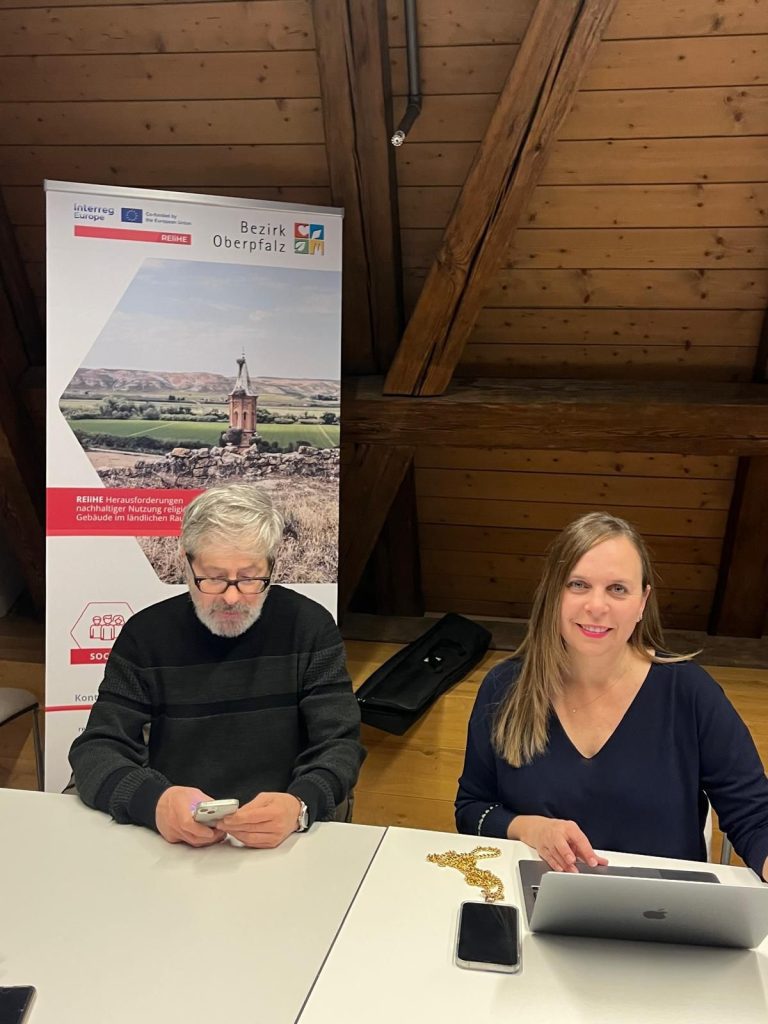
The director of Territorio Mudéjar, Victoria Trasobares, traveled to the German region of Upper Palatinate, in the state of Bavaria, to participate in a technical meeting of REliHE Interreg, the European project for religious heritage in rural areas that aims to improve regional policy instruments and promote innovative approaches to the sustainable reuse of religious heritage. All of this contributes to local development.

Territorio Mudéjar is a stakeholder in this project, led by the Polytechnic of Turin, which has the Provincial Council of Zaragoza as a partner in Spain. In addition to the province of Zaragoza, the following countries are participating: Overijssel (Netherlands), Kujawsko-Pomorskie Voivodeship (Poland), Upper Palatinate (Germany), South Bohemia (Czech Republic) and Zemgale (Latvia).

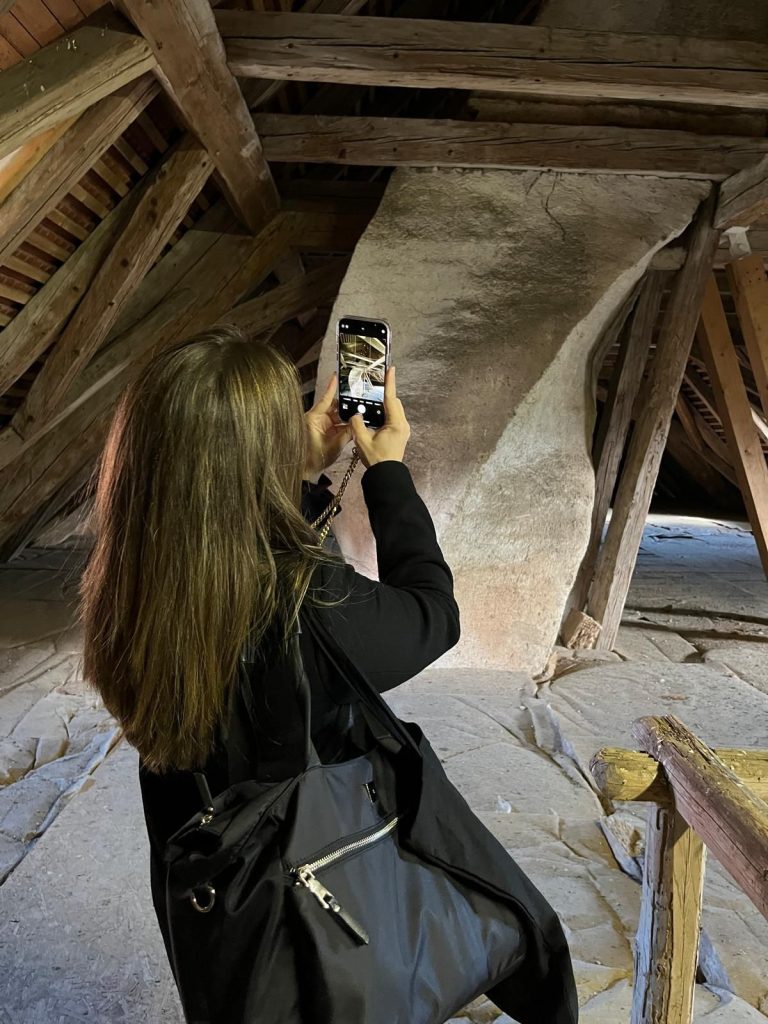
The first day began at the former Frauenzell monastery with a welcome from local representatives and REliHe project leaders. After a tour of the monument, a session was held to discuss the monastery’s past uses and potential future uses. Territorio Mudéjar is also working along these lines, understanding the heritage of its partner communities as a space open to future research and learning, as a space that is not just a container, but part of the content.

The day continued with visits to the parish churches of Maxhütte-Haidhof, to further explore the uses of heritage space.

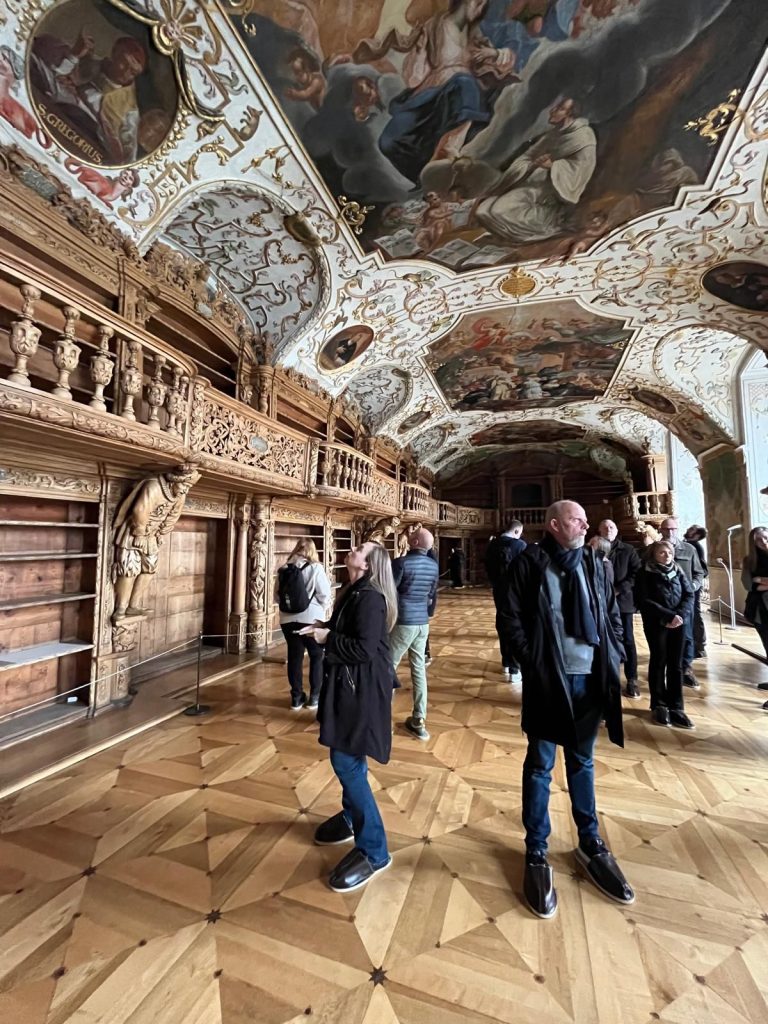
On the second day of the technical tour, Abbess Laetitia Fech opened the doors of Waldassen Monastery to the participants, a fantastic reuse management project that has enabled its preservation. The visit continued with a tour of the Protestant church in Trabitz and the monastery of St. Josef in Neumarkt.

Before flying back, the participating team traveled from Neumarkt to the Planktessen Monastery. There, they were welcomed by Benedictine Abbot Beda, who is responsible for the monastery’s strategic management. He was accompanied by the town’s mayor, Ludwig Eisenreich, who expressed his gratitude for the specialized visit and the opportunity to develop joint projects.

With this technical visit, Territorio Mudéjar returns with a notebook full of ideas on European models for managing the use of religious heritage and how to apply them in the region to achieve a greater and more effective impact.

We concluded our specialized Mudejar courses with a master class by Professor Sarasa.

We have completed our specialized Mudejar courses, and we have done so with two activities that have reinforced our interest in and understanding of the Mudejar heritage of our region:

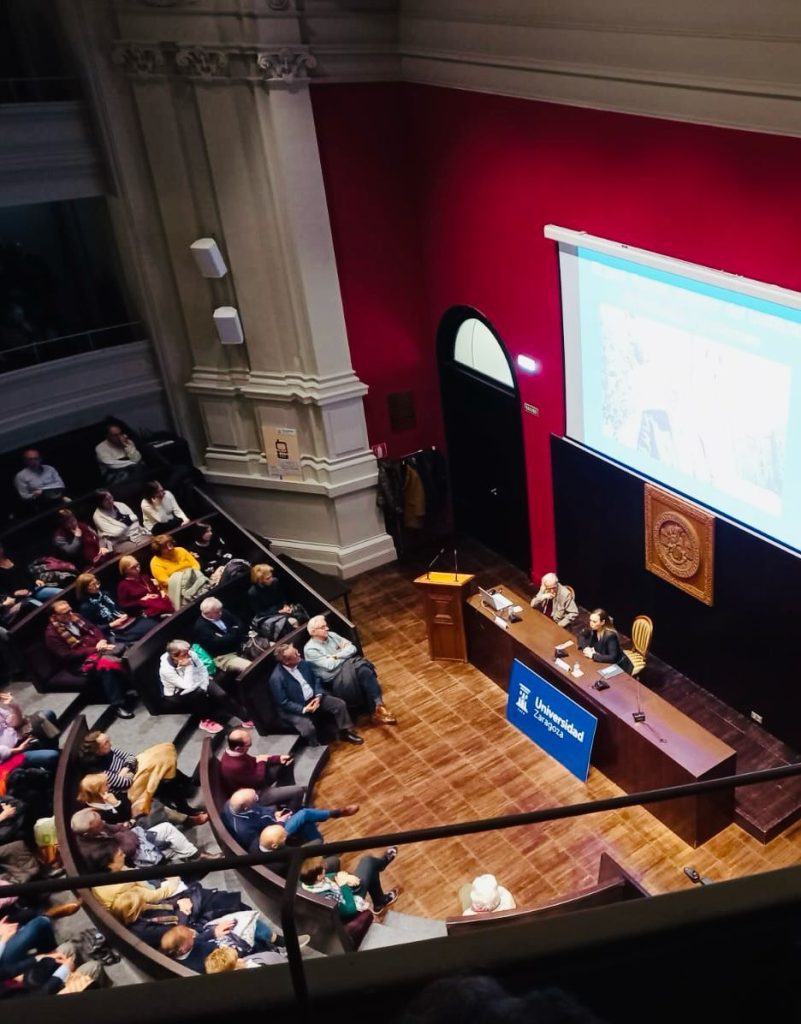
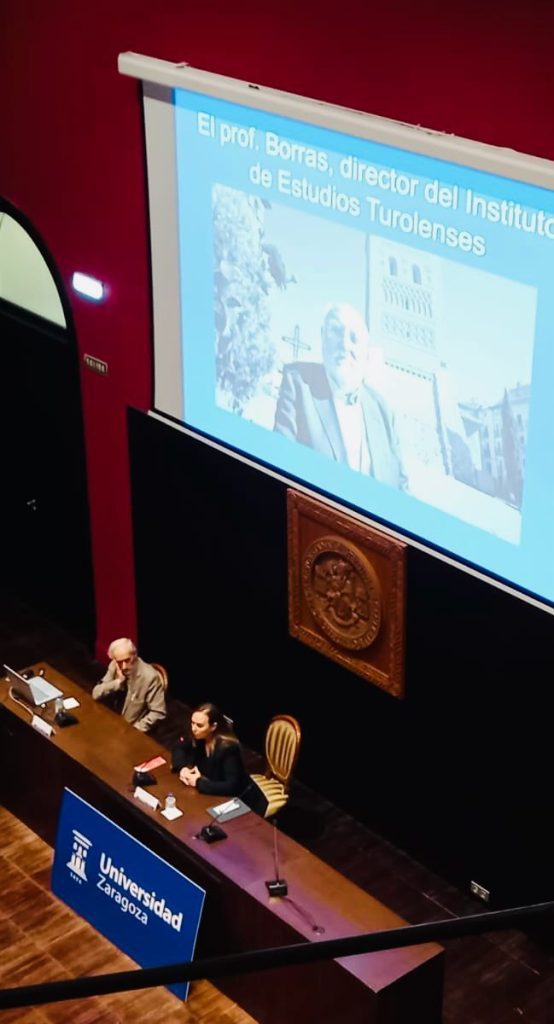
On March 4, Victoria Trasobares introduced Professor Esteban Sarasa at the “Emeritus Tuesdays” event. Sarasa holds a PhD in Philosophy and Letters (History), is an Emeritus Professor at the University of Zaragoza, and a member of the Scientific Committee of Territorio Mudéjar. In the Tuesday session, he gave a master class on Mudejars and Moriscos, reviewing the most important theses of his research work over the past 50 years and honoring Professor Borras Gualis as an expert on Mudejar art. Following the lecture, an interesting debate took place based on questions raised by the more than 150 attendees.

On the other hand, 3rd and 4th grade students from the University of Experience in Zaragoza held the final sessions of their course at the Church of San Pablo, using heritage as a learning environment.

The Fuentes de Ebro City Council and the Mudéjar Territory renew their special collaboration agreement for 2025.

Reunión de trabajo entre el equipo de Territorio Mudéjar y representantes del Ayuntamiento de Fuentes de Ebro para renovar el convenio de colaboración 2025.

The Fuentes de Ebro City Council and Territorio Mudéjar have renewed their special collaboration agreement in 2025, through which they will develop tourism and heritage action strategies.

This agreement will last 10 months and will be developed with a team of art historians and cultural heritage managers.

The new agreement began with research and bibliographical compilation from the municipal library and municipal and parish archives on the heritage of Fuentes de Ebro and Rodén. Technical visits were conducted and the project participated in activities such as the presentation of the results of the employment and training workshop. Working with local stakeholders was key, and the project participated in the preparation of deeply rooted local traditions, such as the bonfire of San Antón, for example.

The first few weeks of the recently renewed agreement have served to document and lay the foundation for the content needed to prepare interpretation materials and guides to shops and heritage attractions in Fuentes de Ebro, as well as to design and implement a tourist visit management calendar, with the aim of promoting local tourism.

The first of these activities is scheduled for March 23 at 11:00 a.m. in Rodén, where a guided tour will follow the interpretation milestones the team is working on: history, heritage, materials, and landscape will allow us to learn about this interesting historical-artistic complex, declared a Site of Cultural Interest in 2017.

On the other hand, these days we are also holding technical meetings between the two entities to improve management tools.

San Mateo de Gállego Town Council and Territorio Mudéjar create a technical team to develop a strategic tourism and heritage plan.

San Mateo de Gállego Town Council and Territorio Mudéjar have signed a special agreement called “Local heritage and sustainable tourism” to design and develop, in pilot mode, a management plan for guided heritage visits, the study of a content model that could be the germ of a future exhibition space dedicated to the history of the town, as well as advice on strategic projects, among other actions.

The agreement will have an initial duration of nine months. To develop it, the Territorio Mudéjar Association will create a team of young professionals who have been trained in the organisation thanks to various internship programmes and who have made it possible to create a pool of emerging professionals with skills for the needs specified by the San Mateo Town Council. It should be remembered that in recent months, the Town Council and Territorio Mudéjar have held working groups to identify these needs.

The team will be supervised by the project management area of Territorio Mudéjar, which will define the strategic lines and integrate the local actions with the different innovation projects that Territorio Mudéjar develops in its Research and Project Stays.

The aim of this agreement is, firstly, to study, diagnose, design and create a management plan for guided tours, buildings and itineraries. It will also be used to set up a calendar of activities with the residents of the municipality based on various itineraries that include the historical, artistic, cultural and natural heritage resources of San Mateo de Gállego.

On the other hand, a calendar of guided tours, itineraries or guided walks will be designed during the nine months of the agreement. In addition, the work team will prepare a model of historical-artistic and heritage contents of the tourist services and companies that have some interesting activity for the traveller. With this, it will be possible to create future graphic materials for promotion and signposting.

The agreement also includes research, data collection and preparation of content for the future project of an exhibition space on the history of San Mateo de Gállego. Likewise, this team will advise the Town Council on strategic projects for the management of heritage resources.

San Mateo de Gállego Town Council has already developed framework activities with Territorio Mudéjar as a partner town, such as the projects Circular desde la escuela ruraldidactic materials to include Mudejar heritage in educational curricula – or Mudetrad – tours of vernacular and traditional architecture.

Charo Lázaro, the deputy delegate for Culture, highlighted this new line of collaboration between Territorio Mudéjar, with a well-established line of work, and the town council of San Mateo de Gállego “to respond to its needs and take advantage of its Mudejar heritage both to generate employment and to boost this resource among its residents and the rest of the potential public”.

The mayor of San Mateo de Gállego, José Manuel González Arruga, explained that this agreement aims to take advantage of the potential that San Mateo de Gállego has in Mudejar art and cited several examples such as the Mudejar temple. He also referred to all the surroundings linked to the Mudejar temple, the historical use of water and the river terrace of the Gállego. “The agreement will be based on these values, together with the workshop-museum of the local ceramist Fernando Malo and the different professionals and creatives of the town”, he added.

The director of Territorio Mudéjar, Victoria Trasobares, stressed the importance of creating these advisory committees, which provide municipal teams with a strategic vision of their usual work of managing local resources. “It is a model that also allows the incorporation of new emerging professionals who can be linked to the locality in the medium or long term. And, above all, it allows the introduction of a working model that seeks to reinforce the quality and sustainability of local resources,” he pointed out.

The calendar of activities will be finalised in the near future, although the first two dates are already known:

6th November. At 18.00 h. Presentation of the agreement to local residents and all interested parties at the town hall of San Mateo de Gállego.

29th November. At 18.00 h. Guided walk around the town starting from the town hall of San Mateo de Gállego. San Mateo de Gállego.

Territorio Mudéjar is currently developing two other special collaboration agreements: one with Fuentes de Ebro -which has just been renewed and will allow the continuation of a calendar of visits- and with Ricla -which will also be renewed and will include a plan of openings and visits to the local heritage-.

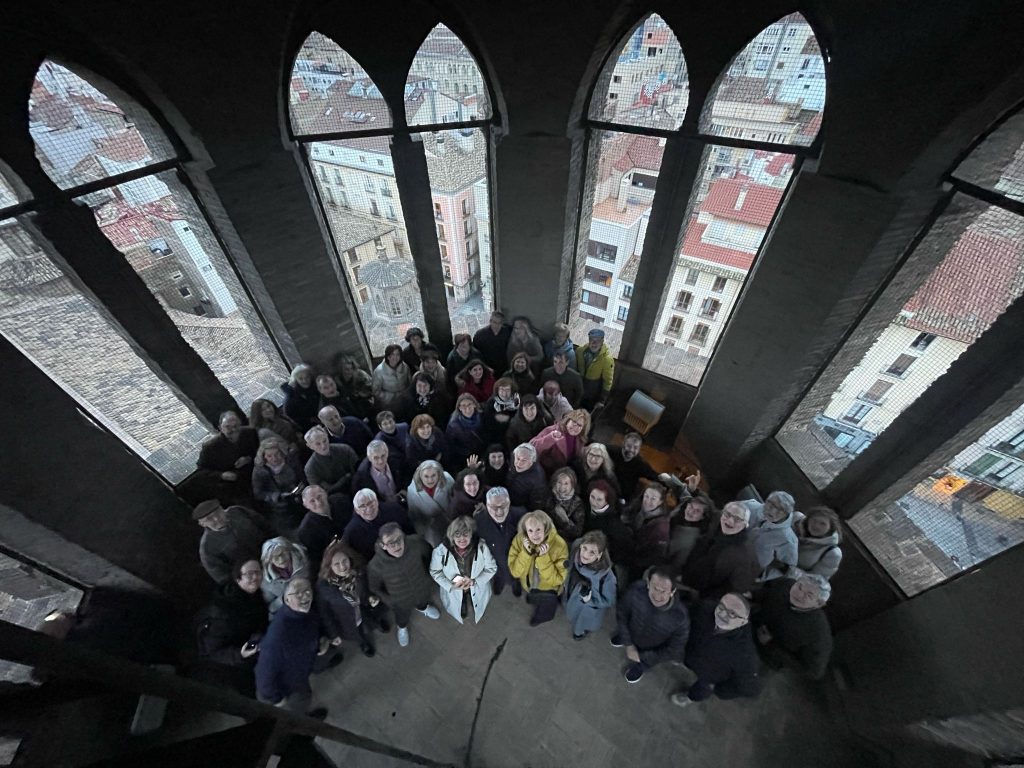
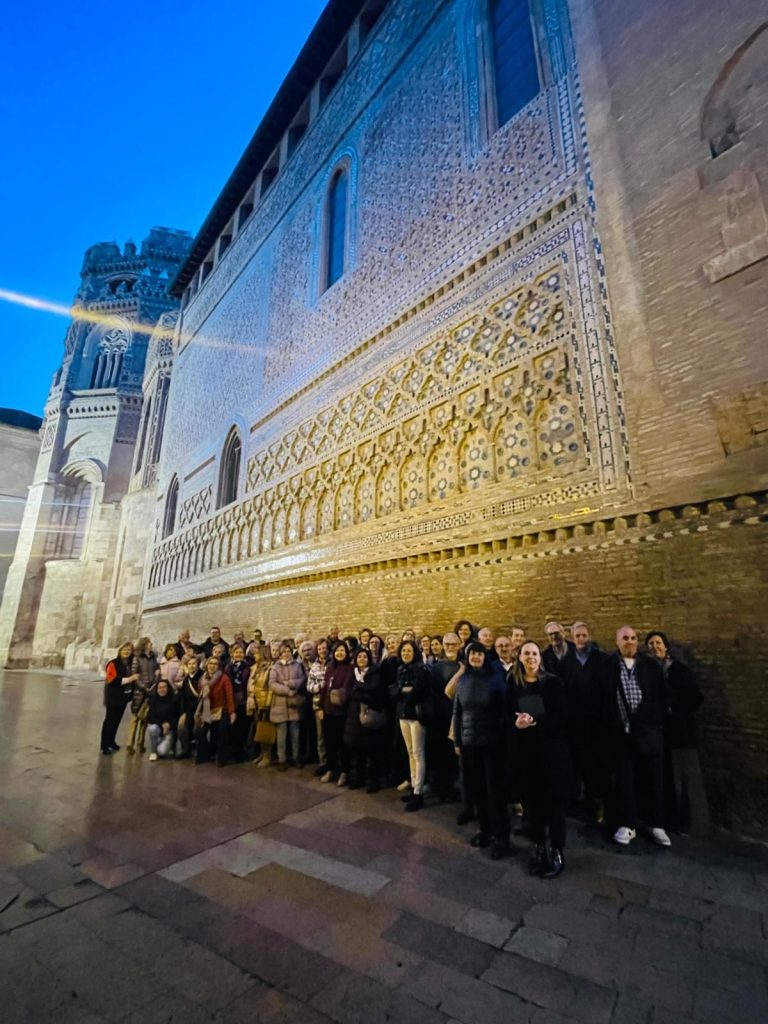
Students from the University of Experience learn about Mudejar architecture at the Parroquieta de La Seo.

Grupo de estudiantes de la Universidad de la Experiencia frente al ábside mudéjar de la Parroquieta de La Seo en Zaragoza durante una visita guiada.

Students of the “Mudéjar, Emblem of Aragon” course at the University of Experience enjoyed on-site classes this past week at the Parroquieta de La Seo with the director of Territorio Mudéjar, Victoria Trasobares.

These on-site sessions complement the theoretical lessons and allow the heritage space to be used as a place of knowledge and learning.

La Parroquieta has thus become a textbook, just as the Church of San Pablo, where students will have their next practical class, will become one in early March. The buildings bear the UNESCO World Heritage status of Mudéjar of Aragon, and both are parishes of the Archdiocese of Zaragoza, like so many parishes in our partner towns.

The dioceses of Zaragoza and Tarazona are also part of our network as honorary members.

We accompany Cariñena in its official debut as City of Wine 2025

Presentador en el escenario durante el acto oficial de proclamación de Cariñena como Ciudad Europea del Vino 2025, con una gran copa de vino proyectada al fondo.

This Saturday, we accompanied Cariñena, a Territorio Mudéjar partner town, in its official debut as City of Wine 2025, in a ceremony with more than 200 guests and the presence of leading authorities, representatives of the Aragonese economy and society, and the wine sector.

The European City of Wine title aims to promote the culture, landscape, gastronomy, and heritage of the chosen location. As a collaborating entity, we will be there supporting this great project and participating in the intensive program of cultural activities, training, and awareness-raising related to wine.

In fact, we’re already working on designing joint research projects linked to the landscape, as well as a calendar of activities that we’ll hold there as a partner town: exhibitions, tours, etc.

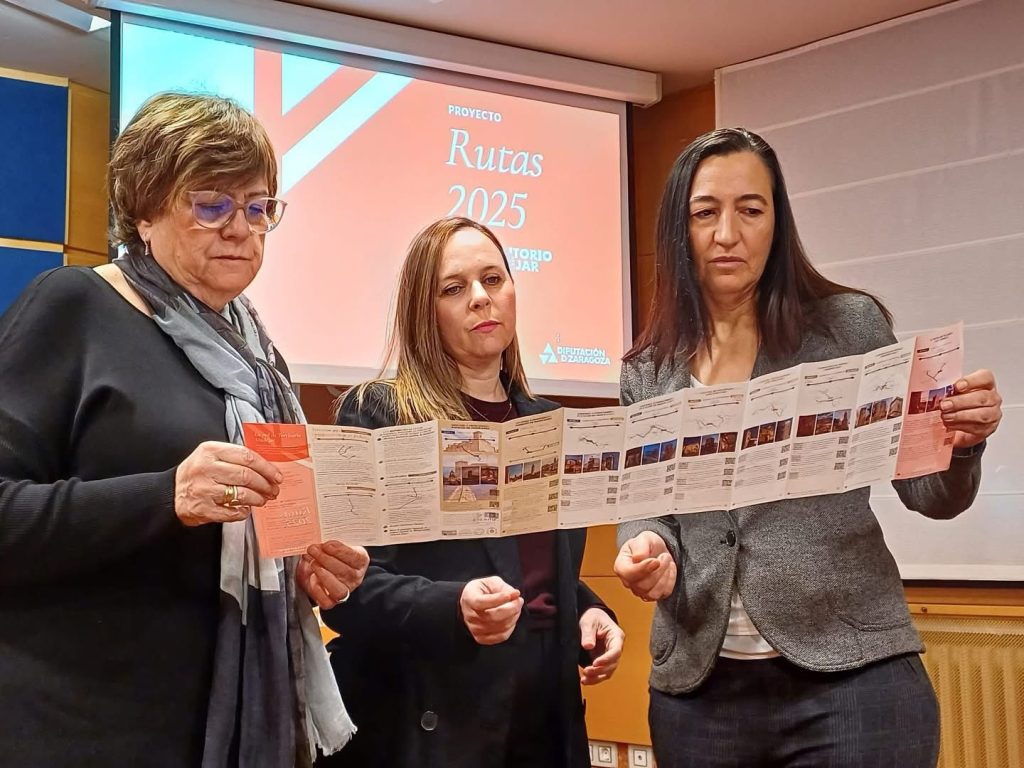
The Territorio Mudéjar routes return with 49 destinations and new itinerary options.

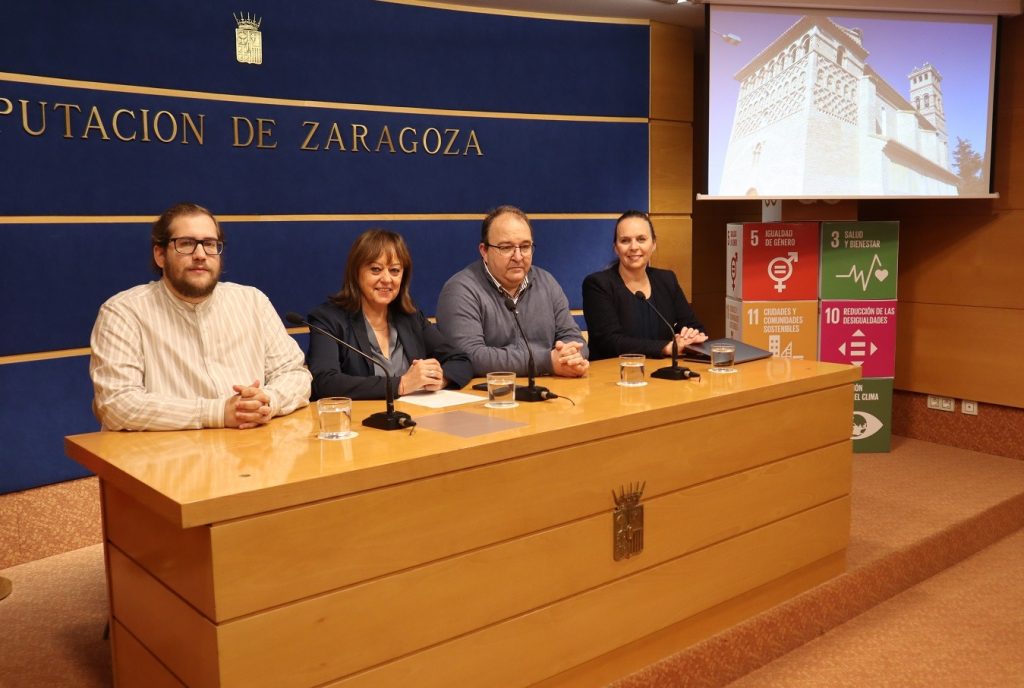
Tres mujeres presentan el nuevo folleto de las Rutas Territorio Mudéjar 2025 en un acto institucional con proyección de fondo.

The Territorio Mudéjar network, in a strategic alliance with the Zaragoza Provincial Council, is launching the 2025 edition of its routes with 49 destinations, 19 itineraries, and 36 dates to discover the heritage, culture, traditions, and gastronomy of the municipalities that form part of this entity.

This year, as a new feature, the routes incorporate new options—project or signed routes and a special Mudéjar World Heritage route starting in Zaragoza—and add another destination—Torres de Berrellén, which has just joined Territorio Mudéjar as a partner.

The Deputy Delegate for Tourism of the Zaragoza Provincial Council, Cristina Palacín, and the Director of Territorio Mudéjar, Victoria Trasobares, presented the project this morning.

Reservations are now open and can be made at www.territoriomudejar.es/rutas/. The first itinerary will begin on February 15th, and routes will continue throughout the year.

The organization offers various options for reserving a spot, such as arranging transportation from Zaragoza or dining with the organization’s group at one of the establishments in Territorio Mudéjar’s partner towns. In all cases, reservations are essential.

Admission and guided tours to each destination are free for users who make a reservation, thanks to the discount applied by the Territorio Mudéjar association through funding from the Zaragoza Provincial Council for the organization’s projects.

ROUTE MODALITIES 2025

???? Routes around five themes

The first “Mudejar Territory Villages” package continues the essence of previous editions with 15 itineraries through the province of Zaragoza, guided by heritage specialists and organized into five themes:

1. Mestizo and border: Mudejar villages

2. Keys to a style: the origins

3. Bird’s eye view: the towers

4. The construction of space: light and matter

5. Military orders and territory (new 2025).

Visitors will discover not only magnificent architecture and the finest arts, but also places full of life and activity, enjoy cuisine based on local produce, and learn about centuries-old crafts thanks to collaboration with local businesses.

The UNESCO World Heritage routes will begin in Zaragoza.

The UNESCO World Heritage Route, which covers Calatayud, Cervera de la Cañada, and Tobed, along with its monuments that epitomize the origin and development of Mudejar art, has a new addition for the public this year. The itinerary will begin in Zaragoza, visiting some of the Aragonese capital’s UNESCO-listed monuments, which will be included in the explanations: the Tower of San Pablo (on the April route) and the Parroquieta of the Seo or the Cathedral (on the June and December routes).

Project Routes: Following Professor Gonzalo Borrás

These tours are the result of research projects conducted by the Territorio Mudéjar professional network and will involve, on the one hand, a transfer of knowledge and the application of research results in practical explanations about the territory. Three of these routes will be offered in this 2025 edition. This option will also feature guest speakers from leading experts in the field, such as Professor Esteban Sarasa, a member of the organization’s scientific committee.