Castillo de los Luna, Mesones de Isuela

Castillo de los Luna, Mesones de Isuela

CURRENT PROTECTION STATUS: ACI

TYPE OF ASSET: Property

CATEGORY: Civil

ARCHITECTURAL STYLE: Mudejar

CONSTRUCTION DATE: 14th century
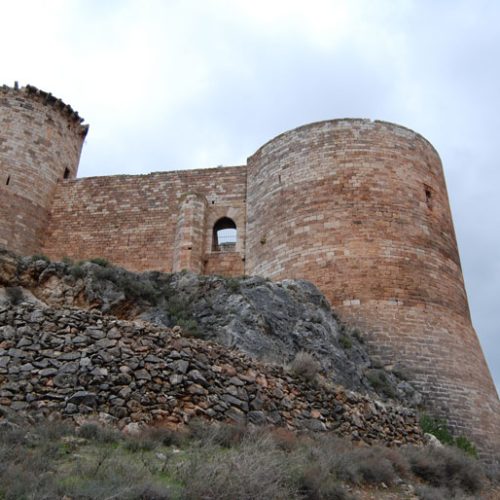
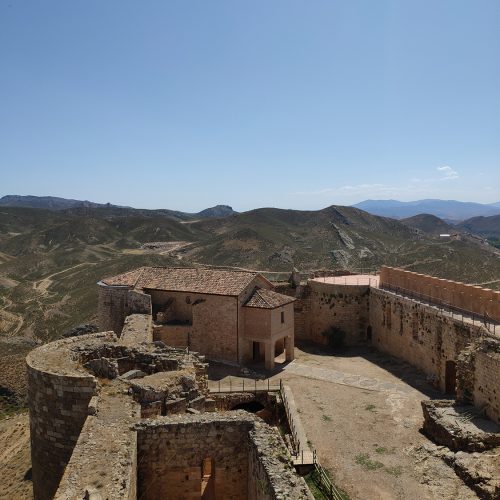
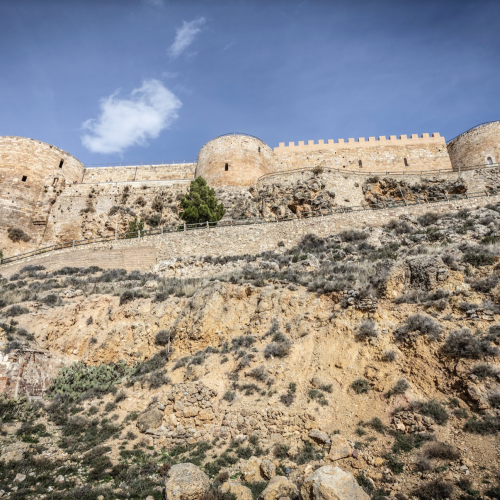
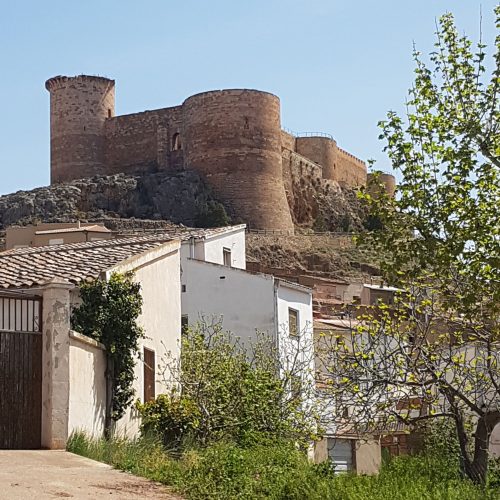
The fortress in Mesones de Isuela is constructed almost entirely of limestone. The archbishop Lope Fernández de Luna had it built around 1379 in the Felipe Augusto style, in which the interior is divided into courtyards with rooms arranged around them. It has a rectangular floor plan bordered by six circular towers, four at the corners and two in the middle of the longer sides divided into two stories and standing on round arches over corbels. The interior of the fortress is divided into two courtyards and has two main parts. On the one hand, the eastern end held the defensive rooms, arranged around one of the two courtyards. To the south was a portico resting on arches featuring corbels with decorative plant and anthropomorphic motifs. The western end housed the square-shaped residential area with service rooms opening onto the interior of the courtyard. They are open to the exterior through surbased arches. The room known as the ‘Sala Mayor’ is rectangular in shape and large in size, covered with round arches and beveled vaults resting on corbels. Two doors framed by a surround with sculpted decorative motifs lead to the interior. The rooms of the palatial residence are located on the south side of the compound. There is a trapezoidal main room covered by a barrel vault resting on transverse arches that opens onto the courtyard through a simple entryway. The tower in the southwest corner must have been used as the keep, as it houses a square chamber with Gothic details and a private chapel or oratory. Keeps were an essential component of castles, given that they were fitted out with everything needed for use as a shelter during times of war. In Spanish, they are referred to as towers of homage, as this was where the ceremony of homage to the lord and knight would take place. One of the most important areas in the compound is the castle chapel, located in the northeastern corner and first documented in 1680, in the Baroque era. Ashlars and masonry from the castle were reused here. The interior features a single nave with three bays covered by an underpitch vault with an entablature that has decorative cycles with plant motifs. The expansion contains plasterwork done in the Mudejar style decorating the lunettes, transverse arches, doorjambs and the intrados of the arches.
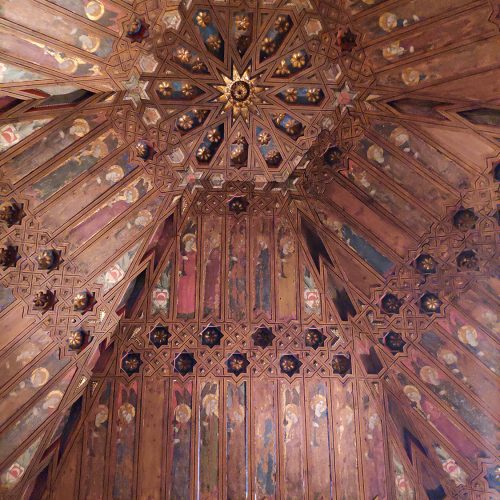
The interior has a hexagonal plan and is covered by a wood ceiling with a moamar (paired beam hips) structure. It consists of six trapezoidal slopes that come together in a hexagonal horizontal piece in the center. The exceptional nature of this ceiling structure is seen in the Mudejar carpentry work, with paintings decorating the joists and the friezes around the base of the ceiling. The decorative pictorial motifs include anthropomorphic figures alternating with heraldic motifs around the ceiling structure. Mythical animals with a certain symbolic meaning are also depicted. The heraldic motifs include the coat of arms of Lope Fernández de Luna: a white moon on a red background edged in white and coats of arms of the Vidaurre family with a gold ground and a blue band in the center. The panels of the ceiling structure feature horizontal edging decorated with an interlacing design housing an octagonal piece with a gold gadroon shape. The spaces between the trusses also have arrow-shaped decorative elements on the underside depicting plant motifs on blue and red backgrounds. The joists in the spaces between the posts of the roof structure are covered in paintings showing a clear Italian Gothic influence. There were originally 96 in all, divided into two rows of eleven with five on each side of panels. These paintings depict human figures carrying large candles, dressed in loose- fitting tunics tied at the waist and falling to their feet; they have folded wings and a golden halo above their heads. Some scholars have identified them as wise or foolish virgins. Others believe them to represent retinues of angels and seraphs bearing candles.
Interventions

Restoration, 20th to 21st century In 1997, the Government of Aragon commissioned a project for the restoration of the Mudejar ceiling. In 2000, the restoration was carried out in light of the imminent risk of the polychrome decoration becoming detached. The restoration and general cleaning of the paint work and carpentry of the ceiling took place. After the work was completed, integrated lighting of the ceiling and chapel was installed. The budget for these activities amounted to 192,720 euros. Between 2005 and 2006, the Government of Aragon performed a series of restoration and stabilization tasks on much of the compound, as well as rebuilding some parts that were in very poor condition. Between 2008 and 2009, a collaboration agreement was drawn up by the Ministry of Public Works and the Government of Aragon to resume restoration work on the castle, focusing on the southwest tower in particular. The total budget for these activities amounted to 463,421 euros.

Projects and interventions

Projects and interventions, and the driving forces behind them, define the history of monumental buildings and how they are perceived.

Declarations

Declaration, 21st century Castillo de los Luna in Mesones de Isuela was declared an Asset of Cultural Interest under the Ministry of Public Instruction and Fine Arts Decree of June 3, 1931 published in the Madrid Gazette on June 4 1931. The Official Gazette of Aragon dated October 23, 2002 published the Department of Culture and Tourism Order of September 30, 2002, whereby the original declaration of Castillo de los Luna as an Asset of Cultural Interest is supplemented pursuant to Transitional Provision One of Aragonese Cultural Heritage Act 3/1999, of March 10, which defines the property and its protected environment. This castle is also included in the list of castles considered Assets of Cultural Interest in accordance with the terms of Additional Provision Two of Aragonese Cultural Heritage Act 3/1999, of March 10. The list was published in the Official Gazette of Aragon on, May 22, 2006.

Bibliography

CABAÑAS BOYANO, AURELIO. Aragón: una tierra de castillos, Edit. Prensa Diaria Aragonesa S.A. (El Periódico de Aragón. Grupo Z), 1999. CABELLO SOLANAS, F. Y LACARRA DUCAY, MªC. Capilla de la Virgen del Castillo de Mesones de Isuela, Serie Patrimonio Recuperado nº 14, Prames, Departamento de Cultura y Turismo, Zaragoza, 2002. CANTOS CARNICER, Álvaro. Sobre algunos pormenores constructivos del castillo de Mesones de Isuela (Zaragoza): yeso y tapia, adarves y parapetos. Castillos de Aragón. 2006 , nº 13, p. 4- 21.
CEBOLLA BERLANGA, José Luis. Excavaciones arqueológicas en el castillo de Mesones de Isuela (Zaragoza). Expediente 042/05. Arqueología Aragonesa 1995-2005 [CD-ROM]. 2007 GALINDO PÉREZ, Silvia. (coord.). Aragón. Patrimonio cultural restaurado. GASCÓN DE GOTOR, Ana María. El castillo de Mesones de Isuela. Zaragoza. 1957 , nº 5, p. 119-126. GRACIA SENDRA, Dolores; Barcelona, David. Inventario de Castillos de Aragón. Inventario inédito, Gobierno de Aragón. Departamento de Educación, Cultura y Deporte, 2001. GUITART APARICIO, Cristóbal. Castillos de Aragón. Zaragoza: Librería General, 1977. IBÁÑEZ FERNÁNDEZ, Javier. Los castillos de Mesones de Isuela e Illueca. En HERNÁNDEZ, Javier; MILLÁN, Julián ; SERRA, Agustín . (coord.). Comarca del Aranda. Gobierno de Aragón, 2001.p. 199-235. MARTÍNEZ PRADES, José Antonio. El castillo de Mesones de Isuela. Zaragoza: Institución Fernando el Católico, 1983. MARTÍNEZ PRADES, José Antonio. Signos lapidarios en el castillo de Mesones de Isuela (Zaragoza). En I Encuentro de Estudios Bilbilitanos (Calatayud, 18-20 de noviembre 1982). Centro de Estudios Bilbilitanos, 1982. vol. I, p. 205-218. MÉNDEZ DE JUAN, José Félix et al. (coord.). Aragón. Patrimonio cultural restaurado. 1984/2009: Bienes inmuebles. Zaragoza: Gobierno de Aragón, 2010. QUERALT DEL HIERRO, Mª PILAR. Los mejores castillos de España, Everest. León, 2004. VV.AA. Castillos de España, Colección de Castillos de España Iberia. León , 1990-2000

Appendixes

Castillo de los Luna

Diseminado Afueras, 15
50267 Mesones de Isuela

Visit Mesones de Isuela

City Hall: 976 605 877

WANT TO KNOW MORE?
www.turismodezaragoza.es

Apse of the Church of San Juan de la Cuesta, Daroca

Apse of the Church of San Juan de la Cuesta

Calle Mayor 44, 50360

CURRENT CATEGORY OF PROTECTION:
Bien de Interés Cultural (BIC)

TYPE OF PROPERTY: Real estate

CATEGORY: Religious

ARCHITECTURAL STYLE: Mudejar

DATE OF CONSTRUCTION: 13thCentury

The period of genesis and formation of Aragonese Mudejar art took place during the 13th century, in a process that began with the Christian conquest and which affected the different centres of Mudejar art in the Iberian Peninsula in different ways.

Daroca is an important place, as few of the testimonies of the process of replacing the churches built after the Christian conquest with others in the Mudejar tradition have survived. In the church of San Juan de la Cuesta, there was not a simple substitution of construction material in the Romanesque building, but rather the adaptation of the new construction system with elements from the Islamic tradition.

Thus, the Romanesque church dates from the mid-13th century, and its construction began in the apse, using ashlar stone, interrupted at mid-height to continue the brickwork.

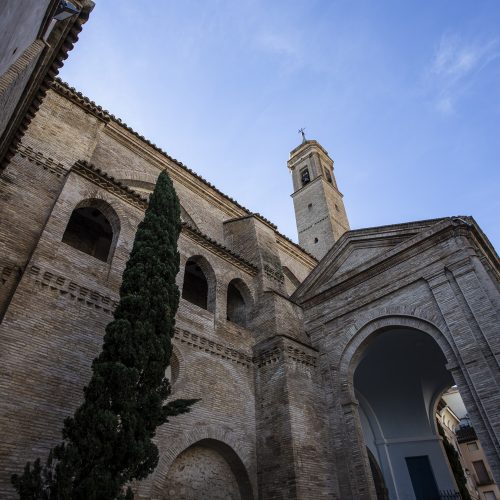
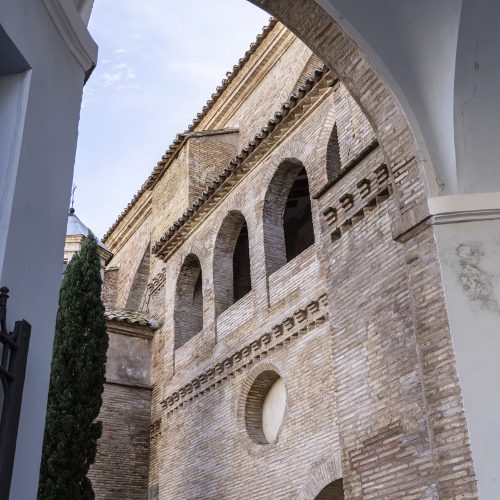
It is a semicircular apse with six semi-columns, replaced at the top by brick, with a frieze of blind arches, except for a few small openings that alternate with the arches. The most significant feature is the use of a type of opening that uses the lobed arch, constituting the oldest example in Mudéjar art, and which will not be continued in Aragonese Mudéjar: there are two openings, one in the central section of the apse and another in the straight section of the presbytery in the wall of the epistle, semicircular lobed arches with little light, which are doubled by a seven-lobed arch, with a clear reference in the Aljafería in Saragossa.

Interventions

Restoration, 20th Century to 21st Century

It was restored in 1960 in which the original south doorway, an essential element of the original church, was removed. A new space was also opened up on the Gospel side to obtain greater symmetry of the whole, completely altering the external appearance of the church and especially the doorway.

Projects and interventions

Projects and interventions and their promoters define the history of monumental buildings as well as the perception of them.

The downloadable document presents the current status of the files under review, which will allow us to update our knowledge of each of the monumental buildings.

Declarations

Declaration, 21st Century

The Official Gazette of Aragon of 8 October 2001 published Decree 221/2001 of 18 September 2001, of the Government of Aragon, declaring the Abside of the Church of San Juan de la Cuesta in Daroca to be an Asset of Cultural Interest, in the category of Monument.

Bibliography

BORRÁS GUALÍS, G. M. Arte Mudéjar Aragonés, CAMPZAR and Colegio Oficial de Arquitectos Técnicos y Aparejadores de Zaragoza, Zaragoza, 1985, T. II, pp. 156

MAÑAS BALLESTÍN, FABIÁN (COORD.). Comarca del Campo de Daroca, Colección Territorio 8, Diputación General de Aragón, 2003.

VV.AA. El Arte Mudéjar. Islamic aesthetics in Christian art, Madrid, 2000.

VV.AA. Mudéjar Land. El mudéjar aragonés, Patrimonio Mundial, Heraldo de Aragón. D.L., 2002.

VV.AA. Campo de Daroca, Colección RUTASCAI por Aragón nº 27, Zaragoza, 2005.

Appendixes

Apse of the Church of San Juan de la Cuesta

Calle Mayor 44,
50360 Daroza (Zaragoza)

Visit Daroca

Town Hall: 976 800 312
www.daroca.es
WANT TO KNOW MORE?
www.turismodezaragoza.es

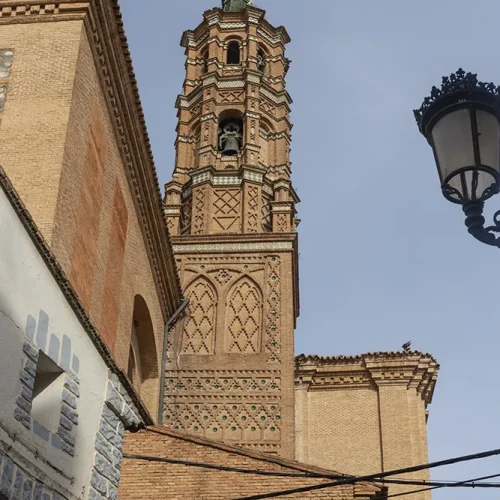
Tower of the church of La Asunción, La Almunia de Doña Godina

Tower of the church of La Asunción, La Almunia de Doña Godina

Plaza de España 50100 La Almunia de Doña Godina

CURRENT PROTECTION CATEGORY:

Bien de Interés Cultural (BIC)

TYPE OF PROPERTY: Real estate

CATEGORY: Religious

ARCHITECTURAL STYLE: Mudejar

DATE OF CONSTRUCTION:
14thCentury

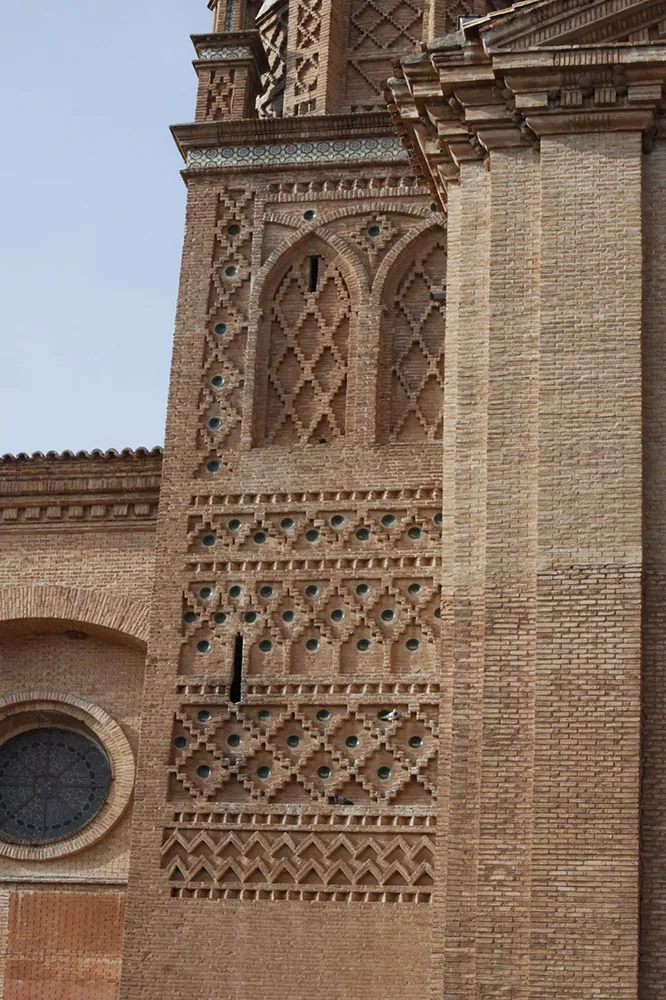
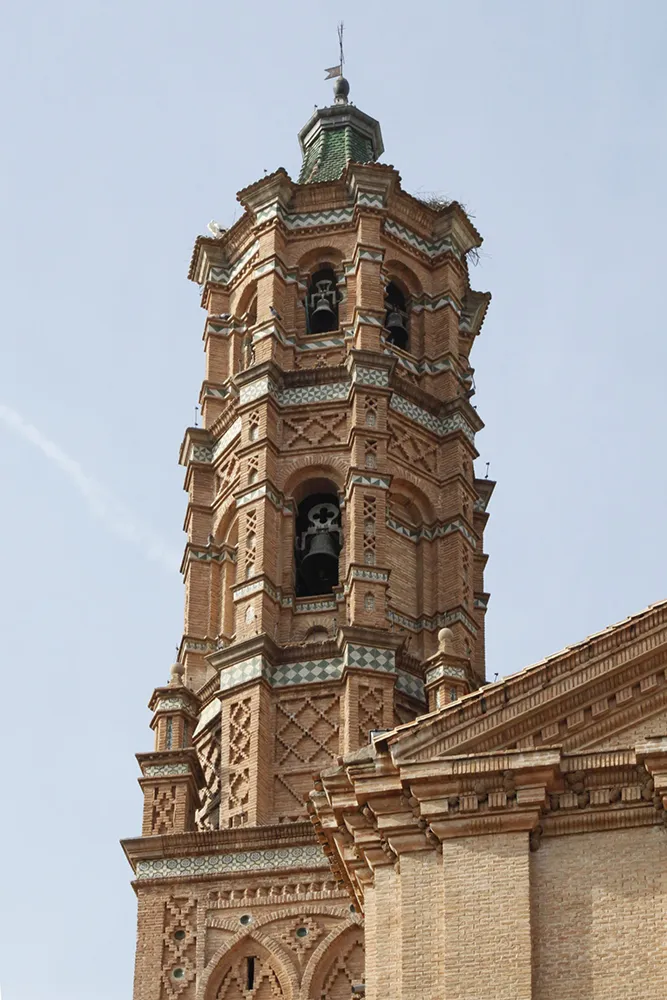
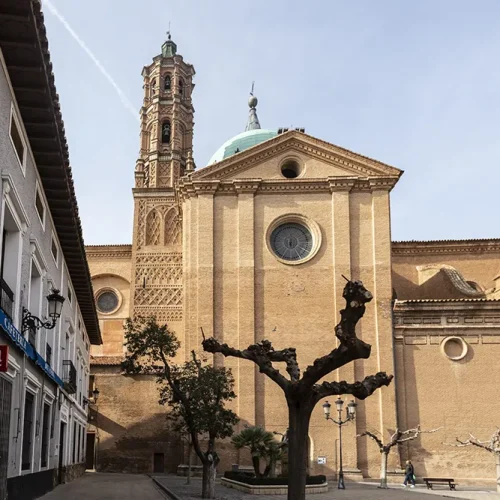
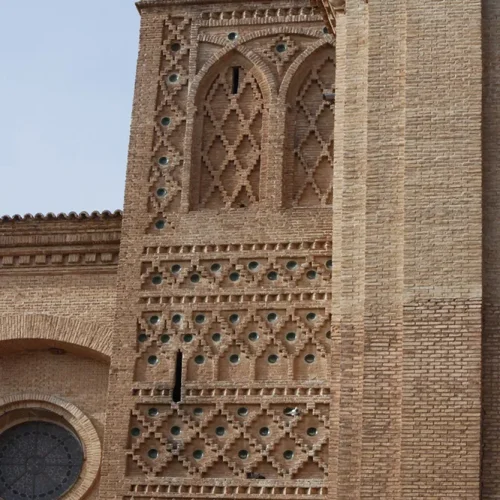
The Mudejar tower of the parish church of the Asunción de Nuestra Señora de la Almunia de Doña Godina belongs to the old Romanesque church, demolished in the 18th century. It is a tower of mixed typology built in two phases. It was in the 14th century when the Romanesque church dating from the 12th century was completed with the construction of a Mudejar tower. This tower has a square floor plan and is influenced by the Hispano-Muslim minaret. This is reflected in the arrangement of a massive central buttress and a staircase covered by a false vault with an approximation of courses. On the outside, the decoration is made up of bricks in angled brickwork, forming zigzags and crosses of bricks in diamond-shaped projections.

In addition, the second body was laid out as a belfry open to the exterior with pointed arches on each side, framed by brick decoration in the form of diamond-shaped projections.

It was in the second half of the 16th century that the height of the building was increased and the structure was changed, with the addition of an octagonal body. The old openings were enclosed and the ceramic ornamentation was completed.

Interventions

Restoration, 20th Century to 21st Century

In 1960, the ceramic decoration was renewed in accordance with the original models, with ceramic discs and friezes, some of which were replaced.

Projects and interventions

Projects and interventions and their promoters define the history of monumental buildings as well as the perception of them.

The downloadable document presents the current status of the files under review, which will allow us to update our knowledge of each of the monumental buildings.

Declarations

Declaration, 21st Century

The Official Gazette of Aragon of 8 October 2001 published Decree 217/2001 of 18 September 2001, of the Government of Aragon, declaring the Tower of the Church of the Assumption of Our Lady in La Almunia de Doña Godina (Zaragoza) to be an Asset of Cultural Interest, in the category of Monument.

Bibliography

ALLO MANERO AND MATEOS GIL. La Almunia de Doña Godina. Guía histórico-artística, Diputación General de Aragón, Zaragoza, 1987.

LANZAROTE GUIRAL, José María; Arana Cobos, Itziar. Valentín Carderera’s artistic journey through Aragón: Architectural monuments of Spain. Zaragoza: Institución Fernando el Católico, 2013.

VV.AA. La Almunia de Doña Godina, Colección Territorio, Comarca del Valdejalón, p. 251, Diputación General de Aragón, 2003.

VV.AA. Mudéjar Land. El Mudéjar Aragonés, Patrimonio Mundial, Heraldo de Aragón D.L. 2002

Appendixes

Tower of the church of La Asunción

Plaza de España
50100 La Almunia de Doña Godina

Visit La Almunia de Doña Godina

Town Hall: 976 600 076
www.laalmunia.es
WANT TO KNOW MORE?
www.turismodezaragoza.es

Gunpowder factory, Villafeliche

Gunpowder factory, Villafeliche

CURRENT PROTECTION STATUS:

TYPE OF ASSET: Intangible

CATEGORY:

ARCHITECTURAL STYLE:

CONSTRUCTION DATE:
Villafeliche boasted the only Royal Factory in Aragon, where nearly 200 mills existed in the 18th century. This manufacturing model was exported to new factories in the Philippines, Mexico and Peru. Sulfur from Libros and Villel was used. The manufacturing process required sulfur, charcoal and saltpeter, and was carried out at the Factory’s water-powered mills.

During the second siege of Zaragoza in the Peninsular War, the powder supplied to Palafox’s army was highly important. By the mid-19th century, production was halted by royal order of Fernando VII, thus banning powder manufacturing and converting it into a “stockpile asset” like tobacco, salt or saltpeter. After that time, powder-makers went underground.

There are numerous documentary references such as the document/report by Joseph Campillo, director of the Royal Gunpowder Factory of Villafeliche and the reference by Pascual Madoz, which reflects the decline of the powder industry in Villafeliche.
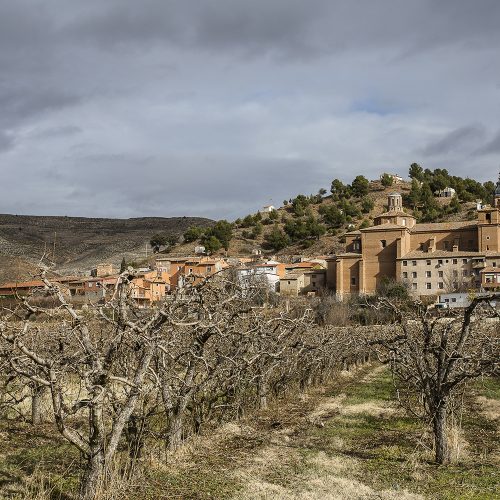
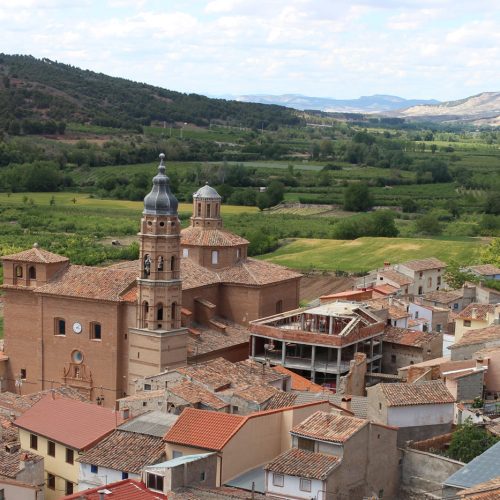
Vista aérea de Villafeliche con la iglesia parroquial mudéjar de San Miguel y el valle del río Jiloca al fondo.
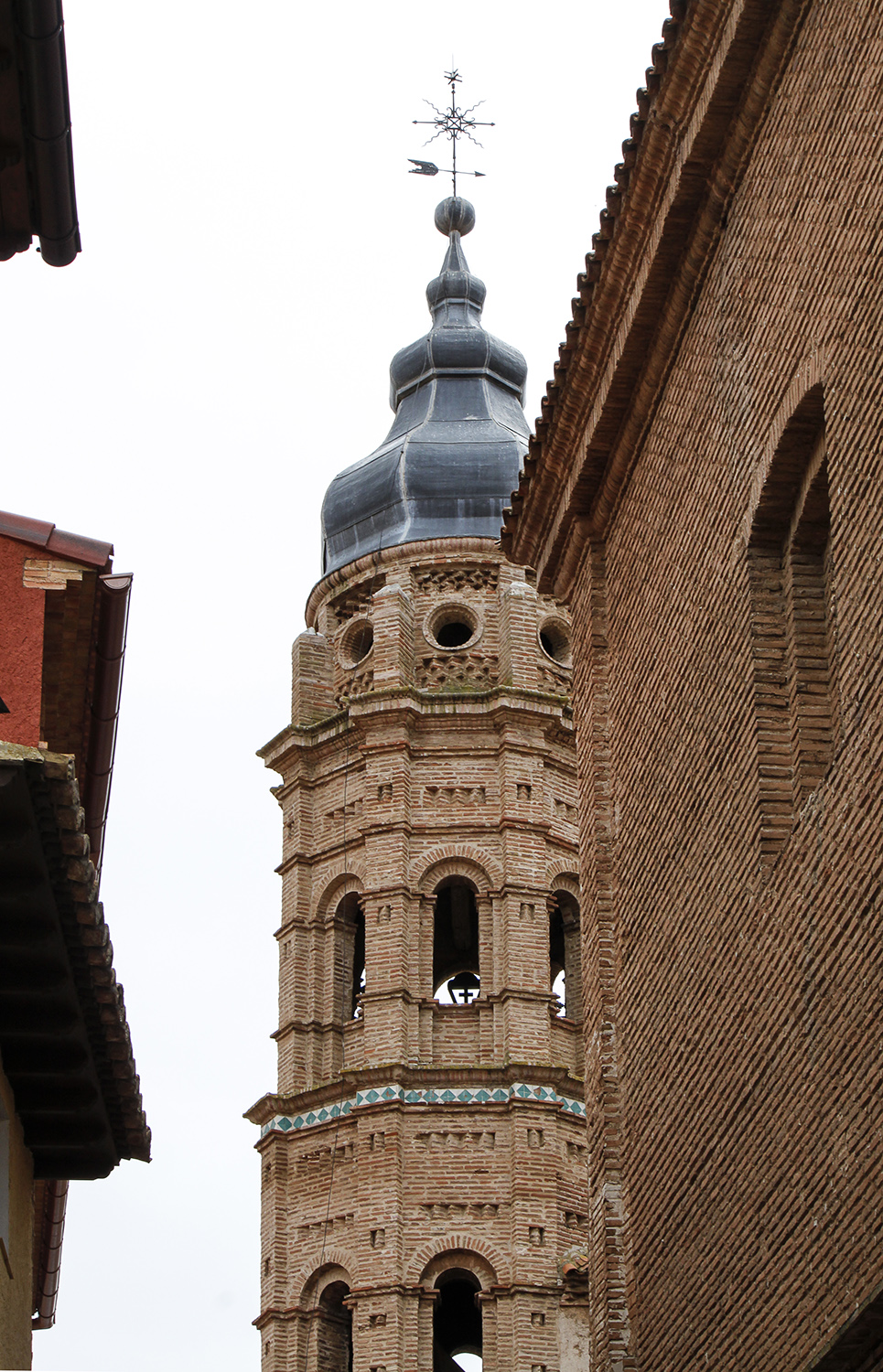
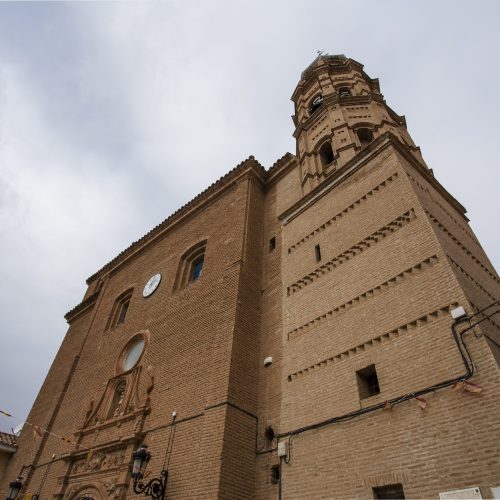
Torre mudéjar octogonal de ladrillo de la iglesia de San Miguel en Villafeliche, vista entre calles del casco urbano.

Interventions

Restoration, 20th to 21st century

From 2000-2002 the restoration of the temple tower was carried out, sponsored by the Provincial Government of Zaragoza, the Zaragoza Diocese and the Villafeliche City Council. The investment amounted to 120,202 euros.

Declarations

Declaration, 21st century

On December 14, 2001, the 25th Official Session of the World Heritage Committee held in Helsinki (Finland) resolved to recognize and declare the Mudejar architecture of Aragon as World Heritage.

The Official Gazette of Aragon dated August 9, 2002 published the Department of Culture and Tourism Order of July 1, 2002 declaring the tower of the church of San Miguel Arcángel in Villafeliche (Zaragoza) a Listed Asset of Aragonese Cultural Heritage.

Bibliography

NAVARRO TRALLERO, PEDRO JOAQUÍN (COORD.). Restauración del Patrimonio Histórico en la Provincia de Zaragoza, Diputación de Zaragoza, Zaragoza, 2003.

SANMIGUEL MATEO, AGUSTÍN. “El arte mudéjar”, en Comarca de la Comunidad de Calatayud, Colección Territorio 20, Zaragoza, 2005.

VV.AA. Recuperación de un patrimonio. Restauraciones en la provincia, Diputación de Zaragoza, 1987, pp. 191-192.

Gunpowder factory

50391 Villafeliche (Zaragoza)

Visit Villefeliche

City Hall www.villafelicheturismo.es WOULD YOU LIKE TO KNOW MORE? www.turismodezaragoza.es

Tower of the church of San Miguel Arcángel, Villafeliche

Vista aérea de Villafeliche con la iglesia parroquial mudéjar de San Miguel y el valle del río Jiloca al fondo.

Tower of the church of San Miguel Arcángel, Villafeliche

Plaza de la Iglesia, 1, Villafeliche

CURRENT PROTECTION STATUS: Listed

TYPE OF ASSET: Property

CATEGORY: Religious ARCHITECTURAL

STYLE: Mudejar

CONSTRUCTION DATE: 17th century
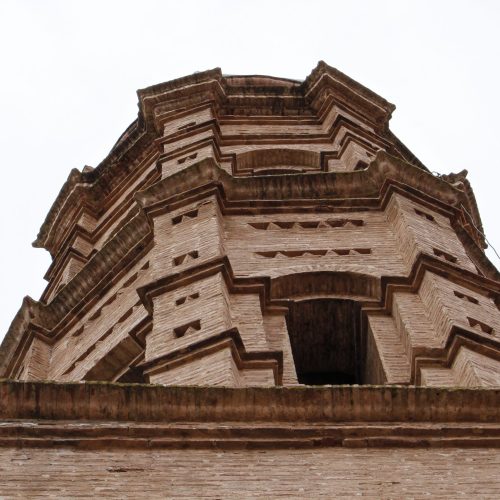
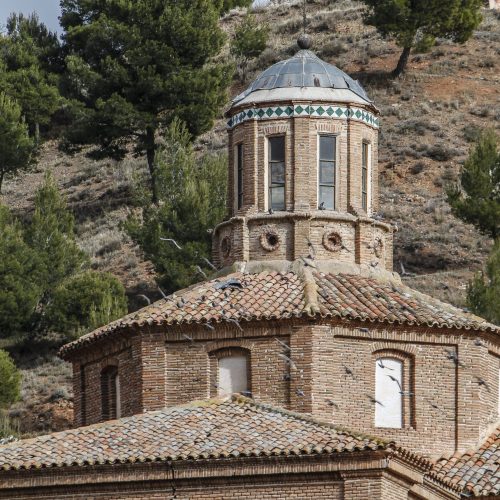
The Mudejar tower in Villafeliche stands at the west end of the parish church of San Miguel Arcángel. Built in the early 17th century, this tower represents one of the best examples of this period, in which Mudejar forms, deeply rooted in Aragonese society due to the late expulsion of the Moriscos from this region (1610), experienced a late revival and a persistence of the Mudejar ornamental schemes.

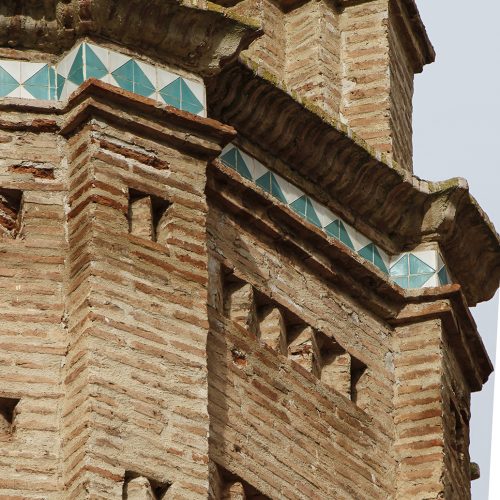
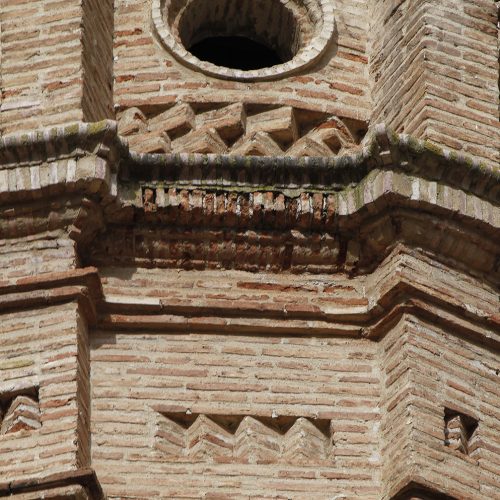
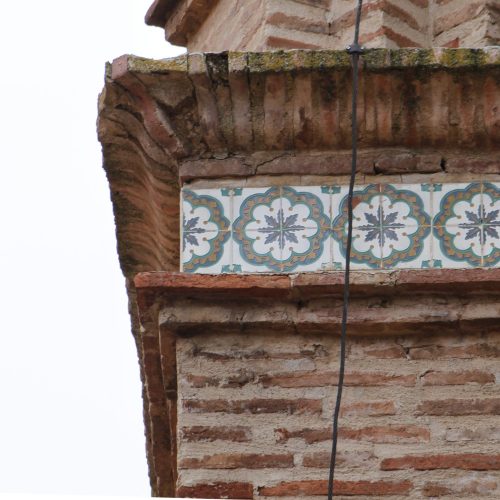
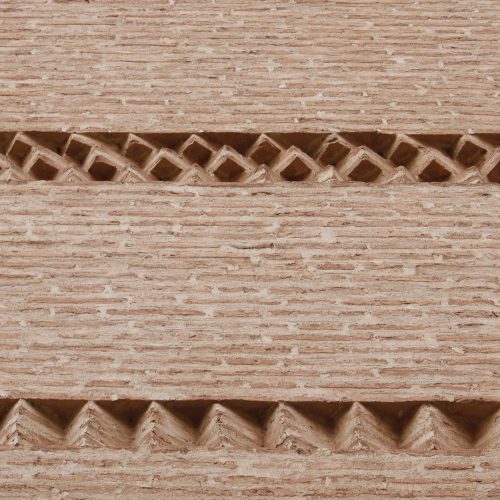
This tower falls under the mixed structure category that became popular and widespread starting in the second half of the 16th century: it has two sections, the lower one with a square footprint over a masonry plinth and the upper one being octagonal. The protruding brick ornamental schemes follow the outstanding tradition of the school of Calatayud, with Villafeliche representing one of the best examples of this current. The bottom section is decorated with simple and staggered angled brick friezes. The floor features a frieze of green and white ceramic tiles.

The octagonal upper section consists of buttresses in the form of pilasters at the corners with round-arched openings on each side, alternating with small strips of angled brick.
Detalle de ladrillo y cerámica vidriada en la torre mudéjar de la iglesia de San Miguel en Villafeliche.

Interventions

Restoration, 20th to 21st century

Between 2000 and 2002, the restoration of the temple tower was carried out, sponsored by the Provincial Government of Zaragoza, the Zaragoza Diocese and the Villafeliche City Council. The investment amounted to 120,202 euros.

Declarations

Declaration, 21st century

On December 14, 2001, the 25th Official Session of the World Heritage Committee held in Helsinki (Finland) resolved to recognize and declare the Mudejar architecture of Aragon as World Heritage. The Official Gazette of Aragon dated August 9, 2002 published the Department of Culture and Tourism Order of July 1, 2002 declaring the tower of the church of San Miguel Arcángel in Villafeliche (Zaragoza) a Listed Asset of Aragonese Cultural Heritage.

Bibliography

NAVARRO TRALLERO, PEDRO JOAQUÍN (COORD.). Restauración del Patrimonio Histórico en la Provincia de Zaragoza, Diputación de Zaragoza, Zaragoza, 2003.

SANMIGUEL MATEO, AGUSTÍN. “El arte mudéjar”, en Comarca de la Comunidad de Calatayud, Colección Territorio 20, Zaragoza, 2005.

VV.AA. Recuperación de un patrimonio. Restauraciones en la provincia, Diputación de Zaragoza, 1987, pp. 191-192.

Appendixes

Tower of the church of San Miguel Arcángel

Plaza de la Iglesia, 1
50391 Villafeliche (Zaragoza)

Visit Villefeliche

City Hall
www.villafelicheturismo.es
WOULD YOU LIKE TO KNOW MORE?
www.turismodezaragoza.es

Casa de La Estanca, Borja

Casa de La Estanca, Borja

Camino Vardebajil. 50540 Borja (Zaragoza) CURRENT PROTECTION STATUS: Asset of Cultural Interest (ACI)

TYPE OF ASSET: Property

CATEGORY: Civil

ARCHITECTURAL STYLE: Mudejar

CONSTRUCTION DATE: 1542/1543
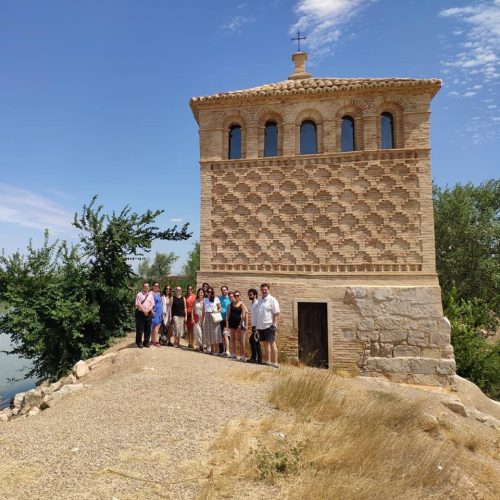
Casa de la Estanca is located to the north of the town of Borja. It is one of the few examples of public civil Aragonese Mudejar architecture still standing. The building was commissioned by the City Council as a result of the creation of the Estanca reservoir, which expanded the irrigation system for Borja and neighboring towns. It is a free-standing structure comprising a prismatic volume measuring 5.40 meters wide on each side, and the interior is divided into three levels, aligned with the three distinct sections of the façade. This alignment is not seen on Mudejar monuments from the 14th century. The ground floor contains a single room with a staircase leading to the upper levels in one of the corners. The first floor was used as a dwelling and is divided into three spaces: a kitchen and two bedrooms (following the typical layout of vernacular buildings from the 16th century). The upper level consists of a single space with a low ceiling and was used as storage for the reservoir keeper’s tools. The lower level consists of roughly hewn ashlars clad in face brick on the left side. In addition, the ground floor and first floor are covered with an architrave structure, while the second floor features a wood-framed hipped roof.
Alterations were made in the 18th century, such as those rendered in 1771 to lower the roof and build stables adjacent to the rear façade. Mudejar elements are found on all three levels of the building’s exterior façades, the ornamental scheme repeating itself on all four sides of the building. The main façade faces south, where this three-sectioned design can be observed. The middle section features strips of double courses of angled bricks in a stretcher bond arrangement along with a panel of decorative brickwork consisting of a grid of double-angled crosses forming a regular geometric pattern. The upper section has five double round arches in the typical Aragonese arcade fashion. The façade is finished with a strip of angled brick to form the eaves, which must have been higher prior to the work done in 1771. In 1771, the stables were built on the rear façade, and the west façade, which had been damaged, was coated in a layer of brick and mortar. The middle section of the east façade has a flat-arched opening, constructed in response to damage sustained over time, that disrupts the decorative elements. With the arrival of classical elements in the 16th century, we see a decline in this art form. This was prompted by the assimilation of renascent ornamentation, leading to the co-existence of both styles and to the subsequent decline of the Mudejar style.

Interventions

Restoration, 21st century (2012) In 2012 the Borja city council restored Casa de la Estanca. The work focused on stabilizing the foundations and restoring the façades.
  • The round-arched openings were covered over in the 19th century.
  • There is a small rectangular opening in one of the sides on the second floor, which disrupts the decorative diamond-shaped pattern.
  • The current wood door has replaced another, larger, door.

Projects and interventions

Projects and interventions, and the driving forces behind them, define the history of monumental buildings and how they are perceived. The downloadable file shows the current status of review proceedings in progress, making it possible to gradually update the knowledge about each monumental building.

Declarations

21st century (2001) The Official Gazette of Aragon (BOA) from October 8, 2001 published Decree 220/2001, of September 18, by the Government of Aragon, declaring the Casa de la Estanca in Borja (Zaragoza) an Asset of Cultural Interest, Monument category.

Bibliography

BORRÁS GUALÍS, G. M , Arte Mudéjar Aragonés, CAMPZAR y Colegio Oficial de Arquitectos Técnicos y Aparejadores de Zaragoza, Zaragoza, 1985, T. II, pp. 101 LOMBA, SERRANO, C., Borja, Arquitectura civil, siglos XVI-XVII, Centro de Estudios Borjanos, IFC, Col. Monografías CESBOR, Borja, 1982.

Appendixes

Casa de La Estanca

Camino Vardebajil. 50540, Borja (Zaragoza)

Visit Borja

City Hall: 976 852 001 www.borja.es WANT TO KNOW MORE? www.turismodezaragoza.es

Ex-collegiate church of Santa María, Borja

Ex-collegiate church of Santa María, Borja

C/ Virgen de la Peana. 50017 Borja (Zaragoza) CURRENT PROTECTION STATUS: Asset of Cultural Interest (ACI) TYPE OF ASSET: Property CATEGORY: Religious ARCHITECTURAL STYLE: Mudejar CONSTRUCTION DATE: From the 12th to the 15th century
  • Expansion in the 15th century
  • Remodeling in the 17th century
  • Restoration in the 19th century
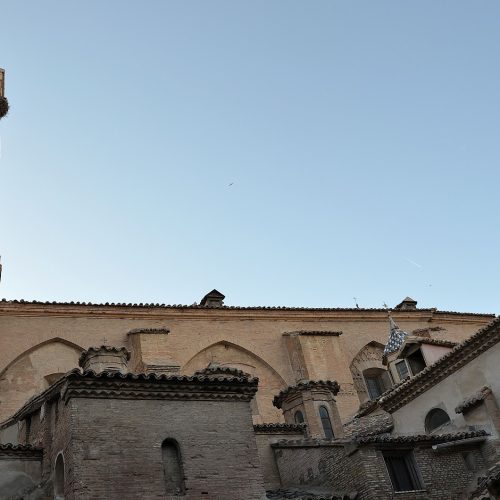
The architectural ensemble known as the Ex-collegiate or former collegiate church of Santa María comprises two parts: the church and the cloister, which have been altered in a complex process of architectural evolution.

The church was originally constructed in the style of a Mudejar fortified church, boasting the main features of this style, which arose in response to the widespread violence taking place in Aragon at that time.

The church is composed of a Mudejar central nave, remodeled in the Baroque and Neo-classical styles, with five bays covered by a barrel vault with lunettes over transverse arches resting on a cornice and extending to the walls by means of fluted pilasters. The chapels open onto the nave through round arches, and the larger ones are covered by a semi-spherical dome with a lantern while the smaller chapels feature underpitch vaults running crosswise to the nave.

The building has a fortified appearance due to the use of solutions such as the placement of two wall-walks clinging to the wall along the third and fourth bays over the chapels built between the buttresses. There are two modules, one with four pointed stilted arches and the other with three.

In addition, the traces of Mudejar decoration found in the apse and on the side walls of the first and second bay are striking: abundant decorative elements based on geometric tracery, projecting brick corbels and angled brick friezes have been preserved.
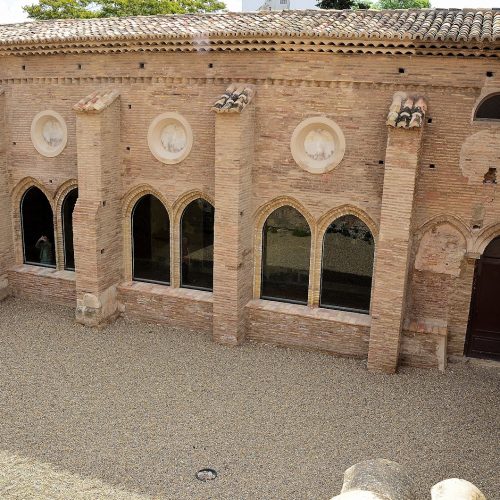
In the 15th century, an enclosed cloister was attached, completed in the following century by Antón de Veoxa, who was commissioned to work on the exterior decoration.

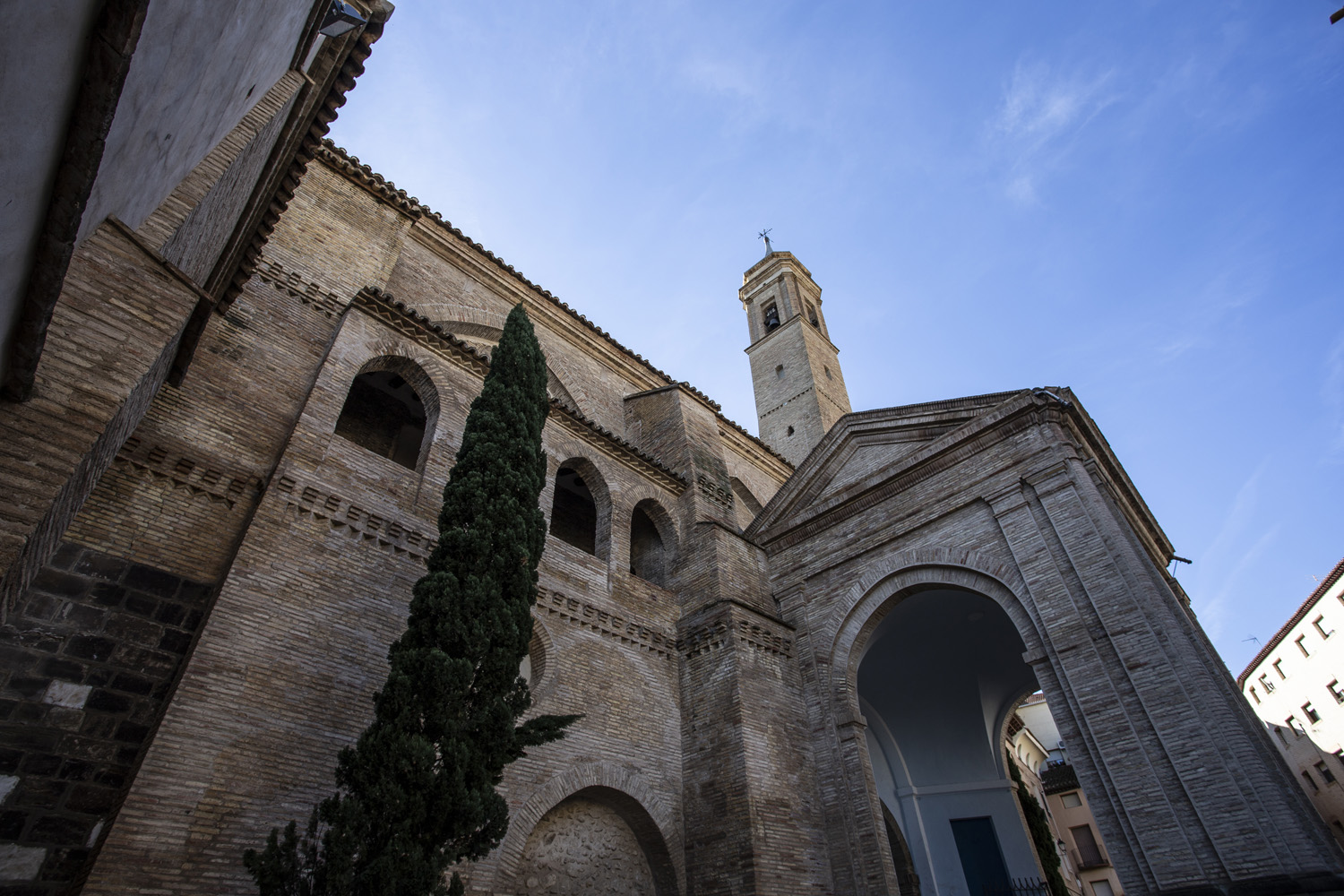
Adjacent to the north wall of the nave is the north tower, built of brick and divided vertically into four sections separated by a row of angled bricks on the cornices, over which a row of projecting brick corbels was placed. The upper section has four blind arches and, on top of this, another section was built with open basket arches housing the bells.

The top section is separated from the rest of the tower by courses of projecting brick in a stretcher bond arrangement with piers at the corners. The openings have flat arches on the outside and inner segmental arches, and the tower is topped with a zinc spire.

The clock tower, on the other hand, is the only part that remains of the old 12th to 14th century church, attached to the south wall of the nave and oriented differently from the church. Vertically, it has four sections: the lower section made of ashlars and three sections made of brick above it, separated by corbeled cornices. The first of these is blind while the second is divided into two levels separated by a strip of angled bricks. The lower level has two pointed arches inscribed within a large lancet arch, and the upper part has two pointed arches. Finally, the third section is composed of two levels separated by two rows of angled bricks.

Interventions

Restoration, 21st century (2000) In 2000 the Government of Aragon installed the zinc spire over the tower of the church of Santa María. The budget for the work amounted to 9,035 euros. In 2002, the Directorate General for Cultural Heritage of the Government of Aragon sponsored the restoration of the Virgin with Child panel dating from 1460-1465, which was part of the old main altarpiece. A total investment of 7,755 euros was allocated.

Restoration, 21st century (2007) In 2007, the restoration of the church cloister was passed through an arrangement between the town council, the Provincial Government of Zaragoza and the archbishopric.
Claustro mudéjar de la ex colegiata de Santa María de Borja con ventanales góticos y muros de ladrillo.
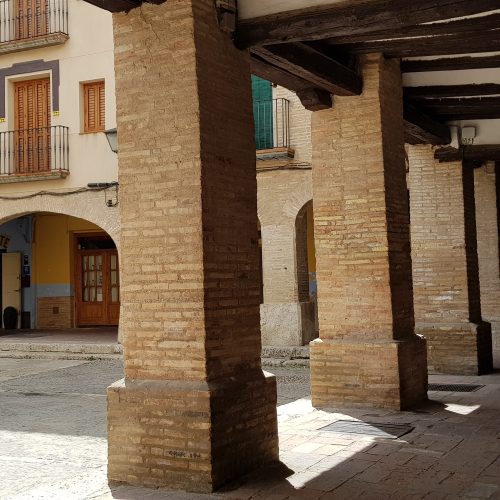
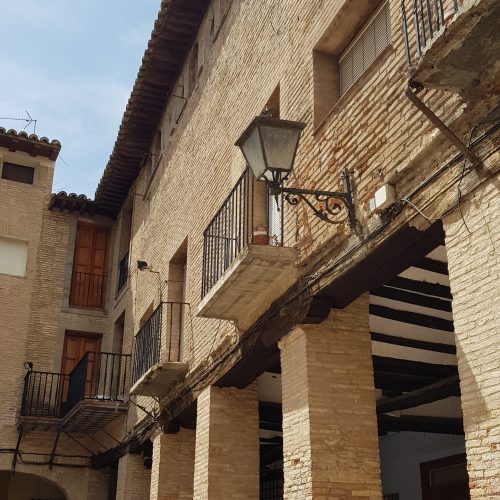
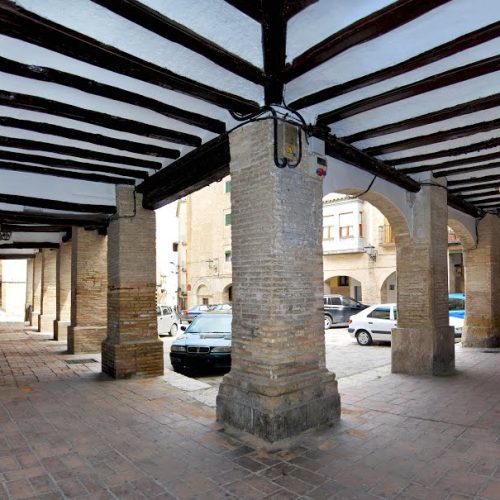
Soportales con columnas de ladrillo y techumbre de madera en la Plaza Mayor de Borja.

Projects and interventions

Projects and interventions, and the driving forces behind them, define the history of monumental buildings and how they are perceived.

Declarations

Declaration, 21st century The Official Gazette of Aragon (BOA) from November 21, 2001 published Decree 273/2001, of November 6, by the Government of Aragon, declaring the former collegiate church of Santa María in Borja (Zaragoza) an Asset of Cultural Interest, Monument category.

Bibliography

AGUILERA HERNÁNDEZ, ALBERTO. La capilla del Santo Cristo de la colegiata de Santa María de Borja (Zaragoza): aportaciones documentales para su historia y exorno artístico (1538-1633), Aragonia Sacra. 2015 , nº XXIII, p. 7-30.

BRESSEL ECHEVERRIA, CARLOS ET AL. Borja. Arquitectura y evolución urbana, Colegio Oficial de Arquitectos de Aragón, Zaragoza, 1988.

CRIADO MAINAR, JESÚS. Las artes plásticas del Segundo Renacimiento en Aragón. Pintura y escultura 1540-1580, Institución Fernando el Católico, 1996.

ESCRIBANO SÁNCHEZ, JOSÉ CARLOS; JIMÉNEZ APERTE, MANUEL. Iglesias medievales en la comarca de Borja. I. Borja, Cuadernos de Estudios Borjanos. 1981 , nº VII-VIII, p. 109-231. GALINDO PÉREZ, SILVIA (COORD.). Aragón Patrimonio Cultural Restaurado. 1984/2009. Bienes muebles, Gobierno de Aragón, Zaragoza, 2010.

GRACIA RIVAS, MANUEL. El museo de la colegiata de Borja, Centro de Estudios Borjanos e Institución Fernando el Católico, Borja, 2003.

GRACIA RIVAS, MANUEL. Las reliquias conservadas en la Colegiata de Santa María de Borja, Centro de estudios Borjanos, 2006.

GUITART APARICIO, C. La Ex– Colegiata de Santa María de Borja, Centro de Estudios Borjanos, 1970.

MARTÍNEZ MOLINA, JAVIER. La reforma neoclásica de la Colegiata de Santa María de Borja y sus proyectos previos (1791-1831) , Centro de Estudios Borjanos e Institución Fernando el Católico, Borja, 2015 Borjanos. 2002 , nº XLV, p. 95-119.

VV.AA. Catálogo de la Exposición: María en el Arte de la ciudad de Borja, Antiguo convento de Santo Domingo. Obispado de Tarazona y Ayuntamiento de Borja.
VV.AA. Tierra Mudéjar. El Mudéjar Aragonés, Patrimonio Mundial, Heraldo de Aragón, D.L. 2002

Appendixes

Ex-collegiate church of Santa María

C/ Virgen de la Peana.
50017, Borja (Zaragoza)

Visit Borja

City Hall: 976 852 001
www.borja.es
WOULD YOU LIKE TO KNOW MORE?
www.turismodezaragoza.es