
Ateca
Village Territorio Mudéjar
“The ancient one”
Located at the crossroads of the River Jalón with the River Manubles and the Mesa-Piedra, its historically strategic location has led to settlements in the area since the Eneolithic period, with finds documented in numerous places in the municipality.
The Islamic legacy of Ateca can be seen in the Arabic toponym from which its name “la antigua” derives, and is reflected in an attractive hamlet that is built on an urban layout of Islamic character with steep slopes, twists, turns and cul-de-sacs or covered passages, on which stand large houses with high, closed walls. The complex dialogues with the landscape marked by the use of water resources and draws attention to the system of irrigation channels, the most important element of which is the Canal del Val aqueduct.
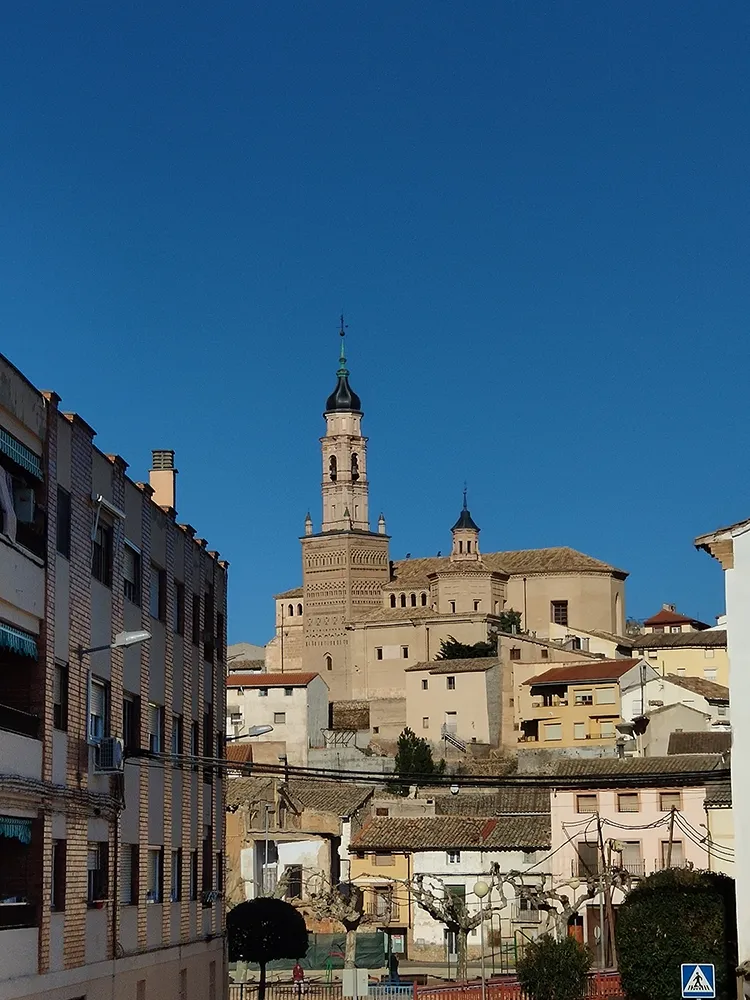
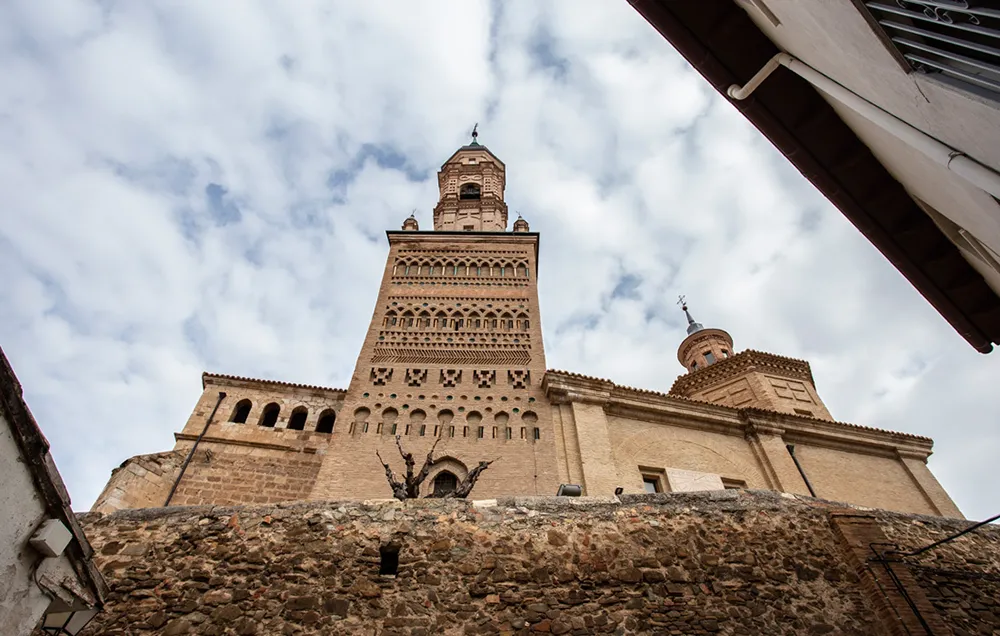
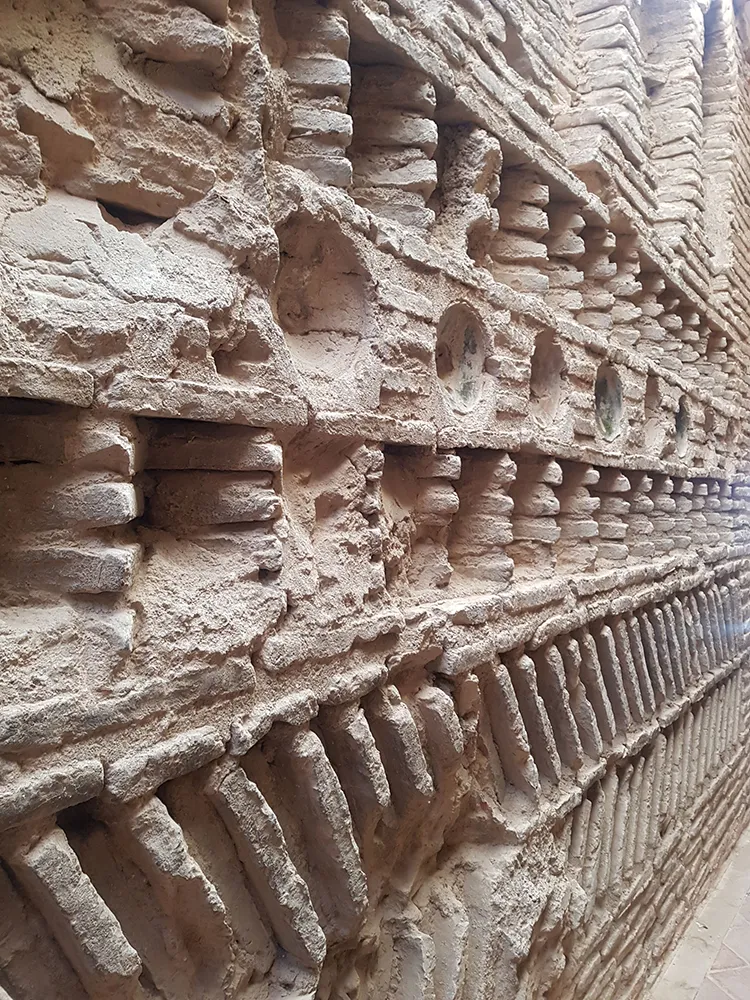
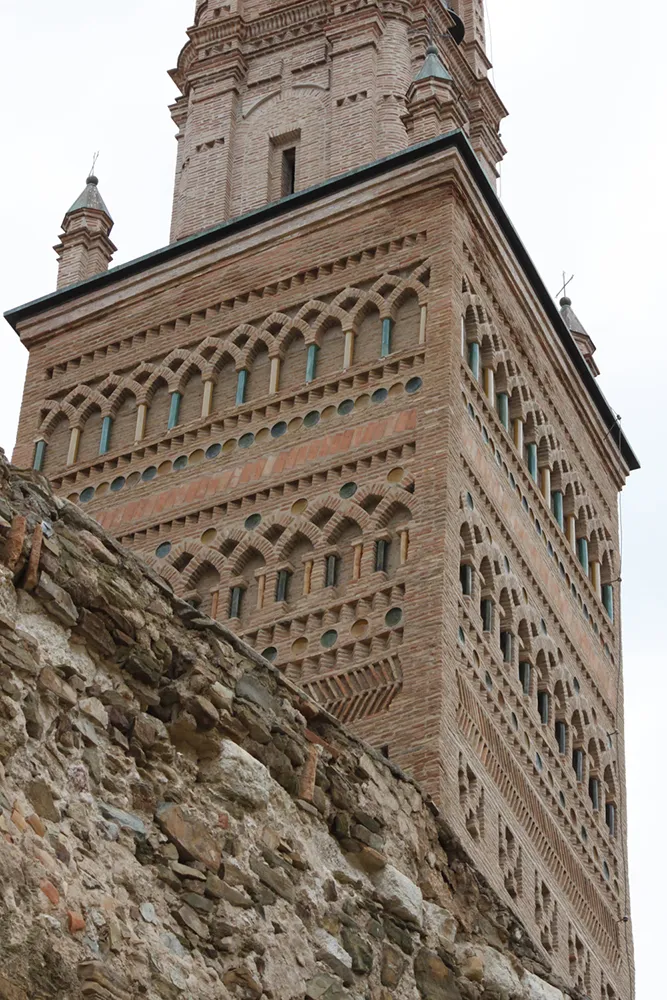
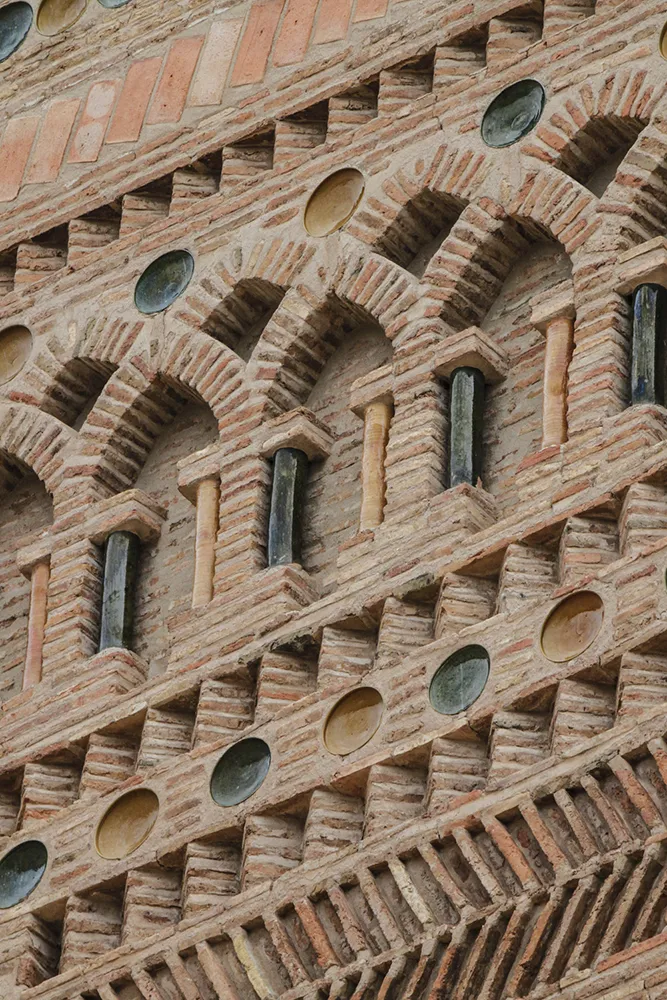
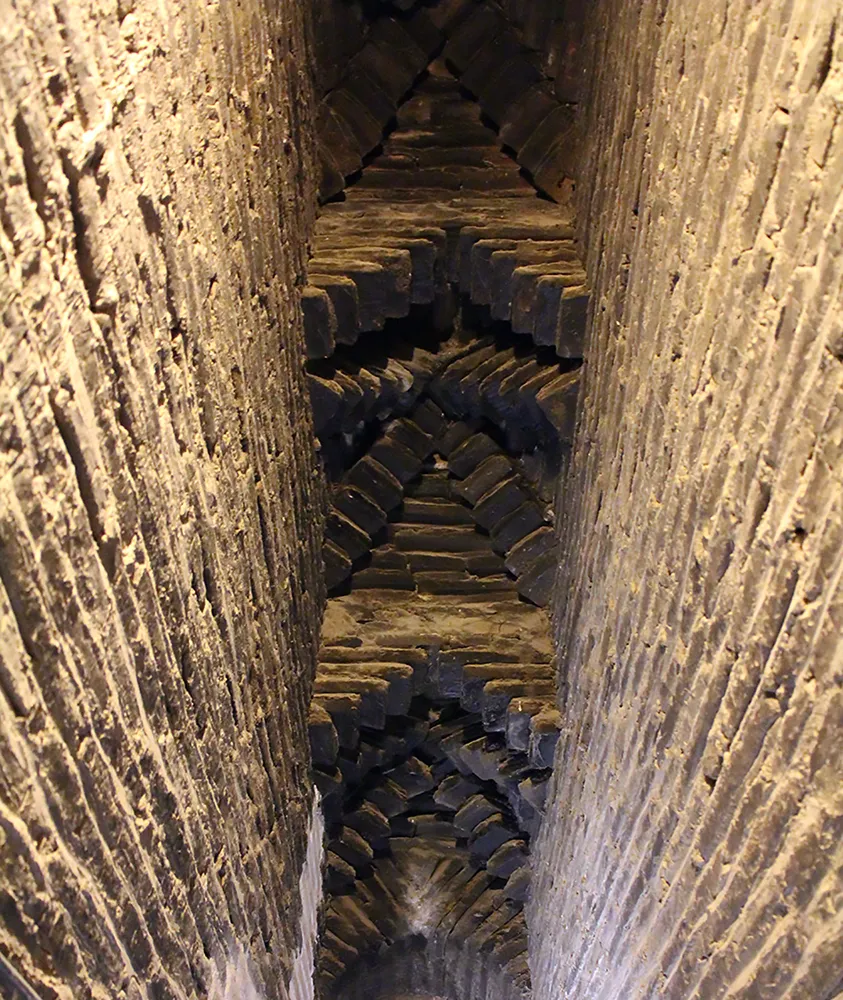
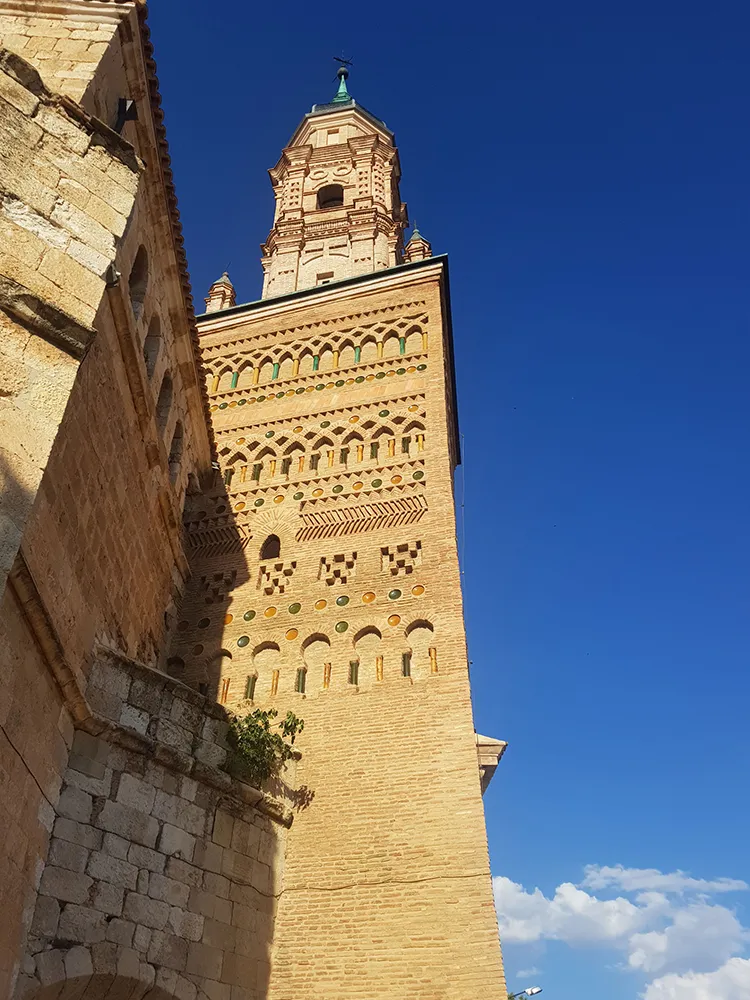
But if there is one thing that is striking about the town, it is its group of towers. The Mudejar tower of the church of Santa María, dated, according to professor Gonzalo M. Borrás Gualis, to the second half of the 13th century, is the oldest part of the complex, prior to the Mudejar church, and is totally free-standing at the foot of the church and displaced from its axis. Both its structure and its ornamental elements, somewhat archaic for the time, follow the Almohad Islamic tradition, built by Aragonese Moorish masters, perhaps following the local tradition of minarets in the region but in any case built as a Christian bell tower. In 1560, the Clock Tower was built, commissioned by the council to the master builders Domingo and Ameçot to house the new clock that was to regulate the life of the city.
Located at the crossroads of the River Jalón with the River Manubles and the Mesa-Piedra, its historically strategic location has led to settlements in the area since the Eneolithic period, with finds documented in numerous places in the municipality.
The Islamic legacy of Ateca can be seen in the Arabic toponym from which its name “la antigua” derives, and is reflected in an attractive hamlet that is built on an urban layout of Islamic character with steep slopes, twists, turns and cul-de-sacs or covered passages, on which stand large houses with high, closed walls. The complex dialogues with the landscape marked by the use of water resources and draws attention to the system of irrigation channels, the most important element of which is the Canal del Val aqueduct.
But if there is one thing that is striking about the town, it is its group of towers. The Mudejar tower of the church of Santa María, dated, according to professor Gonzalo M. Borrás Gualis, to the second half of the 13th century, is the oldest part of the complex, prior to the Mudejar church, and is totally free-standing at the foot of the church and displaced from its axis. Both its structure and its ornamental elements, somewhat archaic for the time, follow the Almohad Islamic tradition, built by Aragonese Moorish masters, perhaps following the local tradition of minarets in the region but in any case built as a Christian bell tower. In 1560, the Clock Tower was built, commissioned by the council to the master builders Domingo and Ameçot to house the new clock that was to regulate the life of the city.
Projects Territorio Mudéjar in Ateca
Monuments | View the project
Education | View the project
Project Mudetrad | View the project
Architecture civil Mudéjar | View the project
Mudéjar educational, the guide | View the project
Urban planning preventive | View the project
“Circular” Walks with the family | View the project
Mudéjar RGB | View the project
Projects Territorio Mudéjar en Tobed
Recognition and promotion of traditional architecture through a a series of itineraries.
More information
Town Hall: 976 842 005
www.aytoateca.es
Association for DevelopmentIntegral Development of the Region of Calatayud and Region of Aranda
galcar.es
VISIT ATECA
976 633 296
WOULD YOU LIKE TO FIND OUT MORE?
Tourism in Aragón
turismodearagon.com
Tourism Region Community of Calatayud
comarcacalatayud. com
Centre for Bilbilitan Studies Bilbilitanos
cebilbilitanos.com
Camino del Cid
www.caminodelcid.org
Territorio Mudéjar Network
The town council has been a founding member of Territorio Mudéjar since 13 September September of 2018.
On the “Camino del Cid”, the Way of El Cid
Ateca is located at a strategic point at the confluence of the rivers Manubles and Jalón, and is dominated by a fortification of uncertain origin of which is mentioned in documentary sources dating back to the 10th century. At that time, the castle belonged to the Banu Timlat, although it was captured by El Cid on his journey into exile -as it is stated in the Song of My Cid— and was incorporated permanently into the Kingdom of Aragon in 1120 by Alfonso I the Battle-Ax following the battle of Cutanda.
These remains of the old castle watch over the town centre of Ateca, which, in addition to the church of Santa María and the Clock Tower, stands out for its strong character and other architectural features such as the Baroque church of San Francisco and the Renaissance-style town hall, as well as for the conservation of three of the four access gates to the walled enclosure of the medieval town: Puerta de las Fraguas, Puerta del Arial and the gate of San Miguel. The fourth, called Almazán, has disappeared.
Ateca is located at a strategic point at the confluence of the rivers Manubles and Jalón, and is dominated by a fortification of uncertain origin of which is mentioned in documentary sources dating back to the 10th century. At that time, the castle belonged to the Banu Timlat, although it was captured by El Cid on his journey into exile -as it is stated in the Song of My Cid— and was incorporated permanently into the Kingdom of Aragon in 1120 by Alfonso I the Battle-Ax following the battle of Cutanda.
These remains of the old castle watch over the town centre of Ateca, which, in addition to the church of Santa María and the Clock Tower, stands out for its strong character and other architectural features such as the Baroque church of San Francisco and the Renaissance-style town hall, as well as for the conservation of three of the four access gates to the walled enclosure of the medieval town: Puerta de las Fraguas, Puerta del Arial and the gate of San Miguel. The fourth, called Almazán, has disappeared.
The influence of the Order of the Holy Sepulchre in Tobed is evident throughout its town centre urban area, which does indeed catch the eye because of its simplicity and appearance of a “white village” preserves buildings from important buildings from the modern era such as the Lonja, the church parish church of San Pedro and the Palace of the Canons, also known as the Commandery, from the Baroque period.
The town preserves, in addition other features of interest such as the tower of the castle Islamic and the chapel of Saint Valentine on the ridge of the Algairén mountain range .