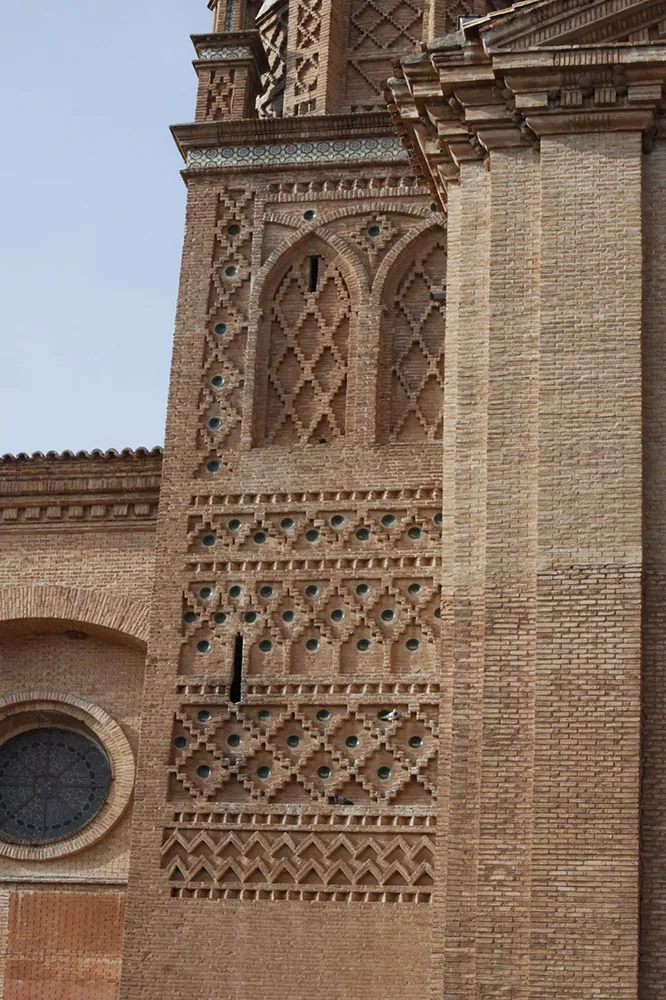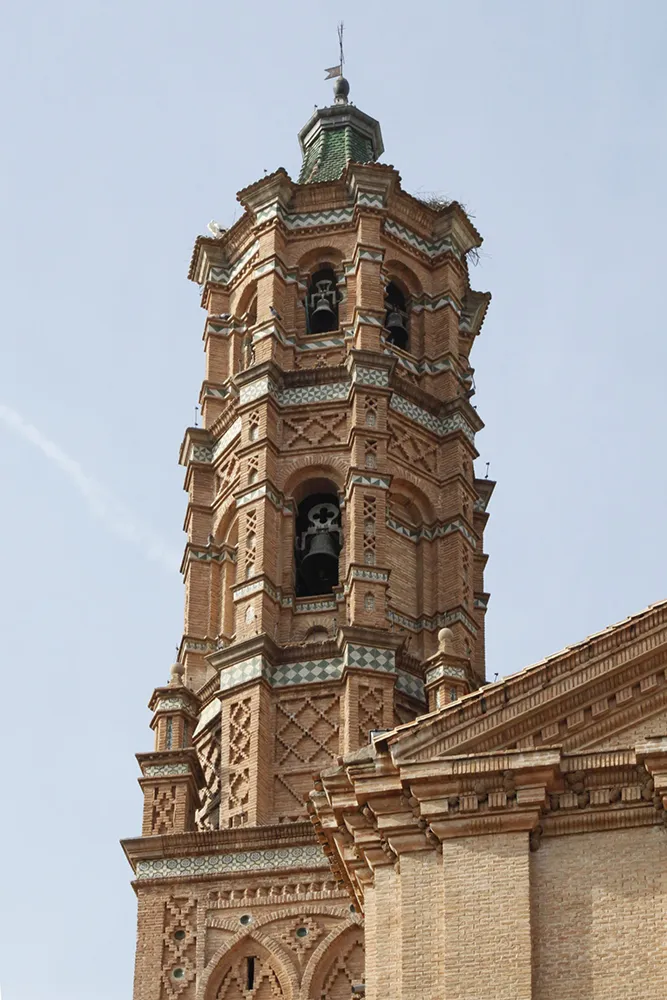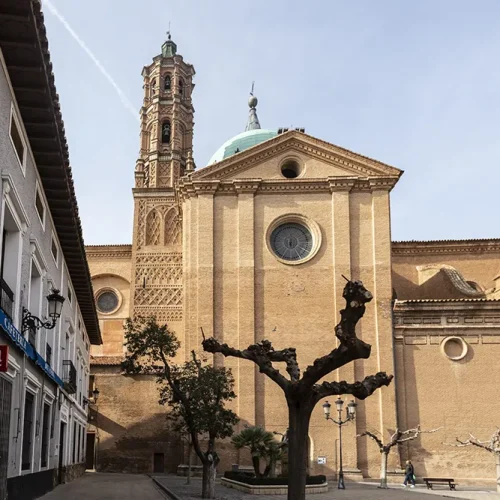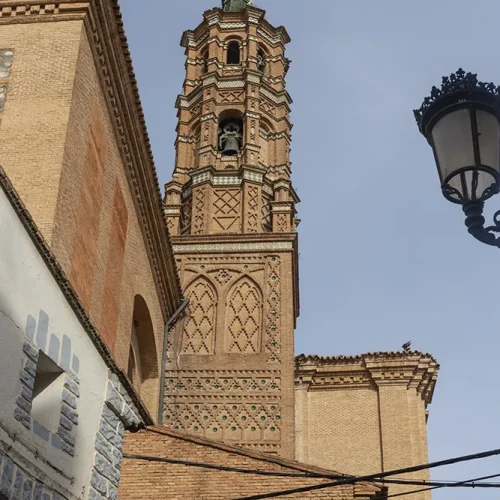


Cabañas chapel, La Almunia de Doña Godina
50100 La Almunia de Doña Godina, Zaragoza
CURRENT CATEGORY OF PROTECTION:
Bien de Interés Cultural (BIC)
TYPE OF PROPERTY: Real estate
CATEGORY: Religious
ARCHITECTURAL STYLE: Mudejar
DATE OF CONSTRUCTION: 12th, 13th, 14thCentury
This is an old Romanesque chapel built in the 12th century because Cabañas was a very important centre of population during the Middle Ages.
The original hermitage would have a rectangular nave and a semicircular apse, as well as a porticoed atrium on the epistle wall. In other words, it would follow the basic precepts of a Romanesque hermitage. Throughout the 13th century, a series of transformations were carried out, such as the closure of the atrium to create a new nave and the change of the entrance to the nave, located in the new wall.
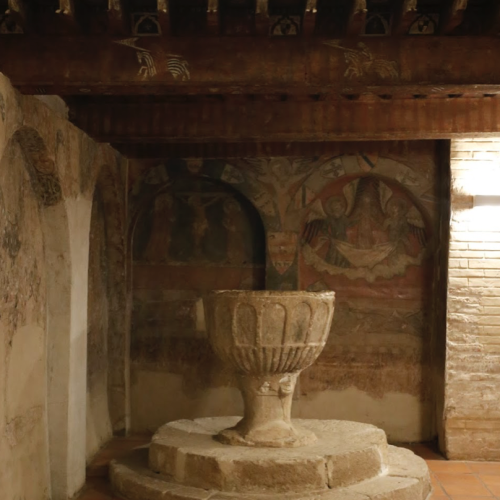
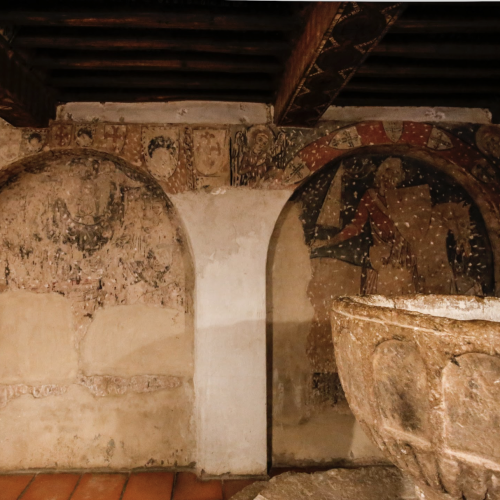
In relation to the mural cycle of the right lateral nave, we can see how different narrative scenes are developed, such as: The cycle of the Passion, the life of St. Nicholas of Bari, the life of St. Ursula etc.
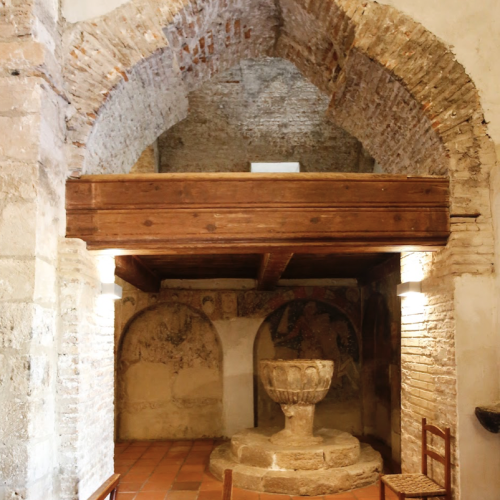
In addition, there are three arcosoliums on the side wall. On one side, the Caballero de Cabañas, the Cabañero Lopez de Luna and the Caballero Albero, with their specific heraldic coats of arms. At the foot of the nave, below the Mudejar alfarje, are the two most interesting arcosoliums due to the quality of their paintings. They are the tombs of Horia Pérez and Doña Guillelma Pérez.
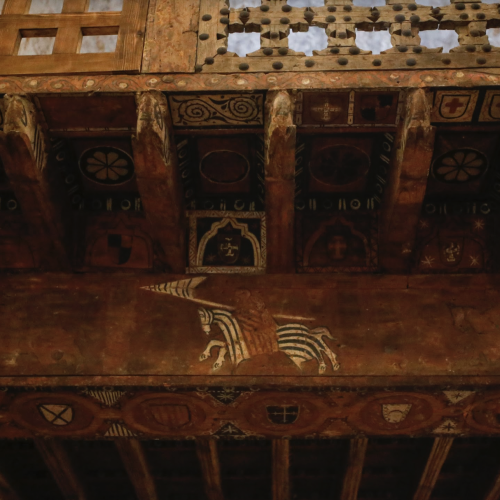
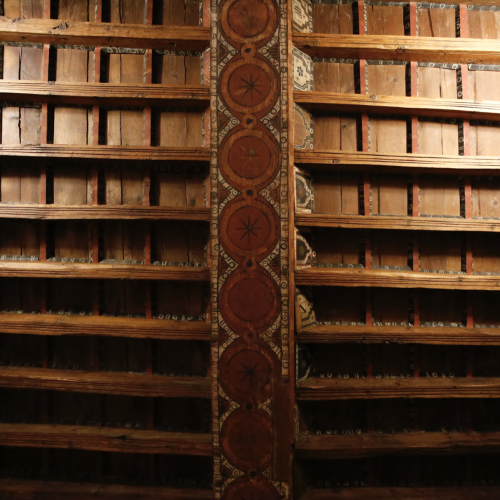
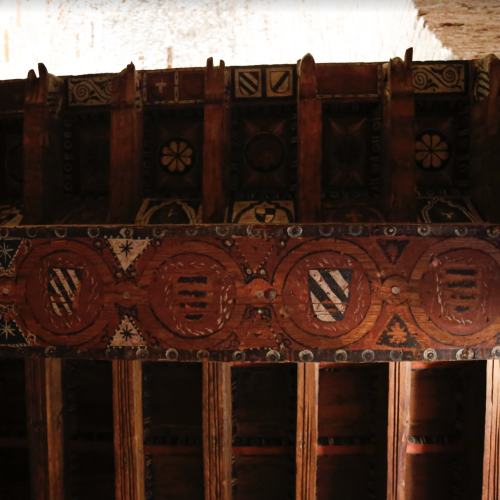
The alfarje is located at the foot of the side nave. It is a small alfarje of great interest due to the quality of its painting. Its structure is based on the arrangement of transversal beams on which longitudinal braces are placed. From the front, we can see how an overhang is supported by corbels. The closing of the upper part of the window frame is made of openwork wood with motifs of an octagonal loop of four and crosses.
Interventions
Restoration, 20th Century to 21st Century
It was restored in 1960 in which the original south doorway, an essential element of the original church, was removed. A new space was also opened up on the Gospel side to obtain greater symmetry of the whole, completely altering the external appearance of the church and especially the doorway.


Projects and interventions
Projects and interventions and their promoters define the history of monumental buildings as well as the perception of them.
The downloadable document presents the current status of the files under review, which will allow us to update our knowledge of each of the monumental buildings.
Declarations
Declaration, 21st Century
20th Century to the 21st Century The Cabañas Chapel has been a National Monument since 27th October 1978 and was declared an Asset of Cultural Interest on 11th March 2002.

Bibliography
ALLO MANERO AND MATEOS GIL. La Almunia de Doña Godina. Guía histórico-artística, Diputación General de Aragón, Zaragoza, 1987.
ABBAD RÍOS, Francisco. Monumental Catalogue of Spain: Zaragoza. Madrid: CSIC, 1957.
ANDREU LORENTE, Concepción; Potoc Pozo, María Carmen. Some curiosities about the hermitage of Cabañas. Ador. 2009 , nº 14, p. 31-41. Work progresses on the restoration of the alfarje of the Cabañas hermitage. Heraldo de Aragón. 29/04/2019 p. 44.
BENITO, Félix. Inventory of the architectural heritage of the province of Zaragoza. Unpublishedinventory, Government of Aragon, 1988.
BORRÁS GUALIS, Gonzalo. Aragonese Mudejar art . Zaragoza: CAZAR, 1985.
CABELLO SOLANAS, Santiago. Portraits of memory. La Almunia de Doña Godina: [s.n.], 1997.
The Mudejar alfarje of the hermitage of Cabañas will be consolidated soon. Heraldo de Aragón. 18/08/2018 p. 15.
FACI, Roque Alberto. Aragón, reyno de Christo y dote de María Santíssima. Zaragoza: Diputación General de Aragón, 1979.
GARCÍA GUINEA, Miguel Ángel; Pérez González, José María(dir.). Encyclopaedia of the Romanesque in Aragon: Zaragoza. Aguilar de Campoo: Fundación Santa María la Real, 2010. GUDIOL, José. Medieval painting in Aragon. Zaragoza: Institución Fernando el Católico, 1971.
MAÑAS BALLESTÍN, Fabián. The hermitage of the virgin of Cabañas. La Almunia de Doña godina: Asociación Cultural L’Albada, 2007.
MAÑAS BALLESTÍN, Fabián. The hermitage of the Virgin of Cabañas. Ador. 2009 , nº 14, p. 13-29. MOYA CERDÁN, Fausto. Cabañas and La Almunia in its beginnings. Ador. 1996 , no. 3, p. 29-53.
POST, Chandler Rafhton. A history of spanish painting. Nueva York: Kraus Reprint Co., 1970.
RÍOS GRACIA, Luis de los; Estarán Molinero, José. Anecdotario de Cabañas. Ador. 2009 , no. 14, p. 275-283.
MAÑAS BALLESTÍN, F. Las pinturas de la ermita de Cabañas, Revista La Replazeta nº 6, June, 2000.
VV.AA. La Almunia de Doña Godina, Colección Territorio, Comarca del Valdejalón, Diputación General de Aragón, 2003, p. 251.
Appendixes
Cabañas chapel
50100 La Almunia de Doña Godina
Zaragoza
Visit La Almunia de Doña Godina
Town Hall: 976 600 076
www.laalmunia.es
WANT TO KNOW MORE?
www.turismodezaragoza.es