CONSTRUCTION DATE:
Original construction, 16th century
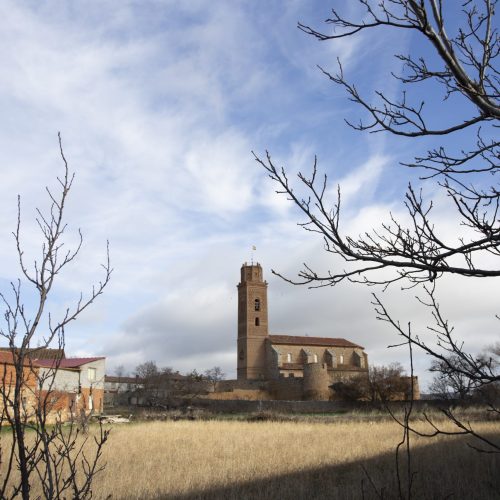
The church of San Pedro Apóstol was built in the 16th century, completed in 1609, constructed over part of the castle compound built in the 14th century in this town. The church tower is somewhat older, dating from 1400.
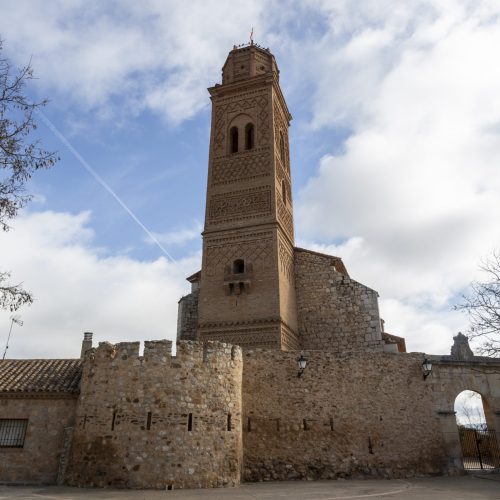
Construction of the church of San Pedro in Romanos began in the 16th century and was completed in 1609. To build the church, part of the castle compound built in the 14th century in this town was demolished. A section of the wall and two circular towers are the only parts of the castle still standing. The remaining area of the castle was used as a cemetery. This is a Renaissance-Gothic church with influences from the eastern coast of the peninsula.
The interior contains a single nave covered by late Gothic stellar vaults and a polygonal apse at the east end. A stone arch frames the entrance to the church.
The church boasts a magnificent defensive tower that is somewhat older, dating from around 1400. At the bottom of the tower there is an entrance via a pointed arch. This entrance also provided access to the original church. The uppermost section of the tower was adapted to house the belfry.
This tower is decorated with motifs that are common in Aragonese Mudejar art: bricks in zig-zag patterns, intertwining arches and angled brick patterns.
Interventions
Restoration, 20th to 21st century
The restoration mainly focused on the tower, with work being led by Javier Ibargüen, who left the addition at the top in place.
Declarations
Declaration, 20th century
Bibliography
Tierra Mudéjar. El mudéjar Aragonés, Patrimonio Mundial, Heraldo de Aragón, D.L. 2002
Utilizamos cookies para asegurarte la mejor experiencia en nuestra web. Puedes consultar más detalles
Funcionales
Always active
El almacenamiento o acceso técnico es estrictamente necesario para el propósito legítimo de permitir el uso de un servicio específico explícitamente solicitado por el abonado o usuario, o con el único propósito de llevar a cabo la transmisión de una comunicación a través de una red de comunicaciones electrónicas.
Preferencias
El almacenamiento o acceso técnico es necesario para la finalidad legítima de almacenar preferencias no solicitadas por el abonado o usuario.
Estadísticas
El almacenamiento o acceso técnico que es utilizado exclusivamente con fines estadísticos.El almacenamiento o acceso técnico que se utiliza exclusivamente con fines estadísticos anónimos. Sin un requerimiento, el cumplimiento voluntario por parte de tu Proveedor de servicios de Internet, o los registros adicionales de un tercero, la información almacenada o recuperada sólo para este propósito no se puede utilizar para identificarte.
Marketing
El almacenamiento o acceso técnico es necesario para crear perfiles de usuario para enviar publicidad, o para rastrear al usuario en una web o en varias web con fines de marketing similares.