
Territorio Mudéjar Routes
We have 49 destinations, 25 itineraries, and 40 dates.
Will you join us?
Territorio Mudéjar presents a programme of itineraries for 2026 featuring 49 destinations, 25 routes and 40 scheduled dates.
Developed in collaboration with the Tourism Department of the Provincial Council of Zaragoza, the project invites visitors to travel slowly and in depth through a territory shaped by centuries of cultural coexistence, expressed through the rich heritage of its towns and villages.
“Territorio Mudéjar Villages” Routes
The routes have been designed around cultural elements that bear witness to the deep roots of the Andalusi Islamic tradition in the region from the 8th century onwards, and its continuity within the medieval Christian world. From this cultural fusion emerged, from the 13th century onwards, the Mudéjar heritage of Aragon, which continued to develop until the early decades of the 17th century.
Through 15 itineraries organised into six thematic areas, the member towns of Territorio Mudéjar offer evocative journeys that combine architecture of outstanding historical and artistic value, landscapes shaped by water and agriculture, centuries-old crafts, and a gastronomy rooted in local produce. These routes are designed not only to discover monuments, but also to explore places full of life and identity.
Unesco World Heritage Route: Tobed, Cervera de la Cañada y Calatayud
25th Anniversary of Mudéjar Architecture in Aragon UNESCO World Heritage Site
These special routes introduce visitors to the results of recent research carried out in Territorio Mudéjar. Led by specialists, they combine academic rigour with clear and accessible explanations, offering a fresh perspective on heritage.
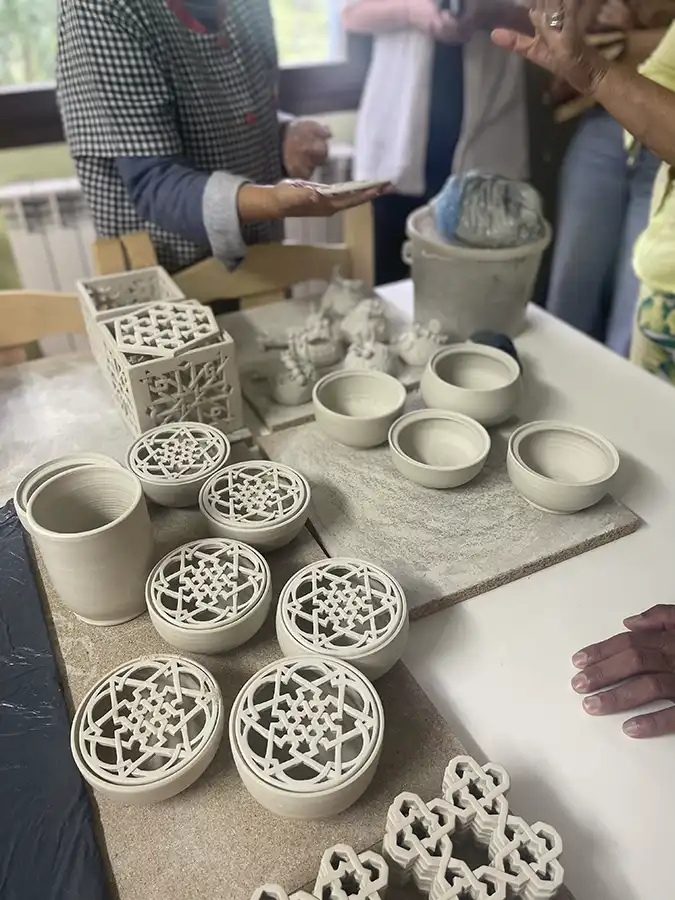
The routes explore materials, construction techniques, landscapes and traditions that have shaped the towns, transforming the journey into an experience of learning and discovery. As a complement, small hands-on workshops are included, inviting participants to engage directly with materials, their textures and the sensations they evoke, bringing knowledge closer to personal experience.
Local Economy and Popular Heritage in Territorio Mudéjar Villages
The routes are developed in collaboration with the people who live and work in the villages, those who preserve heritage in their daily lives and sustain local communities. Local guides and heritage professionals accompany the visits, providing expert yet approachable explanations. In addition, all routes include a small tasting of local gastronomy or crafts, highlighting traditional trades and local economic activity.



Book your visit:
We are opening the booking calendar for guided tours in 2026.
- Visits to buildings: free of charge ( subsidised by Territorio Mudéjar)
- Transport from Zaragoza: service with prior reservation and fare. Consult conditions.
More information:
- Telephone: 876 634 125
- E-mail: rutas@territoriomudejar.es
- WhatsApp: 648 799 405 / 686 460 189
Hybrid and Borderland: Mudéjar Villages
The imprint of Islamic presence remains visible today in language, landscape and, especially, in the urban layout of many Aragonese towns.
This route explores how, from the early 12th century to the 17th century, Muslim, Christian and Jewish communities shared the territory, giving rise to complex and nuanced urban spaces.
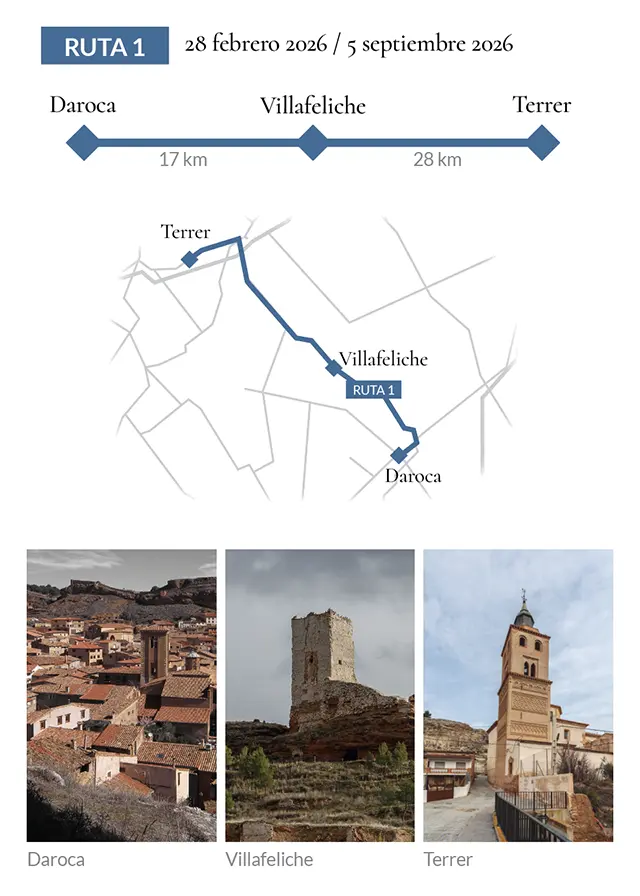
10.00 a.m. Daroca. The day begins in Daroca, a city of remarkable historical richness. Highlights include the Palace of the Luna family, the Santo Domingo tower and the church of San Juan de la Cuesta, along with a walk through the former Moorish and Jewish quarters.
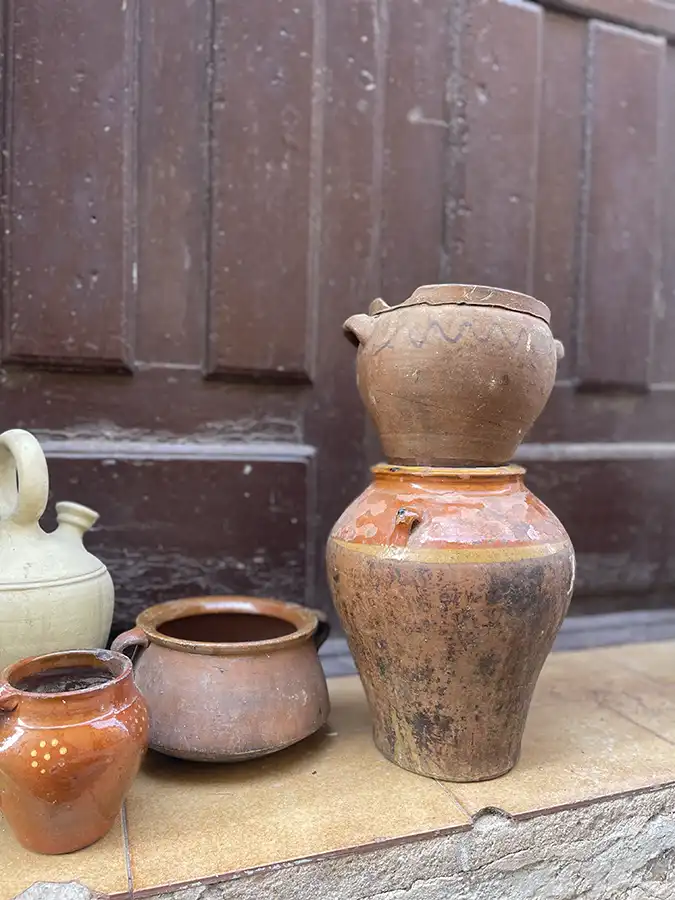
12.30 p.m. Villafeliche. From the main square, the route explores a town shaped by centuries of Mudéjar and Morisco presence. The ascent to El Calvario offers panoramic views of the town and its castle. The visit concludes at the ceramic centres, reflecting a vibrant craft tradition.
4.30 p.m. Terrer. A walk through Terrer’s historic centre reveals one of the most important Moorish quarters in medieval Aragon. The visit ends at the Mudéjar tower of the Church of the Assumption.
Special stop:
Local bakery in Daroca and pottery in Villafeliche

10.00 a.m. Fréscano. The route begins at the hermitage of Our Lady of La Huerta and reveals an urban layout closely linked to water. The visit ends at the Water Museum, housed in the former palace of the Dukes of Villahermosa.
12.30 p.m. Torrellas. A walk through streets of Islamic layout introduces visitors to Torrellas’ medieval past. Highlights include the tower of the Church of Saint Martin of Tours and the remains of the Moorish and Jewish quarters.
4.30 p.m. Tarazona. The visit showcases Tarazona’s medieval splendour. Monuments such as the Cathedral of Santa María de la Huerta, the Church of La Magdalena and the Mudéjar mosque of Tórtoles illustrate the importance of Mudéjar art in the city.
Special stop:
Local bakery in Torrellas and Tarazona
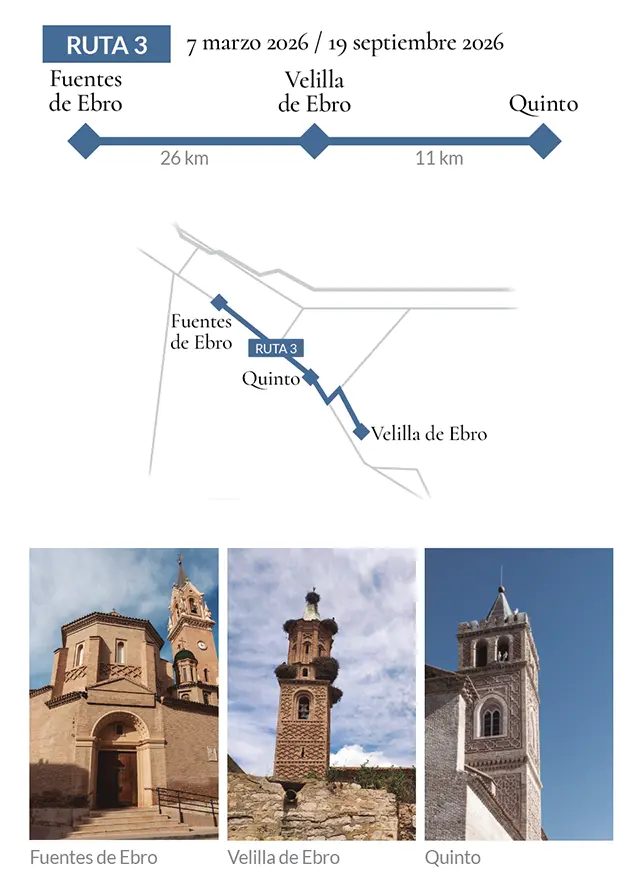
10.00 a.m. Fuentes de Ebro. Starting at the Church of San Miguel, the route explores the former Moorish quarter and concludes in Rodén, a site of outstanding landscape value where alabaster plays a key role.
12.30 p.m. Velilla de Ebro. The visit focuses on the relationship between water, agriculture and landscape, essential to understanding the history of the Ebro Valley settlements. The parish church and Roman remains of ancient Lepida Celsa are included. Lepida Celsa.
4.30 p.m. Quinto. The route ends at the Mudéjar church of Our Lady of the Assumption, known as El Piquete, now home to the Museum of the Mummies of Quinto. A final urban walk traces the historical evolution of the town. .
Special stop:
Local bakery and butcher’s shop in Quinto and Fuentes de Ebro
Roman gastronomy in Velilla de Ebro
Understanding a Style: The Origins
How did Mudéjar art emerge? Why did it become one of the most distinctive styles in Aragon?
These itineraries explain why the style was so highly valued in medieval times and how it has been preserved to the present day.
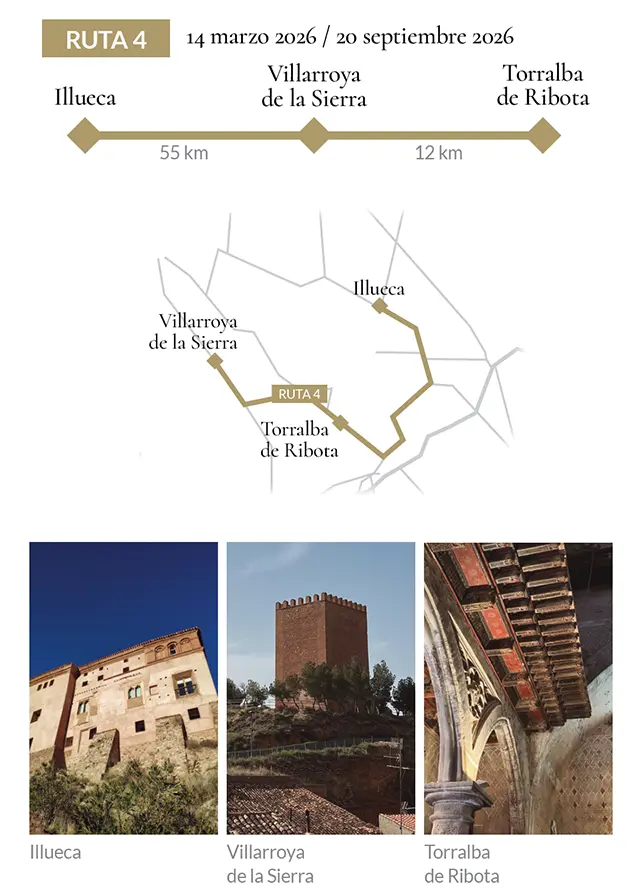
10.00 a.m. Illueca. The itinerary begins at the Palace of the Luna family, birthplace of Benedict XIII, internationally known as Pope Luna. The site provides essential context for understanding the building’s architecture and the surrounding urban landscape.
12.30 p.m. Villarroya de la Sierra. From the parish church, the walk continues through a beautifully preserved historic centre to the upper part of the village, where the King’s Castle and Queen’s Castle stand, illustrating the relationship between defensive architecture and urban form.
4.30 p.m. Torralba de Ribota. The visit focuses on the Church of San Félix, one of the finest examples of a Mudéjar church-fortress. Its imposing presence and excellent state of preservation make Torralba de Ribota a key stop.
Special stop:
Local bakery in Illueca and Villaroya de la Sierra

10.00 a.m. Zuera. The route begins at the Arco de la Mora, a remarkable example of an Islamic-inspired hydraulic structure. The visit continues to the Church of San Pedro, a transitional building between Romanesque and Mudéjar architecture.
12.30 p.m. Castejón de Valdejasa. The parish church illustrates the transformation of a Mudéjar building over time. A walk through the village reveals wine cellars, historic houses and corners that preserve the memory of the past.
4.30 p.m. Tauste. The route concludes at the Church of Santa María de Tauste, whose Mudéjar tower dominates the town skyline. Climbing the tower offers privileged views and highlights the visual and symbolic importance of these structures.
Special stop:
Local bakery in Zuera and Tauste
Butcher’s shop in Castejón de Valdejasa
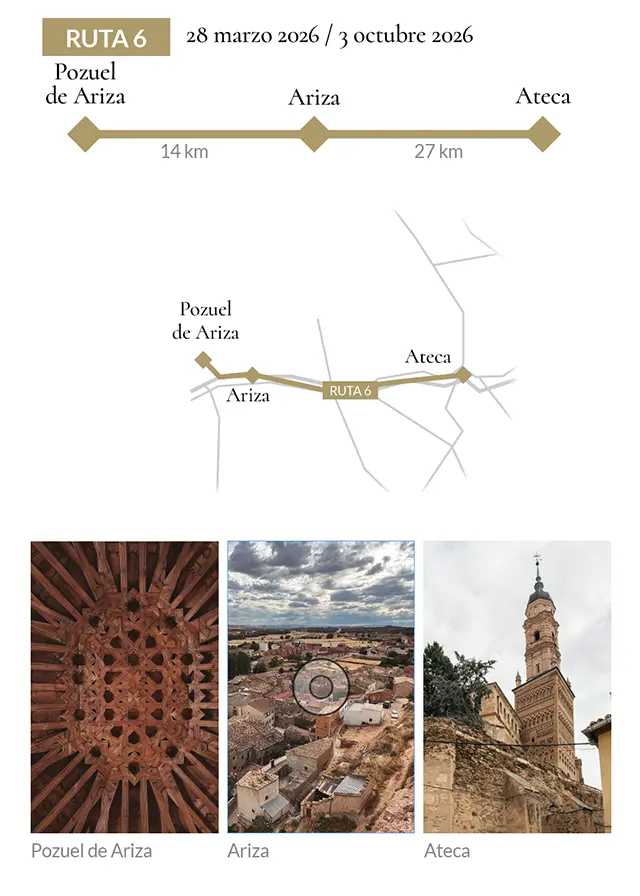
10.00 a.m. Pozuel de Ariza. After exploring the village, the visit continues to the hermitage of Our Lady of La Torre, where one of the most beautiful and distinctive Mudéjar wooden ceilings in Aragon is preserved.
12.00 p.m. Ariza. From the Church of Santa María, formerly the main mosque, the itinerary includes the castle and urban spaces such as the Jewish and Moorish quarters, reflecting complex medieval coexistence.
4.30 p.m. Ateca. The tour focuses on the Church of Santa María, paying special attention to its Mudejar tower. The exterior ceramics and interior structure provide insight into the construction techniques characteristic of this style.
Special stop:
Homemade sweets in Pozuel de Ariza
Chocolates in Ateca
Bird's eye view: the towers
Mudéjar towers are among the most recognisable features of the Aragonese landscape. Many had defensive origins and served to monitor and communicate across the territory.
Visitors are invited to climb the towers of our towns and enjoy breathtaking views, gaining insight into their historical significance and relationship with the surrounding landscape.
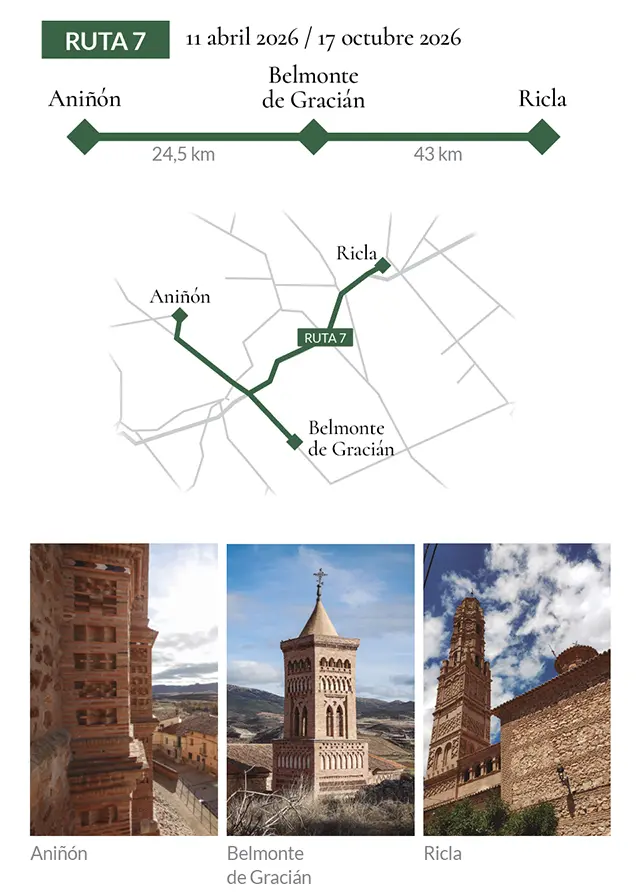
10.00 a.m. Aniñón. The route begins at the Church of Our Lady of the Castle, whose tower and façade preserve elements of the former Mudéjar temple. A walk through the village leads to the Olive Oil Museum, combining heritage and agricultural tradition.
12.30 p.m. Belmonte de Gracián. The visit focuses on the Church of San Miguel, notable for the exterior decoration of its apse and tower and its unique palm-shaped interior structure. The surrounding gypsum landscape is striking.
4.30 p.m. Ricla. After a brief visit to the recently restored castle, the route continues to the Church of Our Lady of the Assumption. Climbing the tower offers sweeping views over the Jalón Valley.
Special stop:
Cherries, garlic and oil in Aniñón and Ricla
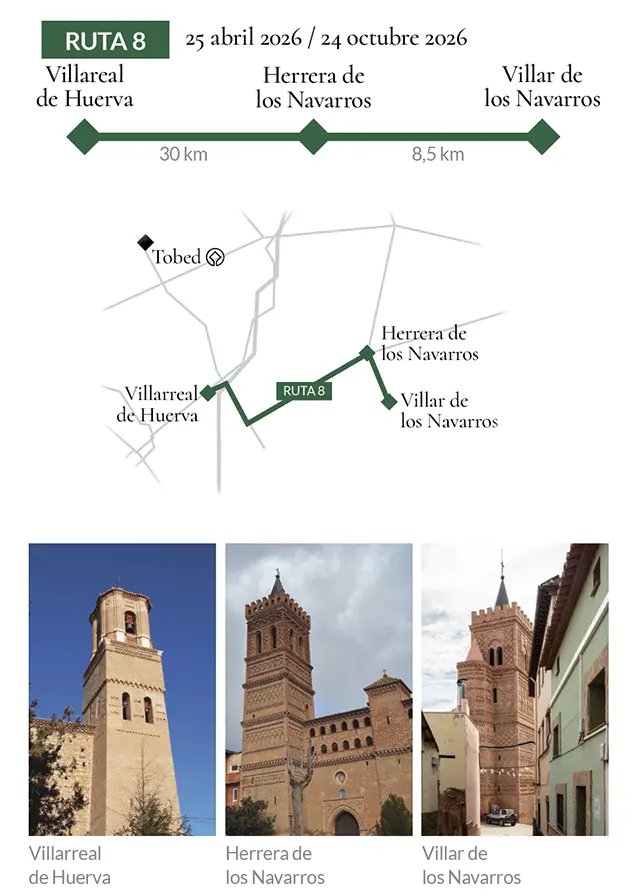
10:00 a.m. Villarreal de Huerva. The visit centres on the defensive complex of the Church of San Miguel Archangel, comprising a keep, a Baroque church and a Mudéjar tower. From the top, visual connections with neighbouring towns reinforce the idea of a territorial network.
12:30 p.m. Herrera de los Navarros. The Church of Saint John the Baptist is one of the most remarkable church-fortresses in the area. Its tower features an exceptional double wall-walk that illustrates both defensive and symbolic functions.
4.30 p.m. Villar de los Navarros. The day ends at the tower of the Church of San Pedro, one of the most distinctive Mudéjar towers in Aragon. The ascent offers an intimate relationship with the surrounding landscape.
Special stop:
Eggs and potatoes in Villarreal de la Huerta
Local bakery and almonds in Villar de los Navarros
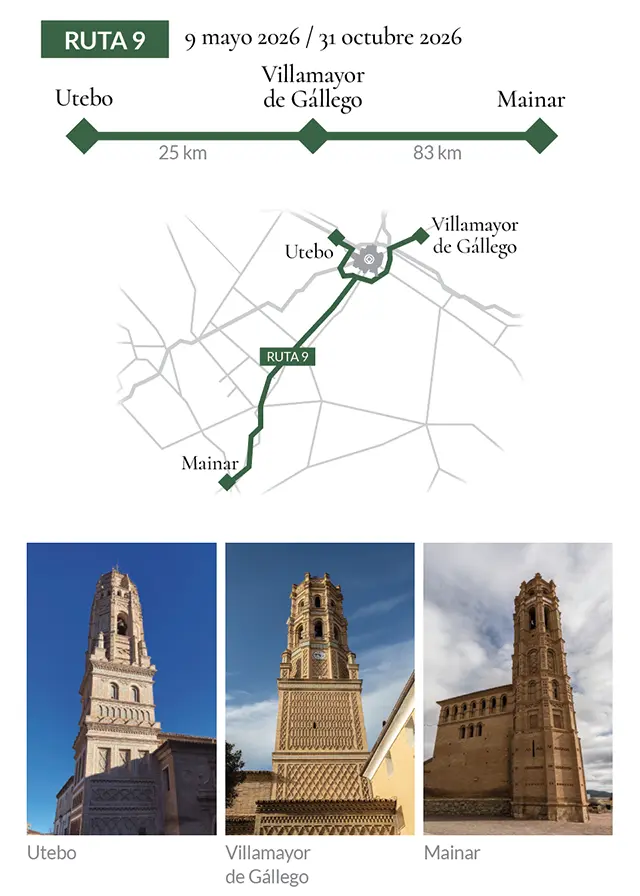
10.00 a.m. Utebo. The renowned Tower of Mirrors at the Church of Our Lady of the Assumption marks the start of the route. The interior visit and tower ascent reveal one of the most emblematic Mudéjar examples in Zaragoza.
12.30 a.m. Villamayor de Gállego. From the Mudéjar tower of Our Lady of the Assumption, an urban walk leads to the hermitage of Our Lady of El Pueyo. Elevated views of the valley accompany the discovery of a townscape dotted with stately houses.
5.00 p.m. Mainar. The route concludes at the Church of Santa Ana, whose tower is among the last Mudéjar towers built in the region. Its elegance provides a fitting finale.
Special stop:
Locally grown products in Utebo
Artisanal bakery products in Villamayor de Gállego
Shaping Space: Light and Material
Mudéjar buildings represent a synthesis of solidity and beauty. Light, materials and space are intelligently combined, generating unique atmospheres that respect their surroundings.
The route highlights architecture designed to impress, including visits to outstanding examples of church-fortresses.
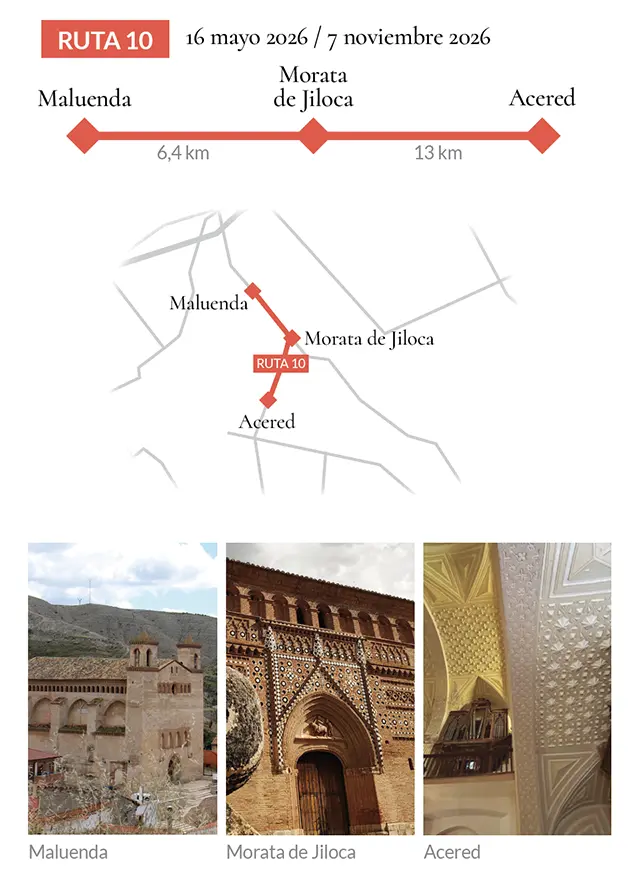
10.00 a.m. Maluenda. Maluenda offers an exceptional ensemble of Mudéjar monuments. The route links the churches of Saints Justa and Rufina, San Miguel and Santa María, showcasing decorative richness and typological variety.
12.30 p.m. Morata de Jiloca. The visit focuses on the Church of Saint Martin of Tours, one of the most outstanding Mudéjar buildings in the area, notable for its church-fortress structure and ceramic façade.
4.30 p.m. Acered. The visit begins at the Church of Our Lady of the Assumption, whose interior preserves delicate Islamic-inspired plasterwork. A walk through the village reveals examples of vernacular architecture.
Special stop:
Homemade sweets in Maluenda
Butcher’s shop, local bakery and wine in Acered

10.00 a.m. Borja. The route starts at the former Collegiate Church of Santa María, now a museum, and continues through landmarks such as the House of Shells and the former parish church of San Miguel. The visit concludes at La Estanca, a site of high landscape value.
12.30 p.m. Magallón. From the former Church of Our Lady of La Huerta, the walk passes through the Moorish and Jewish quarters to the parish church of San Lorenzo, offering panoramic views.
5.00 p.m. San Mateo de Gállego. The route ends at the Church of Saint Matthew the Apostle, with optional access to the tower overlooking the Gállego River landscape.
Special stop:
Butcher’s shop in San Mateo de Gállego
Oil and wine in Magallón and Borja
Cultural Landscape: A Lived Territory
The cultural landscape is the result of the historical and social relationship between people and their environment.
Exploring these landscapes reveals how towns, architecture and traditional activities have shaped a lived space, where heritage extends beyond monuments and becomes part of everyday life and territorial identity.

10.00 a.m. Alpartir. A walk through the village at the foot of the Algairén range highlights the close relationship between landscape, urban fabric, architecture and traditional crafts.
1.00 p.m. Villanueva de Gállego. The visit reveals the close link between the town and the Gállego River, shaping agriculture, infrastructure and settlement patterns.
5.00 p.m. Torres de Berrellén. In addition to visiting the church, participants will see a remarkable example of a towboat (barca de sirga), illustrating the river’s role as communication route and natural boundary.
Special stop:
Wine and oil in Alpartir
Artisanal bakery products in Torres de Berrellén
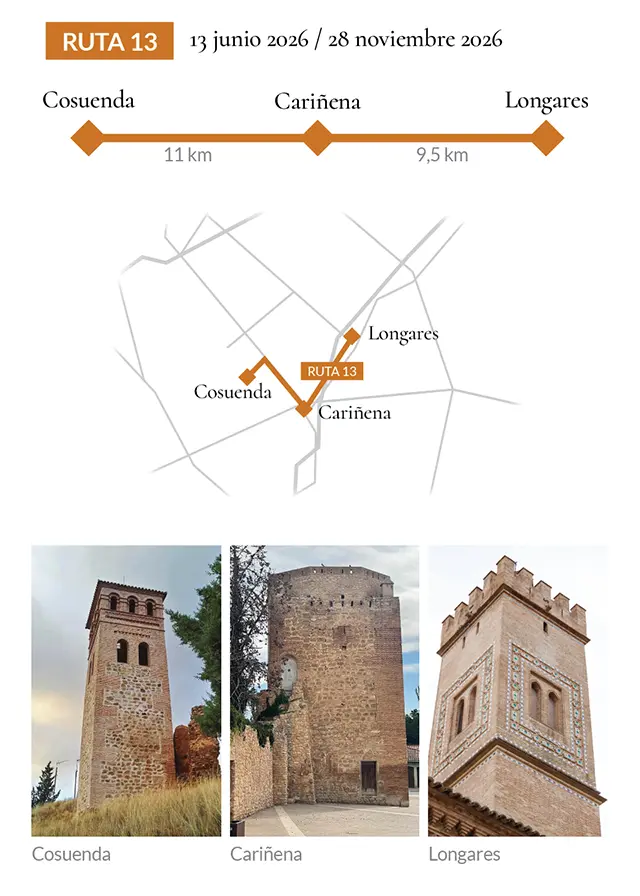
10.00 a.m. Cosuenda. The Lisalta Tower offers an excellent viewpoint to interpret the vineyard-shaped landscape. The walk through wine cellars and vernacular architecture reveals how the environment has shaped settlement. .
12.00 p.m. Cariñena. From the Monjas Tower, the urban walk explores a town deeply connected to its wine-growing landscape. The former synagogue, parish church and street layout reflect centuries of coexistence.
4.30 p.m. Longares. The visit focuses on the Church of the Assumption, whose Mudéjar tower dominates an agricultural landscape.
Special stop:
Affiliated establishments of the Campo de Cariñena Wine Route
Power and Territory: Medieval Administrators
During the Middle Ages, the territory was controlled by different powers responsible for its organisation and exploitation. Nobility, clergy and military orders shaped population distribution, resource management and the construction of churches, castles, palaces and urban complexes that survive today.

10.00 a.m. Romanos. The route begins at the Mudéjar tower integrated into the defensive enclosure of the church. Climbing the tower reveals its strategic role and the surrounding landscape.
12.30 p.m. Muel. From the Roman dam below the hermitage of Our Lady of La Huerta, the route connects heritage, landscape and ceramic tradition.
4.30 p.m. Calatorao. The walk ascends to the remains of the Islamic-origin castle and descends through the town, including its Mudéjar mosque.
Special stop:
Local bakery and ceramics in Muel

10.00 a.m. Saviñán. The visit includes the Palace of the Counts of Argillo and the parish church, which preserves the skull of Pope Luna.
12.30 p.m. Mesones de Isuela. The Castle of the Luna family dominates the town. Inside, a magnificent Mudéjar wooden structure illustrates advanced construction techniques.
4.30 p.m. La Almunia de Doña Godina. The visit begins at the hermitage of Our Lady of Cabañas and explores former Jewish quarter streets.
Special stop:
Local bakery in Saviñán
Mudejar world heritage
Aragonese Mudéjar architecture constitutes a unique and authentic style. Its Outstanding Universal Value led to its recognition as a UNESCO World Heritage Site. Three Territorio Mudéjar member towns—Calatayud, Cervera de la Cañada and Tobed—hold this distinction. Do you dare to discover them through this very special route?

9.00 a.m. Zaragoza. The route begins at the Church of San Pablo (April) or the Parroquieta of La Seo (June and December).
In December, the anniversary of the 2001 UNESCO designation is celebrated.
11.30 a.m. Tobed. Starting at the Mahoma Calahorrí Mudéjar Museum, the visit continues to the Church of the Virgin of Tobed, a UNESCO World Heritage Site.
4.00 p.m. Calatayud. The historic centre preserves remains of major Moorish and Jewish quarters. Visits include the Church of San Andrés and the Collegiate Church of Santa María.
5.30 p.m. Cervera de la Cañada. An urban walk leads to the Church of Santa Tecla, declared World Heritage in 2001.
Special stop:
Artisanal bakery products, oil and fruit in Tobed
Wine and oil in Cervera de la Cañada
Artisanal bakery products, sweets and wine in Calatayud
Rutas - Taller de proyectos "Siguiendo al profesor Gonzalo M. Borrás Gualis, rutas con firma"
Las actividades propuestas derivan del trabajo realizado en las Estancias de Investigación Territorio Mudéjar, dedicadas al profesor Gonzalo M. Borrás Gualis, firme defensor de la gestión del patrimonio aragonés y del territorio. Su trabajo ejemplificó con perfecta coherencia la posibilidad de compaginar una labor investigadora de alto impacto científico con el compromiso por la tierra y sus gentes, no solo favoreciendo el conocimiento, la conservación y la difusión de su patrimonio histórico artístico, sino también modernizando los procesos de trabajo y planteando proyectos de innovación en los que los recursos naturales, culturales y patrimoniales son una pieza clave en el futuro de los pueblos. A través de esta propuesta, mostramos los resultados de algunos de los estudios llevados a cabo por los investigadores que conforman nuestro equipo.
*A diferencia del resto de itinerarios, en las rutas-taller de proyectos visitamos un único lugar y la actividad se concentra en horario de mañanas.
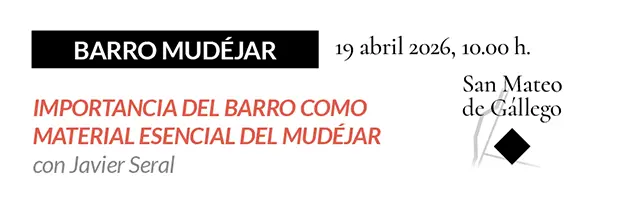

Domingo, 19 abril 2026, 10.00 h.
San Mateo de Gállego
Esta ruta‑taller invita a descubrir la importancia del barro como material esencial en la arquitectura y en la vida cotidiana de los pueblos mudéjares. A través de un paseo por la localidad, se contextualiza el uso del barro en el paisaje, la construcción y los oficios tradicionales.
El recorrido se completa con un taller experimental guiado por el diseñador industrial Javier Seral, en el que los participantes trabajan directamente con el material, explorando sus cualidades plásticas y sensoriales. Una experiencia que conecta patrimonio, artesanía y creación contemporánea.
Domingo, 21 junio 2026, 10.00 h.
Rodén (Fuentes de Ebro)
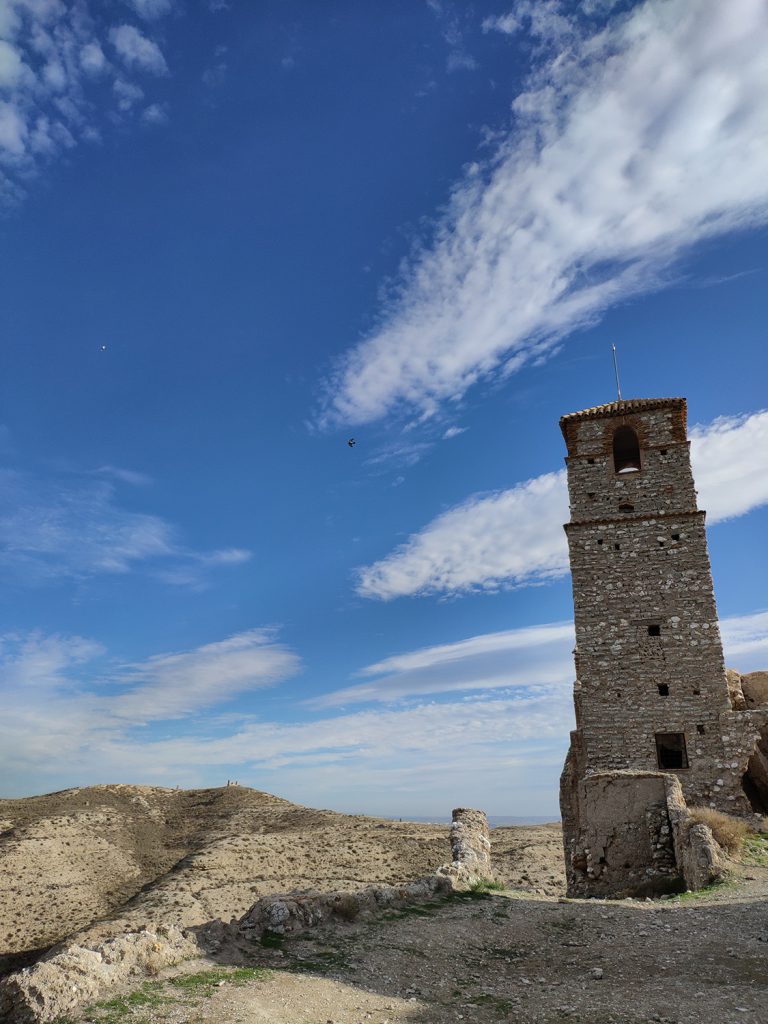
Esta ruta‑taller propone una mirada diferente al patrimonio construido, entendiendo los muros como superficies vivas donde se acumulan huellas del tiempo, materiales, colores y texturas. El paseo por la localidad se centra en la observación pausada de fachadas, paramentos y detalles arquitectónicos.
La experiencia se completa con un taller de iniciación a la acuarela, guiado por la artista Pilar García Verón, que invita a traducir la observación en gesto artístico. A través del color y el agua, los participantes exploran nuevas formas de mirar y comprender el patrimonio desde la sensibilidad y la creación.


Domingo, 15 noviembre 2026, 10.00 h.
Ricla
Esta ruta‑taller se centra en los resultados de investigaciones recientes en torno a la música y la danza vinculadas al territorio mudéjar. El recorrido por la localidad permite contextualizar los espacios donde estas manifestaciones culturales formaban parte de la vida cotidiana y festiva.
El paseo se complementa con un taller experiencial en el que sonido, ritmo y movimiento se convierten en herramientas para comprender el patrimonio inmaterial. Guiados por el músico Carlos González y la bailarina Inés Turmo, los participantes descubren cómo la música y la danza contribuyen a construir identidad y memoria colectiva.