
Bárboles
Village Territorio Mudéjar
At the confluence of the rivers
Bárboles is situated in the Ribera Alta del Ebro region, at the point where the Ebro and Jalón valleys meet, forming a fertile plain that has attracted settlers since ancient times. This privileged location explains both its long history as a stately seat and the presence of an architectural heritage that has its roots in the Middle Ages.
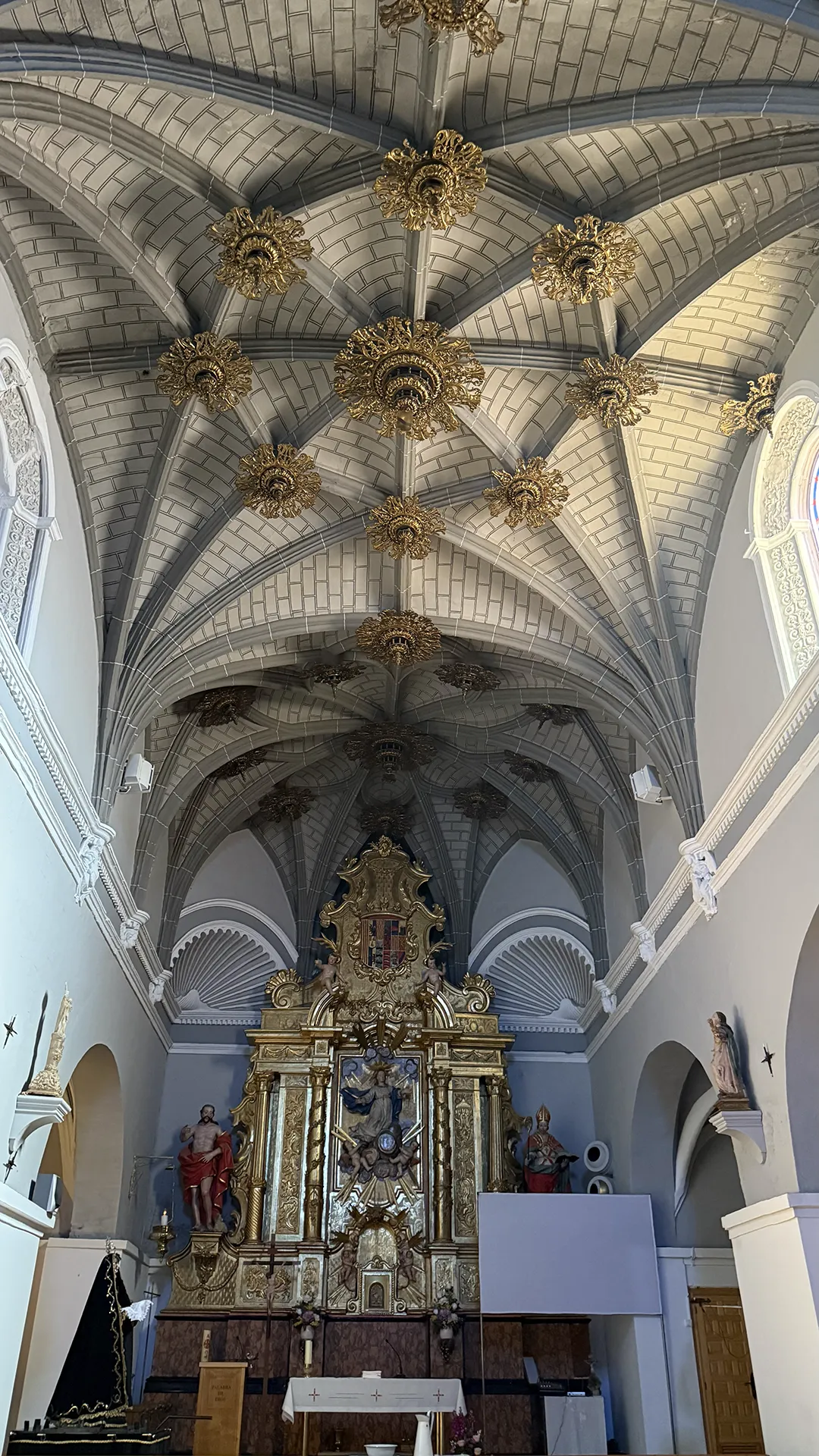
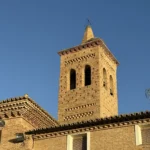
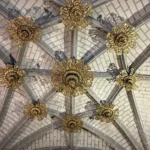
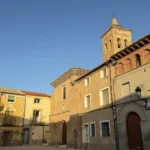
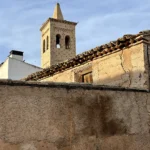
The centerpiece of Bárboles’s urban landscape is the Church of the Assumption of Our Lady, built in the mid-16th century on the ruins of an earlier 15th-century parish church, of which only the Mudejar-style tower remains, overlooking the entire town. The new church was built on a rectangular plan with a single nave divided into two sections, featuring a straight apse in plan and a polygonal apse in elevation, with side chapels built between the buttresses. It is covered by a simple ribbed vault in the apse and a star-shaped ribbed vault in the nave, and features a raised choir at the foot of the atrium, which opens onto the nave through a paneled arch and is covered by a reticulated ribbed vault.
Bárboles is situated in the Ribera Alta del Ebro region, at the point where the Ebro and Jalón valleys meet, forming a fertile plain that has attracted settlers since ancient times. This privileged location explains both its long history as a stately seat and the presence of an architectural heritage that has its roots in the Middle Ages.
The centerpiece of Bárboles’s urban landscape is the Church of the Assumption of Our Lady, built in the mid-16th century on the ruins of an earlier 15th-century parish church, of which only the Mudejar-style tower remains, overlooking the entire town. The new church was built on a rectangular plan with a single nave divided into two sections, featuring a straight apse in plan and a polygonal apse in elevation, with side chapels built between the buttresses. It is covered by a simple ribbed vault in the apse and a star-shaped ribbed vault in the nave, and features a raised choir at the foot of the atrium, which opens onto the nave through a paneled arch and is covered by a reticulated ribbed vault.
Projects Territorio Mudéjar in Bárboles
Pedagogy | View the project
Mudéjar teaching guide, the guide | View the project
Projects Territorio Mudéjar in Bárboles
Recognition and promotion of traditional architecture through a a series of itineraries.
More information
Ayuntamiento 976 654 151
https://barboles.net/
VISIT BÁRBOLES
976 654 151
WANT TO LEARN MORE?
Aragon Tourism
turismodearagon.com
Ribera Alta del Ebro Regional Tourism
https://turismoriberaaltadelebro.es/
Territorio Mudéjar Network
The council has been a founding member of Territorio Mudéjar since 2026.




The Importance of the Heredia Family
Particularly striking is the side chapel built in the mid-17th century, located on the right side of the nave and adjacent to the tower, whose vault is decorated with Mudejar-style plasterwork featuring four- and eight-loop motifs, which still retain traces of polychrome paint. Inside, the church also houses the main altarpiece of the Assumption, made of polychrome wood—an 18th-century sculptural work commissioned by the Counts of Parcent, the local marquises—as well as a painted altarpiece depicting the Holy Family attributed to the master Diego San Martín and a 19th-century marble baptismal font in the Neoclassical style. Since 2003, both the tower and the Mudejar elements of the church have been designated as Catalogued Assets of Aragonese Cultural Heritage.
The town’s history is closely tied to the Heredia family. Diego de Heredia, General of Cavalry in the Aragonese army and lord of Bárboles, was executed in 1592 for political reasons, which led to the confiscation of his property and the destruction of the castle of Bárboles. His heirs recovered the family estate, and one of his descendants, Juan Fernández de Heredia, became the 10th Count of Fuentes.
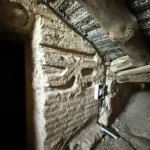
Particularly striking is the side chapel built in the mid-17th century, located on the right side of the nave and adjacent to the tower; its vault is decorated with Mudejar-style plasterwork featuring four- and eight-loop motifs, which still retain traces of polychrome paint.
Inside, the church also houses the polychrome wooden main altarpiece of the Assumption, an 18th-century sculptural work commissioned by the Counts of Parcent, the local marquises, as well as a painted altarpiece depicting the Holy Family attributed to the master Diego San Martín and a 19th-century marble baptismal font in the neoclassical style. Since 2003, both the tower and the Mudejar elements of the church have been designated as Catalogued Assets of Aragonese Cultural Heritage.
The town’s history is closely tied to the Heredia family. Diego de Heredia, General of Cavalry in the Aragonese army and lord of Bárboles, was executed in 1592 for political reasons, which led to the confiscation of his property and the destruction of the castle of Bárboles. His heirs recovered the family estate, and one of his descendants, Juan Fernández de Heredia, became the 10th Count of Fuentes.
The content and updates to news items are produced in collaboration with the Town Council of Tobed through the Mahoma Calahorri Museum.
*This collaboration took place within the framework of the project run by the council of Tobed, funded by the Ministry of Culture and Sport under its grants for 2020 for local organisations with World Heritage sites listed by UNESCO.*Esta colaboración se desarrolló en el marco del proyecto del ayuntamiento de Tobed, financiado por el Ministerio de Cultura y Deporte en sus ayudas 2020 para entidades locales con Patrimonio Mundial inscrito por la Unesco.